

Wyoming is required by law to fund public education.
Every K-12 student in Wyoming is entitled to the same high quality education wherever they live.
We fund education primarily through property taxes and mineral revenues.
With the decline in revenues generated by mineral production over the last 10 years the state has struggled to fully fund education.
Lower revenues and automatic inflationary components within our educational finance model has caused a long term structural deficit for education.
If Prop #1 passes it takes our education funding problem to a whole new level.
Prop #1, fully implemented, will cut direct funding to education by $92.6 million dollars in 2028 and $95.9 million in 2029.
A biennial decrease of $188.5 million in education funding.
This biennial number automatically increases with inflation each biennium. Combined over the next 10 years lost revenue for education funding will approach $1 billion dollars.
The Legislative Service Office (LSO) prepares an annual long-term budget forecast based on all existing revenue streams and known anticipated expenditures.
As of today - with passage of Prop #1 - LSO estimates a deficit of approximately $780 million dollars [-$780,000,000.00] by the end of 2030.
This is not a one-time shortfall - the majority of it is an ongoing expense. That is, without additional funding from somewhere this deficit will continue to grow.
Because funding education is a constitutional priority, the funding shortfall for education will have to come from existing revenue (other state funded programs) or a new revenue source.
This will require the legislature to raise or create new taxes.
Two of the state’s largest budgets are the Dept. of Health and the Dept. of Family Services.
These 2 agencies typically match state dollars with federal dollars – meaning cuts result in a double whammy to state services for those who need it the most.
Both departments have been nationally recognized as being among the most cost-efficient agencies in the country. There is very little ‘fluff’ to squeeze out additional dollars.
Making our education system structurally and economically sound is one of the most important and pressing tasks for the legislature. There is no easy fix.
The options are few.
They include across the board cuts to all agency budgets, including cuts to community colleges, UW, Highways, State Parks, etc.; modifying (reducing) the basket of goods currently required by law in the education funding model and cutting out other after school programs that are outside the education model.
Alternative solutions are increasing sales tax, creating an income tax or increasing some other existing tax (ie.; severance, AI/data centers, lodging taxes).
Funding cannot come from the Permanent Mineral Trust Fund (PMTF). By law the fund is inviolate. We cannot spend the corpus.
The state relies heavily on the interest income produced by the PMTF to pay our bills, pay for major maintenance for hundreds of buildings and provide operational cash flow.
Interest from the PMTF has become the life blood for the state because of declining tax revenues from our mineral industries.
Whenever possible we should be adding to the corpus of the PMTF to protect future generations.
The LSRA, or Rainy Day accountant, provides a back stop for education funding and various other state run programs.
However, this account is also in trouble. Because of the education shortfall, with the passage of Prop. #1, it will essentially be depleted.
This will cause a ripple effect throughout the state finance system because it functions as the backstop for the state’s check book.
Prop #1 also cuts $80 million in biennial funding for counties, cities and special districts.
The combined effect of Prop #1 is a biennial cut of $268 million dollars to the state’s overall budget.
Because the legislature’s first priority, by law, is funding education, the ability to backfill cuts to cities, counties and special districts simply would not be in the cards.
The legislature has passed numerous property tax relief bills over the last 4 years.
The average property tax bill in Wyoming today, with the homeowner’s tax exemption, is lower today than it was in 2022.
We have capped future property increases to no more than 4 % per year. Property taxes in Wyoming are lower than all our surrounding states.
Overall, we are the second lowest taxed state in the Nation. Wyomingites are very blessed to live in this great state. Let’s not put our special way of life at risk.
Please, Wyoming, let’s take a step back, take a breath, saddle up, and ride this one out by voting no on Prop. #1.
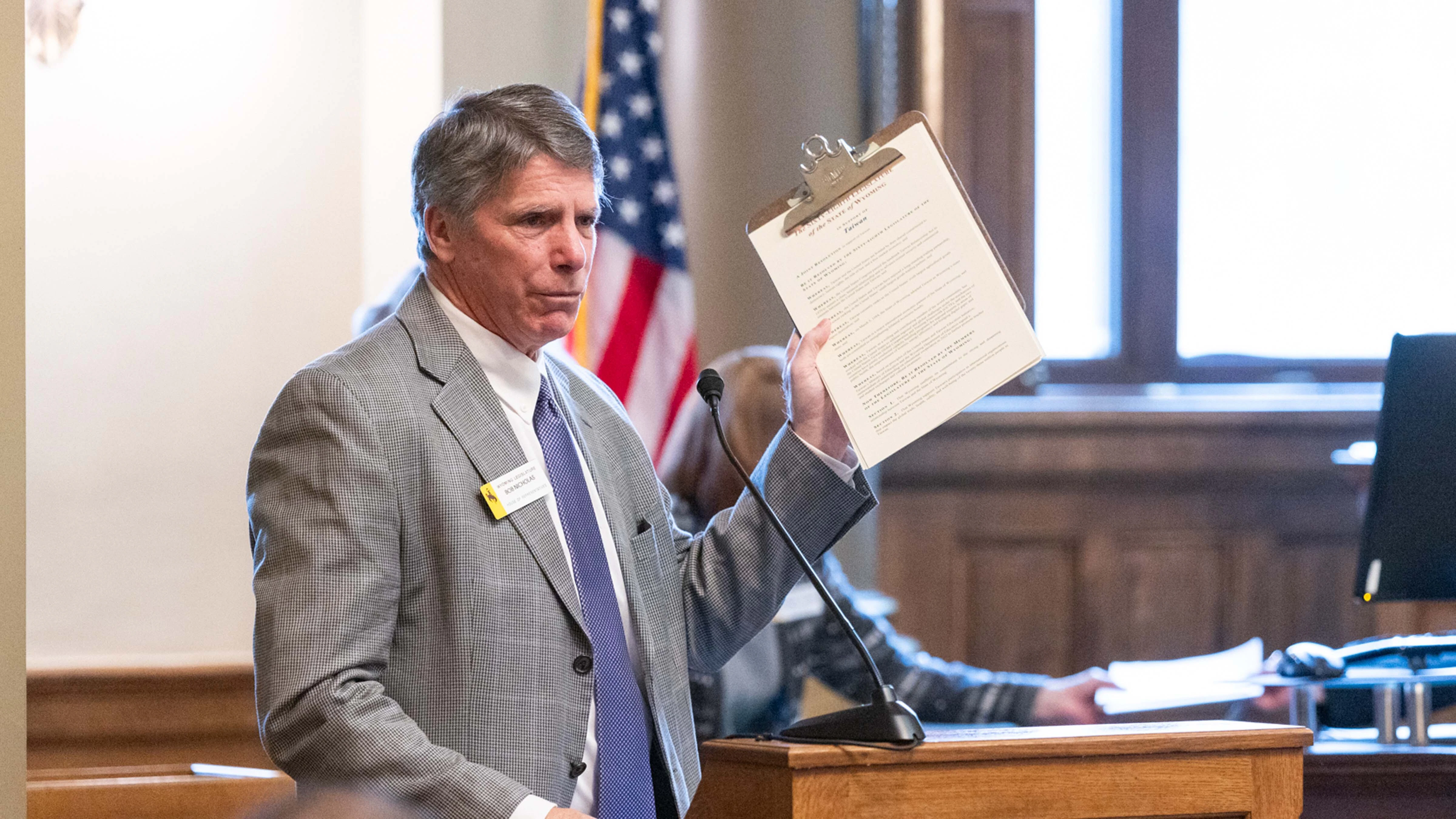
Representative Bob Nicholas
6 year chair / Appropriations Committee
Cheyenne, Wyoming


