
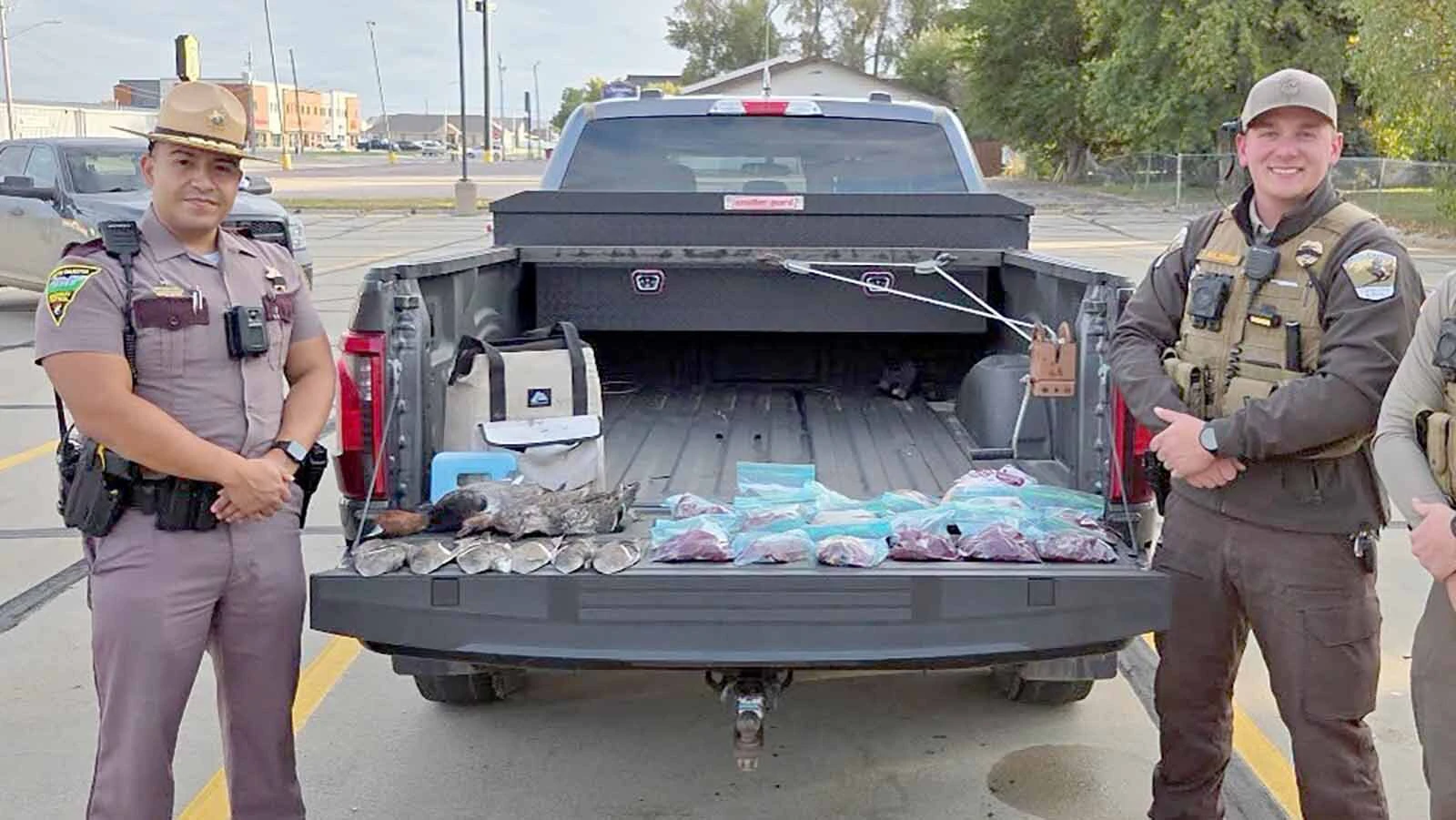
A South Dakota state trooper who pulled over a driver for speeding found something considerably more unusual than a lead foot: 70 dead ducks, 52 more than the state's legal possession limit.
Only three of the 70 ducks met the state's legal transportation requirements.
The discovery on Oct. 13 in Union County, in the southeastern corner of South Dakota, prompted an investigation by South Dakota Game, Fish and Parks conservation officers, who seized all 70 ducks and cited the driver, according to a Game, Fish and Parks statement.
Authorities are saying little about the incident.
The driver's name has not been released, nor have authorities disclosed where he is from, where he was headed or how fast he was driving when he was pulled over.
They also haven't said where the ducks were killed or why the driver was transporting so many.
"It is still an active investigation," Nick Harrington, a spokesman for South Dakota Game, Fish and Parks, told Cowboy State Daily.
Harrington could not say whether the birds were killed in South Dakota or another state.
An Unusual Traffic Stop
The investigation began when South Dakota Highway Patrol Trooper Oswaldo Gonzalez stopped a vehicle for speeding in Union County.
Gonzalez noticed what he believed could be an illegal number of waterfowl, according to the statement.
He contacted conservation officers, who responded to the scene and discovered 70 ducks.
The legal possession limit is 18 ducks, putting the driver 52 birds over the limit, according to Game, Fish and Parks.
All 70 ducks were seized as evidence, and the driver was issued a citation for exceeding the possession limit, the statement says.
The South Dakota Highway Patrol referred Cowboy State Daily's questions about the investigation to Game, Fish and Parks.
Carter Knecht, an aquatic habitat biologist with the agency, said he was aware of the incident but declined to comment because the investigation remains open.
Why Transportation Rules Matter
While the number of ducks found in the vehicle is striking, the transportation violations raise another question: How were the birds being carried?
South Dakota, like Wyoming and other states, has specific rules governing how hunters transport harvested game birds.
Those regulations help conservation officers determine what species have been harvested, how many birds a hunter possesses, and whether the hunter is complying with legal limits.
For ducks, hunters generally must leave the head or one fully feathered wing attached to each bird during transport, allowing officers to identify the species.
Simply removing the breasts from a duck and placing the meat in a plastic bag can create a legal problem if the required identifying parts have been removed.
South Dakota also limits how frozen game birds may be packaged, generally requiring no more than two birds per package.
Freezing multiple birds together in a large block of meat can make it difficult, if not impossible, for conservation officers to determine how many birds a hunter possesses, according to an email shared with Cowboy State Daily by Harrington outlining small-game bird transport.
A licensed hunter may transport another person's legally harvested game birds to a wildlife processing facility at the conclusion of a hunt, provided the birds are tagged with the required information about the hunter and the harvest.
Such regulations are intended to prevent hunters from concealing over-limit harvests or passing off illegally taken birds as someone else's game.
Authorities have not explained which transportation requirements were violated in the Union County case, or how the 67 ducks that failed to meet the requirements were packaged, though a photo shared by South Dakota Game, Fish and Parks shows multiple birds and parts of birds in Ziploc bags..
What Happens To 70 Seized Ducks?
The discovery also raises a practical question: What happens to 70 ducks confiscated during a wildlife investigation?
Harrington said seized wildlife sometimes makes its way to local food banks, depending on the circumstances.
But in this case, the ducks are evidence in an active investigation.
That means their ultimate disposition will depend on the legal process and how the case is resolved, he said.
Game birds seized during wildlife investigations may be kept in refrigerated or frozen evidence storage while authorities document alleged violations and prepare their cases.
Harrington could not say what will happen to the ducks seized in Union County.
He also declined to speculate about possible additional penalties, saying the matter must work its way through the legal process.
Kate Meadows can be reached at kate@cowboystatedaily.com.


