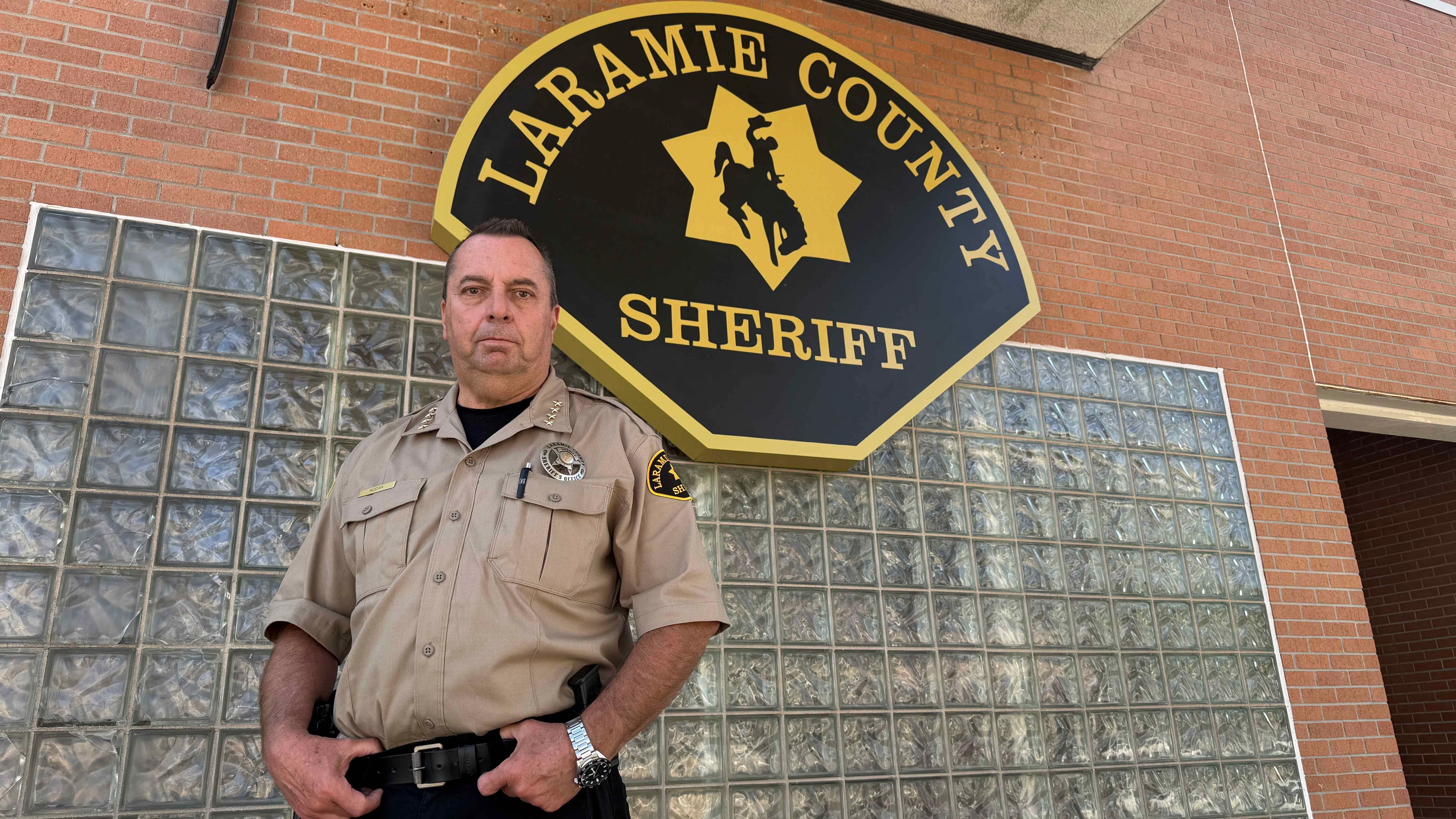
A Cheyenne-based judge on Monday declined to hold Laramie County Sheriff Brian Kozak in contempt, after an immigration firm and investigator asked her to.
Laramie County District Court Judge Robin Cooley had ordered Kozak’s office, through County Attorney Mark Voss, to produce a list of documents about a Mexican national’s arrest by Aug. 5.
Kevin Lewis and the Colorado-based firm Lichter Immigration agreed with Voss, through its attorney Drake Hill, that the county could produce documents about the arrested man by that date.
The county was two days late, produced some documents Hill called unreadable, removed certain privileged emails from the tranche rather than cordon them to a separate inventory list and didn’t verify the associated report, court documents say.
Hill also voiced doubt at the Oct. 16 hearing about whether the sheriff’s office included all its communications with U.S. Immigration and Customs Enforcement (ICE).
But Hill didn’t show clear and convincing evidence that Kozak or his attorney did any of this willfully, Cooley concluded.
Voss had told the court that this document search was a huge and messy task, because county systems aren’t isolated by department. The first search yielded about 7,700 documents, and the searches unearthed unrelated and privileged documents, he said.
Cooley chided the county attorney and sheriff, noting repeatedly that the county defendants had agreed to the original deadline.
“Finally, the fact that defendants’ noncompliance was not willful does not make it acceptable,” wrote Cooley in her Monday order. “Defendants’ failure to provide a privilege log and to meaningfully address the concerns raised in plaintiffs’ Aug. 24, 2026, letter prolonged a dispute that should have been resolved without the necessity of further court proceedings.”
“Unfortunately,” Cooley continued, “that did not happen, but the court expects full compliance with both the order compelling (these documents) and this order to prevent a recurrence of the same.”
The county has 10 days from Monday to:
Give Hill a privilege log, listing which documents have been kept out of the exchange and why;
Give Hill documents that transferred prior as unreadable, or obtain an information technology (IT) authority’s sworn statement on why those documents can’t be transferred in a readable format;
Address in a letter to Hill any allegedly missing records;
And notify the court of its compliance.
“Should defendants fail to comply with this order,” wrote Cooley, “the court will set this matter for further proceedings.”
And those could include contempt or sanctions, the judge noted.
Kozak told Cowboy State Daily on Tuesday that he believes Voss will hand over the remaining documents and work through the technical problems within the deadline, which should conclude the case.
"I’m glad that, you know, that the judge clearly noted there’s no contempt finding," he said.
Kozak lamented that under an Oct. 16 Cowboy State Daily story, social media commenters criticized Cooley for considering Hill's contempt motion.
I thought that was unfair," said Kozak. "Because Judge Cooley, I think, is a really good judge and she really correctly and fairly looked at all arguments on both sides and made fairly reasonable decisions."
So far this year, said Kozak, the sheriff's record's department has received 4,706 requests for records: double the amount placed in 2023.
This Case
Lewis and Lichter filed this case through Hill on June 30.
It concerns a rush to get documents about the arrest of Mario Fabian Valenzuela Robles, to equip him for his ongoing federal immigration proceedings.
The lawsuit complaint accuses Kozak’s office of wrongly withholding body camera video and information that Valenzuela Robles needed for his immigration case.
The sheriff’s office detained Valenzuela Robles on April 23, the complaint says.
An order in Valenzuela Robles’ federal wrongful-detention case says he was detained starting about April 23 through at least May 27, after a Cheyenne police officer initiated a traffic stop on him because his taillights were “kind of dark” and his truck had “tinted windows.”
ICE agents were on scene within the time Valenzuela Robles took to provide his ID to the officer, the order says, adding that Valenzuela Robles asserts he was given a choice between $2,600 to return to Mexico or face ICE detention. He opted for detention, the order says.
The order recounts assertions by Valenzuela Robles that he’s lived in the U.S. for 20 years and has no criminal history, plus he has three children who are U.S. citizens.
Kozak has cast case’s motivation as politically motivated, pointing Cowboy State Daily to Hill’s tangential connections to a gubernatorial candidate whom Kozak is investigating for alleged bribery.
He maintains that belief as of Tuesday, he said.
Hill and Lewis are business partners.
Hill and his wife have donated money to Kozak’s primary election campaign opponent.
Kozak has said his office turned over the body camera video, which he indicated was initially withheld to ensure it could be released according to the narrow provisions allowed in public-records law.
Voss Says
In court Oct. 16, Voss said body camera is difficult to vet for privileged information such as people giving their driver’s license numbers, Social Security numbers, or mental-health diagnoses. If a law-enforcement encounter lasts 30 minutes but three deputies capture it via body cam, that’s an hour and a half through which records staff must scour to edit out confidential information. That duration expands if dash cameras also capture the encounter, he said.
Plus, Voss noted, Wyoming law applies much narrower grounds for releasing officers’ video than other documents.
Voss cast the records search and demands as an information technology (IT) nightmare, repeatedly conceding to Cooley that these efforts were messy. He said the sheriff's office is inundated with records requests, and the sheriff might have to request a budget boost to get more staffers to field them.
Voss said he should thank Hill for prompting the formation of a new records policy at the sheriff’s office, as this case marked the "first meaningful request for records regarding ICE detention that we had received."
Hill Says
Hill, conversely, read dubious behavior into the sheriff’s office’s responses.
“I believe these delays do mean that they are not honoring the court’s order and that it’s intentional,” said Hill. “You cannot know about a court deadline and not meet that deadline without intentionality.”
He noted that the earliest released report about Valenzuela Robles’ arrest was, in the words of one Cheyenne Police Department staffer, a “complete fabrication.”
Voss countered, saying one of the deputies had conflated the traffic stop with another later but similar one, but that was corrected.
Hill also said the body-camera video his team ultimately obtained doesn’t match the deputy reports.
“I’m sure the defendants disagree,” said Hill.
He added that the deputy who made the stop said, “Well, I pulled you over for failure to use your turn signal, but I really couldn’t see it.”
Other aspects of the body camera are “very concerning,” said Hill.
ICE’s main report of the incident, according to Hill, claims Valenzuela Robles didn’t have a current registration or tags on his vehicle, or current insurance.
“Well, the body camera video shows that he did. And they had it in their possession,” said Hill.
Hill asserted that deputies didn’t have probable cause for the initial stop.
Voss urged Cooley to rein back Hill to the hearing’s purpose, of a proposed contempt finding.
Cooley agreed.
“I find the background information is peripherally important,” said Cooley over Hill’s due process concerns for Valenzuela Robles.
“But the standard here really is whether there was a clear and effective order, the defendants knew of that order and they did not comply with that deadline – and that their failure to comply was willful or intentional,” said Cooley, listing the basis of the contempt hearing.
Clair McFarland can be reached at clair@cowboystatedaily.com.