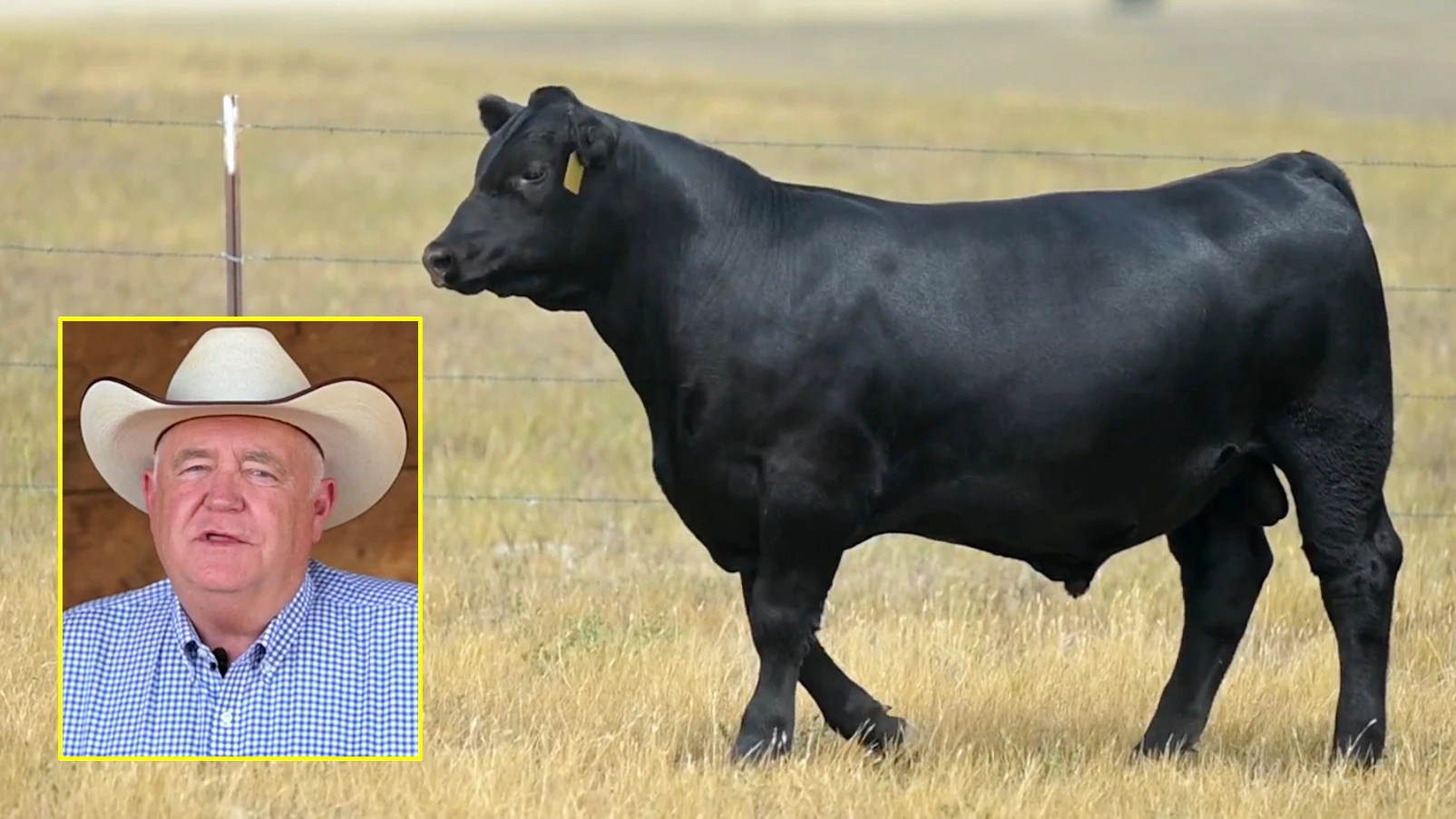
Auctioneer Roger Jacobs has sold plenty of expensive cattle over the years, but even he seemed stunned Saturday as the bidding on a 9-month-old Angus bull climbed toward $1 million at the Billings Livestock Commission in Montana.
As the bids reached $900,000, Jacobs called out for another $100,000.
"One million," he said. "I've never asked that before."
Nobody took him up on it.
But when the hammer finally fell, Jacobs could hardly contain his excitement.
"I sold the bull for $900,000!" he exclaimed.
The sale was an extraordinary moment for Montana cattleman Doug Stevenson, who has spent his life raising Angus cattle and knows a thing or two about producing valuable bulls.
Stevenson said it's by far the most any one of his bull's has ever earned. The highest documented sale for a bull at auction in the U.S. is $1.51 million in North Dakota in 2019.
"I knew that the bull would bring a lot of money," Stevenson told Cowboy State Daily. "That probably even exceeded my expectations for what he would sell for."
For anyone wondering what makes a bull worth nearly $1 million, the answer has little to do with how much beef he'll put in someone's freezer.
It's about genetics, technology and the potential to produce thousands of calves carrying some of the most desirable traits in the beef industry.
The buyers aren't purchasing him for what he can do today.
They're betting on what he can produce for years to come.
A $900,000 Investment
The bull, raised by Stevenson's Basin Angus operation in Reed Point, Montana, is just over 9 months old.
He's not even old enough to produce semen for artificial insemination, but that didn't stop some of the country's top cattle operations from competing for a piece of his future.
A group of 10 buyers joined forces to purchase an interest in the bull. Stevenson will retain 50% ownership and continue raising him at his Montana ranch.
Once the bull matures, he'll be moved to an artificial insemination facility, where his semen can be collected and used to breed cows across the country.
"They're buying their part of the bull to have semen to use in their own operation and as investment," Stevenson said of the buyers.
That means they're investing in the genetic potential of a bull whose offspring could influence cattle herds nationwide.
The bull will remain with Stevenson for now, giving him time to mature before beginning his career as a breeding sire.
"We sell these bulls with a guarantee that there's going to be semen," Stevenson said.
He called the purchase a "fairly surefire investment" for the buyers, based on the bull's genetic profile and his ranch's history of producing influential breeding stock.
Still, there is one thing this young superstar hasn't done.
He hasn't proven himself through his offspring.
"This bull has a little more to prove because he's just 9 months old," Stevenson said.
What Makes Him So Special?
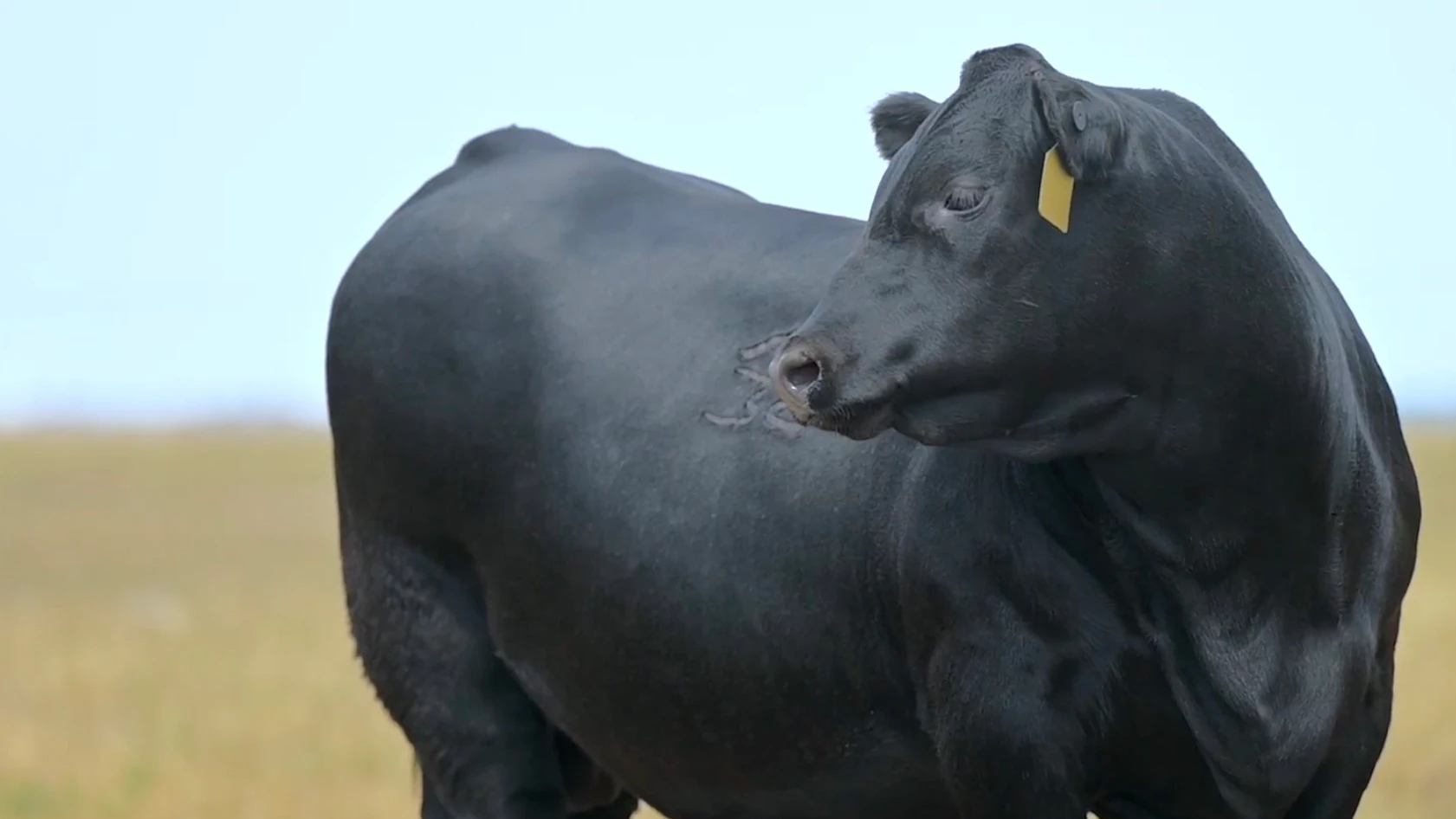
To the untrained eye, a $900,000 bull might look like any other well-fed, muscular Angus bull.
But to cattle breeders, his value is written in his DNA.
Modern cattle breeding relies heavily on expected progeny differences, or EPDs, which are statistical predictions of the traits a bull is likely to pass along to his offspring.
Those predictions can help breeders evaluate everything from birth weights and growth rates to maternal characteristics and carcass quality.
Advances in DNA testing have made those predictions even more powerful, allowing cattle producers to identify genetically exceptional animals long before they have offspring of their own.
Stevenson said his operation identified the young bull as an outstanding prospect several months ago.
His genetic data was exceptional, and his physical characteristics backed up the numbers.
"We identified him several months ago as a very, very elite phenotype," Stevenson said.
Phenotype refers to an animal's observable physical characteristics, including its muscle development, body structure and overall appearance.
And this bull, according to veteran Angus sale manager Dick Beck, has the whole package.
"He has a tremendous phenotype — lots of muscle, lots of body, structurally sound," Beck said.
But it isn't just his appearance that makes him special.
Stevenson said the bull combines an unusual pedigree, exceptional genetic predictions and physical characteristics that appeal to a broad range of cattle producers.
"He's one that can find widespread use because he's not bred like the rest," Stevenson said.
That's important in an industry where breeders are constantly trying to improve their herds without sacrificing other desirable traits.
A bull that excels in one category often falls short in another. This one, Stevenson said, checks nearly every box.
For breeders looking to produce cattle with superior growth, desirable carcass characteristics and strong maternal traits, the young bull offers an opportunity to introduce those genetics into their herds.
And thanks to artificial insemination, his influence could extend far beyond the pastures of Montana.
A Bidding War
Beck, who helped manage Saturday's auction, has spent nearly 50 years working in Angus cattle sales.
Even he was impressed by what unfolded.
"I guess I thought it was a really, really amazing event," he said.
As the bidding climbed to $500,000, four contenders were still competing for the bull.
"That's not something that happens very often," Beck said.
The bidding eventually reached $900,000, setting a record high for a bull sold at this Basin Angus sale.
But the young bull wasn't the only member of his family attracting extraordinary prices.
His mother sold for $450,000, with a Wyoming cattle operation among the buyers.
Stellpflug Cattle, based in Guernsey, partnered in the purchase of the cow, Beck said.
Three of her daughters — sisters to the $900,000 bull — also commanded impressive prices.
One sold for $110,000, another for $60,000 and a third for $25,000.
The prices underscore just how valuable an exceptional genetic bloodline can become.
And they demonstrate why cattle breeders are willing to spend extraordinary sums to acquire animals they believe will improve the next generation.
Beck said the level of interest in elite Angus genetics is unlike anything he has witnessed in his career.
"I've never seen anything like it — all across the country," he said.
A Proven Track Record
For Stevenson, Saturday's sale didn't happen overnight.
Basin Angus is a family cattle operation built around producing cattle that combine strong physical characteristics with superior genetic data.
Stevenson has spent his life in the cattle business and said he's been fortunate to raise several bulls that have made a substantial impact on herds across the country.
One of the best-known examples is Basin Jameson, a bull his operation sold in 2022 for $600,000.
Since then, Jameson's genetics have been used widely, generating millions of dollars in semen sales, according to Stevenson.
His sons and daughters have also commanded top prices at cattle production sales.
That history is part of what makes buyers willing to invest so heavily in another young bull from the Basin program.
"We have a very good track record of the bulls we promote as herd sires having a big impact around the industry," Stevenson said.
Beck believes Saturday's record-setting bull could be even more influential.
"This bull is the next step better," he said. “He should be one of the most widely used bulls in America for the next few years."
Why Genetics Matter
For cattle producers, the pursuit of better genetics isn't simply about winning ribbons or selling expensive bulls.
It's about producing the kind of beef consumers want to buy.
And increasingly, Beck said, that means high-quality beef with the marbling and other characteristics that help it earn premium grades.
"We live in a world where quality is everything in the meat industry," Beck said.
He knows the meat business from both ends.
His father owned a butcher shop, and Beck grew up learning what makes beef desirable to consumers.
Today, he sees those same demands influencing breeding decisions made on ranches across the country.
"The world wants prime beef," Beck said. "We've found the industry will pay, people will pay a premium for a quality product."
Kate Meadows can be reached at kate@cowboystatedaily.com.