
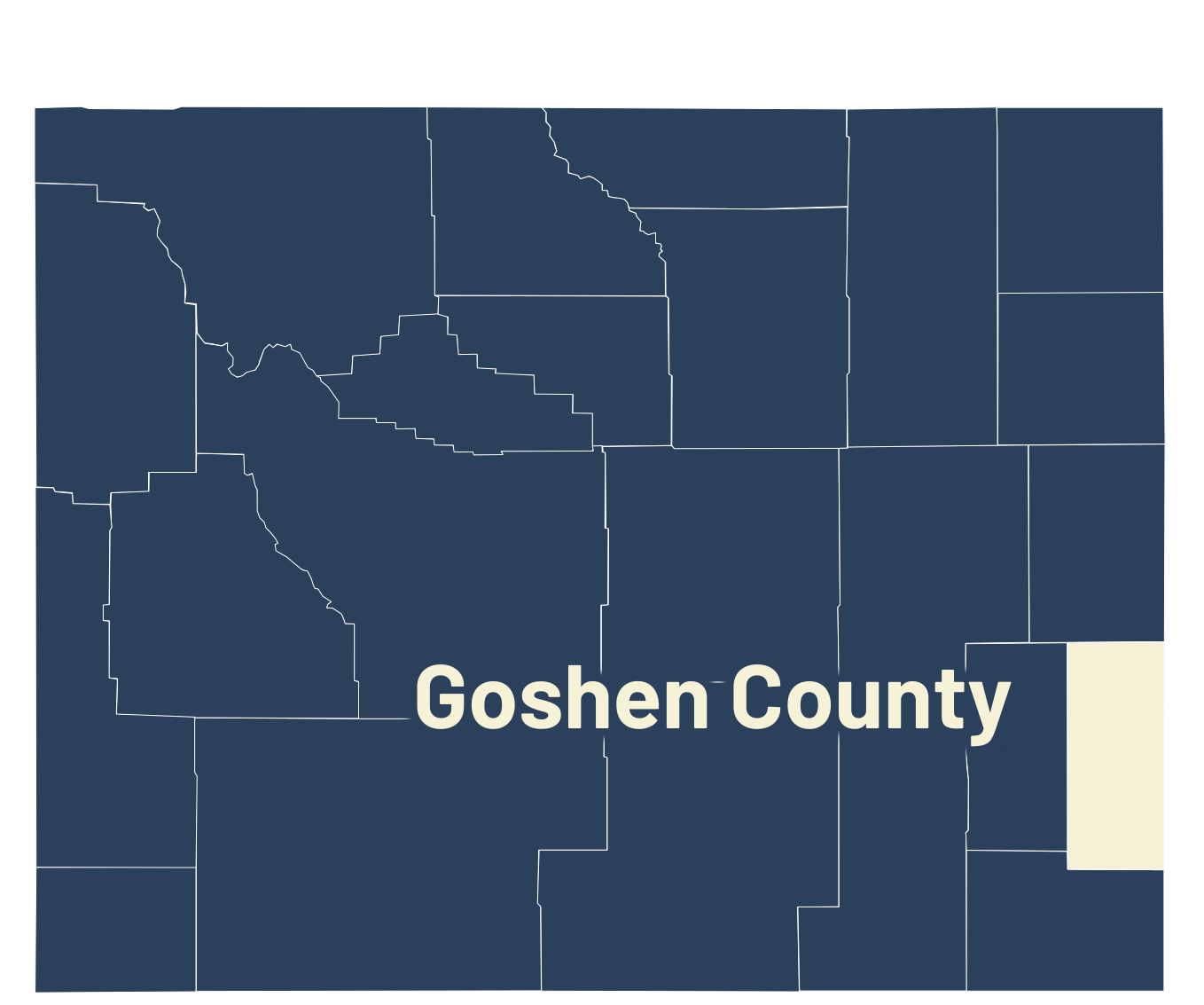
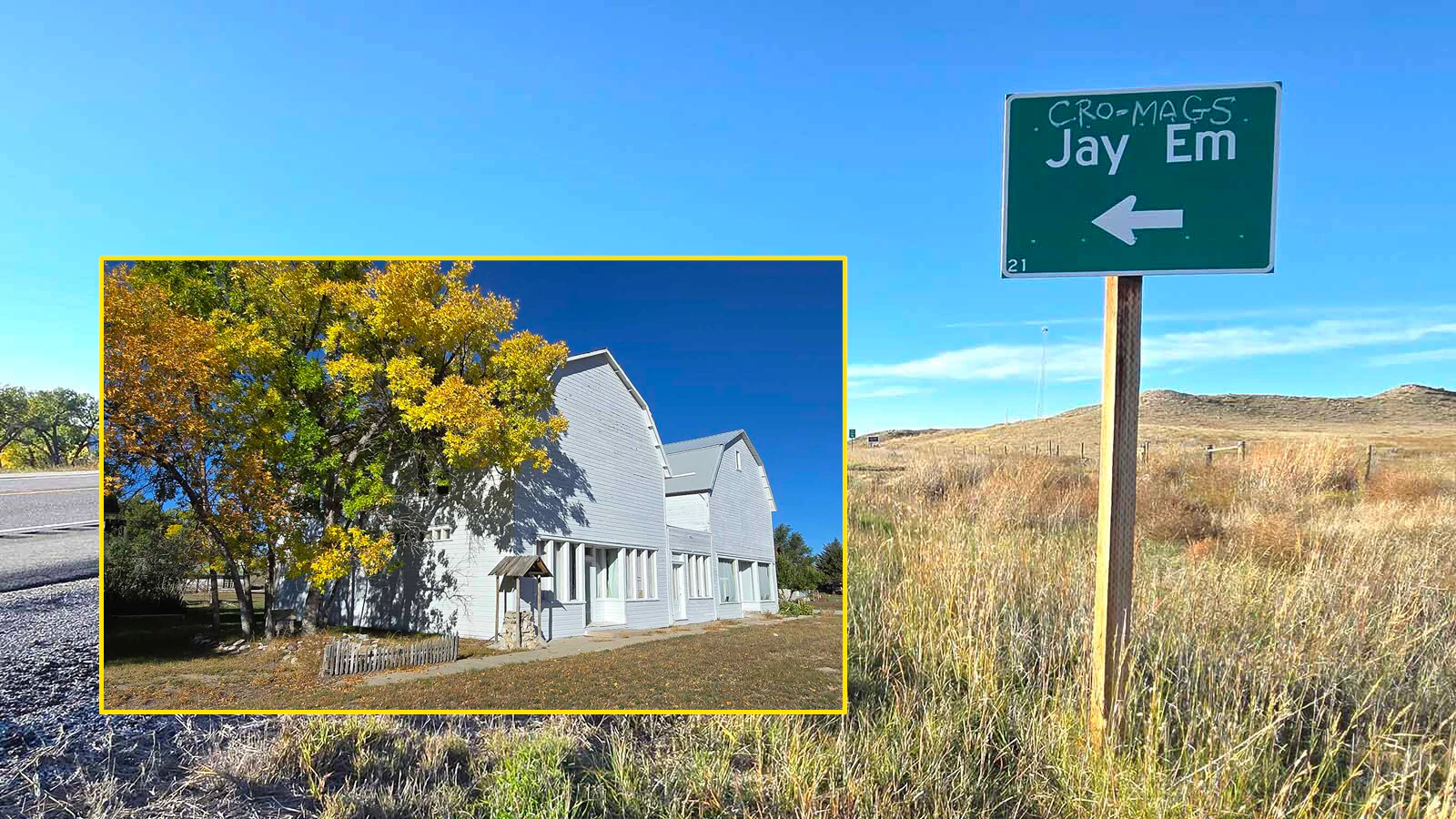
JAY EM — Ask the 15 or so residents here, and they’ll tell you this isn't another Wyoming ghost town.
But these days the busiest pedestrians on Main Street are a gaggle of noisy turkeys. They’re buying nothing and seem completely unaware of the quiet calico kitty peeping at them from around the corner of the Mill House.
This is commerce, such as it is, in Jay Em.
It’s a community that began with entirely modest ambitions but whose founder’s descendants come back every year to preserve the town’s buildings and the stories inside them.
Jay Em wasn’t a cattle town. It wasn’t a mining town. It wasn’t a railroad town.
And its founder, Lake Harris, never intended it to become a boomtown, his great-granddaughter Brenda Van Gorder told Cowboy State Daily.
Harris envisioned a simple outpost for surrounding homesteaders — a village that would help them all fight “that feeling of isolation” and provide supplies closer to home.
Harris filed his homestead claim on Rawhide Creek in 1912, the year he turned 23, but Jay Em’s name reaches further back into Wyoming’s cattle history.
Water helped lay the groundwork for Jay Em long before Harris planned the Goshen County town.
In the early 1860s, cattleman Jim Moore claimed land around a spring used by cattle drives heading north along the Texas Trail toward Lusk, about 25 miles to the north.
By 1869, he owned the second-largest cattle ranch in the Wyoming Territory, according to WyoHistory.org.
After Moore died, Silas Harris and his three sons took over the ranch in 1905. They operated it as the Jay Em Cattle Co., spelling out the letters of Moore’s J Rolling M brand.
Lake established a post office in the ranch bunkhouse, and the family opened a small general store to serve neighboring ranchers and homesteaders.
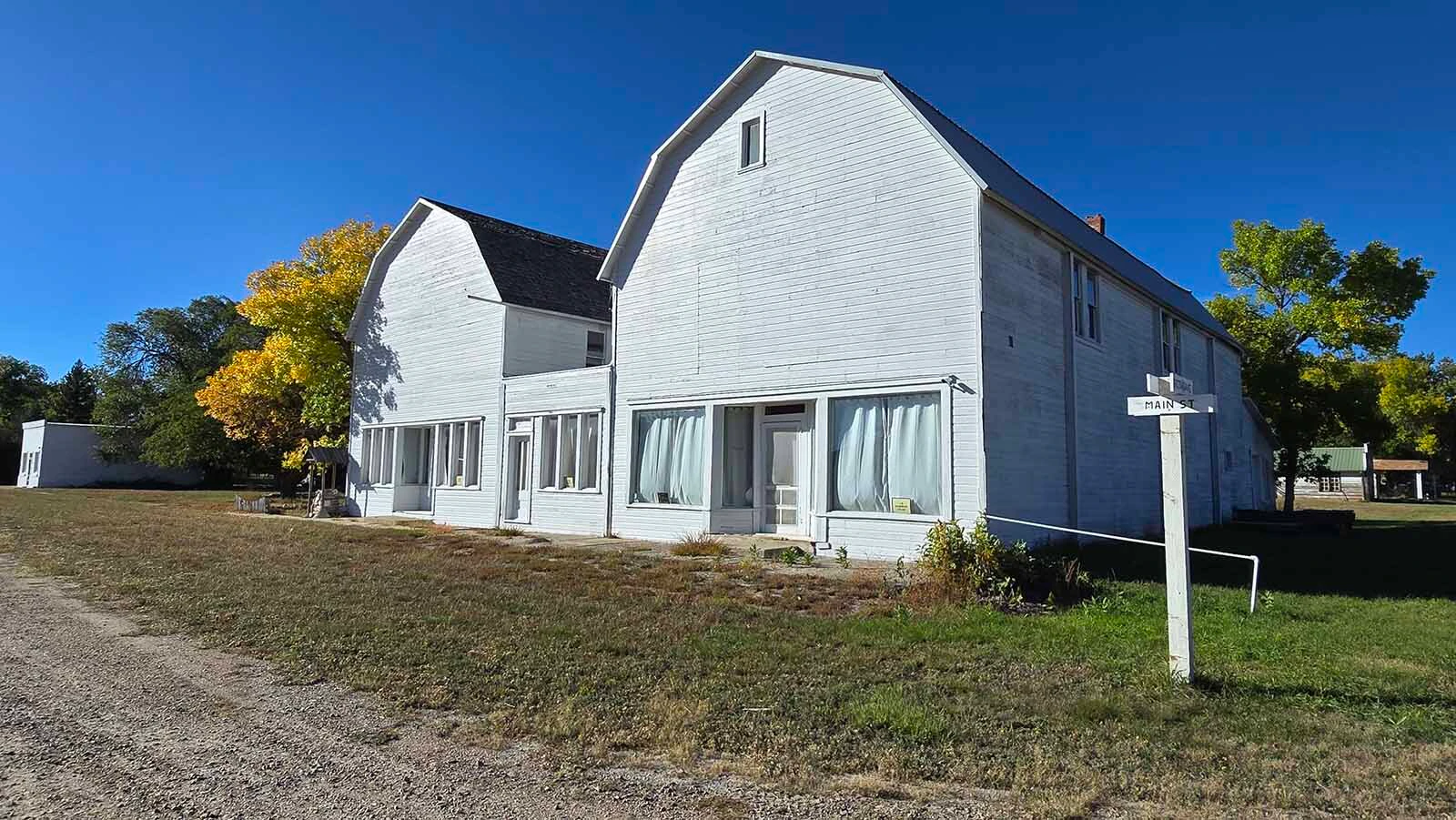
The Mill may look like an old barn, but it actually housed some of the town's businesses, including a hardware store. Family members say it was never a barn. (Renee Jean, Cowboy State Daily) 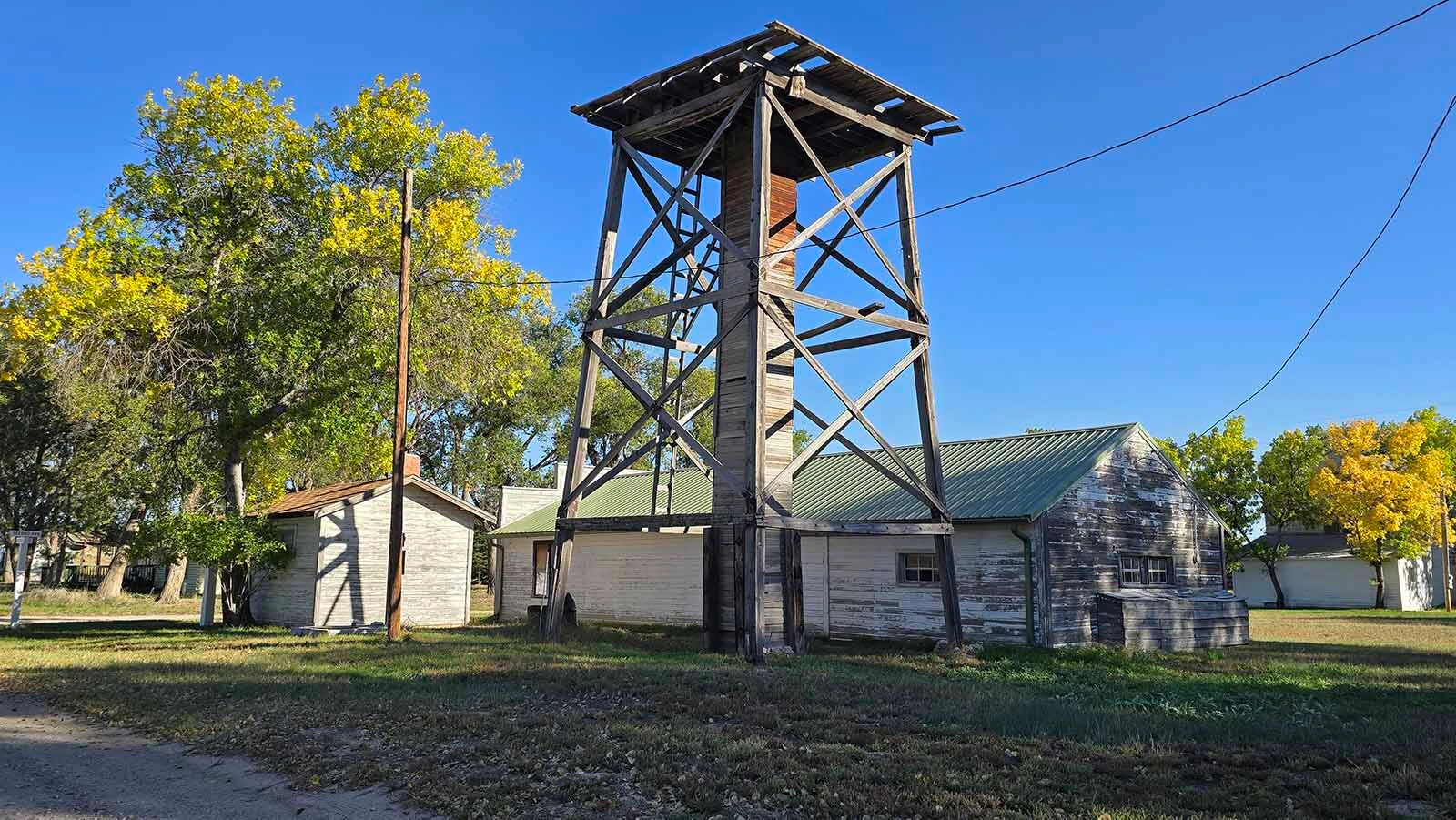
A cluster of buildings with a tower in Jay Em. (Renee Jean, Cowboy State Daily) 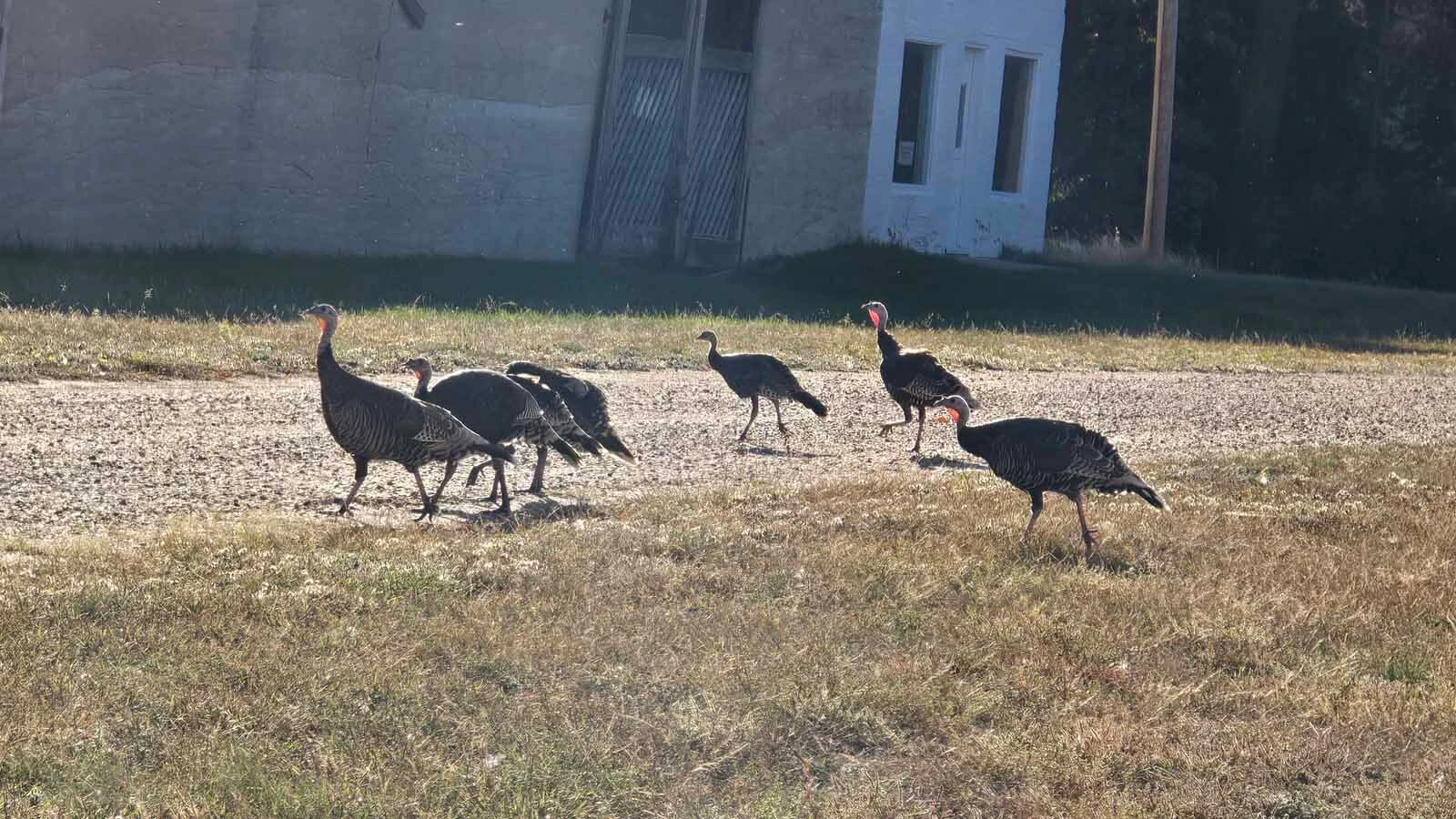
A flock of turkeys decided to take a stroll down Main Street. The kitty is not visible from this angle, but is watching from around the corner, hiding in the ring of trees. (Renee Jean, Cowboy State Daily) 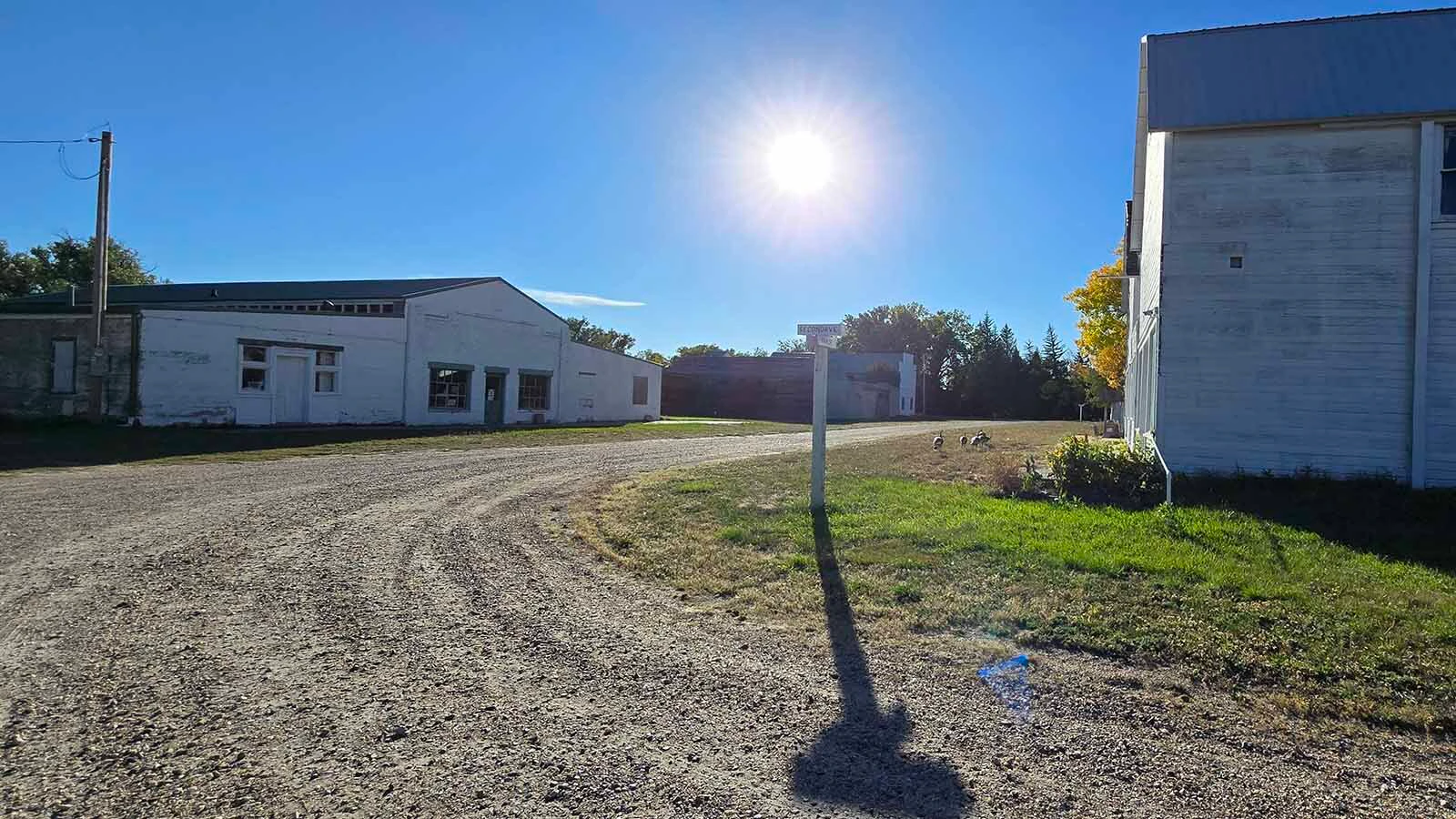
The sun sets on Jay Em. (Renee Jean, Cowboy State Daily)
When Cider Goes Rogue
One thing Jay Em never had, by design, was a saloon. It was a completely dry town.
Except for a certain Saturday spike in flavored extract sales — vanilla being a favorite.
And there was that one time when the cider went just a little … rogue.
“My great-grandfather Harris, he had an ice cream parlor in there,” Van Gorder said. “And he would also make up batches of apple cider.”
One day, the cider seemed to be particularly popular.
“This group of guys kept getting a little louder and very jovial,” Van Gorder said with a chuckle. “And they kept coming back for a little more cider.
"Finally, he went over and tasted it, and my grandmother was told immediately, ‘Stop! No more cider! Shut it off.’”
That was the end of cider sales — the first and last time alcoholic drinks were served in Harris’ Jay Em stores.
“He was small in stature,” Van Gorder said. “And these guys were like, ‘No, no, no, we want more cider.’ And he was like, ‘No, no, no, no more cider for you.’”
The stonecutting garage in Jay Em. (Renee Jean, Cowboy State Daily) 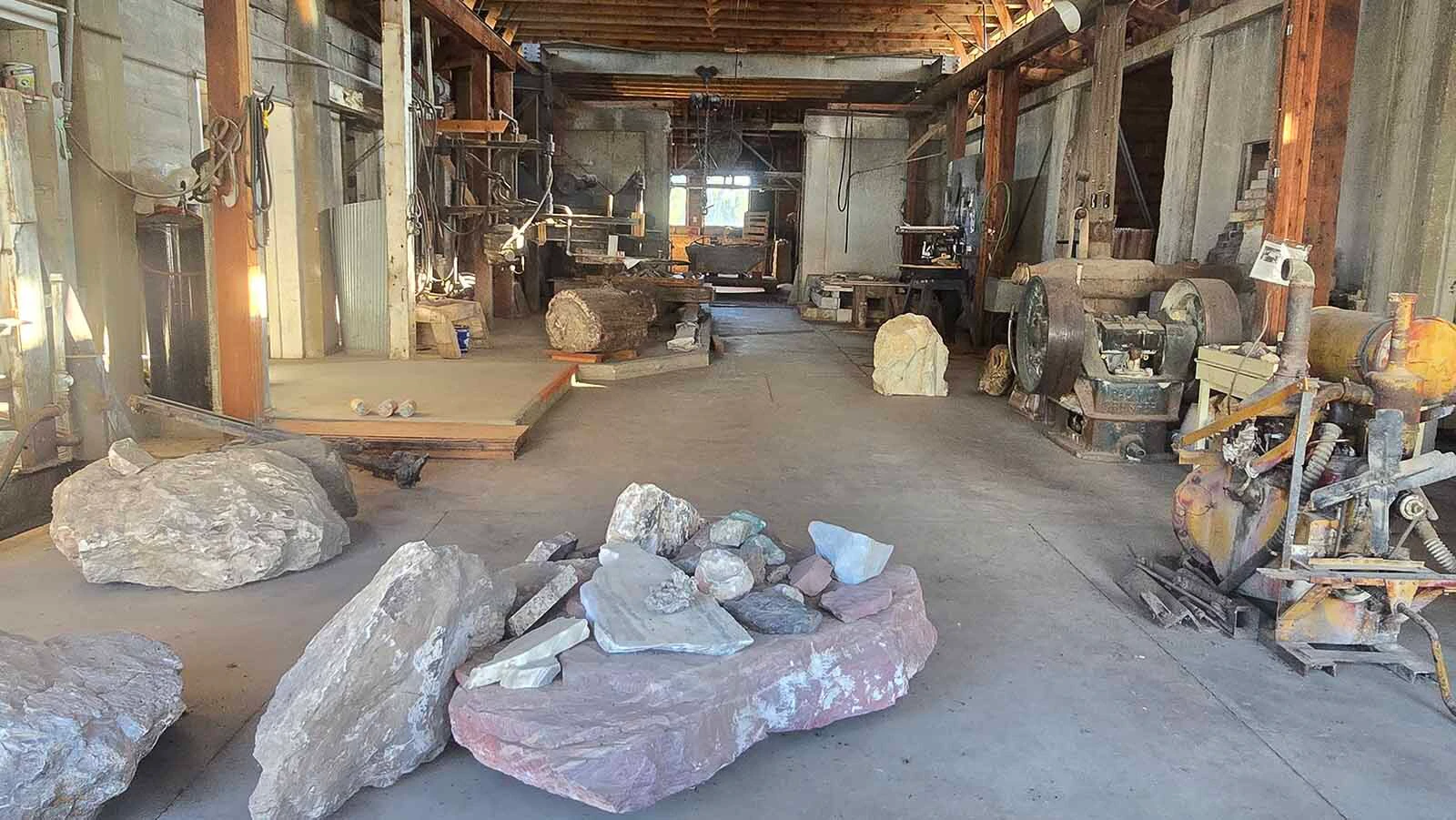
Inside look at the stonecutting garage in Jay Em. Stones lay on the floor perpetually waiting to be cut. (Renee Jean, Cowboy State Daily) 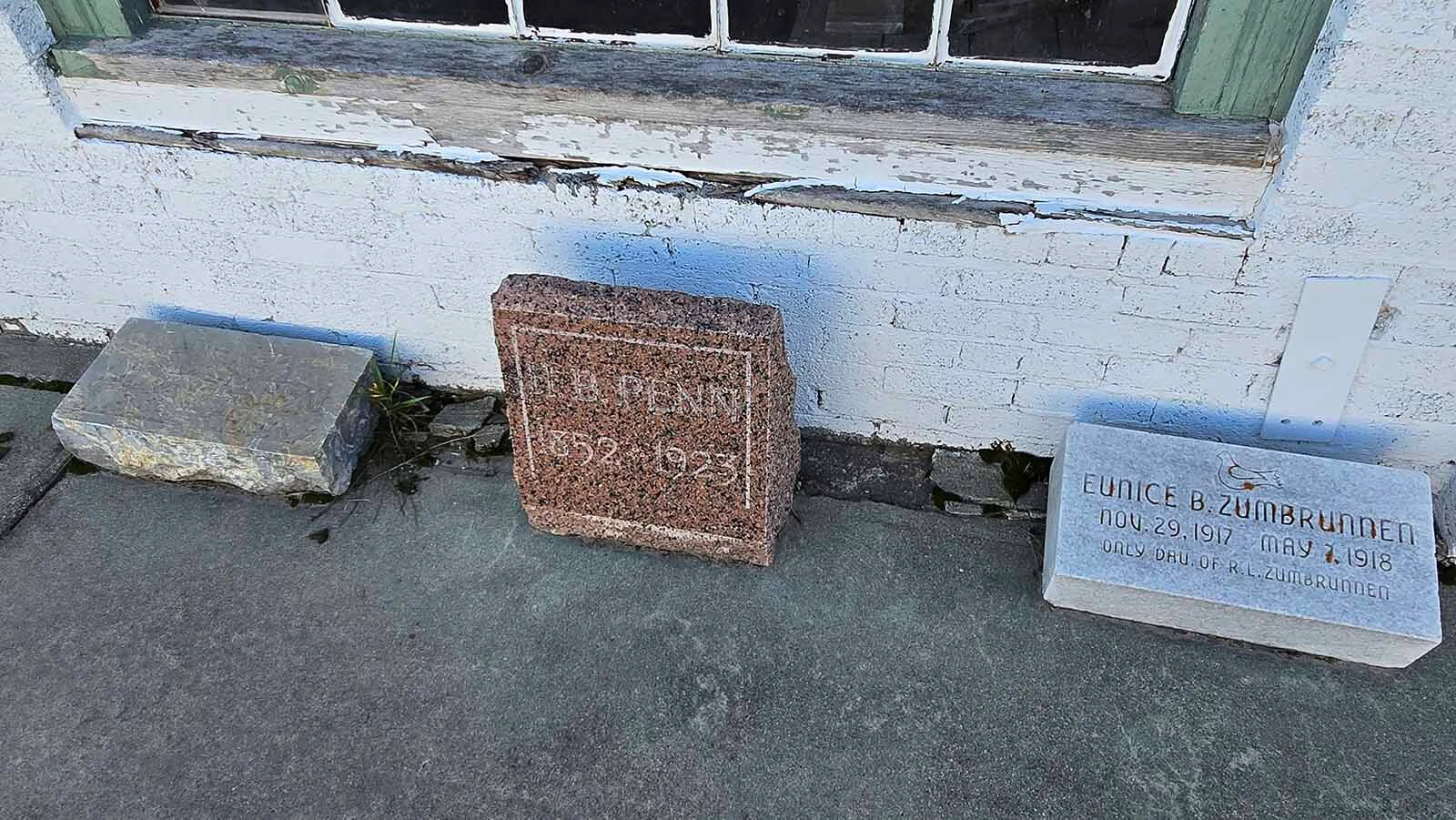
Some of the stones cut in the stonecutting garage in Jay Em were headstones. (Renee Jean, Cowboy State Daily) 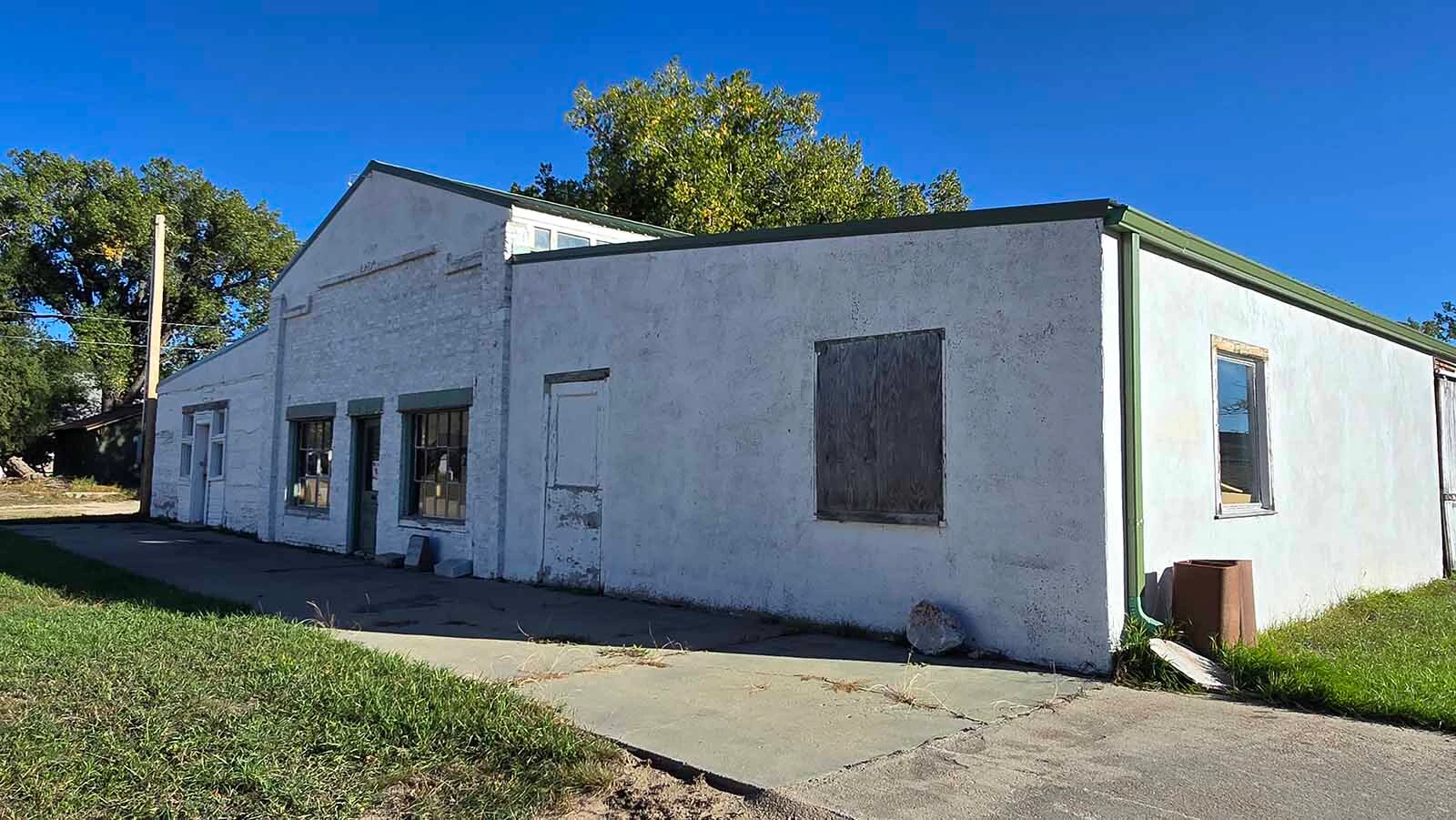
The stonecutting garage in Jay Em. (Renee Jean, Cowboy State Daily) 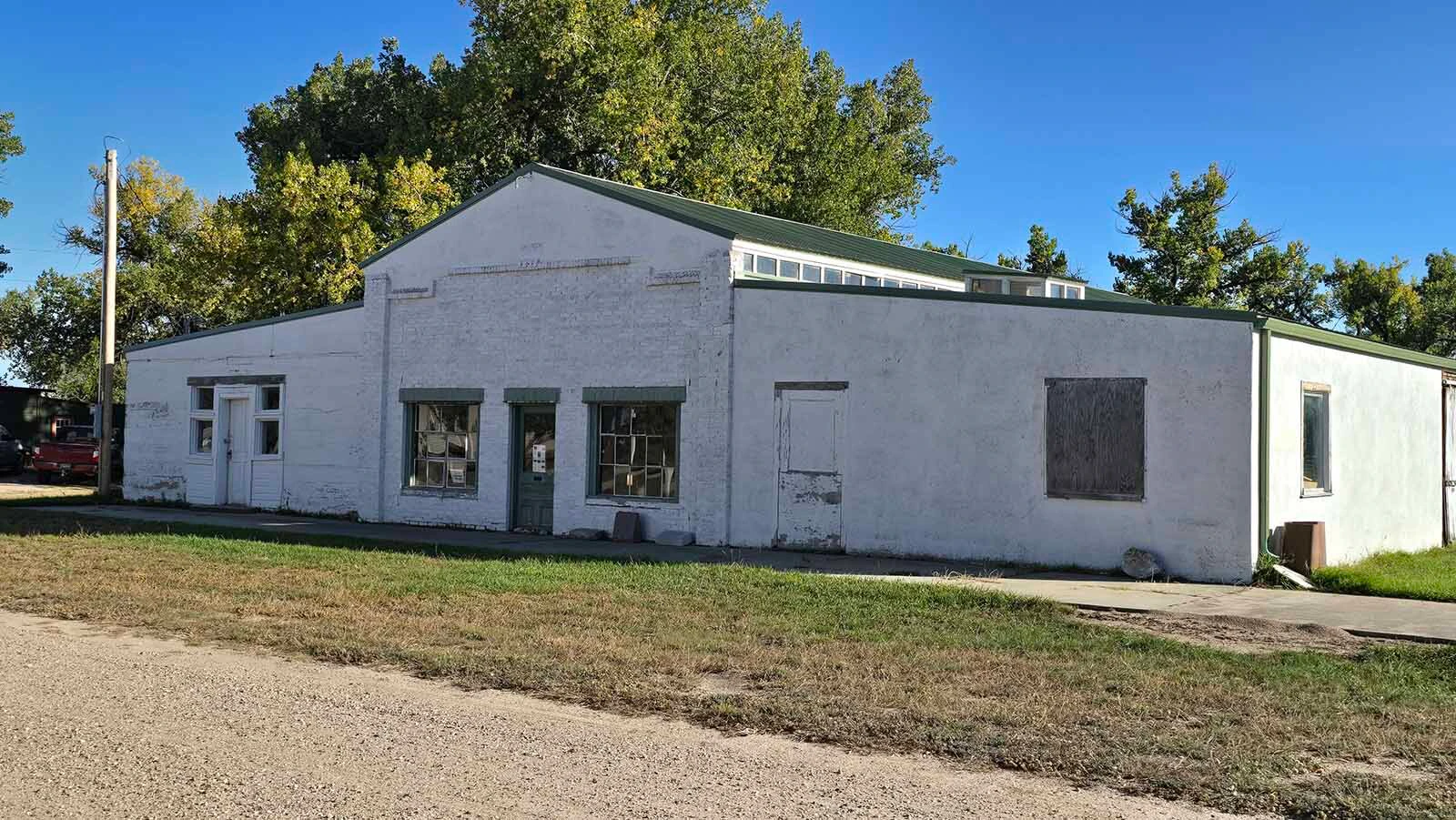
The Jay Em stonecutting garage still has large rock taken from Rawhide Buttes for cutting. Family members say that some of the stones cut here were sent to the Capitol for fireplace mantels. They are still there. (Renee Jean, Cowboy State Daily)
One Man, Many Businesses
Jay Em didn’t have a saloon, but it was a gathering place with lots of other things — a hardware store, a grocery store, a bank, a post office, a print shop, a movie theater, a dance hall, a stone-cutting garage, an indoor shooting range, a 4-H camp, a football camp for kids, and more.
“The post office was in the bank,” Van Gorder said. “But they ended up moving it eventually because he was running all of those businesses.”
If someone needed something from the bank or post office, Harris would leave the grocery store to handle it. Then he’d run back to the grocery store and wait on the next customer.
“People were understanding,” Van Gorder said. “They’d say, ‘Well OK, I need to do my bank business, but then I’ll meet you down at the grocery store.’”
Harris, too, was understanding. When children came into his grocery store, he would make sure they got an ice cream cone — even if it wasn’t in the family’s budget.
“They had cream testers so they could decide if the cream was good,” Van Gorder said. “And he would shave off some of the higher quality to make his own ice cream.”
Many of the town’s guests during summer tours have told Van Gorder they remember that ice cream and just how good it was.
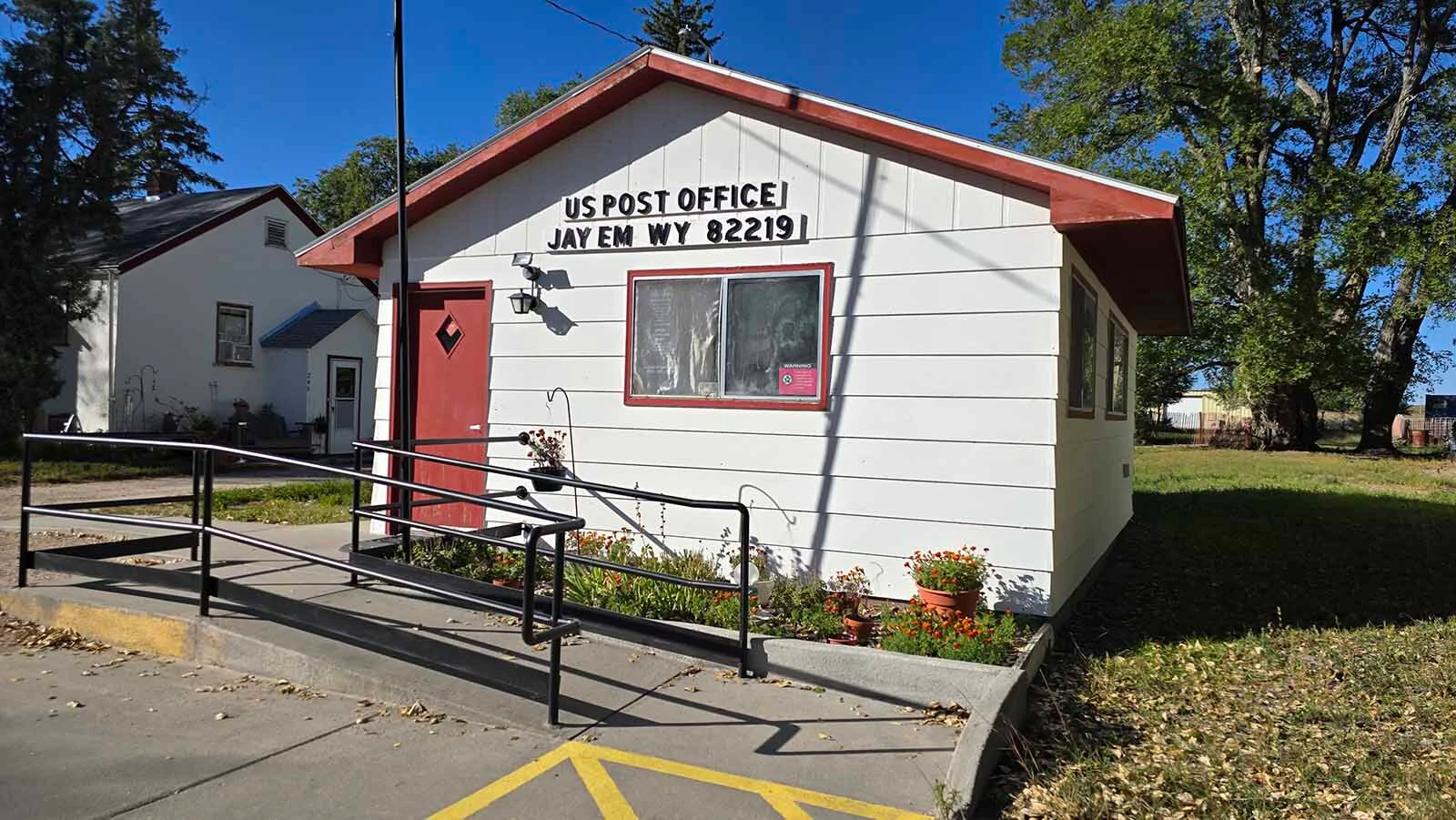
The historic Jay Em Post Office is still open. (Renee Jean, Cowboy State Daily) 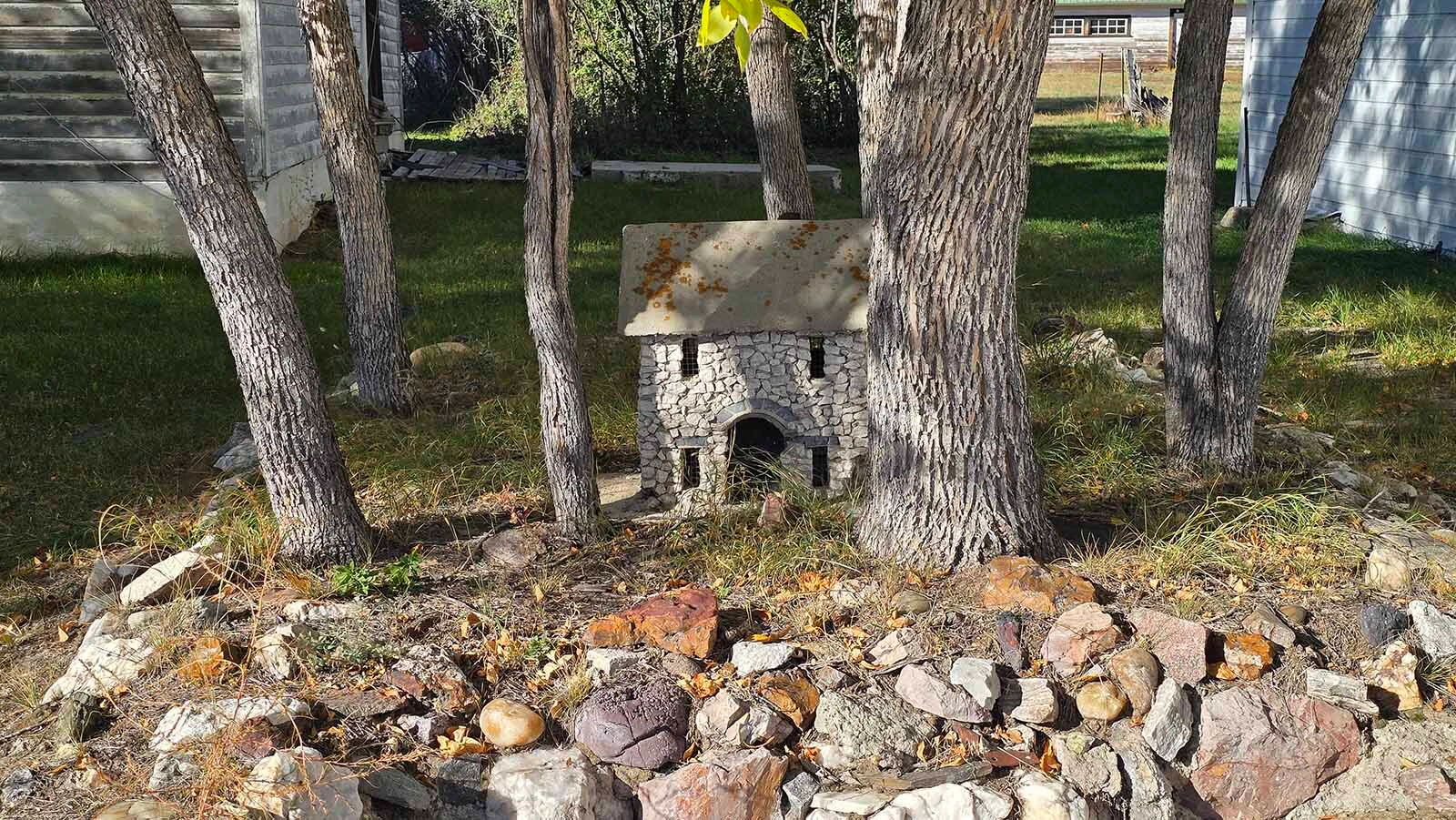
A tiny little house in a ring of trees in Jay Em. (Renee Jean, Cowboy State Daily) 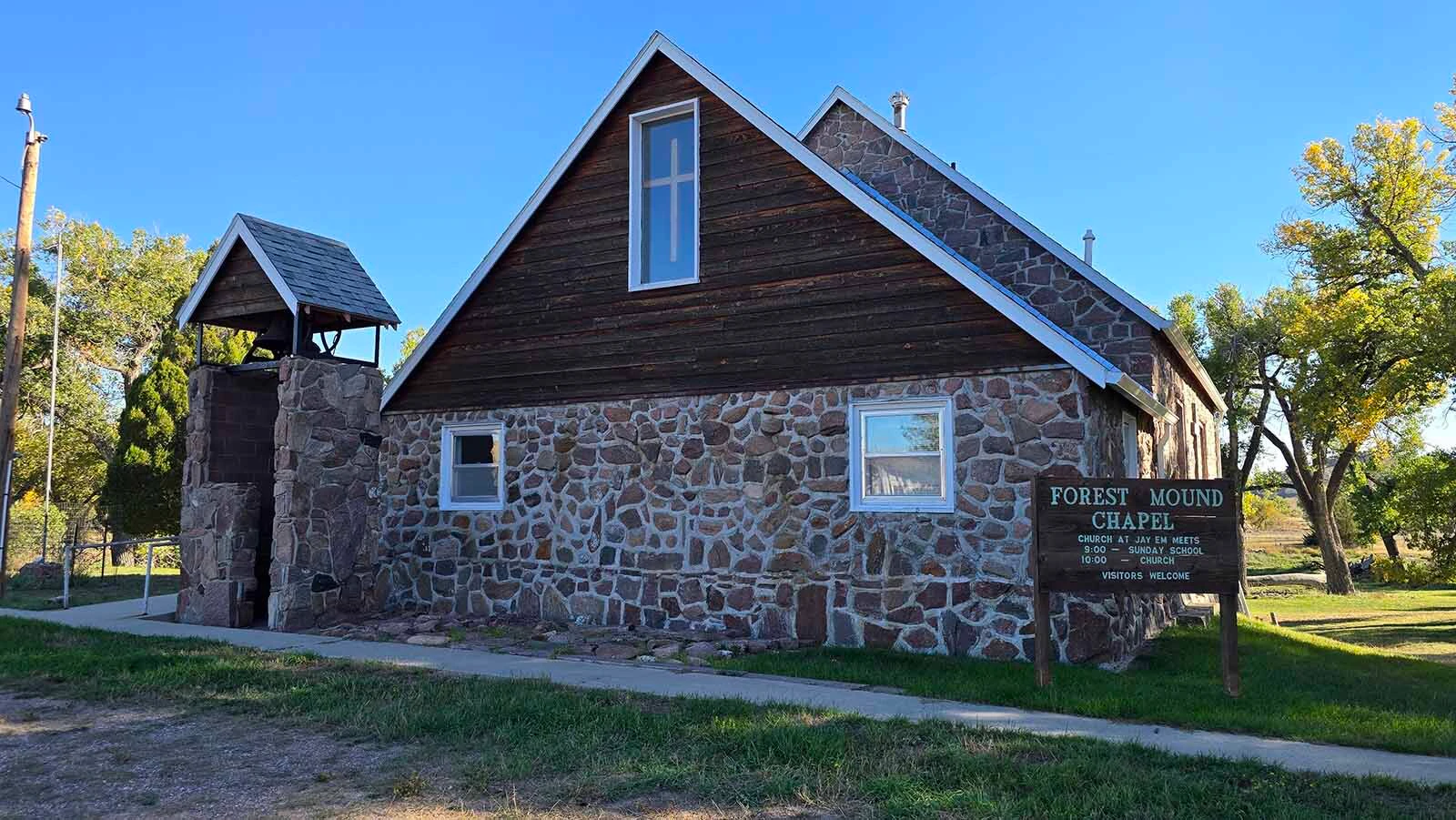
The nondenominational Forest Mound Chapel is still in use in Jay Em. (Renee Jean, Cowboy State Daily) 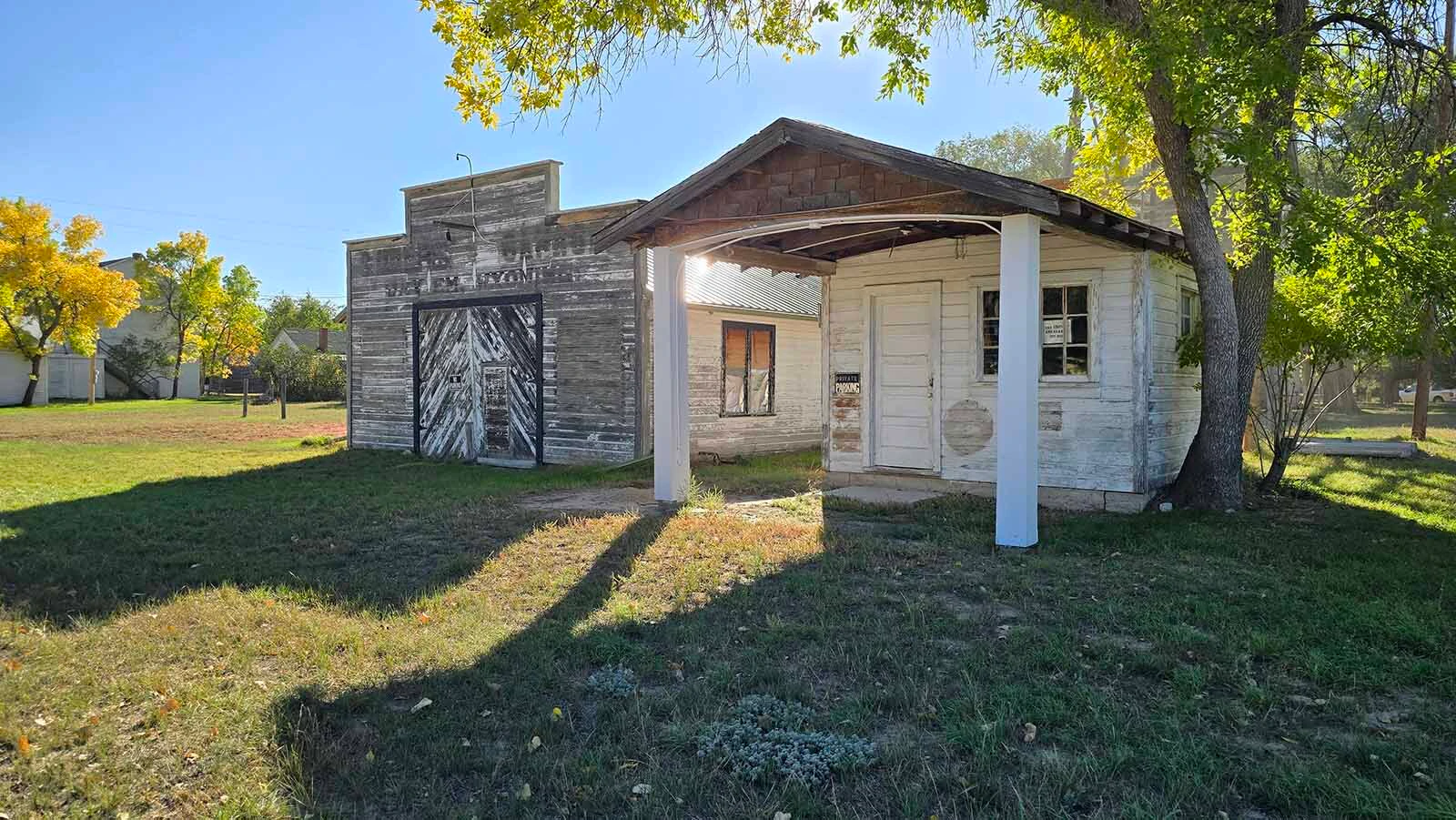
The gas station and garage at Jay Em is no longer open. They're among buildings that are being preserved by descendants of the town's founder. (Renee Jean, Cowboy State Daily)
Held At Fingerpoint
Jay Em’s bank missed the 1933 presidential shutdown order, then survived an attempted burglary, stopped by a man who didn’t actually have a gun.
When President Franklin D. Roosevelt ordered the nationwide bank “holiday” in March 1933, remote Jay Em never got the message, Van Gorder said.
The family still has a letter from Roosevelt addressing the oversight, she added. As she understands it, the bank wasn’t considered to have deliberately defied the order because it hadn’t received proper notification.
The bank burglary was two years after the shutdown order, in 1935.
“My great-grandfather had seen a flash of light up by the bank from his home, so he went to investigate,” Van Gorder said. “And his wife went to get help, because in those days not everyone had phones so you couldn’t just pick up a phone and call.”
Harris, who was unarmed, went behind the bank where he saw a bank robber sneaking out.
“So, he stuck his finger in the man’s back and told him to put up his hands,” Van Gorder said with a chuckle. “And it worked. I mean this is like a movie, but it’s all true. It really happened.”
Harris held the man like that until help finally came. Then the burglar was taken to the hardware store and tied up to await the sheriff.
“You can still see to this day where the bank robbers tried to blow open the safe,” Van Gorder added. “But they were unsuccessful.”
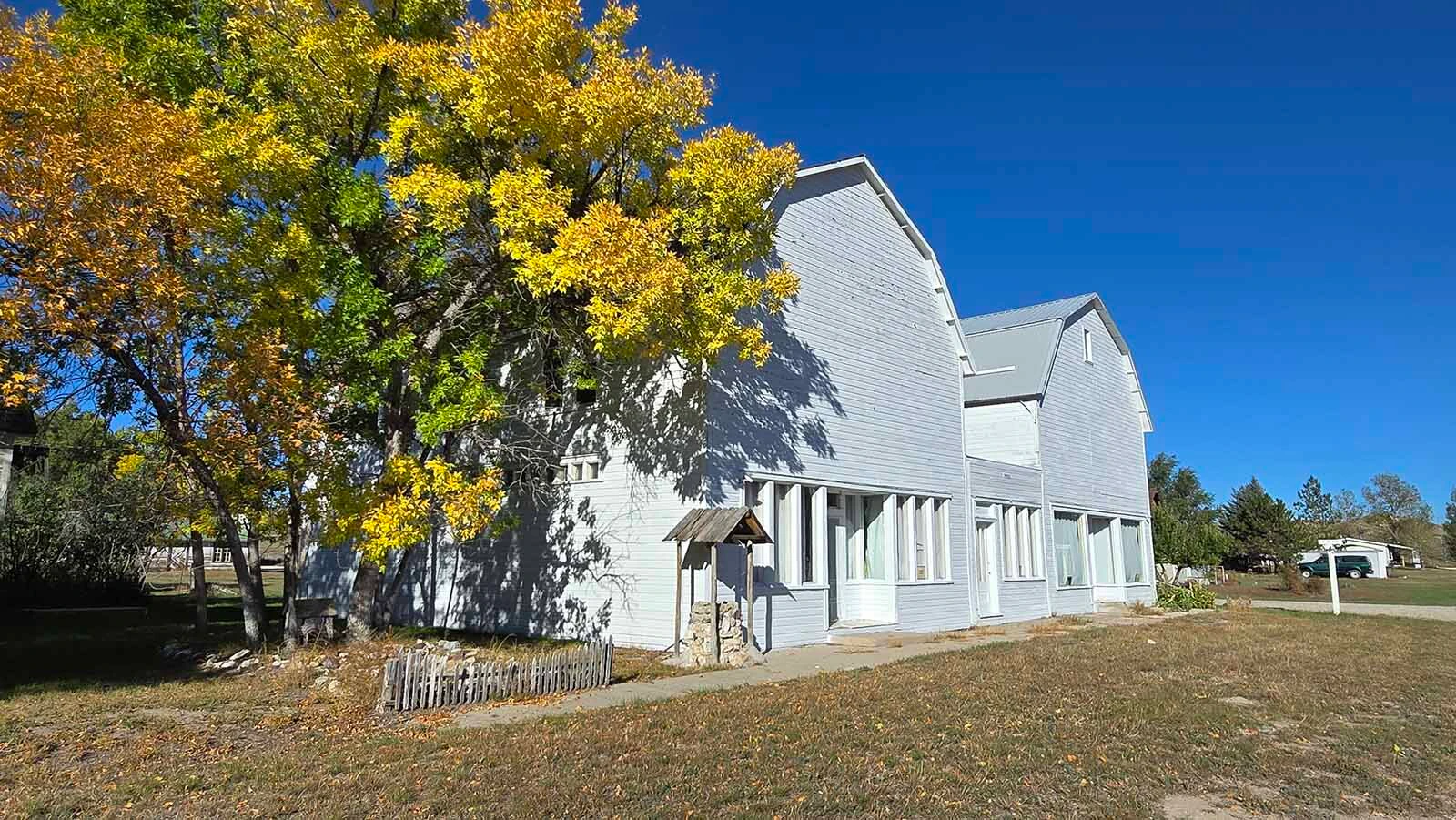
These barn-like structures housed the hardware store in Jay Em. (Renee Jean, Cowboy State Daily) 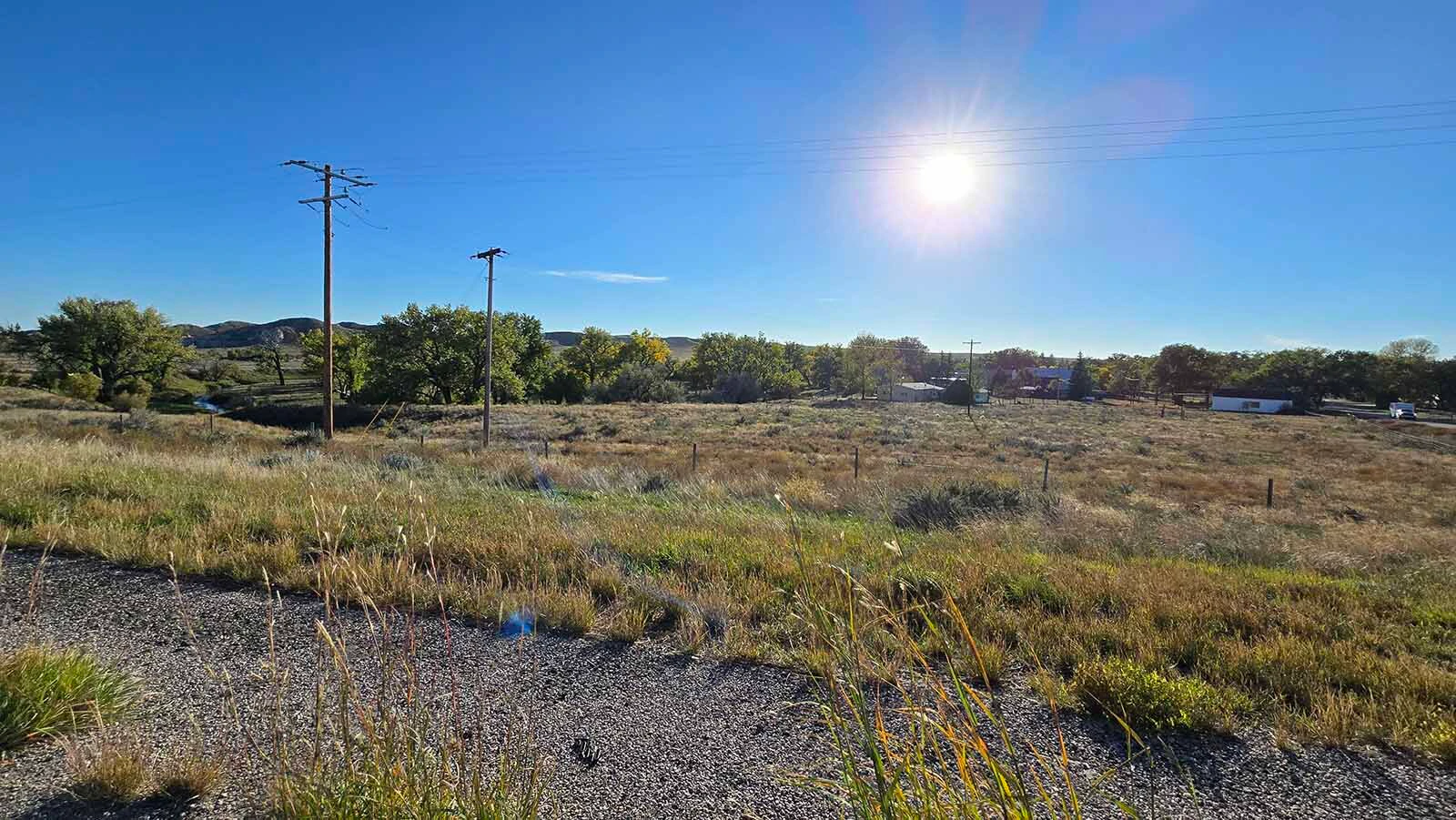
The sun sets on Jay Em, a tiny town along U.S. 85. (Renee Jean, Cowboy State Daily) 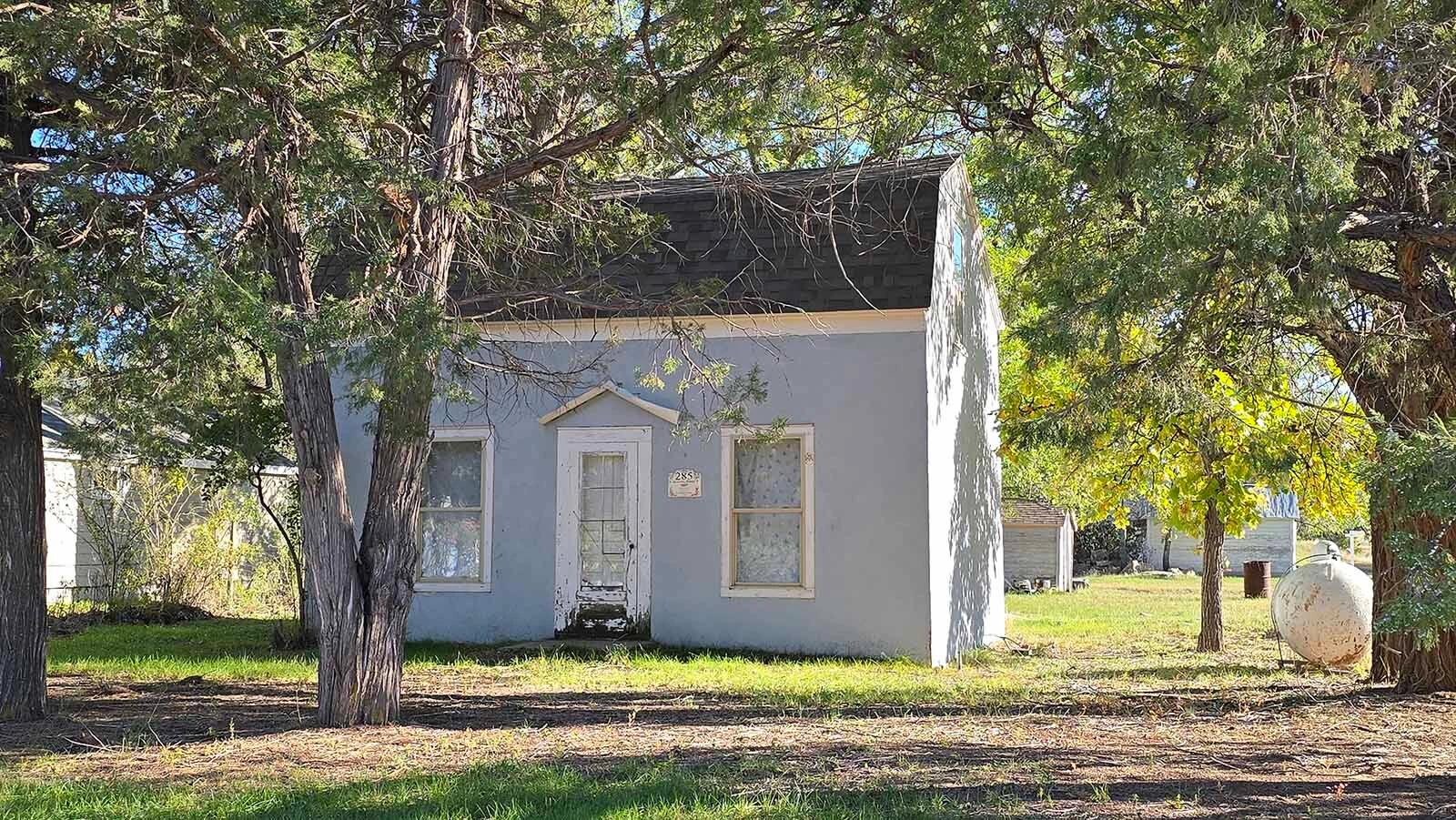
One of the homes in Jay Em, which has a population of roughly 15. (Renee Jean, Cowboy State Daily) 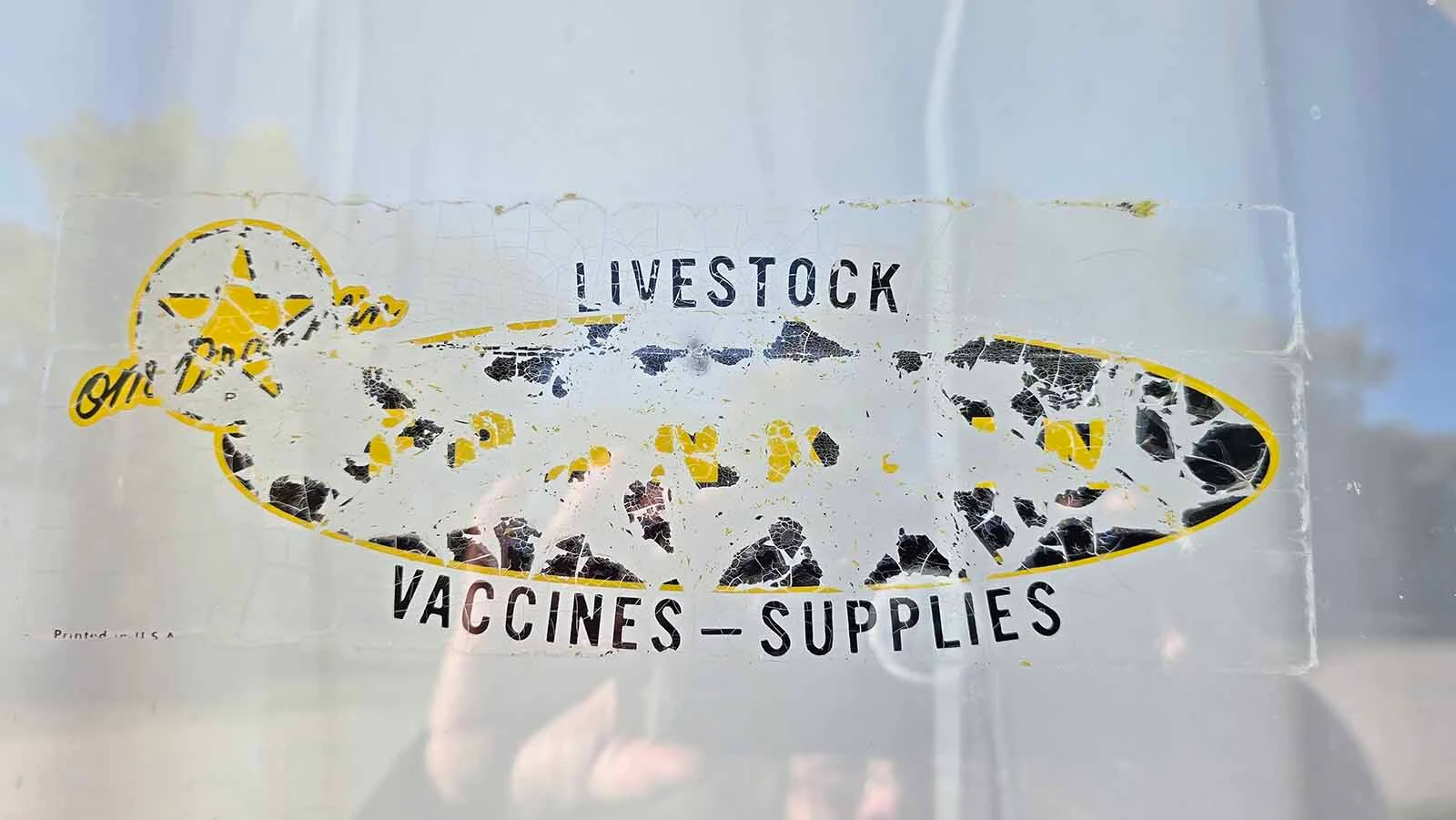
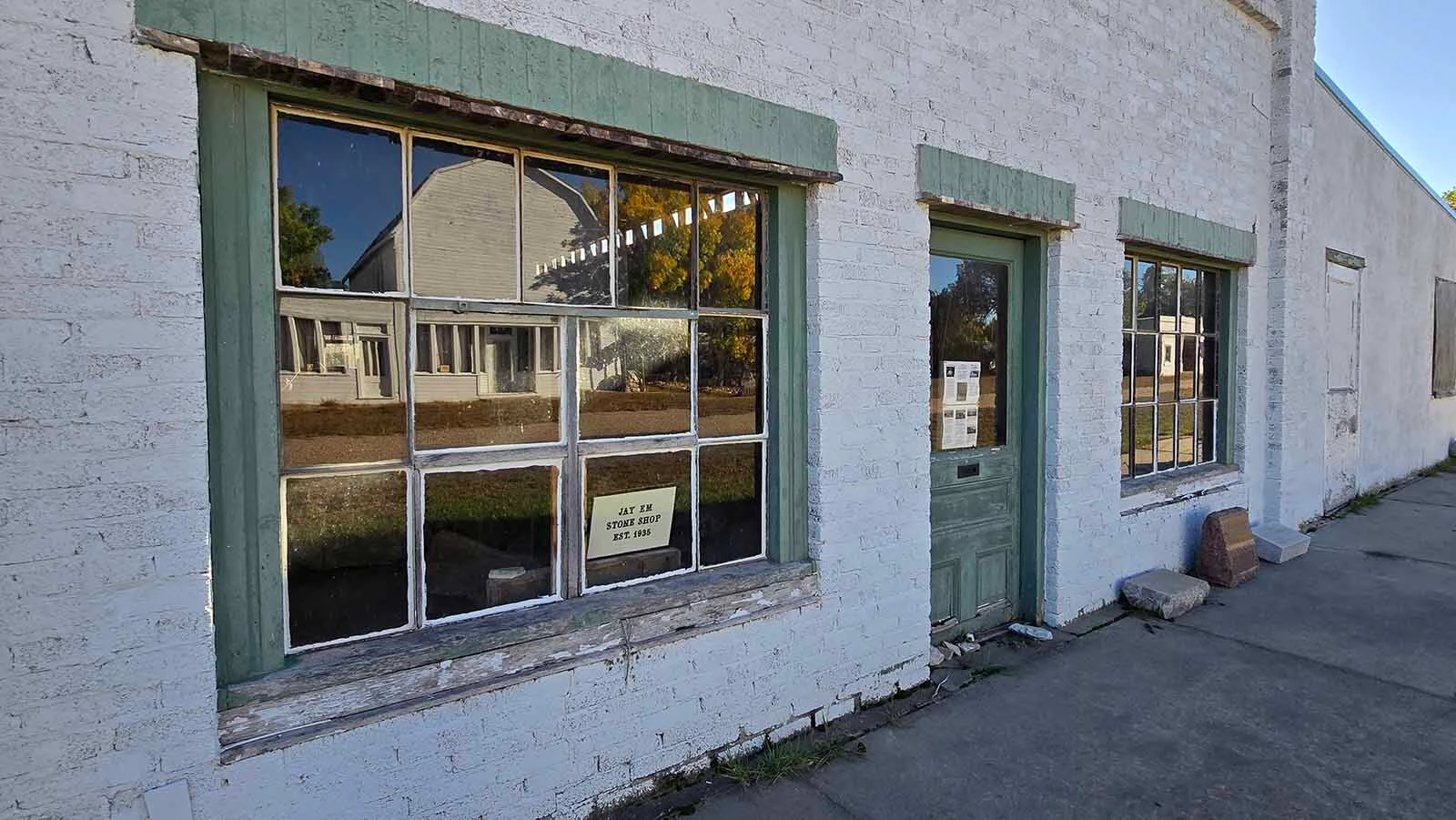
Some of Jay Em's stores still have their old business signs on the windows. (Renee Jean, Cowboy State Daily)
As If He’d Just Left
It might be hard to imagine such a life in the quiet streets of Jay Em today. There’s no storekeeper running from building to building, or burglars trying to blow up the bank.
The sounds of Jay Em today are wind whistling through the prairie and the dense cottonwood trees. Gravel crunches underneath each step along Main Street.
Still, peer into some of the windows, and a surprising tableau awaits.
“Each of the buildings actually has many of the original things,” Van Gorder said. “I always say that it’s almost like Grandpa turned out the lights, locked the door and said, ‘OK, I’m done.’”
Giant blocks of stone still lie on the floor of the stone-cutting garage, as if tomorrow someone might turn on the lights and take up their work once again.
Some of the stones Harris cut in that garage became fireplace mantels in the Wyoming governor’s mansion and the state Capitol, Van Gorder said.
“They’re still in the Capitol,” she said. “That’s a really cool thing that happened, and those stones were hand-picked.”
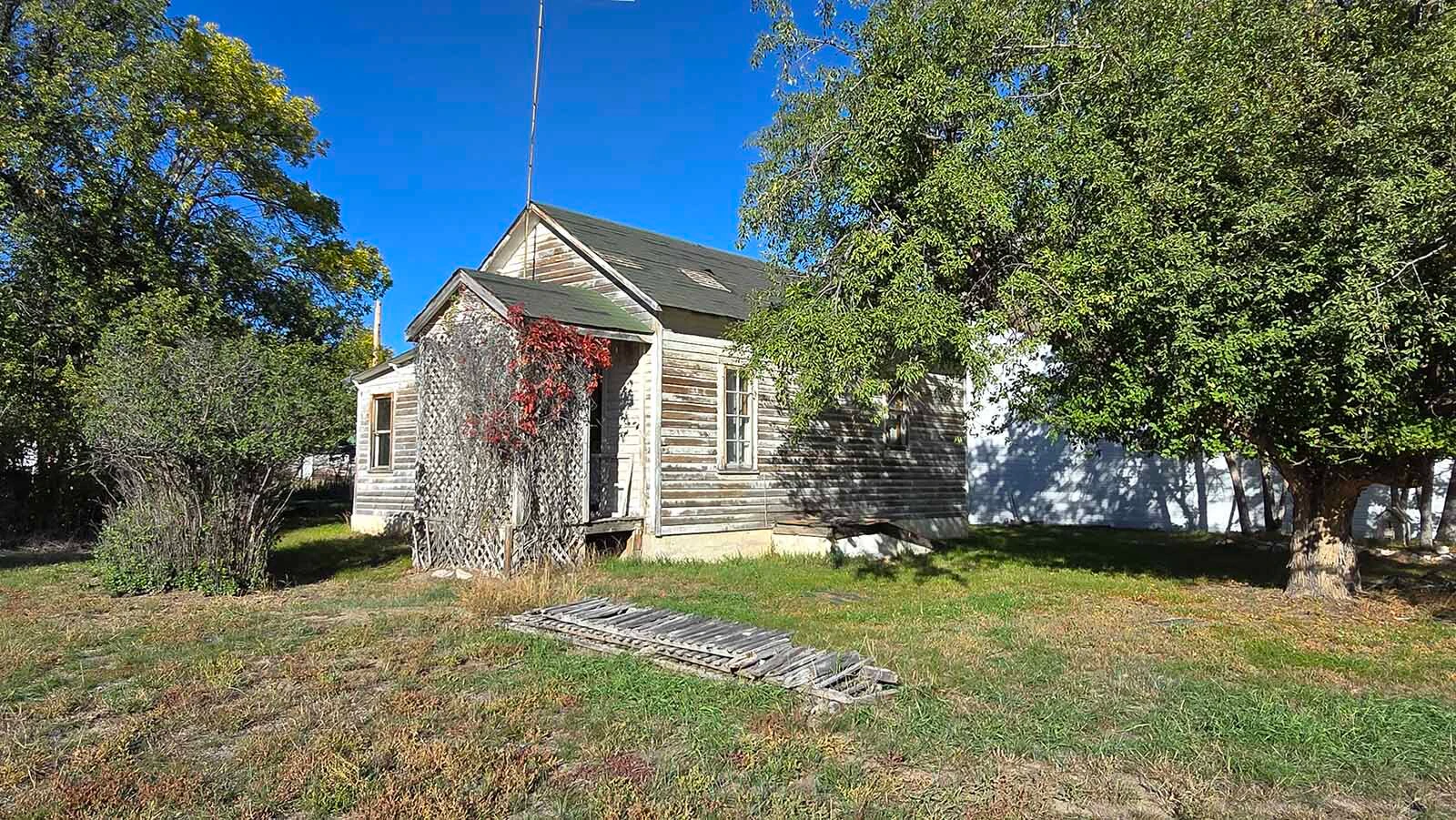
The Porter's house in Jay Em. (Renee Jean, Cowboy State Daily) 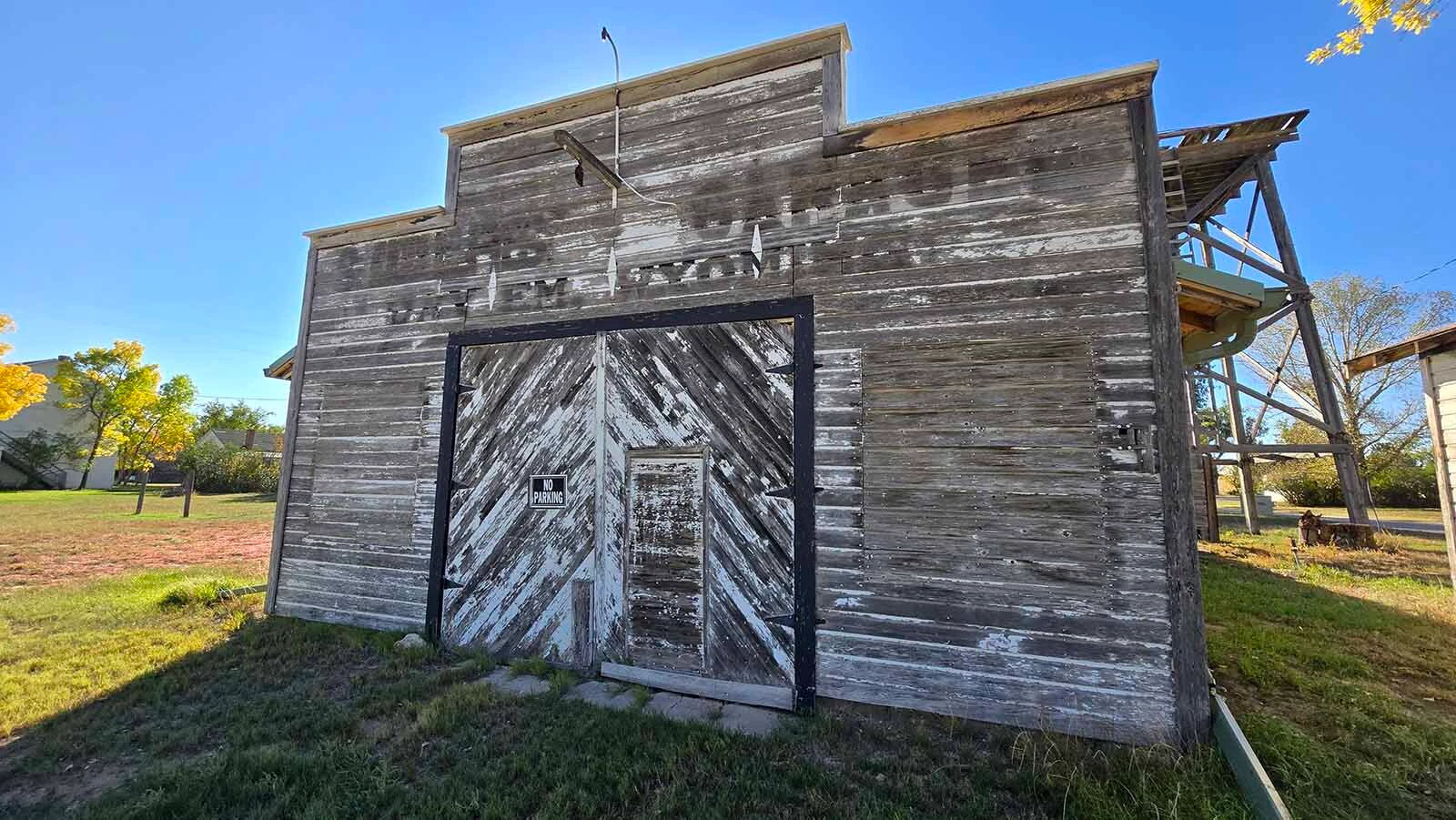
The garage in Jay Em is among buildings that still stand. (Renee Jean, Cowboy State Daily) 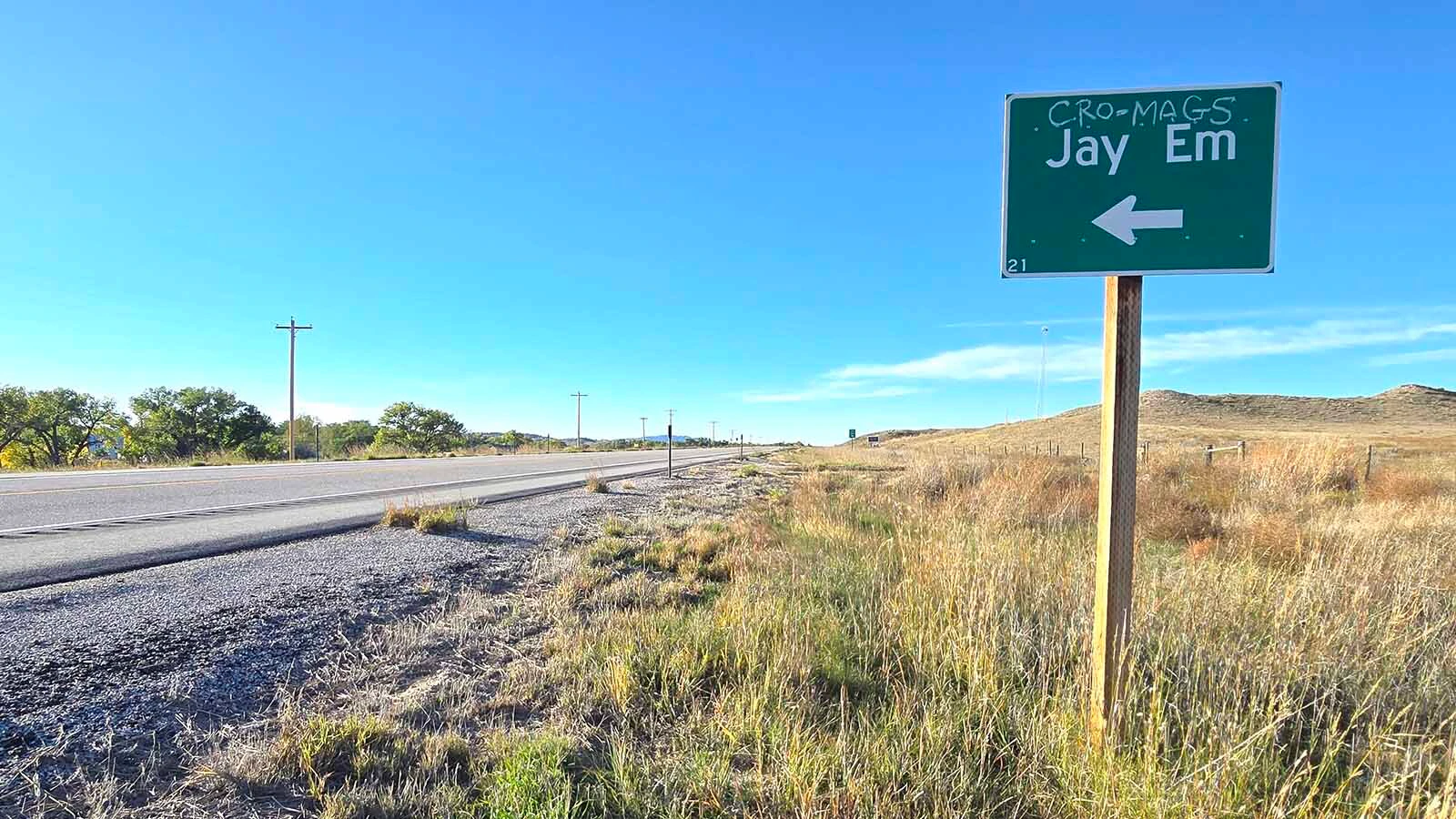
A sign points the way to historic Jay Em, which gives tours every summer. (Renee Jean, Cowboy State Daily) 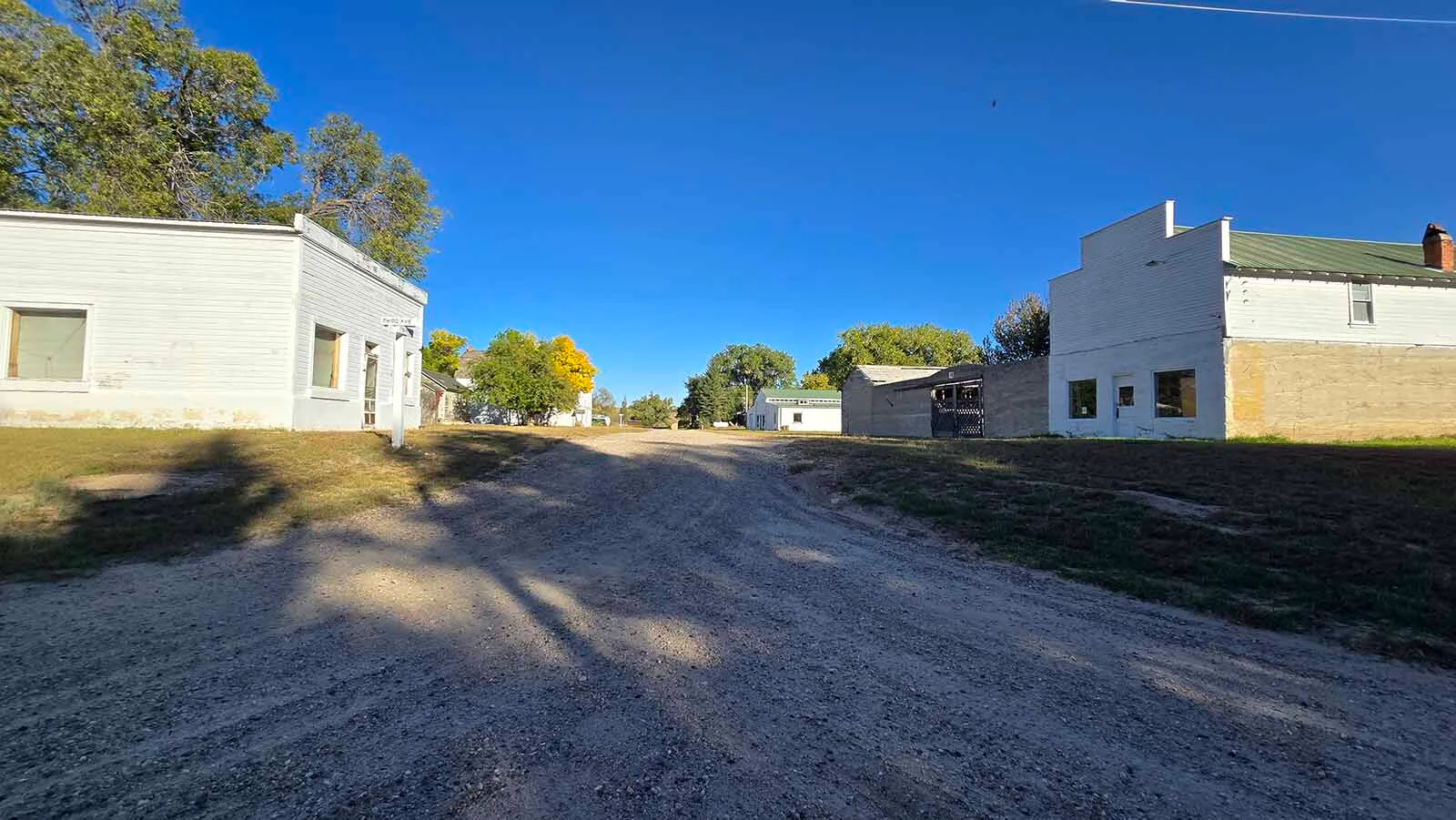
Shadows gather as the sun sets on the Main Street in Jay Em. (Renee Jean, Cowboy State Daily)
Keeping Grandpa’s Town Standing
Preserving these frozen moments of time isn’t the work of a state agency or a heavily funded museum system. It’s a grassroots effort carried forward by Harris’ descendants.
Van Gorder credits her mother, Hazel Mudgett, and her aunt, Marjorie Sanborn, with much of the early preservation work. Both lived in Jay Em as children and knew its founder not as a figure from Wyoming history, but as their grandfather.
“They didn’t want to see it crumble,” Van Gorder said.
So, they replaced cracked window glass. They painted buildings. They made repairs. And then came back to make some more.
Eventually, other relatives joined them, along with civic groups, ranchers, and even some of the remaining townspeople.
The family began holding work weekends a couple of times a year, choosing projects and dividing up the work.
Van Gorder’s own interest picked up after college, in the late 1980s. There were questions she wanted to ask, stories she wanted to understand and a family legacy she wanted to help preserve.
In 2010, she and some of her cousins established Historic Jay Em on the Rawhide, a nonprofit focused on preserving the buildings and sharing the town’s history. It works alongside the family business, which handles pasture leases and other land matters.
Keeping old buildings standing takes more than affection, though. The nonprofit searches for grants and volunteers and welcomes people with skills or ideas that might help.
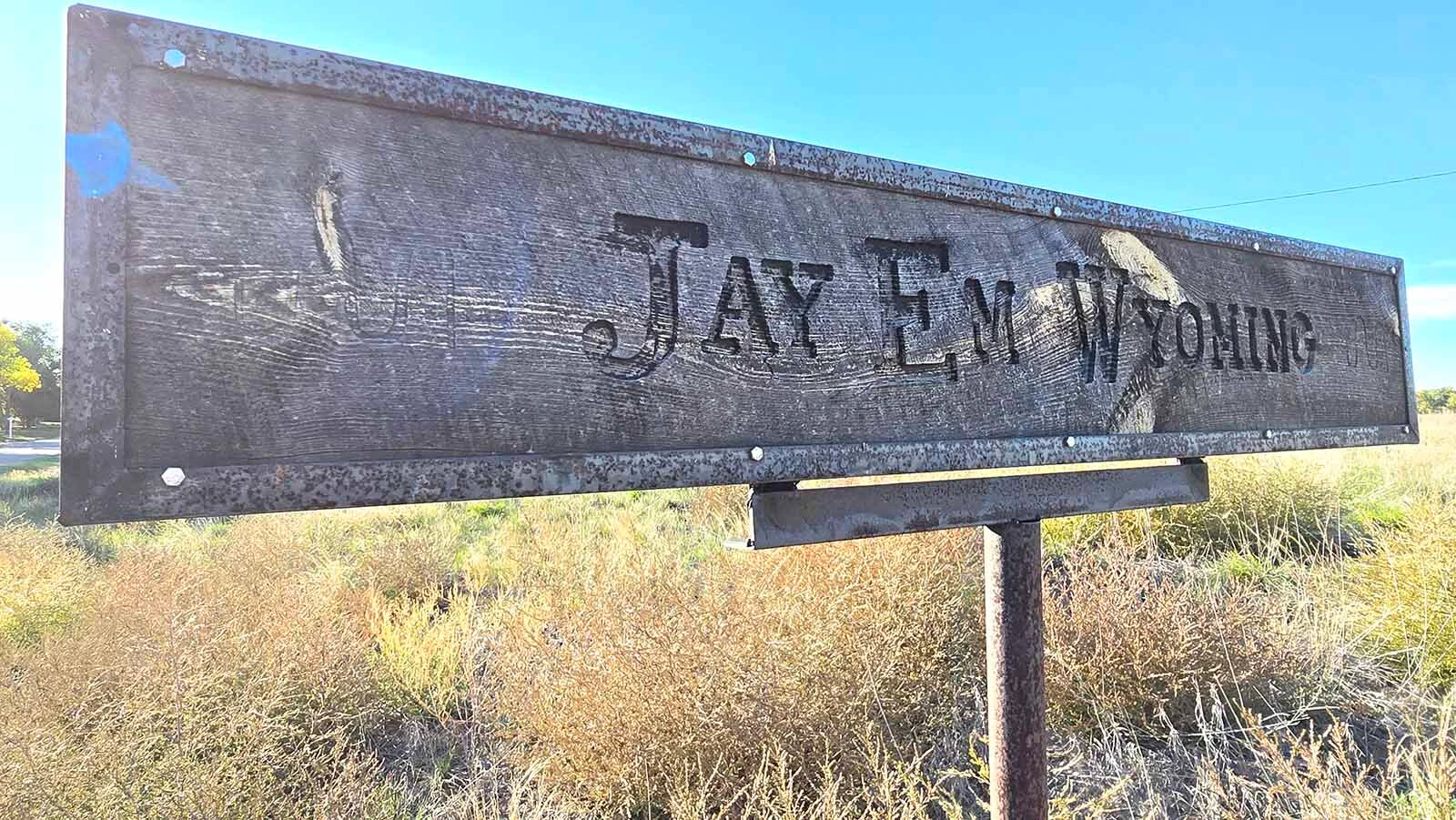
Still A Gathering Place
Van Gorder doesn’t point to a single catastrophe that ended Jay Em’s busy years. It was just the slow march of time and progress.
Better transportation meant people could shop in larger towns, where there was better selection — including alcohol.
Harris, meanwhile, grew older and retired.
The lack of a high school eventually pulled his own family away. When the oldest of Van Gorder’s aunts approached high school age, her family moved to Glendo and started a business there, rather than send their children so far away to school.
But a quieter town doesn’t mean an abandoned one.
About 15 people still choose to live there, Van Gorder said, and are just as protective of the town as she and her family. Harris’ descendants also still gather in Jay Em every summer, using Harris’ old home as a private family place.
The family's nonprofit offers tours of the historic buildings, generally in the summer and early fall, though other visits can be arranged by appointment. The family loves to hear from people who once lived in Jay Em and have stories to add to their collection.
For Van Gorder, the buildings offer much more than memories.
“It’s our family legacy,” she said. “It was so important to my great-grandfather. He was building it for a very specific purpose. And it was so important to that area, and it has such a unique place in Wyoming history. It’s worthy of saving.”
Renée Jean can be reached at renee@cowboystatedaily.com.


