
What began with backing from America’s richest man at the turn of the past century now constitutes a gem of history at the University of Wyoming’s American Heritage Center.
The Center’s Toppan Rare Books Library is one of the few places in the nation one can access the complete set of Edward Sheriff Curtis’ “The North American Indian”, which includes the history of 100 native nations and tribes in 20 volumes along with 2,234 photos that came with the project.
Capitalist and banker J. P. Morgan initially put up cash to allow the project to move forward. Just 272 sets of the volumes were produced.
“It is very unique that we have a complete set,” said Mary Elizabeth Brown, UW library curator. “People don’t know how cool they are.”
Brown said mostly visual arts classes are accessing the volumes to get a handle on Curtis’ photographic technique and discuss his ethics. Academic and private researchers also have used the books.
The large nearly 5-pound leather bound books represent the work of Curtis and a team of colleagues who spent more than 25 years visiting Native American tribes and investigating and documenting their cultures.
Curtis, a photographer based in Seattle, came to his historian and documentarian roles through a series of circumstances.
Curtis Legacy Foundation President John Graybill, of Buena Vista, Colorado, the great-grandson of Curtis, launched a nonprofit to maintain and advance Curtis’ legacy. He said his great-grandfather started his photography career in Seattle after a logging accident.
“He becomes this amazing photographer and he gets incredibly bored with the repetitive portrait business,” Graybill said. “He ventures out to Mount Rainier, which he did a considerable amount of work on , and then starting in the shoreline around Seattle, taking pictures of Natives there.”
Curtis’ earliest Native photographs happened around 1895, he said.
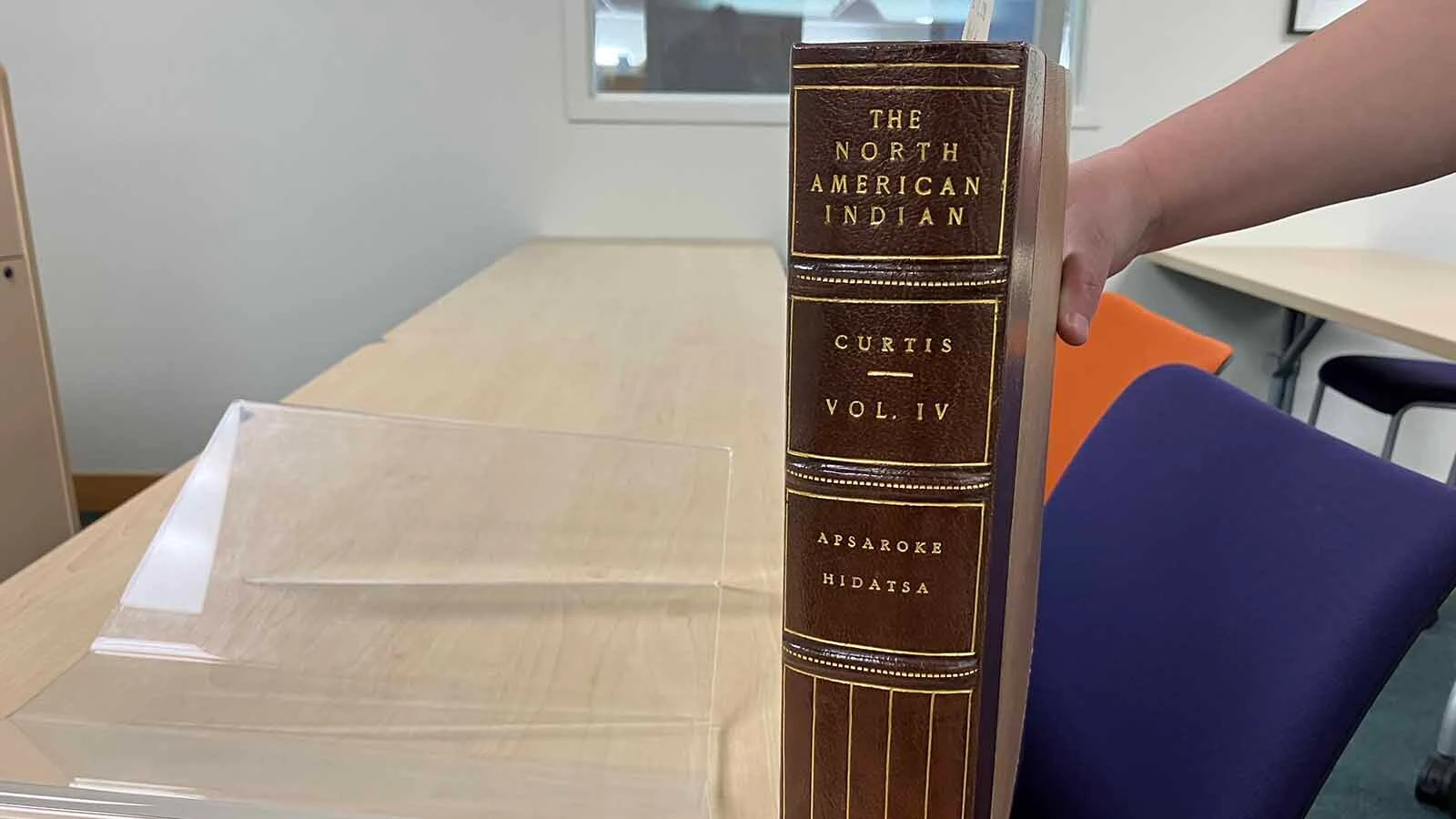
“The North American Indian” books are a big, heavy volumes that are bound in leather. (Dale Killingbeck, Cowboy State Daily) 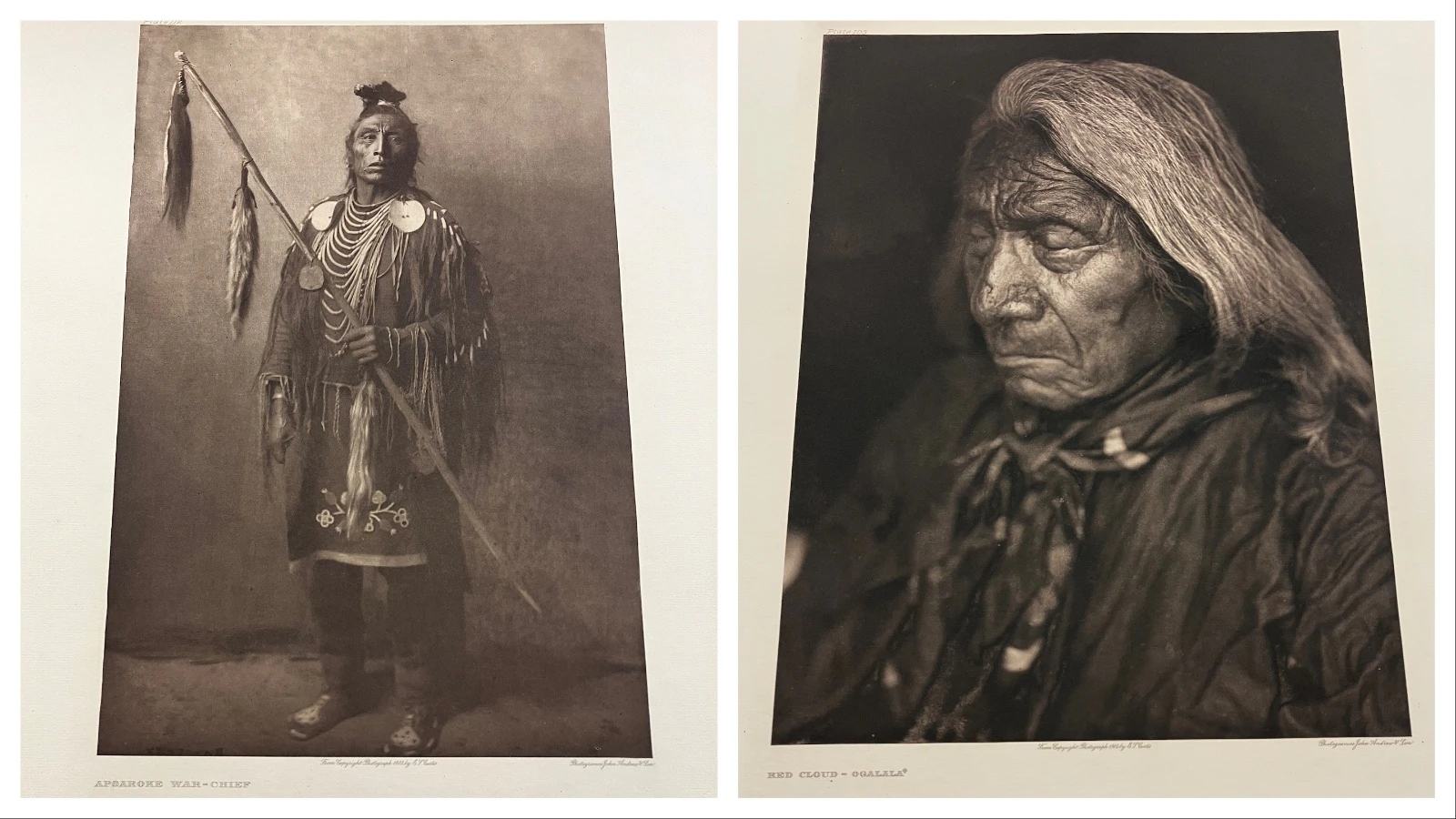
Edward Curtis wanted to capture Native Americans and their culture before it was gone. Right, legendary Chief Red Cloud was one of Curtis’ subjects. (Cowboy State Daily Staff) 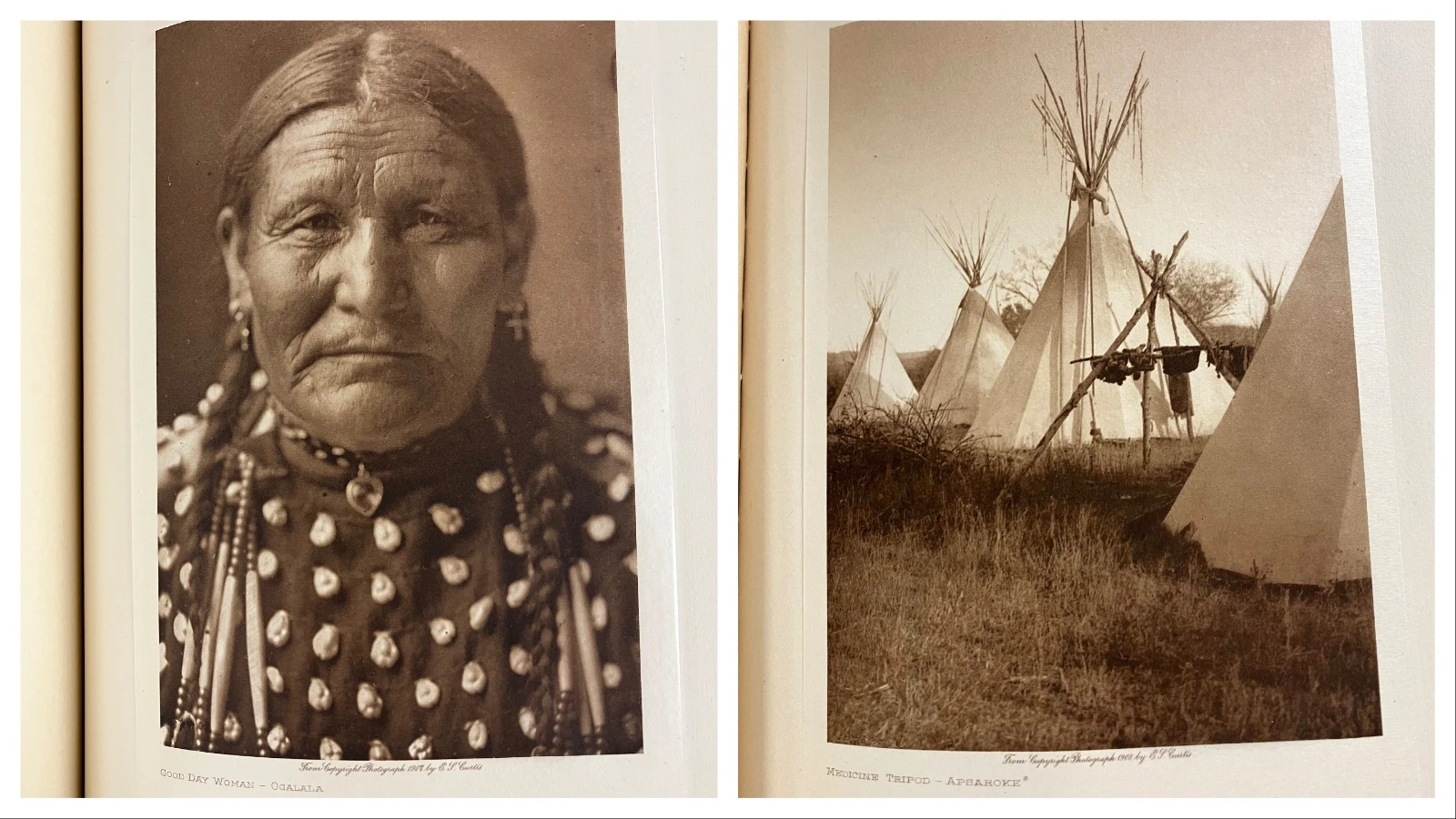
Left, an Oglala woman photographed by Edward Curtis. Right, he also captured the ways of life of Indian tribes. (Cowboy State Daily Staff)
Chance Meeting
A chance meeting of scientists lost in fog on Mount Rainier, where Curtis guided them to safety, resulted in friendships and later an invitation to accompany an expedition to Alaska. That trip was led by financier and railroad magnate Edward Henry Harriman.
On the expedition, Curtis became friends with naturalist George Bird Grinnell, the editor of Field and Stream, and founder of the National Audobon Society as well as ranch owner in Wyoming’s Shirley Basin.
Grinnell also studied Native American Life and published books on natives.
Graybill said his ancestor wrote that he launched his project to photograph Native Americans in 1898 with the Blackfeet tribes. He financed his trips with his own money and went into debt.
The trip to Alaska gave Curtis the opportunity to photograph Alaskan tribes.
Those connections on the Alaska expedition led to an introduction to President Theodore Roosevelt, photographs of Roosevelt’s family, and then a Curtis gamble on a gallery show of his Native American photos in New York City.
The payoff came when he obtained a meeting with Morgan, the richest man in the country.
Curtis then pitched a plan to produce a 20-volume set sold by subscription that would chronicle North American Native culture before it was gone.
Morgan agreed to invest in the project but demanded the books be published on high-quality paper and that Morgan get 25 volumes of the set, 300 large original photos and 200 small photos.
Morgan agreed to give Curtis $15,000 each year for five years for his expenses, but not for a salary.
A subscription for the set was $3,000 for the standard set and $3,750 for the deluxe set — or more than $111,000 in 2026 money.
“The bulk of the money came from Morgan, but he had a lot of money that that came from other sources as well,” Graybill said. “He never took a penny for himself. Everything that came in went to the project, and he dies penniless because of it.”
The three-decade project came out with its first volume in 1907 and last one in 1930.
When Morgan died in 1913, his son, Jack, told Curtis he would still fund the project but the Morgans wanted their money and interest. Jack Morgan asked for all the copyrights to the volumes before the project was complete.
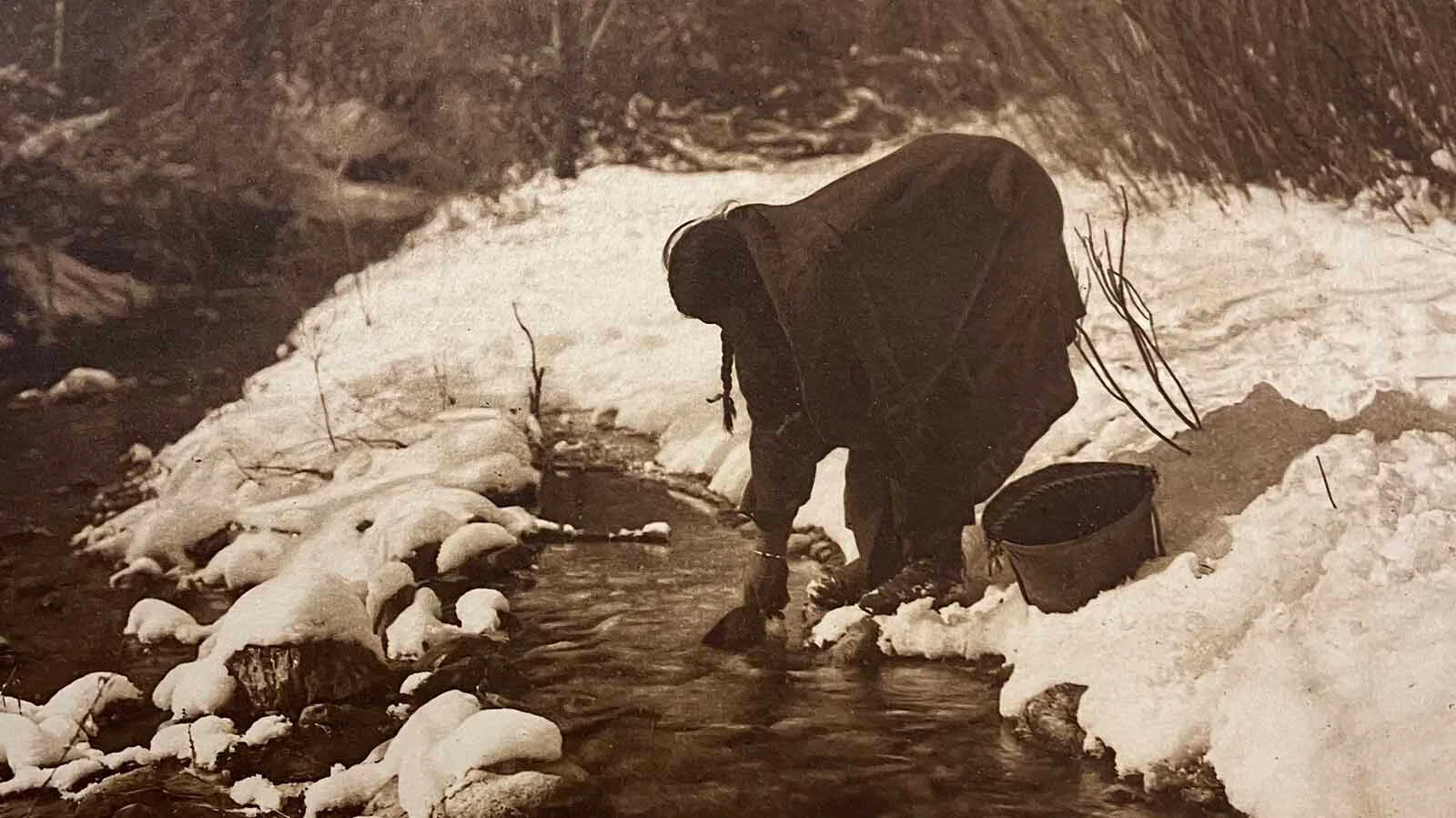
Edward Curtis spent a lot of time with tribes trying to capture their daily rituals. (Cowboy State Daily Staff) 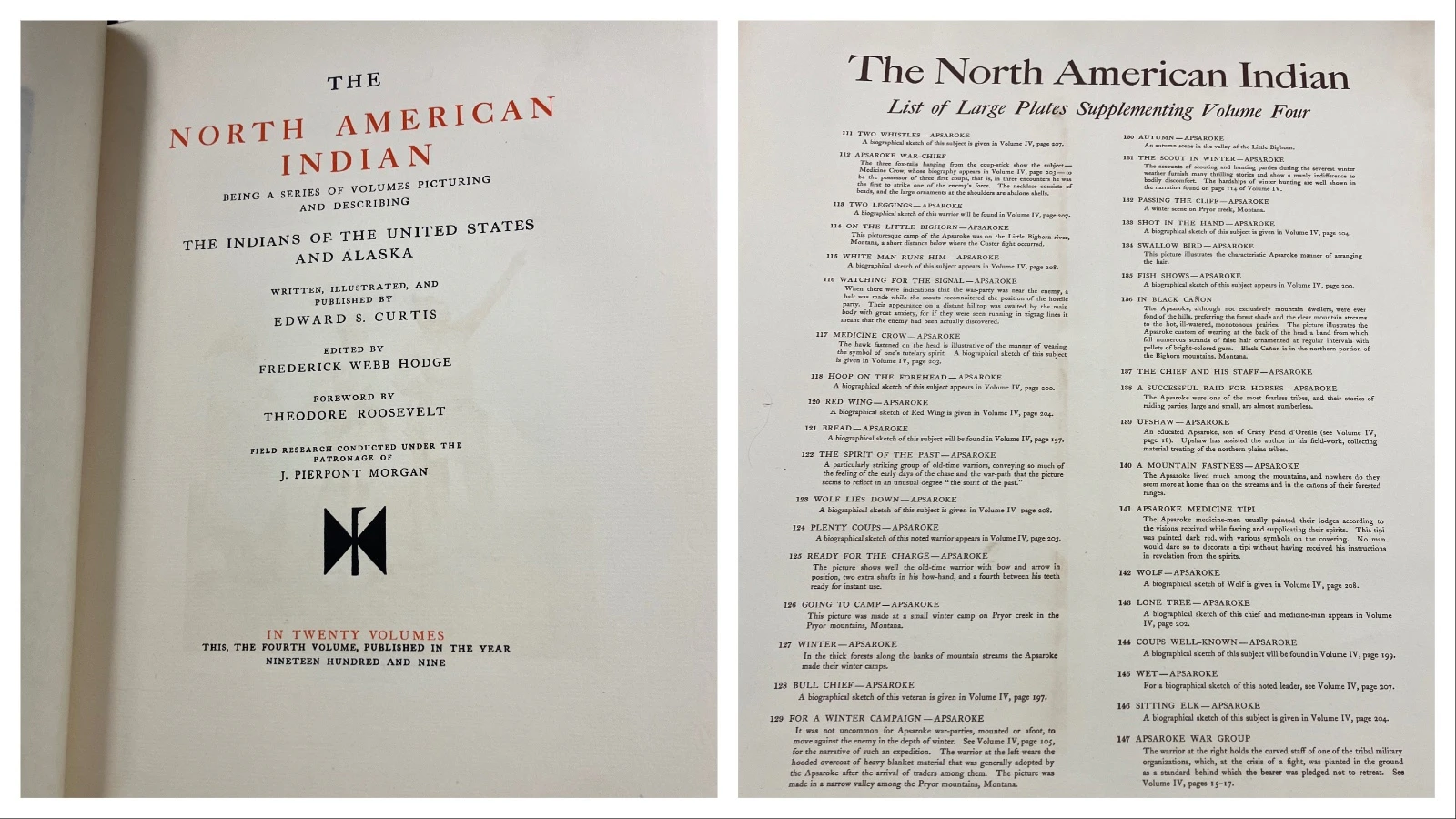
Right, A content sheet that accompanies photos with each volume of "The North American Indian" in the archives at the American Heritage Center at the University of Wyoming. (Cowboy State Daily Staff) 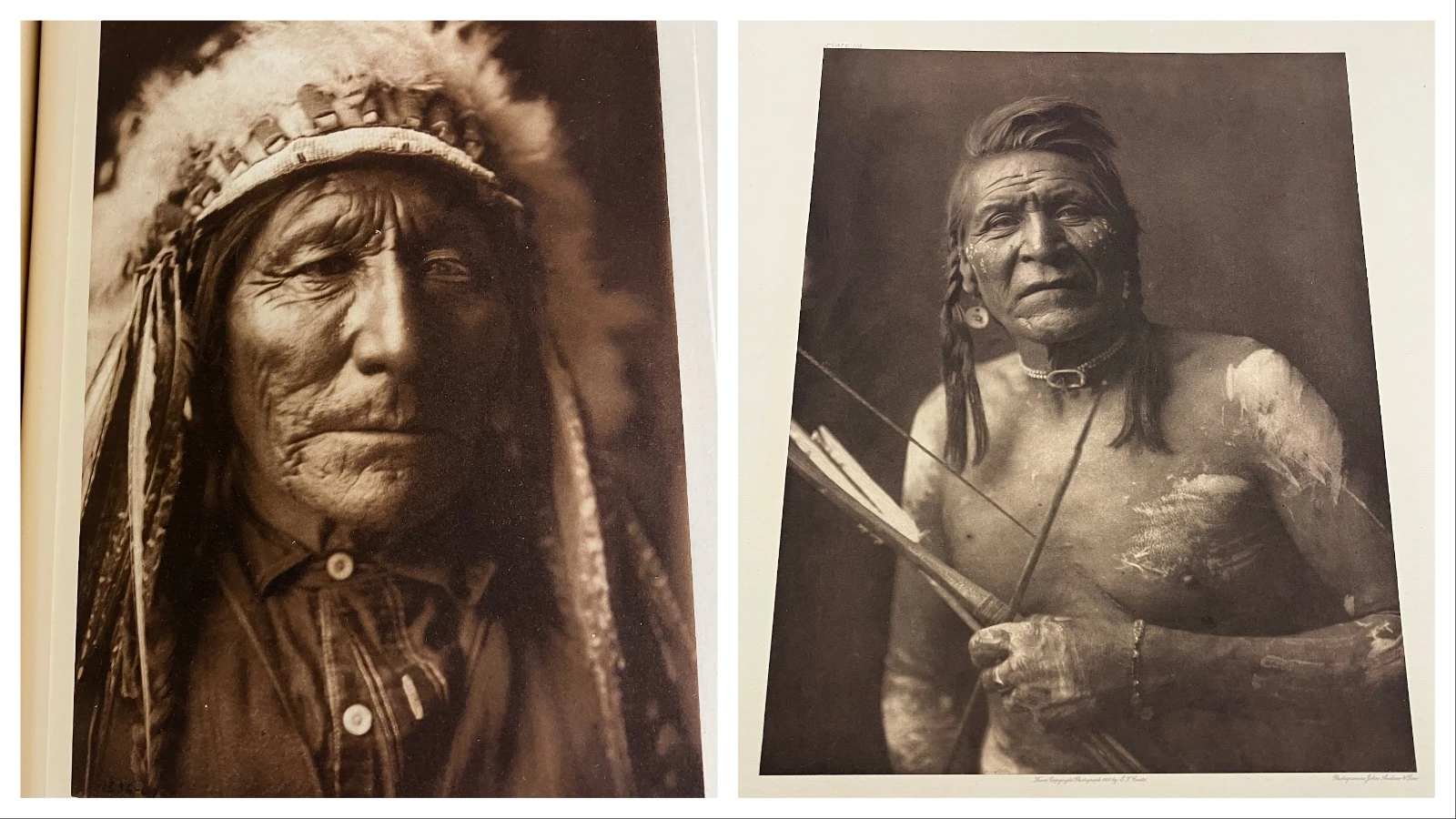
Returned Scout, left, was one of Edward Curtis’ subjects, as was Two Leggings, right. (Cowboy State Daily Staff)
Preservation Effort
Graybill, and his wife, Colleen, the foundation’s executive director, said Curtis' struggle with finances carried on through the project and cost him his marriage. But Curtis gave himself up to getting 20 volumes completed.
“When you go through these, you’ll see he documents their life ways, everything they can share, their marriage ceremonies, their government, their games, how they harvest food, and just everything that they do,” John Graybill said.
Colleen Graybill said Curtis also focused on their spirituality and ceremonies. In addition to photography, he used film and obtained recordings on wax cylinders of their singing.
Graybill, a photographer himself, said his great-grandfather’s technique for the images he captured involved the photogravure process.
“Back in the day they used copper plates that had been sensitized,” he said. “He would take his negative from the field and his darkroom people would make a larger one for whatever size they wanted the final output to be.”
The process involved making a contact print onto the copper plate, hand inking the plate, and manipulating shadows and highlights by rubbing it.
Paper would be dampened to received the plate and blankets would go on the top and bottom of the plate and paper. The plate, paper and blankets would be squeezed at 10,000 psi.
“That ink is actually pressed into the fibers of the paper,” Graybill said. “So, incredible archivability.”
But also labor intensive and expensive.
John Graybill said as the Great Depression approached in 1929 the plan for 500 sets of “The North American Indian” faded.
Only 272 were produced. Morgan ended up selling unbound copies and the remaining 50 sets of material that were unbound to a Boston book store owner.
“As far as valuation goes, it varies widely,” John Graybill said. “But I think if you were to look at a pristine set issue without any stamps or other markings on it, they’ve gone as high as $3 million for a set.”
Brown said the university does not discuss the value of objects in its book collection.
The books were donated in 1981 by a “Mrs. Frederick Davis”, who at the time donated the set and its folios anonymously. Her name was released a few decades later.
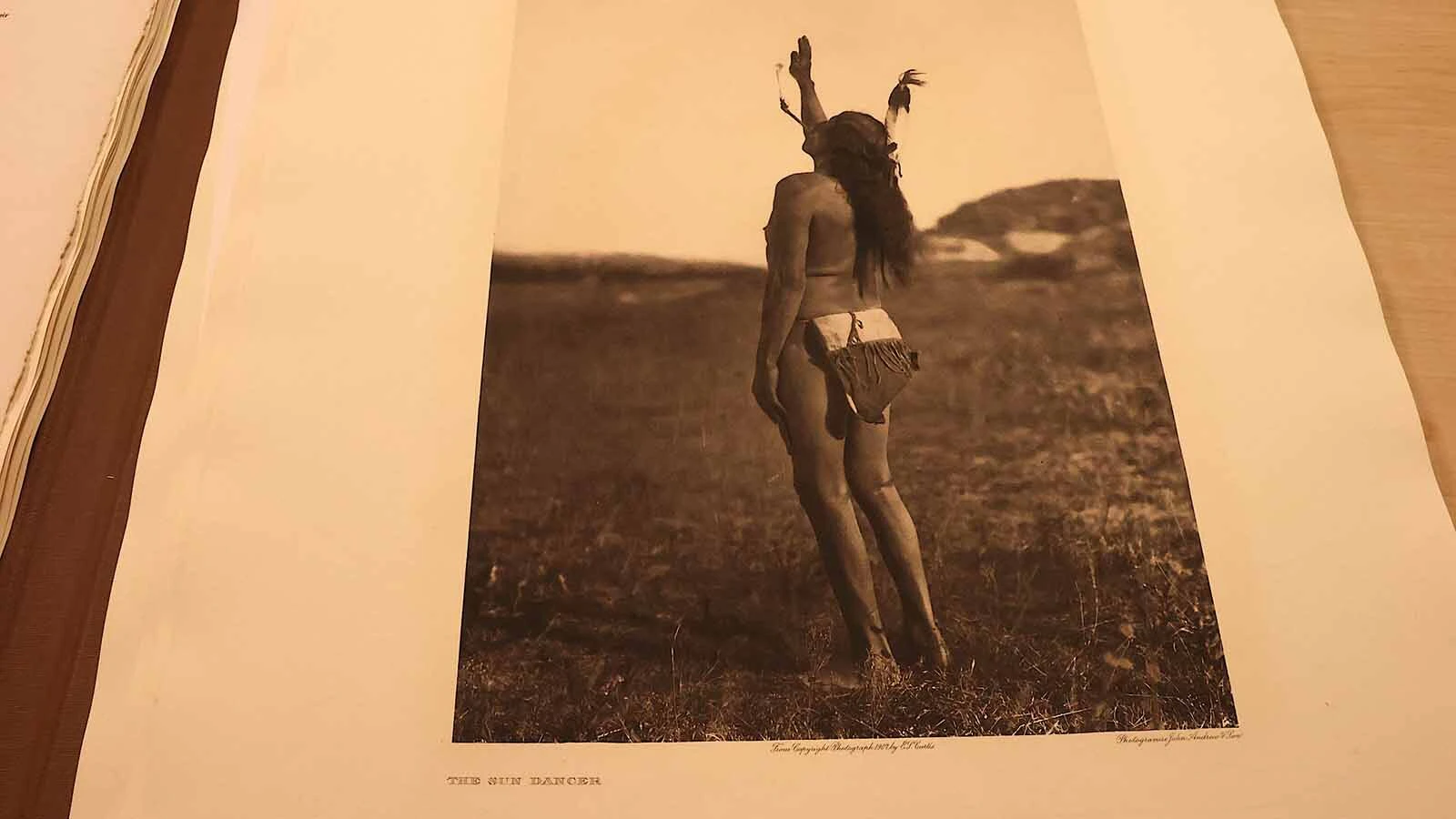
A warrior performs the sun dance. (Cowboy State Daily Staff) 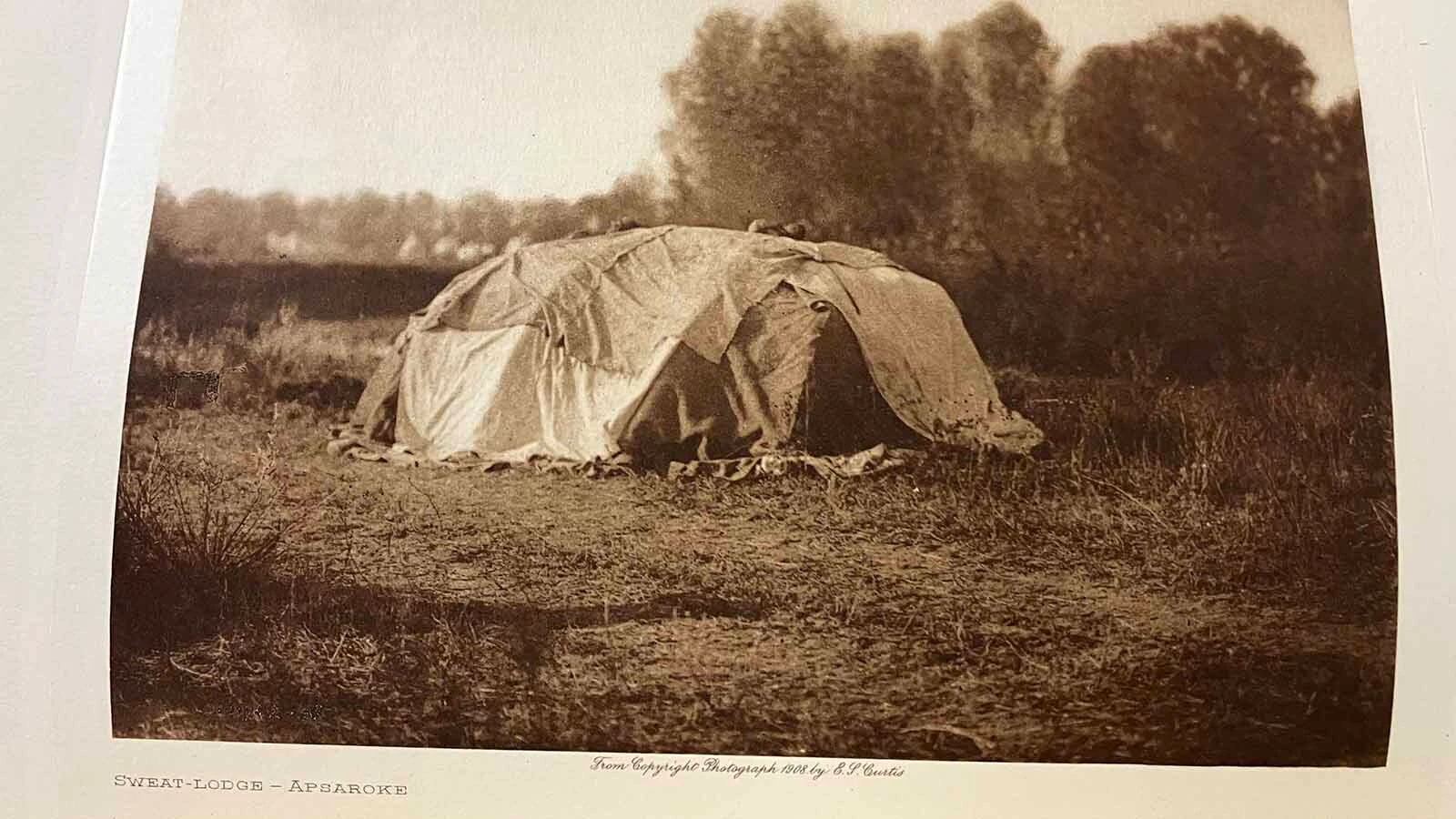
An Apsaroke sweat lodge photo in "The North American Indian," volume four. (Cowboy State Daily Staff) 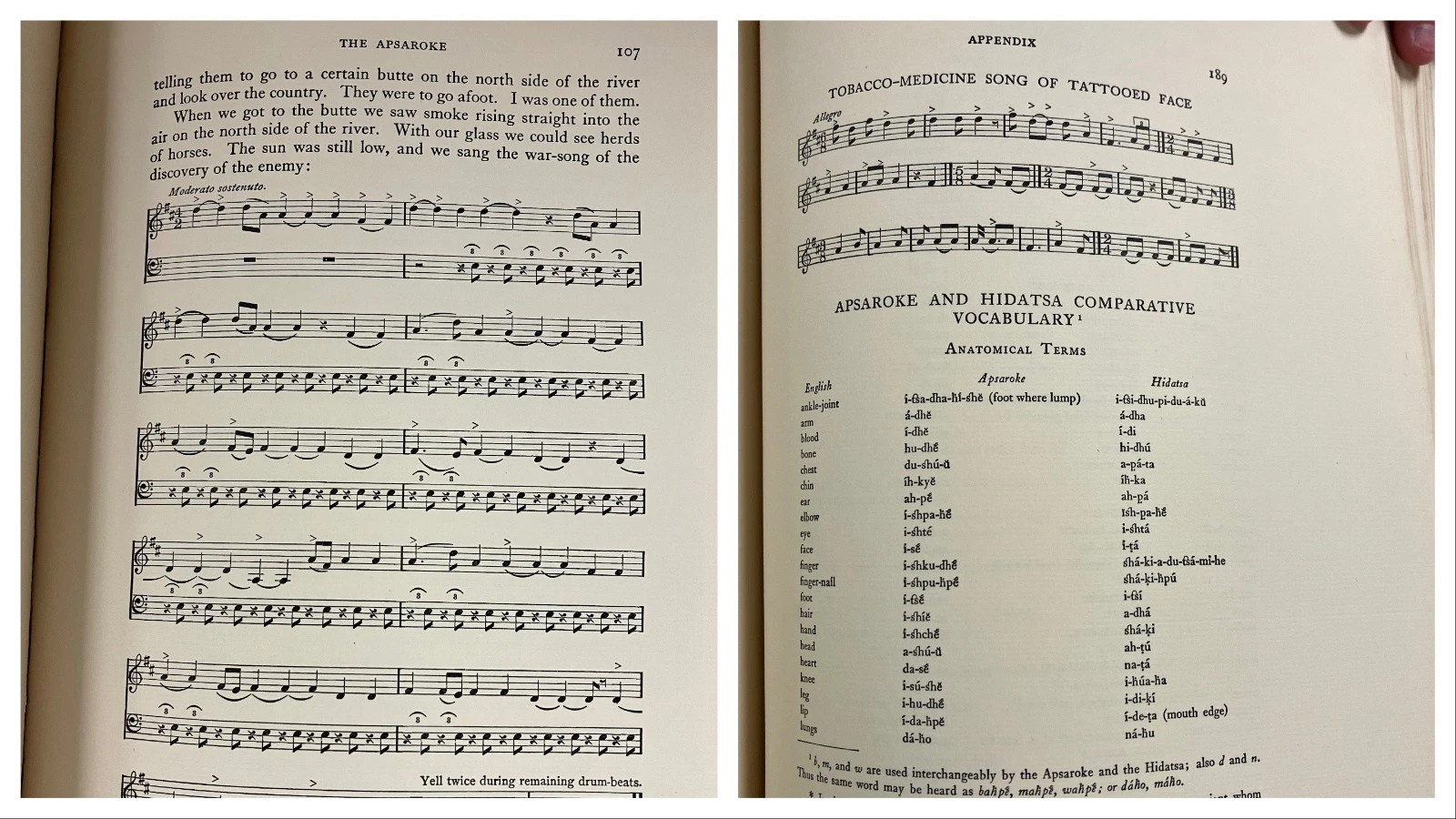
Edward Curtis included songs and volaculary lists in his volumes. (Cowboy State Daily Staff)
A Donation
An article in the university’s Branding Iron newspaper on Jan 13, 1982, announced the donation was in honor of Henry Mertz, who taught and served at the university from 1887 until 1916.
“Initially he taught German and French, then was principal at the University Normal School, also teaching political science and philosophy,” the Branding Iron reported. “After 1909 (he) was head of the modern language department.”
Brown showed volumes three and four to Cowboy State Daily. They were published in 1808 and 1809. The books included an introduction from President Theodore Roosevelt and mention on the title page that field research was conducted under the “patronage of J. Pierpont Morgan.”
In addition to outlining various aspects of tribal culture, Curtis included musical notation of Indian songs, and a short listing of some vocabulary words used by the tribe in the volumes.
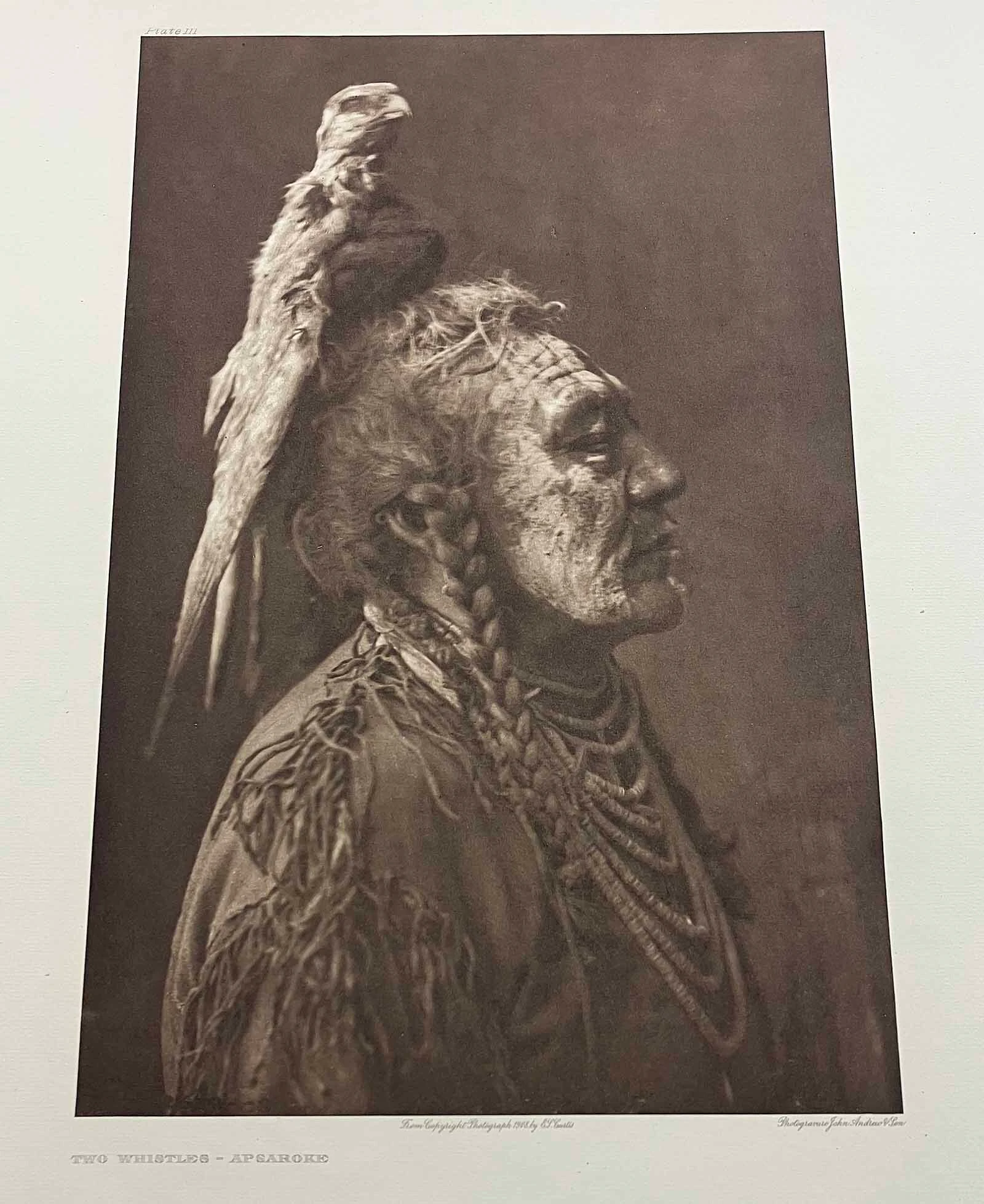
Large 2-foot photos came with each volume and each volume has a separate content sheet that describes the photos and the pages within the volume that deal with the person or scene depicted in the photo.
The quality of the books shown to Cowboy State Daily revealed heavy, quality paper and photos appear pasted on the pages.
Colleen Graybill said Curtis did fieldwork and photography with tribes in Wyoming, but they have not been able to pinpoint locations or the timeframe he was in the state. He spent a lot of time in Montana in the border area between Wyoming and Montana.
The couple say they believe that the University of Wyoming’s possession of the rare books is a special thing.
“As we’ve done our work, I’ve really come to believe in all my heart that our Native Americans are a national treasure,” John Graybill said. “So, (the books) are invaluable, especially to our Native Americans. … So many don’t know that he wrote of their customs and tradition and when they know that and they read them, they are just in awe that he captured all that information.”
Brown said the library and American Heritage Center are always trying to promote the thousands of items and resources available for the public and review — including Curtis’ set on the “The North American Indian.”
“To have the whole set is definitely a privilege for us to have,” she said.
Contact Dale Killingbeck at dale@cowboystatedaily.com
Dale Killingbeck can be reached at dale@cowboystatedaily.com.