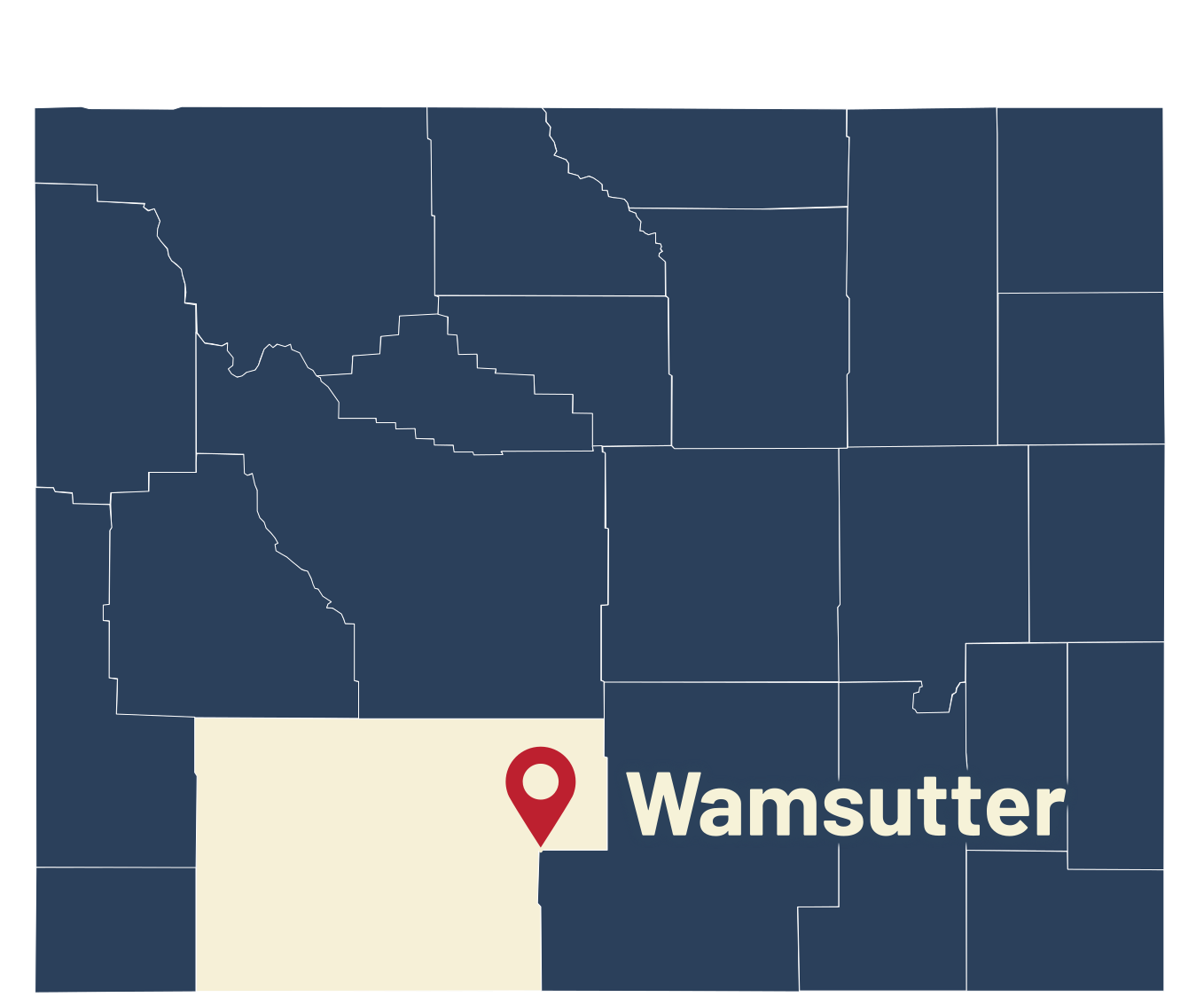
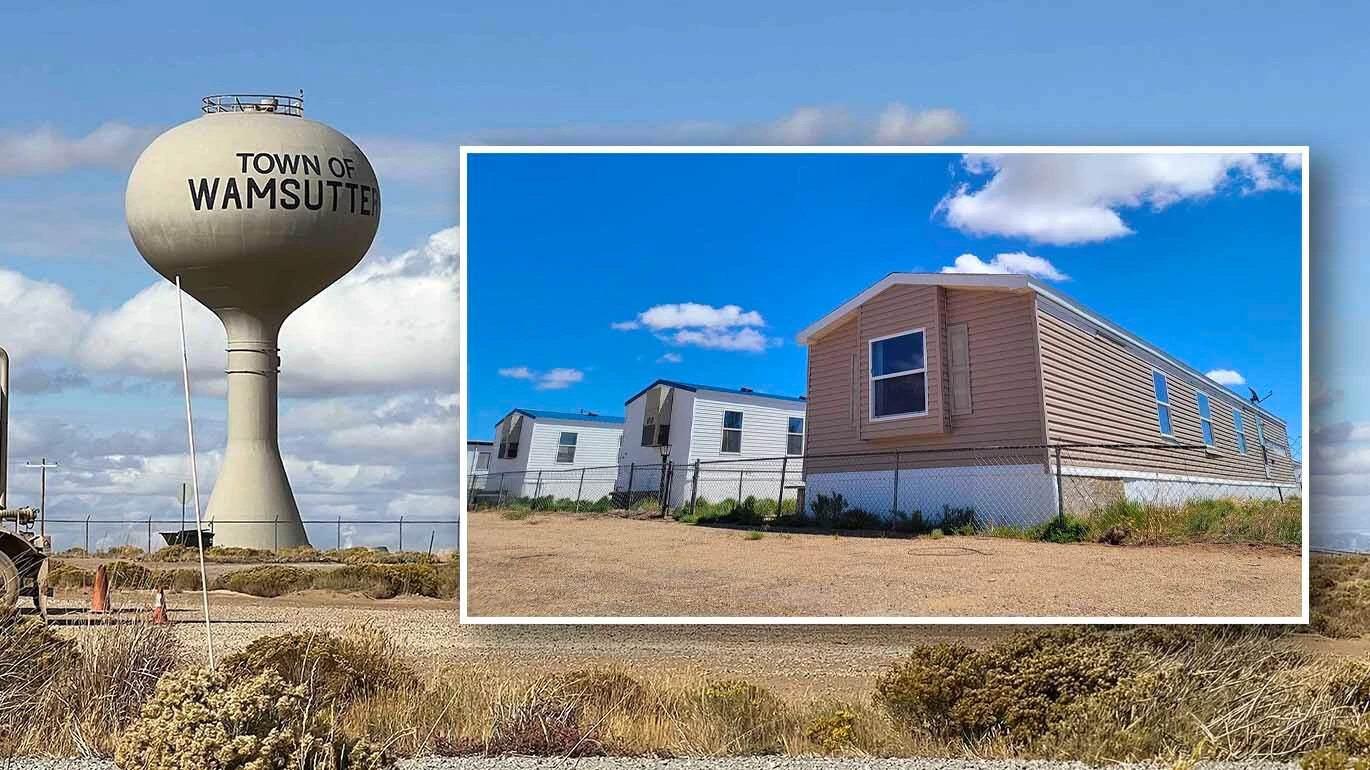
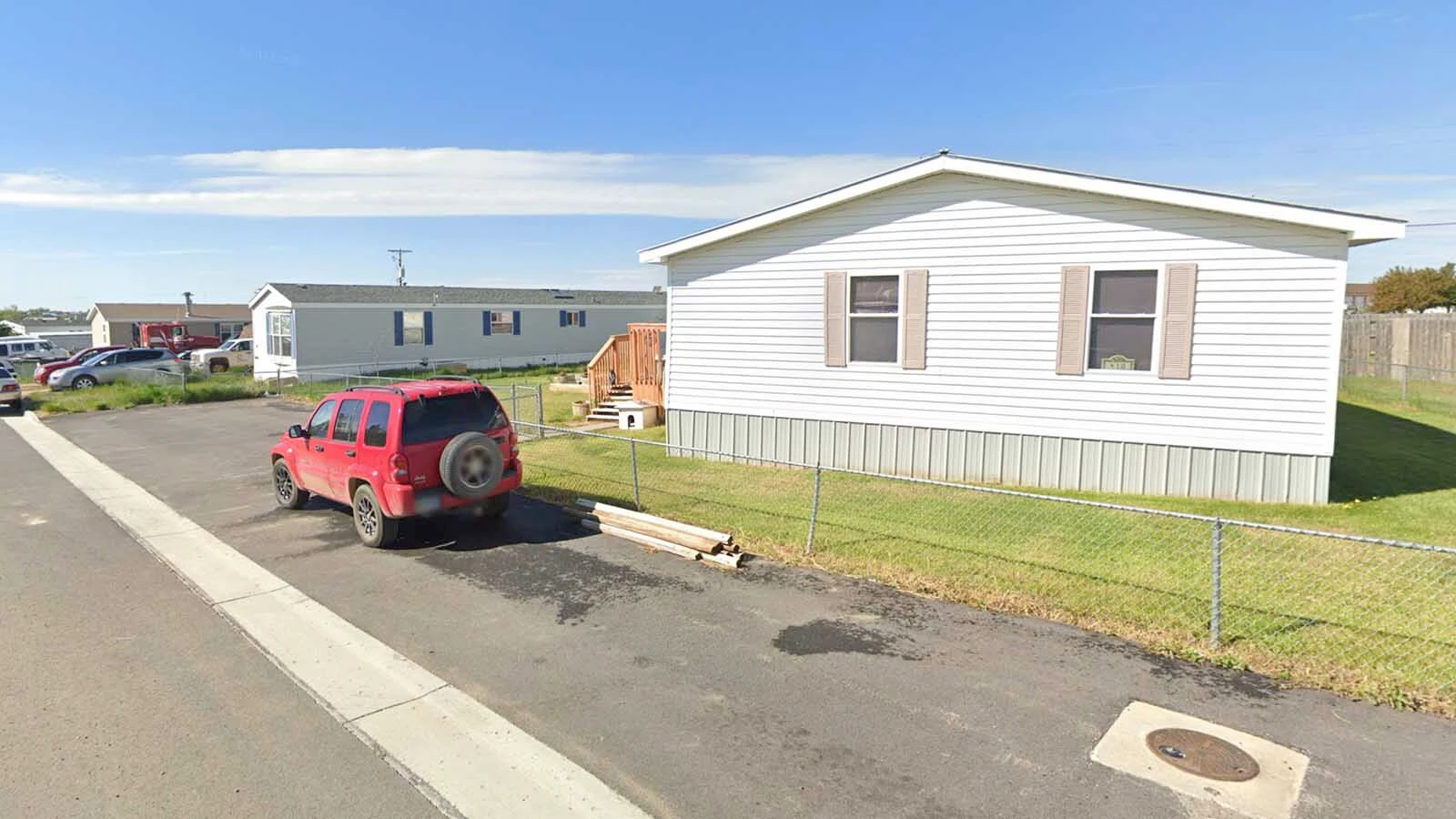
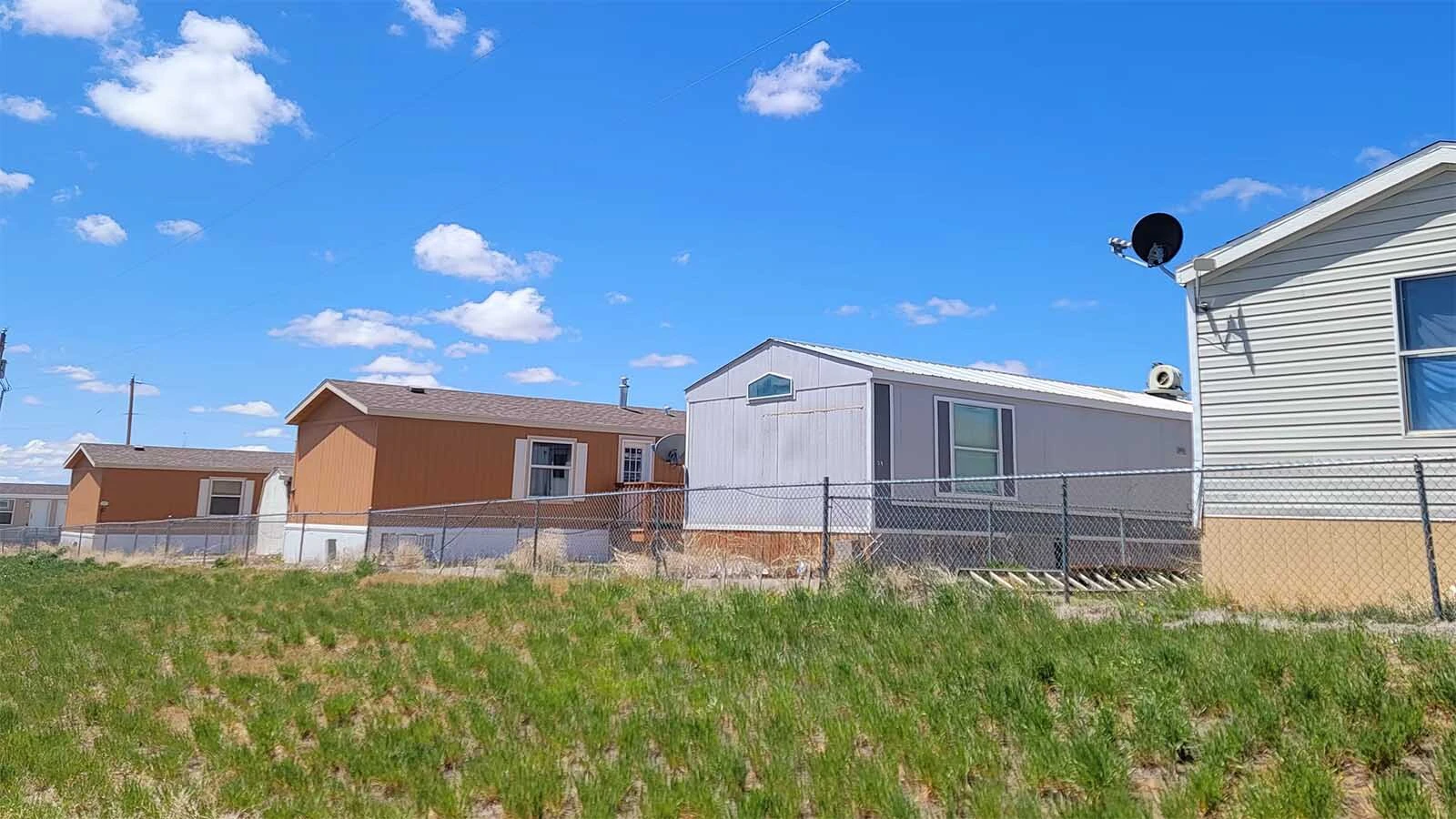
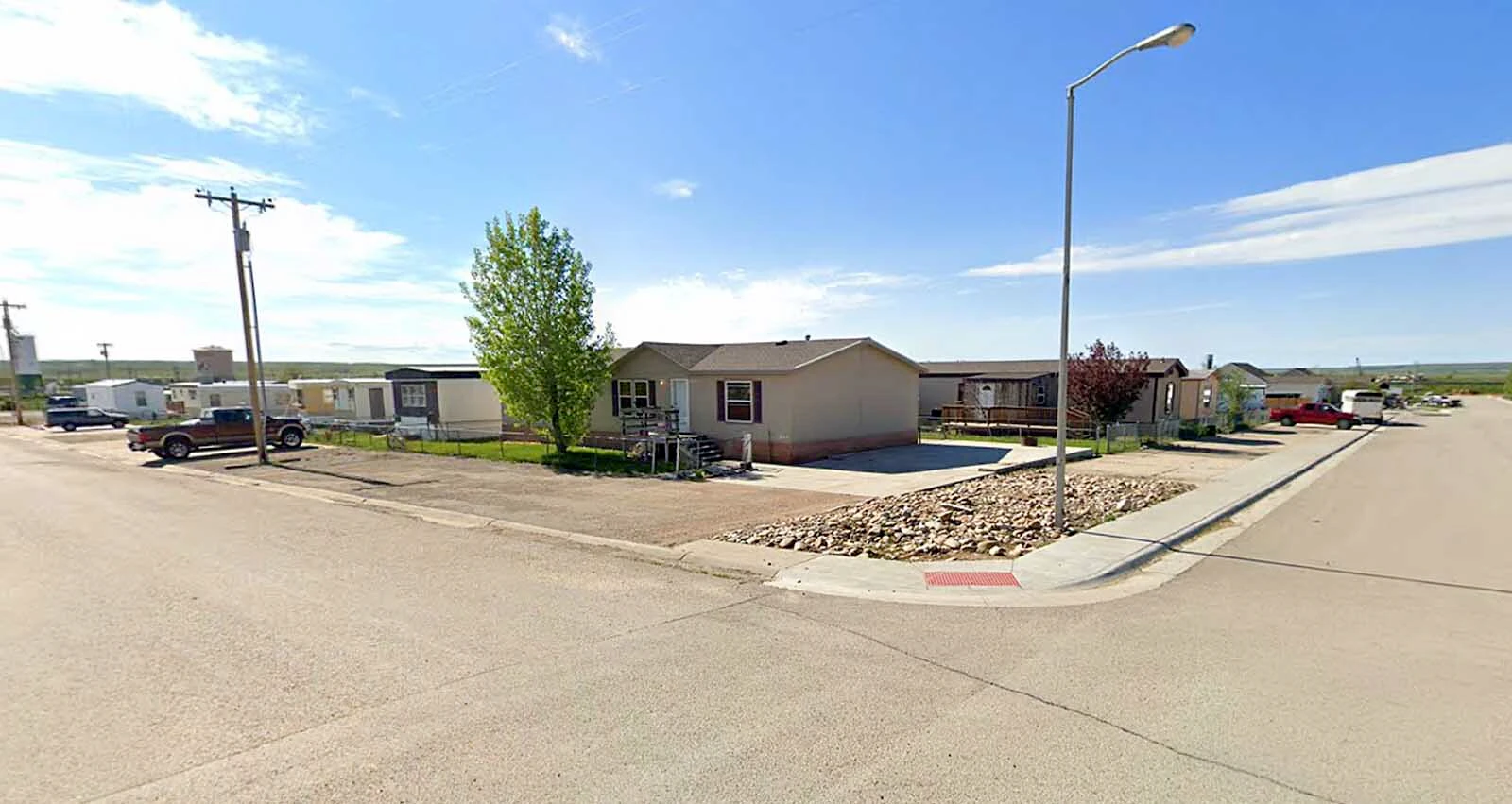
Half the houses — if not more — in Wamsutter are trailers.
They punctuate the Red Desert with long, low rectangles that tell the story of Wyoming booms that have come and gone.
The numbers get a little fuzzy in a town this small, but look around Wamsutter and the point is hard to miss: Trailers are everywhere.
The latest census shows 49% of Wamsutter's 153 homes are mobile, but 31-year-old Jace Waldner thinks it's even higher than that.
"I count six," said Waldner, talking about stick-built houses in town.
He would know better than most.
Waldner is a third-generation owner of Wamsutter Trailer Court, a locally owned family operation that has rented mobile home spaces for more than 20 years.
He sells trailers, rents industrial land to companies hauling water for the oil and gas industry and, when winter comes, sometimes finds himself moving snow.
"I'd say probably 80% to 90% of the town is trailers," said longtime resident John Marich.
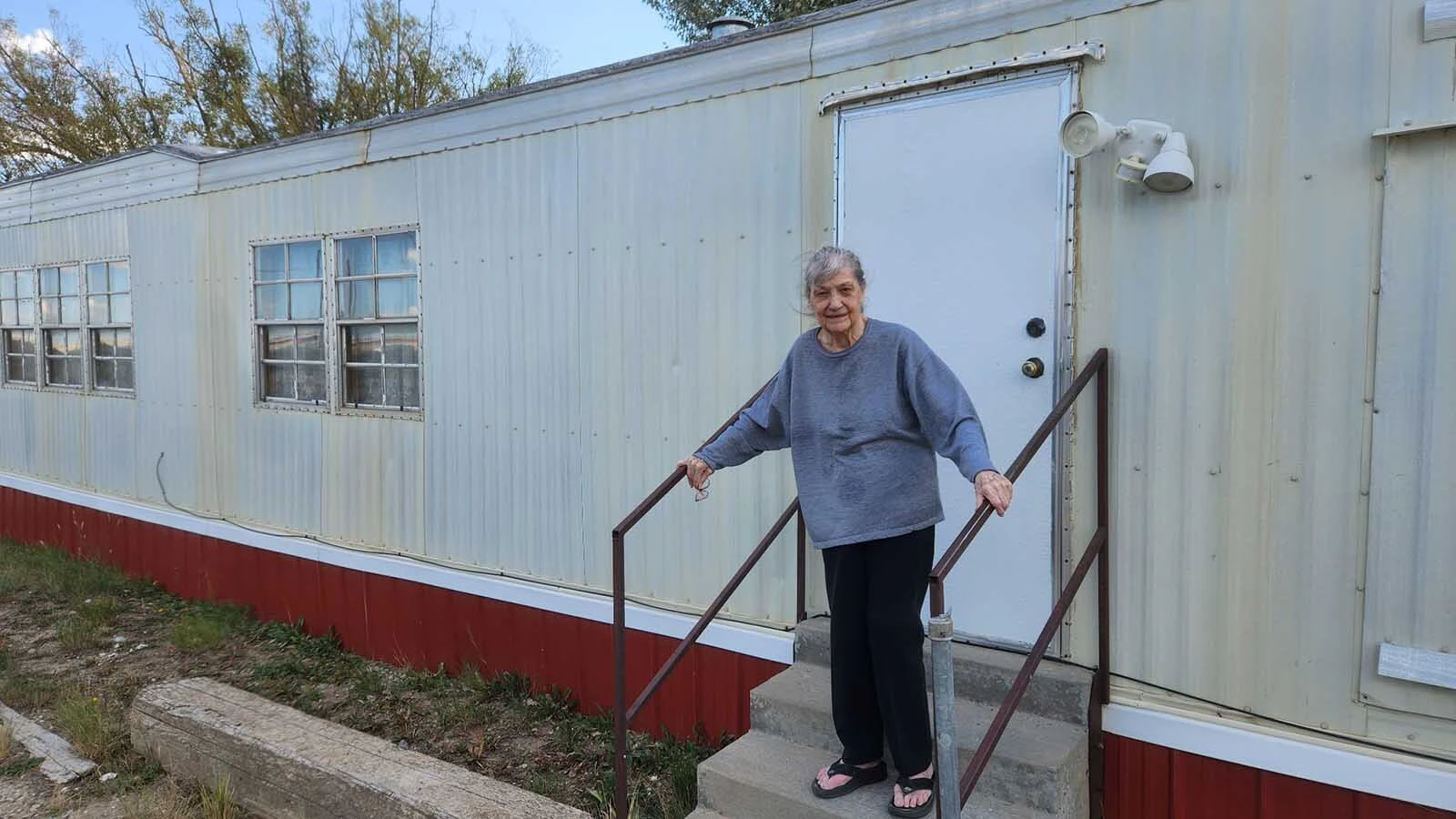
97-Year-Old Resident
Rosemary Rowe, who turns 97 this month, lives alone in a two-bedroom trailer just steps from the Desert Bar, the Wamsutter watering hole she has owned since 1980.
She wakes up at 4 a.m. every morning to open the bar.
"I've been in my trailer for many, many, many, many years, and it's very comfortable," she said.
There's plenty of room, she said.
Two bedrooms for one woman.
She figures her current trailer is about 20 to 22 years old. It's tied down securely against the Red Desert wind.
In Wamsutter, that's important.
"It's windy here, and 90% of the time, the only time it quits blowing is when the wind is inhaling," Marich said.
Feast Or Famine
If Wyoming's boom-and-bust economy can be read in a landscape, Wamsutter might be one of its clearest pages.
For decades, trailers have provided a fast answer to a recurring problem here: An energy boom can bring hundreds of workers almost overnight, and every one of them needs somewhere to sleep.
Building houses takes time. Trailers can arrive on wheels.
"It's pretty much a feast-or-famine economy here in Wamsutter," Waldner said. "We are either just barely scraping by, or we are rolling in it. There is no in-between."
Waldner is 31 and grew up with the cycle.
He remembers booms around 2005, 2009 and 2015.
During the 2009 and 2015 surges, Waldner said, his family's trailer court had waiting lists.
People were practically knocking down the door for a place to put a trailer.
Then there are years like 2025.
"We were at like 72% vacancy or something ridiculous like that," he said. "It's pretty crazy to be completely full and then people kicking down your door for a space, and then you're just like, 'I can't fill a space to save my life.'"
Town Becomes A Trailer Court
Federal environmental studies described Wamsutter as one of the communities swept up in the energy-development wave that followed the 1973 oil embargo.
The population went from 139 people in 1970 to 681 in 1980 — nearly five times as many people in a decade.
The Waldner family was there for that transformation, too.
Jace's grandmother Emma Waldner came to Wamsutter in 1952 after her father took a pipeline job with Colorado Interstate Gas. Verne Waldner arrived in 1957 to work for Union Pacific.
When the railroad pulled out and Wamsutter's fortunes sank, Verne began buying property.
Decades later, much of that property would be filled with trailers.
Then natural gas brought another wave.
By 2001, as development accelerated around Wamsutter, the town's population again surged to nearly 500. About 600 gas workers arrived in the area, available housing disappeared and nearly every dusty lot was occupied by trailers and motor homes.
By 2004, the latest gas boom again transformed the town.
High Country News reported Wamsutter's population tripled in four years to around 750 and estimated an extraordinary 98% of its residences were in trailers.
About 20 drilling rigs were operating around Wamsutter, requiring more than 400 roughnecks to keep them running around the clock.
They worked 12-hour shifts, seven days on and seven days off. Some spent those working weeks packed two to a bedroom in company-provided man-camp trailers.
The Waldners alone had about 70 rental trailers scattered across roughly 100 acres, including some used for those man camps.
Even the town library operated out of a single-wide trailer donated by BP America.
A federal socioeconomic study captured the transformation in hard numbers a few years later.
A July 2007 count found just 20 single-family houses in Wamsutter, compared with 39 modular homes, 117 mobile homes, 49 RVs and 19 four-person dormitory units.
There wasn't a single available rental unit that summer.
'Wham, Bam'
That pattern makes perfect sense to Kim Klingenberg, owner of Cabin Creek Homes in Riverton.
Klingenberg sells manufactured and modular homes around Wyoming and said she tends to see concentrations of factory-built housing in communities that experience sudden industrial growth.
"Quick, quick boom," is how she described it.
When companies suddenly need to house large numbers of workers, manufactured housing offers something conventional construction can't always provide: speed.
"Wham, bam," Klingenberg said. "There you go. There's a house."
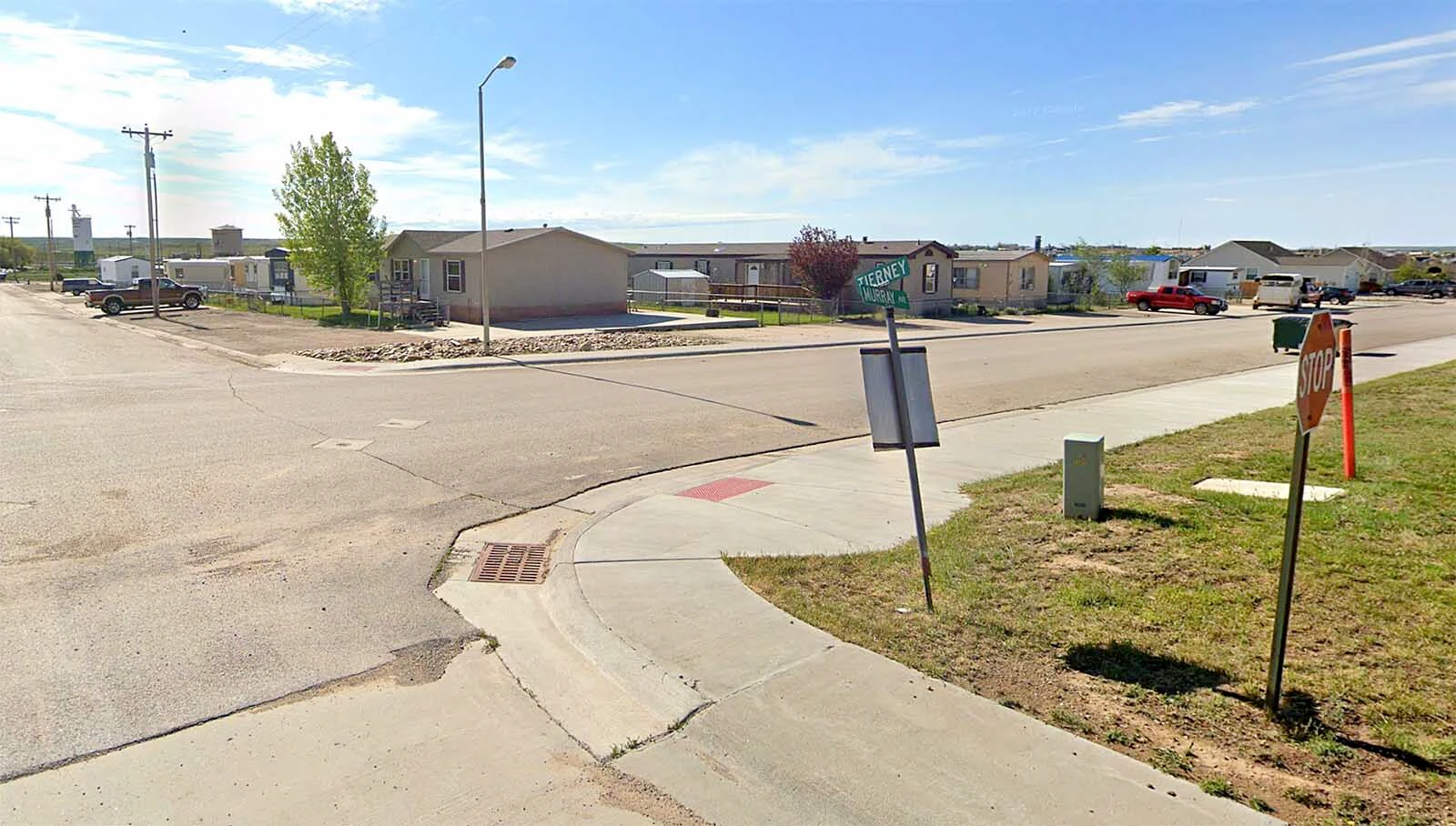
Wamsutter, Rawlins and Rock Springs immediately came to mind as places where that history can still be seen in the housing stock.
Christopher Volzke with the Wyoming Community Development Authority sees the same broader pattern.
Manufactured housing plays a larger role in Wyoming than it does nationally, particularly in smaller communities, he said.
Part of that is simply Wyoming: rural geography, a small population and the economics of building conventional homes in remote places, but manufactured housing becomes especially important in energy-producing and historic boom-and-bust communities, Volzke said.
When workforce demand suddenly spikes, those homes can be delivered and occupied more quickly than traditional site-built housing.
He pointed to Wamsutter and parts of Sweetwater, Campbell and Sublette counties as places that historically have had concentrations of manufactured housing above the statewide average.
Federal land managers understood the same problem when another massive round of natural-gas development was proposed around Wamsutter in the mid-2000s.
Thousands of new wells were proposed across the countryside.
In its environmental review, the Bureau of Land Management warned that the influx of workers and their families would put new pressure on Wamsutter's housing and services.
What Is A Trailer, Anyway?
Even deciding what to call them gets complicated.
"Trailer," "mobile home," "manufactured home" and "modular" are routinely thrown around as though they mean the same thing.
Technically, they don't.
Klingenberg said the important dividing line for manufactured housing came in 1976, when federal HUD construction standards took effect.
Older factory-built homes are commonly called mobile homes, while newer HUD-code homes are manufactured homes. True modular homes are built in sections in factories but constructed to residential building codes and typically placed on permanent foundations.
Waldner is less fussy about it. He calls them trailers. Sometimes he'll call them modulars.
"Makes them sound slightly nicer," he joked.
Marich doesn't need a technical term for his, either.
His trailer was built in 1967 or 1968, before the federal HUD standards existed.
Marich came to Wamsutter in 2010 and found work with an oil-field services company.
There was plenty of it.
He remembers being "busy as much as I wanted to be busy, and then some."
Today, Marich's nearly 60-year-old trailer sits about a block from the Desert Bar.
"It's seen some better days by far," he said.
It's comfortable, he said, and there's enough room for him, his dog, and four cats.
When the Wamsutter wind really gets going, the old trailer rattles and makes noise, but Marich isn't particularly concerned.
More importantly, it's his.
"I mean, that's mine," he emphasized.
The Hangover
The booms didn't last.
Not all the trailers did, either.
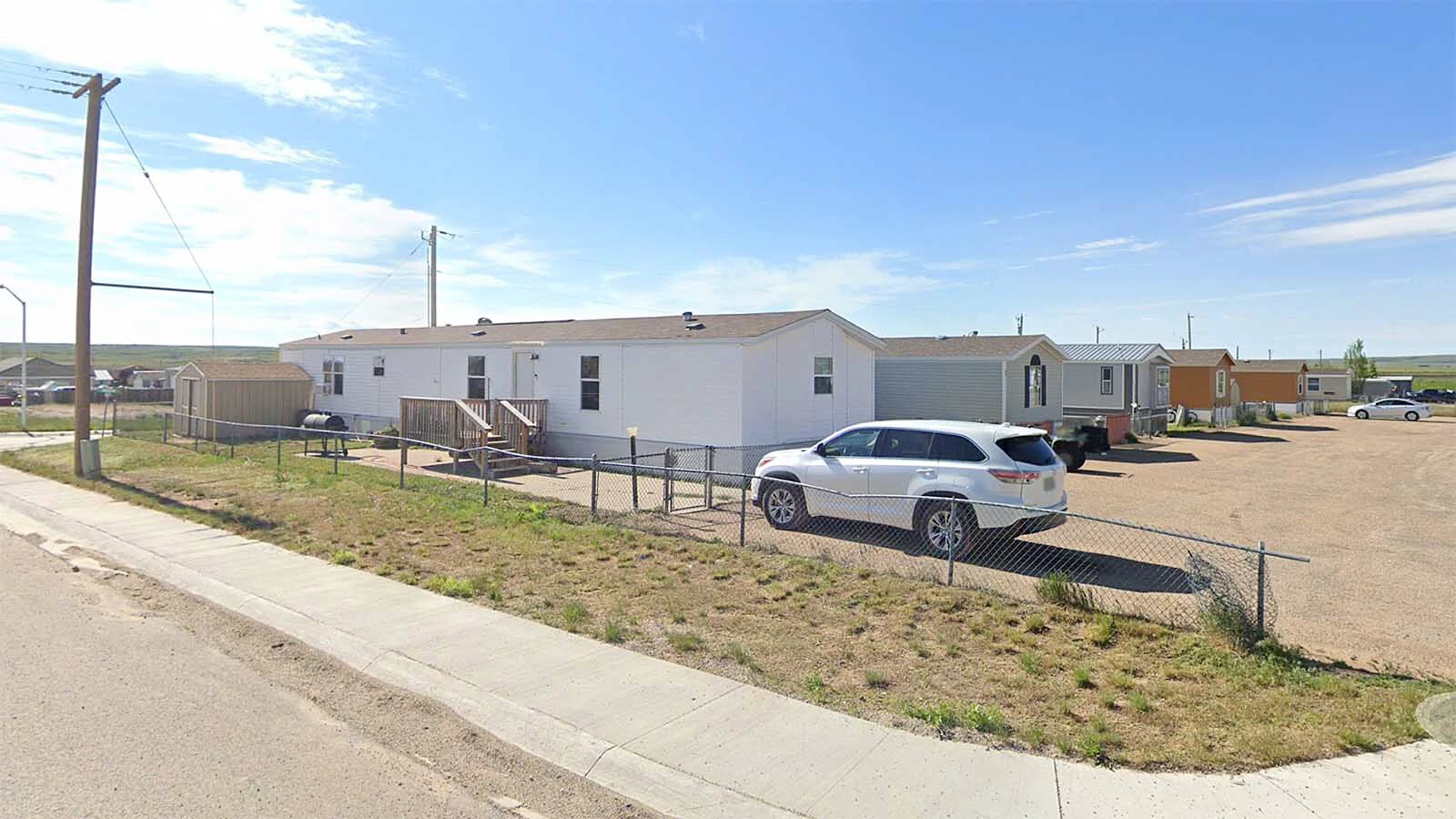
Waldner doesn't have to look through old Census tables to find the remnants of workers and companies that came and went.
"I have a couple of abandoned trailers that an oil-field company used to own," he said.
Eventually, the company dropped to a skeleton crew, Waldner said, and the homes fell into disrepair.
Other trailers were abandoned by people who weren't necessarily oil-field workers — mechanics, convenience-store employees and others trying to make a living in a place where the economy can change quickly.
Some simply vanished. "They up and skipped town without saying anything," Waldner said.
Marich has watched the landscape thin out, too.
"They've been taking the older ones out and just leaving the lots empty," he said.
Sweetwater County Assessor records show a steady decline.
There were 181 mobile homes on Wamsutter's records in 2010. Two years later, there were 170.
By 2015, there were 159.
The number fell to 154 in 2018, 141 in 2021 and 122 in 2024.
By 2026, 115 remained in the assessor's count.
Yet more than 100 remain in a town of only a few hundred people.
'A Lot Of Something'
There isn't a grocery store in Wamsutter. Serious shopping means leaving town. Medical care means driving, too.
Rawlins is roughly 45 minutes away, and Rock Springs is farther in the other direction.
A dependable vehicle matters. So does knowing your neighbors.
At 31, Waldner is something of an oddity.
"There are not many people around my age group that are still in town," he said.
Many of the permanent residents he knows are older than 50 and have been around since at least the 1980s.
Rowe has been there for 46 years.
There's not much in Wamsutter by conventional standards.
One bar. One church.
No grocery store.
A scattering of businesses catering to the interstate and energy fields.
And trailers.
Lots of trailers.
Still, "There's a lot of something for all this nothing," said Waldner.
Kolby Fedore can be reached at kolby@cowboystatedaily.com.