

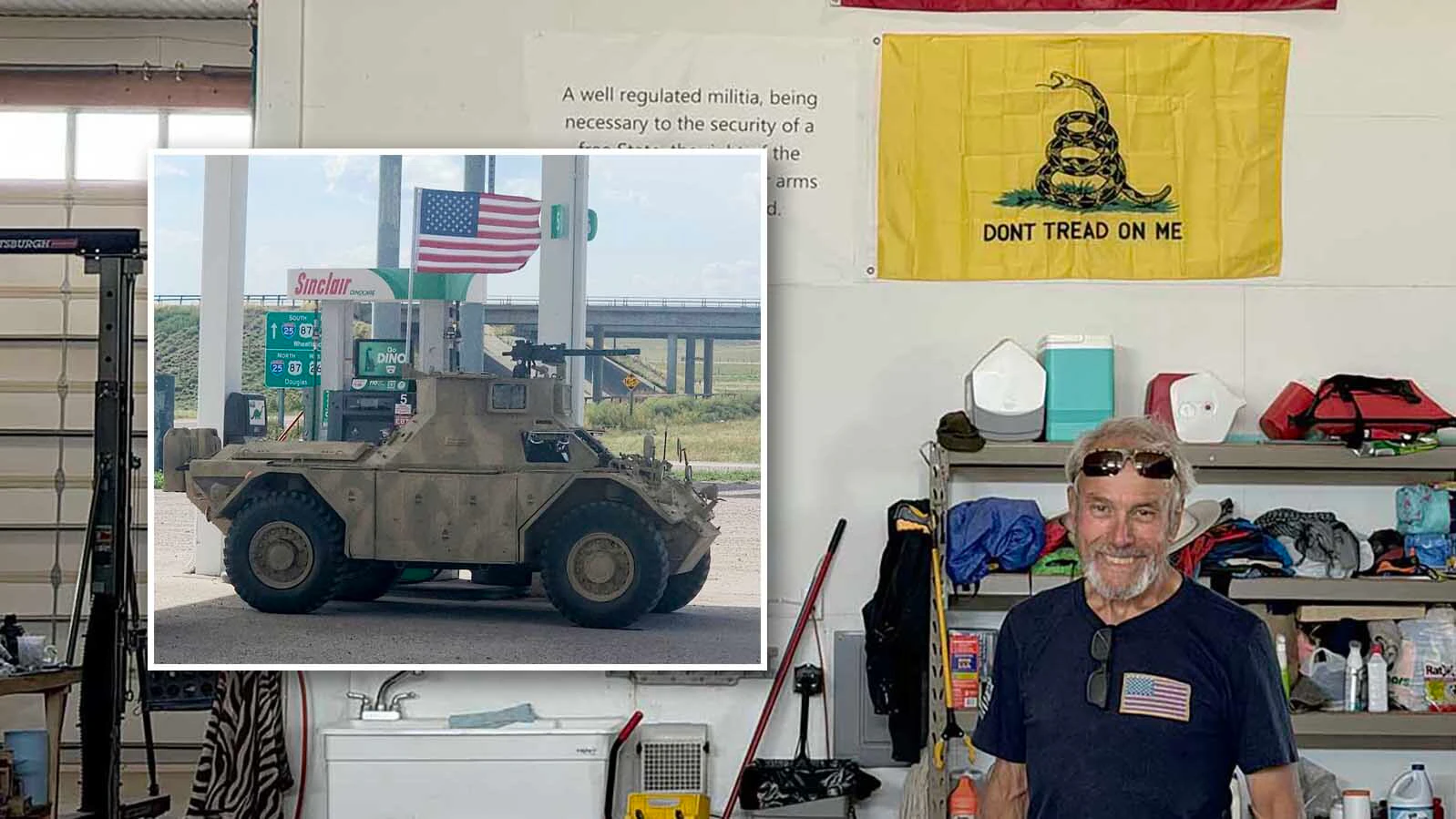
At 71, Pedro Pirado still hops in and out of his vintage military armored vehicles like they're pickups.
He heaves open heavy steel hatches, drops into cramped driver's seats and wrestles stubborn gears into place. Then he fires up the machines and takes them rattling down the dirt roads around his place by Sheep Mountain.
“I keep them alive and they keep me alive,” Pirado reckons.
He was born in Venezuela, flew in the Venezuelan Air Force, and immigrated to the United States in 1989.
He spent decades flying commercially before eventually retiring near Glendo with his Midwestern bride, where they now keep a motor pool of military iron.
People call them tanks, but Pirado is a purist.
“Tanks have to have a rotating turret, tracks and a cannon,” he said.
Most of the machines sitting outside his house have two out of three, making them more accurately defined as armored vehicles.
Follow The Dust
Pirado pulled up to the intersection of Sandy Beach and Patten Creek roads in a military Land Rover, known as a “Snatch,” so a reporter could follow him to his remote property without getting lost.
They crossed several cattle guards and passed “No Trespassing" signs" before his house emerged in the open country.
Two labradoodles came running out, tails going hard at the sight of somebody new.
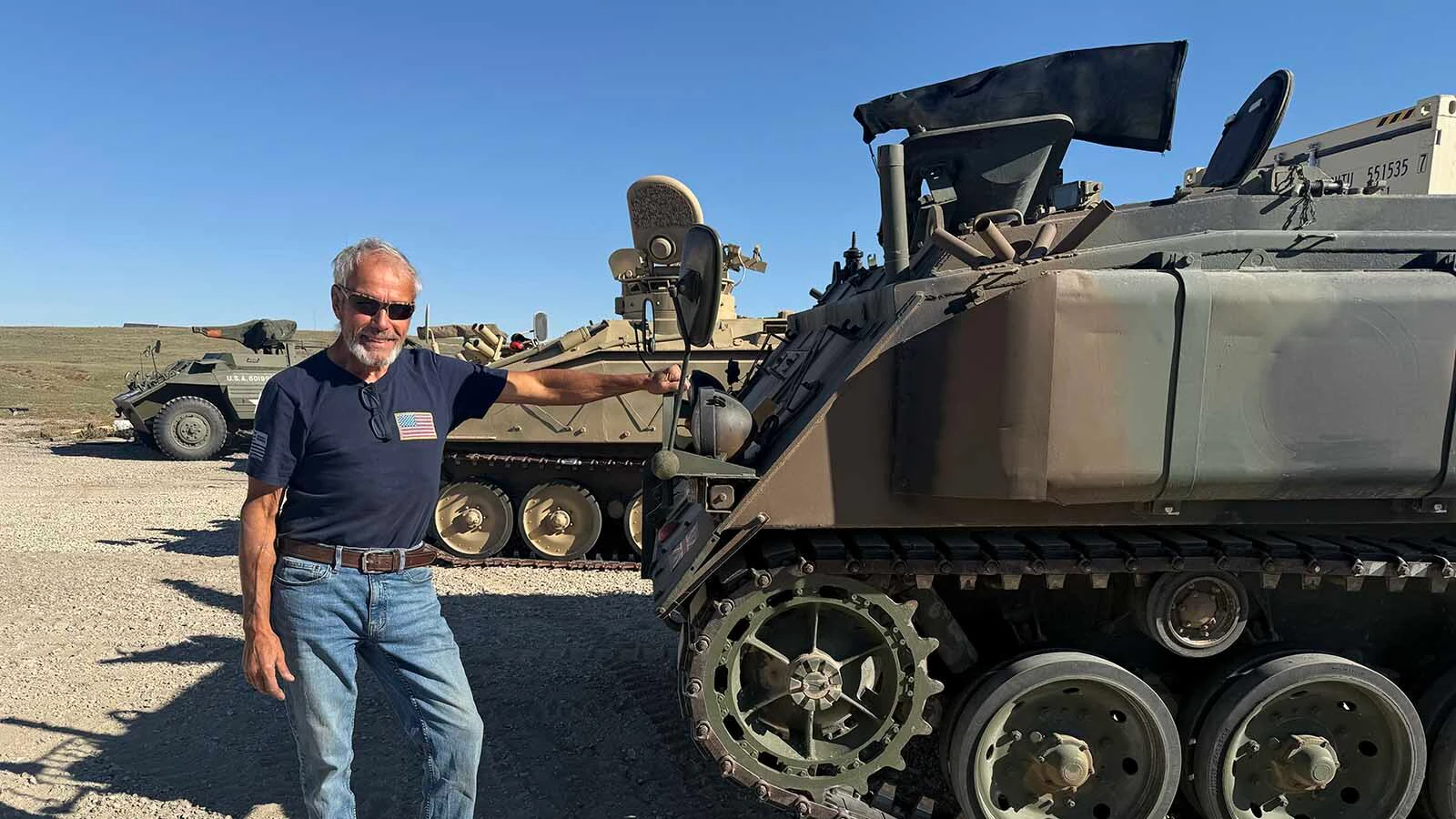
Beyond them, Pirado's collection sunbathed on the gravel in the unseasonable October heat.
Pirado walked through the lineup talking about engines, transmissions, parts and old military hardware. Tracks and heavy tire prints crisscrossed the ground.
The American stuff is mixed with the British. One of the old Ford-built M8s still carries a white U.S. Army star. The tracked machines sit nearby with their hatches open and interiors exposed.
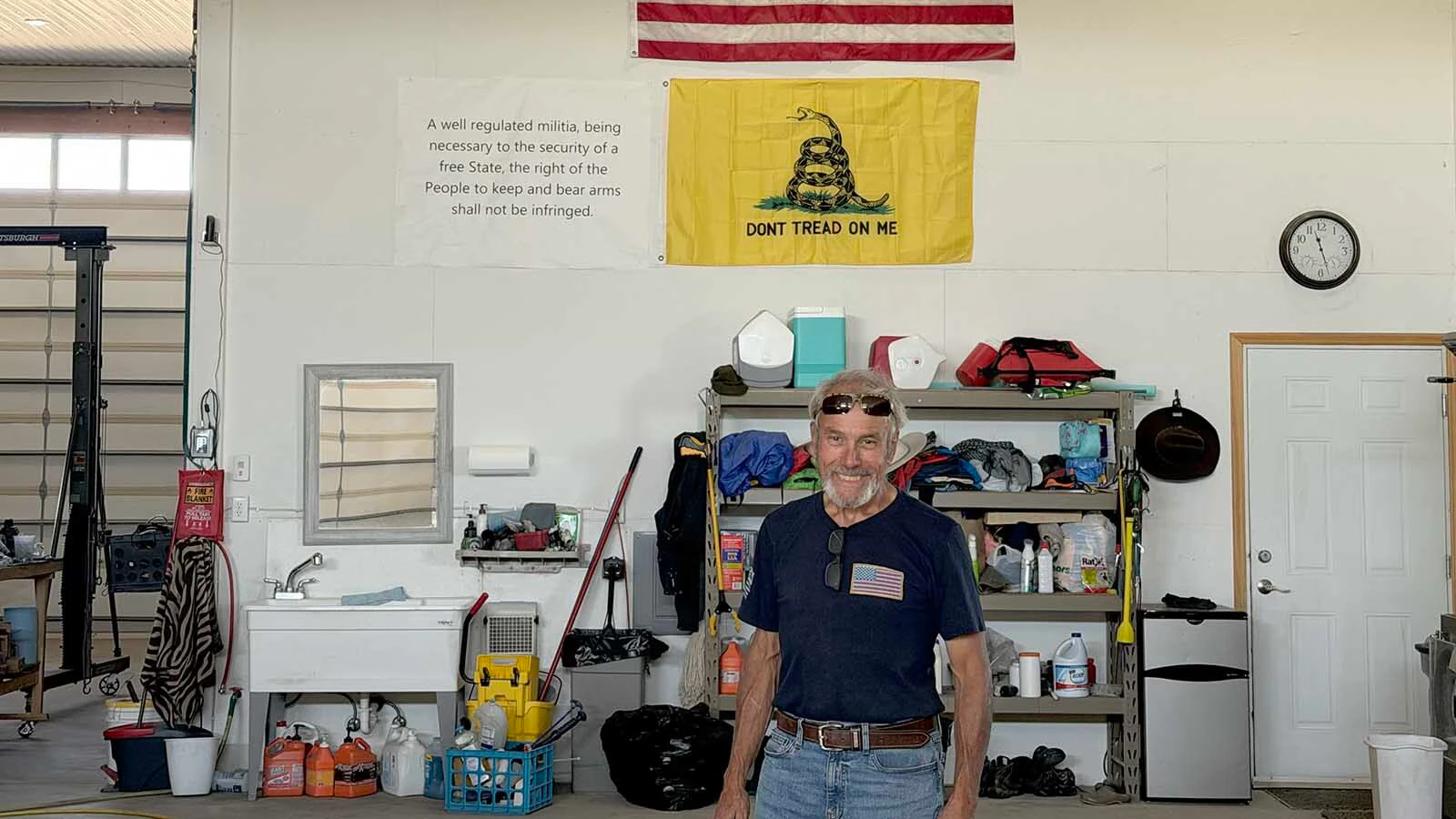
Inside Pirado's shop, an American flag hangs high on the wall. Below it is a yellow Gadsden flag, and beside that a large copy of the Second Amendment.
“A well-regulated Militia, being necessary to the security of a free State, the right of the people to keep and bear Arms, shall not be infringed.”
Fire Up The Spartan
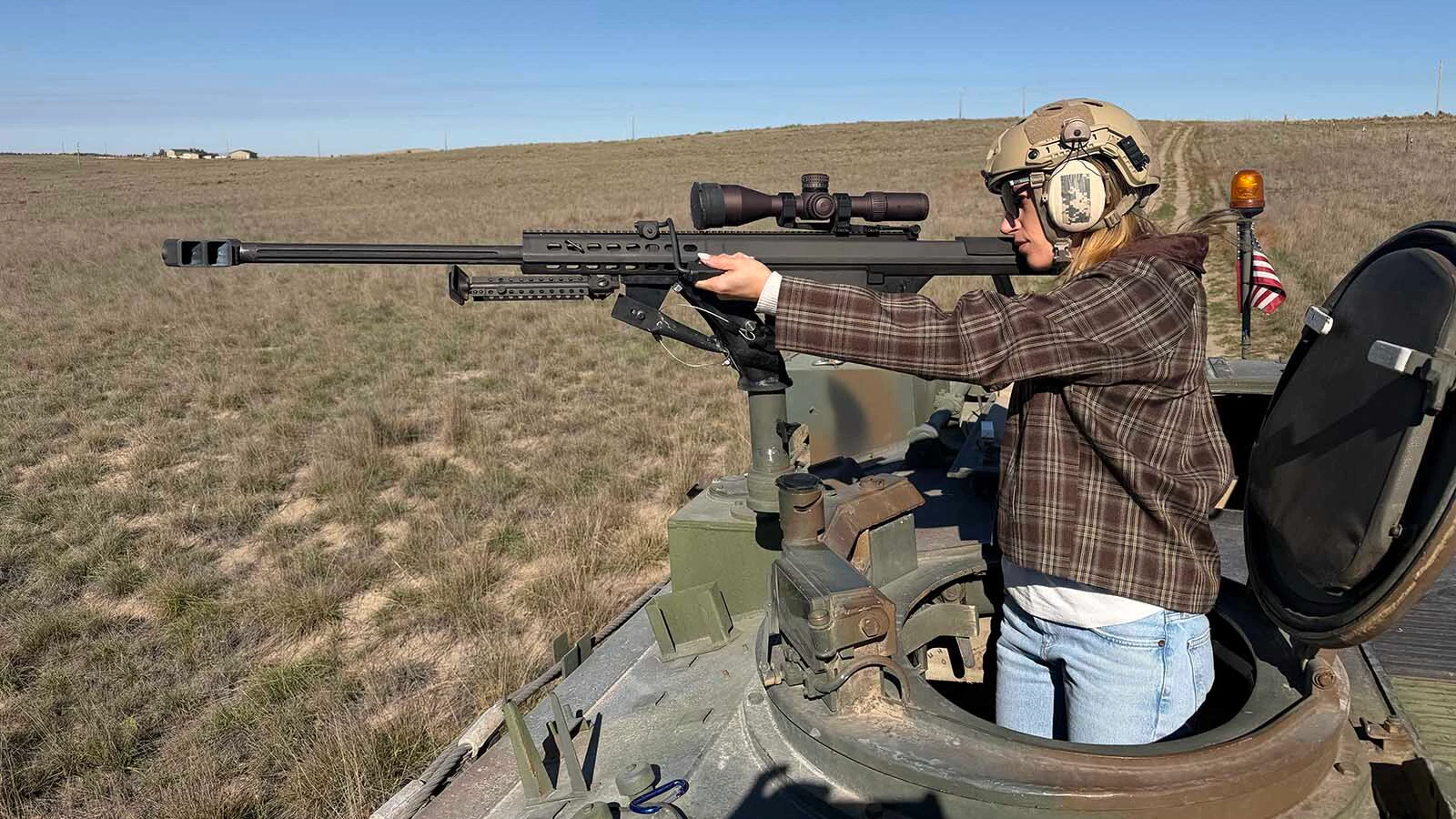
Pirado climbed into the 1979 Spartan and fired up the engine. The tracks started moving and Pirado hollered over the noise.
“Hang on!”
The Spartan heaved forward.
A black plume of exhaust rolled out behind it while Old Glory snapped furiously in the wind.
The machine rumbled up the dirt tracks, rattling hard enough to send jackrabbits into the tall grass, surely thinking: He's at it again.
One of Pirado's few neighbors was working in a garden bed when the armored vehicle came clattering past.
She looked up and waved. Pirado honked back.
Then the armored vehicle rattled on.
Glendo Mayor Jeston Cundall said Pirado and his machines are well known around town. He's even driven them in Christmas parades.
Onion Representative
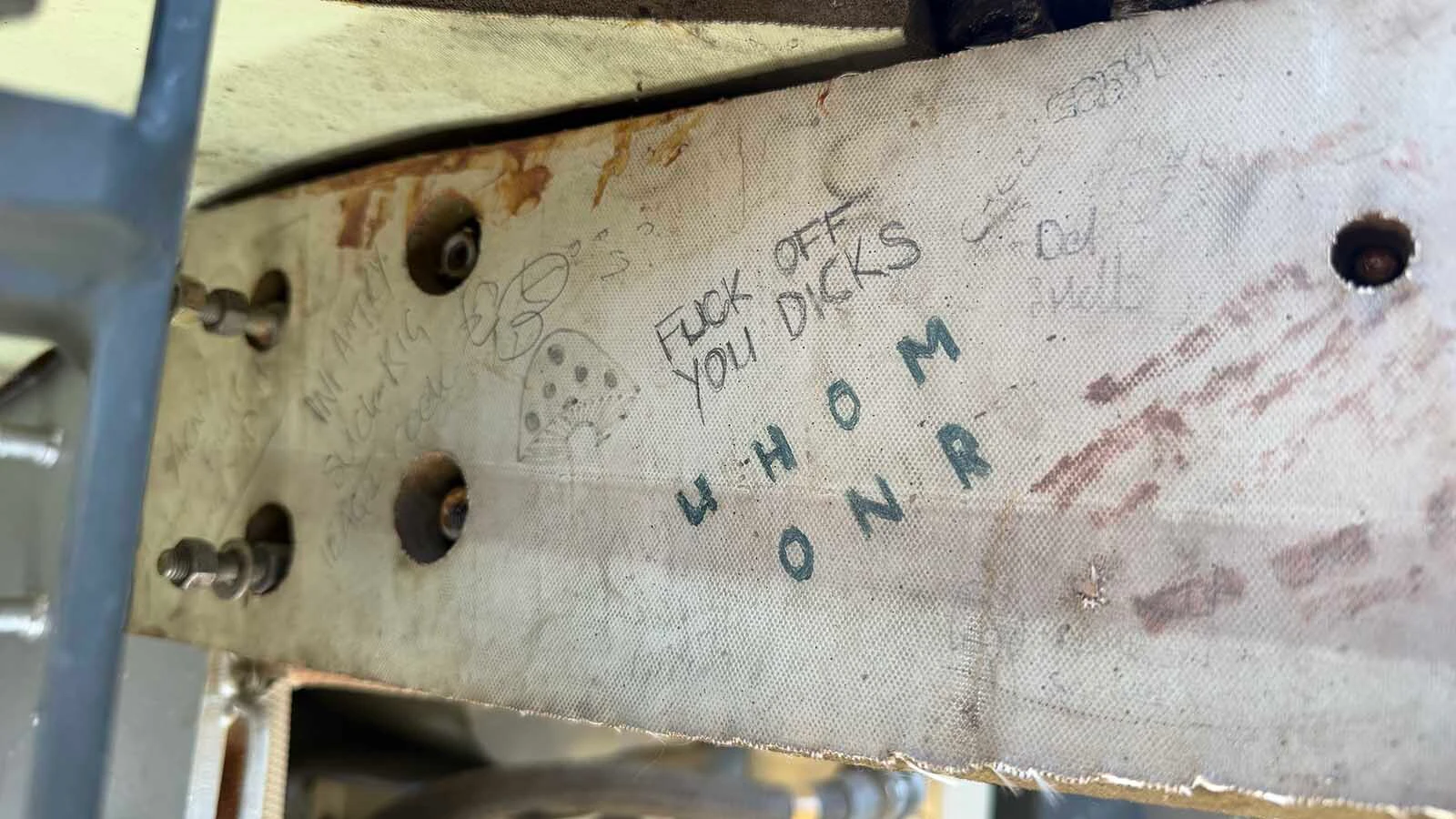
Pirado said the Spartan likely served during the Gulf War, and some of the young men who rode inside it left their thoughts behind.
“Minty is the onion representative. He answers to nobody,” reads one.
A mushroom is doodled beside crass humor — the scrawlings of '90s-man-boys mixed with dents and worn controls.
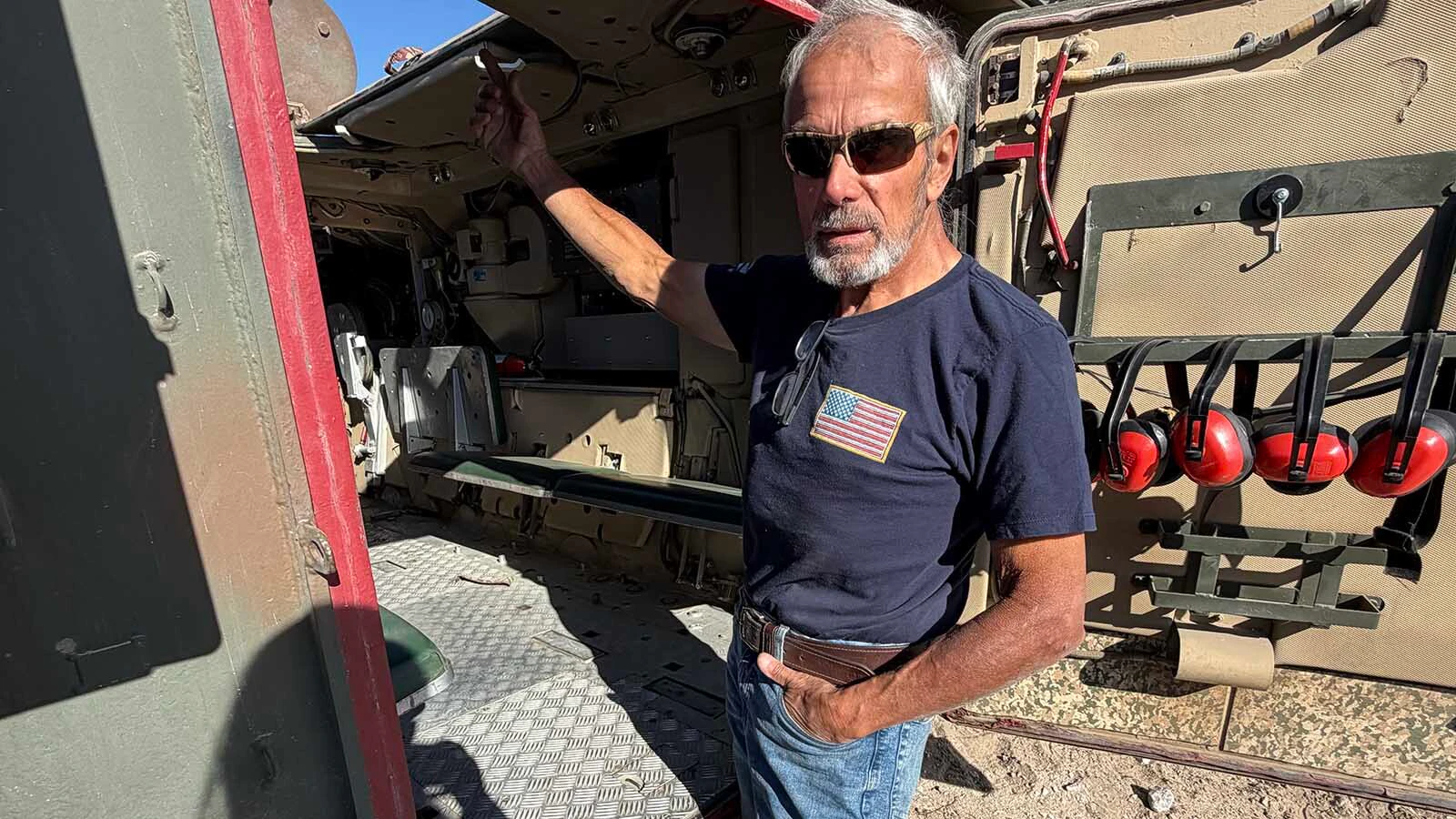
After 10 minutes inside the big box, it's difficult to imagine spending days or weeks inside one.
There isn't enough room to stand, unless you poke your head out the hatch on the top. Pirado has to duck and twist around seats, pipes and equipment to move through it.
There is no air conditioning, but Pirado has installed a heater.
The Spartan bucks and lurches easily, and nearly everything is made of metal. Pirado has padded some of the worst spots with sophisticated pool noodles wrapped in electrical tape.
Ouch!
Driving the Spartan isn't much like driving a car, but it's somewhat like a skid steer.
Except the vehicle weighs several tons — and had the added problem of people shooting at it.
There are two steering levers. Pull both back and the almost-tank stops. Work one side or the other and it turns.
There's a clutch, gear shifter, and a gas pedal — none too complex.
The trick is keeping steady pressure. Let your foot bounce and the giant behemoth throws you forward, quickly revealing why a helmet is necessary even in peacetime.
Out on the prairie, there is no reason to drive sealed inside the armor. The hatch can stay open, leaving the driver with Wyoming spread out in every direction.
Pirado dropped the covers anyway, just to show what crews had to work with.
The world nearly disappeared. The driver would peep through a small periscope the size of a mail slot in a front door.
Sneaky Little Ferrets
The Ferrets look almost small parked beside Pirado's tracked machines.
They sit low on four big tires, with sloped armor and a turret rising from the middle. They are armored cars, not tanks, and they were designed for a much different job.
Rae Whitley, a curator at the National Museum of Military Vehicles in Dubois, said Daimler built 4,409 Ferrets between 1952 and 1971.
“The British Army traditionally preferred reconnaissance by stealth rather than by force,” Whitley said.
The job was to find the enemy, figure out what was going on and get the information back without getting caught.
Ferrets could run about 58 mph. They had run-flat tires and smoke grenade launchers to help crews get out of trouble.
Better yet, if sneaking failed, they could reverse at full speed.
The Ferret, Whitley said, was built to “see without being seen and report back.”
Whitley said Ferrets saw service during Suez, the Malayan Emergency, Aden, Cyprus, Northern Ireland and the Gulf War, among other deployments and conflicts.
Eventually, some passed into private hands, and two of them are now sitting on gravel outside Glendo.
Keep It Moving
Buying old military equipment is one thing; keeping it running is another.
If something breaks, he works on it. If something needs a part, he starts hunting.
Parts aren't sitting on the shelf at NAPA.
Whitley said Ferret owners rely on old military manuals, other collectors, former military mechanics and specialty shops. Some parts have to be rebuilt. Sometimes another vehicle becomes the parts bin.
Pirado has the same problem with the rest of his collection. Spartans sent to Ukraine have made some parts harder and more expensive for collectors to get, he said.
"The trick is to keep driving them," said Pirado.
Let it sit and it goes bad. He figures people aren't much different.
Pirado quotes "Call of the Wild" author Jack London: “The proper function of man is to live, not to exist.”
So he keeps moving, and so do his built-to-last armored vehicles.
Contact Kolby Fedore at kolby@cowboystatedaily.com
Kolby Fedore can be reached at kolby@cowboystatedaily.com.


