
There might have been a few beers in hand when Danny Shervin spilled some smokeless gunpowder on his kitchen table one night and lit it on fire to watch it burn.
Shervin, then in his 20s, was attending Montana State University in Bozeman, studying finance and economics. In his free time, though, the fifth-generation Jackson native and his roommates liked playing around with gunpowder and rockets.
It was a messy affair. They were college kids, after all, so lots of excess gunpowder landed on the white, laminated kitchen table, which they’d picked up at a thrift store for their off-campus apartment.
“I had always been in art and grew up painting and loved art,” Shervin said. “And t
here was a bunch of gunpowder on our kitchen table, so I laid it out into a design — the mountains and the trees — and then I lit it on fire to see what it would do.”
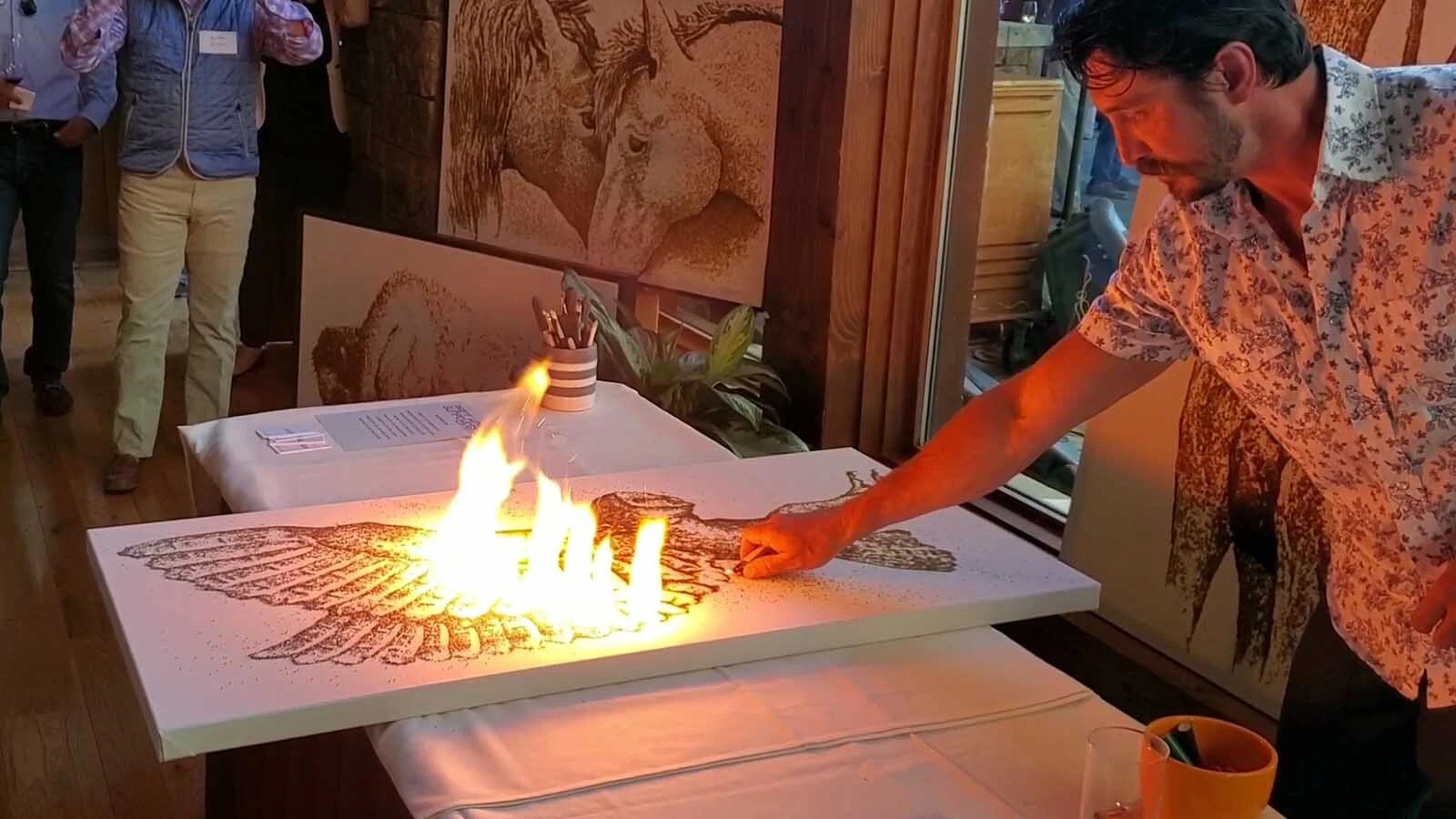
What it did was mesmerizing.
No one could stop watching the fire slowly but surely consume the gunpowder, scorching Shervin’s artistic, beer-inspired image into the white table.
“It was there for the rest of the year,” Shervin said. “And I don’t know what happened to that table. It’s probably in a landfill somewhere, but I wish I still had it.”
A Late-Night Hobby
The cool flash of gunpowder art was just that at the time. Some flash and fun for college kids enjoying their weekend.
Growing up, Shervin had taken every art class he could in high school because he loved it.
But when he went to college, he chose a degree in economics and finance. Like many artists, he just couldn’t imagine that his own art could pay all the bills. He saw it as a late-night hobby, nothing more, nothing less.
But Shervin turned out to be wrong about that.
Today, the Jackson Hole-born-and-raised artist’s wildlife and western scenes command thousands of dollars and have taken him to some interesting places around the world.
He’s done projects for Disney, ESPN, and a “Mission: Impossible” movie, and he’s been featured on multimedia platform Mashable, the British daily broadsheet The Telegraph, online magazine Mental Floss, and many other publications.
He’s created live gunpowder art for Cartier, BMW, Harley-Davidson, Belvedere and at the Yellowstone Club in Big Sky, Montana, and he’s shipped his artwork to collectors all over the world.
Gunpowder art has become his full-time occupation and makes more money than his finance career ever did.
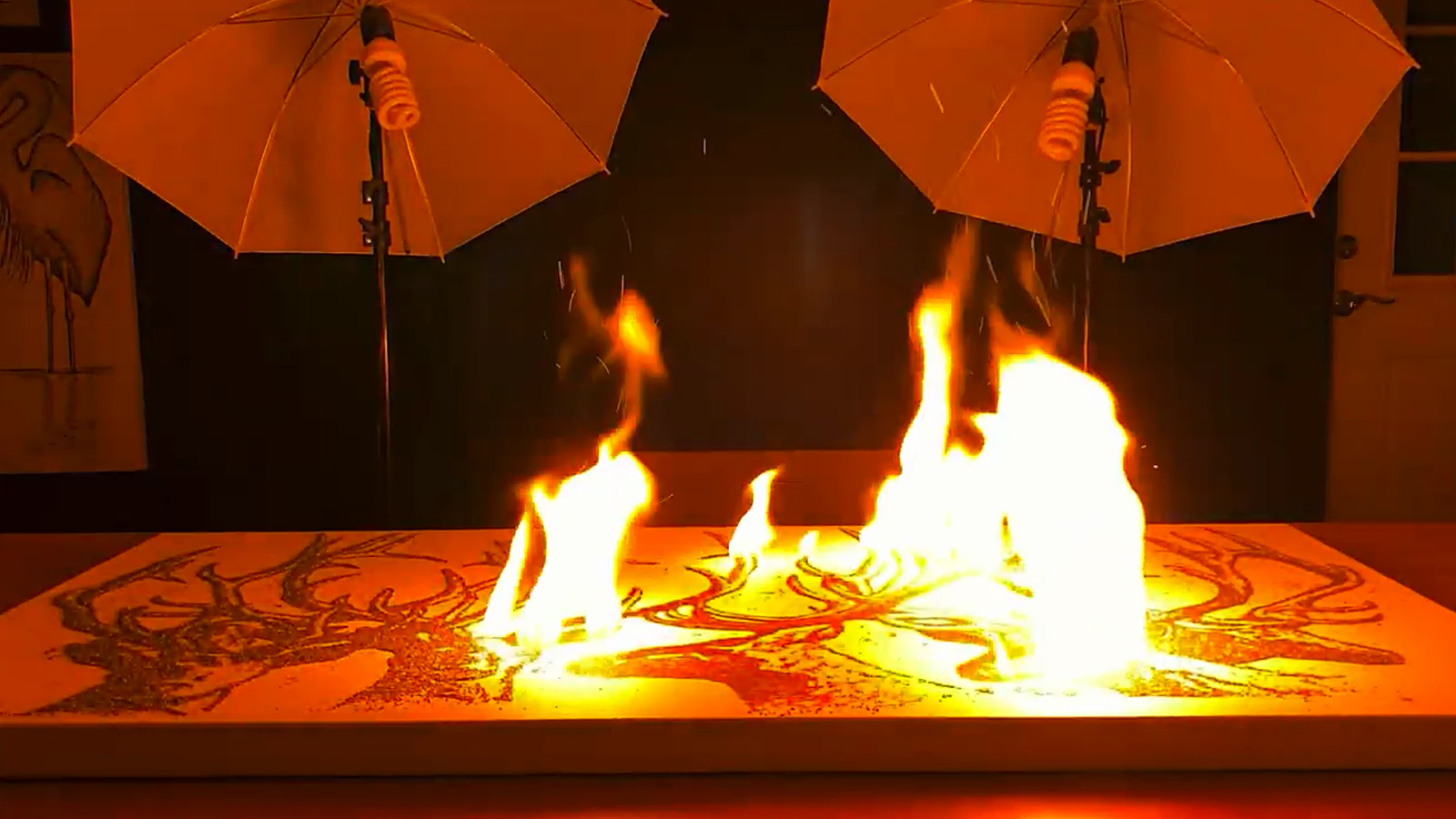
Flames rise from the canvas as gunpowder burns in the images of bull elk in Danny Shervin's piece titled "Sixes." (Danny Shervin) 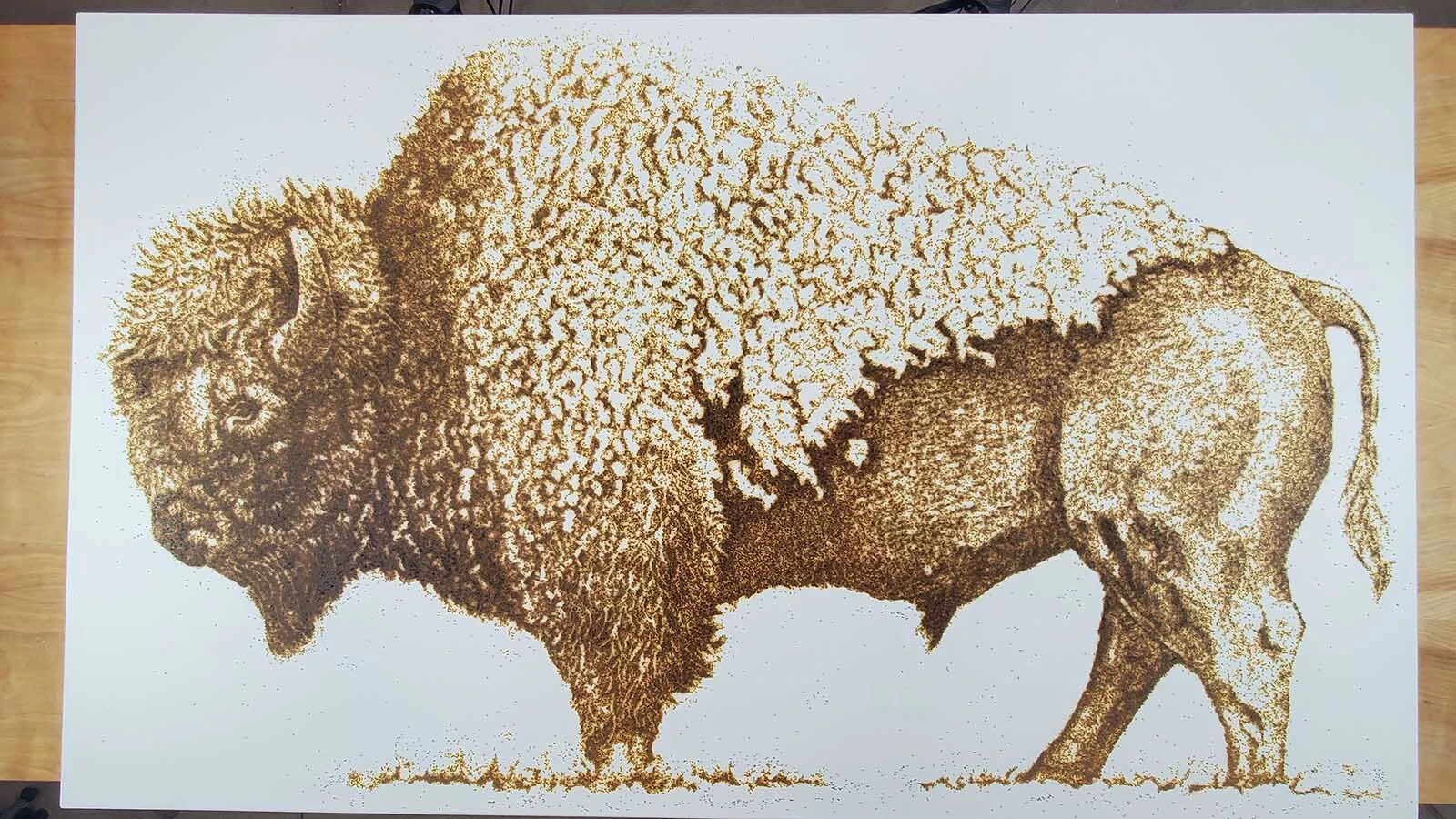
Getting closer to finished this portrait of a bison is made using gunpowder that will be lit on fire. (Danny Shervin) 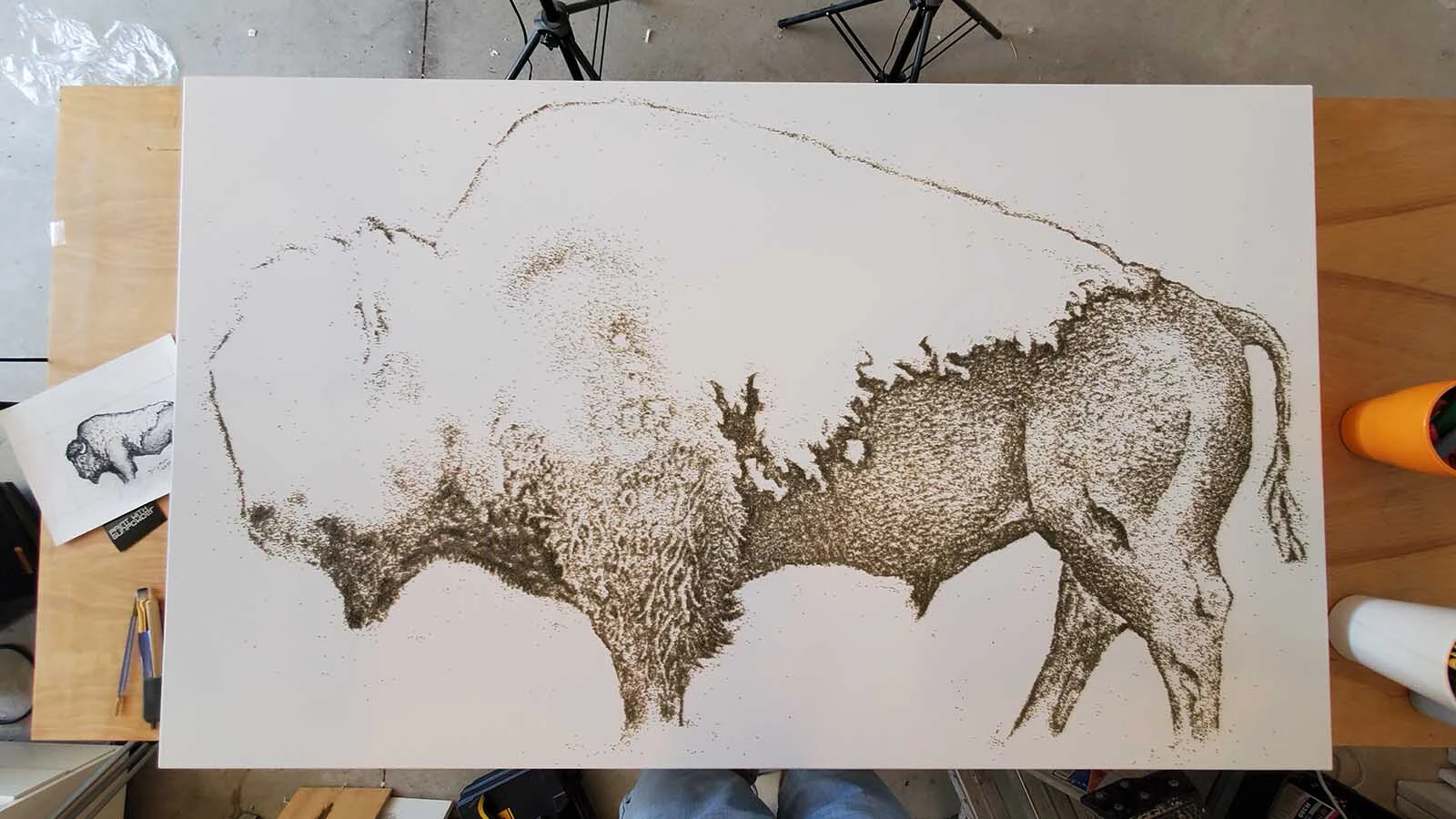
A portrait of a bison in progress by Danny Shervin. (Danny Shervin) 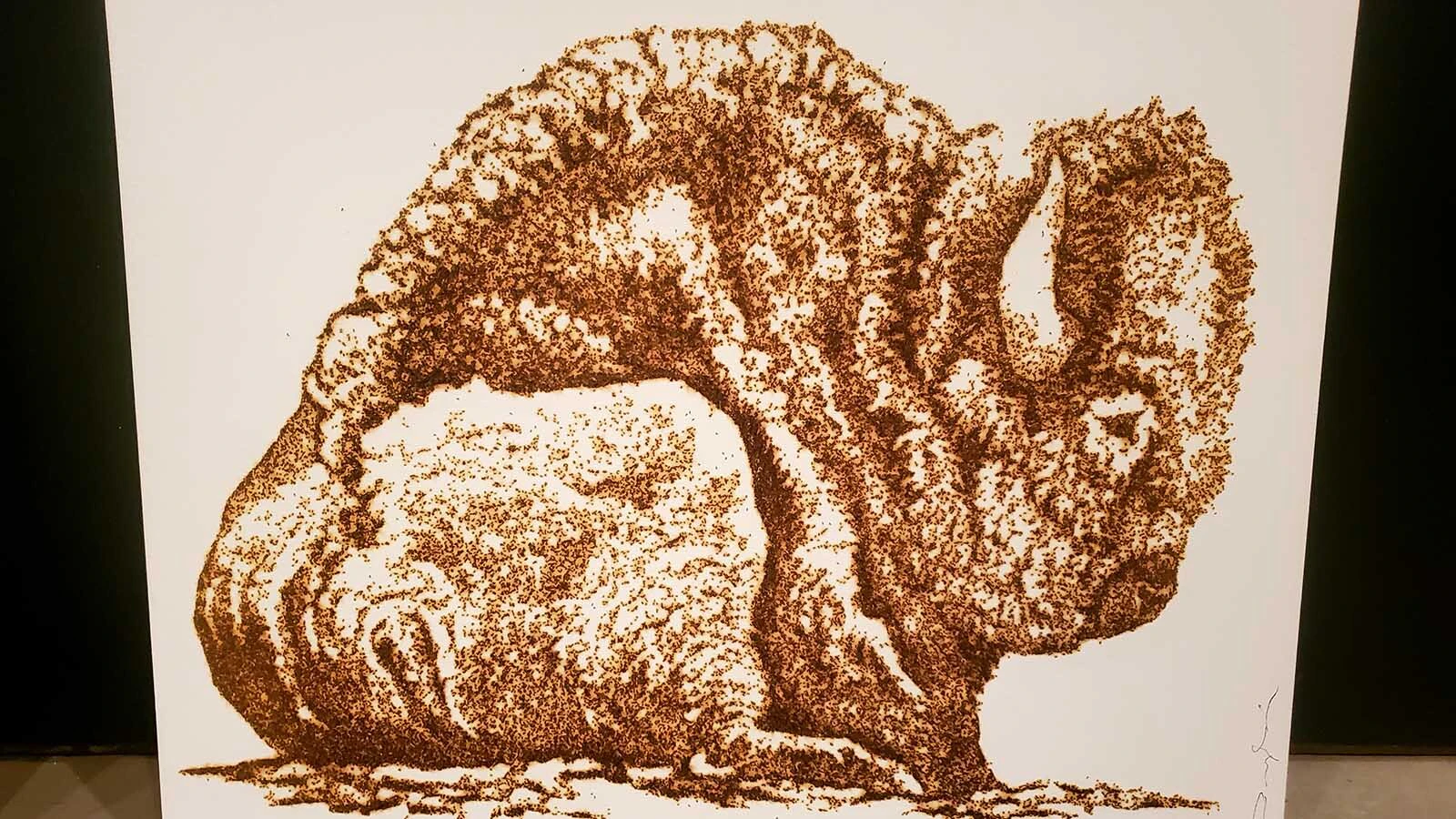
Another of Danny Shervin's wildlife portraits. (Danny Shervin)
A Video With 15 Million Views
Shervin’s route into full-time artistry was another impromptu scenario. He was telling his wife about the image he’d burned into a table when he was in college.
Remembering it made him want to try again, this time with canvas and different kinds of gunpowder.
His wife’s brother, who worked in online marketing, helped build a website and social media accounts where Shervin could share videos of his late-night projects.
That’s when things went a little crazy.
“A couple of the videos got close to 15 million views in, like, a week,” Shervin said. “It was insane. I was totally unprepared. I was getting hundreds of emails a day for artwork, and I was just totally caught off-guard.”
Shervin filled orders late at night after work and on weekends. Eventually, the art business was successful enough that he decided to take the leap and do it full-time.
“In 2019, I retired from the finance world, and I’ve been doing this artwork full-time for the last six, almost seven years,” he said. “It’s a blessing. But it was not planned. It just kind of fell into my lap.”
The Science Of A Slow Burn
Gunpowder paint sounds like a mad-artist experiment, one bound to go awry in perhaps explosive fashion.
But Shervin works with smokeless powder, which he said isn’t as volatile as black powder.
“Black powder does flare up really fast and does kind of act like a bomb,” he said. “The smokeless powders — either these super-condensed pellets or balls, and they have some flake powders — all burn relatively controlled.
"So, when you start it, like most of my pieces, it probably takes two or three minutes to burn through the whole piece.”
Fire will work its way slowly across the painting doing a kind of fiery, domino-like dance. The fire tends to snuff itself out at the edges as the gunpowder is consumed — as long as there’s no stray wind to interfere.
Different powders have variable burn rates and chemical compositions. That allows Shervin to influence the type of line laid down on a canvas.
He can also make an area darker by using a little more gunpowder, or he can create the sense of highlights by thinning the gunpowder out.
There are occasions, however, when he has lost a piece to fire.
“I had one in my studio where the canvas caught fire,” he said. “I had the doors open and the wind blew in and blew the flame back on itself.”
Shervin pushed the gunpowder away from the flame burning on the canvas.
“The canvas doesn’t burn that fast,” he said. “It kind of just smolders through the thick cotton canvas, so I was able to get it put out.”
Once the fire was out, he dumped the gunpowder off and tossed the painting outside.
“I kept it because it is still kind of cool,” he said. “It has a hole burned right in the middle of it and the rest of the piece burned and finished. It’s still a pretty cool image of two bull elk fighting.”
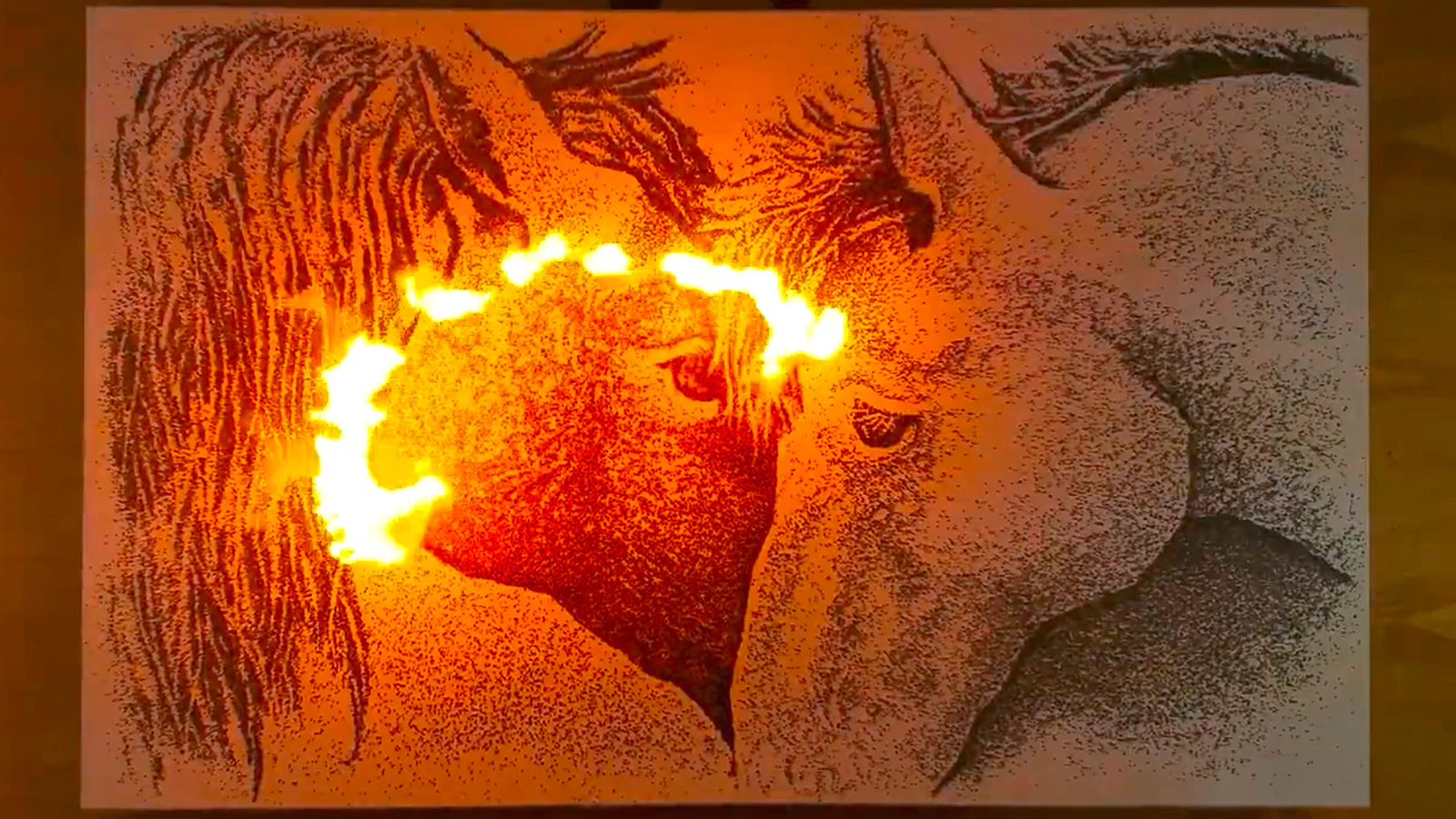
"Unbridled Devotion" is burned into an intimate portrait of a pair of horses. (Danny Shervin) 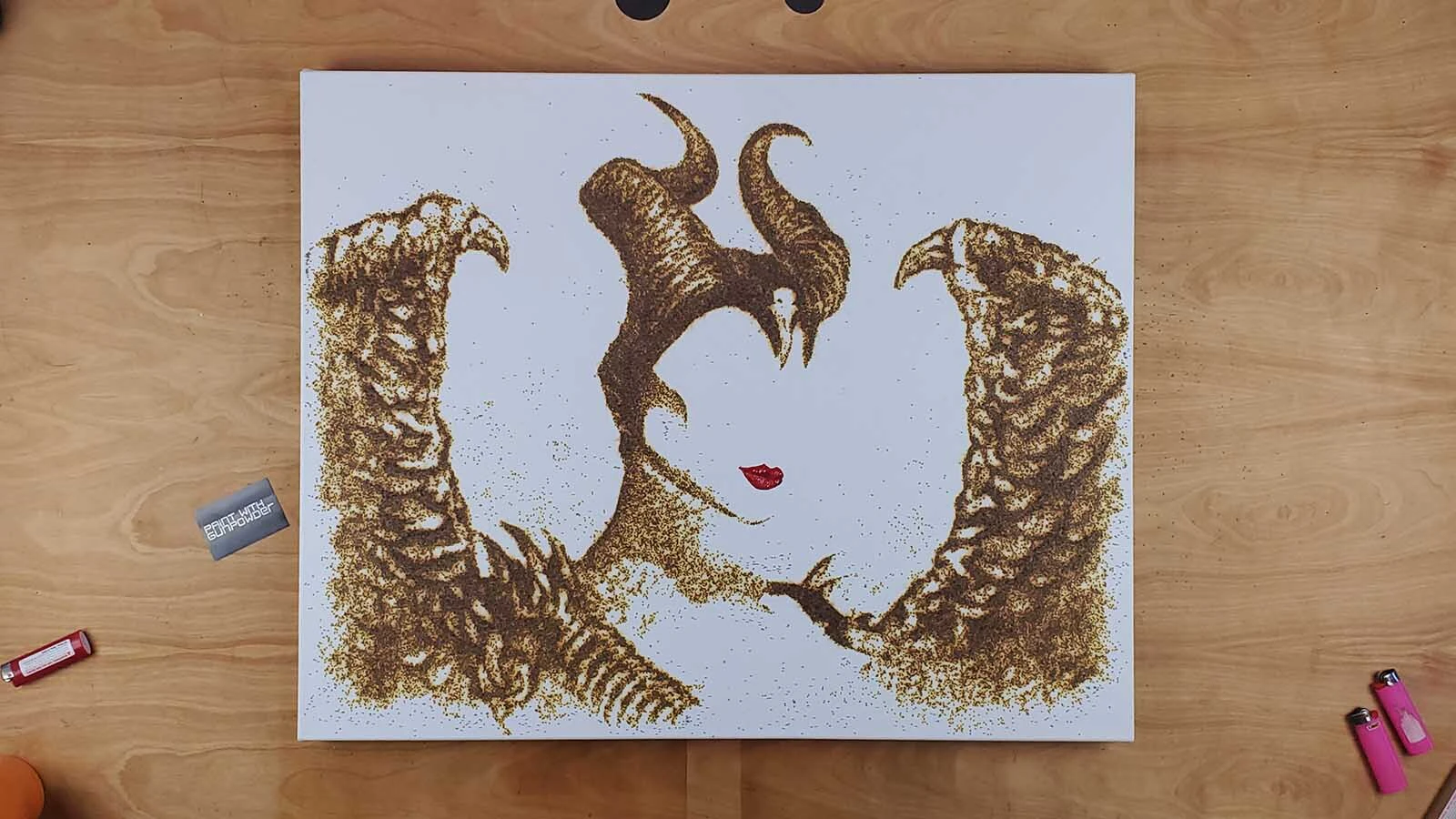
One of Danny Shervin's works in progress. (Danny Shervin) 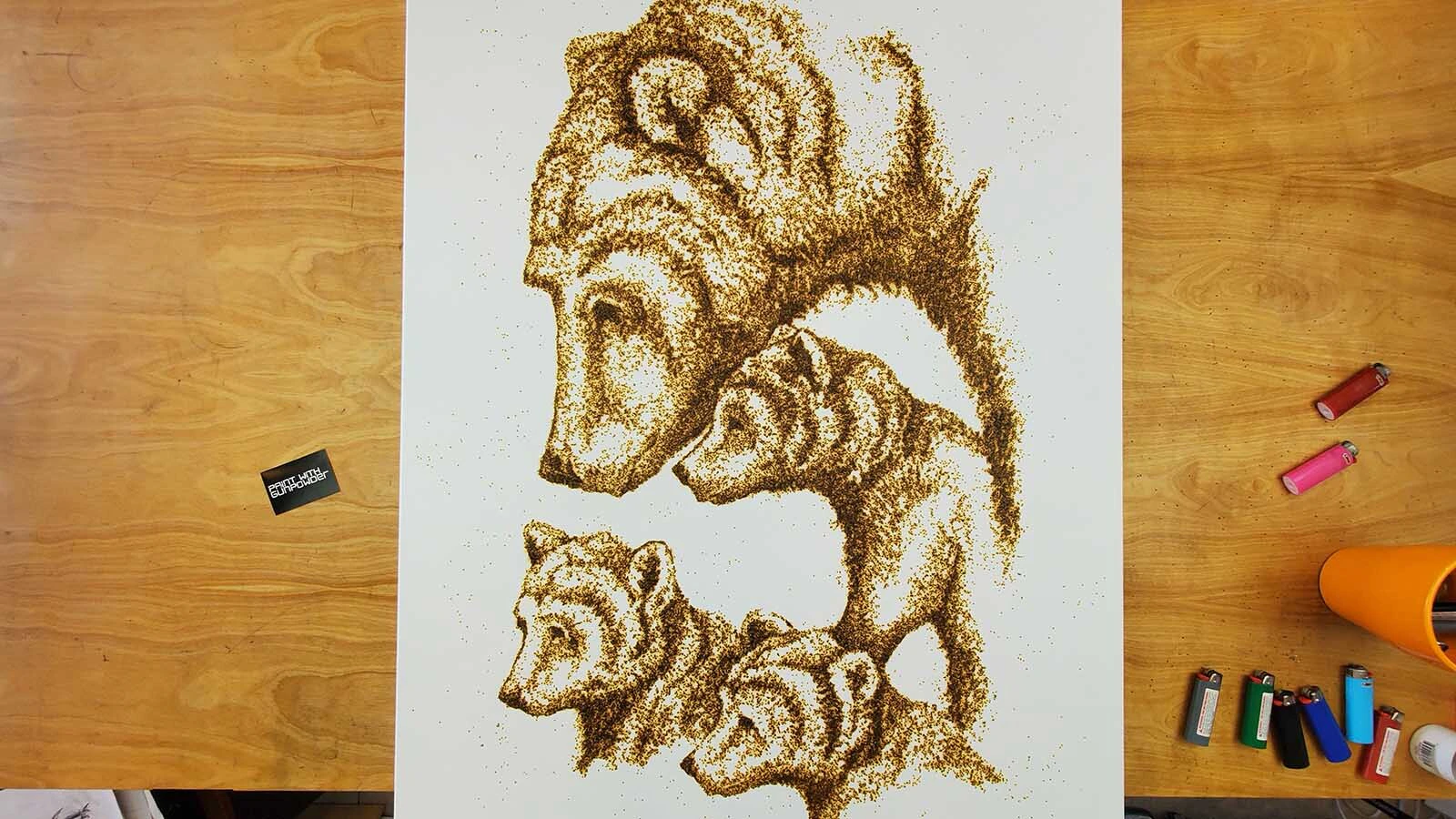
Wildlife is a favorite topic for gunpowder painter Danny Shervin. (Danny Shervin)
No Such Thing As Good Vibrations
Before the flames arrive, Shervin’s artwork is particularly vulnerable.
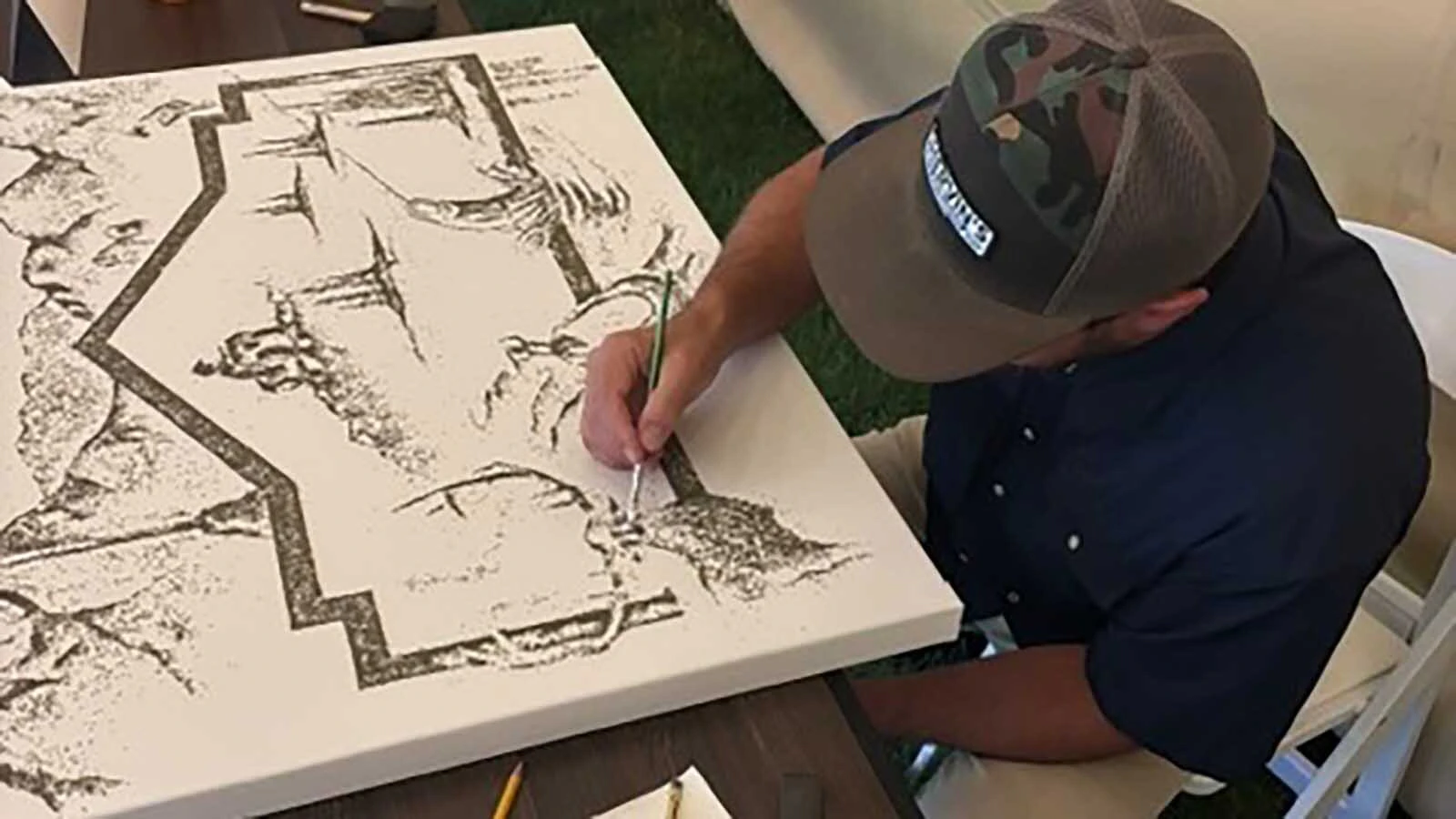
He doesn’t glue down the powder. It sits loose on the surface while he moves it into place, building shadows and texture and leaving open space for highlights.
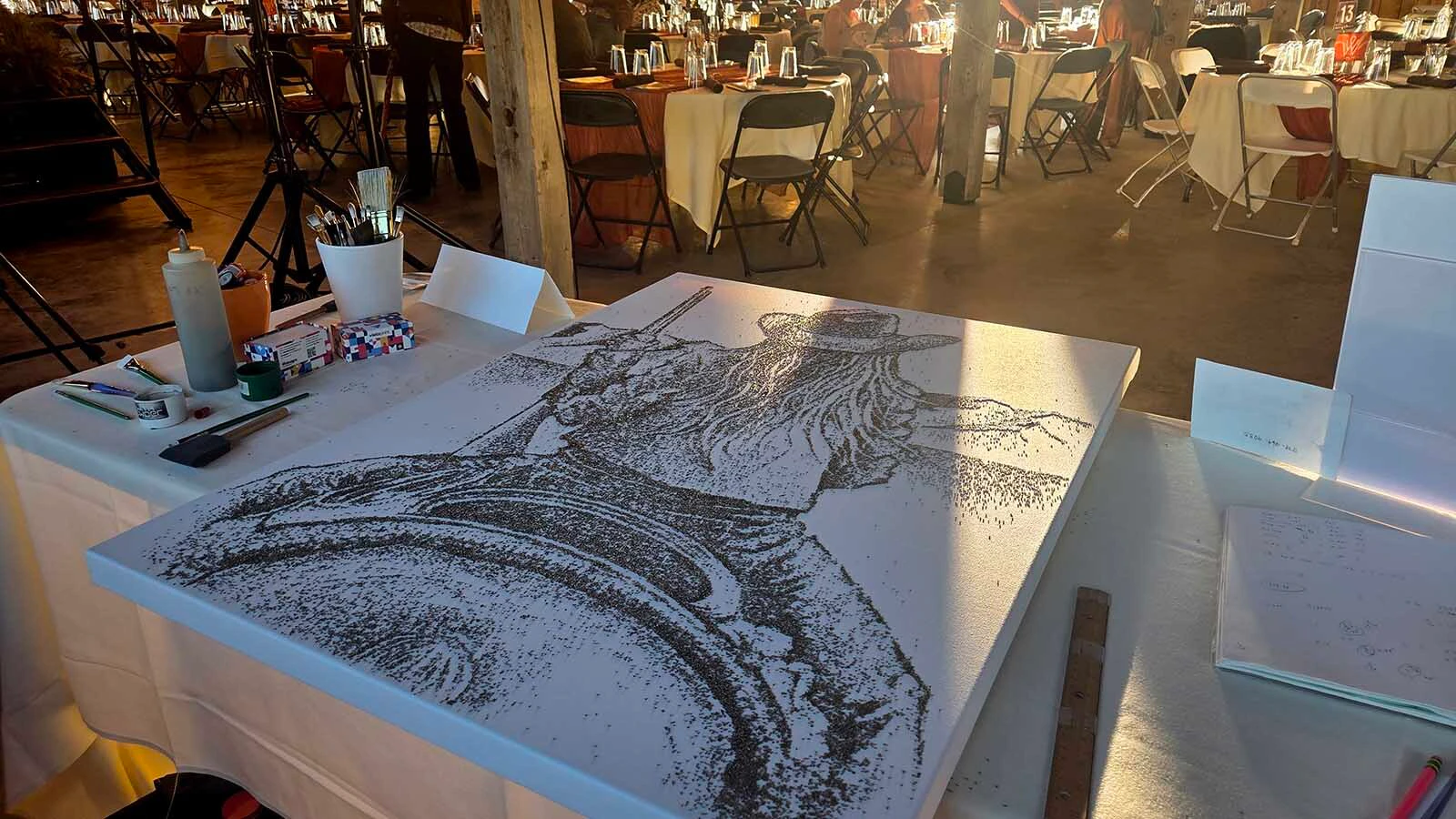
Something as simple as a dropped brush or an untimely opened door can completely wreck an image in progress. Even speakers at a live event can vibrate the powder out of position.
One memorable setback happened when he was still working out of his garage. His wife came home and opened the garage door. A gust blew through, scattering the piece right before he was going to burn it.
There went the artwork.
And the appeal of using the family garage for a studio.
He now has his own, dedicated workspace, although his outdoor events still require protection from wind and live performances often bring complications he can’t entirely control.
The longer he works on a piece, the more time that leaves for something to go wrong.
A commission depicting a bottle and label for Gunpowder Irish gin took roughly 70 to 80 hours to create with its Chinese lettering and other intricate details.
“The longer the project, the more nervous I get about it,” Shervin said with a chuckle. “But it turned out awesome, and it was really cool.”
Creatures Great And Small
Shervin’s favorite subjects remain close to home. As a Jackson native, he naturally gravitates to wildlife and western scenes, particularly bison and bears, whose shaggy coats have lots of texture to play around with.
His commissions, though, have pushed him well beyond those subjects.
For ESPN, he created college football logos whose burning process was filmed for use during team and player introductions. Projects other than artwork filmed for Disney and “Mission: Impossible” include corporate logos, buildings, bottles and tables.
He’s shipped artwork to buyers in New Zealand, Ireland, Australia and elsewhere in Europe. Locally, pieces hang in the Hotel Jackson and other businesses, while much of his selling happens online.
His smallest works are typically 6-by-6-inch cards, while his largest was a 10-by-12-foot public art piece depicting a moose, half-skull and half-living head.
Because the powder had to stay flat, Shervin repeatedly climbed above the painting to check his proportions, then descended to make adjustments.
He created the piece on a framed board covered in white laminate — a much larger version of that old kitchen table that started it all. Then he had an automotive shop apply a clear coat to protect it outdoors.
It was displayed for a time along Broadway in Jackson and is now stored in his barn until he can find it a permanent public home.
Keeping The Art Fire Burning
Shervin compares working with loose powder to shaping clay. Until he burns it, he can keep moving it around, shaping the image.
Once he lights it, though, his decisions become permanent.
“That’s kind of what I like about it is the finality of it, because I’m a perfectionist,” he said. “I can sit there and work on something forever and keep changing it and changing it. So this is good for me because when I light it, it’s done. I can’t go back.”
For someone who once chose finance because art seemed impractical, the way things have worked out — and how well — still amazes him. He couldn’t imagine doing anything else now.
It’s also not lost on him that his artwork fits perfectly around homeschooling his two children. He has time for lessons, travel and live events.
He’s going to continue experimenting with textures and colored smoke, but has no elaborate plans for where his business should go next.
The process is fussy and vulnerable, easily wiped out by a light breeze or dropped brush, but there’s something endlessly fascinating about that moment when he clicks a 99-cent Bic lighter to light a flame that will curl its way across the lines he’s made.
“I love it,” he said. “It’s kind of mesmerizing.”
Watching his work burn feels a lot like sitting around a campfire in his youth, and that’s endlessly appealing.
“You just relax and watch it burn,” he said.
Renée Jean can be reached at renee@cowboystatedaily.com.


