CHEYENNE - Distaste for debates appears to be an affliction befalling many candidates for office in this election cycle, across the nation.
It could be the first sign of the eventual end of candidate debates as an election institution.
More candidates are turning to social media and digital messaging as a way to reach voters without having to be in personal contact with them.
In Wyoming, major Republican incumbents and MAGA supporters Harriet Hageman and Chuck Gray refused an invitation to debate their challengers.
Hageman, currently a U.S. Representative, is running for the U.S. Senate seat being vacated by Cynthia Lummis, who is retiring.
Gray, the current Secretary of State, is seeking to replace Hageman as the only Wyoming Representative in Congress.
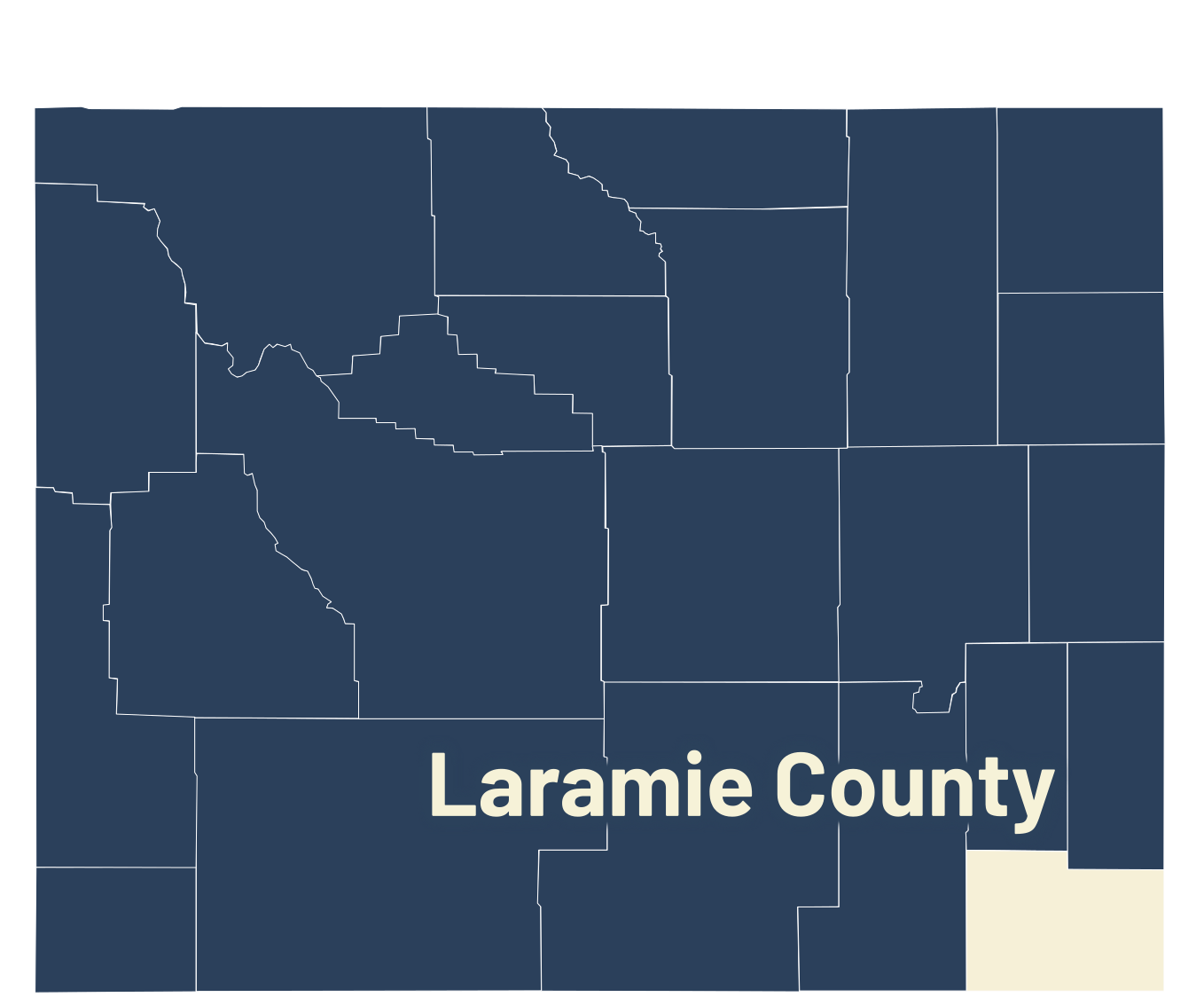
The anti-debate affliction goes further. Laramie County’s sheriff, Republican Brian Kozak, is seeking his second term. His opponent is Democrat Robin Cozad.
Kozak, a former Cheyenne police chief, recently rejected the debate invitation from a group called “Circle of Citizens,” because of offensive comments from its organizer Joe Ramirez.
Kozak has been criticized by Ramirez and others, including the American Civil Liberties Union, for his open support of ICE immigration operations in Laramie County, according to internet sources.
His no-show left Cozad with the latitude to explain his plans and experience, or lack thereof, without interfering questions from Kozak.
If I were Sheriff Kozak’s campaign manager 20 years ago, I would have advised him to go to the debate and demand his allotted time to compare his vast experience in law enforcement and understanding of the law with Cozad’s.
But that was a time when failure to enter a debate was considered a black mark against an incumbent candidate It was a sign the candidate had become arrogant and sure of his or her seat. It was a sign they were happy they no longer had to put up with those pesky voters, with all their questions.
The incumbents’ collective argument against debates is they can get their message across to voters easier through modern communication means, like social media or digital messages, in other words, ads.
It’s not the same, though. Ads, for example, have become a nuisance to a lot of people.
I think there is a large dose of arrogance in an incumbent’s unwillingness to face voters in person.
Two years ago, Wyoming Public Television canceled a planned debate when both Hageman and Sen. John Barrasso, who was running for re-election, declined to participate.
This year, Wyoming Public Television canceled a scheduled debate between Hageman and Democrat challenger and former legislator James Byrd.
This year Gray rejected a Wyoming Public Television debate invitation.
But the station will go on with a debate among Gray’s opponents, Democrat Lisa Kinney and Libertarians Jeff Hegit and Shawn Johnson.
In the golden age when Wyoming had remarkable representation in both the Senate and House, we had Gale McGee, Cliff Hansen, Teno Roncalio, Dick Cheney and Alan Simpson.
They relished debates so they could show off what they knew.
They weren’t afraid of their voters.
Today, though, as in everything else, the debate over debates is split politically.
It should be noted that one criticism of the decimated right-wing Freedom Caucus group was that members refused to debate bills in the Legislature.
Currently, conservative commentators and Republican strategists often frame the decision to skip debates among candidates as a rejection of a media landscape they perceive as biased.
They claim there is growing support for alternative formats, such as town halls or digital interviews, which allow candidates to speak directly to their base without interruption. This perspective holds that debates have become performative rather than substantive, distracting from key policy issues, according to an internet source, Political Bytes.
Democratic strategists argue that the decline in debates favors incumbents and well-funded candidates who can dominate media cycles through advertising.
They contend that debates provide a necessary check on power.
Face-to-face interactions with voters, including debates, are crucial for holding representatives accountable and ensuring transparency in the democratic process, the Democrats say.
Contact Joan Barron at 307-632-2534 or jmbarron@bresnan.net