
"Elections belong to the people. If they decide to turn their back on the fire and burn their behinds, then they will just have to sit on their blisters." — Abraham Lincoln
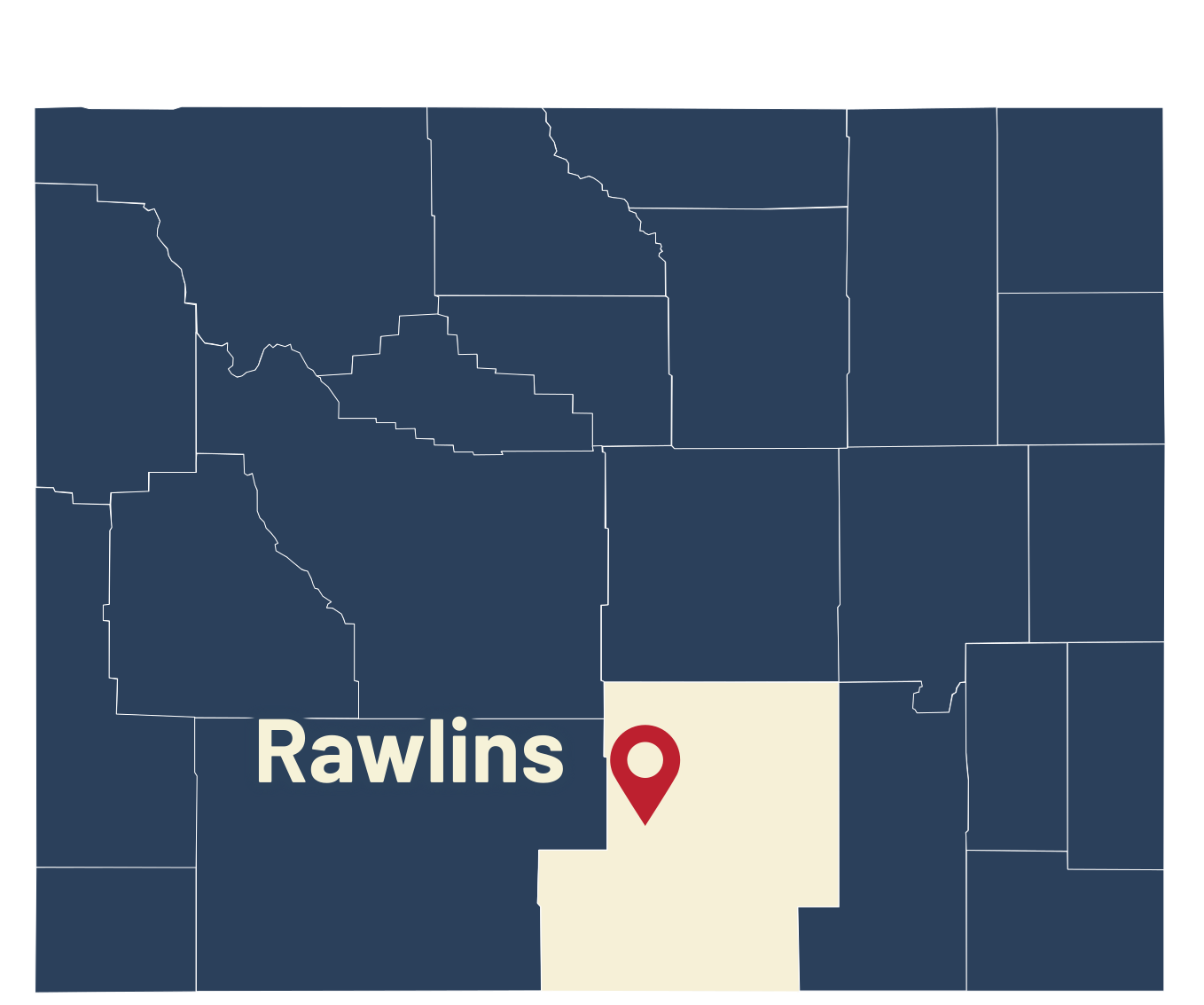
I was a young lawyer in Rawlins, Wyoming in the 1980s when the coal economy collapsed.
I know what that looks like from the inside — not from a policy paper, not from an economist's model, but from a Carbon County courtroom where the human wreckage of destroyed livelihoods arrives, case by case, on my docket.
The collapse does not come from nowhere. It comes from Washington.
Jimmy Carter's energy policies — the windfall profits tax, the regulatory stranglehold on domestic production, the systematic hostility to the fossil fuel industry that powers Wyoming — drain the life from communities like Rawlins for years before the final bust hits.
The rigs go quiet. The mines close.
Men who built their lives on honest work in an energy state find themselves with skills the market no longer wants, in a town the federal government helped hollow out, with no map forward and no one in Washington who knows their name.
I had been a prosecutor. When the bust hits, I become a public defender.
The transition teaches me something no law school teaches: the distance between a good man and a broken one is often nothing more than the distance between a paycheck and the absence of one.
One case never leaves me. I can still see him — piercing blue eyes, a red beard, a ruddy face burned by Wyoming wind. A coal miner. A strongly moral man, the kind Carbon County is built on.
He loses his job when the industry collapses. It is a bitter winter — wind screaming through the Hanna gap like something alive and angry, temperatures so far below zero the air itself feels hostile.
A family cutting costs, holding on, getting through one more day.
One morning, while he is out looking for work, refusing to quit, refusing to ask for anything he hasn't earned — his wife takes their little girl into the garage to warm up in the car.
The garage door is closed against the cold. She buckles her daughter in. She turns to open the garage door. One step. She slips on the ice. She fractures her skull and goes down on the garage floor and does not get up.
The carbon monoxide does the rest. He comes home to find them both dead. His wife. His daughter.
Gone on the same morning, in the same garage, because there is no work, because there is no money, because Washington has decided that Wyoming's energy industry is a problem to be solved rather than a community to be sustained.
The guilt of a man who is not there when his family needs him most is a particular kind of torment. He has been doing everything right. And it destroys him anyway.
That winter breaks him. By summer he is hollowed out, drowning what is left of him in whatever he can find.
At the Hanna town picnic — children playing in the summer grass, neighbors who worked beside him in the mines — the delusion takes over.
He believes his dead wife and daughter are there in that crowd, in danger. He draws his gun to protect them. He wounds innocent people with the wreckage of his own wounds.
It is not justifiable. But it is not evil. It is the final chapter of a story that begins in Washington.
I defend him. I do my job. I keep him out of prison. But sometimes a lawyer must understand human nature as well as the law. A man needs a reason to live.
I argue this to him — his son, his surviving child, the one thing Washington's policies could not take from him. He seems to hear.
But I never stop thinking about the invisible men in Washington who believed they knew better than the free market what America should make and how America should live.
They took his livelihood, his purpose, his family, and finally his sanity, and never once knew his name or looked into those blue eyes. He wounds neighbors at a summer picnic when his real enemies wear suits, carry briefcases, and go home to comfortable houses in cities that will never run out of heat.
The faces change but the idea never does. Carter's regulators have been replaced by AOC, Bernie Sanders, Hakeem Jeffries — slicker in presentation, sharper on social media, selling the same threadbare promise: that everyone can have everything, that prosperity is a matter of political will rather than productive work.
Every cowboy in Wyoming knows better. You can only make something out of something. The land doesn't lie, the cattle don't lie, and the market doesn't lie. You work, you produce, you earn — or you don't eat.
There is what is seen — the price at the pump, the immediate pain that drives voters to hand Democrats control of Congress this November.
And there is what is not seen — 160,000 manufacturing jobs announced but not yet filled, a $17 billion Google data center rising in Cheyenne, ten consecutive months of manufacturing expansion before the electorate decided fuel prices were more important than the future.
That little girl in Hanna is the unseen. She is what the accounting never includes.
Biden's energy policies are Carter's policies with a fresh coat of paint. Trump was fixing it.
Not fast enough for an electorate that turns its back on the fire, sits down hard, and will now have to sit on its blisters. A country that makes nothing will be worth nothing.
I spent thirty-nine years in Rawlins. I watched strongly moral men become defendants.
I defended a man with blue eyes and a red beard who drew a gun at a summer picnic to protect a wife and daughter already in the ground. I know what it costs when Washington decides Wyoming is expendable.
We have just handed the tools of obstruction back to the party that wrote the original playbook — the same fatal certainty that prosperity is a promise rather than a product of work.
AOC and Bernie Sanders didn't invent that idea. Jimmy Carter's regulators had it first. They just didn't have the Instagram account.
A country that makes nothing will be worth nothing. The blisters are coming.
Wyoming already knows what they feel like. We have the scars to prove it.
Fred Harrison can be reached at: Fred.Harrison@fjhlawoffice.com