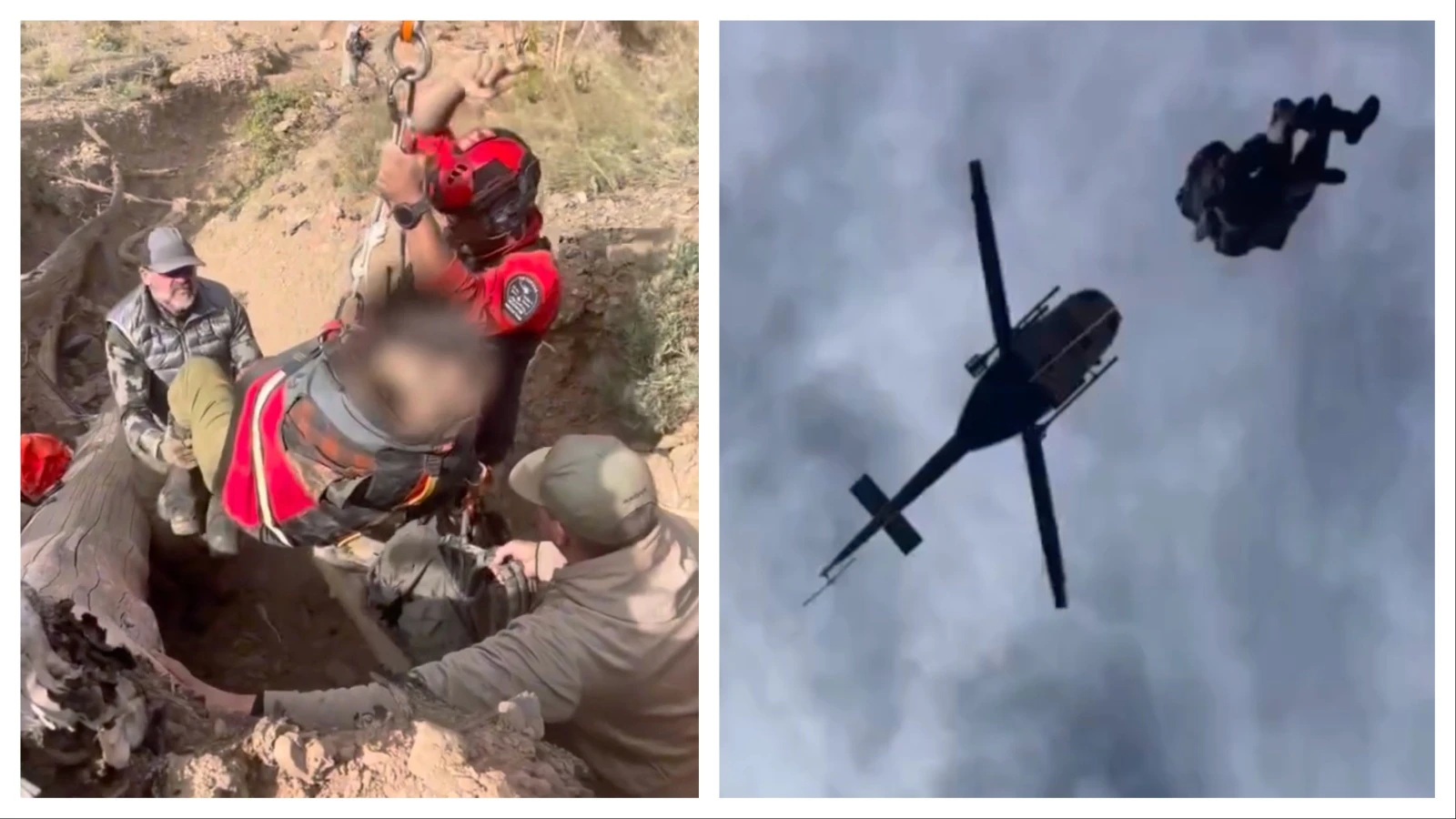
Pinedale’s Tip Top Search and Rescue rescued an injured horseback rider out of a tight crevice last week using sophisticated short-haul helicopter rescue training.
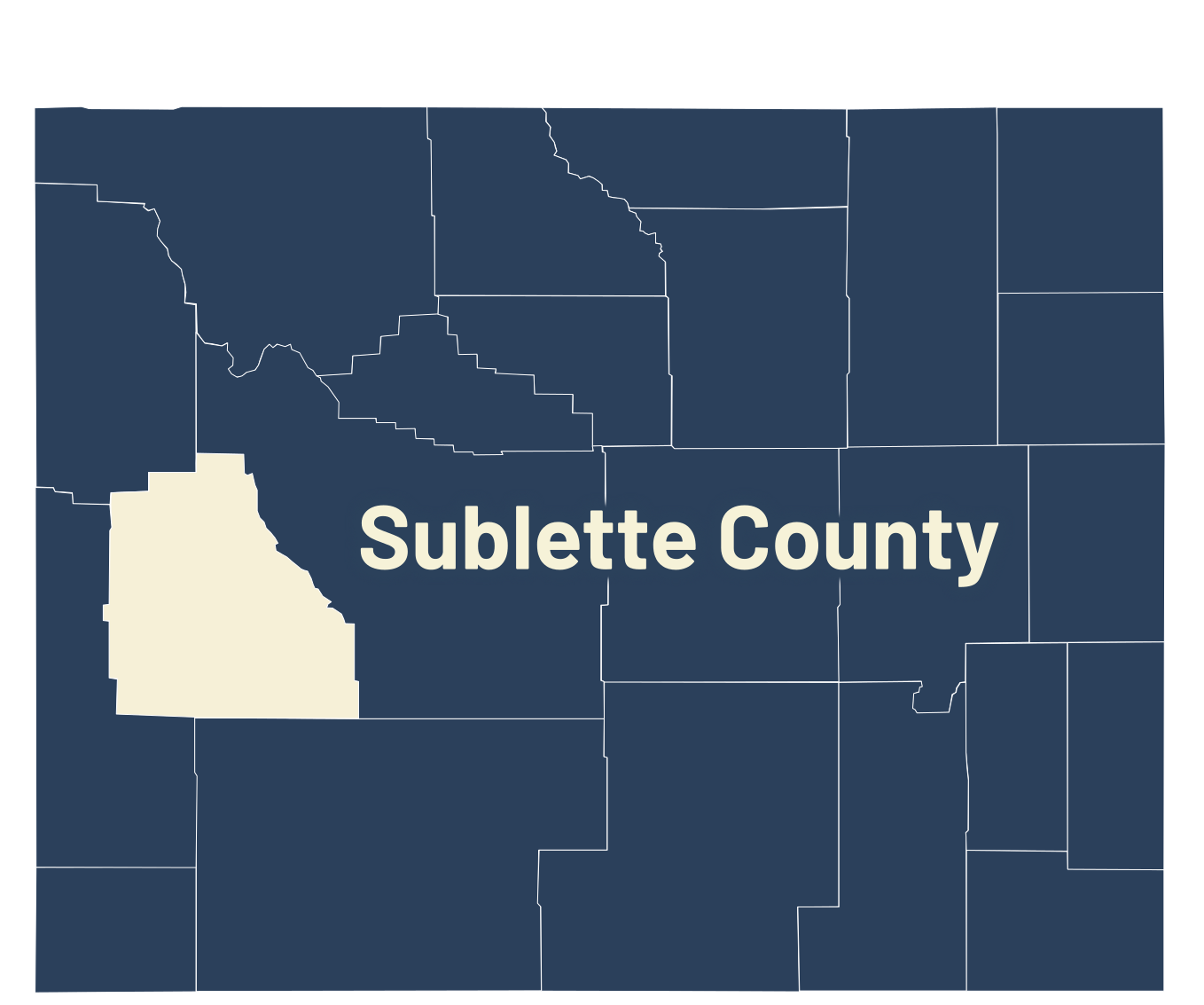
Tip Top Search and Rescue (TTSAR) got a call the morning of Sept. 15 that a man had been bucked off a horse while riding near Mount Darby in Sublette County.
The victim ended up at the bottom of an 8-foot-deep crevice. He reportedly hit his head, had difficulty breathing, and couldn’t move his lower legs.
Definitely A Short-Haul
Joel Klosterman, TTSAR’s helicopter short-haul team lead, determined a short-haul rescue was the best way to rescue the victim. A short-haul operation is one where the rescuer and/or the victim are suspended by rope or cable beneath the belly of a helicopter.
“Given where that patient was, it was an absolute short-haul,” he told Cowboy State Daily. “We decided that I would be on the line, and our other team member would be the spotter, sitting on the right side of the helicopter to observe the tail and whatnot.”
The rescue effort was coordinated from a field a few miles from the victim’s location. Klosterman attached himself to a rope, which was attached to the helicopter via a “belly band.”
“That's what our long line hooks to,” Klosterman said. “We rigged the ship for a short-haul, I hooked up in the meadow, and then the pilot flew me from the rope hanging from the helicopter into the patient.”
A medical helicopter from Evanston landed in the same meadow, waiting for the victim.
While dangling from the line, Klosterman communicated with the pilot via radio. He called out his distances from trees and the ground to ensure his safety as the helicopter carried him through the air.
When the helicopter reached the crevice, Klosterman was lowered into it and prepared to get the victim into “a screamer suit”, or evacuation harness, for extraction.
“The patient was in a lot of pain,” he said. “He didn't really want to move, and couldn’t put his legs down, so it made getting him into the screamer suit a little difficult.”
With help from two other TTSAR volunteers, Klosterman managed to get the man into the screamer suit. Then, Klosterman linked them both to the line, and the helicopter lifted them out of the crevice and into the air.
From there, it was “an easy extraction,” Klosterman said.
“Once we got him, it was nice and smooth,” he said.
The victim was then flown to a hospital in Idaho Falls, Idaho. Authorities have not disclosed his name or condition.
Tip Top Training
Klosterman described the mission as “pretty routine” as far as short-haul missions go. TTSAR constantly trains to ensure they go as smoothly as possible.
“We're required to do what's called typical terrain short-haul training,” Klosterman said. “The short-haul program is very complex, especially for a volunteer organization, so we train a ton throughout the summer while we have the contract and the helicopter is here.”
No short-haul rescue can commence without crucial paperwork.
According to Klosterman, a Go/No-Go assessment was completed before the operation to ensure conditions were within safe parameters for the helicopter and the people it’d be carrying.
“It’s administrative paperwork to make sure winds, terrain, and all that stuff is in our favor,” he said. “We do that, and if everything looks good, we take off.”
Klosterman said every TTSAR volunteer is “super highly trained,” which made the mission, by their standards, fairly straightforward.
“We don’t just short-haul people in and out of big meadows and flat ground,” he said. “We do super-steep stuff off cliffs, into deep crevices and drainages, and stuff like that. When we do the real missions, it’s all routine for us.”
Andrew Rossi can be reached at arossi@cowboystatedaily.com.