Wyoming legislators shot down a bill Tuesday that would have let non-veterinarians pregnancy-check livestock.
Large-animal veterinarians pleaded for their livelihoods. Some lawmakers sparred with bill detractors. And one rancher cried during the hours-long debate of the Joint Agriculture Committee in Sheridan Tuesday morning.
In the end, the bill died on an 8-5 vote.
It is a crime in Wyoming, punishable by up to six months in jail and $750 in fines, for a non-veterinarian to practice veterinary medicine – with some limited exceptions.
The bill draft the committee debated Tuesday would have added selling pregnancy checks to those exceptions. But, a note from a legislative staffer emphasized, it wouldn’t have added any hybrid certification for the lay pregnancy tester.
Ranchers can already perform their own pregnancy checks, on their own livestock. The crime would apply to an independent, lay practitioner offering that service without a license.
People on both sides of the argument agreed there’s a shortage of rural vets.
Rep. Pepper Ottman, R-Riverton, challenged veterinarians on whether adding lay pregnancy checkers to the industry would harm them at all, given the shortage.
“I just don’t see the threat when it is very obvious that we are short-handed today,” she said.
Producers will still call a veterinarian if there’s a problem, Ottman added.
“What is the problem with someone wanting to get trained, and be into the open market, in this procedure?” she asked.
She said she doesn’t believe that “allowing one person to get into the marketplace to preg check cows when they’re going to be preg checked at the sale barn anyway is going to be detrimental to the economic stability of the state.”
“I just don’t understand it. It’s to complement the veterinarians,” she added.
The veterinarians who testified didn’t see it that way. Many said they saw the bill as an existential threat that could scare away rural veterinarians.
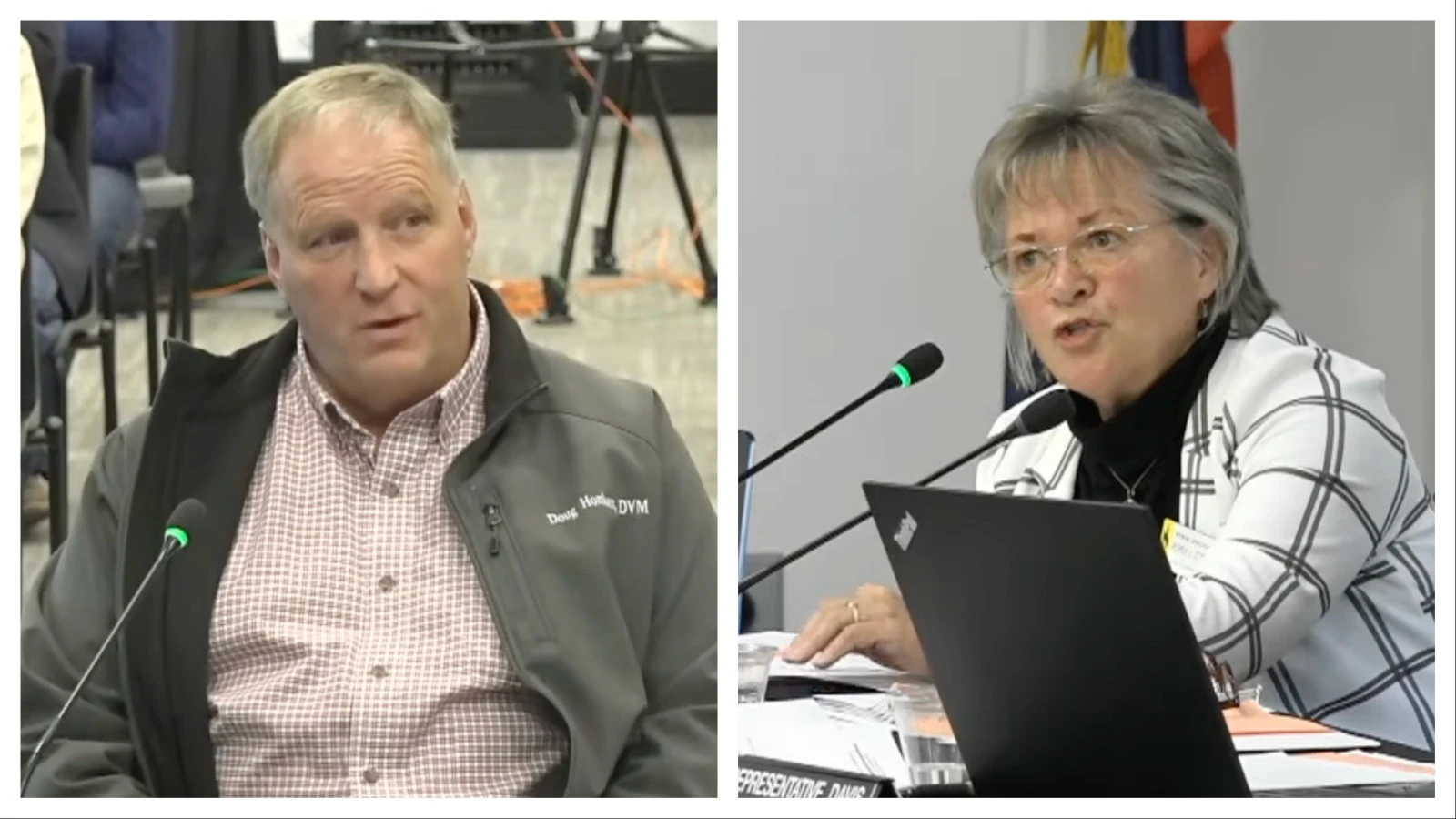
That would then leave ranchers in a bind during true medical emergencies, Dr. Doug Honken, of Laramie, told the committee.
“Yes (vets’ opposition) has to do with economics,” he said. “But I can guarantee you 100% ... You will cut their throat and you will never get another large animal veterinarian to come to the state of Wyoming.”
Honken said he’s preg-checked a cow whose calf suffered from a disability by which it was completely inside out.
“A layperson is going to say, ‘Oh, I don’t know, she’s pregnant.' No, she’s got a deformed calf. It’s just extremely disheartening.”
Ottman engaged in back-and-forth debates with multiple members of the public. So did Committee Co-Chair Sen. Bob Ide, R-Casper, who said more regulation means less freedom.
To the vets’ claims that preg checks help them keep a measure of the herd’s overall health, Ide said ranchers can make the decision to take that benefit, or the alternate risk, themselves.
“But expanding the pool is more liberty for everybody,” said Ide. “The free market always figures it out.”
The state shouldn’t be criminalizing entrepreneurs in this space, he added later.
Rep. Karlee Provenza, D-Laramie, called for less argument with the public.
“Typically we don’t have a back-and-forth with the folks that come to testify. We ask questions and then we have that back-and-forth with each other,” said Provenza. “
Sen. Barry Crago, R-Buffalo, nodded.
“I just would ask, committee, that we keep to questions, to people that have driven here to testify, so that members of the public feel welcome,” she said.
Ide said he’d rein in the discussion.
Can’t Get A Vet
Katalina Pfeil, a rancher who testified her family farm in northeast Wyoming has bene in operation since 10 years before Wyoming became a state, said vets are difficult to book. They don’t do comprehensive herd checks during the preg test, in her experience, and a lay pregnancy checker could help with earlier, smaller market decisions.
“You kick yourself because you wasted your time holding onto animals that could have been culled earlier,” said Pfeil, of struggling to book a vet until later in gestation.
Pfeil testified that she’s gone to ultrasound classes and now can check cattle at 30 days, and make earlier decisions about her herd.
“As we say around here, the less you call a vet, the more they like you,” said Pfeil.
On the other hand, Jackie Benton, who runs a large cattle company in northern Wyoming, approached legislators in tears, saying offloading the pregnancy testing market from them would create a larger deficit of veterinarians.
The Entrepreneur
Hadessa Clyde, a producer from Fremont County, told the committee she supports the bill and wants to benefit from the deregulation.
“Nobody wants to work anymore,” said Clyde. “Well, I want to do this work.”
She said ranchers are professionals and should be able to hire whomever they choose to test their cows.
Crago asked Clyde how much she’d be charging per cow.
Her vet charges $5.25 per head, and Clyde would charge “somewhere in there,” she said.
Crago pressed again. “Like exactly the same dollar amount, or less or …?”
“It would be like the same,” said Clyde.
A Flood
Later, speaking to both Ottman’s assertion the bill would be for “one person” and Clyde’s statement, Crago noted that the bill doesn’t simply authorize one person. It would authorize a whole market.
“While I applaud the young women trying to start a business, they will not be able to charge the same as a vet, if this were to pass,” said Crago, who also ranches in Kaycee. “Because there will be people flooding into this state from other states to do the same thing.”
The practice cost would plummet and drive people out of business, said Crago.
Crago’s vet, Dr. Christina Vondraof Kaycee, testified against the bill as well.
Crago later invoked her business model while explaining his nay-vote on the bill.
“If her clinic does not do pregnancy checking, that clinic does not exist,” he said. “And in the middle of the night, when I need to haul a cow in to get a C-section, I’m going to be driving to Buffalo or Sheridan.”
“As a producer I understand the importance of keeping my vet local,” Crago added.
Compromise
Committee Co-Chair Dalton Banks, R-Cowley, asked the committee to add sideboards to the bill and find “middle ground.”
The committee tried that at a prior meeting, Provenza countered, and members killed the proposed amendments.
Sen. Laura Pearson, R-Kemmerer, cast that as unfortunate.
She said she believes in small business and in freedom. And she’d pushed for compromises on the bill that would have given vets more “oversight” on the new sector.
But having an involved veterinarian is vital to a producer and to health of Wyoming livestock generally, she added.
Roll Call
Crago, Provenza, Banks, Pearson and Sen. Taft Love, R-Cheyenne, gave nay votes, as did Republican Reps. Justin Fornstrom (Pine Bluffs), Bob Davis (Baggs), John Winter (Thermopolis).
Those voting aye were Ottman, Ide, Republican Reps. Steve Johnson (Cheyenne), Tomi Strock (Douglas), and Republican Sen. Troy McKeown (Gillette).
This story has been clarified to correct a typo.
Clair McFarland can be reached at clair@cowboystatedaily.com.