For a former NFL player, being an assistant coach on a middle school football team in Idaho might not seem too glamorous or rewarding. But for someone like Rich Ackerman, it’s all about making the most of every opportunity.
“If I’m not going to do it all-in, I can’t do it,” he said.
That’s what Ackerman, 67, did across five seasons in the NFL in the 1980s, squeezing out a legitimate career from a single tryout opportunity.
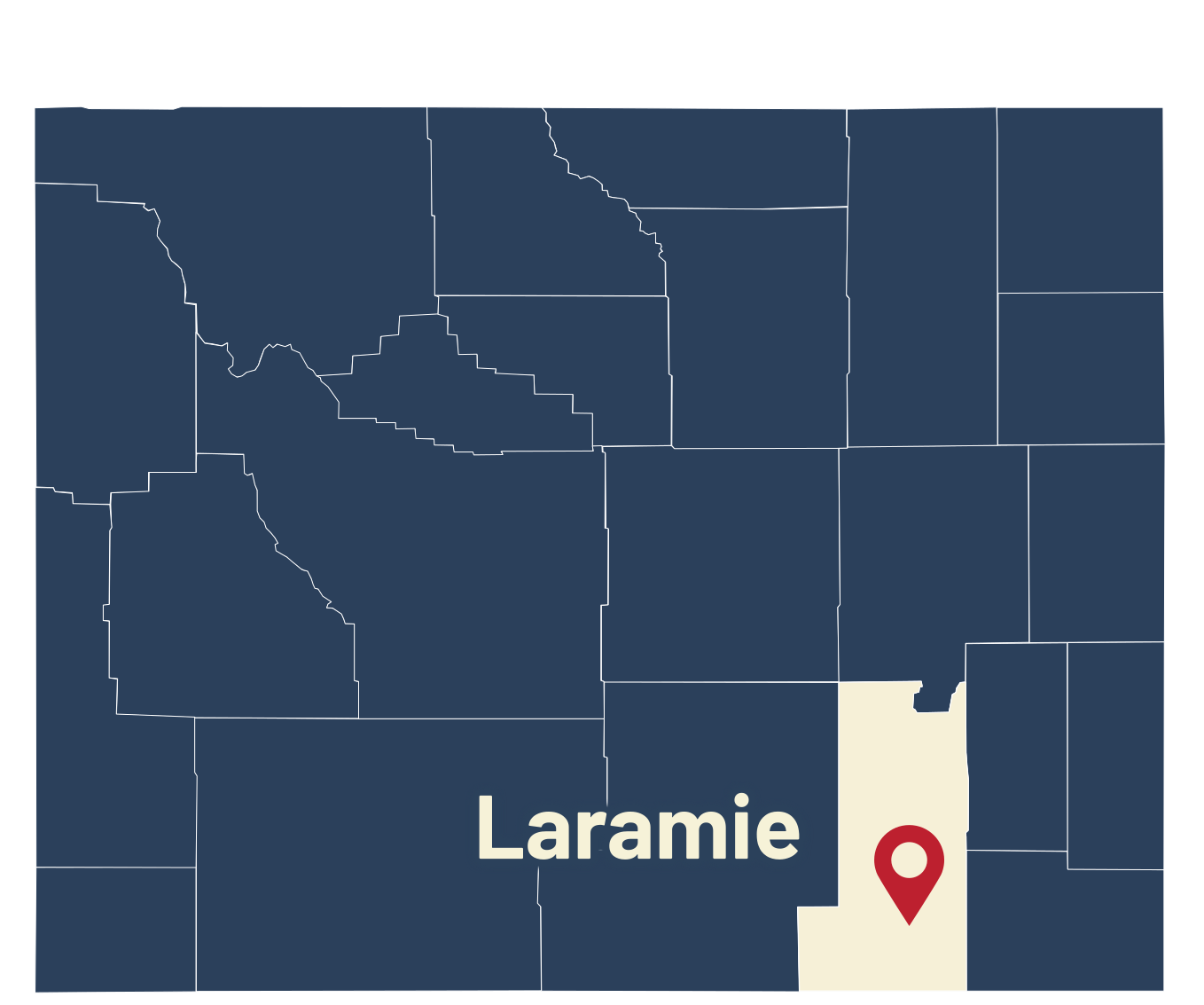
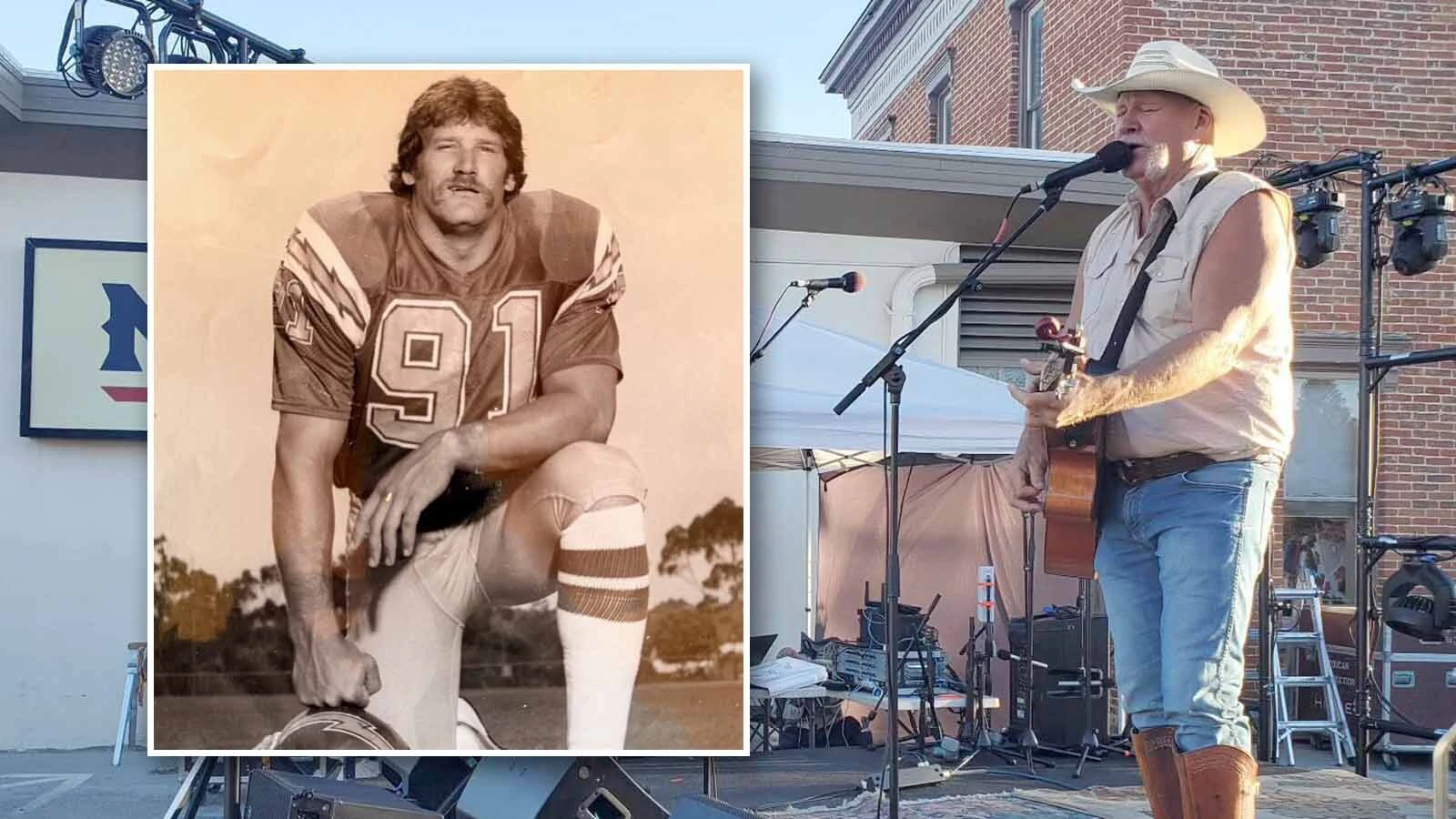
Once his football playing days were done, he moved to Wyoming full time. Now, he lives outside Laramie and regularly plays a variety of country, blues and rock and roll music at Wyoming music establishments, performing under the name “Big Ack.”
Ackerman grew up in what was at the time a rural area of Illinois, west of Chicago. After turning his dismal high school football team into a state powerhouse, he moved on to Memphis State University, where he played nose tackle.
Ackerman went undrafted after college but was given a training camp spot with the San Diego Chargers when the team’s assistant manager Tank Younger took a liking to him. The local media did not share the same enthusiasm, with one outlet predicting Ackerman would be the first player cut.
“It set me off, I was so pissed off,” he said.
Ackerman vowed from that moment forward to take out as many players as he could before getting cut.
Raw Talent Reaps Rewards
Back in those days, NFL training camps were a grueling affair, with up to six weeks of full on tackle football.
Ackerman credits this regimen for hardening his body and protecting him from injuries. He believes the reduced contact seen in training camps today is what leads to more injuries during the regular season.
Ackerman did enough in that tryout to hang around through the rookie mini-camp and then the full-squad training camp. He remembers the moment he laid eyes on the team’s starters at defensive tackle for the first time, staring out at multiple all-pro players.
At first, going up against veteran offensive lineman Ed White was like “handling a big bowling ball,” Ackerman said.
But fellow Chargers like Louie Kelcher took him under their wing, with Kelcher telling him he had to make the team so he could be his drinking buddy.
Once Ackerman did make the team, the two would go out drinking, with Kelcher playing the persona of Lefty, and Ackerman taking on Pancho, from the classic country ballad “Pancho and Lefty” played by Merle Haggard and Willie Nelson.
Now, when he plays shows, Ackerman tells this story and plays the song.
His professional coaches also helped mold him from a raw talent just trying to make a roster to a bona fide NFL defensive tackle.
Although he didn’t have much technique, Ackerman did have sheer strength, and considered himself one of the strongest on the team.
During the football off-season, Ackerman would stay in shape by lifting weights and bailing hay in Illinois.
His first breakthrough moment in practice came thanks to his defensive line coach Jerry Smith, who taught him to line up with a 3-inch lead step to give himmore momentum when rushing opposing linemen.
Standing behind Ackerman, the coach told him, ‘if you step on my foot, I’m cutting your ass.’
Ackerman took his advice and adjusted his stance and the rest was history.
“I just about lifted my opponent off the ground and threw him into the quarterback,” he said. “A light bulb went off.”
During practice, defensive players weren’t allowed to tackle their star future Hall of Fame quarterback Dan Fouts, so Ackerman would rush at the offensive linemen and then toss them into Fouts to satiate his appetite for bagging quarterbacks.
“I hate quarterbacks, can’t stand them,” Ackerman said, explaining how they were protected during practice, yet he had to sustain thousands of hits to his head.
Becoming A Raider
By the 1983 season, Ackerman was a full time starter for the Chargers, collecting two fumbles and 1.5 sacks that year in addition to playing in 15 games.
On the field he became a master of the “rip-to-hump,” a powerful two-step pass-rush sequence where a defensive lineman uses a rip move to get an offensive blocker leaning forward, and then executes a violent arm-lift, known as the hump, to throw the blocker off-balance.
But more than any specific play, Ackerman remembers the camaraderie and close relationships he kept with his teammates.
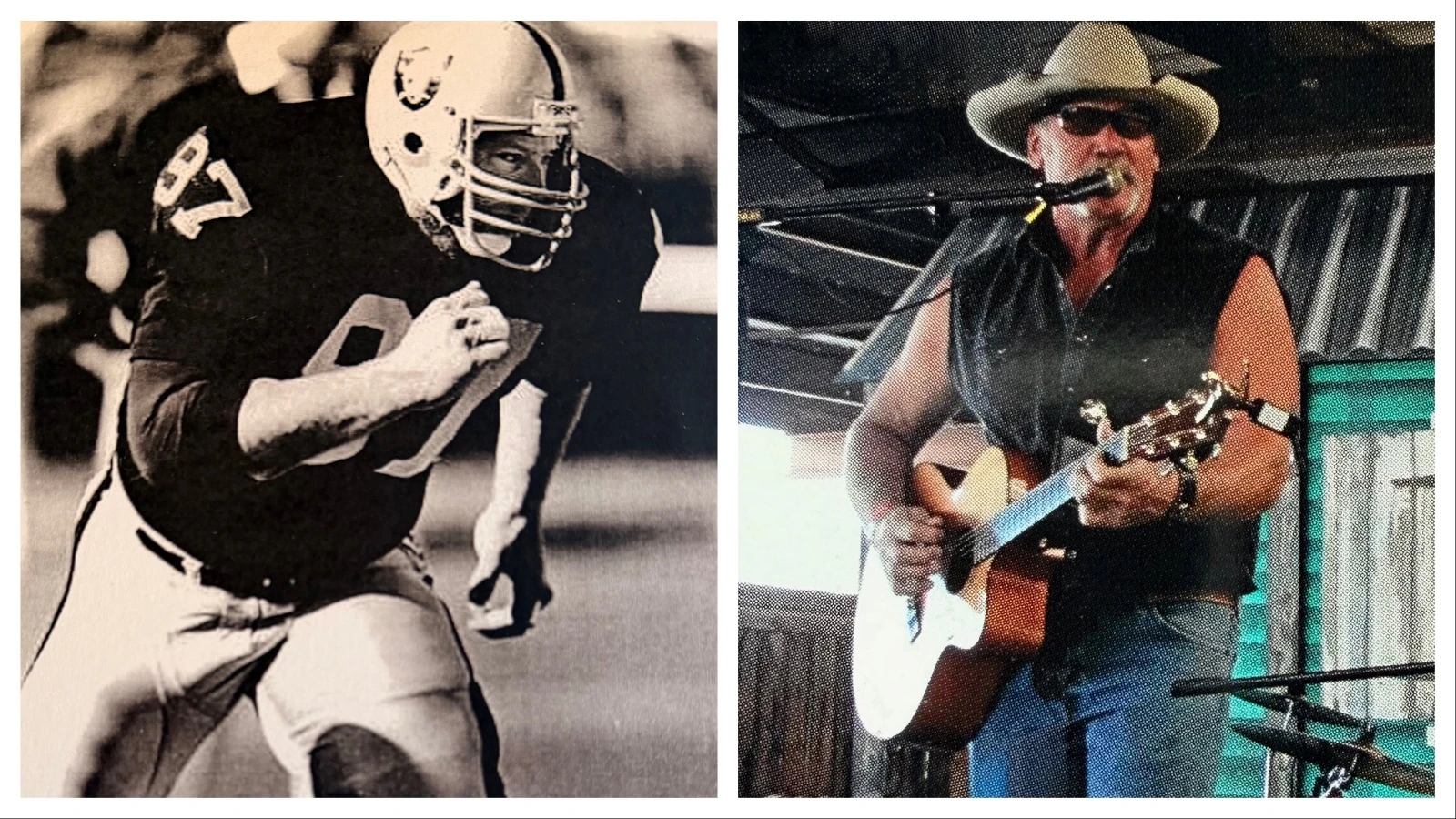
The Chargers released him during the 1984 season but soon after he received a call from legendary Los Angeles Raiders owner Al Davis, who offered him a tryout with his defending Super Bowl champion team.
Ackerman was excited as the Raiders’ outlaw veneer fit his own self-described “renegade” personality.
“You could do whatever you wanted and fight all the time,” Ackerman said of his time with the team.
Davis liked what he saw in Ackerman and offered him a contract that paid much more money than what the nose tackle was making on his rookie-scale deal with the Chargers.
It was during this formative time in Ackerman’s life he got his first taste of Wyoming, spending about a month each off-season in Yellowstone National Park.
“I decided when I was done I was moving to Wyoming,” Ackerman said.
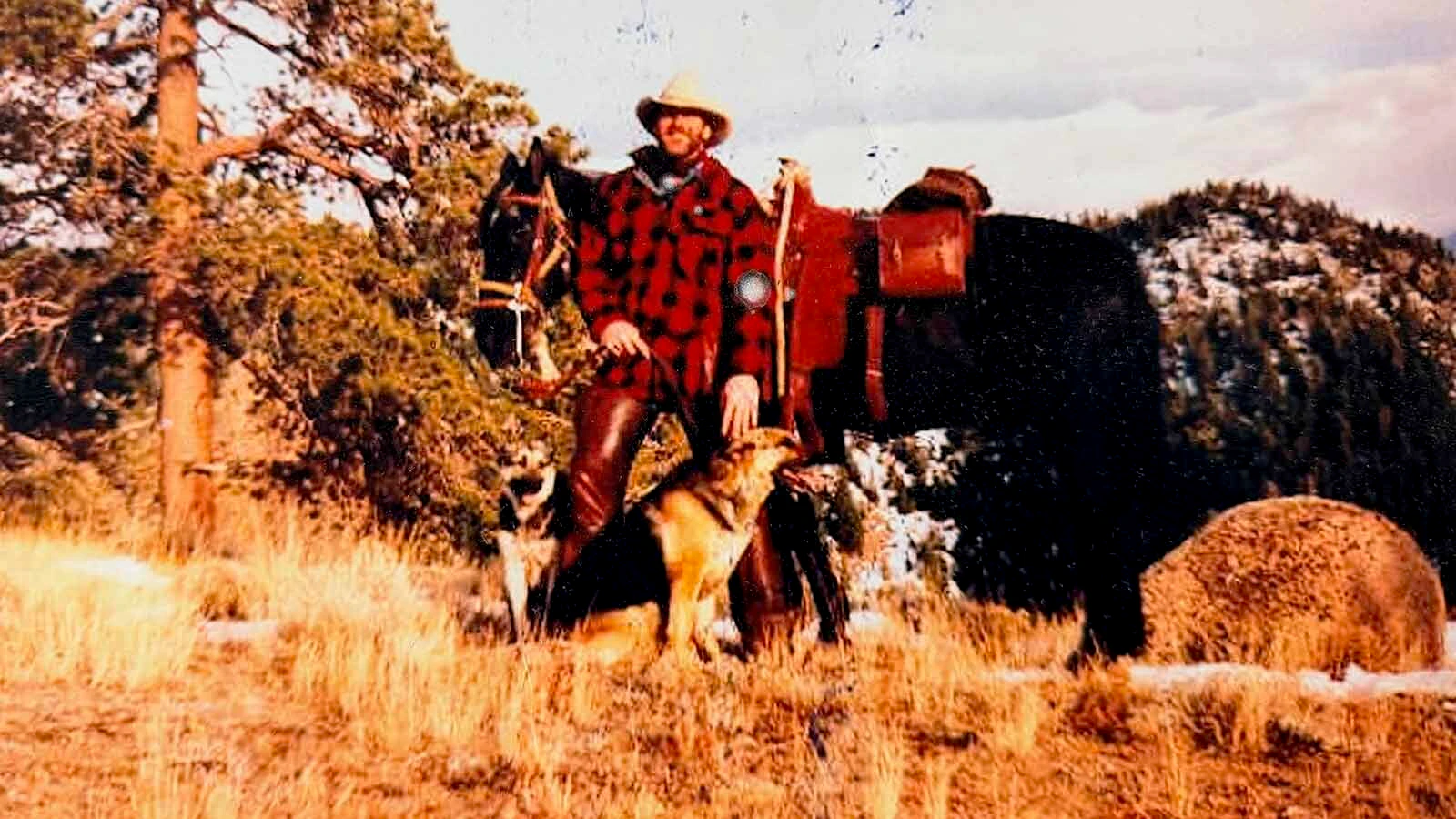
Since retiring from football, Rick Ackerman has lived the life of a mountain man, living in a small Wyoming cabin off the grid. (Rick Ackerman) 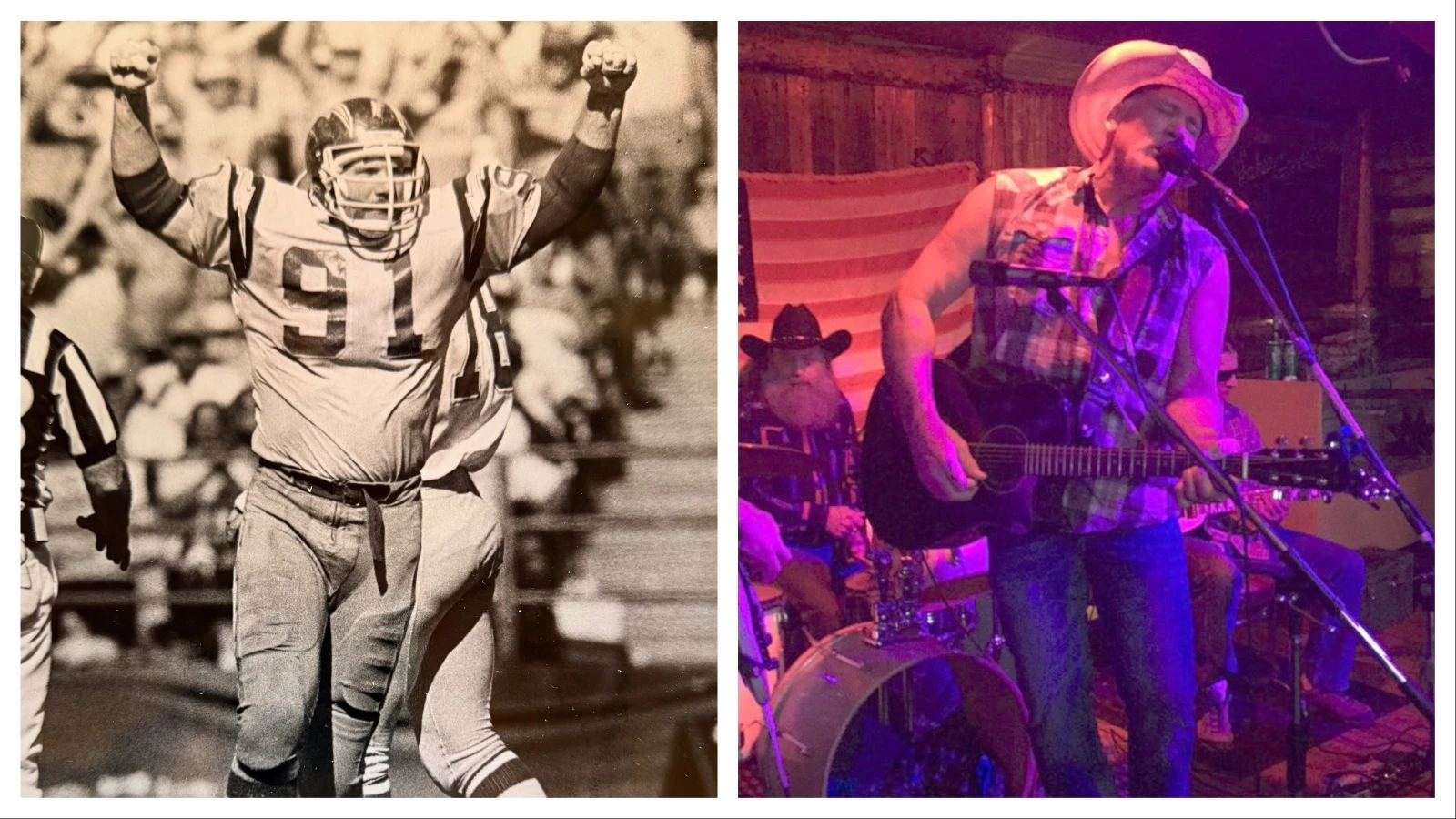
Rick Ackerman had some of his greatest NFL success with the San Diego Chargers, logging a career-high three sacks during the 1982 season. Now he lives another dream as a Wyoming mountain man and country music performer. (Rick Ackerman) 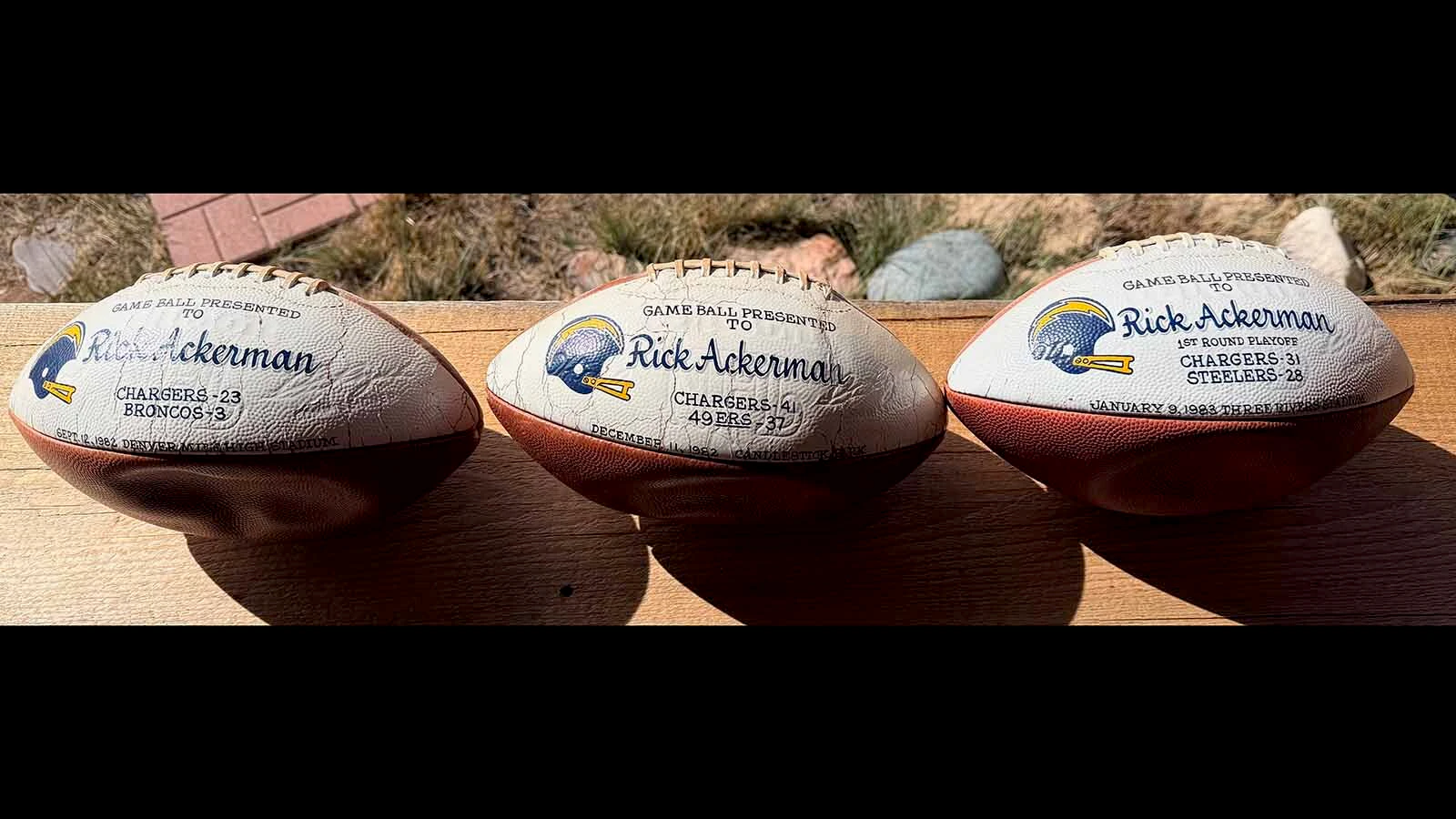
Rick Ackerman was given three game balls during his career as a reward for his stellar play in those contests. (Rick Ackerman) 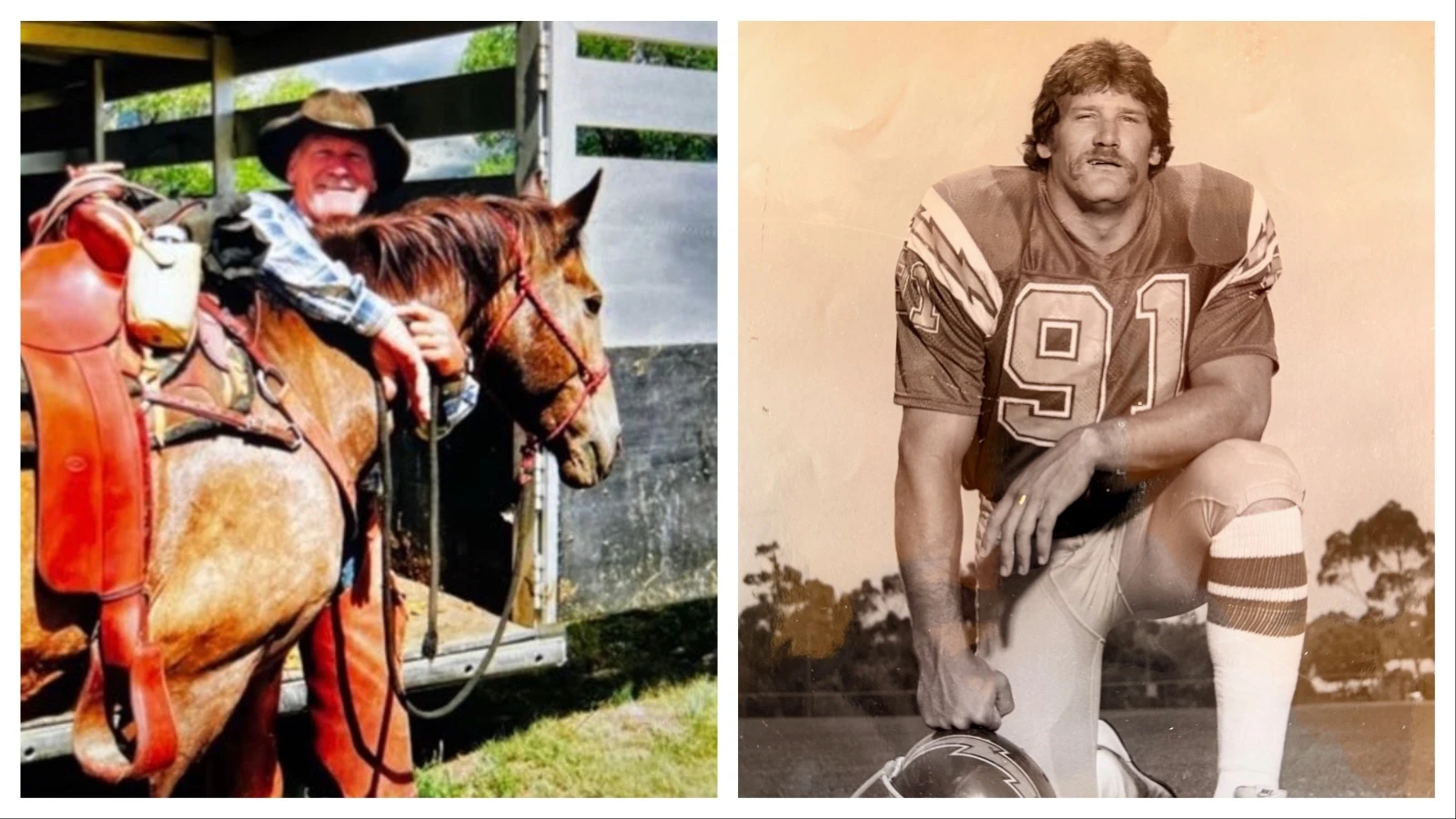
Rick Ackerman poses with his horse Moose after a backpacking trip. He started his NFL career with the San Diego Chargers, playing for the Bolts from 1981-1984. (Rick Ackerman)
Wyoming Chapter Of Life
Ackerman struggled to make a team over the next two seasons but continued his relationship with Davis, who would frequently offer him playing chances.
In 1987, Ackerman reunited with the Raiders again, but that year would prove to be his last in the NFL.
Ackerman finished his career playing in 42 total games, earning 18 starts, 7.5 sacks, and recovering three fumbles.
He moved to Laramie in 1989 and attended school at the University of Wyoming, where he earned a bachelor’s degree in animal science and a master’s degree in biology.
Ackerman remains grateful for this experience, as he said it helped smooth the abrupt transition from being a professional football player to becoming a normal member of society.
“Whenever you’re done (playing football), nothing will fill that void again ever,” Ackerman explained. “To leave the NFL and try to figure out how to live a regular life, it takes a while to figure out what the hell am I going to do now?”
After spending so much time in Yellowstone, Ackerman gained a deep desire to become a mountain man in Wyoming, living off the grid in a small trapper-style cabin. He fulfilled this dream within a decade of moving to Wyoming, and still lives this lifestyle today --hunting, fishing, guiding and horseback riding.
“I’m part mountain man, part cowboy,” Ackerman said.
But his hermetic lifestyle also led to him becoming estranged from his football connections.
A Memphis sports magazine editor told Ackerman it took him 17 years to track him down for a piece. He finally made contact with Ackerman after seeing an advertisement for one of his music shows.
During the editor’s pursuit, he said Davis even inquired about Ackerman’s whereabouts.
When former teammate and two-time Pro Bowl participant Henry Lawrence asked him why he never went to Raider player reunion events, it finally gave Ackerman some pause about his isolated lifestyle. The first event Ackerman attended had around 250 former Raiders in attendance.
“It was crazy, (it was) just what I needed to get back with all the guys,” Ackerman said.
Since that time, Ackerman has been a regular at Raider alumni events in their new home of Las Vegas. He also has taken advantage of a Raiders' wellness weekend for former players and their spouses, offering a health screening valued at around $10,000 a person, completely paid for by the organization.
Ackerman considers the Raiders to have the best alumni program in the NFL, which he believes originates from the Davis family's concern for their players.
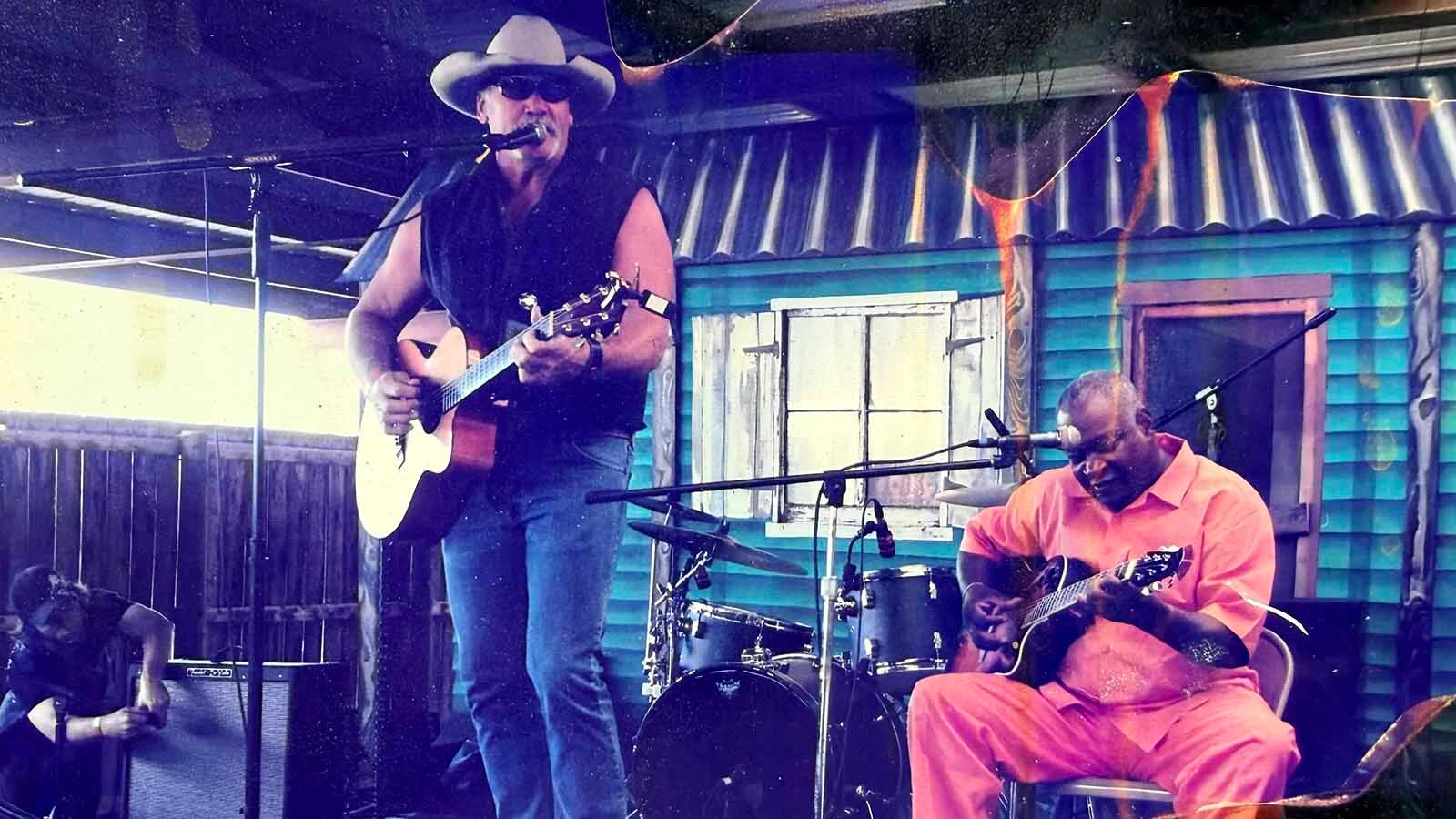
Music Career Blossoms
Shortly after putting down roots in Wyoming, a musician friend introduced him to the guitar, and the former footballer instantly became hooked. He started playing five hours a day, completely self-taught.
Eventually, Ackerman started playing live shows at places such as the Snowy Range Music Festival. He describes his music selection as a blend of country, blues and classic rock and roll, which can vary from night to night and show to show.
The former player strikes a memorable figure on stage, standing 6 feet 5 even before putting on his signature cowboy hat.
Ackerman also performs with his son Hoss, a talented guitarist and singer in his own right.
His life has taken him in many different directions. Ackerman’s advice to others is to study what great athletes, musicians, cowboys and mountain men have done to become successful.
“Don’t copy what they do but study what they do great and incorporate it into your game and what you do great,” he said. “And most of all, make it your passion and work as hard as you can and great things will happen.”
Ackerman helped coach Wyoming football for a few seasons under former coach Paul Roach around 1990, developing lifelong friendships with players like Doug Rigby, to whom he passed down the rip-to-hump.
But one of his proudest coaching memories may be from coaching that youth team in Idaho. After struggling before Ackerman joined, his team demolished the best team in their league.
“The only problem with me is, if I’m going to coach a bunch of kids, I’m going to be up every night, all night, thinking how I’m going to try and make them better,” he said. “That’s just how I’m built.”