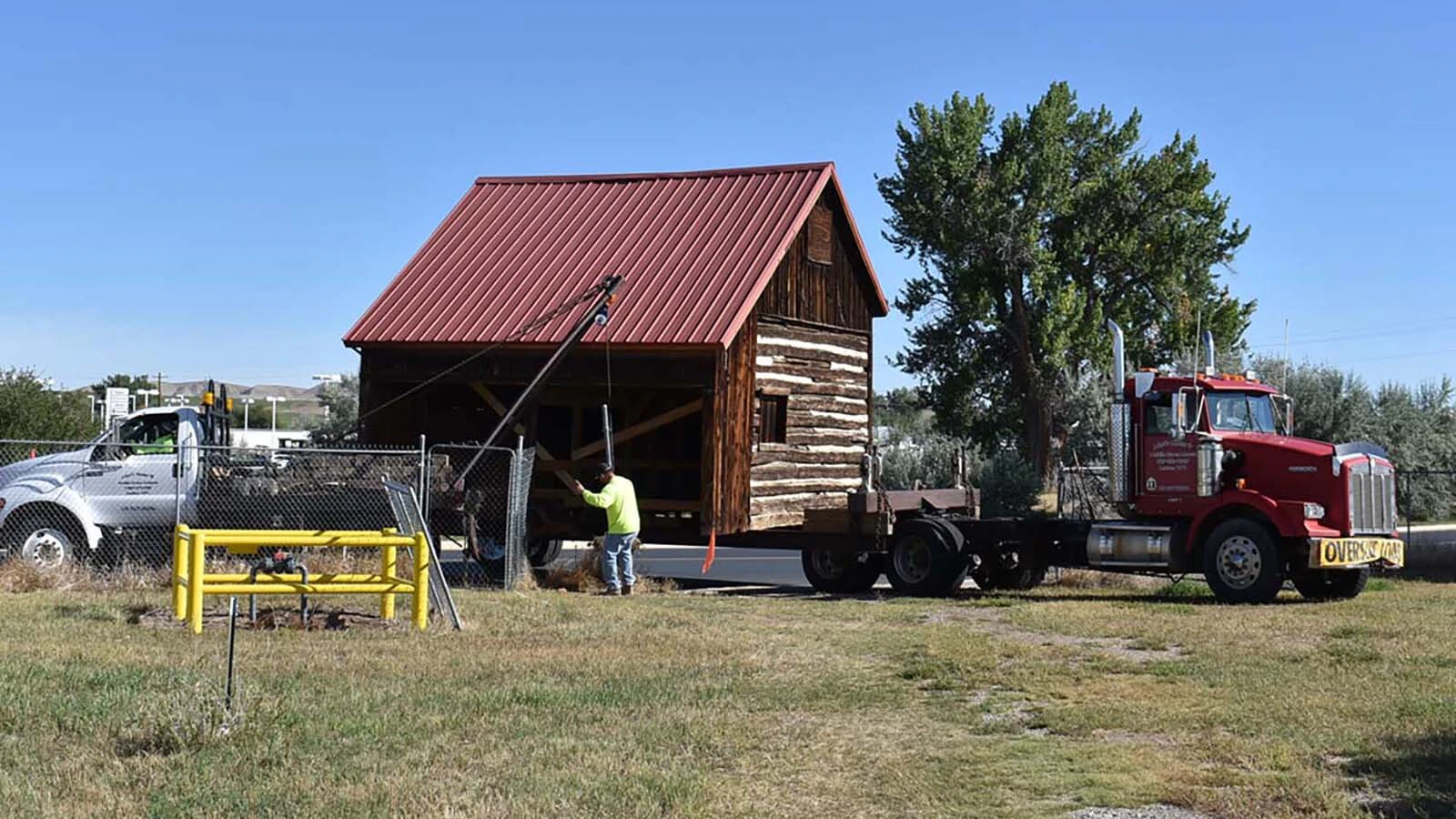
A little piece of Lander history was hiding behind a building on Main Street, masquerading as a somewhat weather-beaten, tired old shed.
Now it is about to step into the limelight.
The shed, it turns out, is no shed at all. It’s an authentic late 19th-century Chinese laundry and bathhouse that belonged to a man named Sam Sing. That makes the tiny cabin a window into a forgotten era of the Popo Agie Valley.
Recognizing the historic value of the old shed, property owner Tony McRae donated the log-cabin structure to the Fremont County Pioneer Museum some eight years ago.
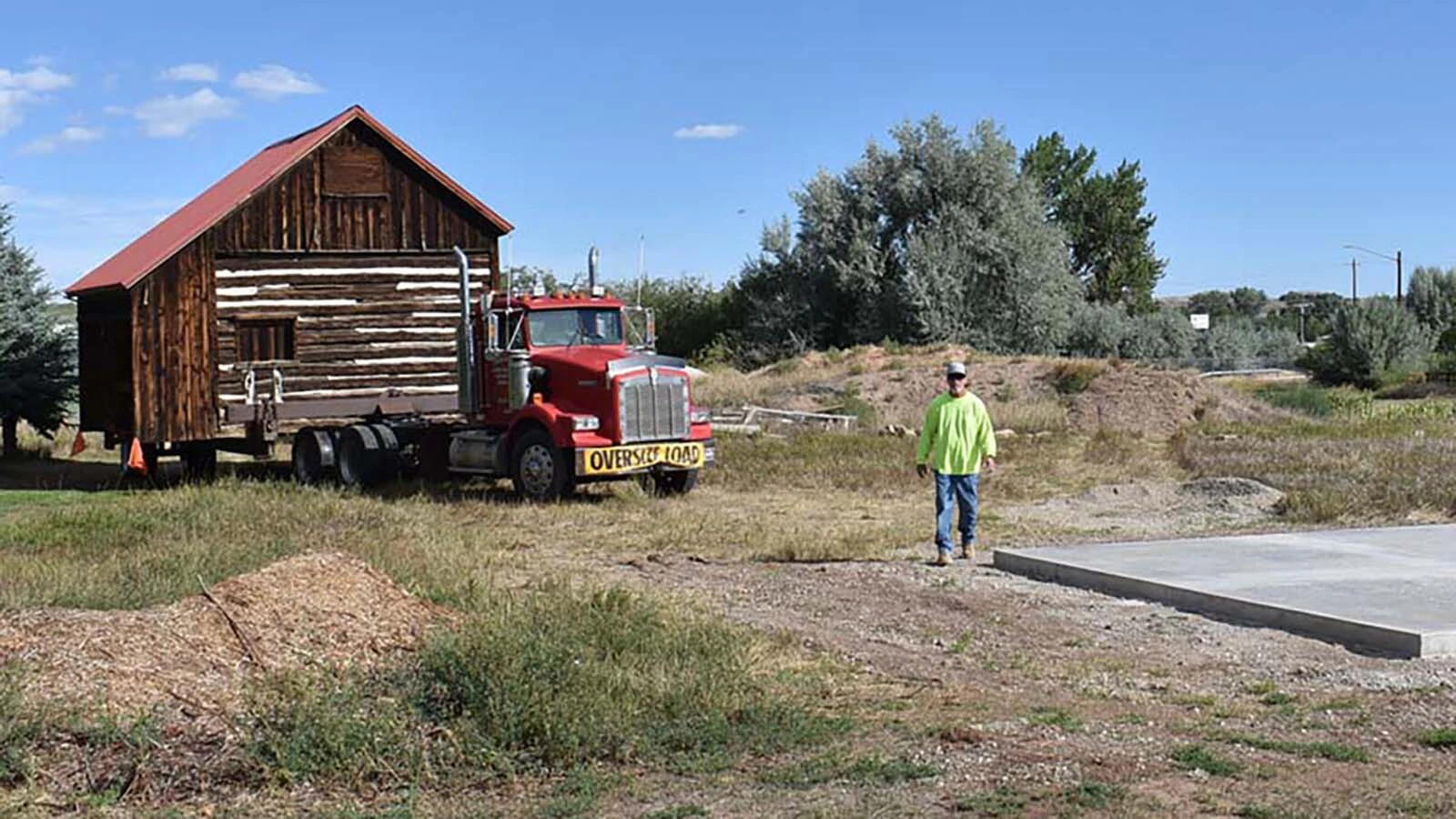
That touched off a multi-year campaign, spearheaded by the Fremont County Pioneer Association, to rescue the 1800s building from obscurity and move it to a new home at the museum’s Pioneer Village, where it now sits.
There it will be restored to its former identity, and help tell the little-known history of Sing, who was one of Lander’s earliest and most influential citizens.
Museum Director Randy Wise said Landerites can thank Sing for the town’s concrete sidewalks. He was an early advocate, and without him, the town might have gone with boardwalks instead.
Many Western towns of the era did go with wooden boardwalks, and they are a “maintenance nightmare,” Wise added.
“Sing said we, as a developing community, needed these,” he said. “We needed to keep improving the community. So he was very interested in helping the community grow.”
Gold Fields To Laundry House
Sing’s obituary describes his life in glowing terms. That and newspaper articles are primary sources for most of what is known about him.
He was born Sing Yee Wind in the Canton Province of China in 1859, and grew up to become a geologist. Gold soon lured him to America, where he worked for a time in California’s gold fields.
He soon left for South Pass City, along with thousands of others who hoped to strike it rich in the Wyoming boom town that went bust just three years later. Now it’s a ghost town that’s become a state historic site.
After the short-lived mining boom at South Pass, Sing drifted into Lander, along with many other disappointed gold seekers, where he took a job as a cook at the Lander Hotel.
Lander, Sing decided, was a good base for a geologist like him to continue prospecting for gold and other valuable minerals. And because of his training, he was early to recognize locations around Lander that had oil and gas deposits.
Knowing that someone would eventually want that oil and gas, he snapped up several valuable claims that made him a lot of money.
But he didn’t stake his entire future on such speculation.
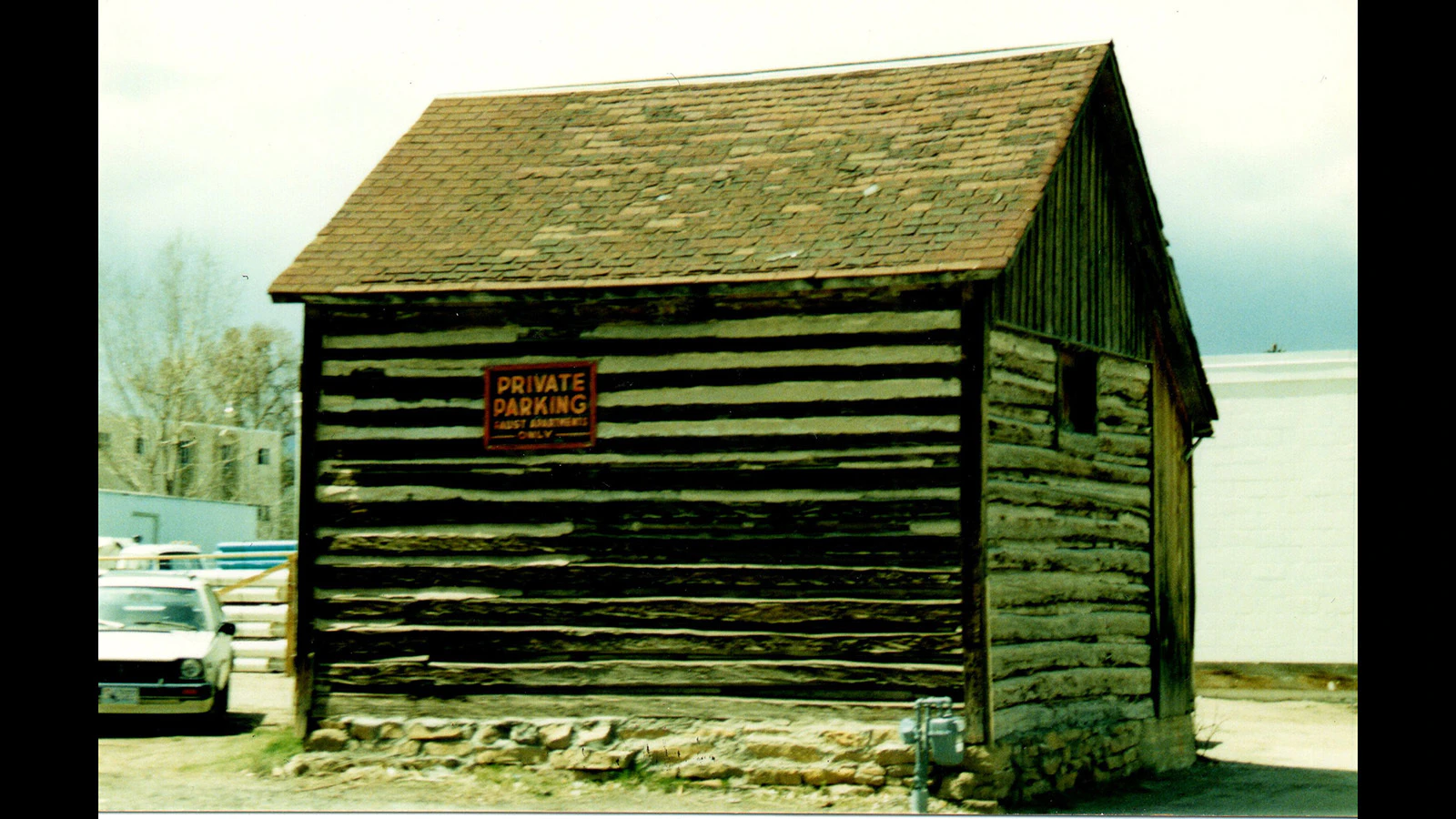
As soon as he’d saved enough money from his job at the Lander Hotel, he chose a more practical foundation for his livelihood. He started a successful laundry and bathhouse in the tiny log cabin that now belongs to the Pioneer Museum.
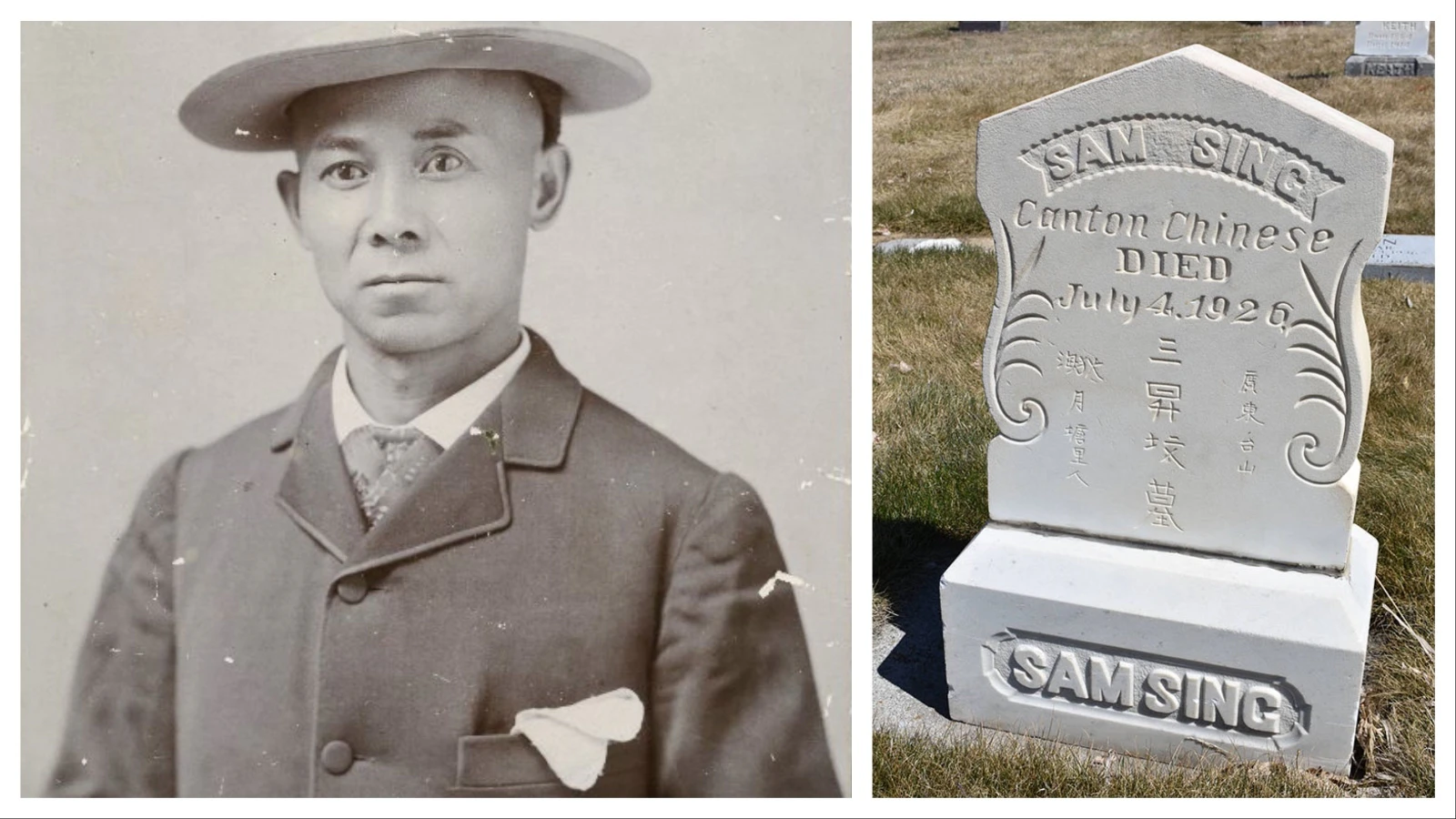
Sam Sing was a promiment resident of early Lander, Wyoming. His headstone at Mount Hope Cemetery includes an inscription in Chinese. (Fremont County Pioneer Museum) 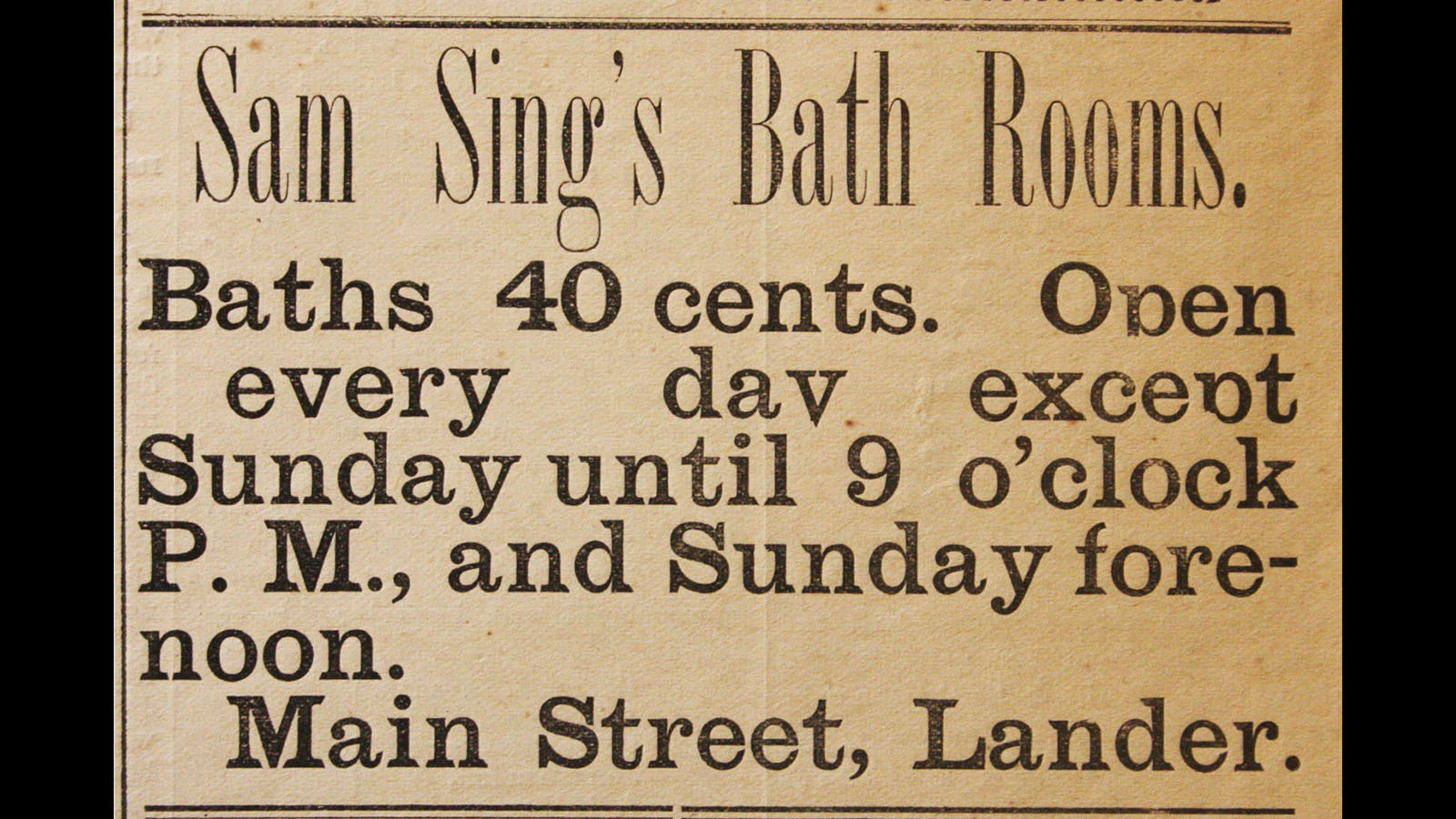
An early ad for baths at Sam Sing's laundry in Lander. (Fremont County Pioneer Museum) 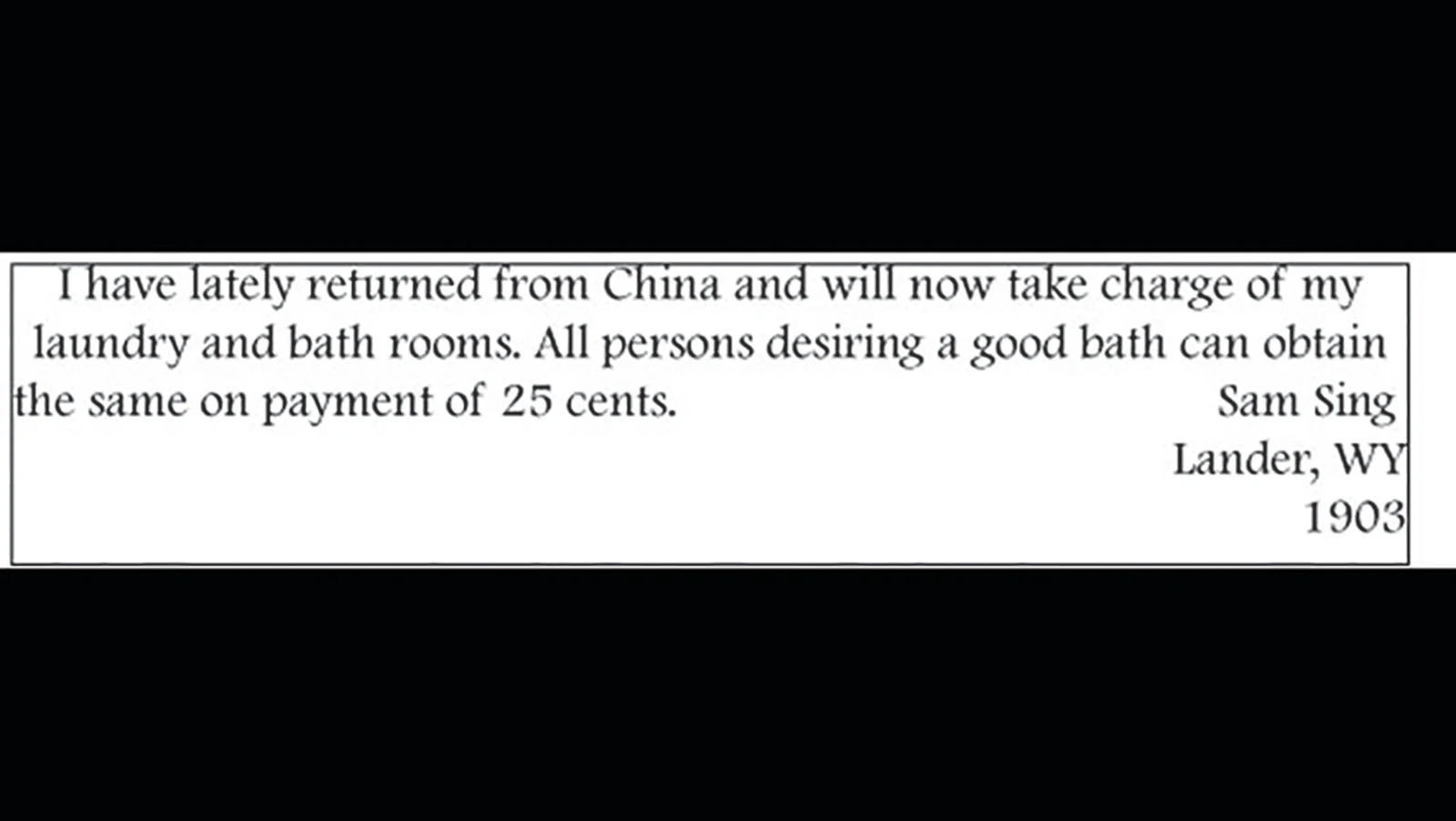
This ad for Sam Sings bathhouse advertises baths for 25 cents. (Fremont County Pioneer Museum)
When Baths Cost 25 Cents
Early advertisements show that Sing’s baths were available seven days a week for 25 cents each in 1903. That was later raised to the grand sum of 40 cents.
It was a smart business choice for the time.
There were no modern washing machines, and doing laundry was an all-day affair that usually involved backbreaking work like hauling dozens of gallons of water from a nearby stream, chopping wood to stoke a fire, boiling heavy pots, and then scrubbing clothes on metal washboards with harsh, skin-burning lye.
Given all that, most people were eager to outsource laundry if they could afford it.
Many homes of the era also didn’t have running water for baths, which gave Sing a huge side gig for the investment of a few tubs and some soap, as well as the labor to haul water and chop wood to heat it up.
Saved By Obscurity
Sing’s laundry originally was on Main Street, but was later moved to the back of the McRae Pharmacy lot. This is probably what saved it from eventual demolition, Wise said.
It would remain behind McRae Pharmacy for decades, unnoticed, until Tony McRae sold off the main part of his business lot to Gannett Peak Sports.
“He was using the laundry as a storage shed, basically,” Wise said. “So nobody really paid much attention to it.”
In fact, McRae still had items stored in the old shed when he sold to Gannett Peak, so he kept the converted laundry right where it was.
“Over the course of time, he eventually got it cleared out,” Wise said. “But he recognized that it was a significant old building in Lander. So he approached the museum, probably eight years ago, with the idea that we might want it.”
The museum did want it. But moving such a building without destroying it isn’t a cheap proposition. It took time to raise the money for the move, as well as a new concrete pad to put the building on.
Lander Ambassadors raised just over $20,000 for that phase of the project.
Significant Work Remains
The Chinese laundry will need significant restoration work to become a museum exhibit. In the near term, the building needs new chinking and some of the logs closer to the ground are rotten and must be replaced.
A roof inspection is coming to determine if it needs work. Eventually, once the building is weathertight, the museum will replace the bay doors added in more recent times with a single door flanked by a window on each side — an arrangement Wise said is more historically accurate.
“We knew when we accepted it that it might need a lot of work,” Wise said. “All of the buildings here at the museum originally needed an awful lot of work when they came here.”
No photos of the original laundry have surfaced yet, Wise added. If none turn up, the restoration work will be the museum’s best approximation of what an 1800s laundry in the American West town of Lander would have looked like.
The museum already owns some original artifacts from Sing’s laundry, as well as period items representative of what the laundry would have had. Those include a working water pump.
“The building sat very close to Dickinson Creek, which runs right through Lander,” Wise said. “So he probably got a lot of his water right out of the creek, but I’m pretty sure he had a hand pump, too, like most people would have had.”
Telling A Forgotten History
Pioneer Village has about a dozen buildings that preserve key pieces of Lander history.
This is the first that can tell the story of Lander’s early Chinese citizens, which historical archives suggest were a flourishing part of the community, which had about 1,000 people in all.
Early newspaper accounts described the town’s 30-some Chinese residents as industrious, vital contributors to the growing community.
Their acceptance, however, had boundaries. Immigrants were often heavily restricted in how they could earn a living, forced into domestic work, restaurant labor, or the grueling, scalding-hot business of running a hand laundry.
The threat of hostility, too, was always present. Even the widely respected Sing was sometimes tormented and discriminated against by some in Lander.
He was teased and taunted by some of the children for his broken English and Chinese attire, and he was robbed more than once. The windows of his laundry were also frequently broken by vandals.
Despite that, Sing considered Lander his home, and he worked hard to help make it a better community.
Sing was never married and had no children. When he died, his brother came over from Canton, buried him and returned to China.
An elaborate headstone in the Mount Hope Cemetery is inscribed with Chinese script, and carries his Chinese name, as well as the date of his death: July 4, 1926.
Wise anticipates that the Sing laundry will take about a year to prepare and will require additional fundraising to complete, though work to make it weathertight will begin right away.
“There’s an argument to be made that moving a historic building kind of degrades its integrity,” Wise said. “I understand that argument. But the building probably would not have survived. Eventually Tony’s going to sell that lot and I doubt whoever bought it would be interested in preserving a building like that.
"Here it will be safe for many, many decades so people can learn another little part of Lander history.”
Renée Jean can be reached at renee@cowboystatedaily.com.