Aspen Alley is slowly springing back to life, thanks to a deliberate effort to ensure the famous grove has a healthy and vibrant future.
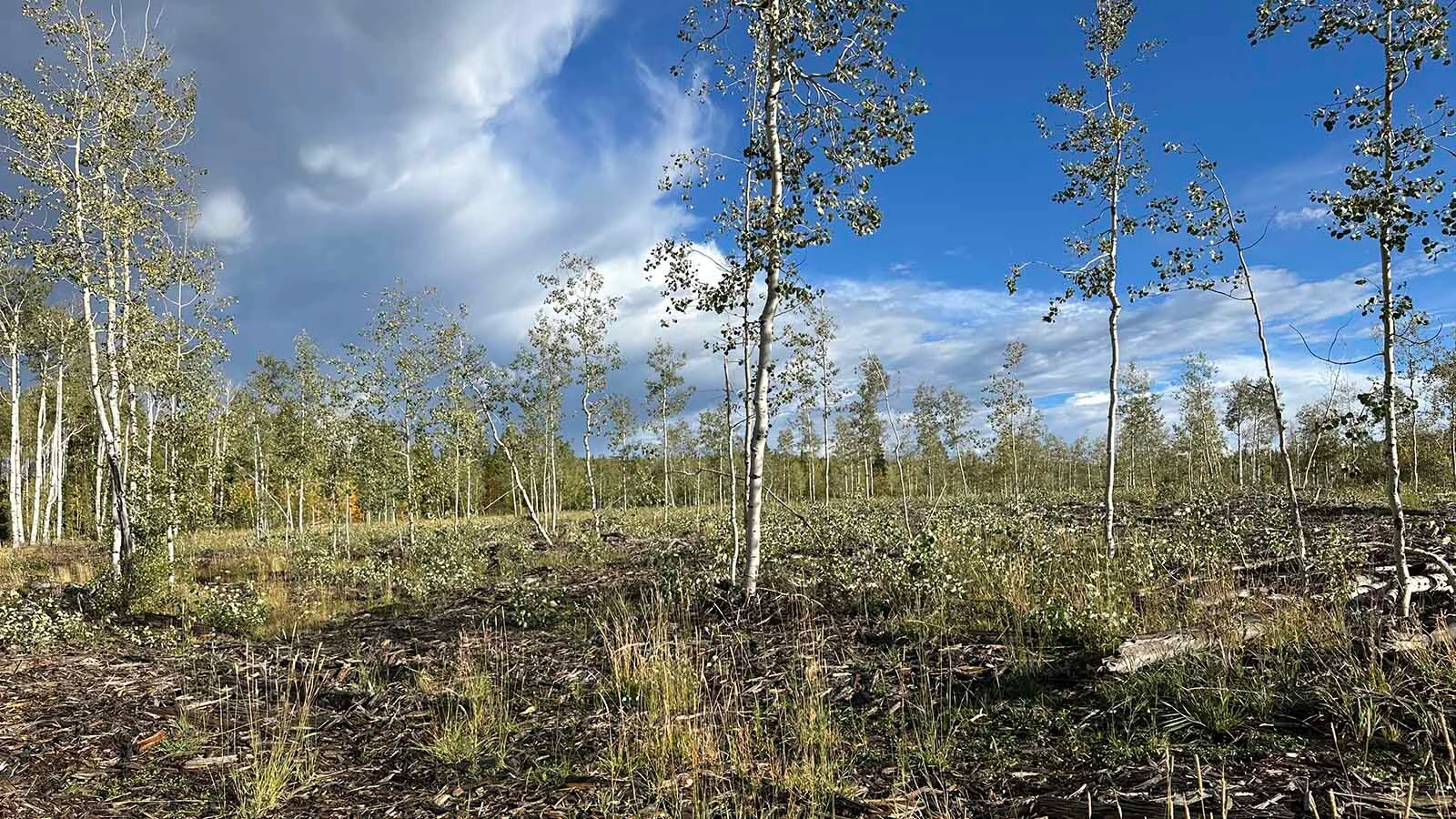
Dennis Faerber, owner of the Aspen Alley Ranch, is eagerly watching dozens of two-foot-high saplings growing in the once-dense aspen grove.
All his efforts to revitalize the grove, along with partners like the U.S. Forest Service and the Mule Deer Foundation, appear to be working.
“Given that we only had 30% snowpack this year and no rain, it's actually looking pretty good,” he told Cowboy State Daily. “The consensus is that within five years, we'll have aspen so thick it'll be hard to walk through there.”
These saplings will delight fall foliage enthusiasts for the next 80 years. It’s part of Faerber’s efforts to ensure Aspen Alley survives and could potentially help other aspen groves thrive as well.
“This is all about stewardship and setting up the ranch for future generations,” he said. “Aspen Alley will come back, and it'll be as spectacular as ever. We just have to give it time.”
Out With The Old
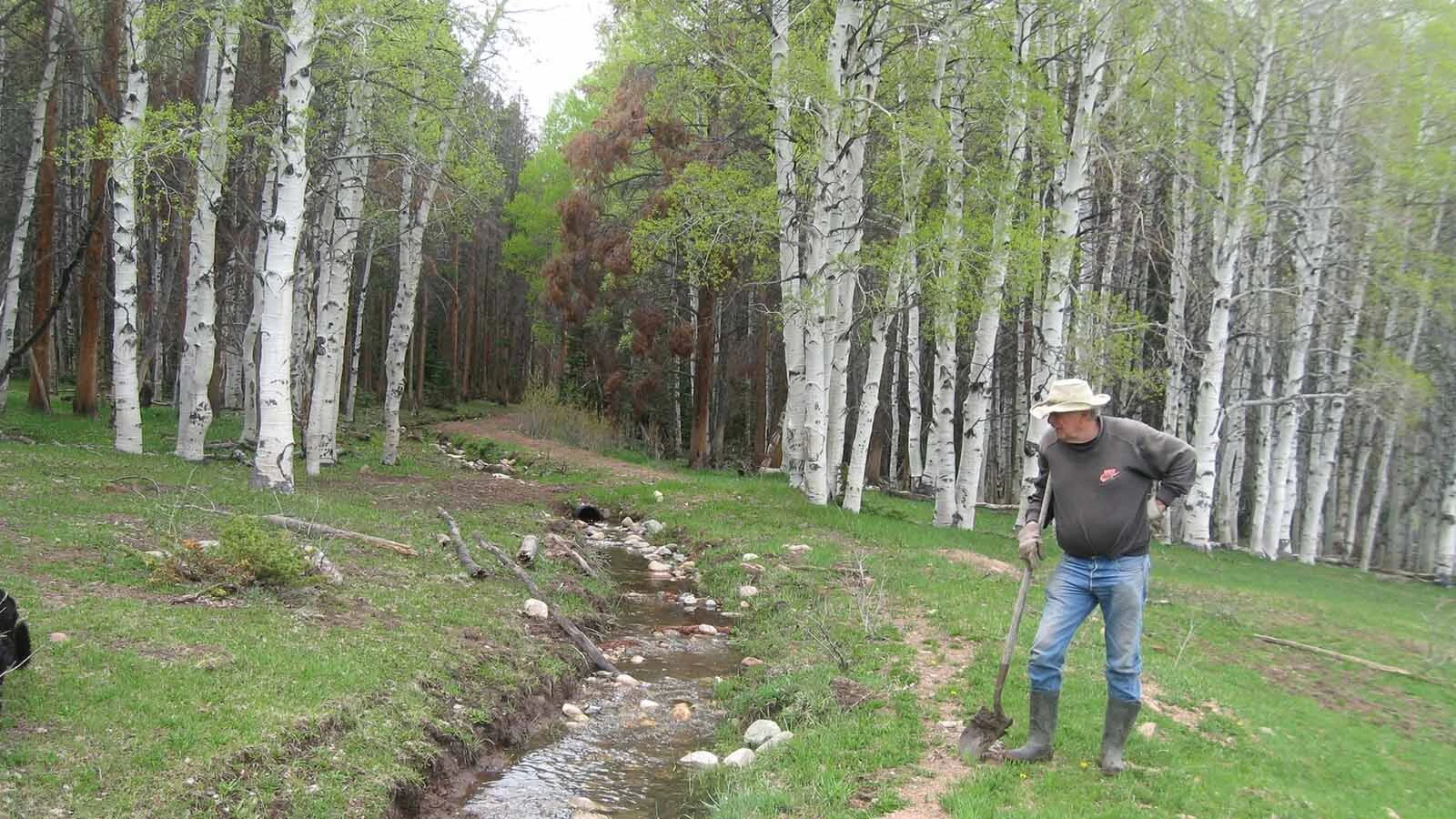
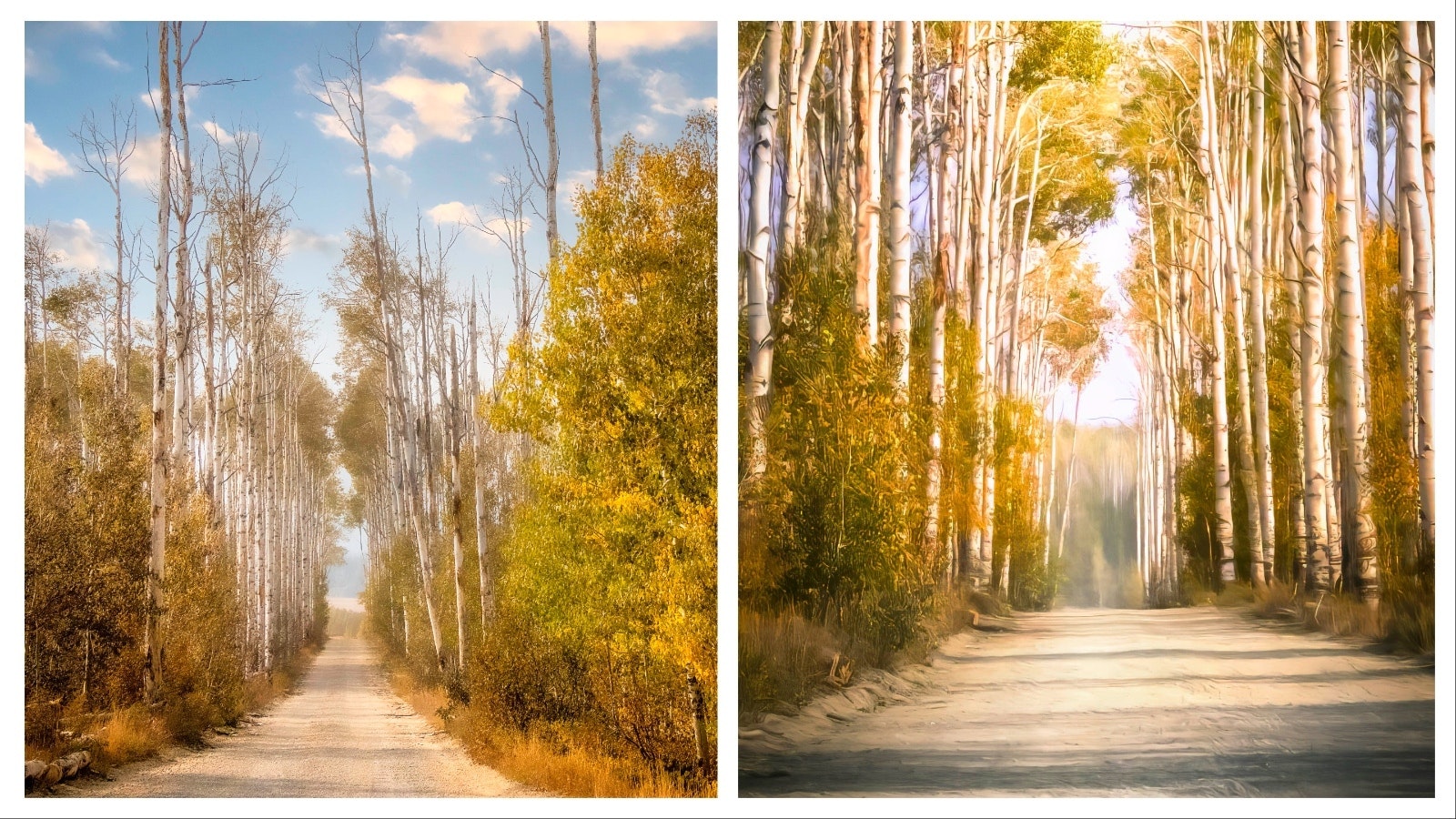
When Faerber bought the 520-acre Aspen Alley Ranch, the famous aspen grove was on its last legs. The trees that made it famous were long past their prime.
“Aspen Alley was in its final stages of decline, quite candidly,” he said. “Aspen trees will live 80 to 100 years maximum. These trees were at the end of their life. Many were sick and diseased. It wasn’t what it used to be.”
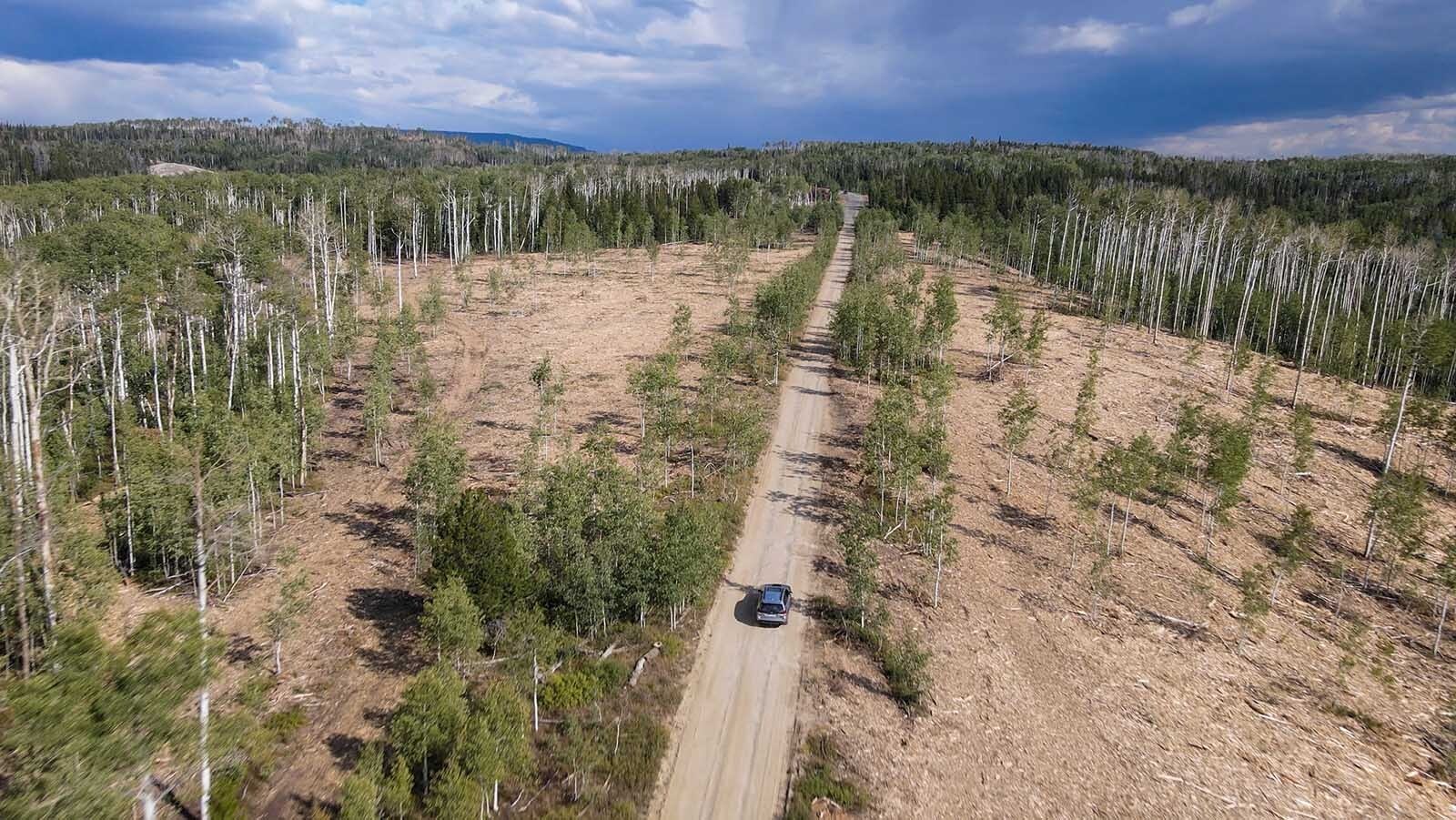
That’s when Faerber consulted with experts and decided to do something seemingly sacrilegious. They cut down all the aspen trees so they could sustain the next generation.
“We agreed to masticate the aspen groves to allow them to stimulate the soil and allow the new shoots to come up,” he said. “Working with Wyoming State Forestry and the U.S. Forest Service, the path was fairly clear.”
Aspen groves aren’t a collection of individual trees growing together. All the individual trees are stems sharing the same root system, growing from a single seed.
Because they grow as clonal colonies, mastication is especially beneficial for aspens. It disturbs the roots and stimulates new growth.
“We kept the trees that were healthy and masticated the sick and dying trees into the soil,” he said. “That creates a base that’s like a mulch. It holds the moisture in the ground and radically accelerates new growth.”
In Summer 2025, Faerber cut down and mulched all the dead, dying, and still-standing aspens along Aspen Alley. This spring, he did it again.
Faerber could only hope that their efforts would achieve the desired result and revitalize the grove.
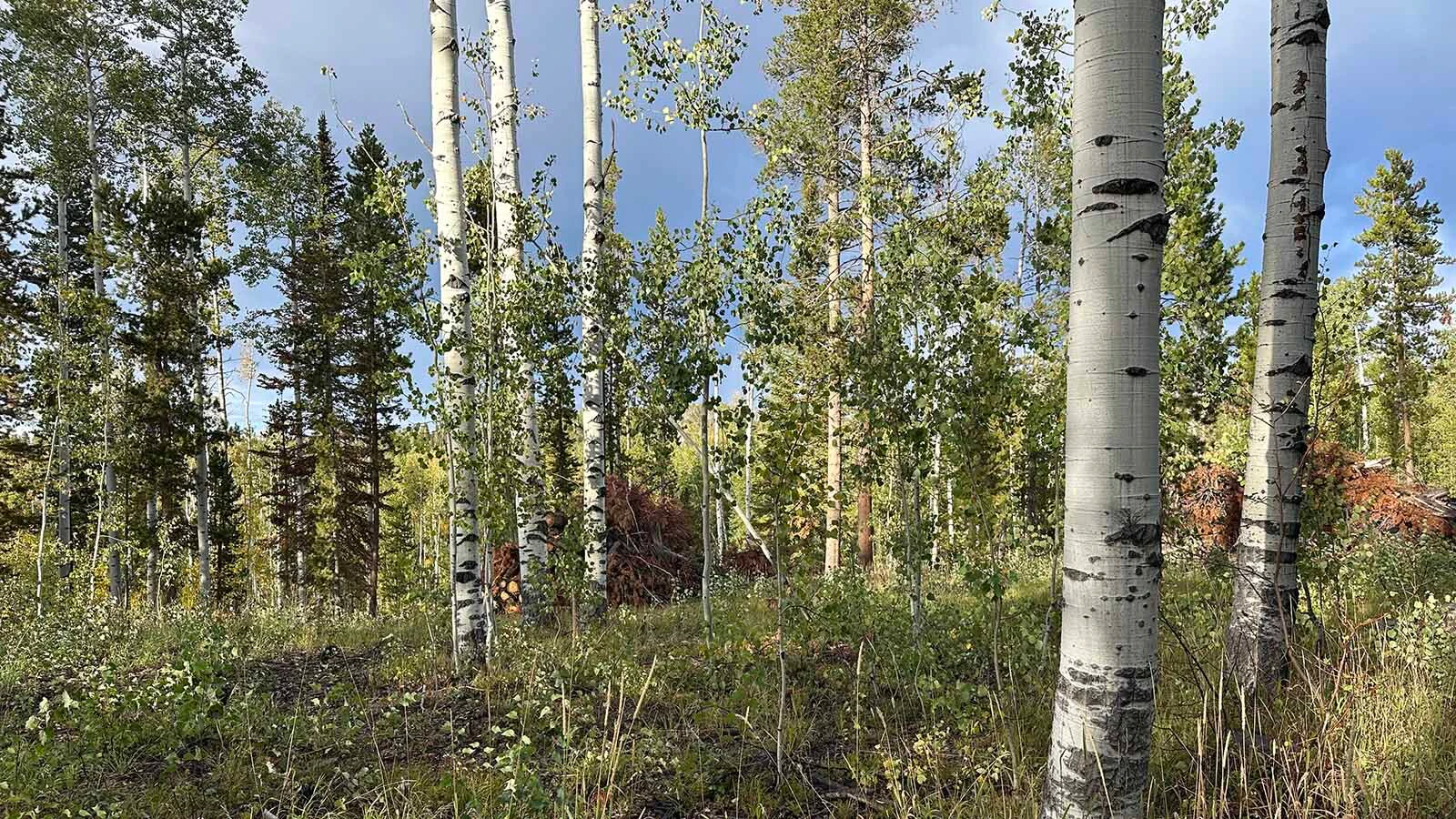
After years in decline and die-off, the once-stunning Aspen Alley corridor in southern Wyoming’s Sierra Madre Mountains is making a comeback. Withing five years, “We'll have aspen so thick it'll be hard to walk through there,” says area rancher Dennis Faerber. (Dennis Faerber) 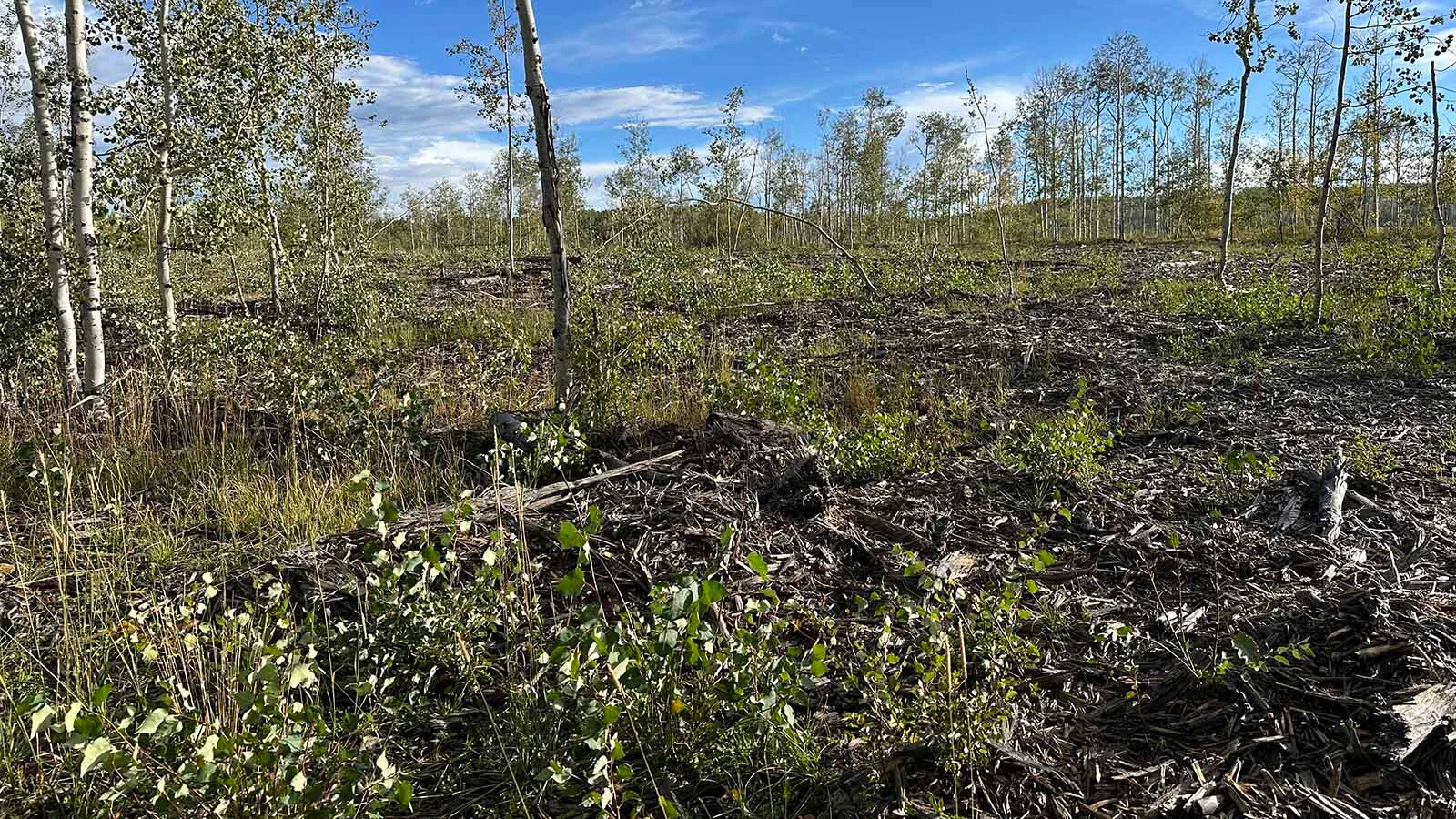
After years in decline and die-off, the once-stunning Aspen Alley corridor in southern Wyoming’s Sierra Madre Mountains is making a comeback. Withing five years, “We'll have aspen so thick it'll be hard to walk through there,” says area rancher Dennis Faerber. (Dennis Faerber) 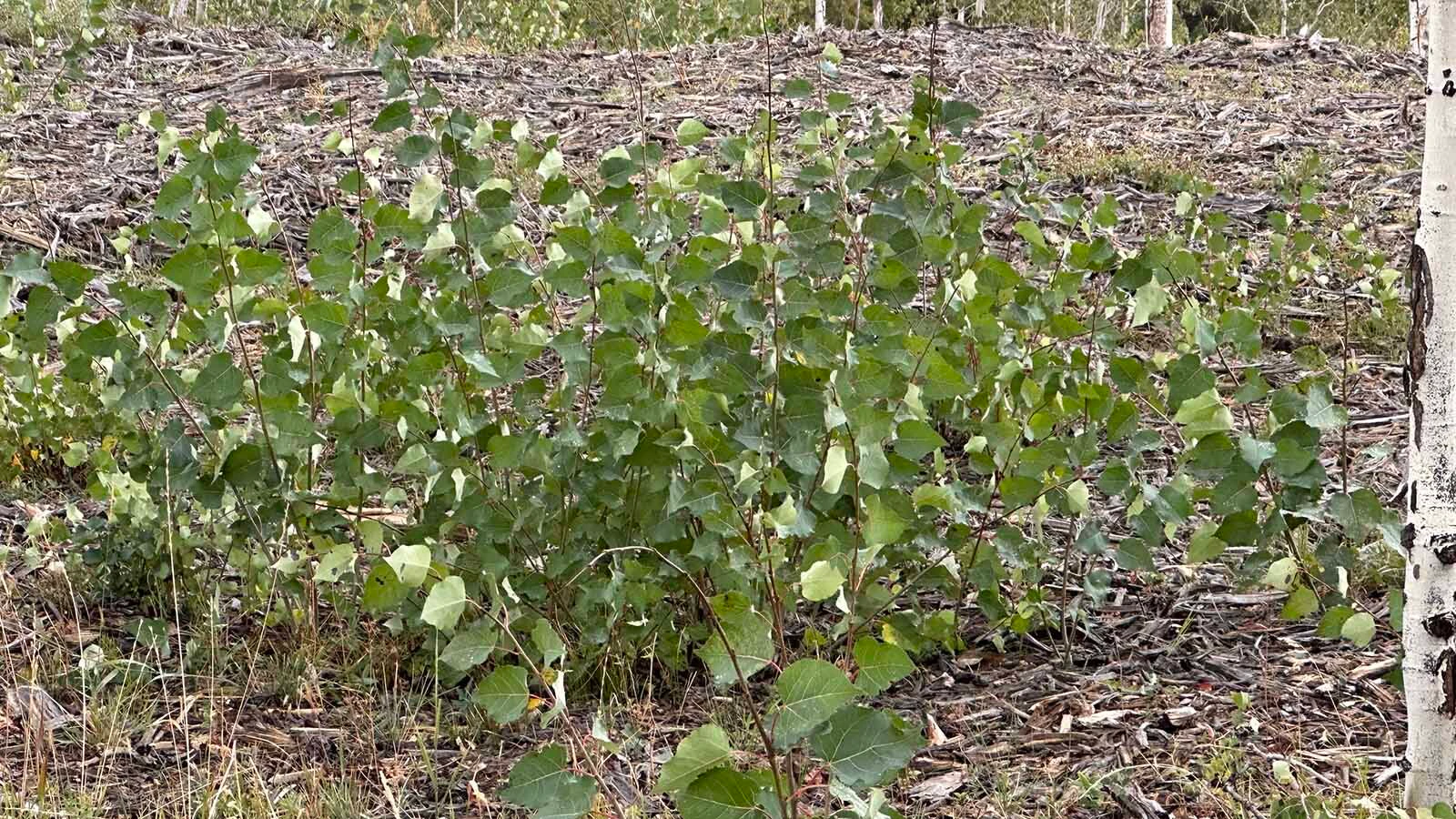
After years in decline and die-off, the once-stunning Aspen Alley corridor in southern Wyoming’s Sierra Madre Mountains is making a comeback. Withing five years, “We'll have aspen so thick it'll be hard to walk through there,” says area rancher Dennis Faerber. (Dennis Faerber) 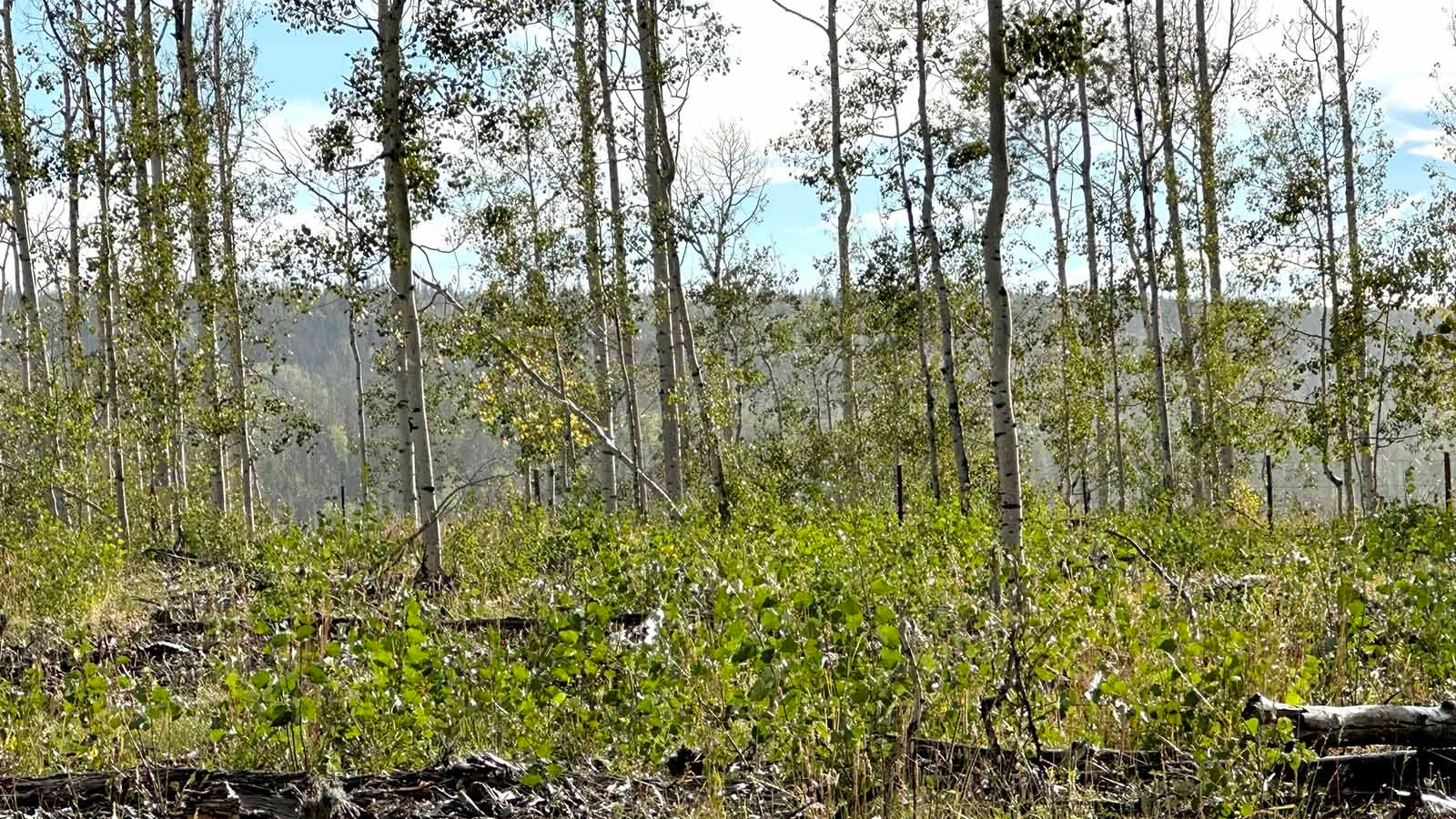
After years in decline and die-off, the once-stunning Aspen Alley corridor in southern Wyoming’s Sierra Madre Mountains is making a comeback. Withing five years, “We'll have aspen so thick it'll be hard to walk through there,” says area rancher Dennis Faerber. (Dennis Faerber) 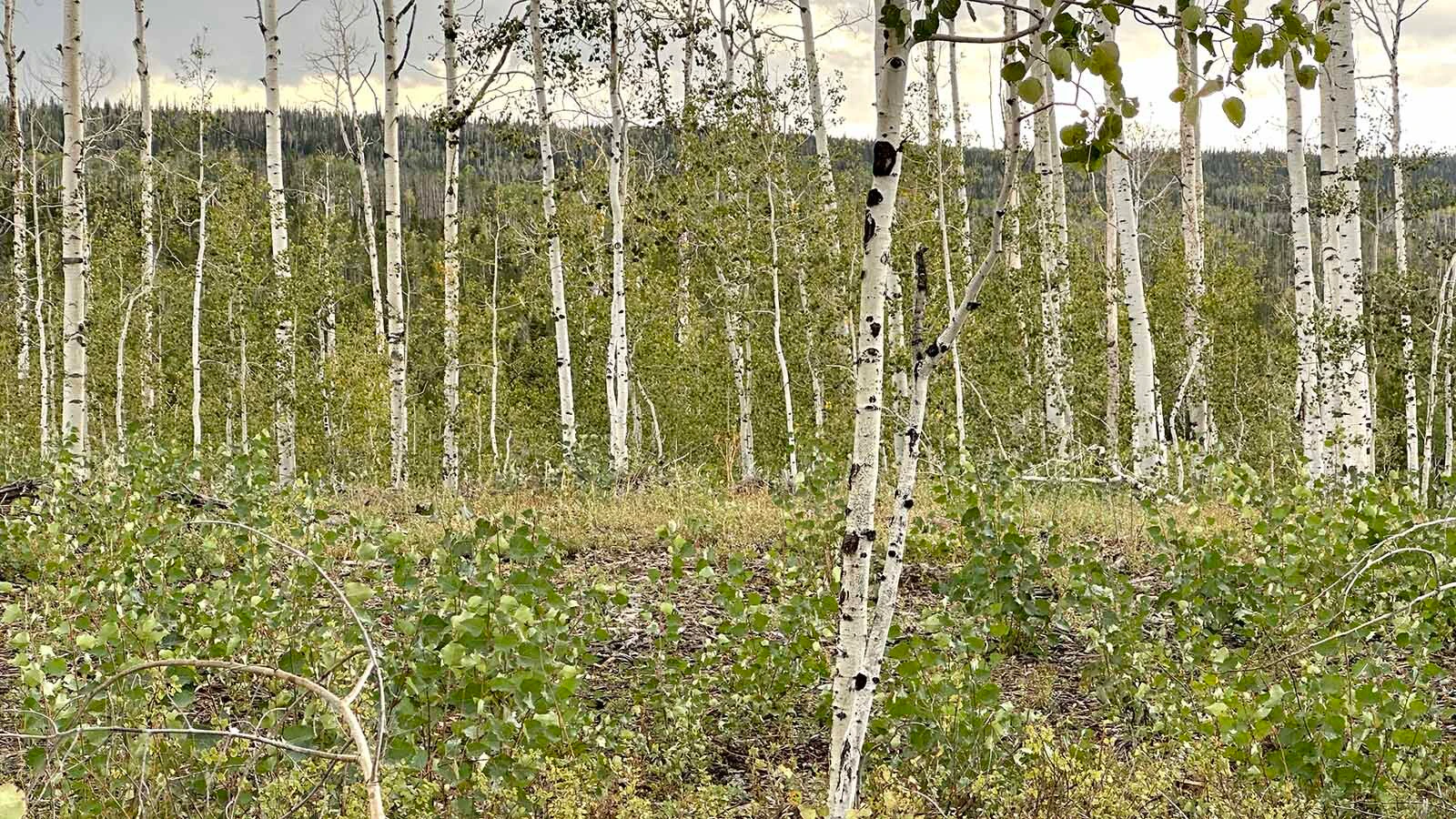
After years in decline and die-off, the once-stunning Aspen Alley corridor in southern Wyoming’s Sierra Madre Mountains is making a comeback. Withing five years, “We'll have aspen so thick it'll be hard to walk through there,” says area rancher Dennis Faerber. (Dennis Faerber)
Hyper-Relieved
After a few tense weeks, Faerber saw the first signs of success. Aspen saplings started to emerge from the 6-inch layer of mulch.
“When I didn't see shoots initially, I was really nervous,” he said. “When they started coming up, I was hyper-relieved.”
Dozens of young aspens, between 1.5 and 2 feet tall, are growing. Many have leaves, which are already turning gold.
That’s not unexpected for young aspen. Their leaves usually turn and drop much faster than mature aspen.
“It’s just survival,” said Cheyenne botanist Shane Smith. “Those poor little trees are going to be better off if they drop their leaves sooner rather than later. In a drier situation, there’s not much advantage to hanging in there longer.”
Faerber has had his partners at Wyoming State Forestry Division, the Forest Service, and the Mule Deer Foundation come out to see the new growth. They all agreed that the progress was “very positive.”
Faerber said he believes something he was apprehensive about actually ensured the saplings’ survival.
“One of the things I was concerned about with the masticating is that they did a lot of chipping,” he said. “In some areas, there were 4 to 6 inches of chips on the ground.”
In this case, trusting the process paid off. The thick layer of aspen chips helped the soil retain moisture, making up for the lack of precipitation.
“If you kicked those chips back, the ground was still moist even though it was a very dry year,” Faerber said. “Our belief is that the root systems down there are cooking right along.”
Slowly But Surely
Regrowing a healthy aspen grove is a slow process. Having dozens of two-foot-high saplings at Aspen Alley within a year is tremendously encouraging for Faerber.
That said, Aspen Alley won’t return to its former glory for quite some time.
“Aspen shoots start out at a foot to a foot and a half the first year,” Faerber said. “They’ll be two or three feet tall next year, and then they really start to take off.”
As they mature, aspen trees can grow up to a foot a year in optimal conditions. Aspen Alley should be dense with 10-foot-tall trees within five years.
The thick layer of aspen chips covering the grove will continue to accelerate that growth.
“As all that mulch is breaking down, it provides new opportunities for more shoots to come up,” Faerber said. “I expect the growth we have to shoot up very rapidly, and new growth to increase radically as those chips break down.”
Many people were upset when they saw Aspen Alley cleared out and mulched in 2025. A year later, Faerber is finding more people who understand and appreciate what’s been done.
“We just had an event at the Little Snake River Museum in Savery, and a lot of the folks there commented that they're really encouraged by the growth,” he said. “The response has been really positive.”
To The Good
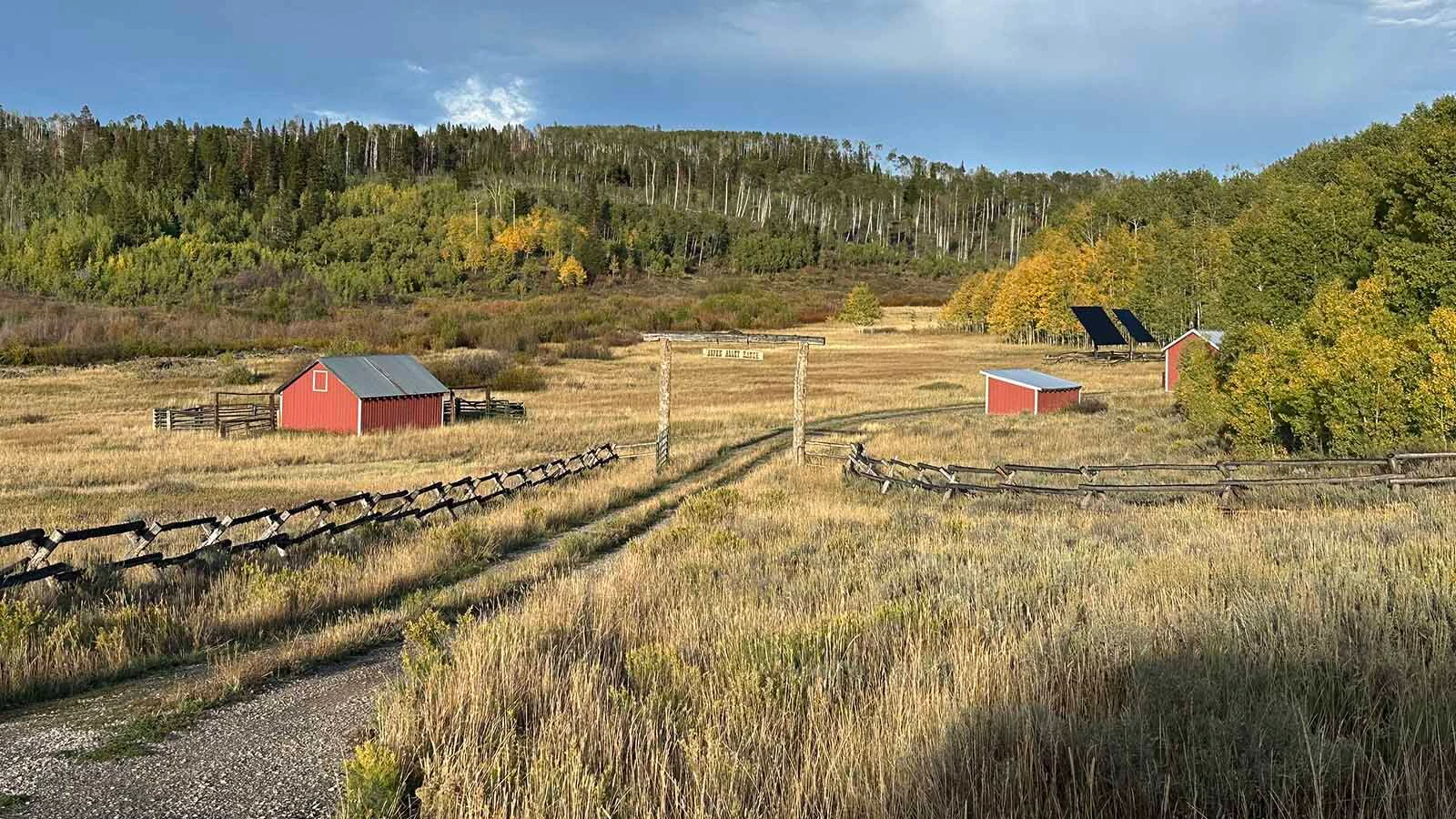
The aspens aren’t the only trees benefiting from intentional forest management at the Aspen Valley Ranch.
One of Faerber’s other goals was to rejuvenate the ranch's conifers. When he bought the ranch, they were also dead, dying, or struggling.
“Our conclusion was that we needed to do selective cutting in the conifer forest to reduce the risk of a fire, which we felt was inevitable,” Faerber said. “We really needed to thin them out and remove the fuels.”
Faerber and his partners toppled dozens of dead and diseased conifers last year and gathered the trees and the surrounding ground fuel into 1,000 slash piles. Those piles were burned last winter.
“That has dramatically changed those forests to the good,” he said. “We have another 400 piles to burn this winter.”
The work on the Aspen Alley Ranch has become more than a well-intentioned revitalization. The practices being implemented could help rejuvenate aspen groves and conifer forests through the Rocky Mountain Region.
“The Mule Deer Foundation, the Forest Service, and State Forestry have brought people in to take a look at what we've done and hopefully replicate that in other areas,” Faerber said.
Blessing And Responsibility
With the mulching done and saplings sprouting, Faerber said the the best thing he can do now to foster the regrowth of Aspen Alley is leave it alone.
“If you transit too much over the grove, you'll destroy the new growth,” he said. “This year, we’ve been staying out of the grove and letting them do their thing.”
The elk appreciate Faerber’s efforts. The aspen grove hasn’t been fenced off, so they’ve been helping themselves to the new growth.
“We have plenty coming up,” Faerber said.
The Wyoming State Forestry Division and Forest Service have been helping Faerber use best practices to ensure the long-term health of Aspen Alley and the surrounding conifer forest, he said.
The Mule Deer Foundation has lent its expertise to ensure the rejuvenation creates the ideal habitat for mule deer and other wildlife.
“Our goal was to bring back the most nutritious plants to Aspen Alley,” Nicole Reed, the foundation’s director of conservation operations, told Cowboy State Daily in September 2025. “If you clear out the dead aspen and some of the juniper growing on the forest floor, you get more sunshine in there.
"Then all you'll see would be more grasses, more forbs, and those aspen trees.”
That specific undergrowth assemblage is where mule deer prefer to fawn in the spring, seek forage in the fall, and survive in winter.
Faerber wouldn’t say how much money has gone into his Aspen Alley and conifer projects.
He said he’s been enriched by what’s been accomplished and by how his efforts are slowly ensuring future generations will see Aspen Alley in all its splendor.
“From my perspective, taking over Aspen Alley has been a blessing,” he said. “With that comes a responsibility for stewardship. We're blessed to have it, and we'll try to do the absolute best we can for the community, the forest, and the wildlife for as long as we have it.”
Faerber is only asking for one thing in the short term.
“What we really need is a lot of moisture this fall, and then a good heavy snow this winter,” he said. “If we get a good snowpack this year, I think things are going to really pop.”
Andrew Rossi can be reached at arossi@cowboystatedaily.com.