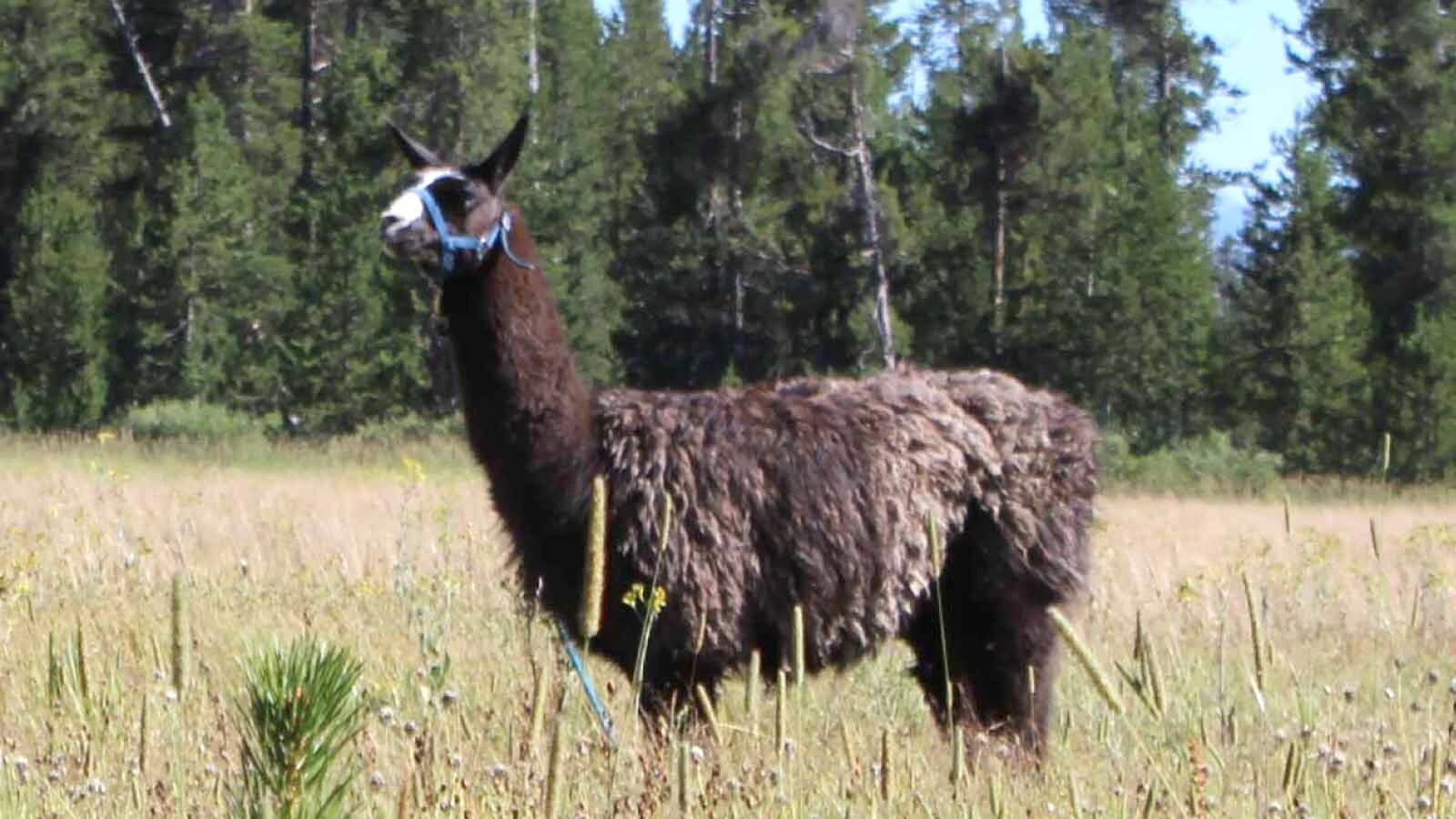
Smokey the llama is missing in action along the South Fork of the Shoshone River. If someone doesn’t find and rescue him, he’ll likely be a predator's dinner before winter.
The 6-year-old llama got scared by a grizzly bear and vanished into the high-elevation conifer forest during a backcountry packing trip Sept. 2. His owners are eager to recover him, to the point that they’ve got a flight booked to pinpoint his location.
“I think he's doing fine, but it's just a matter of time before he gets tangled up in some deadfall or chased by wolves,” said Joshua Smunk, owner of Hoofs, Horns, and Hideaways. “Llamas are resilient animals, but obviously the sooner we can get him out of there, the better.”
Spooked In Different Directions
On the third night of a packing trip, Smunk, Smokey, and Mark Livesay with Treeline Academy in Montana had pitched camp in the Castle Creek drainage, southwest of Cody. Around midnight, Smunk got a “llama alert.”
“Llamas are very wary animals, and they’re very alert at night,” he said. “Smokey had alarmed at midnight. We went out and checked, but nothing was there.”
Smokey, who was tied down with a half-inch heavy-duty lead attached to his halter, calmed down, and everyone called it a night.
A few hours later, around 2 a.m., Smokey must have come face-to-face with a grizzly. The encounter sent both animals running.
“You could tell they both spooked in different directions,” Smunk said. “There was definitely a bear in the camp. He ran through and tore some tarps down on his way out.”
Smokey, meanwhile, broke his lead and ran into the dark woods.
“That was absolutely incredible,” Smunk said. “In our combined 13 years of leasing llamas out to people, and all of the trail miles that they have, that's never happened. Typically, they would hurt their neck before they could break that rope, so the encounter between him and that bear was pretty significant.”
Smunk and the others tried to get Smokey back, following his alarm bark. Soon after, Smokey stopped calling, and they lost his trail.
“We could hear him quite a way away, and tracked him as long as we could, but we could never catch up to him,” Smunk said.
After another eight days of searching, they found no sign of Smokey.
They’re not giving up. Neither is Smokey.
Crusin’ With The Elk
Since Sept. 2, there have been two confirmed sightings of Smokey. From what Smunk has heard, the llama seems to be doing just fine.
“A couple of hunters have seen him, and they said he looks really healthy,” he said. “He's up in a very hard-to-reach spot, hanging out with some elk, at 11,400 feet.”
Llamas are herd-oriented animals, and Smokey especially so. Smunk wasn’t surprised to hear he’d found some friends in the mountains.
Most likely, Smokey will keep following the elk herd until he’s rescued. That’s just what llamas do.
“I'm sure he's using them for safety while trying to keep a visual advantage and just moving with the herd,” Smunk said. “If they alert and move off, he moves off, and I'm sure he's been following them to water and everything else. He’s cruisin’ with the elk.”
Llamas may be domesticated, but they’ve adapted to thrive in high-alpine environments. Shoshone National Forest isn’t the slopes of the Andes, but Smokey should do just fine finding enough food and water while braving the elements, Smunk said.
The concern is the length of half-inch lead still hanging from his halter. Smunk said it’s “only a matter of time” before it gets tangled in the trees or underbrush, making him much more vulnerable to predators.
“Llamas can be ruthless,” Smunk said. “They'll chase off coyotes and stomp domestic dogs, which is why people use them as guard animals. But with the magnitude and volume of predators out there, I'm not sure he's going to be fighting much. He’s gonna run.”
That increases the urgency of finding and recovering Smokey. He’s doing all right so far, but that won’t last forever, he said.
Llama Negotiations
As of Friday, Smokey was high in the Absaroka Range That’s going to make him difficult to recover.
“He was last seen up in Eleanor Creek, right on the highest elevation between the end of South Fork and the Jack Creek trailhead,” Smunk said. “That’s eight to 12 miles from either spot.”
By foot, it would take eight to 10 hours to reach the last spot where Smokey was spotted, with no guarantee he’d still be there. He’s been on the move since he ran off.
Horses would cut that travel time in half, but coordinating and staging a rescue on horseback could easily eat up the extra time.
Smunk hopes someone hunting in the area might find Smokey, get close enough to grab the lead, and bring him out of the mountains.
However, while llamas are mild-mannered, they’re not approachable. There’s a technique to luring in llamas.
“Smokey won’t stand around and let you grab him,” he said. “If it's done right, he could be baited with some treats or shaking some rocks in a bucket.”
Nobody who sees Smokey should try chasing after him, as that will only push him further away. He also doesn’t want to overwhelm the area during hunting season.
“I don’t want to have that area flooded with people potentially ruining hunts and negatively impacting businesses operating there,” he said.
Smunk also thought Smokey might be drawn to the sounds of civilization, like ATVs in the backcountry, making him easier to rescue. He could also appear in someone’s pasture, which would make things a lot easier.
The best llama rescue tool is more llamas, Smunk said. Smunk and Livesay would love to get back into the wilderness with more llamas, which would almost certainly lure Smokey back, but that takes time, too.
“If we can get out there with more llamas, he'll come right to the llamas,” Smunk said. “The hard part is, even when we do get a sighting, we won't be there for eight to 10 hours, and who knows where he is now?”
Experienced And Costly Camelid
Smunk estimated that a llama as experienced and well-trained as Smokey is worth around $15,000.
“He has a lot of experience, and it took a large amount of time to get him to that level,” he said. “As far as pack animals are concerned, losing him is a big hit for a llama-leasing business.”
Llamas are becoming increasingly common pack animals for backcountry excursions. Smokey is “hitting the prime of his packing career,” according to Smunk, which makes him even more eager to get him back.
“Llamas are super easy to handle, especially if you’re not comfortable with animals in the backcountry,” Smunk said. “They require a lot less care than horses, and they’re camelids, so they need less water. It's very rare to get hurt by a llama, and they’re super alert. If something’s around, they’re going to tell you.”
Llamas are becoming common additions to elk hunts. A well-trained llama can help hunters get a harvested elk out of the backcountry without wasting meat, while reducing the time needed to process the carcass and lowering the risk of a grizzly encounter.
“After a couple-hour tutorial, you can be out in the mountains and safely operating with llamas and know that you can come out of there with your animal in one trip.”
Survival Stories
It’s not unrealistic for Smunk to expect Smokey to survive long enough to be saved. Llamas aren’t native to Wyoming, but they can sustain themselves in the wild.
In August 2023, a llama named Joaquin survived in Yellowstone National Park for 17 days before rescuers found him.
Joaquin was on a multi-day pack trip in the Lamar Valley when several bison ran through an overnight encampment. Like Smokey, he got spooked, pulled up his lead, and ran off.
The llama was spotted 17 days later near Trout Creek. Yellowstone rangers retrieved him and led him out of the wilderness.
Susi Hülsmeyer-Sinay, the owner of Yellowstone Llamas, was happy to get her llama back, but wasn’t surprised Joaquin survived. In 2018, she found an abandoned llama near Lewis Lake and added it to her herd, which inspired a children’s book.
“(Llamas) are not pets that need people,” she told Cowboy State Daily.
Spotting Smokey
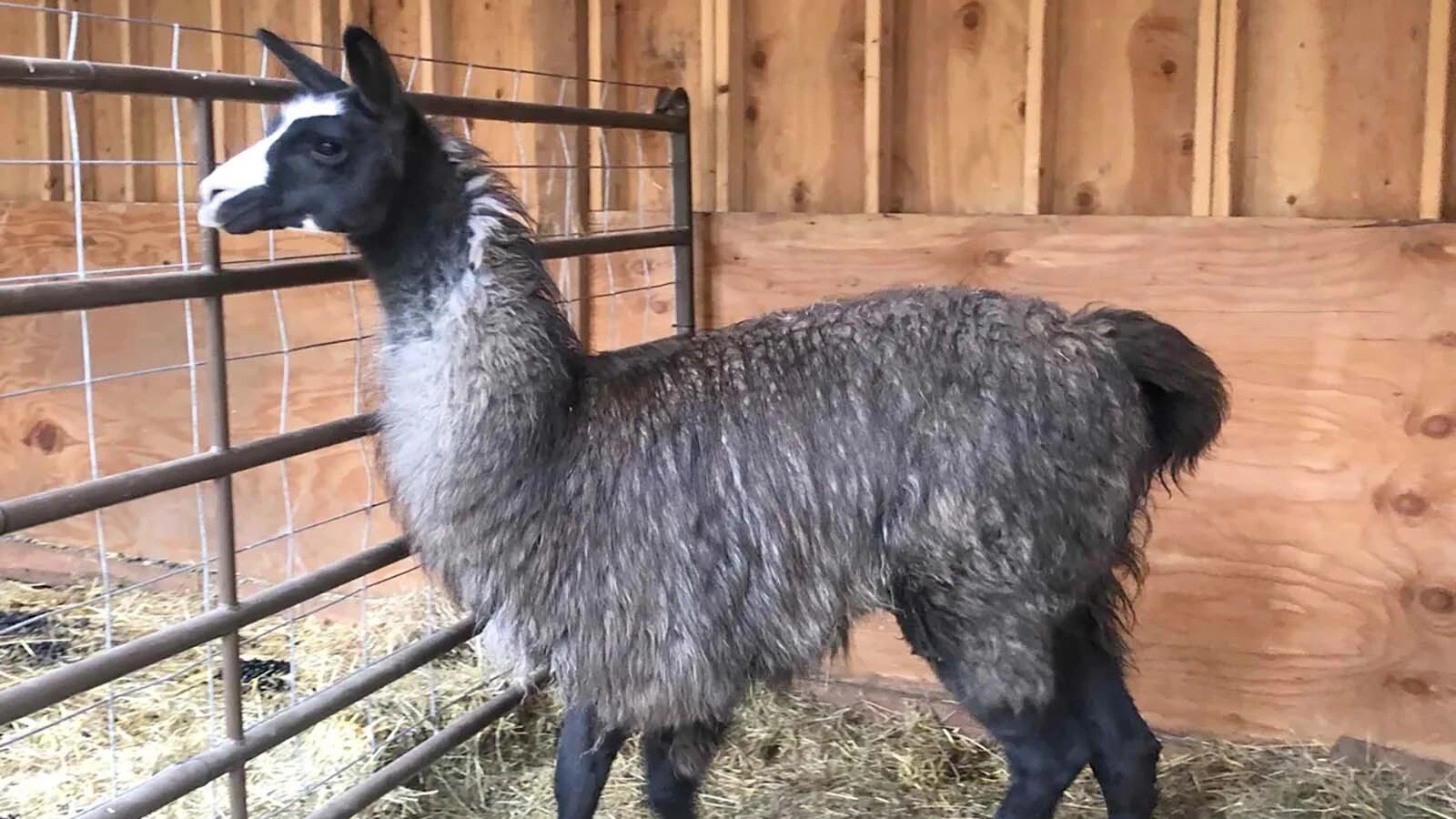
Smokey is a black-bodied llama with silvery-gray fleece tips, a black head with a white face blaze and muzzle, and black legs. He’s still wearing an orange halter, with a broken piece of blue lead rope hanging off it.
Mark and Amy Livesay are offering a reward to anyone who safely retrieves Smokey. They’ve also set up a GoFundMe to cover the costs of their “last resort” effort.
“I have a friend who’s a pilot, so the plan is to do a flyover of the area and have a team of horses lined up to go in later that day or the following morning,” Smunk said. “We're going to set it up so the flight and the trip in are as close together as possible, so we have the best odds of Smokey being where we saw him.”
Extra funds will be donated to the Wyoming Backcountry Horsemen and a yet-to-be-decided llama rescue.
The coordinated flight/horse effort probably won’t happen until the first week of October. Smunk and the Livesays are hoping it won’t be necessary.
“Ideally, someone grabs Smokey before then,” Smunk said. “We’re hoping to get a phone call before we need to do a flyover, and we're going to do everything we can to go in there and get him before that happens.”
Anyone with leads on Smokey’s location can reach Smunk directly at (307) 272-9024.
Andrew Rossi can be reached at arossi@cowboystatedaily.com.