
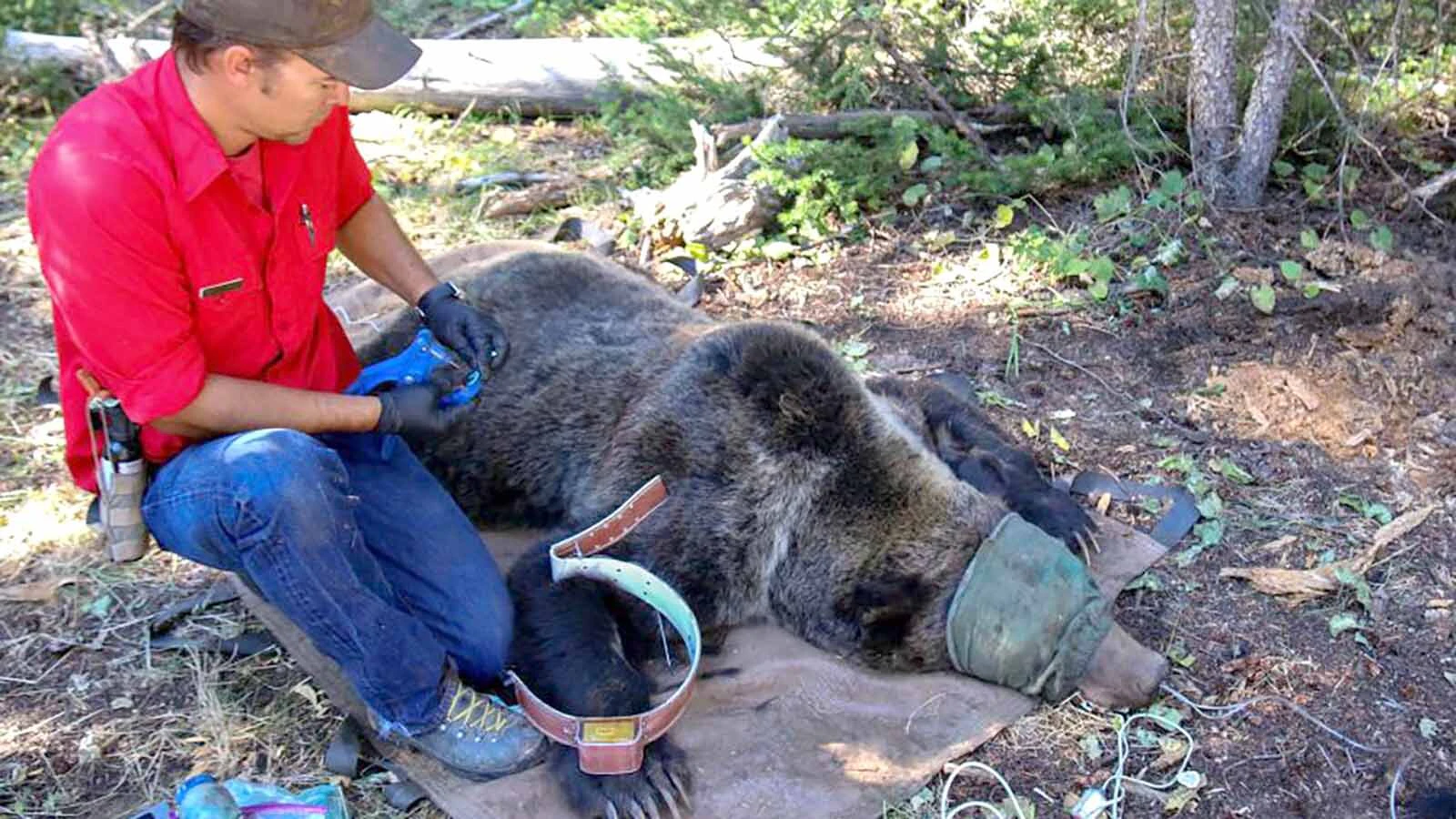
In fiscal year 2025, the Wyoming Game and Fish Department paid $958,484 to compensate ranchers for livestock killed or maimed by grizzlies.
The department’s wildlife-damage fund: $500,000.
Factoring in damage claims for other species, plus additional costs for preventive measures and other expenses, the wildlife-damage program cost $3,294,150, according to the Game and Fish's FY 2025 report.
That’s compared to $2,692,167, including $710,254 for grizzly damage payments, in FY 2024, according to Game and Fish.
The FY 2026 wildlife damage cost report is expected to be released in November or December.
Delist Bears To Save Bucks
Whenever costs soar above the established $500,000 wildlife damage fund, Game and Fish must absorb the additional cost, legislator Sen. Larry Hicks, R-Baggs, told Cowboy State Daily.
The Legislature about a decade ago weaned Game and Fish off general fund money to compensate for wildlife damage, Hicks said.
Department officials at the time were in favor of that because “general fund money comes with legislative oversight,” he said.
Game and Fish is intended to remain as self-sufficient as possible to avoid political entanglements.
Compensation for grizzlies killing livestock is just one of the costs of managing the bears, Hicks added. Grizzly management can cost up to tens of millions of dollars over a decade.
Delisting grizzlies from Endangered Species Act protections and opening a hunting season might help cut costs, Hicks said.
Full state management might help mitigate attacks on livestock, and the resulting costs being passed on to Game and Fish, and by proxy, hunters and anglers, he added.
“That could give landowners the ability to shoot those bears for depredation,” Hicks said.
A hunting season could raise revenue through grizzly tag sales, Hicks added, while also suggesting that hunting grizzlies could make them more wary of humans, lessening the frequency of human-bear conflicts.
Money Source
The base damage-fund budget comes from hunting license application fees of $15 for non-residents and $5 for residents.
“According to the (state) statute, 25% of the fees collected from these license applications are set aside to establish and maintain a fund of $500,000,” according to Game and Fish.
Former Wyoming Game and Fish commissioner Mark Anselmi told Cowboy State Daily there must be a better way to absorb the cost of managing grizzlies and compensating ranchers for their losses.
“In a perfect world, the U.S. Fish and Wildlife Service should probably pay for it, but that’s never going to happen,” said Anselmi, who served on the commission from 2013 to 2019.
The Legislature might reconsider pitching in from the general fund, added Anselmi.
That ship has probably sailed, Hicks said.
Only the Legislature can hike Wyoming hunting and fishing license fees, and “part of the deal” of pulling general fund money for wildlife damage was to relieve the department of any significant license fee hikes, he said.
Would Delisting Save Money?
Grizzly advocate Mike Bader of Missoula, Montana, told Cowboy State Daily he’s skeptical that delisting grizzlies would save Wyoming, Montana, and Idaho any money for grizzly management.
“It would really just pass more costs down to the states,” said Bader, a grizzly ecologist and former Yellowstone National Park ranger.
He’s also skeptical that hunting grizzlies would make the bears more wary of humans.
A bear that’s killed by hunters can’t pass a fear of humans on to other bears, he said.
Moreover, the states would issue only a few grizzly tags, raising at best thousands of dollars against millions in management costs, he said.
Costs related to livestock could be cut through better prevention measures on the ranchers' part, Bader said.
That could include range riders to watch over cattle, he said.
“With smaller livestock, like goats and chickens, electric fencing is going to be effective,” Bader said.
There is also increasing development in and near grizzly habitat in the Greater Yellowstone Ecosystem, he said.
Proactive measures, such as people keeping garbage and pet food secure, could go a long way toward preventing human-bear conflicts and the resulting expenses, Bader added.
Mark Heinz can be reached at mark@cowboystatedaily.com.


