
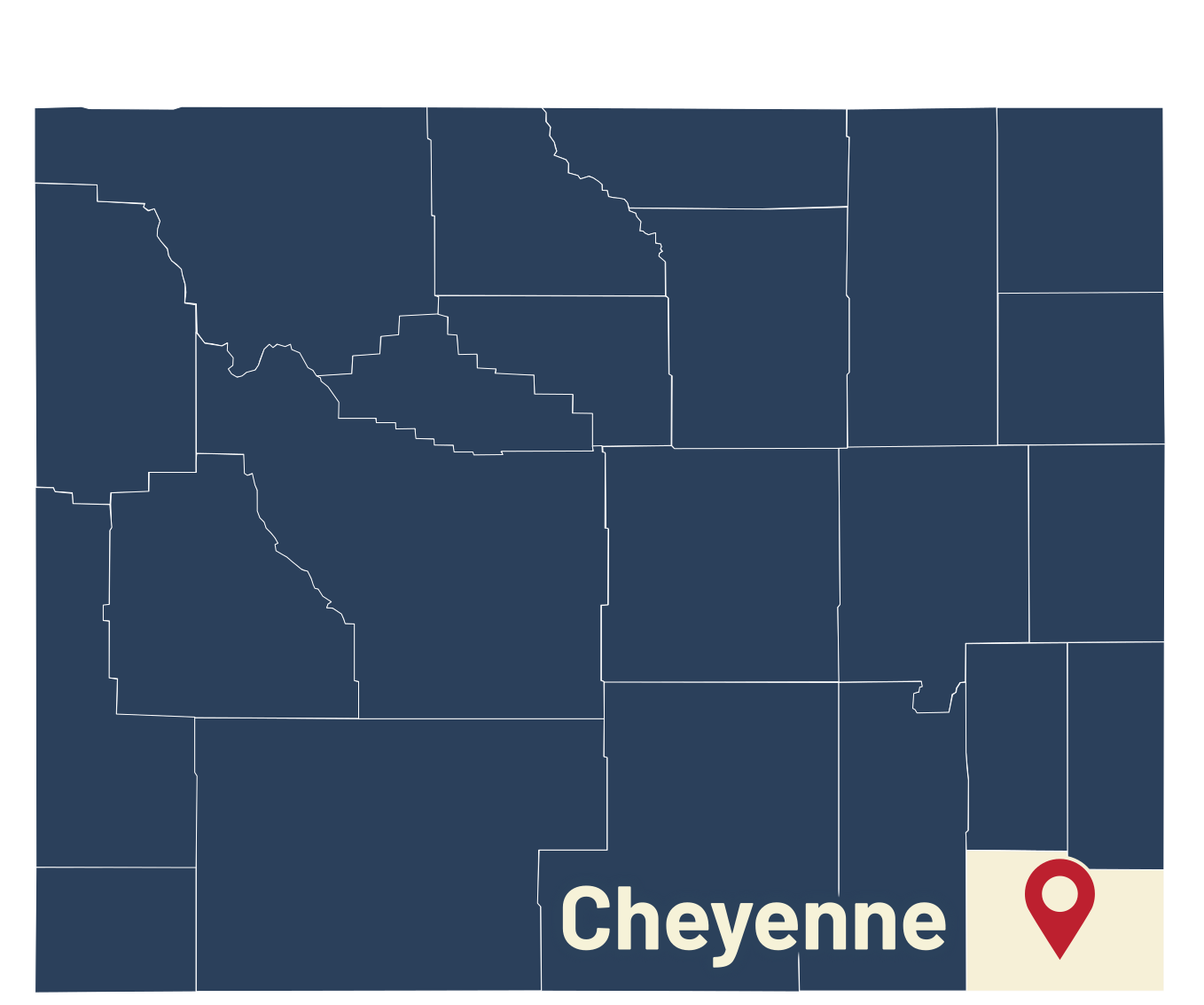
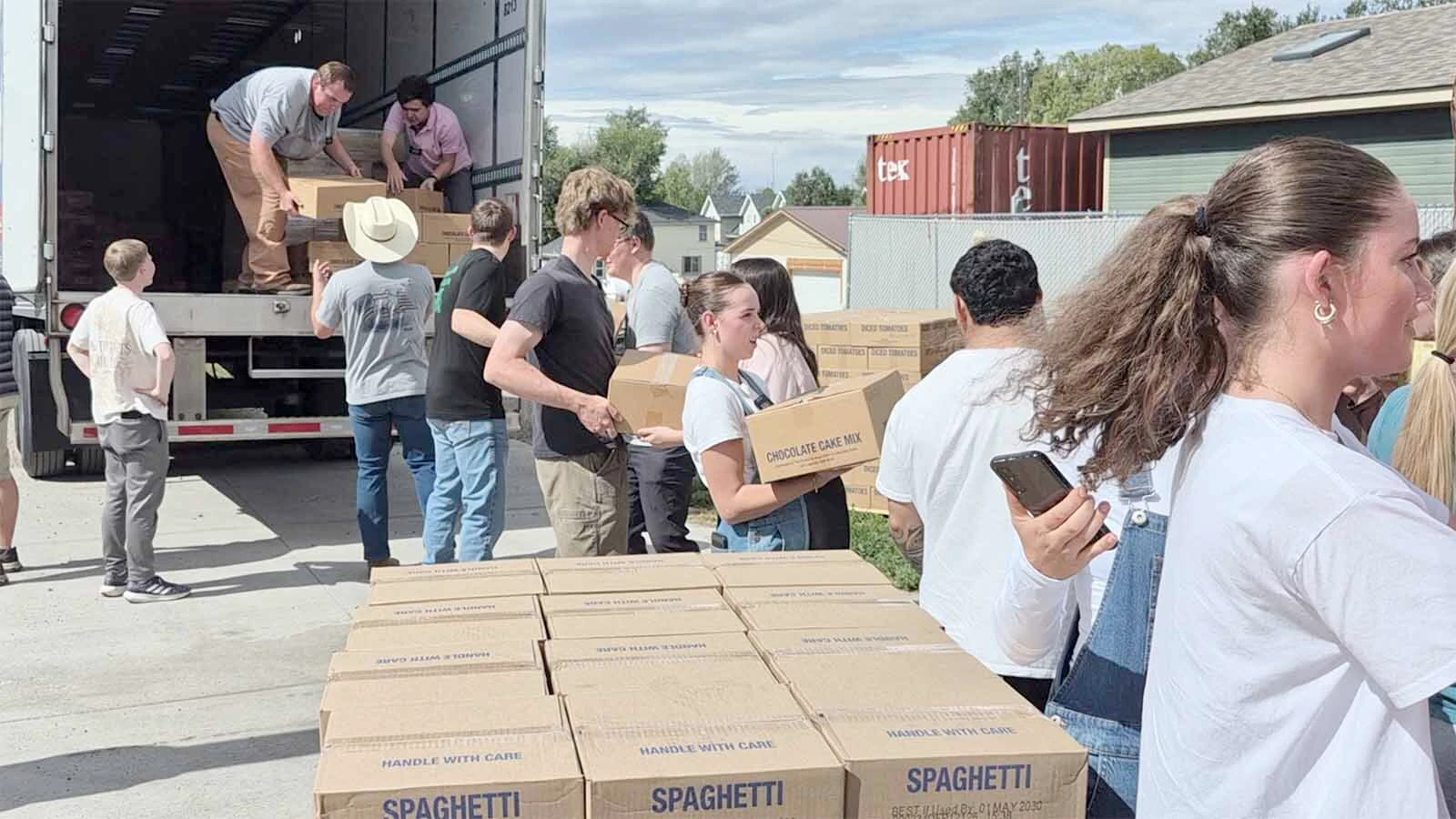
CHEYENNE — A huge truck carried 42,000 pounds of food to Cheyenne on Wednesday morning, but that was just the visible part of its load.
Its destination was four hunger-relief organizations, who split the 21 tons of food to distribute to their clients. It will provide an estimated 33,000 meals.
As massive as the donation may seem, the agencies say that food will last them about a week.
The unseen part of the large delivery was the relief it will give to the people who are finding it increasingly difficult to meet the demands of the needy at a time when government funding, donations, and even the number of volunteers are running low.
“It’s an incredible time right now,” said Kristen Erin Balderaz, executive director of Needs Inc., a food pantry in south Cheyenne. “In Laramie County, we’ve never seen hunger this severe.”
The donation was made by the America250 “America Gives” initiative and the Church of Jesus Christ of Latter-day Saints’ “JustServe” service platform. Cheyenne is one of 250 communities across the country receiving a total of 1,522 cases of shelf-stable food and commodities.
America250 is a national commemoration of the 250th anniversary of the Declaration of Independence.
No Strings Attached
“This kind of food doesn’t come with strings attached to it, like it would with grant funding,” Balderaz said. “We know that if somebody expresses a need, they don’t have to jump through 90 million hoops to prove that they truly are in need and deserving of this food.
“When we have food drives and large-scale efforts like this, it’s a game changer for us. It helps us because this isn’t coming out of our operating budget this week, so we're able to preserve some of our resources for another week. It gives us some breathing room.”
So, how long will this shipment last?
“It’s a huge truck of food, but just to put it into perspective — which is probably the discouraging part and the gutpunch that is the reality of what it will do for us — it won’t last us the week,” Balderaz said. “That just speaks to what the need is in our community right now.”
The other organizations that split the shipment locally are Meals on Wheels, the Salvation Army and St. Joseph’s Food Pantry.
Bailey Monk, St. Joseph’s executive director, said the donation includes high-quality staple goods such as oatmeal, macaroni and cheese, pasta, pinto beans and dry goods.
“It’s something people can stretch if they really need to,” she explained. “St. Joseph’s has a weekly pickup where you just have to come in, and we make sure that if they show up we’ll feed them.”
“I think there are a lot of people who assume that the people in need in their community are some unseen group of people — it’s always ‘them’ — they never know who it is,” Balderaz said. “But we know in reality it’s their neighbors, it’s their dental hygienist, it’s the two-income households who are struggling to budget with low wages and inflation.”
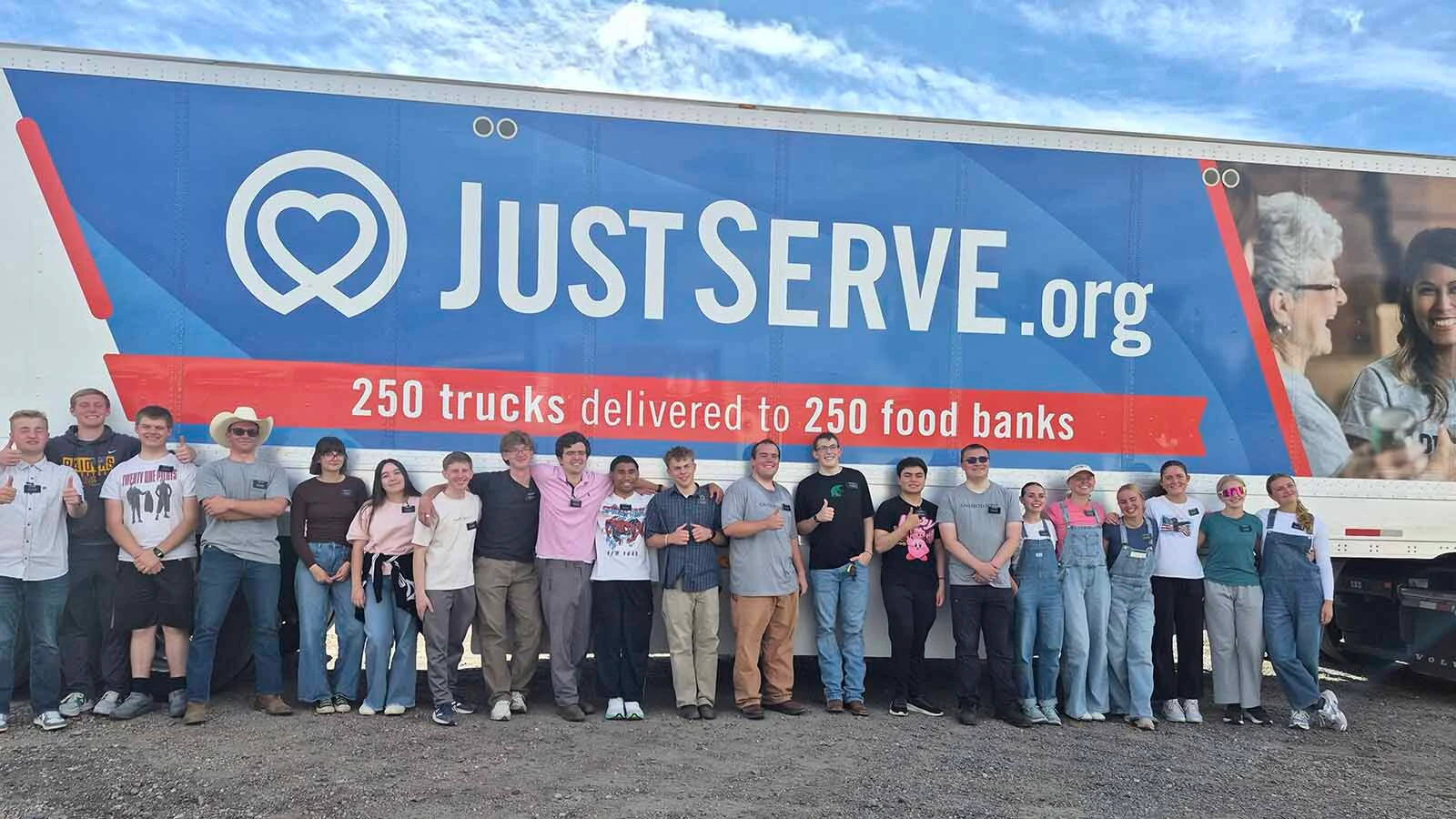
Volunteers and employees of four hunger-relief agencies in Cheyenne — Needs Inc., Meals on Wheels, the Salvation Army and St. Joseph's Food Pantry — pose for a photo after helping empty an America250 "Just Serve" truck with 42,000 pounds of food on Wednesday morning. (Kerry Drake for Cowboy State Daily) 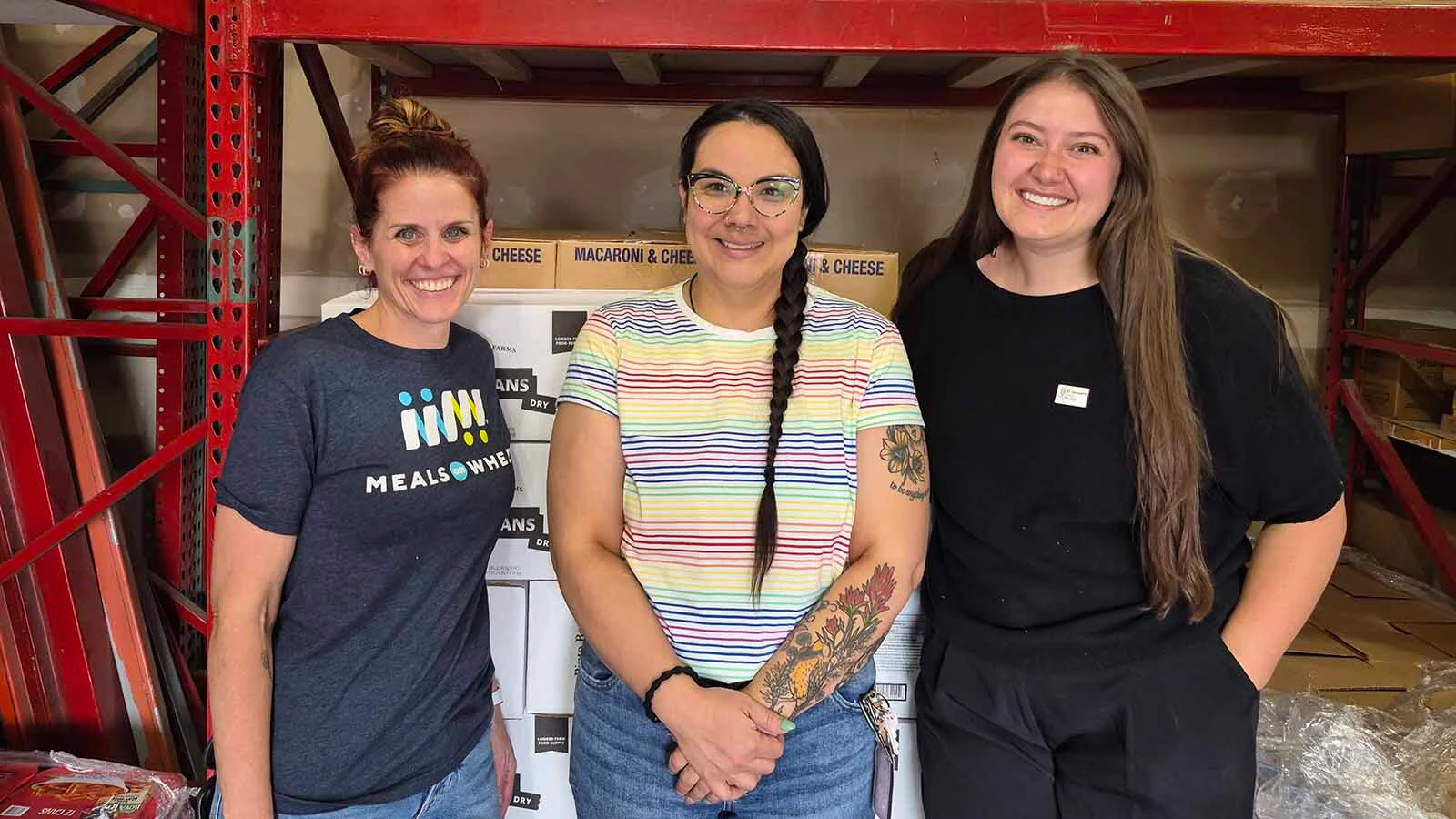
Executive directors of three Cheyenne hunger-relief agencies — from left, Stephanie Freeman of Meals on Wheels, Kristen Erin Balderaz of Needs Inc., and Bailey Monk of St. Joseph's Food Pantry — say Laramie County is seeing an unprecedented demand for food from needy clients. (Kerry Drake for Cowboy State Daily)
A Reflection Of The Economy
Balderaz said what the hunger-relief organizations are seeing is a sign and reflection of the economy.
“A lot of volunteers are going back to work, so they’re not able to help like they used to.” she noted. “And there’s a drop-off in donations across the board.
“People are needing to go back to work and be more careful with their dollars. And can’t be as generous as they were before. In fact, a lot are becoming clients of ours for the very first time.”
Stephanie Freeman, executive director of Meals on Wheels, said her organization provides hot nutritious meals to anyone in the community who needs them, Monday through Friday. Cold meals are prepared for weekends.
“Food like this helps us stretch our budget that much further and provide for the influx of people we’re seeing,” Freeman said. “We’re making meals from scratch every day so having these items really does help. We’re getting a lot of white flour, because we do really like to make desserts. Because that’s the best part of every meal.”
Ronnie Lopez, president of the Cheyenne Wyoming Stake of the Church of Jesus Christ of Latter-day Saints, said he’s thankful the community has organizations that know the people they serve and where their resources are needed the most.
Balderaz said legislation has created more challenges for hunger-relief agencies and in nonprofit work in general, and a lot of opportunities are no longer funded. But the faith-based community, generous neighbors, and small businesses are filling the gaps.
“It's now people taking care of each other rather than us being able to depend on what we used to be able to count on,” she said. “Communities stepping up in a very powerful way is what’s ensuring that we can continue to keep our doors open and continue to meet the need as it’s growing.”


