
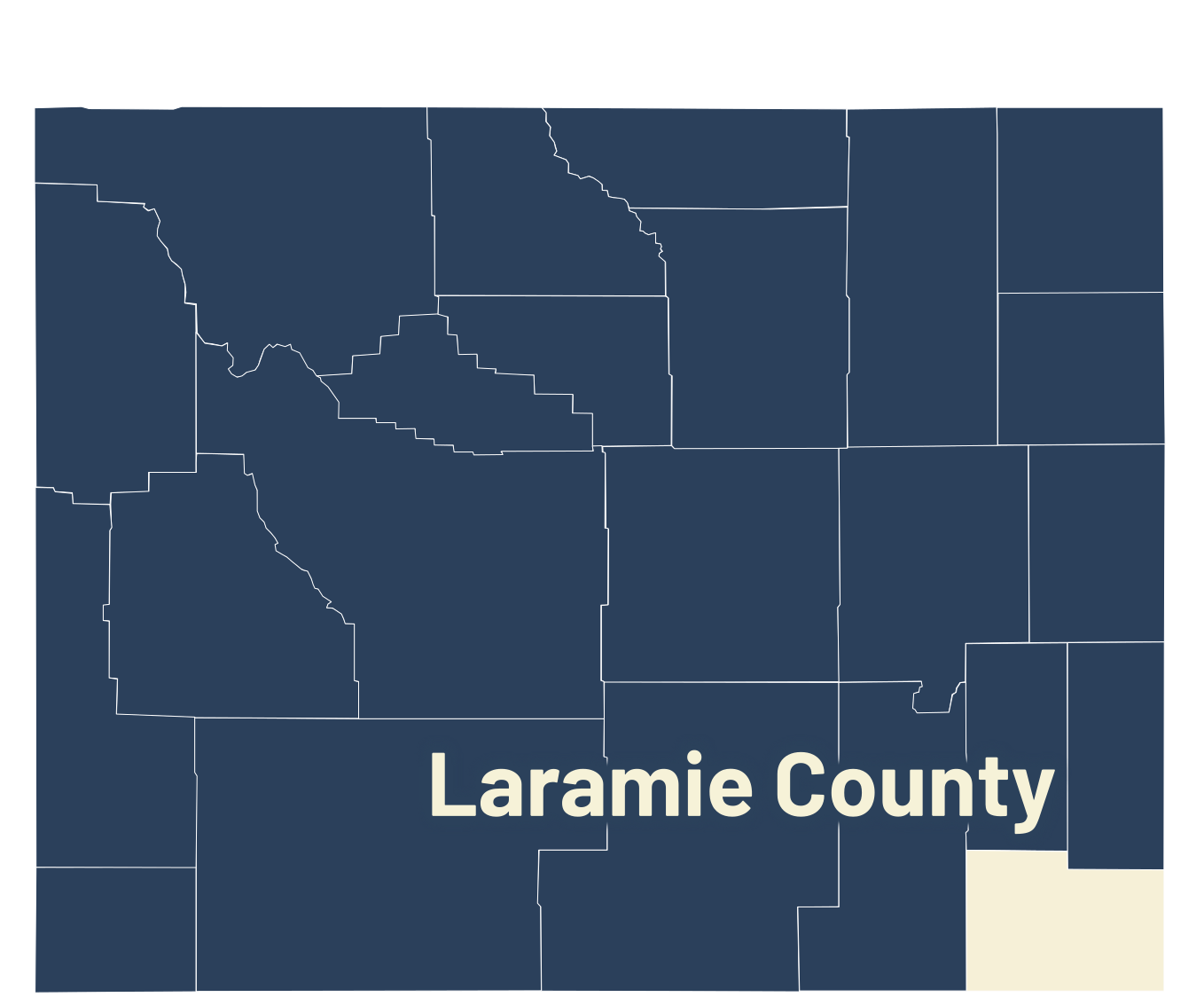
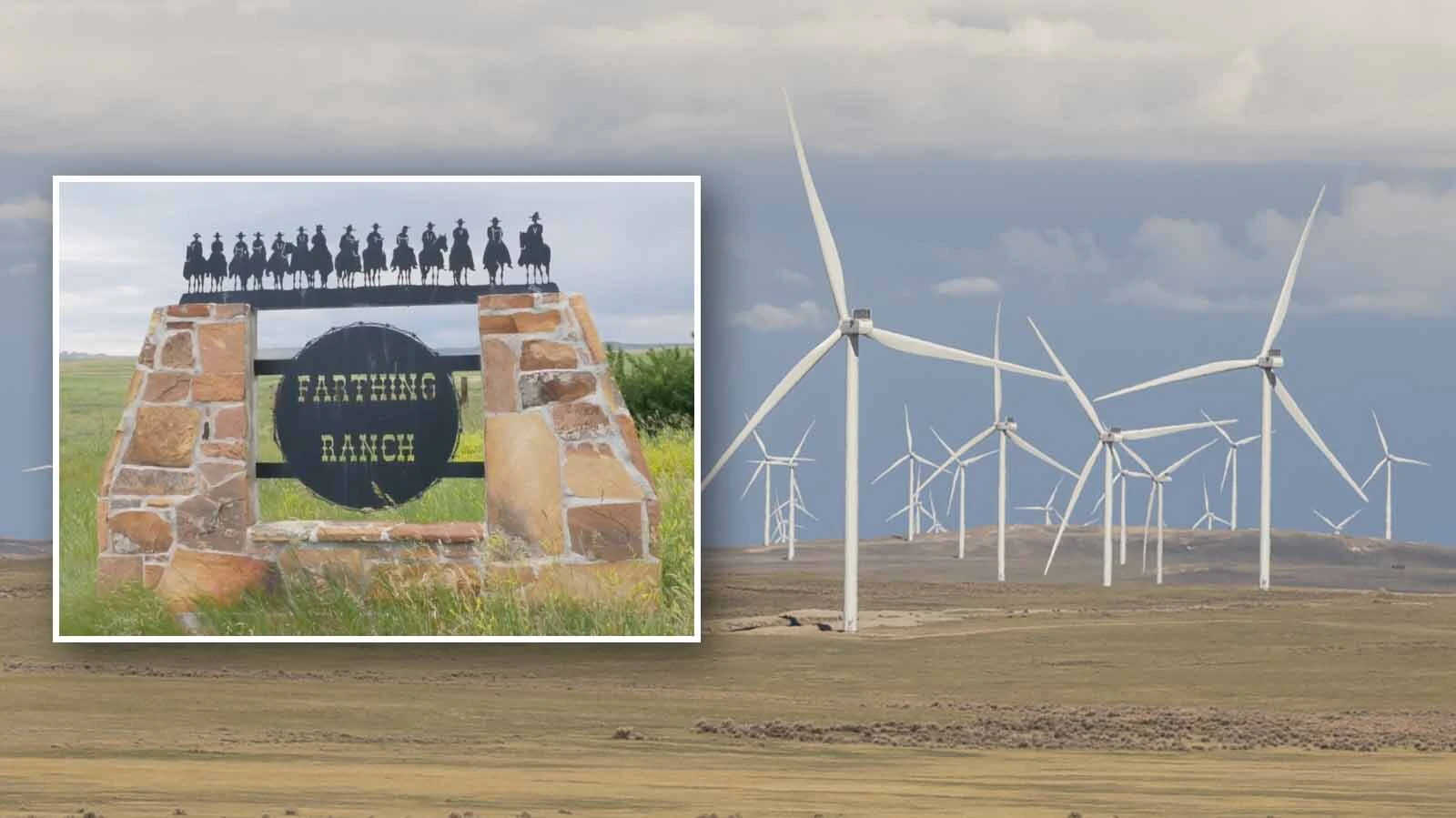
For Charlie Farthing, rancher and owner of Farthing Ranch Co. near Iron Mountain, leasing part of his land for Laramie Range Wind Project turbines is about protecting the future of a ranch that’s been in his family since 1903.
“I'm the third generation, and two of my sons are with me on the ranch here,” Farthing told Cowboy State Daily. "We want to be able to continue on. Then I've got grandkids, and I hope that they have the opportunity or want to come back. That’s a lot of the reason we're doing this.”
For him, leasing his land to the wind farm is a way to ease the financial insecurity of the cattle business without disrupting ranching operations.
“We're going to be able to continue ranching with the wind farm,” Farthing said. “If you go some of these other routes, like solar panels, that land is gone. With this wind farm, when it's over and done with and these things are decommissioned in 30 years, the land comes back the way it was. And it's still ours.”
Last year, Laramie County commissioners voted down the first version of the proposed 650-megawatt wind farm, which at the time was slated to be three times bigger than the city of Cheyenne.
Now, a modified proposal is going before the commissioners again after securing approval with 26 conditions from Wyoming's Industrial Siting Council after a tense two-day hearing on Sept. 1.
The scaled-back Laramie Range Wind Project, developed by ConnectGen Laramie County LLC, a Repsol Renewables affiliate, now proposes up to 139 turbines across roughly 41,200 acres of private and state land in northwestern Laramie County, down from the original 170-turbine, 56,000-acre footprint.
The developer also plans to construct two substations and new transmission infrastructure.
Now having cleared the hurdle of state approval, county commissioners will soon decide whether the modifications are enough to outweigh the concerns that sank the project the first time around after fierce community pushback they heard before casting that first vote.
‘Still Ours’
Cattle is Farthing's primary source of income, a business he's learned firsthand can be volatile.
“The cattle market is very cyclical,” Farthing said. “The last two or three years, we’re having good years. We have our ups, and then we also have our downs, and we'd like to diversify our income.”
Even when the market is up, Farthing said, the cattle business is still susceptible to unforeseen circumstances. This year has been good, he said, but rising costs for diesel, machinery, parts and tires have eaten into the bottom line.
Last year looked promising too, until a drought hit and nearly doubled the cost of hay.
Farthing has watched Laramie County change around him in recent years, with new housing developments and data centers moving into areas that used to be open ranch land. He knows the county is going to need more power to keep up with that growth.
While he doesn't think wind should be the only source, he sees leasing part of his land for turbines as a way to fit into that shift while still avoiding something more permanent, like selling to subdivisions.
“Once you put pavement down, put all these houses in, it's not coming back to agriculture,” Farthing said. “We’re going to continue into agriculture. We're going to continue to raise cattle.”
While weighing the decision to lease, Farthing said he talked with other landowners whose properties already house turbines.
The most common complaint he heard was about the construction period itself, which brings a few years of noise and heavy truck traffic in and out of the property. But once the turbines are up, he said, he expects life on the ranch to return to normal for his family and their livestock.
The main pushback he's heard to the wind farm in Laramie County comes down to visibility, as the turbines will change how the landscape looks for his neighbors. He acknowledges some might see them as an eyesore or a hit to residential property values.
But that visual concern doesn't carry as much weight with him or his agricultural neighbors, and he said the crux of the issue comes down to property rights. Just as he can't control what his neighbors do with their own land, he said he feels they shouldn't get to dictate what he does with his.
“Several of my neighbors or people that we know have taken their land closer to town and put it into houses and subdivisions,” Farthing said. “They’ve developed it. And I don't necessarily like to see the houses, but it's their right to do that. They pay the taxes on it. I pay the taxes on this.”
‘Tsunami Wave Of Development’
Wendy Volk, a Cheyenne-based real estate agent, also has deep ties to the proposed site. Her family's Dereemer Livestock Ranch has worked land in the Horse Creek area since the 1870s. She's been a vocal opponent of the wind farm almost from the start, but not for the visual concerns Farthing raised.
"I'm not opposed to how they look,” Volk said. “They are going to be the size of a 60-70 story office building. I used to live in Hong Kong, I know what a high-rise looks like.”
Volk's ranch shares a border with Farthing's, and she said the two families have always had a great deal of mutual respect as neighbors. But where he sees an opportunity, she sees dire consequences that go beyond the rights of Farthing and the other landholder leasing to the wind farm, True Ranches LLC, have.
“This cumulative landscape is going to be forever changed,” Volk said. ”It's not just private property rights of these two large landholders. It’s when those impact how we can use our property.”
Her concerns center on how the three years of construction and hundreds of workers this wind farm will bring will impact roads, water use and public-safety resources in an area she said is already stretched thin.
Residents in the Horse Creek area already contend with unreliable cell service and long distances from the nearest hospital, she said, and she worries an influx of construction workers will only add more strain to emergency response times.
The rural roads leading to the site are narrow and largely lack turn lanes, Volk said, making them a tough fit for trucks hauling 200-foot-plus turbine blades. Volk also pointed to the project’s own application, which estimates construction will require 541 acre-feet of water for turbine foundations and dust suppression.
That’s nearly one-tenth of the capacity of Granite Reservoir, Cheyenne's primary water source at Curt Gowdy State Park.
“I'm not saying that this wind company is getting their water from Curt Gowdy State Park’s Granite Reservoir,” Volk said. “I’m just showing for comparison purposes how much water that would be taking. Wind projects don't use water after they're up and running, but they do demand quite a bit during that construction period.”
Her worries are magnified with other development ongoing in the region. Two other wind farms tied to Repsol, Rail Tie in Albany County and Chugwater Wind and Solar in Platte County, are also moving forward nearby, and she said all three could draw on the same limited pool of workers, water and housing at once. Layered on top of that is a wave of unrelated development already reshaping the region.
Just north of the city, F.E. Warren Air Force Base is in the early stages of a decades-long, $141 billion overhaul to replace its nuclear missile system, a project expected to bring thousands of construction workers to the area in the coming years.
"It's going to be a tsunami wave of development,” Volk said. “We need to start having some very, very important conversations with our leaders, with our planners, with our community.”
Volk tried to start some of those conversations at the Wyoming Industrial Siting Council's hearing, where she and five other family entities near the project had hired an attorney and were granted standing to cross-examine the company and submit their own sworn testimony. But, due to a strange turn of events on the first day of the hearing, Volk said that testimony never made it to the public.
“Our attorney was able to ask us questions, and we got cross-examined and we provided expert testimony,” Volk said. "Then somehow or another, someone hacked the Zoom system right when we were about to provide our testimony.”
Volk wasn’t surprised when the Industrial Siting Council approved the project, noting the state panel's long track record of greenlighting nearly every proposal before it.
While pleased the council adopted 26 permit conditions, even more than what her side had proposed, she maintains the revised plan needs work and emphasized that the state’s approval doesn’t replace the county’s responsibility when they vote again on the project.
“It's an independent responsibility to determine whether the project is compatible with the surrounding area,” Volk said. “(County commissioners) also need to evaluate: Does this project adequately protect public health, safety, and welfare?”
Next Steps
Christi Schaefer, external relations and communications manager for Repsol Renewables North America, told Cowboy State Daily in an email Wednesday that the changes made since the county's 2025 denial were designed to directly answer concerns like the ones Volk and other opponents have raised.
“Laramie Range Wind has been developed through extensive studies and ongoing engagement with landowners, community members and agencies,” Schaefer said. “We believe the project represents a meaningful long-term contribution to the local economy and an important opportunity for local families to preserve their land for generations to come.”
When Laramie County commissioners rejected the original proposal in a 3-1 vote, opposing Commissioner Linda Heath cited a desire to protect Wyoming's undeveloped landscapes. Troy Thompson cast the sole vote in favor, arguing the county held the developer to an unreasonably high standard.
Commissioners were unavailable for comment on the modified proposal.
Public comment remains open through Sept. 28 via email to the Laramie County Planning and Development Office. The county planning commission will hold a public hearing Oct. 22, before the Board of County Commissioners makes a final decision during a Nov. 17 hearing.
Schaefer said the company respects the county's review process and remains focused on working toward a solution that both sides can agree on to move the project forward.
“The changes we've incorporated into the project include reducing the project area and number of turbines, changing our haul route and implementing setbacks that exceed county requirements,” Schaefer said. “Repsol is proud to be a renewable energy developer in Wyoming, and we are committed to responsible development, transparency and collaboration throughout the permitting process.”
Emma Jane Jackson can be reached at emma@cowboystatedaily.com.


