
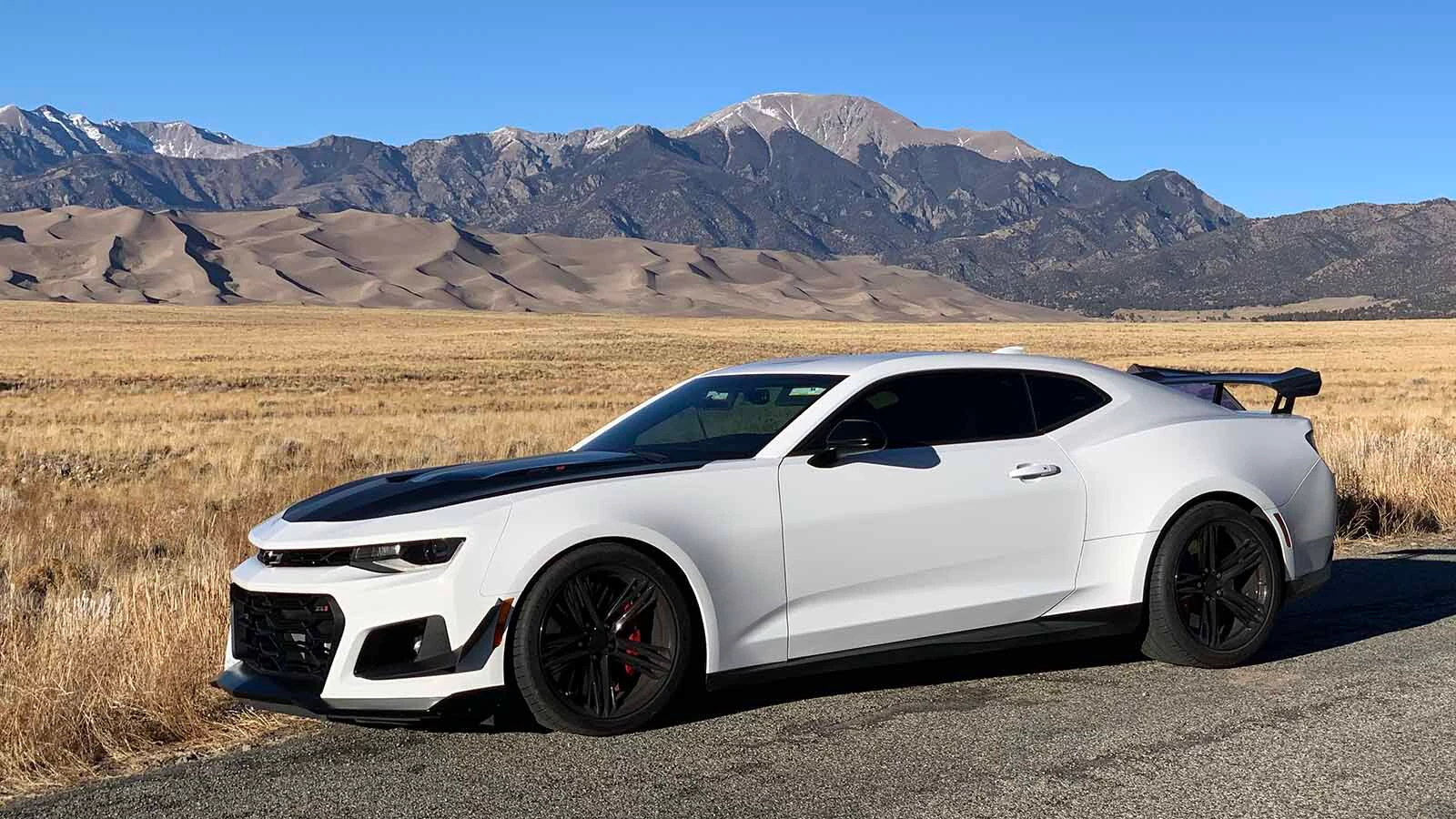
A while back, Nic Young found himself careening down a dirt road in his newly purchased 2018 Chevy Camaro ZL1 in the middle of a thunderstorm, trying desperately to outrun a hailstorm threatening to pummel his beloved ride.
“I ended up just basically off-roading my Camaro. It (the road) had turned into mud. Had I stopped, I would have gotten stuck,” Young told Cowboy State Daily.
The ordeal led him to purchase an inflatable cocoon to protect his Camaro when he’s out on the road, away from the garage.
Young lives in Buena Vista, Colorado, and is originally from Indiana. He’d bought the Camaro in Oklahoma and planned to drive it to Indiana, then back to Colorado.
It was during that journey that he hit the thunderstorms and had to pull a Mad Max-style escape from hail.
He made it out with his car still fully intact. But he vowed to never again put himself and the Camaro in such a situation.
Blow-Up Cocoon
A short time later, while attending a Camaro rally in Sturgis, South Dakota, Young found the answer to his predicament.
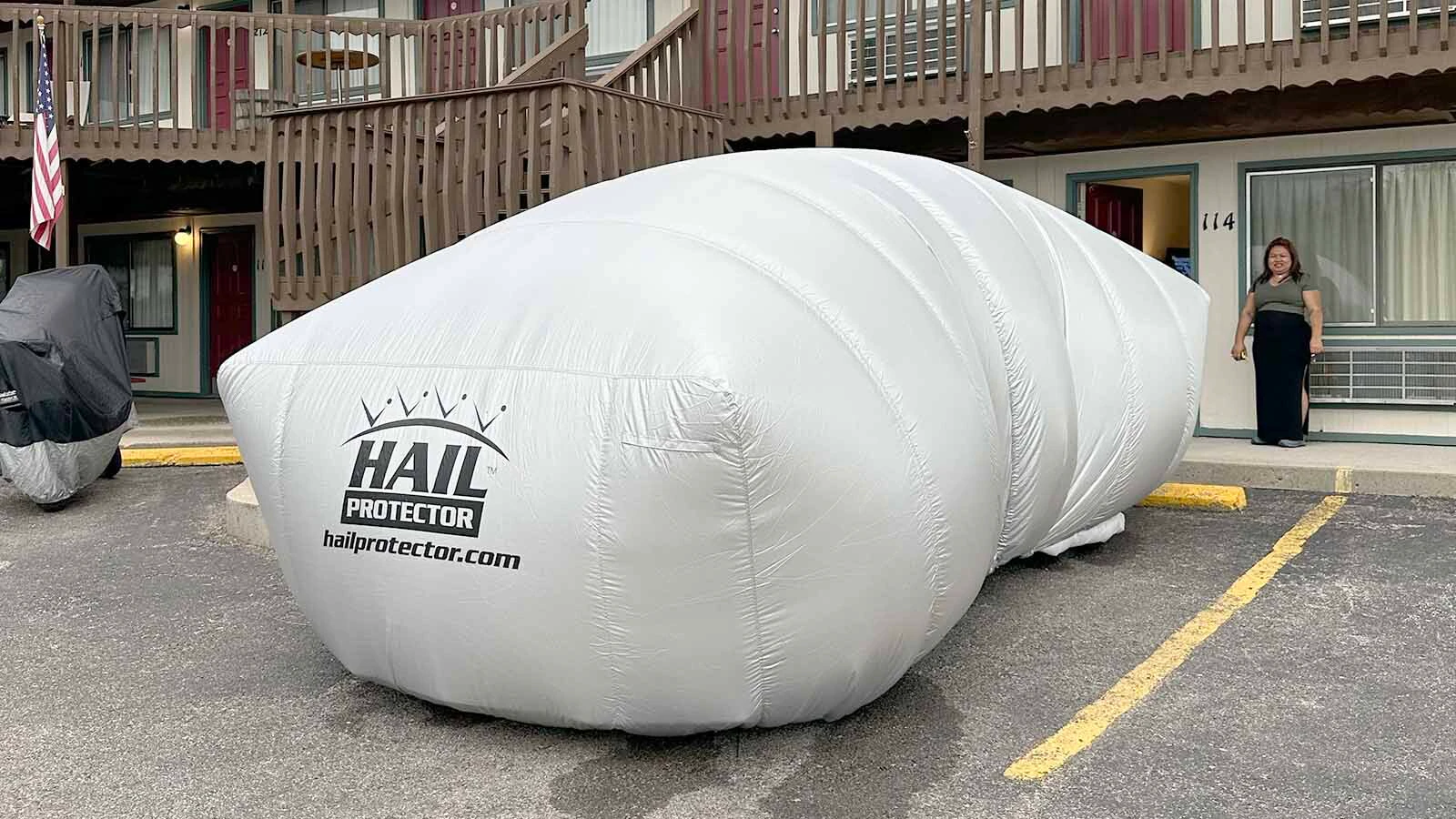
Another attendee was selling an inflatable car cocoon. The product is exactly what it sounds like — a gigantic shell of heavy-duty fabric that blows up to completely surround the vehicle.
It's purported by manufacturers to shield vehicles from hailstones, blowing dust, and other potential threats.
Car cocoons go for about $550 to $650 new. Young got his used for about $200.
It fits in the trunk of his car, and the inflation system can run off the battery or plug into a cigarette lighter or power port.
As somewhat of a transportable garage, “it gives me peace of mind when I’m on the road,” Young said.
Cocoon, or Turd?
The contraption drapes over the vehicle, initially looking about like an ill-fitting car cover. It’s secured via a drawstring that's tightened to secure it to the bottom of the tires.
The hail shield is equipped with internal electric fans, which inflate it in the same manner that popular oversized holiday lawn decorations blow up.
That leaves the vehicle looking like a huge, fat caterpillar. The company claims that “any size hail” will simply bounce off, and the cover can withstand winds of up to 80 mph.
It takes about 10 to 15 minutes to set up, the manufacturer claims, and runs best off household electricity.
Some users claim in social media posts that they’ve adapted theirs to voltage converters that plug into their car’s cigarette lighter/electrical port so that they can take it on the road.
The vehicle cocoons have drawn mixed reactions from commenters. One quipped that it made the user’s car look like a huge “metallic turd” sitting in his driveway.
Another suggested that Styrofoam “pool noodles” packed under a regular car cover might work just as well and would be much cheaper.
Good Enough for Stella Louise?
Ed Schreiner of Torrington frequently drives his 1973 Ford Bronco across Wyoming and neighboring states.
The first-edition Broncos are highly coveted.
And over the years, Schreiner has put countless hours of work into his, making it truly one of a kind. He dubbed it “Stella Louise."
So, the thought of his beloved rig getting pummeled by hail makes him cringe.
“Luckily, the only place I’ve run into hail so far was down in Colorado, and that storm wasn’t severe enough to cause damage,” he told Cowboy State Daily.
He’s got the skills to replace a broken windshield or shattered rearview mirrors.
“But as far as hail dents? Uhhh …”
Well, he’d have to hope a professional could heal Stella Louise, Schreiner said.
Schreiner said he’s seen some inflatable cocoons during his travels and finds them intriguing.
“I’ve always told myself, if I didn’t have a garage, I’d want one of those,” he said.
“The thing that steers me away from them now is, could they handle our high winds in Wyoming?” he added.
However, if the cocoon could meet the manufacturer's claims of wind resistance and if it could be taken on the road without too much trouble, he might consider buying one.
“I could see that it would protect my vehicle not just from hail but also from blowing dirt and anything else like that,” Schreiner said.
‘I’m All Ears’
Dallas Tyrrell, owner of Tyrrell Auto Centers in Cheyenne, knows full well the pain that a severe hailstorm can bring.
A couple of years ago, a whopper hit Cheyenne, and his business suffered “a couple of million dollars in damages” to vehicles and the dealership building.
Even so, he doesn’t know if having a supply of car cocoons on hand would have made the situation any better.
“It would be very impractical” for emergency deployment on a large scale because of the time it would take to set up and inflate each individual unit, he said.
However, for the individual vehicle owner, “if there’s a new way to protect a car from hail damage, I’m all ears,” Tyrrell said.
What About Sharp Hail?
Automotive writer Aaron Turpen of Cheyenne told Cowboy State Daily that for now he’s suspending judgment on whether a car cocoon is an investment he'd make.
“I’ve seen a few of those now, and I think they’re pretty great,” he said. “Assuming the hail isn’t moving too fast and isn’t too sharp.”
For now, Turpen said he’s sticking to old-school methods for protecting his automotive gems from hail.
“I use furniture pads, but you can also get hail blankets (for cars) on Amazon,” he said.
Mark Heinz can be reached at mark@cowboystatedaily.com.


