
In road construction, the unofficial mantra has often been “our way and the highway.” When federal or state governments have found an optimal route for an interstate, few obstacles have stopped them from getting their way.
A 200-foot-wide natural sinkhole in northeast Wyoming filled with more than 20,000 bison bones and indigenous artifacts is a rare exception.
That’s the story of the Vore Buffalo Jump near Sundance. Situated along Interstate 90, it’s a rare Late Plains archaeological site where people can see artifacts in their original state.
It was discovered when the Wyoming Department of Transportation (WYDOT) trespassed and dug a hole into a hole, only to find layers of bison bones nearly 20 feet deep.
“If they hadn’t done that, we’d never have known it was there,” said Jacqueline Wyatt, president of the Vore Buffalo Jump Foundation. "There was no evidence of anything until that happened."
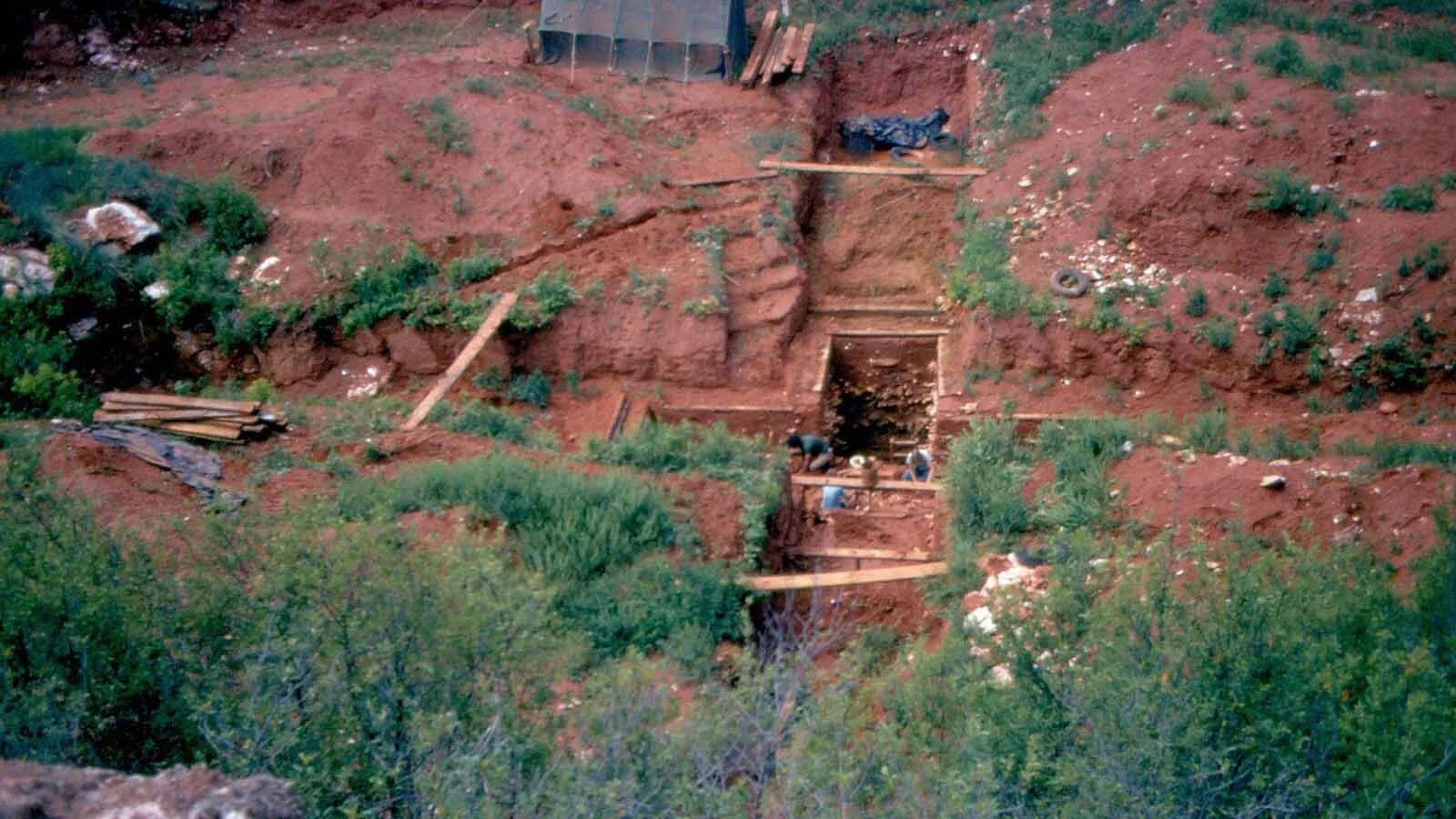
Excavations at the Vore Buffalo Jump during the 1970s. The archaeological site was discovered in 1969 when WYDOT was drilling exploratory holes in the sinkhole to determine the foundation stability for the yet-to-be-built I-90, which was rerouted after the site was discovered. (Jacqueline Wyatt, Vore Buffalo Jump Foundation) 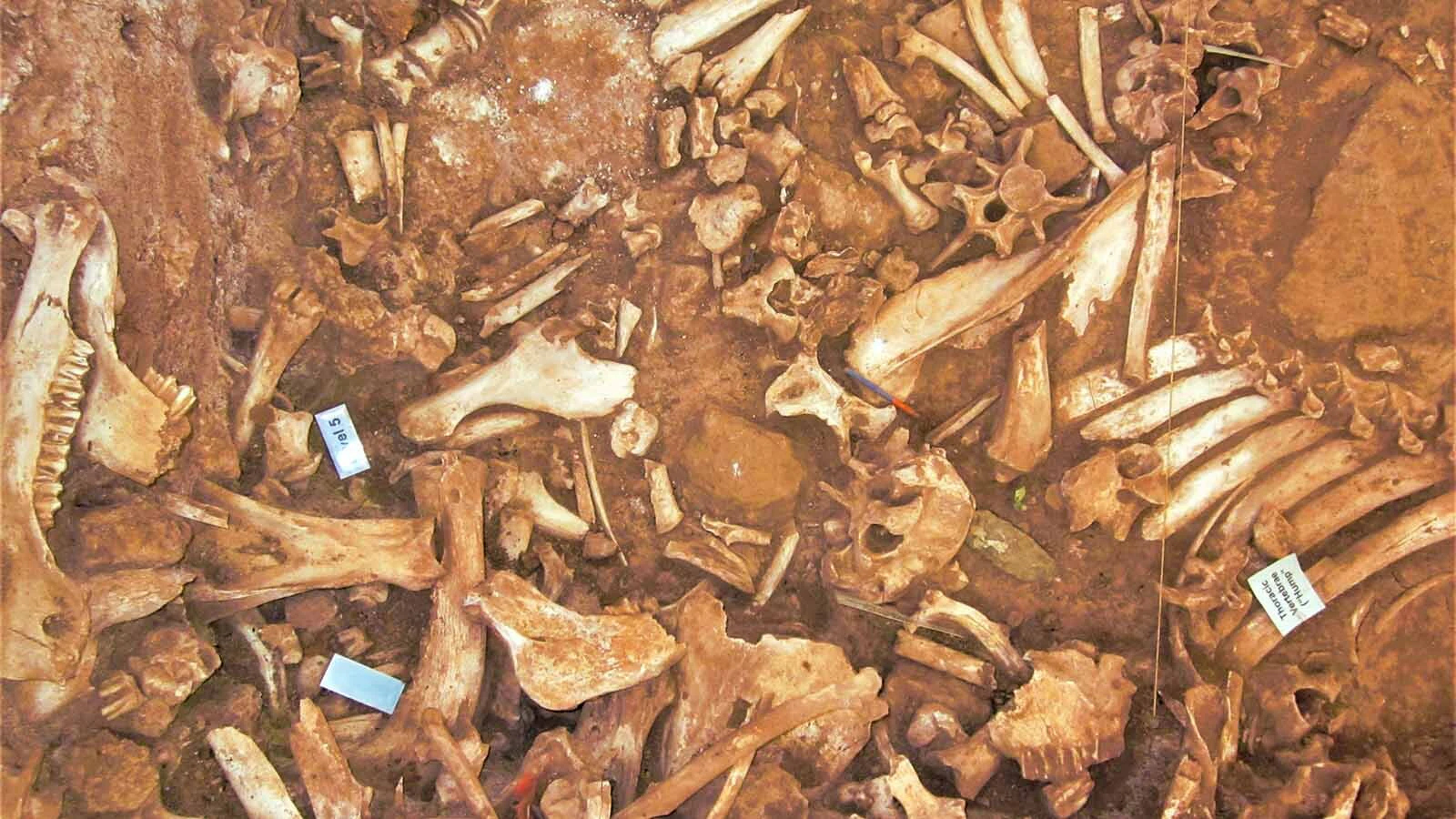
A massive jumble of bison bones preserved as they were found at the Vore Buffalo Jump. Indigenous tribes killed these bison by forcing them off its 40-foot-high cliffs, then butchered them for meat and hides at the bottom, leaving this "garbage" behind. (Jacqueline Wyatt, Vore Buffalo Jump Foundation) 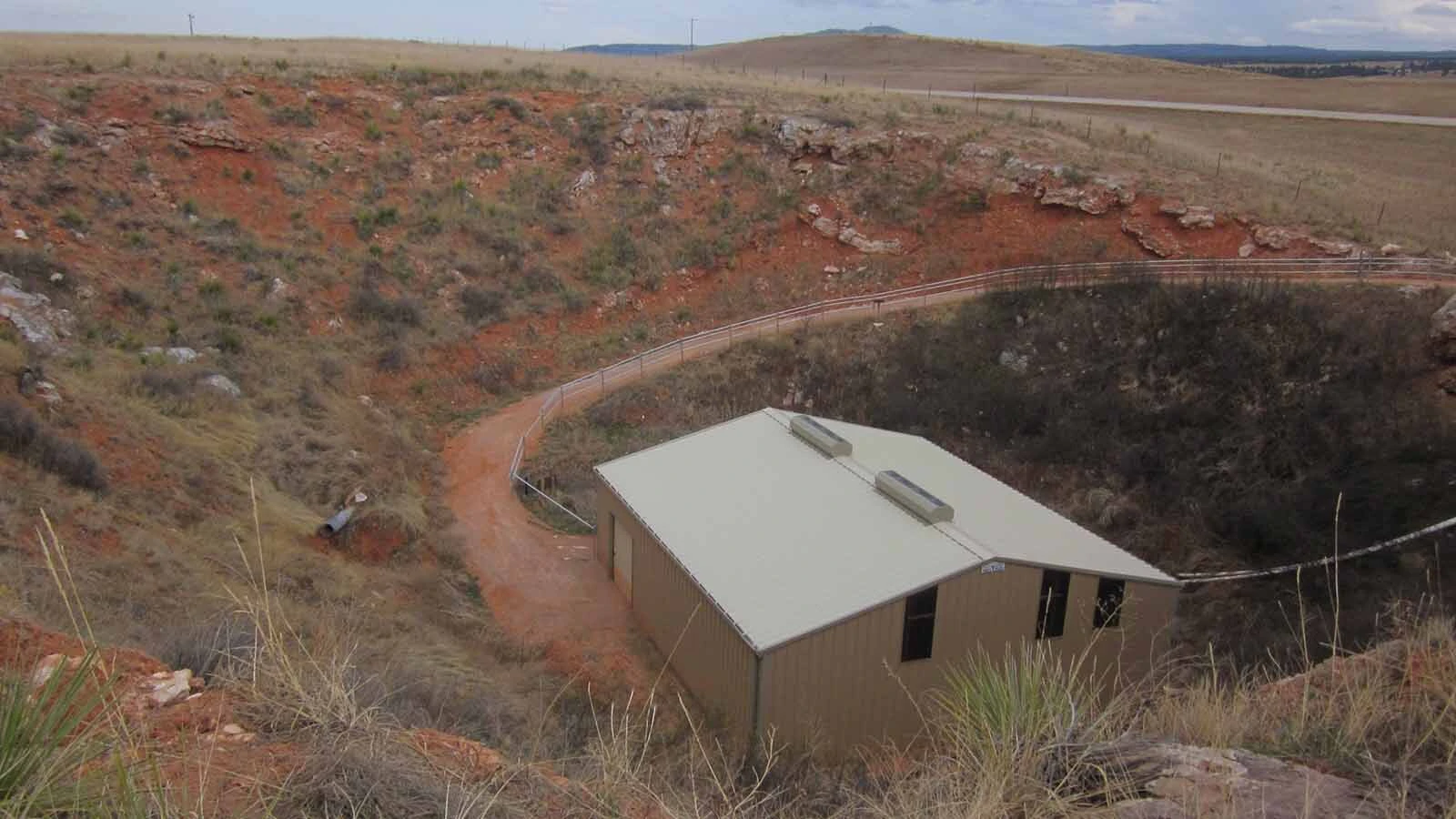
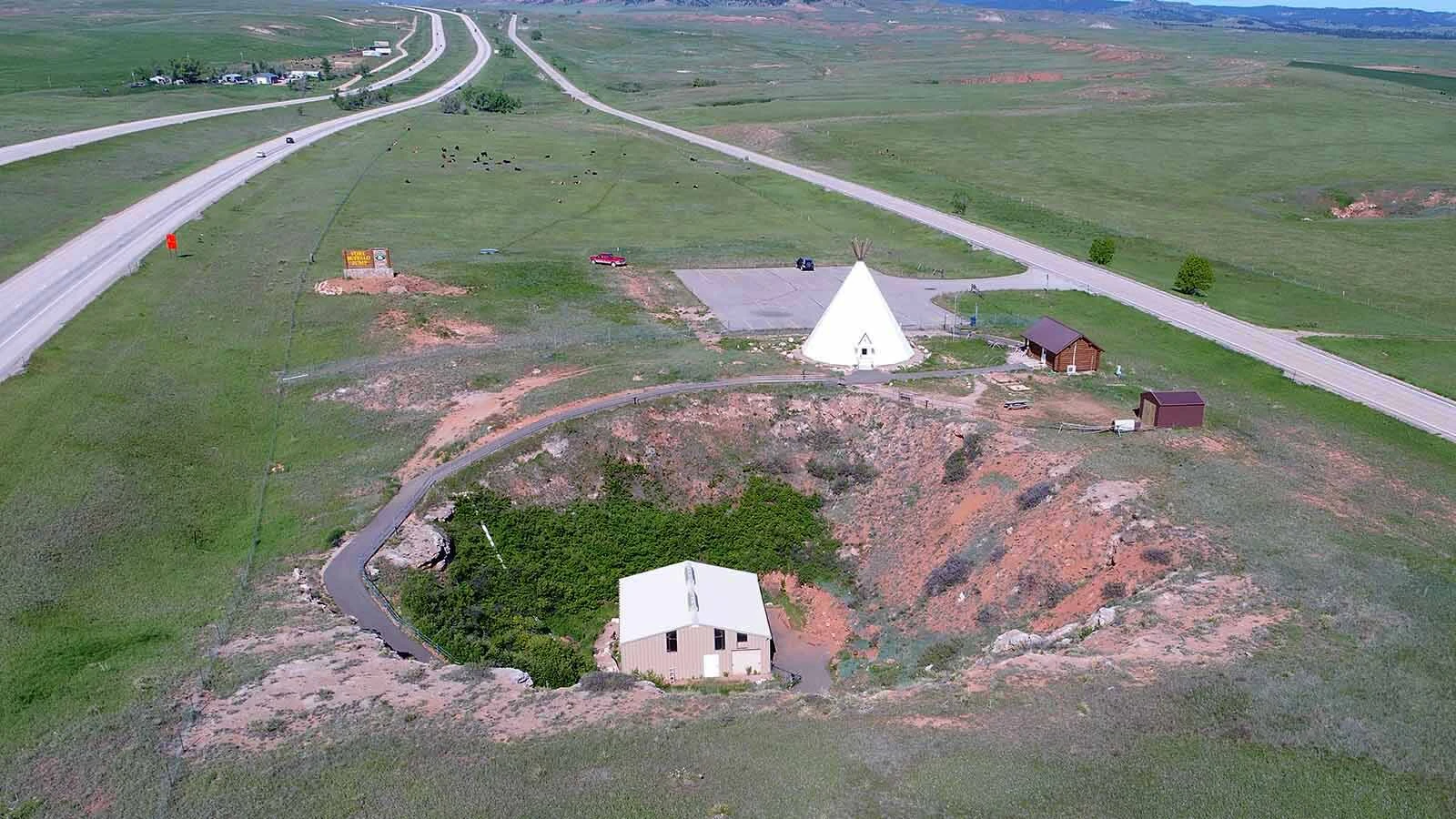
This steel structure preserves the in-situ bones of bison found at the Vore Buffalo Jump. This 200-foot-wide sinkhole, which contains between 4,000 and 20,000 bison skeletons, was used by multiple tribes between 1550 and 1800 to kill whole herds of bison at once. (Jacqueline Wyatt, Vore Buffalo Jump Foundation) 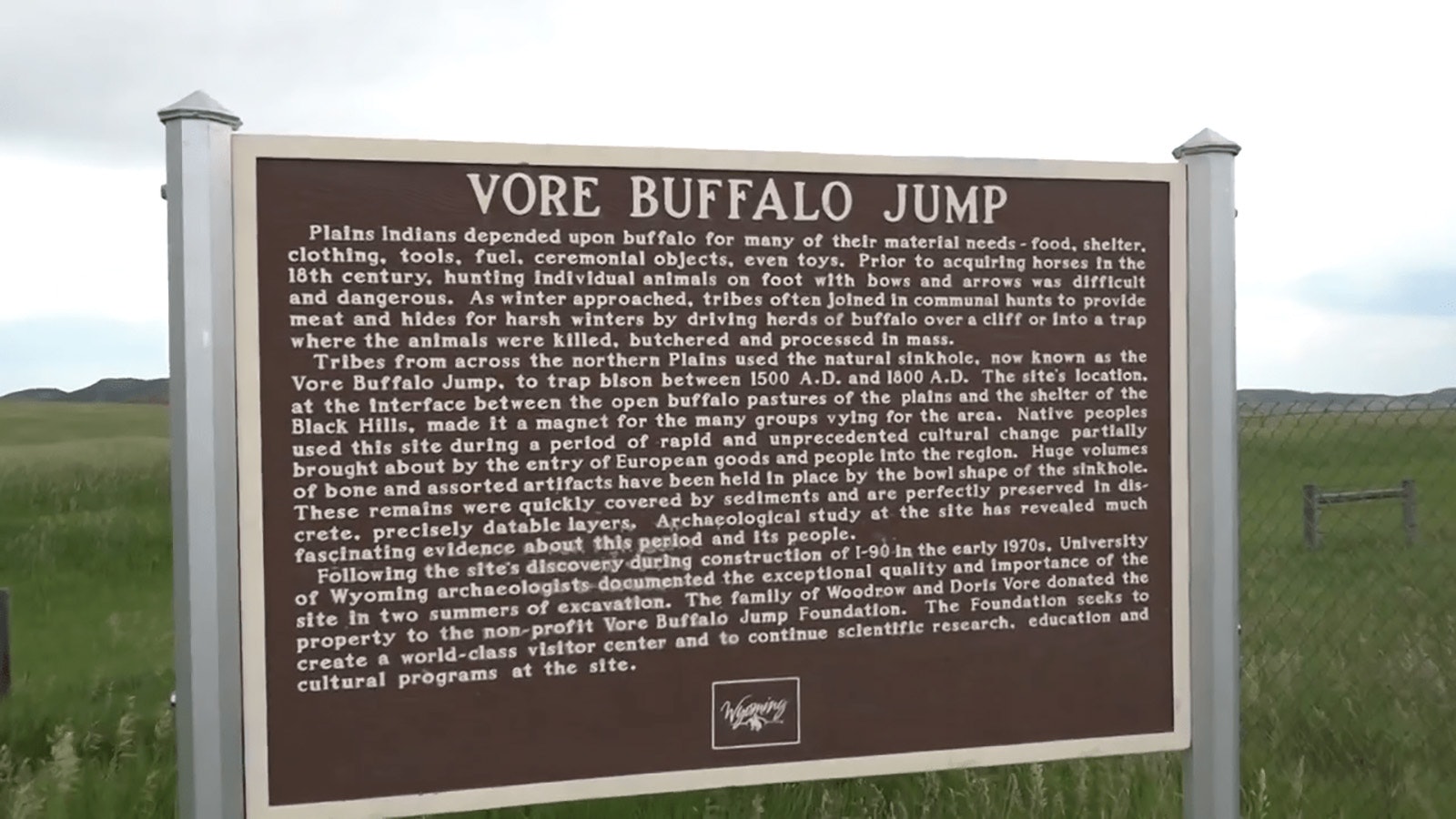
A sign at the Vore Buffalo Jump tells visitors about the significance of the site. (Form Submission)
Into The Hole
It was 1969. WYDOT was working with the federal government to design the best route for I-90 across northern Wyoming, which meant extensive surveying and eminent domain.
The Vore family had been homesteading on that land since the 1880s. Using eminent domain, a portion of their land became federal property for the construction of I-90.
“The service road that goes by the site now was to be the westbound lane of the interstate,” Theodore Vore told Cowboy State Daily. “The eastbound lane was to go where the cabin is located today.
When it came time to start construction, WYDOT approached the Vore family again.
“They asked my father, Woodrow Vore, permission to build a road down into the sinkhole and drill for foundation stability of the interstate,” Vore said. “He told them that they needed to stay up where the highway was going to be to do their exploration, because there's no way that you know where these sinks are until you're right on them.”
According to Vore, WYDOT disregarded his father and built a road to the sinkhole anyway. They came in from land they’d acquired from the Vore family from the north.
Then, they used a small rig to bore several holes to sample the sediment. They found a lot more than they expected.
“They immediately started finding bison bone,” Vore said. “They found 20 feet of bones below that.”
Recognizing they’d uncovered something unusual, WYDOT engineer Bart Olson brought a box of bones to George Frison, then the Wyoming State Archaeologist, at the University of Wyoming.
From the high quantity of buried bison bones, Frison recognized the sinkhole as the potential site of a buffalo jump, where indigenous tribes hunted and killed bison in mass quantities by driving whole herds off cliffs.
With these discoveries, two fateful decisions were made.
“My father gave them permission to excavate at the site, and the highway was rerouted from the north to the south of the sinkhole,” Vore said.
Ironically, the land south of the sinkhole had to be acquired for I-90 through eminent domain. The Vore family got the land north of the sinkhole, where WYDOT built their road, in exchange for the land to the south.
“They had to come back and take a different ground from the Vore family by eminent domain to put the interstate where it runs now,” Wyatt said. “I'm sure WYDOT’s people were not the most popular people in the area at the time.”
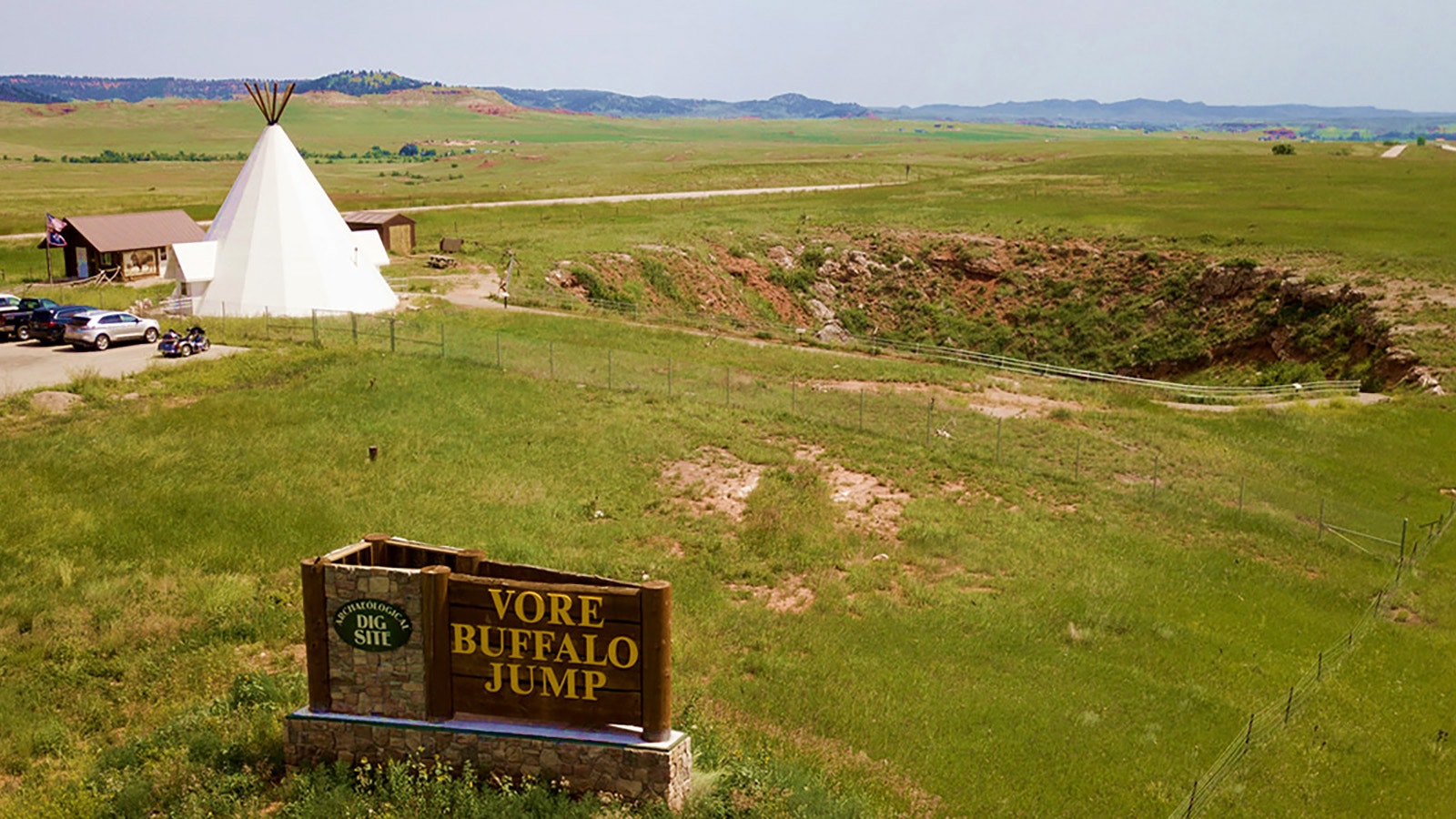
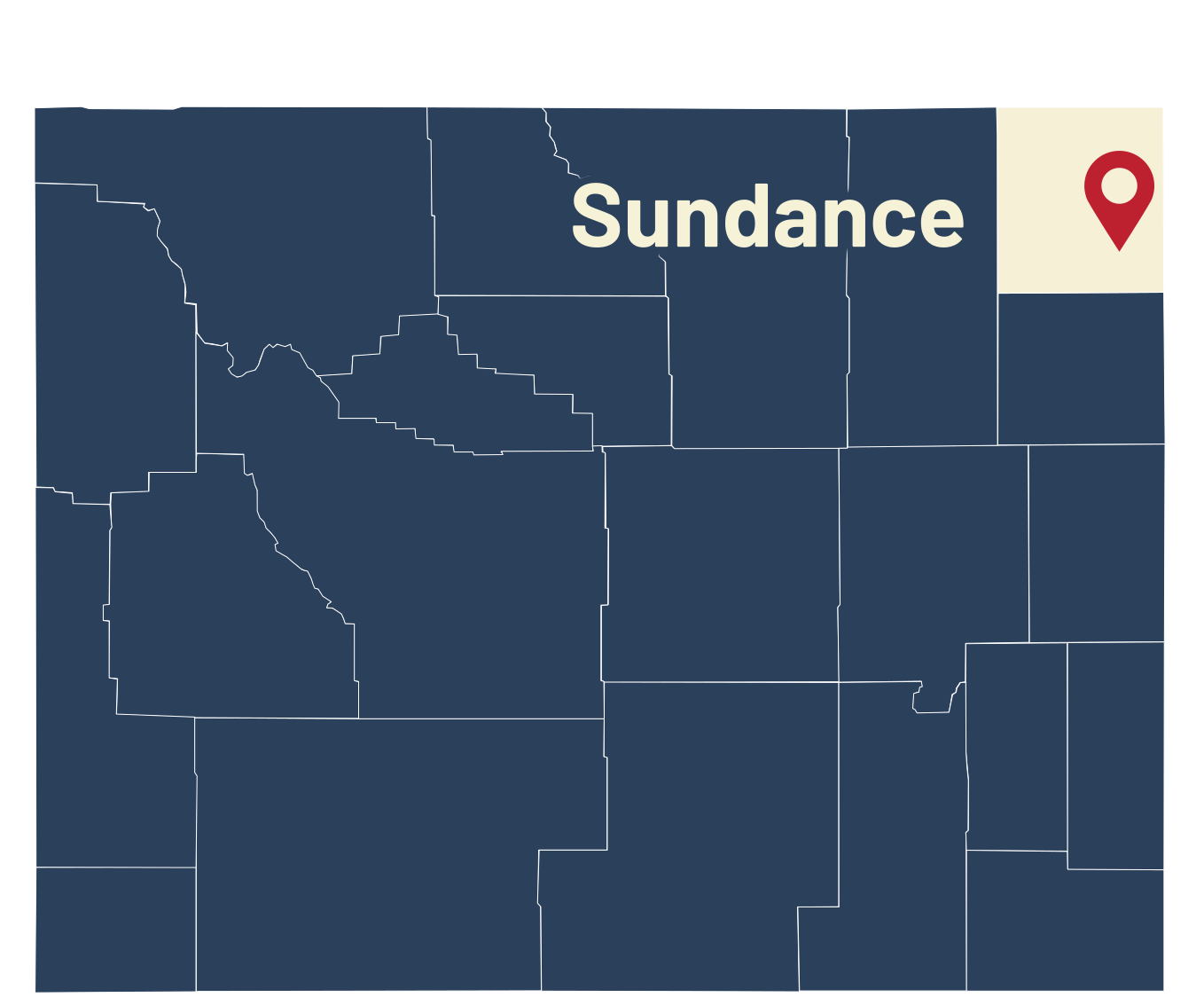
The Vore Buffalo Jump National Historic Site is about six miles from the South Dakota border near Interstate 90. 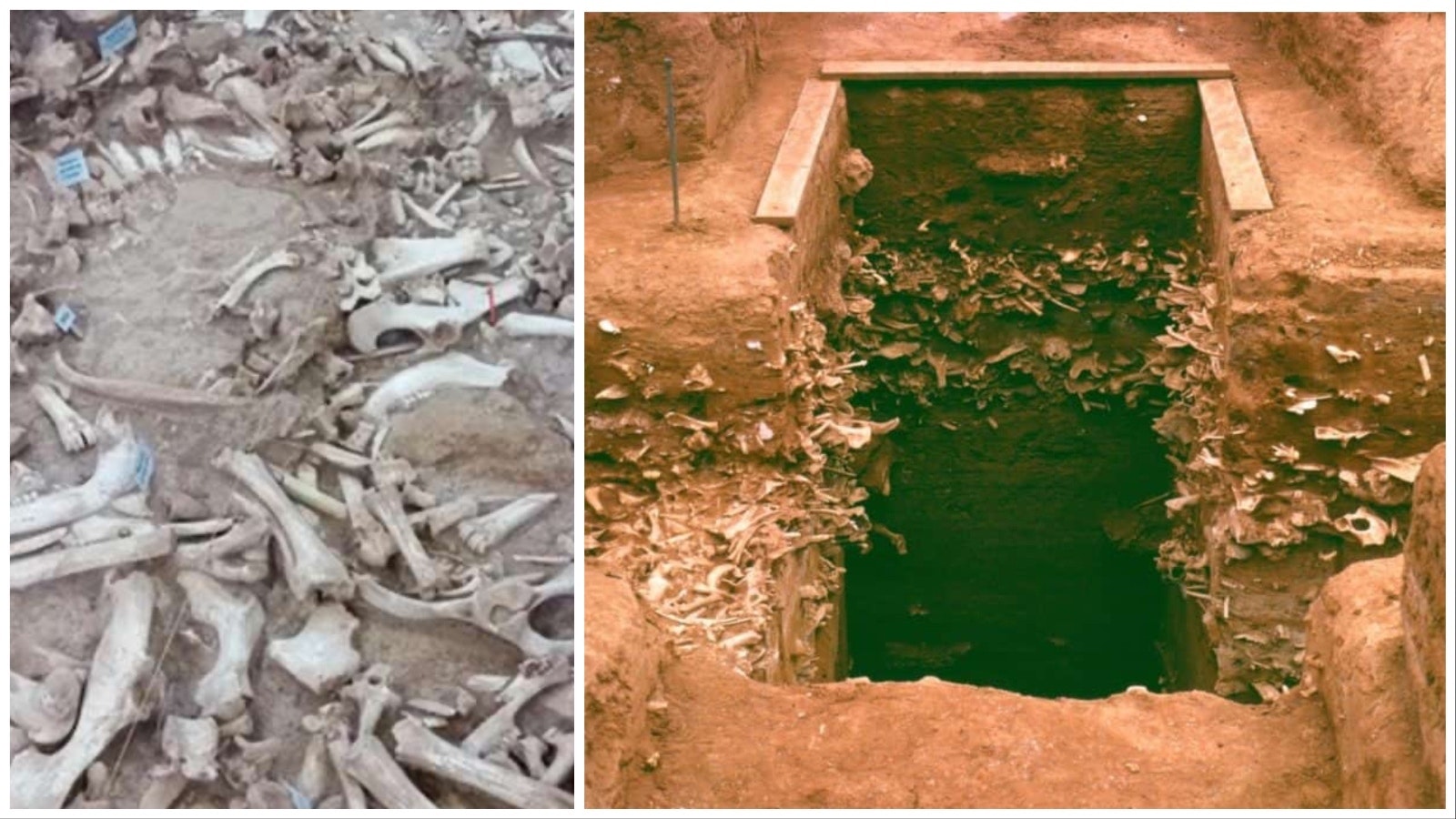
As time went by, the various hunts at the Vore Buffalo Jump site show their layers, telling researchers when and how many bison were killed in a given hunt. The bones are thick as well. 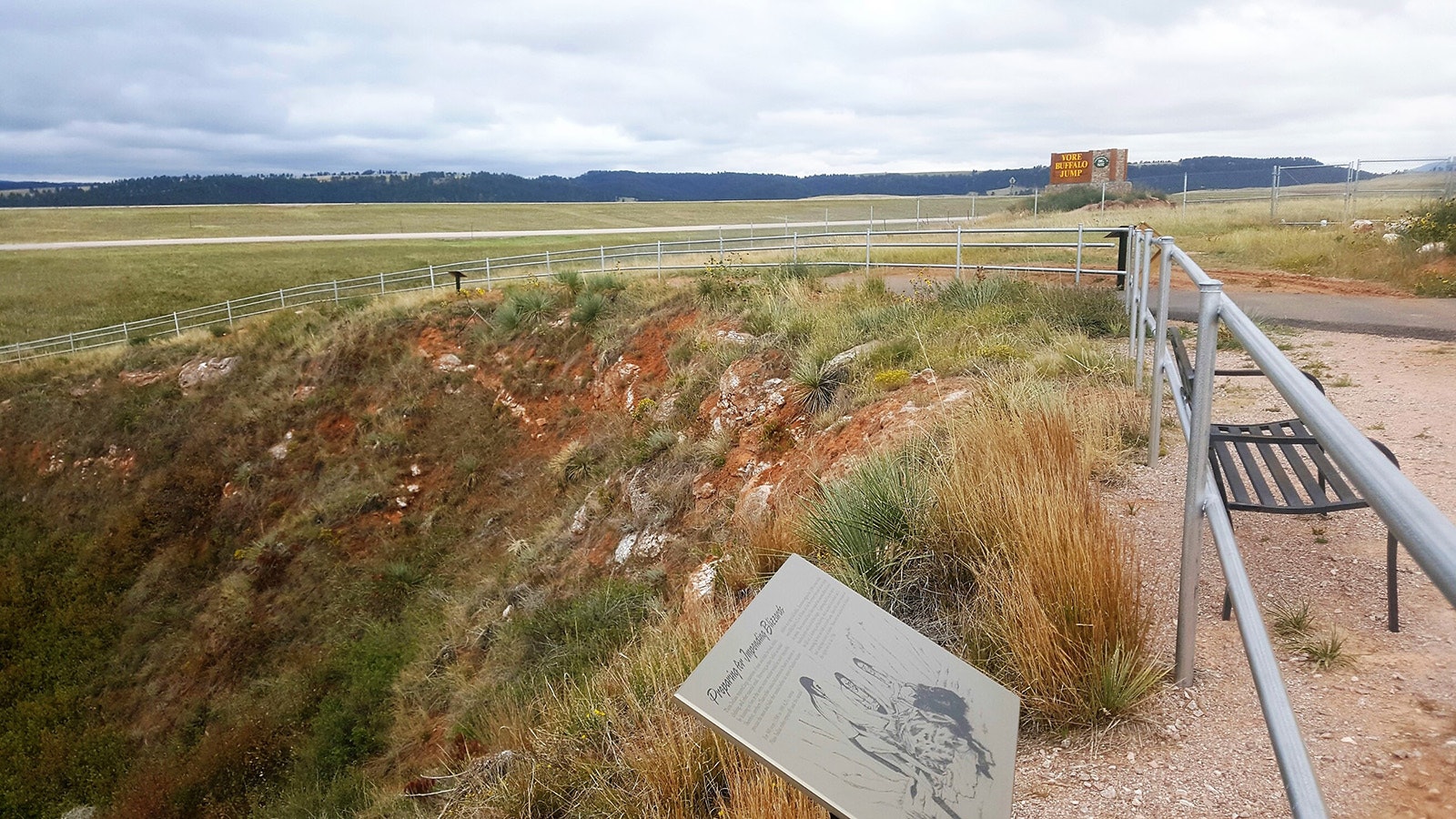
On the surface, the Vore Buffalo Jump looks like a giant hole, but there's much more inside.
Back To Back
The University of Wyoming excavated the sinkhole in the summers of 1971 and 1972 under Frison's supervision. They hit an archaeological jackpot.
“They excavated a cross across that sinkhole to find the extent of the bones,” Vore said. “Once they got the cross excavated, they went into the middle of the cross and dug down and went through 20 feet of bones.”
Meanwhile, highway engineers built the rerouted I-90 to the south of the sinkhole.
It’s estimated that the sinkhole contains between 4,000 and 20,000 bison skeletons in addition to numerous other artifacts. More than ten tons of material were excavated and taken to Laramie, where they still reside in UW’s Archaeological Repository.
In 1989, the Vore family donated the sinkhole and all its yet-to-be-uncovered artifacts to UW, with one stipulation.
“My father included a deed restriction that gave them 12 years to develop (the site) and open it to the public,” Vore said. “We formed the Vore Buffalo Jump Foundation in 1990 to help the university in any way we could.”
After 12 years of “doing absolutely nothing” to improve the site, according to Vore, UW deeded the sinkhole back to the Vores, who immediately deeded it to the foundation.
“Everything that’s been done there since has been done by the foundation,” said Vore, who’s been on the foundation since it acquired his family’s sinkhole.
The Garbage
Today, the Vore Buffalo Jump Foundation maintains a cultural center at the site, built to resemble a giant tipi. The long-term goal is to establish a world-class education and research facility.
A section of the sinkhole is covered by a permanent structure to preserve its contents in situ.Even with the thousands of artifacts UW has collected, only about 10% of the sinkhole has been excavated.
“Our mission is to make sure that this incredible period in Native American history can be accessed by visitors,” Wyatt said. “The site was used 22 times from about 1550 until about 1800.”
Wyatt said the 200-foot-wide, 40-foot-deep sinkhole was used for killing and butchering. After bison were driven into the massive pit, tribes would haul out “the good stuff,” like meat and hides, while leaving “the garbage” where it was.
Tribes believed to have used the sinkhole as a buffalo jump include the Kiowa, Apache, Shoshone, Hidatsa, Crow, and Cheyenne.
“Because of the way erosion happens in a sinkhole, when the spring rains came and snow melted, dirt and rock would come off the walls of the sinkhole,” Wyatt said. “It still does today, which beautifully preserves the bones.”
Using these distinct layers, called varves, archaeologists can identify and date each individual hunt. Artifacts like arrowheads preserved in the varves reveal when different tribes were there.
“Each hunt is preserved in a single layer of bones,” Wyatt said.
The Vore Buffalo Jump is open to the public during the summer, and local elementary school students get guided tours. Wyatt estimated that around 4,000 paid visitors show up each year.
Meanwhile, the foundation funds two students each semester to curate and research the collection at UW. Excavation in the sinkhole is always an option, but Wyatt said that hasn’t been “the focus” of the foundation in recent years.
“The Wyoming State Archaeologist has said they don't need any more of our bones at this point,” she said. “I think there's a lot more to be learned, but we're a very tiny nonprofit, and we don't have that much money.”
High Traffic Area
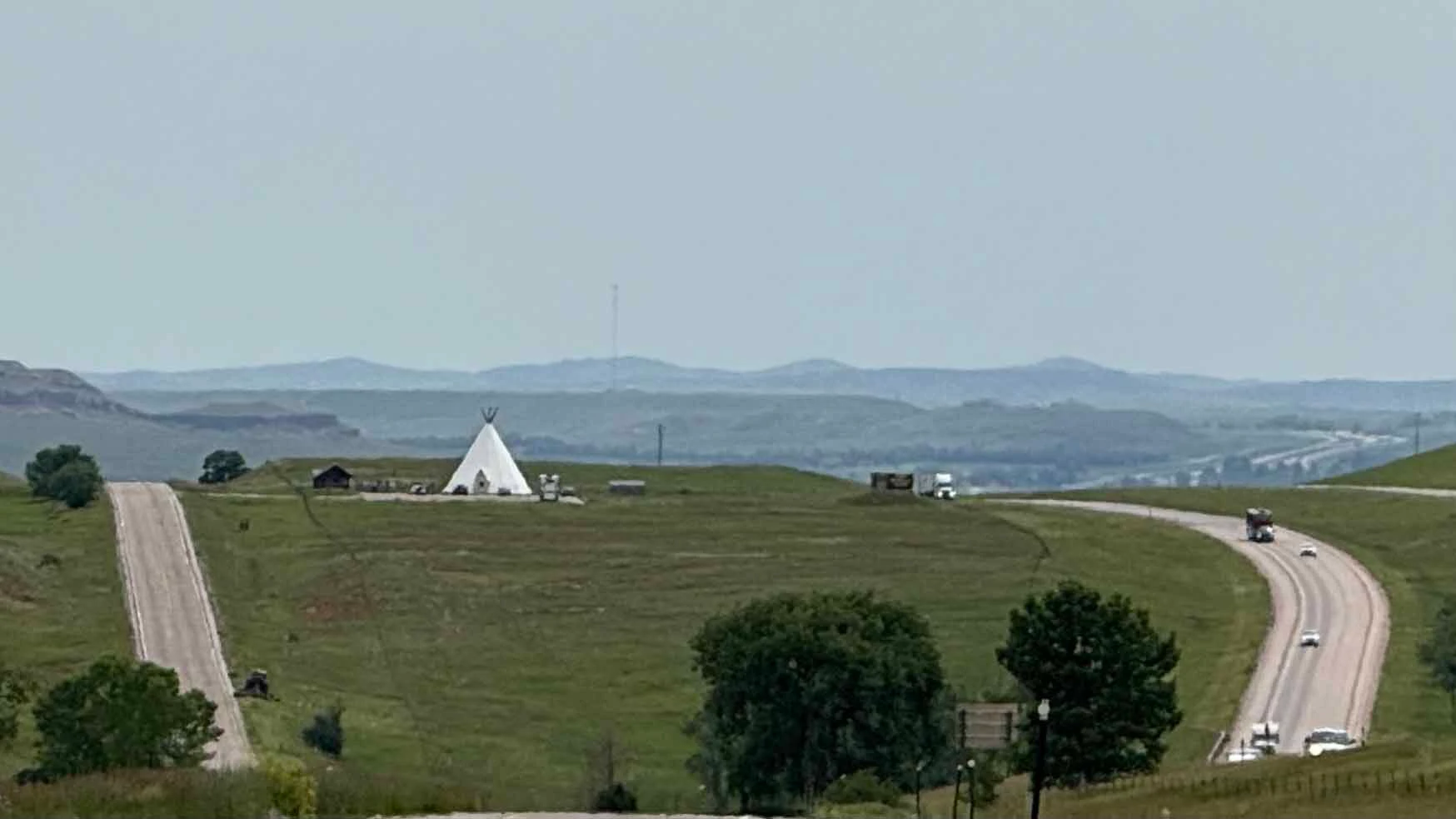
It’s hard to see a sinkhole from a highway, but the Vore Buffalo Jump can be easily seen from I-90 thanks to its tipi-shaped cultural center. Visitors can park there and follow a trail into the sinkhole.
The Vore Buffalo Jump Foundation is always trying to raise interest and awareness in its unique site, both from the traveling public and archaeologists. Wyatt said he believes 21st-century technology could reveal a lot more about the buffalo jump and the people who used it.
“We know a lot more today than we did in the 1970s,” she said. “We have some of the dogs that traveled with these people in the hole. We would really like to do genetic analysis on those remains, but I don’t know if we could get good DNA from anything stored in the basement of the UW anthropology building for 50 years.”
The site benefits from its proximity to I-90.
Without the highway, the site might still be buried, and none of its secrets revealed. It’s an instance where trespassing and eminent domain contributed to Wyoming's cultural heritage.
“My father told WYDOT to stay where they were, but they trespassed and built the road down into the sinkhole anyway,” Vore said. “That’s how the site was discovered.”
Andrew Rossi can be reached at arossi@cowboystatedaily.com.


