Paleontologists have gained new insights into the life and times of “the American cheetah” from the Ice Age, which could help save today’s cheetahs and other big cats.
A new study, "Range and diet diversity in the Pleistocene American 'cheetah,' Miracinonyx trumani," was published in the scientific journal Current Biology on Friday.
Using the tiniest of bones, including some found in Wyoming’s Natural Trap Cave, the diet and DNA of the American cheetah-like cat have been revealed in astonishing detail.
These insights not only reveal more about how these prehistoric predators survived in the Ice Age, but also how humanity might save their modern-day descendants from extinction.
“We were all really shocked with the results,” said Julie Meachen, a mammalian biologist at Des Moines University in Iowa. “It turns out something that we all assumed about modern-day cheetahs was wrong. It was a bad assumption.”
The Cheetah-Like Cat
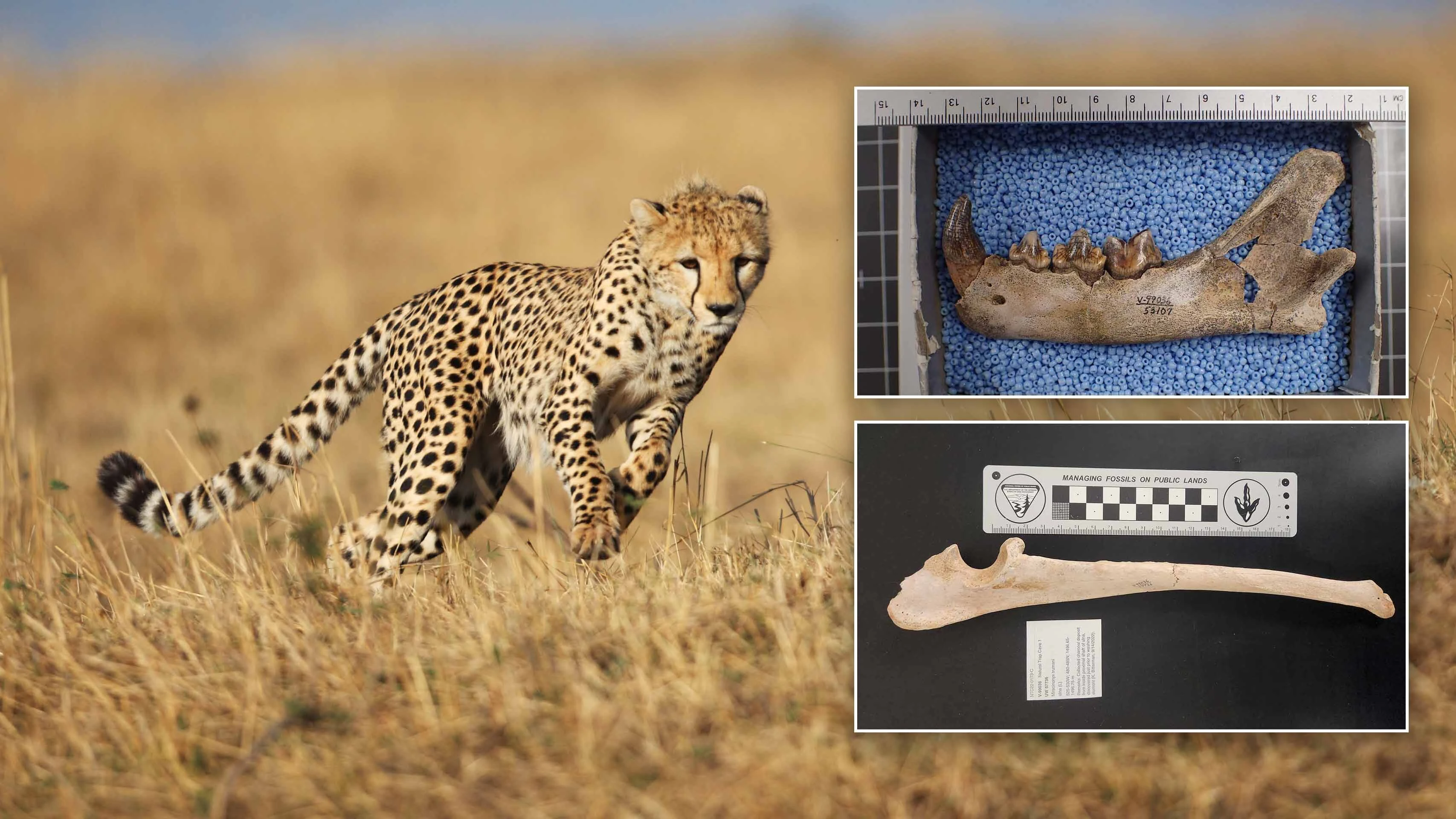
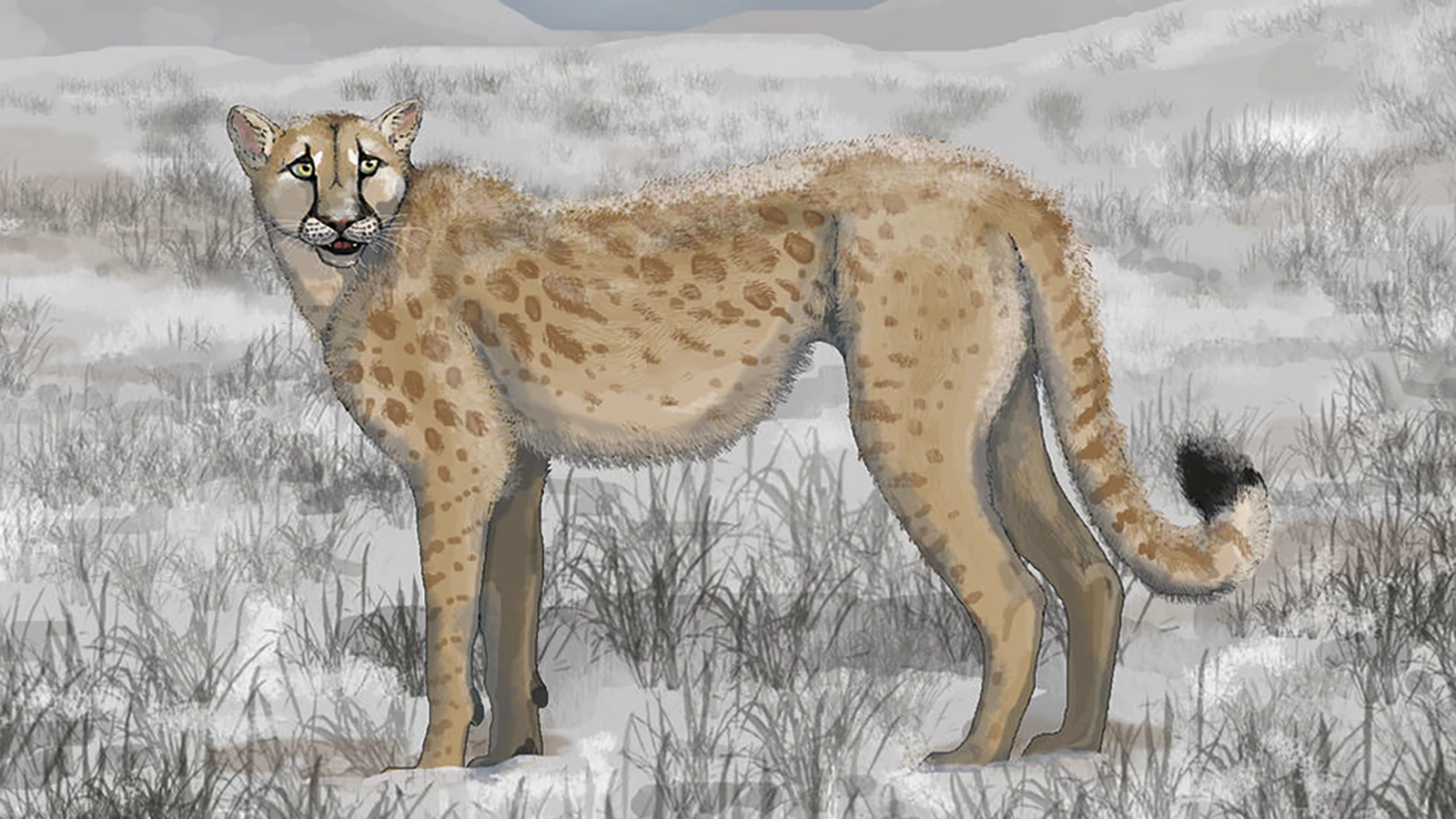
Miracinonyx is called “the American cheetah” because of its resemblance to modern-day cheetahs in Africa. Meachen, who’s been studying Pleistocene predators for years, said the more accurate description for Miracinonyx is “a cheetah-like cat.”
“It’s actually most closely related to the living mountain lion, and those are both sister species most closely related to the jaguarundi,” she said. “The three of them together are distantly related to modern cheetah.”
During the Late Pleistocene, Miracinonyx would have been a highly capable pursuit predator. Its elongated body and legs made it an extremely fast sprinter, like modern cheetahs, capable of running down prehistoric horses, camels, and pronghorn at around 55 mph.
“It was running to chase its prey,” Meachen said. “It would have eaten animals that were going to run away, so it would have done quite a bit of chasing. But, unlike cheetahs, it would have been able to use its forearms to subdue its prey.”
When the last Ice Age ended, large mammals such as mammoths, giant ground sloths, and saber-toothed cats went extinct in North America. As the climate warmed and humans migrated into the Americas, Miracinonyx was one of the many “megafauna” species that didn’t survive.
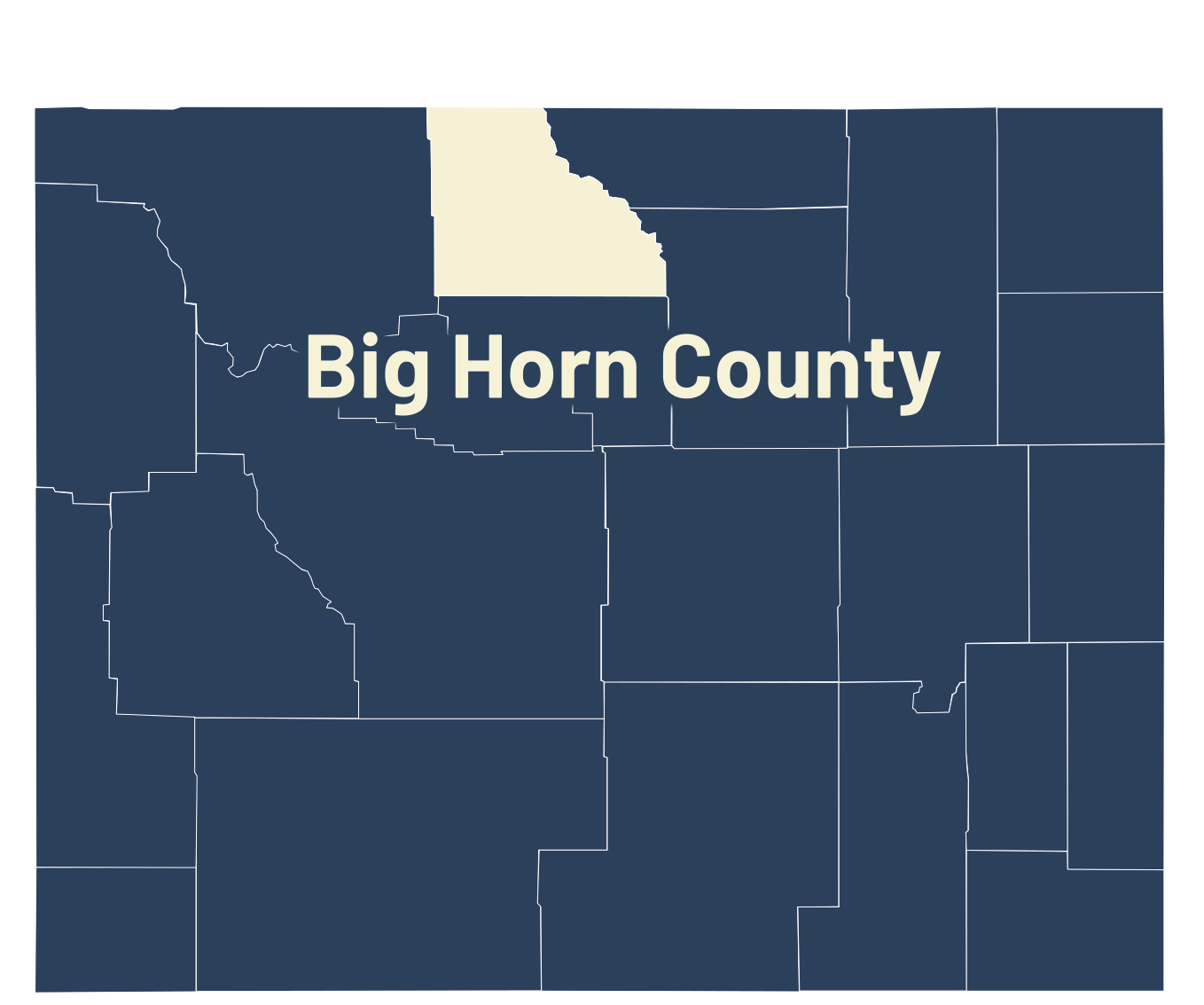
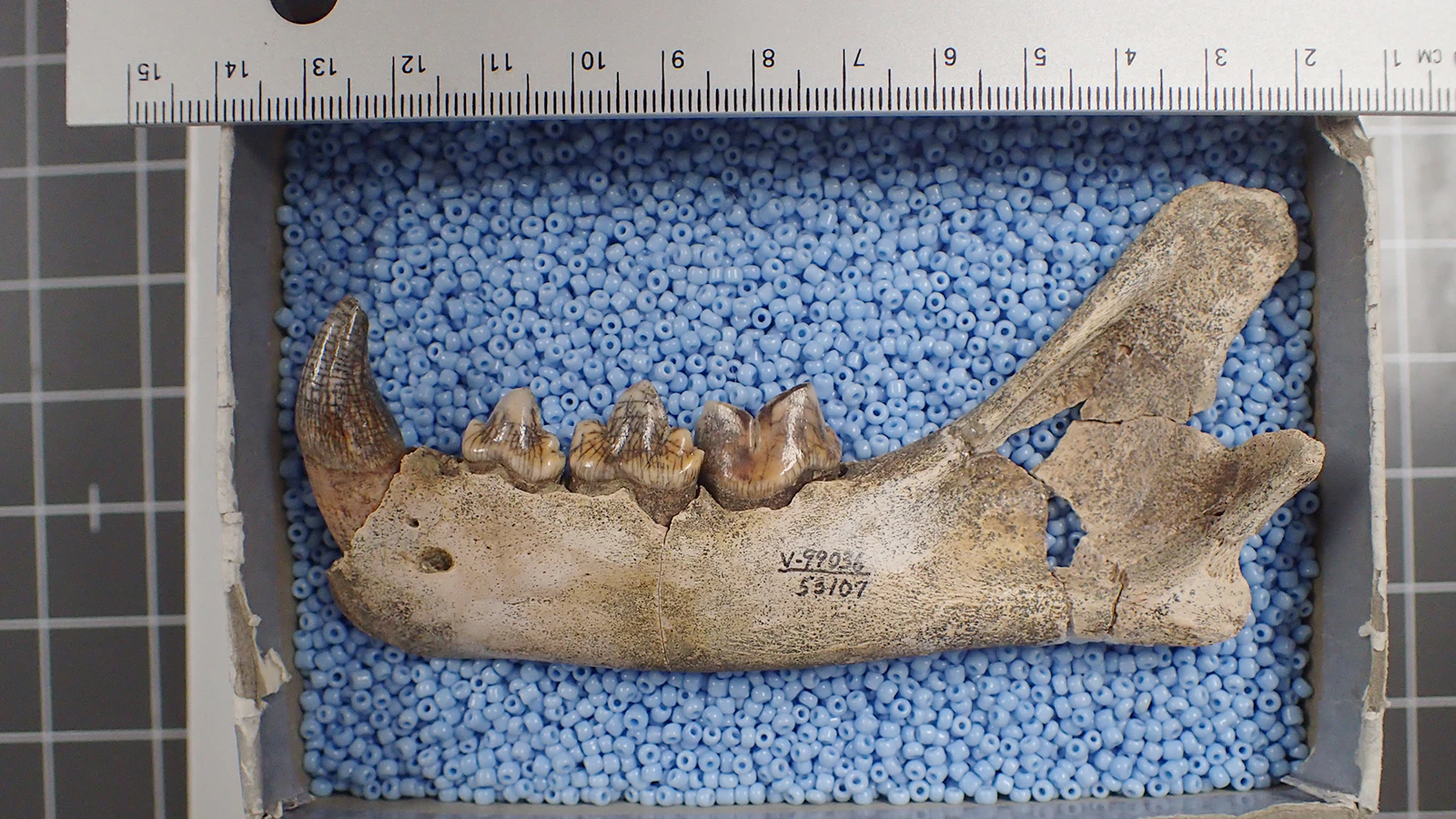
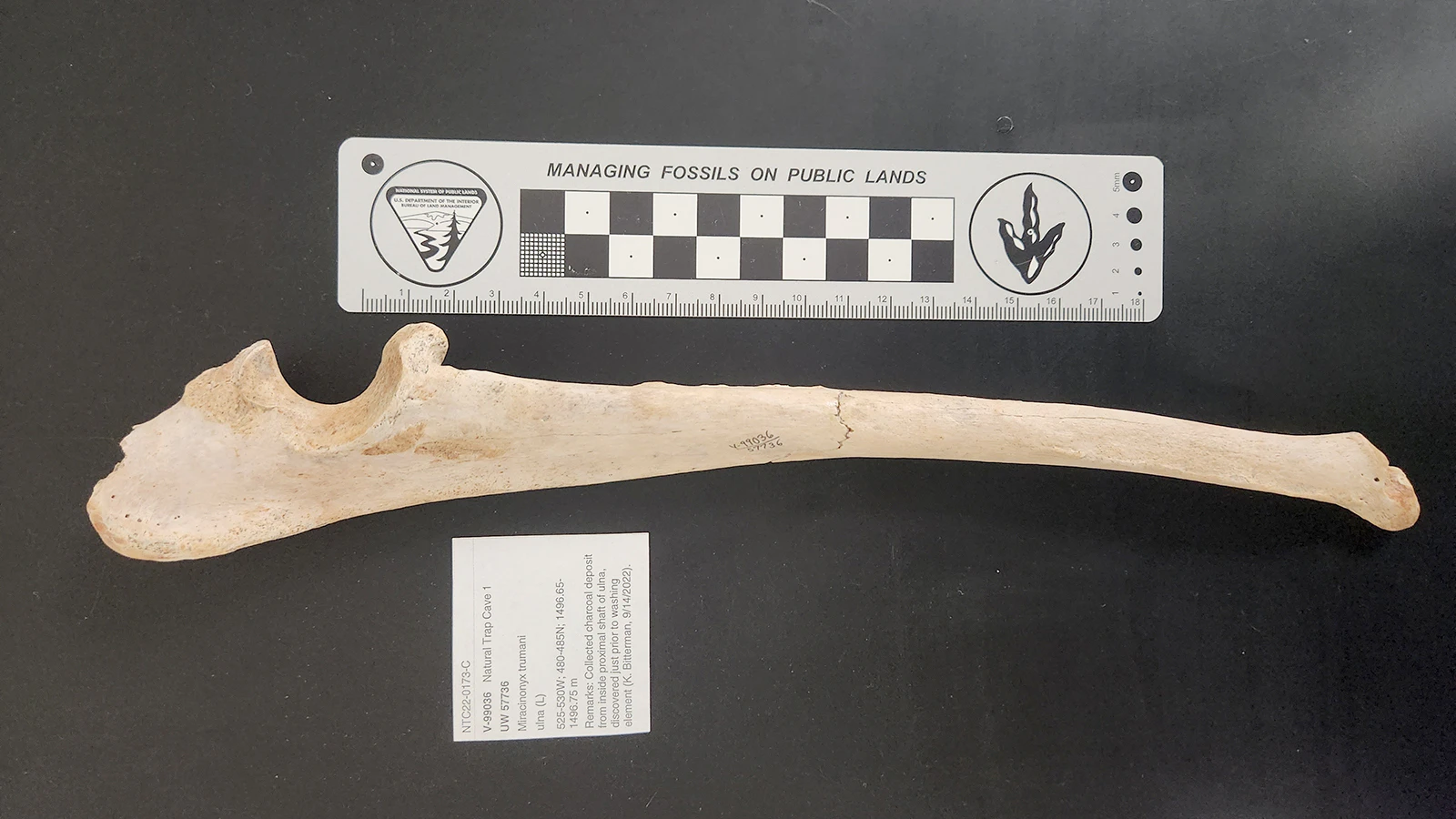
Some of the best Late Pleistocene specimens ever found have come from the sandy bottom of Natural Trap Cave in the Bighorn Mountains. Thousands of 20,000-year-old bones and skeletons from Ice Age animals are perfectly preserved in the moist, cool sediment at the bottom of the 80-foot-deep cavern.
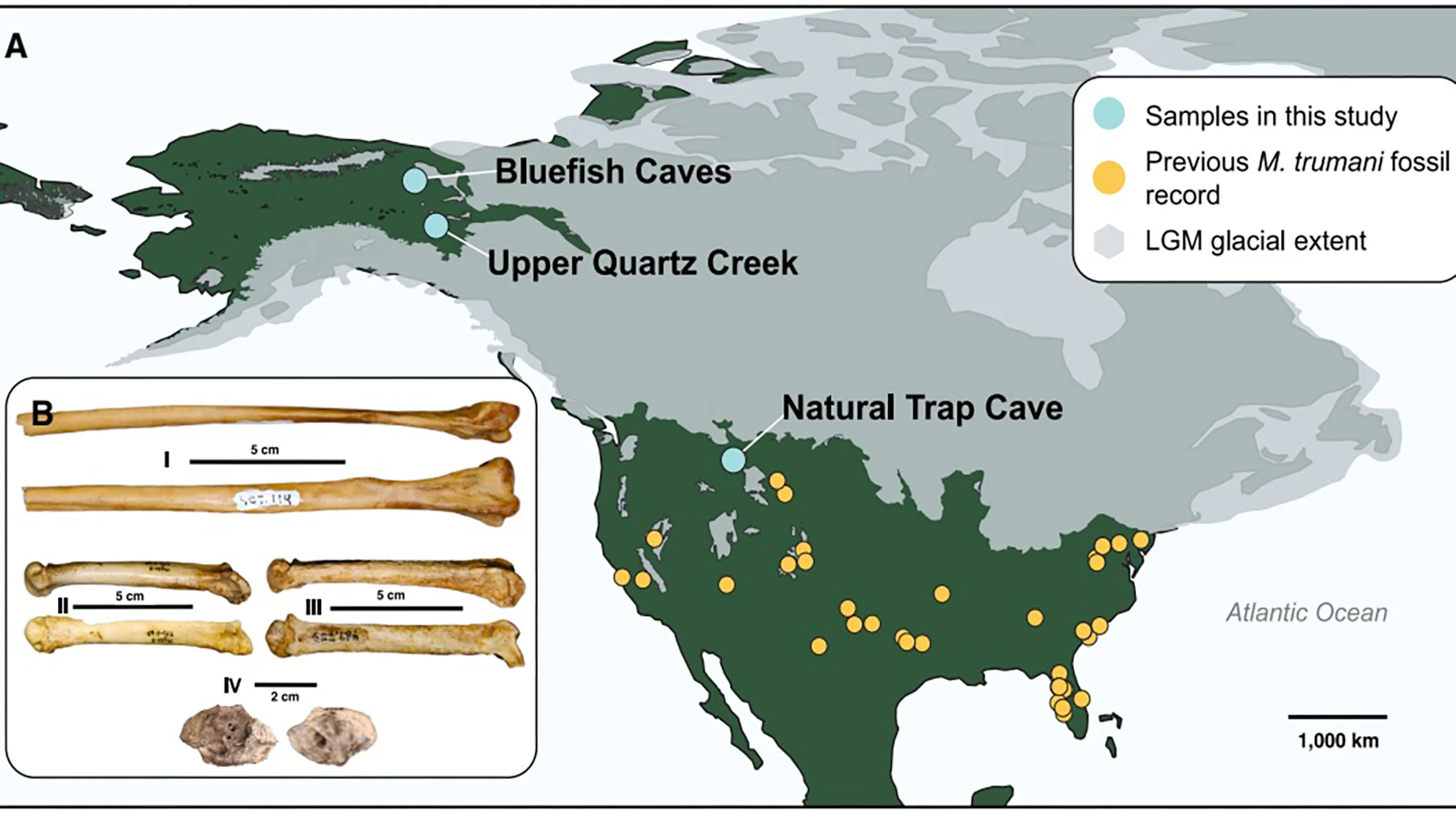
In this new study, Miracinonyx specimens from Natural Trap Cave were compared with specimens newly collected from the Bluefish Caves in the Yukon and Upper Quartz Creek in eastern Alaska.
The results shook Meachen and her peers to the bone.
Fish: It's What's For Dinner
First, Meachen and her peers drilled into Miracinonyx bones and teeth to study the elemental isotopes preserved inside. The stable isotope ratios of elements such as calcium, carbon, and nitrogen can reveal what prehistoric animals were eating.
“In mid-continental North America, and Wyoming specifically, Miracinonyx was eating all sorts of different ungulates,” Meachen said. “Our published isotope data shows it was eating bighorn sheep, pronghorn antelope, and probably horses, too.”
The isotopes from the Alaskan specimens revealed a completely different diet.
“In the Yukon, Miracinonyx was primarily eating fish,” Meachen said.
According to Meachen, this can be explained by the availability of food in different locations. While Ice Age Wyoming was plentiful with pronghorn, horses, and other ungulates, these grazing herbivores would have been much rarer in the colder, more remote reaches of Alaska.
When fish is the most common item on the menu, it’s what’s for dinner.
It helps that previous isotope samples obtained from a 57,000-year-old mummified Pleistocene wolf pup, found in the Yukon permafrost in 2016, also revealed a diet dominated by fish.
“What that tells us is that there was a glut of fish in the Yukon in the late Pleistocene, Meachen said. “I think that's what was driving the diet of the American cheetah-like cats in the Yukon. Just like modern cats, they ate totally different things in different ranges (of their habitat)."
Because modern-day cheetahs aren’t known for fishing, Meachen said it’s another fascinating difference between the extant and extinct cats that were assumed to be more or less identical in form and habit for decades.
“What we're finding with a lot of different studies is that Miracinonyx didn’t necessarily do the same things that cheetahs do,” she said. “Fishing is a unique behavior to the cheetah-like cats in the Yukon, so it’s more confirmation that their ecological roles are not exactly like today’s cheetahs.”
Getting An Earful
In recent years, there have been many efforts to recover intact DNA from specimens recovered from Natural Trap Cave. That DNA can reveal everything from an individual animal's health to the population density of entire species during the Ice Age.
Mitochondrial DNA has been recovered from multiple Natural Trap Cave specimens before, including from Miracinonyx.
Now, for the first time, Meachen and her peers have extracted nuclear DNA from Miracinonyx.
“Our previous studies on the family tree of cats came from mitochondrial DNA, which is only found in your mitochondria,” Meachen said. “Since it’s maternally inherited, you’re only getting half the picture.”
Nuclear DNA, meanwhile, exists in the nucleus of every cell. Recovering nuclear DNA from Miracinonyx bones gave Meachen “the full picture of that animal's genetic code.”
The nuclear DNA was extracted from one of the tiniest bones in the mammal skeleton.
“These samples came from the petrosal, an inner ear bone,” Meachen said.
The petrosal encloses all the soft parts of the inner ear. The human petrosal fused with the surrounding bones of the skull, but it’s a separate, dense, and extremely small bone in the heads of most mammals.
Finding petrosal bones from Miracinonyx made it possible to recover and analyze nuclear DNA. Even better, Miracinonyx petrosals were recovered from Natural Trap Cave and the Alaskan specimens, so they could be compared against each other.
Always Low
The recovery of Miracinonyx nuclear DNA was a huge moment for Meachen and her peers.
For one thing, nuclear DNA analysis confirmed Miracinonyx’s place in the lineage of big cats that had been determined from previous studies of mitochondrial DNA.
“It got a bit more precise,” Meachen said. “We were able to look at that DNA, and it told us where the cheetah-like cat fell into the family tree of cats.”
Even more exciting was that, for the first time, nuclear DNA revealed the effective population size of Miracinonyx in the Late Pleistocene.
“That is something that we were never able to do before,” Meachen said.
This was the discovery that shocked everyone involved in the study. Not only did it reveal a lot about the cheetah-like cat, but it exposed a trend that’s been plaguing cheetah conservation for decades.
According to the International Union for Conservation of Nature’s Red List of Threatened Species, cheetahs are classified as a “Threatened” species. Their overall population is low, which has been partially ascribed to habitat loss, poaching, and low genetic diversity among cheetah populations in Africa and the Middle East.
While all those factors could be contributing to the decline of modern-day cheetahs, the nuclear DNA of Miracinonyx revealed that it isn’t a new or unique phenomenon.
According to Meachen, concerningly low population sizes seem to have been as true then as they are now.
“What we’re seeing is that, even in the Pleistocene, the population sizes of the cheetah-like cats are extremely low,” she said. “It’s not just a function of what humans are doing, as awful as that is. These kinds of animals really have a small effective population size throughout time.”
While most paleontological studies comment on some aspect of the modern world, it’s rare to find such a direct parallel between modern and prehistoric species.
Modern conservationists assumed that cheetah populations had been much higher in centuries past. Meachen and her peers aren’t refuting that on factual grounds, but their research suggests that assuming today’s low population sizes were much higher is “a bad assumption.”
“That’s what’s blown us all away,” Meachen said. “Discovering these things had really low population sizes in the Pleistocene is not something we would have expected, and here is the result. That’s what we found.”
Conservation, And What Won't Change
The new dietary and DNA analyses of Miracinonyx and their implications for modern-day conservation have electrified Meachen and her team.
The Yukon specimens show how Miracinonyx was surprisingly adaptable to a variety of different environments. Its prehistoric range has been extended across the entirety of North America, ocean to ocean from Alaska all the way to Mexico.
The nuclear DNA analyses reveal that North America’s extinct cheetah-like cat struggled with the same genetic disposition of low population sizes that afflicts Africa’s living cheetahs.
The big question is where to go from here.
Meachen was curious whether the low-population trend was a genetic issue across all extinct cat populations in North America. If it was a problem for Miracinonyx, it might have been a problem for the American lion and Smilodon, too.
“It’d be great if we could do this study for Smilodon, the saber-toothed cat,” she said. “It’s a question we could ask about other big cats, in the past and the present.”
That means the search for more petrosals is on. More inner-ear bones could contain nuclear DNA from many Ice Age species, revealing the health of their populations and whether that DNA could have contributed to their extinction.
For paleontologists like Meachen, parlaying prehistoric research into potential modern-day conservation solutions is exciting. The inner ear of Wyoming's prehistoric Miracinonyx could give modern-day cheetahs a better chance of survival.
“(Our work) has really important implications for conservation,” Meachen said. “It’s why we have to be careful about preserving the remaining habitats of big cats. If big cats have a naturally low population size, it doesn’t matter what we do for conservation. That’s not going to change.”
There's plenty more to learn from ongoing study of Miracinonyx and other Ice Age animals preserved in Natural Trap Cave, but Meachen admitted she was equally intrigued by what could be waiting in the Yukon. If wolves and mammoths can be found frozen in the Arctic permafrost, there might be a big-cat ice cube waiting up there, too.
"That would be the Holy Grail," she said. "That would be incredible."
Andrew Rossi can be reached at arossi@cowboystatedaily.com.