
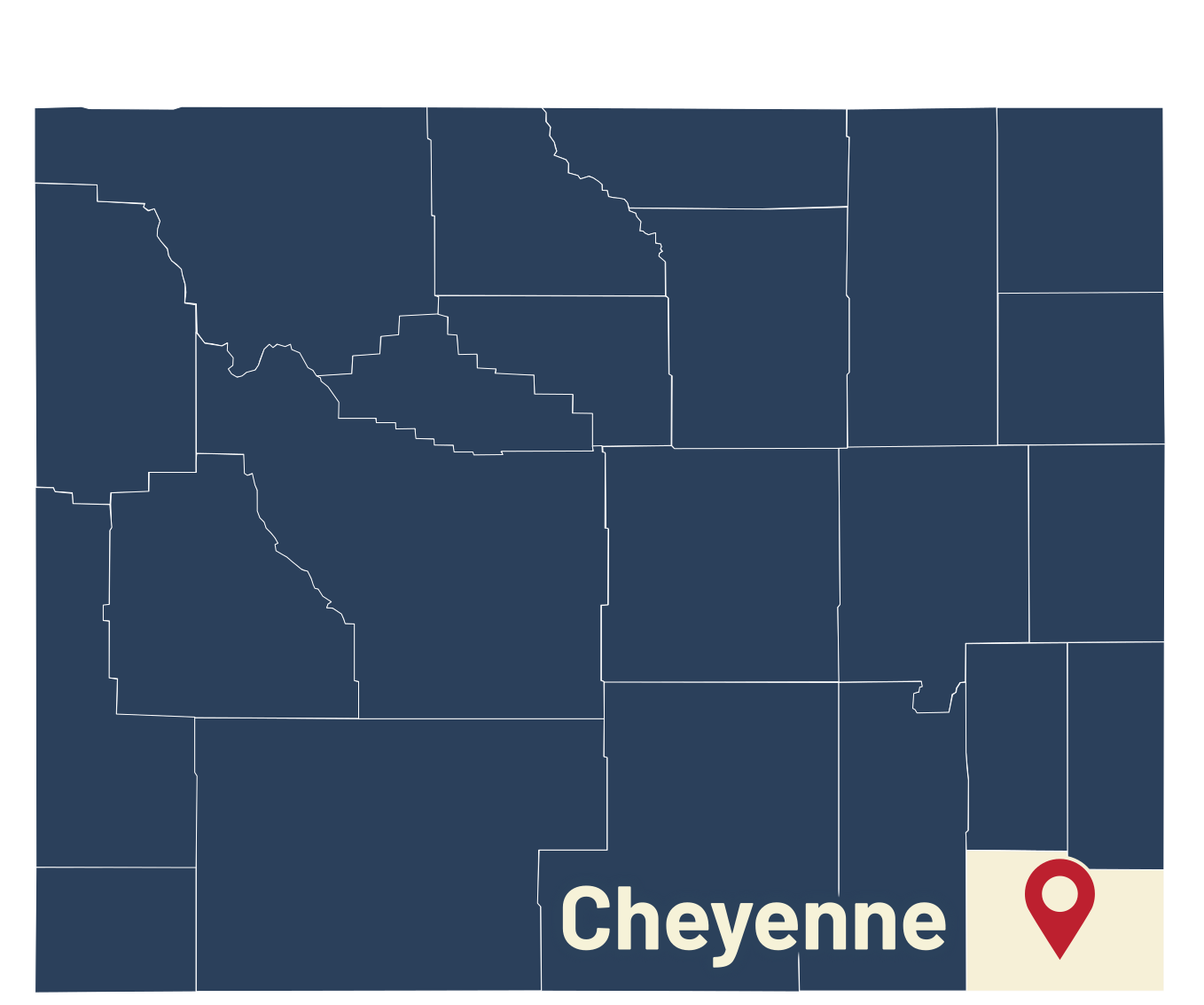
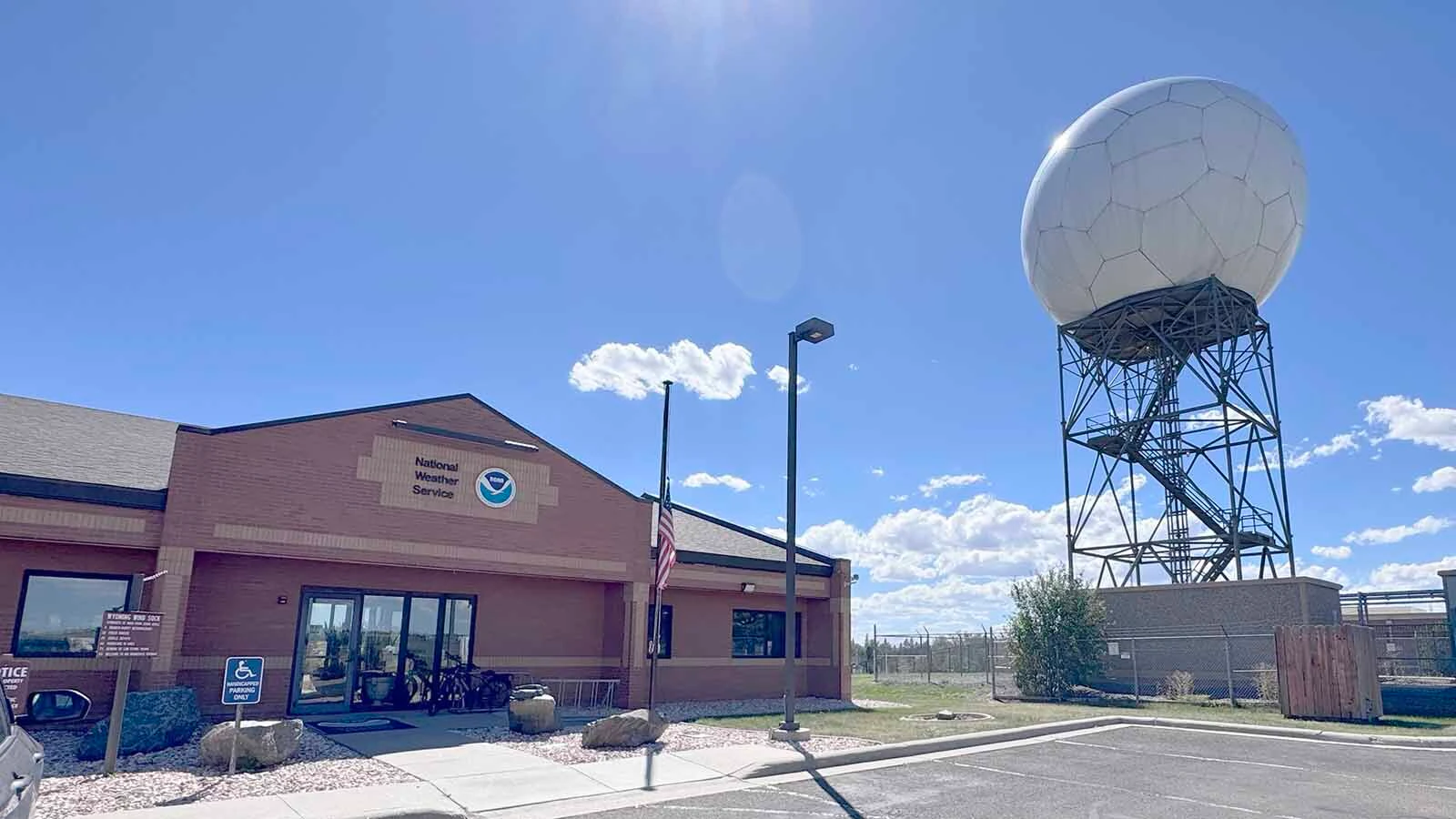
A failure with its communications equipment knocked the National Weather Service office in Cheyenne off its normal channels for days this week, cutting its ability to send weather information directly to the outside world and apparently taking its radar data offline with it.
In the meantime, forecasts and warnings couldn't simply wait for the equipment to come back online.
NWS offices in Denver/Boulder and Riverton had to step in to cover for Cheyenne, relaying its forecasts and other weather products to the public while Cheyenne meteorologists worked through failure.
“We became basically the conduit,” Greg Heavener with the Denver/Boulder National Weather Service office told Cowboy State Daily.
Cheyenne staff fed information to the neighboring offices, Heavener said, allowing them to disseminate daily forecasts, forecast discussions and — had the need arose — weather watches and warnings.
The arrangement continued for “a couple days,” he said, although he couldn't recall precisely when it began.
By Friday, Cheyenne was back on the weather map.
Something Broke
NWS Cheyenne Meteorologist Angela Mose told Cowboy State Daily on Friday that a component inside the office abruptly failed.
There hadn't been warning signs that it was about to go out, but the failure didn't blind the meteorologists working there. They could still receive and view weather information internally, she said.
What they couldn't do was transmit their products normally. That's when neighboring weather offices moved in.
Heavener said Denver/Boulder learned Cheyenne couldn’t "send any data out to the world.”
In other words, Cheyenne was still doing its forecasting, and other meteorologists helped carry it across the finish line.
“There wasn't any gap whatsoever in communication with the folks when it comes to life safety messages,” said Heavener.
What About The Radar?
Cowboy State Daily meteorologist Don Day said he knew Denver/Boulder and Riverton had assumed some Cheyenne responsibilities during the outage, although he didn't know what had caused the trouble.
The neighboring offices handling forecasts didn't particularly bother him.
“The only thing that was inconvenient was the fact that we didn't have the radar up and running,” Day said.
Radars sometimes go down for maintenance or other reasons, he said, but when weather threatens, radar is one of a meteorologist's most important sets of eyes.
Cowboy State Daily asked NWS Cheyenne whether the radar remained operational, whether its data remained accessible to forecasters and the public, exactly what equipment failed and when the outage began.
The office had not responded to those follow-up questions by publication time.
Built For Something Worse
While losing communications for days sounds alarming, Day said one part of this week's episode actually didn't worry him much at all: Denver and Riverton taking over.
The National Weather Service has built its network assuming that, eventually, something somewhere will go wrong.
“You know, they do have protocols set up just in case of a situation,” Day said.
Imagine that a tornado didn't merely threaten Cheyenne but actually struck the National Weather Service office and wiped it out, he surmised.
Other offices are prepared to step in.
“So in this situation, while I don't know what the issue was, it does fit into their normal protocol,” Day said. “Do I have a big concern about it? No.”
Heavener described much the same system from inside the National Weather Service.
Offices train for what he described as mutual-aid or continuity-of-operations scenarios. If one office loses capabilities, another can shoulder its workload and keep forecasts, watches and warnings flowing.
That can apply to a communications failure in Wyoming or something far more dramatic.
If a hurricane forced meteorologists at an NWS office elsewhere in the country to shelter or evacuate, Heavener said another office could assume its responsibilities.
“We have full capabilities of basically any forecast office in the country to then take over responsibility for those folks,” he said.
Location, Location, Location
That doesn't mean Day would be equally comfortable handing southeast Wyoming weather to just anyone, but the offices that helped Cheyenne aren't meteorological strangers to the neighborhood.
Riverton routinely forecasts Wyoming weather. Denver/Boulder sits just south of the state. Other nearby NWS offices include North Platte, Nebraska, and Rapid City, South Dakota.
Those meteorologists understand the region and its peculiarities, Day said.
“If you look at the distance between where the Weather Service forecast offices are, there's Cheyenne, Riverton, Boulder, North Platte, Rapid City, Grand Junction,” he said. “There's several offices that are close.”
Send Cheyenne's weather responsibilities halfway across the country and Day might feel differently.
“Let's say that Cheyenne needed help from somebody in Tallahassee, Florida,” he said. “That would be a concern because they're not familiar with the weather out here.”
But Riverton and Boulder?
“Since it's somebody close by, I wouldn't lose any sleep over it,” Day said.
Not Cheyenne's First Backup
The handoff also comes little more than a year after Cheyenne's National Weather Service office was forced to lean on neighboring offices for an entirely different reason.
In May 2025, Cowboy State Daily reported that a meteorologist shortage had become so severe that Cheyenne suspended its overnight shift, ending 24-hour staffing at the office.
The office stopped operating between 1 and 7 a.m., with Riverton available to handle calls and surrounding NWS offices able to monitor weather and issue warnings if necessary.
At the time, the prospect raised questions about whether meteorologists outside Cheyenne would have the same local knowledge and continuity as the people who forecast southeast Wyoming every day.
This week's breakdown was different. NWS Cheyenne confirmed that the communications outage was caused by an equipment failure, not a staffing shortage.
Kolby Fedore can be reached at kolby@cowboystatedaily.com.


