
A huge commercial wind energy project that has sparked passionate debate in Laramie County for the past two years received the green light Tuesday after an intense two-day hearing before the Wyoming Industrial Siting Council at Laramie County Community College.
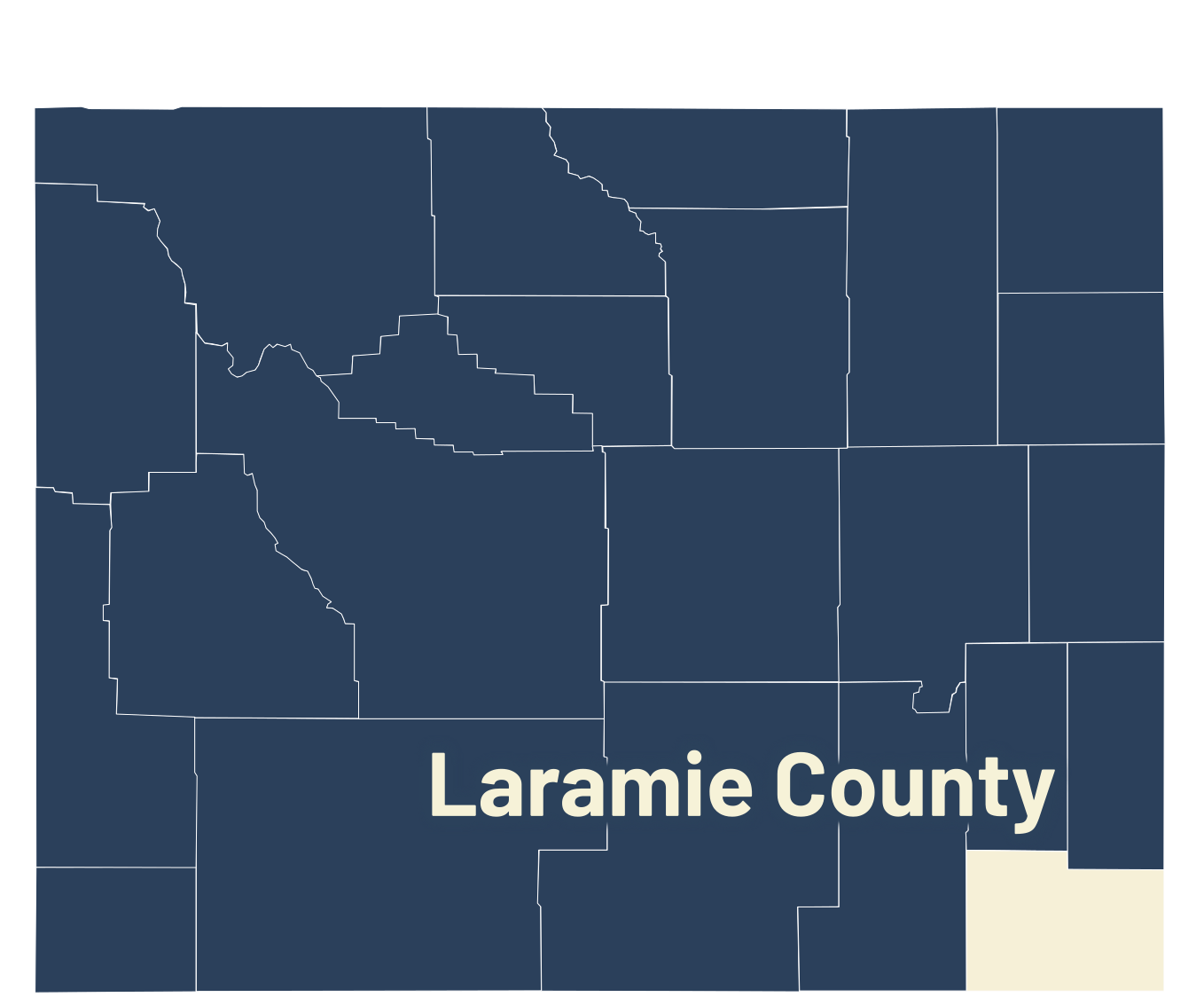
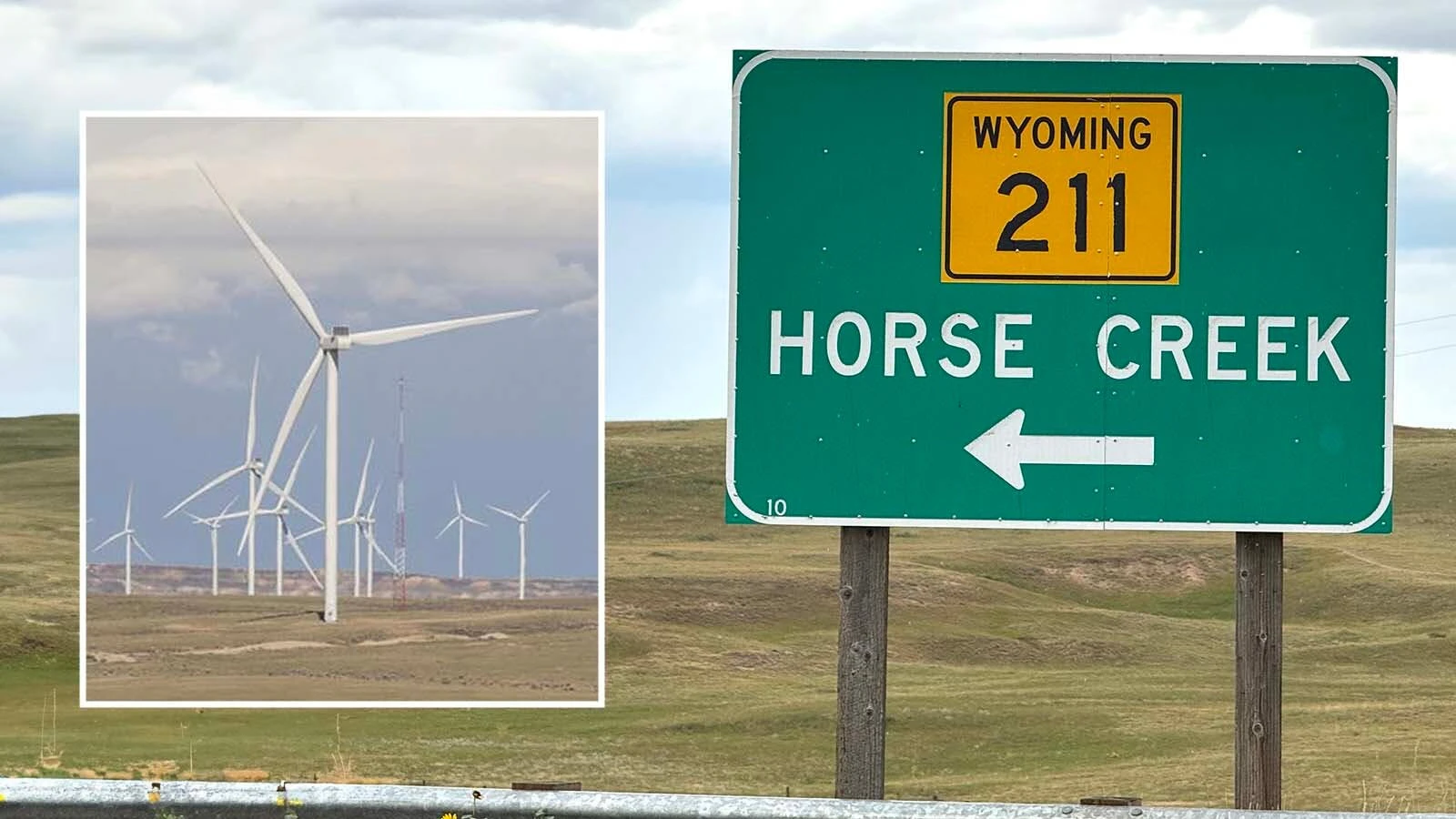
The decision grants permission for the Laramie Range Wind Project, a 650-megawatt wind farm twice the size of Cheyenne, to move forward. The plan calls for 139 wind turbines on 41,220 acres of private and state land in northwestern Laramie County, west of Interstate 25 and roughly 20 miles north of Cheyenne.
The project was approved unanimously with 26 conditions deliberated during the hearing, said Jillian Scott, a spokesperson for the Wyoming Department of Environmental Quality, which oversees the Industrial Siting Council.
Representatives with the Laramie Range Wind Project were not immediately available for comment Tuesday.
Scott said she was trying to reach council members late Tuesday after the decision. She said an order and permit will go into effect in 45 days.
Cheyenne resident and ranching advocate Wendy Volk, whose ranch is adjacent to the project, spoke against it Tuesday. Volk has long been a voice for considering the cumulative impact of major wind development projects in southeastern Wyoming.
“We are deeply disappointed by the Industrial Siting Council’s decision to approve the Laramie Range Wind Project,” Volk told Cowboy State Daily via text message late Tuesday. “Our concerns are practical and deeply personal: Safe ranch access, livestock operations, road conditions, fire and medical response, water, wildlife and the long-term future of this rural community.”
The hearing was livestreamed on Zoom through much of the first day. However, organizers shut down Zoom after reports of a hacker and the remainder of the hearing took place offline..
The Project
The project, proposed by ConnectGen Laramie County LLC, an affiliate of Repsol Renewables North America Inc., would be one of the largest industrial developments in the area. Repsol says it would generate enough electricity to power approximately 200,000 Wyoming homes annually.
The footprint considered by the Industrial Siting Council is smaller than the version Laramie County commissioners rejected last year.
The original proposal covered about 56,000 acres and called for as many as 170 turbines. After commissioners denied the project in a 3-1 vote in September 2025, Repsol revised the plan.
The current proposal covers about 35,350 acres of private land and 5,870 acres of state land.
Volk said Tuesday that for her, the central question was never simply whether 139 industrial wind turbines could be physically constructed.
“The question was whether a project of this scale, in this location and during a period of extraordinary regional development could proceed without substantially impairing the health, safety and welfare of the people who already live and work here,” she said.
The company challenged the county’s 2025 decision in court while moving forward with the state industrial-siting process. That hearing drew dozens of residents who opposed the original project, citing concerns about wildlife, viewsheds, roads, land use and the broader transformation of the Horse Creek area.
Commissioner Linda Heath, who voted against the project then, said at the time Wyoming’s undeveloped landscapes cannot be recovered once they are gone. Commissioner Troy Thompson, the lone vote in favor in 2025, argued that the company had met the county’s requirements and that landowners should have the ability to make decisions about their property.
That divide between private property rights and concerns about the cumulative effects of large-scale development is what has fueled the debate
What Repsol is Proposing
During the two-day hearing before the Industrial Siting Council, representatives with the Laramie Range Wind Project answered question after question.
Project manager Anne Gregory provided a project overview. Allison Poe, director of environmental affairs and permitting, discussed environmental studies. Senior project manager Caldwell Zimmerman answered questions about impacts to traffic and water.
According to the company’s sweeping permit application, construction is expected to begin by the fourth quarter of 2027.
The project would be built in two phases, with the first producing 400 megawatts and the second adding another 250 megawatts. Both phases are expected to be operational by the end of 2029.
The project would connect to the existing Tri-State Generation and Transmission system.
Along with up to 139 wind turbine generators, its infrastructure would include underground and overhead electrical collection systems, a 345-kilovolt overhead transmission line, up to three substations, a 345-kilovolt switchyard, an operations and maintenance building and as many as seven meteorological towers.
The project also would require about 94 miles of access roads and 13.6 miles of electric transmission line.
According to the application, the location was selected because of its strong wind resource, proximity to existing high-voltage transmission, highway access and terrain suitable for construction.
Wind energy is the second-largest electricity producer in the state of Wyoming, according to Wyoming Energy Authority, and southeast Wyoming has one of the densest concentrations of high-class wind energy potential in the country.
The project’s participating landowners include the Wyoming Office of State Lands and Investments, Farthing Ranch Company and True Ranches LLC.
Lease payments to the state would provide revenue for Wyoming schools and other public institutions.
A massive application
The scope of the project is reflected in the size of the application itself.
The permit application runs 1,876 pages and includes sections on the project’s purpose and benefits, facility design, construction, operations, decommissioning, permitting, public involvement, socioeconomic impacts and environmental considerations.
It contains 85 tables covering everything from construction wages and raw-material requirements to energy use, housing availability, construction water use and the estimated number of workers needed for various construction occupations.
The construction workforce is expected to fluctuate substantially, from fewer than 20 workers at some points to more than 300.
The application estimates an average of 131 workers on site during the 24-month construction period, with the workforce peaking at about 305 workers in the third quarter of 2028.
Most workers who temporarily relocate to the area are expected to seek lodging in Laramie County, primarily in Cheyenne, with some potentially staying in neighboring Platte County, the application states.
The economic impact is one of the project’s major selling points.
The application estimates $32.8 million in Laramie County sales and use tax revenue during the 24-month construction period. That one-time revenue would equal roughly 30% of the $110.9 million in local and state sales and use taxes distributed to Laramie County in fiscal year 2025.
The project also is expected to generate significant property tax revenue once operational.
Repsol’s current project materials estimate roughly $194 million in property and production tax revenues over 35 years, along with an approximately $1.1 billion capital investment.
Wildlife remains a major question
Wildlife has been one of the most persistent concerns raised by opponents.
Repsol says it has worked to minimize potential impacts and has incorporated technology intended to reduce the risk to birds.
One system uses an artificial-intelligence algorithm to identify eagles. If an eagle is detected within about a kilometer of a turbine, the turbine can be shut down.
That’s a claim opponent Ann Brande with the Albany County Conservancy rebuts.
“I don’t give them (Repsol) credit in understanding our state, our wildlife,” Brande said in a phone interview Tuesday.
Opponents also argue that individual mitigation measures do not answer a larger question: What happens when multiple wind projects are developed across the same landscape?
That question has become the foundation of what critics call the “Wyoming Wind Wall.”
‘This is not one project’
Like Volk, Brande has pointed out that Laramie Range Wind is not isolated.
The project is about 28 miles north of the 26,000-acre Rail Tie Wind project in Albany County and roughly 30 miles southwest of the recently approved Chugwater Wind, Solar and Lithium Battery project.
Other wind projects are proposed or operating throughout southeastern Wyoming.
Opponents say looking at each project separately obscures the cumulative impact of the development.
That concern has fueled a growing movement to map the projects together rather than viewing them one at a time.
Volk has described a corridor of proposed and existing energy projects stretching across southeastern Wyoming and argues that the state needs to consider the combined effects on ranching, wildlife habitat, viewsheds, roads, transmission infrastructure and rural communities.
“No one at a state level is looking at the cumulative development of a landscape corridor,” Volk previously told Cowboy State Daily.
At a June rally at the Wyoming Capitol, ranchers, conservation advocates and other residents called for a broader review of industrial wind development. Speakers described a “wind wall” stretching across portions of southeastern Wyoming and urged state officials to consider cumulative impacts before approving additional projects.
The concern is not necessarily limited to any single wind farm.
Instead, opponents argue that a series of individually permitted projects can eventually create a landscape-scale industrial development without any single agency being responsible for examining the entire picture.
And There Goes Zoom
Brande also expressed disappointment Tuesday that the remainder of the public hearing was not livestreamed as the Industrial Siting Council said it would be.
Brande said she attended virtually Monday until the viewing option was shut down. The lack of livestream availability Tuesday meant that no one outside the meeting room could hear witness testimony about the project.
“That’s what people were really disappointed in,” Brande said, “technical difficulties before witnesses could be called.”
She said she was receiving calls from concerned people in Laramie, Platte and Goshen counties, “people who live in impacted communities,” she said.
According to Volk, authorities identified an email address of the person who hacked the system. That email has been delivered to the Wyoming Division of Criminal Investigation.
A question of what Wyoming wants
The competing visions about the Laramie Range Wind Project are stark.
Repsol describes the project as an economic development opportunity that can coexist with ranching.
The company says cattle grazing can continue around the turbines and that the project will create construction jobs, long-term employment and tax revenue while supplying electricity to a growing market.
Opponents see the same landscape differently.
They argue developers should have to demonstrate before approval that large industrial projects will not impose unacceptable costs.
For them, the question extends beyond whether Laramie Range Wind can meet the technical requirements for a permit.
The question is, how much industrial wind development does Wyoming want across its southeastern landscape?
This is a developing story and will be updated as more details become available.
Kate Meadows can be reached at kate@cowboystatedaily.com.


