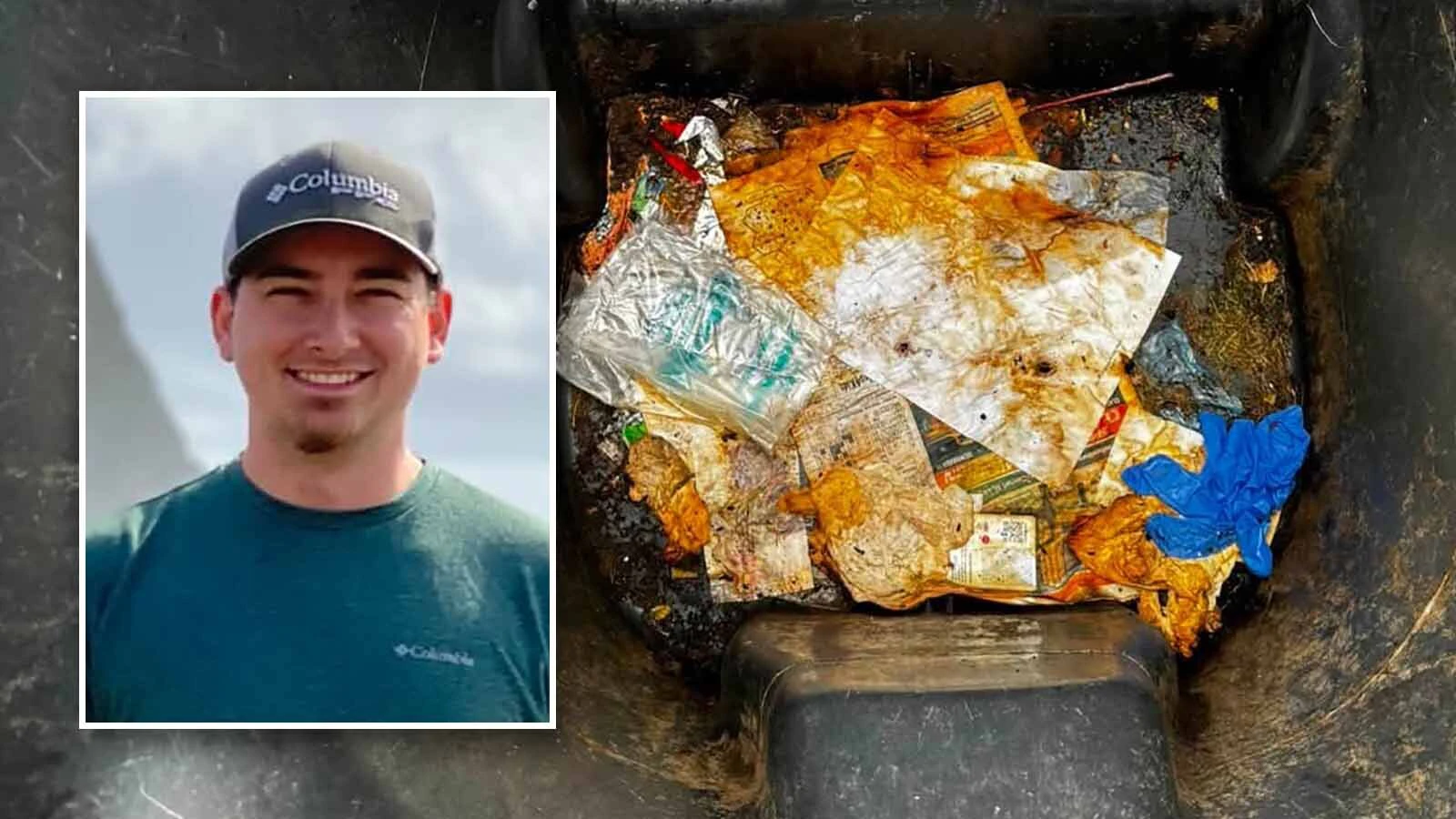
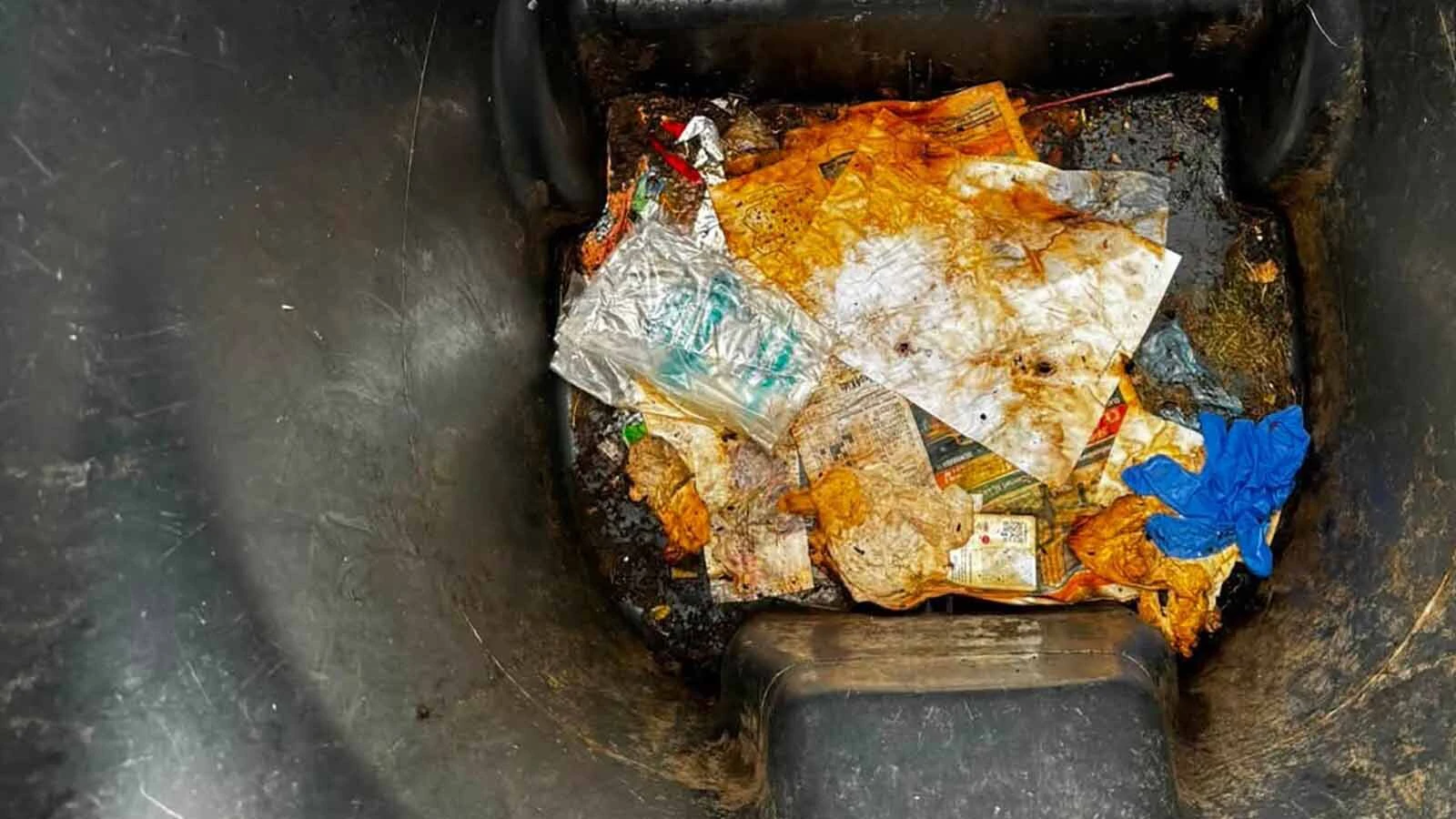
Maggots. Spoiled meat juice. Moldy food. Grease. Dog poop.
Whatever horrors have been slowly fermenting in the bottom of a black plastic garbage can through a hot Wyoming afternoon, Michael Addleman has seen it all.
Standing there in muck boots with a pressure washer while the ooze splashes back at him, he reflects.
“When you're in the middle of it, you kind of second guess your whole life," Addleman said.
When it's over, though, he steps back and admires his handiwork.
Not everyone is cut out for the job.
“You do get that good feeling with it,” he said.
Side Hustle
Addleman is the man behind 307 Bin Cleaning, a fledgling Cheyenne side hustle devoted to doing a household chore most people either don't think about or absolutely don't want to do themselves: cleaning garbage cans.
He's only been at it about a month and a half, but what started as an experiment to make some extra money has taken off faster than he expected.
Addleman works full-time as a physical therapist assistant. After work, typically for about two hours Monday through Thursday, he trades the medical world for degreaser, soap, a pressure washer and some spectacularly dirty garbage cans.
“I was looking to try to make some extra money,” he said. “I saw the idea on TikTok, and I noticed that there was a big lack of that here in Cheyenne. I figured I'd just go ahead and dabble in it and see if I can get anybody to take it.”
Then something unexpected happened.
“It actually started to explode more than what I thought it would.”
Keep It Clean
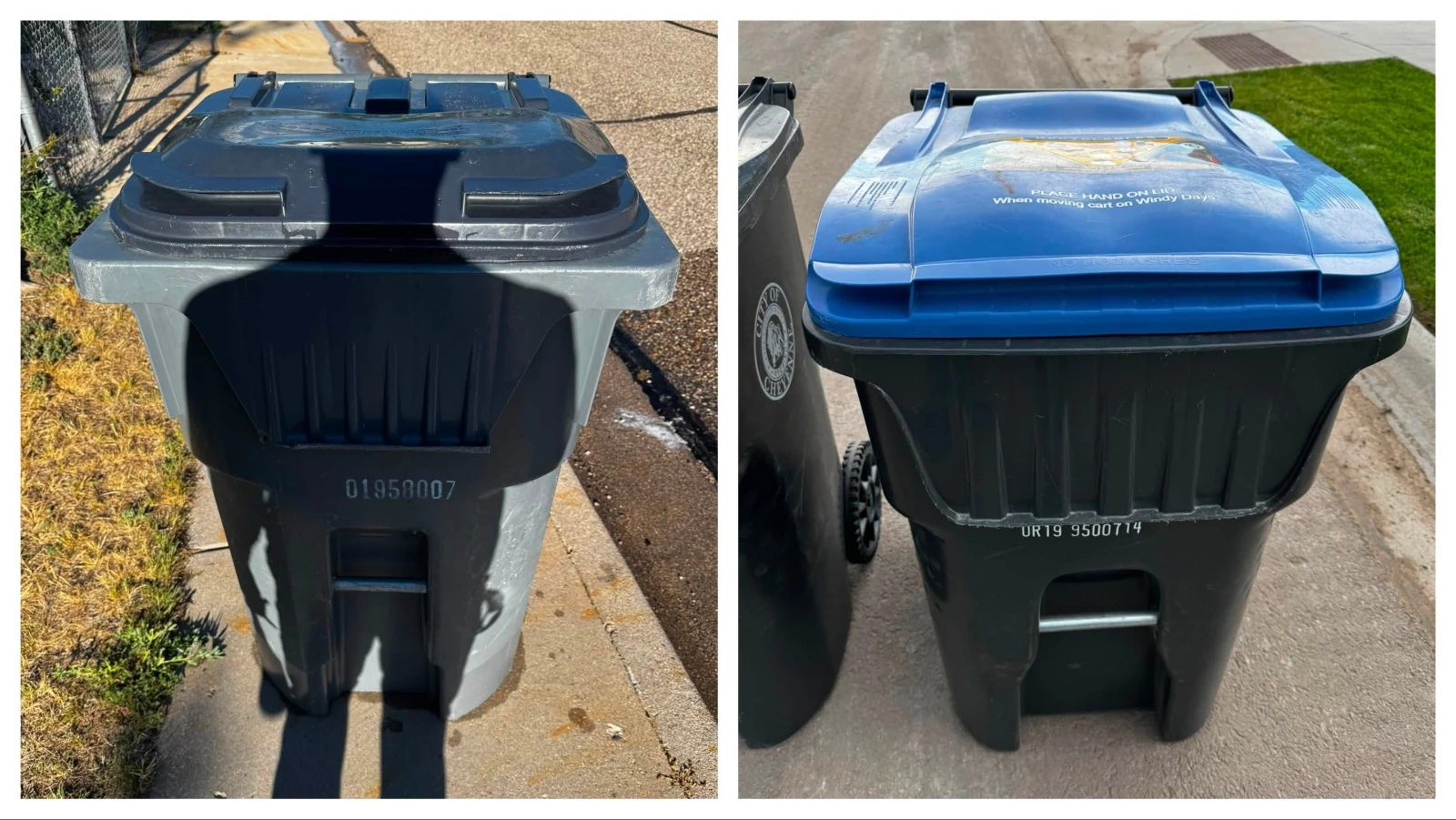
In Cheyenne, keeping a garbage can clean isn't merely a matter of personal preference. It's in city code.
If a customer doesn't do it, the city's Solid Waste Division is authorized to clean the container and charge an appropriate fee.
Austin Reiner, manager of Cheyenne's Sanitation Division, told Cowboy State Daily the city rarely has to invoke the provision because cleaning individual residential containers takes significant resources.
Consider the scale.
Cheyenne sanitation crews make more than 10,000 stops a day, Reiner said. The city has just under 24,000 residential collection points, each with at least a garbage and a recycling container.
That's at least 48,000 cans, with additional containers at some properties.
“It would have to be pretty, pretty dirty for us to come grab it and clean it,” Reiner said.
More likely, sanitation hears from someone because a neglected container has become a neighborhood problem.
“If we get a complaint that somebody's leaving out, like, their can and it's stinky and smelly,” Reiner said, “we could pull that can in and clean it.”
The city's ordinance also requires garbage, other than yard waste and single-stream recycling, to be bagged and containers to remain closed except when trash is being put in or collected.
There are practical reasons for that.
A Rough First Can
Addleman's first professional garbage-can cleaning was nearly his last.
It took him about an hour and a half.
“It was a really rough first one,” he said. “Almost got me to quit.”
He hadn't yet figured out the best order for attacking the grime, where to stand while pressure washing or, critically, how to stay out of the backsplash.
He is smarter. Long sleeves. Pants. Muck boots specifically reserved for garbage-can duty.
An N95 mask helps with the smell, sometimes a little Carmex under the nose.
The clothes come off when he gets home and go straight into the washing machine.
On Thursday, Addleman encountered one of his toughest cans yet. Organic buildup and grease had become so thoroughly bonded to its sides that nothing he tried would make all of it budge.
The customer was still happy, he said, but Addleman considered it one of his biggest challenges.
The Greatest Hits
Not all garbage is created equal.
The greatest hits are exactly what you'd expect, and probably a few things you'd rather not imagine.
Spoiled milk, rotten seafood, and unidentified sticky liquids rise to the top.
People also have a habit of dumping the remains from charcoal grills straight into their garbage cans, leaving behind grease and oily residue that can be especially difficult to remove.
Then there is poop.
So much, in fact, that Addleman is beginning to discourage customers from giving him cans heavily contaminated with it.
Some of it becomes so thoroughly stuck to the container that even Addleman's cleaning process can't completely remove it.
And pressure washing alone isn't enough for many of these cans.
Addleman starts with a degreaser and lets it soak. Then comes the pressure washer and rinse, followed by soap and actual scrubbing. Finally, he applies deodorizer.
Sometimes he has to get physical with the stubborn stuff.
His high-tech scraping implement?
An ice scraper.
Treat Yourself
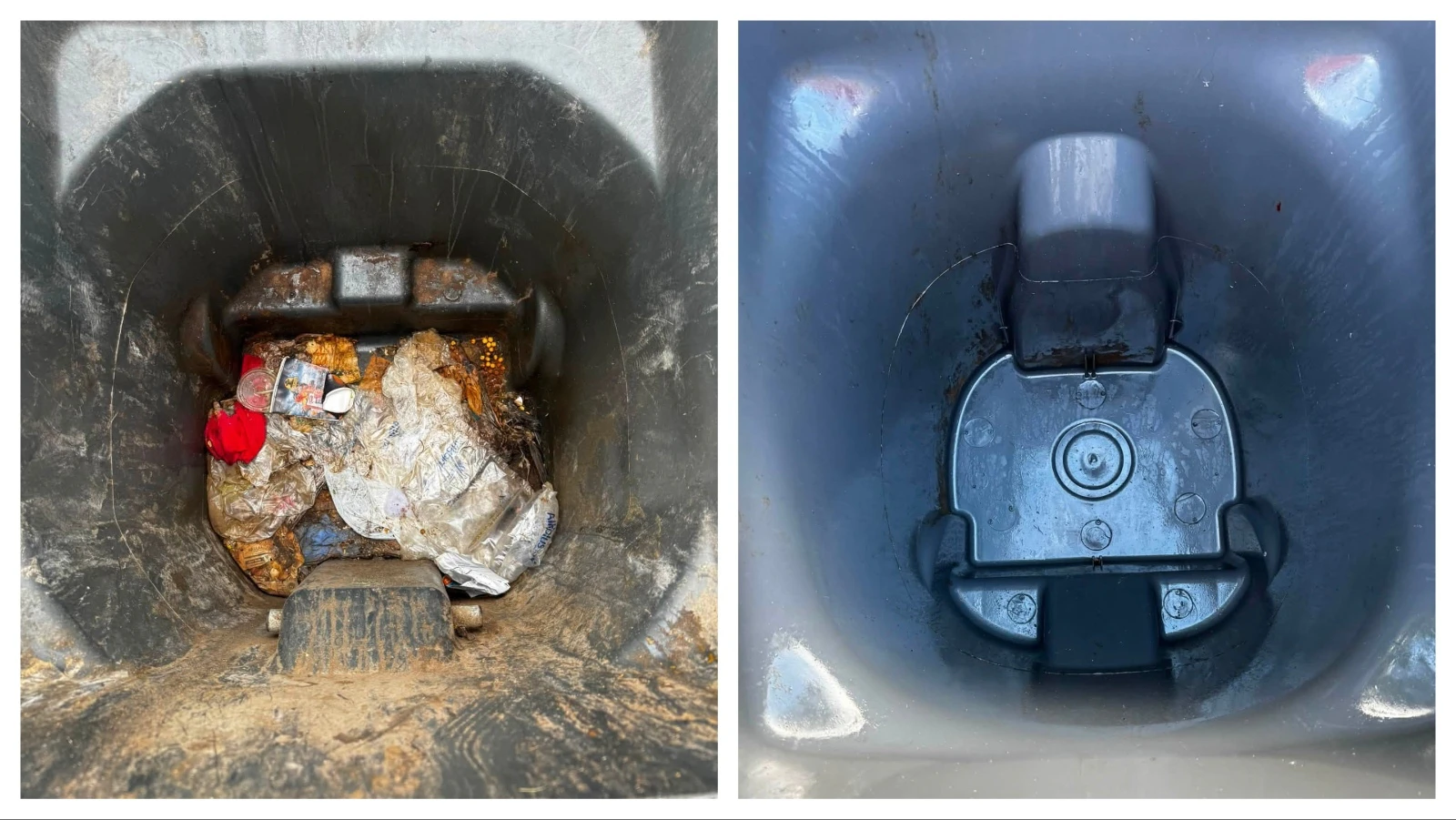
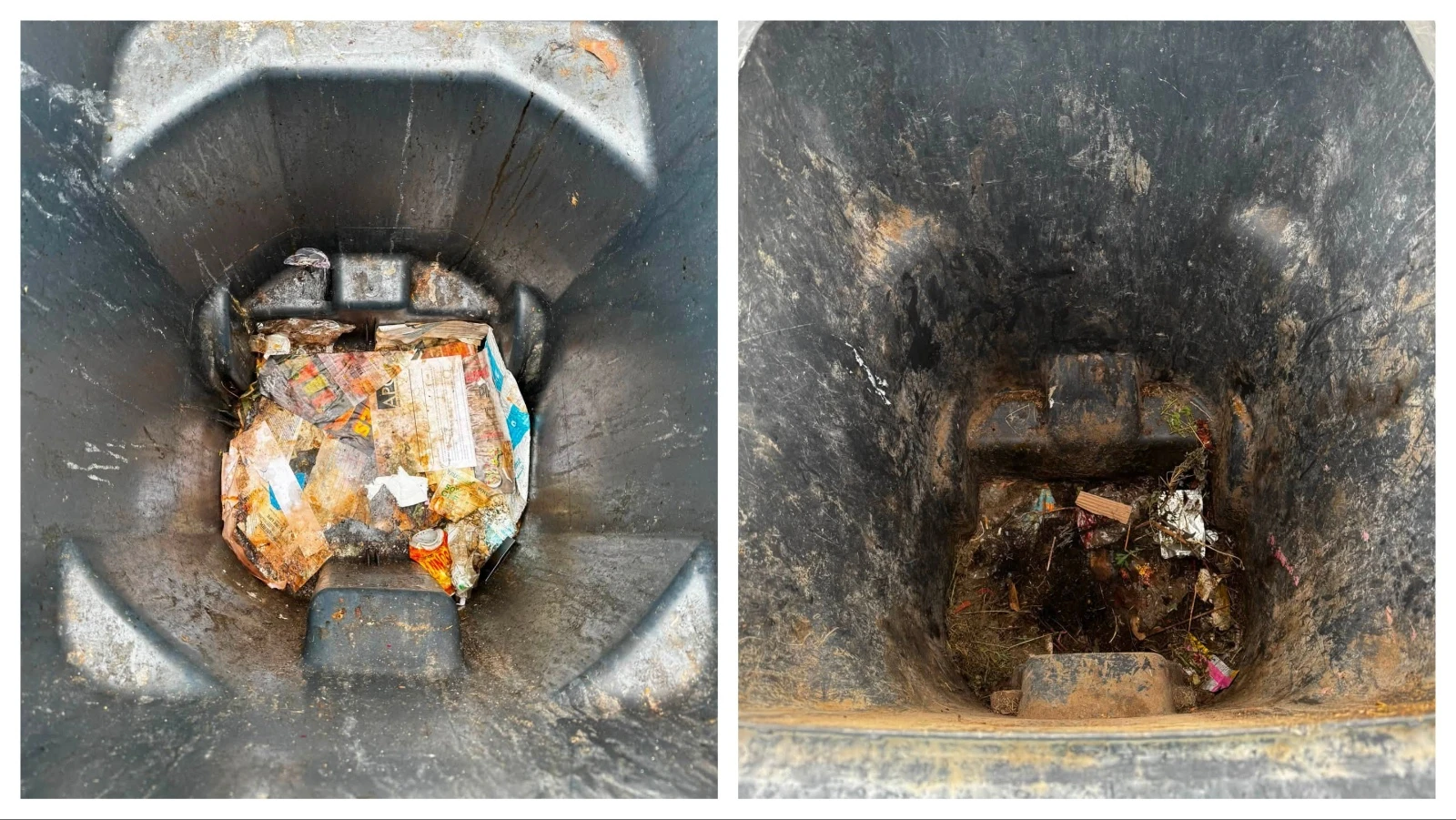
Addleman takes pictures because people don't necessarily realize just how filthy their garbage cans have become.
Part of what convinced him the business might make sense was inspecting his own.
“I didn't realize how bad it was,” he said.
Customers tend to have the same reaction when they see the transformation.
“The shock factor is pretty immediate every single time,” he said.
People generally aren't ashamed to expose the disgusting underside of their household sanitation habits to a stranger, he said. "They're excited."
“I get a lot of people where they're like, ‘I'm going to treat myself,’ type thing."
Some hire him once to rescue a can that has gone too far. Others want the service regularly.
For Addleman's customers, a garbage can can apparently join the lawn, car, kitchen or bathroom on the list of things they simply like having clean.
Addleman works in physical therapy because he likes helping people get better.
“I've always been quite the helper for people, and I'm always just trying to push everybody to get to their very best,” he said. “Ultimately, if that means helping them through their trash bins, then that's going to be it.”
The Stuff At The Bottom
What causes many truly disgusting cans, Reiner said, isn't necessarily the garbage that gets picked up.
It's what gets left behind.
If a bag lands on that sticky layer, it can essentially glue itself to the bottom of the container.
“So even if our truck picks it up and shakes it 1,000 times, it probably won't fall out," Reiner said.
Drivers can't climb out at thousands of stops and peer into every container to make sure everything fell free.
That leaves the resident with old garbage still sitting in the bottom for weeks or months.
In the winter wet garbage can freeze to the bottom and remain there for long stretches.
Summer creates the opposite problem.
“That's when residents can get vermin problems, like mice or flies,” Reiner said.
The City of Cheyenne takes flies seriously enough that its Weed, Pest and Vector Control program works with Laramie County Environmental Health to control so-called “filth flies” around Frontier Park during Cheyenne Frontier Days.
The city's stated goal includes reducing fly populations and minimizing the risk of disease transmission from the insects, and part of that is keeping trash bins sanitary.

Dumpster Fires
There are also things considerably more dangerous than spoiled hamburger juice lurking in Wyoming garbage cans.
Reiner said one of the solid waste industry's biggest concerns right now is lithium batteries.
They can be crushed during collection and compaction, triggering extremely hot fires.
“We have seen fires in our trucks too. When they dump a can, the trucks compact a little bit, and they will — if they, for example, crush a lithium battery — we've seen fires in our hoppers," said Reiner. “Thankfully, we've dodged so far having a truck burn down … but that's a lot of quick action from our drivers, as well as assistance with the fire department responding quickly and helping us contain that fire before it takes over the truck.”
Around the Fourth of July, sanitation also hears from residents whose plastic garbage cans have melted because something hot was thrown inside.
Winter brings hot fireplace ashes.
Those are different problems from the everyday filth Addleman encounters, but they're all part of the strange life cycle of the humble garbage can.
“Most people don't really think about their trash can until there's a problem with it,” Reiner said.
Kolby Fedore can be reached at kolby@cowboystatedaily.com.