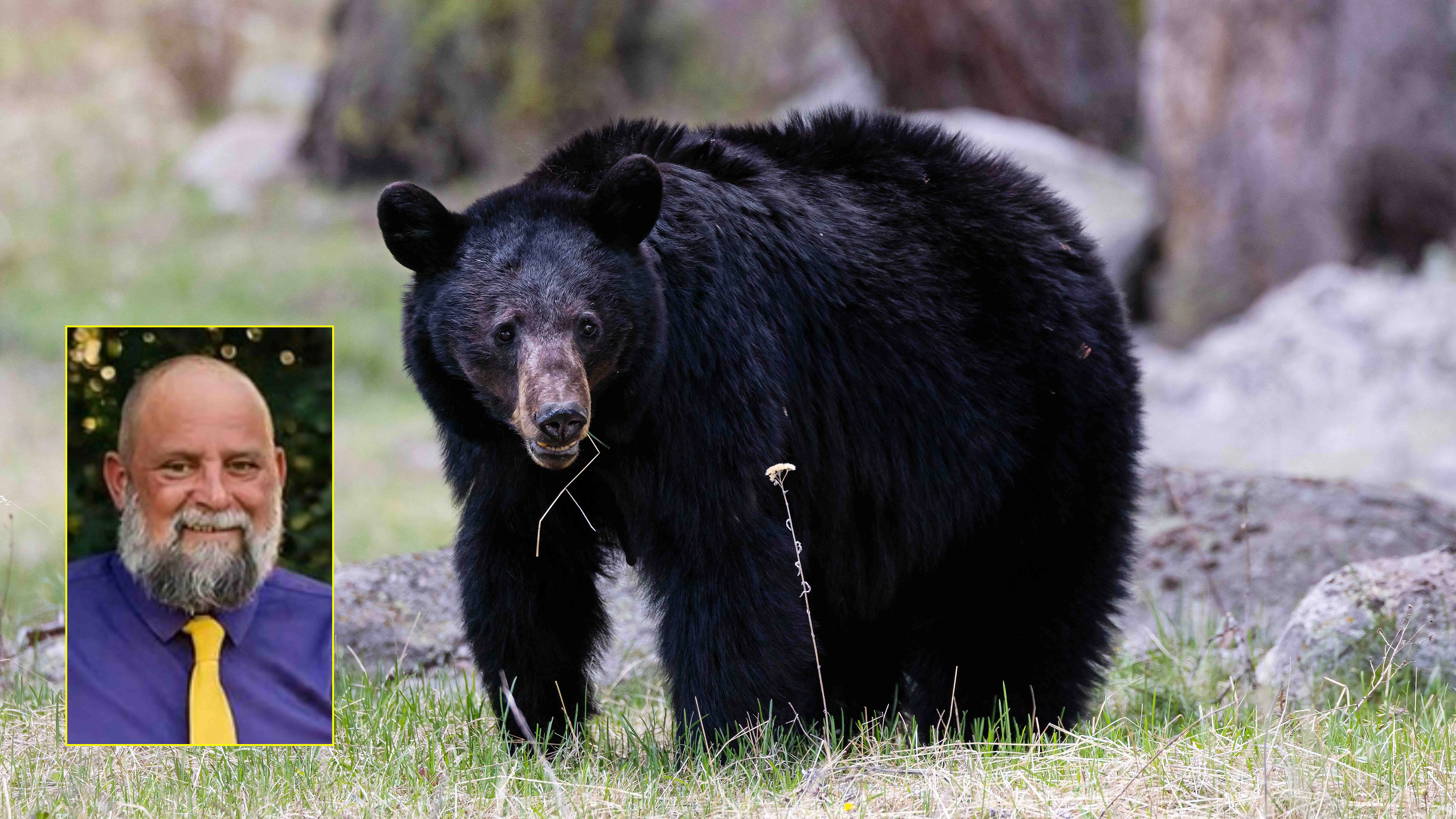
Among bears, grizzlies are bigger and meaner than black bears, frequently getting first dibs on prime food sources.
But every once in a while, a black bear pulls one over on the grizzlies.
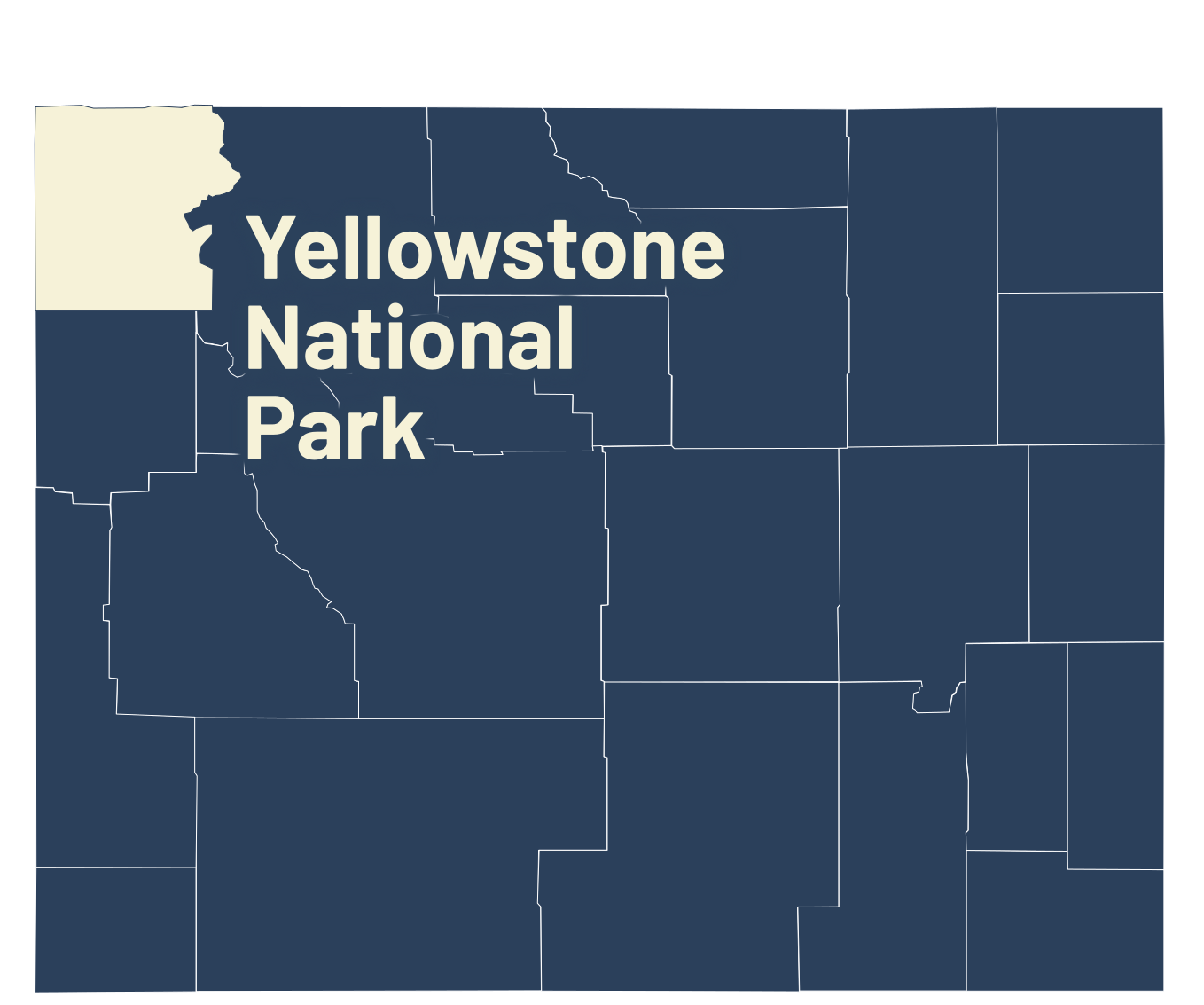
Such was the case Thursday on Dunraven Pass in Yellowstone National Park.
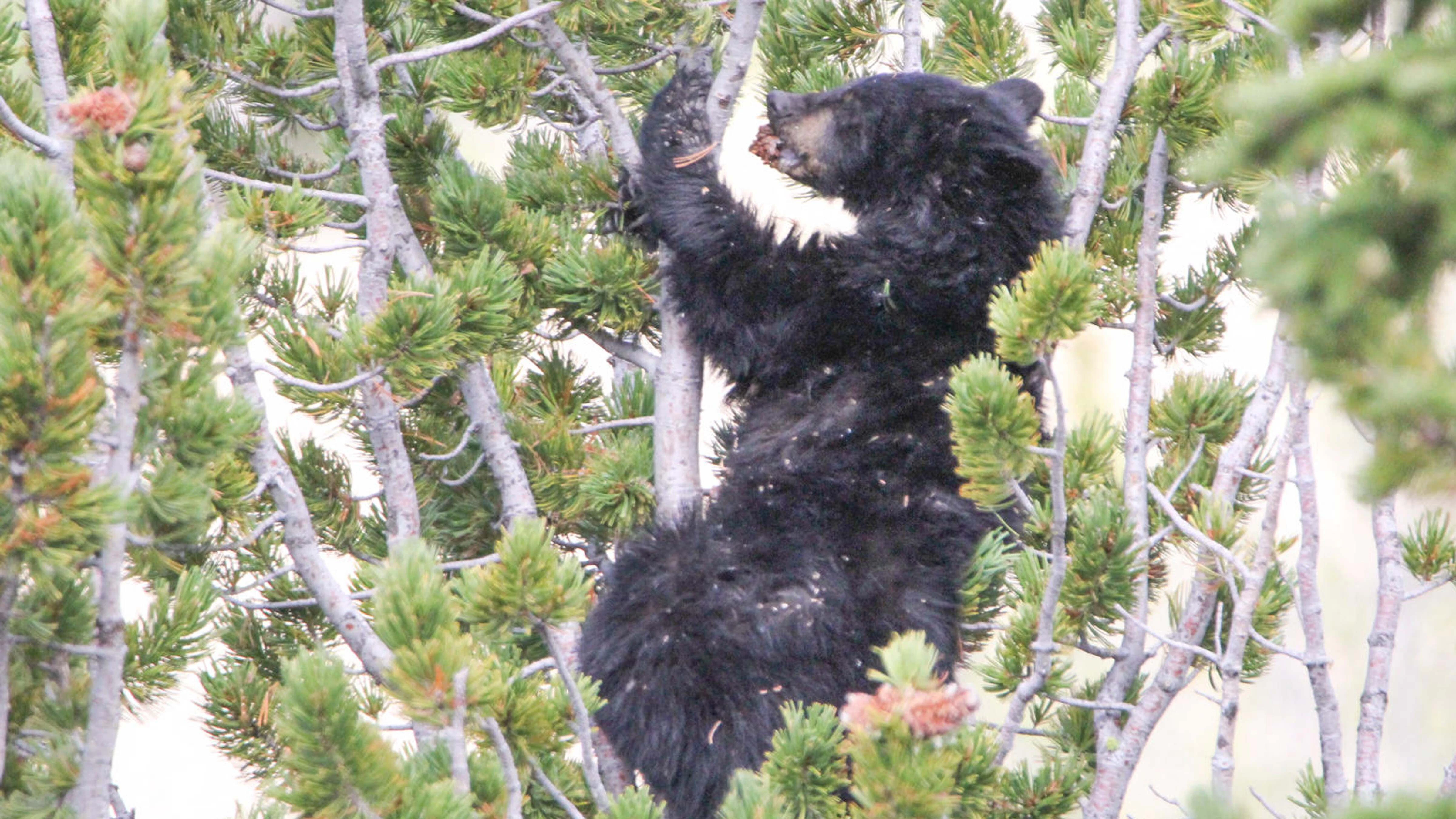
A black bear, thought to be a mature male, scaled almost all the way to the top of a whitebark pine tree and set about gorging himself of its cones.
Climbing For The Prize
The cones contain whitebark pine nuts. Loaded with calories, fats, and protein, they’re one of the most coveted food sources for bears and many other animals in the Greater Yellowstone Ecosystem.
The catch is, the cones grow only at or near the top of whitebark pines.
And grizzlies aren’t good at climbing. They must wait for Clark’s nutcrackers, a small bird species, or squirrels to stash the cones on the ground and then raid the stashes.
Black bears, on the other hand, are excellent tree-climbers, retired federal ecologist Chuck Neal of Cody told Cowboy State Daily.
“I’ve seen them up in whitebark pine trees many times. That’s normal behavior,” he said.
The black bear on Dunraven Pass scored a “big win” by getting up the tree and having a heyday, longtime wildlife and wilderness advocate Louisa Willcox told Cowboy State daily.
Competition between bears is getting fierce. Both black bears and grizzlies are entering a yearly phase called hyperphagia.
It puts them in a state of constant hunger, during which they might eat 18 to 22 hours a day, trying to pack on fat before heading to their winter dens.
‘Skeleton Forests’
For years, there’s been concern over the loss of whitebark pine trees and what that could mean for bears.
A series of warm winters during the 2000s and 2010s allowed pine beetles to spread to higher altitudes.
Whitebark pine trees thrive at subalpine altitudes of about 9,000 feet.
But because beetles typically never reached that far up the mountainsides, whitebark pines aren’t adapted to them, making them less resistant to their devastating effects.
The result was the loss of vast swaths of whitebark pine, Neal said.
Acres of “skeleton forests” where pine beetles tore through during the height of the West’s beetle epidemic about a decade ago remain, he said.
There’s good news for bears in some places, he added. Those trees that survived have been doing exceptionally well the past several years, producing bumper crops of cones.
“I find it ironic that we’re having such good cone production at a time when we’re losing the (tree) species,” he said.
About 15% Remains
Bears in the Greater Yellowstone have long relied on four key food sources, Willcox said.
Those include whitebark pine nuts, Yellowstone cutthroat trout, army cutworm moths, and ungulates (deer, elk, and moose), either by scavenging carcasses or hunting calves and fawns.
A trend toward warmer winters, coupled with the pine-beetle epidemics, wiped out as much as 85% of the Greater Yellowstone area’s whitebark pine stands, Willcox said.
And invasive lake trout took a huge toll on Yellowstone cutthroat in Yellowstone Lake.
That's why left bears are relying more heavily on the other food sources, particularly the cutworm moths.
The moths migrate from across the plains and rest in rocky areas high above timberline.
That’s attracted ever-growing numbers of grizzlies. They flip the rocks over and slurp up the moths hiding underneath.
However, about this time of year, the moths move on, so bears start coming down off the mountains seeking new food sources, Willcox said.
With the trout and whitebark pine nuts lacking, bears have been increasingly relying on meat. And that’s put them into more conflict with hunters and ranchers, she said.
‘Rodney Dangerfield Of The Ecosystem’
The remaining 15% of whitebark pine trees are a veritable wildlife buffet, Willcox said.
“There’s no other tree at high elevation that produces food for grouse, bears, squirrels, and other wildlife,” she said.
She was pleased to hear about the black bear’s score on Dunraven Pass.
“Grizzlies get so much attention. Black bears are sort of the Rodney Dangerfield of the ecosystem,” she said.
That was in reference to the late comedian, whose catchphrase was “I get no respect.”
“It took the strength and ingenuity of a black bear” to climb the tree and get first crack at the cones, she said.
Mark Heinz can be reached at mark@cowboystatedaily.com.