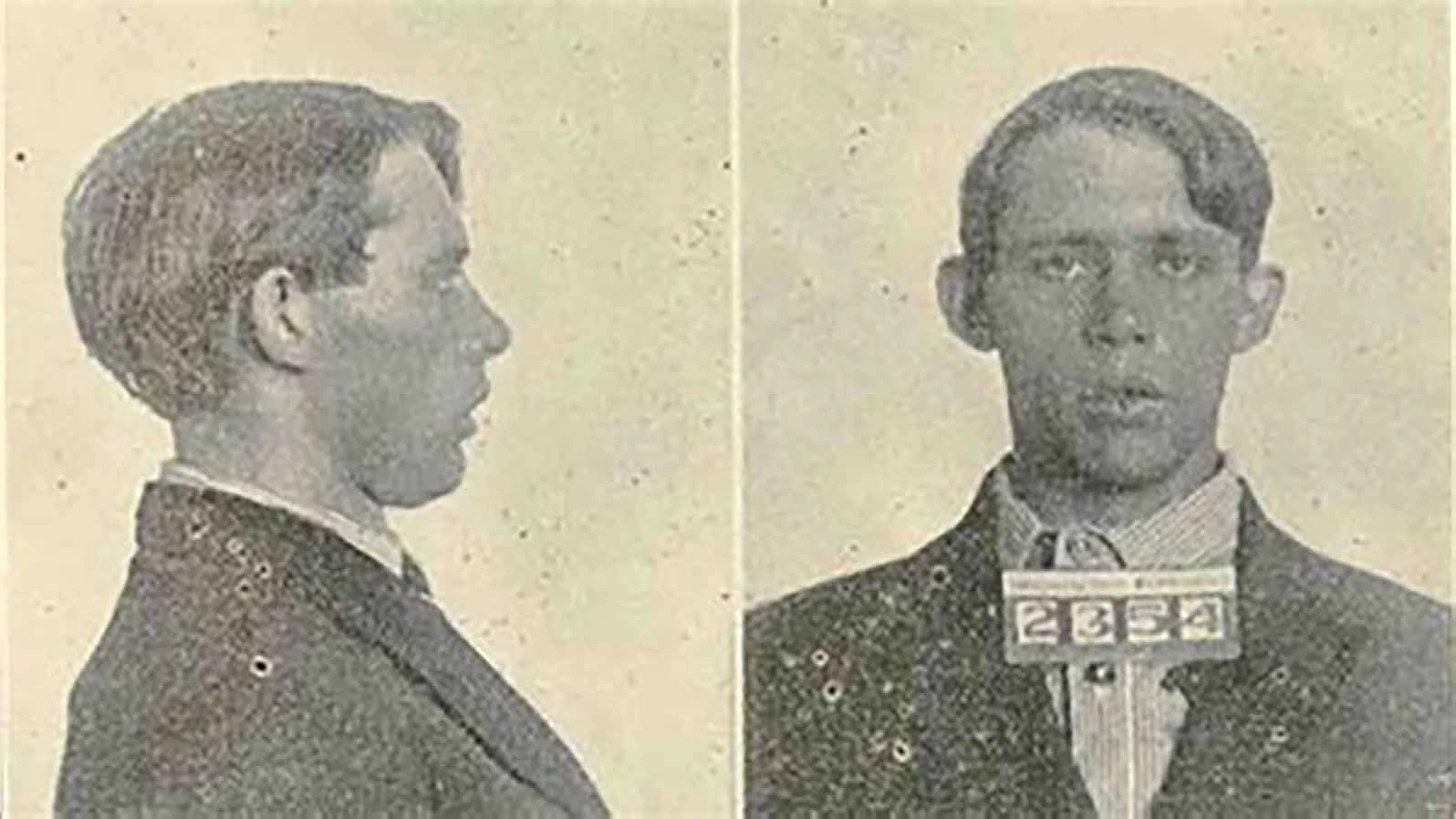
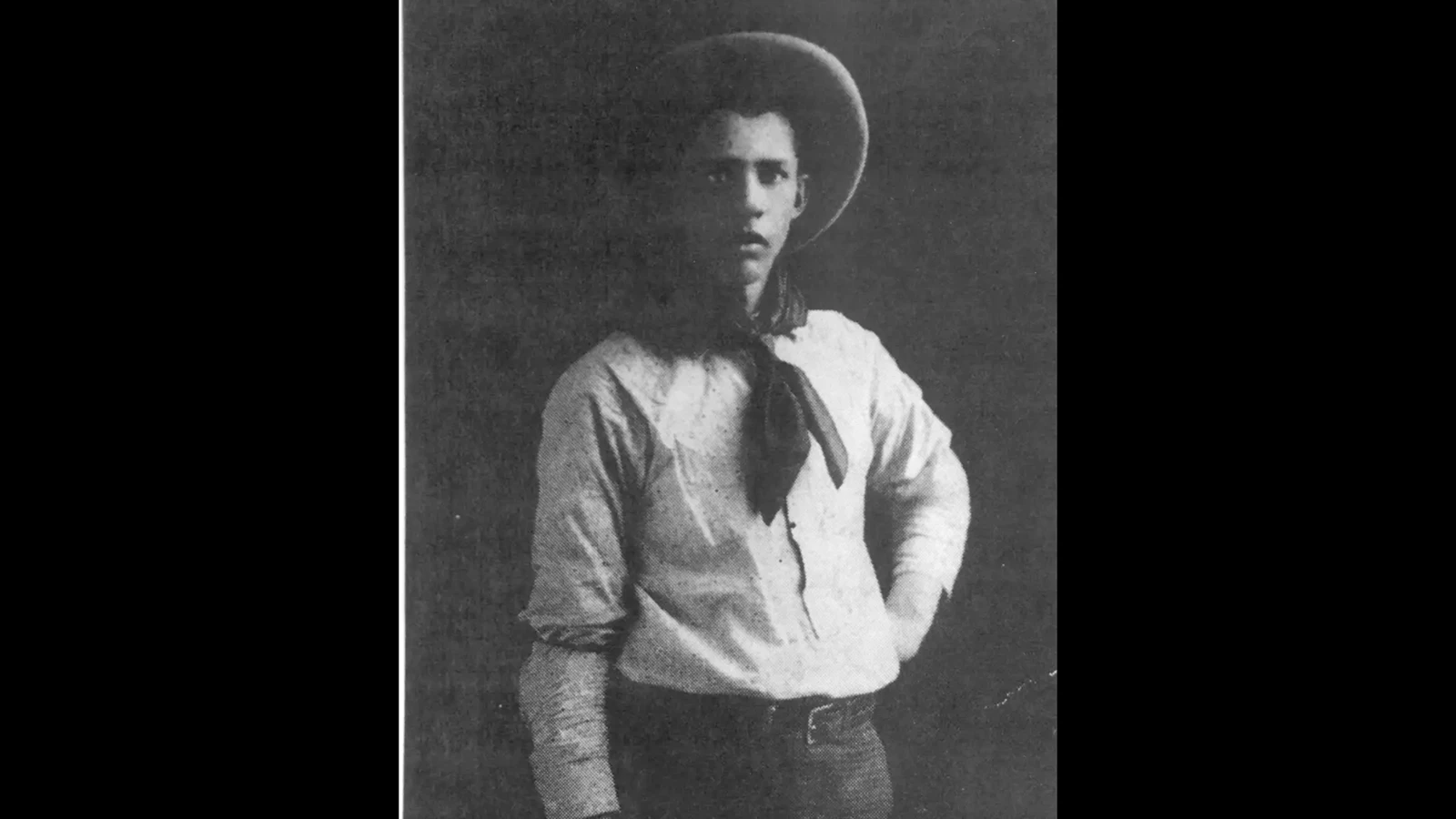
R.J. “Gill” Gillian was 5 years old when he learned that a family friend, Bill Carlisle, was one of the most famous outlaws in America.
Gillian, now 82 and living in Saratoga, said he only knew the Laramie business owner as a good friend of his grandmother, Olive Peberdy, until one day he overheard his grandma and Carlisle chatting casually about the crimes committed in 1916 and 1919.
Gillian's Grandma Olive was a frequent guest of Carlisle's at his restaurant in Laramie and he said it was a treat for him to tag along. Peberdy was just one of numerous citizens in Wyoming who admired the former outlaw and thought the law had been too hard on him.
In fact, thanks to this sympathetic public, Carlisle nearly got away with the train robberies in 1919.
“I thought it was neat because they said he robbed the trains with a toy gun,” Gillian said. “That left an impression on me because I played with toy guns, too.”
According to Carlisle in his 1946 autobiography, “Bill Carlisle, Lone Bandit,” he carried a toy glass gun on his first two robberies but also had a real gun.
Carlisle fired the real gun into the air to prove he was robbing the train when a passenger thought the whole thing was a joke. Carlisle pushed the fake gun into the ribs of a brakeman who also thought the robbery was staged — until the toy gun proved otherwise.
Dubbed the Gentleman Bandit by Wyoming newspapermen, Carlisle, 25, had just a nickel in his pocket when he impulsively decided to rob the Portland Rose, a Union Pacific train near Rock Springs. He refused to rob the women and even apologized to them for the inconvenience his robbery caused them. Carlisle tipped the porter and successfully escaped.
“He was a local hero,” Gillian said. “He was always so good to the people that he was robbing.”
Carlisle robbed his second train two months later and again was polite as he passed the hat, collecting money from only the male passengers. He escaped again.
Now with a reward on his head and headlines reporting on his gentlemanly manners, Carlisle was captured near Laramie by a posse.
He was a hero to a public that demanded clemency but was instead was given a life sentence.
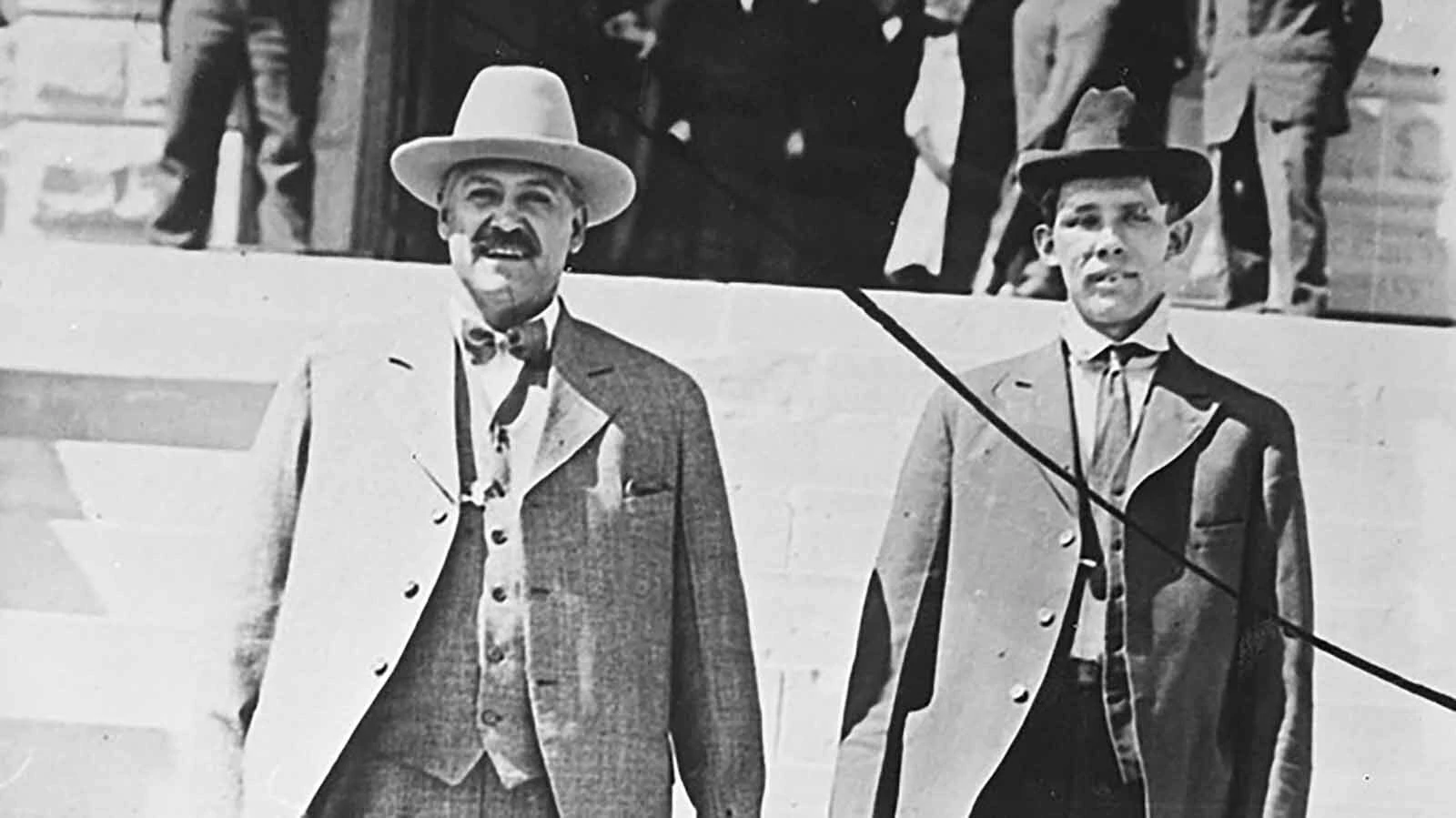
A model prisoner, Carlisle was hopeful his sentence would be pardoned by Wyoming Gov. John B. Kendrick. Instead, in 1919, it was reduced to 50 years, which meant Carlisle would have to serve at least 25 years until he was considered for parole.
If it had stayed a life sentence, Carlisle said, he could have been free in 15 years for good behavior.
Escape By Delivery Truck
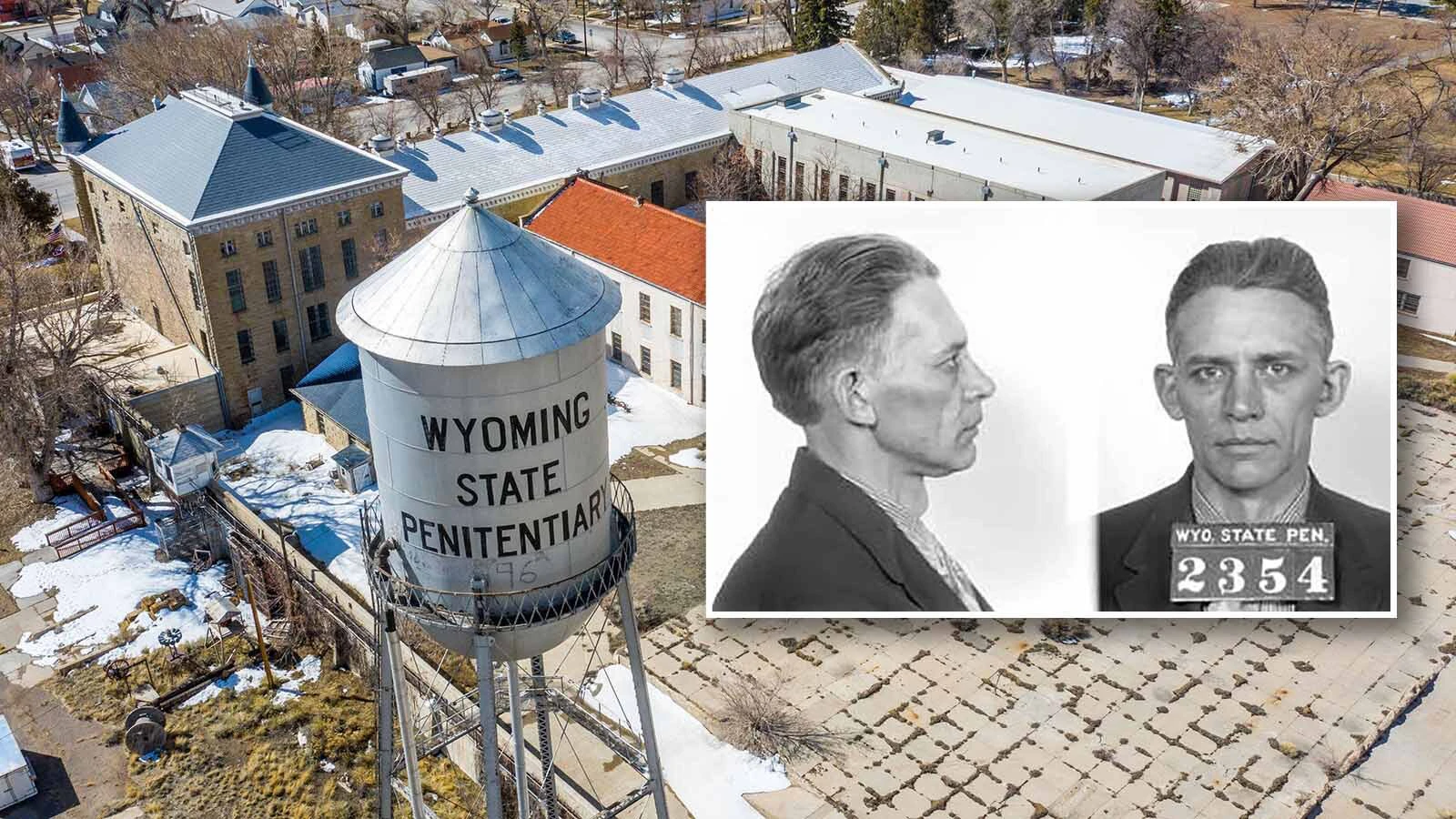
Faced with a lifetime behind bars, Carlisle spent the next few months planning his escape. He worked at the shirt factory at the Wyoming State Penitentiary and decided to stow away in a box to be delivered to freedom. His plan worked and, when it hit the press, most of the public was on Carlisle’s side.
His first night away from the Rawlins penitentiary, Carlisle had dinner at a sheep camp.
“I told the camp tender that I wanted something to eat, that I had taken only what clothes I needed and a rifle and ammunition,” Carlisle later wrote. “He grinned and said it was all right with him, that he hoped I got away, and that I need have no fear of him or the herder.”
He shared a meal with the two men and then, late in the night, Carlisle said he returned to the railroad at Creston with the intention of heading west. However, the posse was searching all the trains heading that direction from the prison, so Carlisle did what appeared to be the only sensible plan.
He headed back to Rawlins to board a train going in the opposite direction.
Because he now had the sheepherders rifle, Carlisle pretended to be a guard. Carlisle said he joined a group of railroad men in a shack used for breaks. When they all remained quiet, Carlisle relaxed, thinking he wasn’t recognized.
Then one of the men stared straight at Carlisle in his role of guard and said, “I have got my opinion of a man who will hire out for three or four dollars a day to catch Bill Carlisle.”
Another man agreed, cursing at Carlisle about pathetic guards who would search for him for a few measly dollars. Not knowing if this was a warning or if they were truly disgusted with someone they supposed was hunting for the escaped convict, Carlisle slipped out of the shack and boarded the train.
The Fugitive Guard
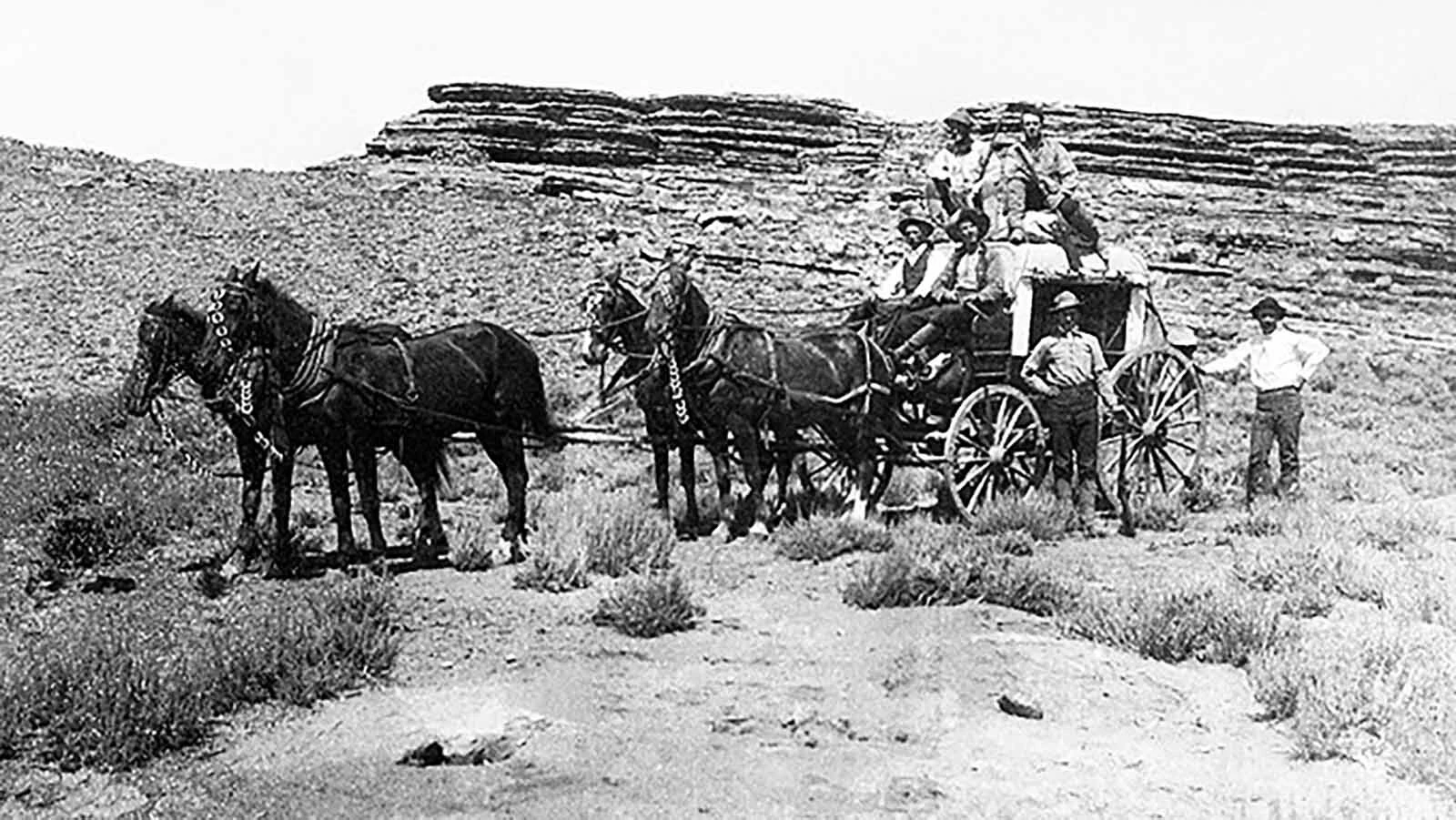
Carlisle said the train passed through Hanna, Medicine Bow, Rock River and on toward Laramie as he pretended to keep an eye out for hobos. He had been a fireman on a train three years prior and knew his role well.
When Carlisle was offered a chance to warm up in engine cab, he gladly accepted and joined the engineer, fireman, head brakeman and rear brakeman in the cab.
“Again, the opinion was openly expressed about train guards,” Carlisle said. “I said the pay was good and that I really hoped I would never meet Bill Carlisle.”
The men all laughed, and this eased the tension. They spent the next few miles in conversation.
“I know Bill Carlisle, would know him anywhere,” the fireman suddenly said. “I was in the courtroom during his trial.”
Carlisle said he looked up quickly to see if he had been recognized but the fireman didn’t react, so he figured it was just idle talk. Just before daylight, they entered the Laramie yard and Carlisle said he jumped down from the engine and started across the tracks when the engineer called out to him.
“So long, Bill,” the engineer said, “And good luck!”
In Laramie, Carlisle was eating at a restaurant across from the police station. When he went to pay for his bill the waitress told him to keep his money because he would need it.
“I knew I was recognized,” Carlisle said. “I told her, you take out what I owe. The government is still making money and when I need more, I will probably get it.”
Carlisle purchased a better gun, using the last of his money. He contemplated robbing a Laramie clothing store but discarded the idea quickly.
“As long as the railroad was looking for me, why should I bother a storekeeper in Laramie, or any other place,” Carlisle wrote. “Why not just go ahead and hold-up another train? I could be in no worse position than I was if I were to hold-up a dozen.”
He reasoned that if he were captured, 50 years lay ahead of him regardless and because of his escape, he could not hope to receive further clemency. He decided to hold up a train once more before leaving Wyoming.
Another Train Robbery
Carlisle hopped on a freight train and rode it to the Ohio Oil Camp at Rock Creek. He was once more recognized, but the men were all friendly to him. Later, he was approached and warned that one of the five was planning to turn him in.
Carlisle said he calmly ate his dinner and told his confidant not to worry, that he would soon be long gone. Carlisle described then how he returned to the train yard as a train slowly moved through. He swung up between two coaches and rode for a mile before attempting to enter.
When he stepped inside the passenger car with a drawn gun, Carlisle was shocked. Most of the passengers soldiers and sailors on their way home from France.
“I felt that I would be very fortunate if I ever left this train without a fight,” Carlisle said. "Some of these men had as much, if not more, nerve than I had. They had fought overseas and would not be as easy to handle as the passengers had been on my other hold-ups.”
It was too late to back out now so Carlisle shouted out to the men to put their hands up. The command was obeyed and Carlisle said he was scared for the first time during a robbery.
“Had I lost my nerve, I wondered,” Carlisle wrote. “It was no time for me to hesitate. This time I did my own collecting.”
He ordered a man to put coins in his cap and moved on to the next seat where two soldiers sat, their hands up and watching him curiously.
“Just back from France?” I asked.
When the soldiers responded to the affirmative, Carlisle told them to keep their money.
“I would have been over there with you had they let me go,” Carlisle said.
He only robbed about six passengers — all men. He let alone all the soldiers, women and an old couple.
“All I wanted was enough money to buy an outfit of clothes that would allow me to dress so that I would not arouse suspicion when I reached Denver, where I had planned to go,” Carlisle said.
Word had spread through the train that he was robbing it. A young man appeared holding a gun and, not wanting to shoot anyone, much less a youth, Carlisle attempted to disarm him and ended up getting shot in the wrist.
“Wounded, with no thought of surrender, I stood formulating new plans,” Carlisle said. “I would have to take to the hills again until such time as it would be safe; or until I could get my hand taken care of, which might be weeks."
At Medicine Bow, Carlisle jumped off the train. A man leaned out of another car and started shooting at him and Carlisle threw himself down. As he rolled out of range, another man who had jumped out took aim and shot once but then he, too, had to run for cover from flying bullets.
“Every car door was belching forth fire,” Carlisle said. “Passengers and guards alike were shooting wildly into the night and anyone within range of their bullets could have been hit.”
Carlisle ran over ground he knew well and disappeared into the range, leaving behind a small trail of blood.
Into The Hills
Carlisle spent the next two weeks on foot, walking from one ranch to another, his wounded hand giving him fits. Sometimes he was recognized, other times the families were unaware of who the fugitive was they were hosting.
Carlisle described how they kept track of the posse on the ranch telephone. As the posse passed a ranch, someone at that ranch would phone ahead that it was coming. They kept track of the posse until one day it reached Antelope Basin and failed to show up again.
The posse had given up the hunt for Carlisle and had gone antelope hunting.
None of the ranchers ever turned Carlisle in for the $1,200 reward and, as one rancher wife simply told Carlisle, “Why would we do that?”
In the end, Carlisle was cornered by law enforcement in an isolated cabin and, despite his hands being up, was blasted through the lungs by a rifle. Trying to surrender saved his life because after the shot, when he lowered his arms, the skin closed around the bullet hole.
Carlisle was roughly treated and not given proper medical care by the deputies until he reached a hospital in Laramie. The doctors were furious at the treatment, and this only built more public sympathy.
Carlisle was again a model prisoner and ended up serving 20 years. Thanks to the persistence of Rev. Gerard Schellinger, he was released in 1936 at the age of 45. Carlisle went on to marry and became a successful businessman with his Carlisle’s Cabins, Roundup Café and The Lone Bandit Trading Post in Laramie.
Gillian remembers eating at the cafe as a child.
“I think the biggest thing about Bill Carlisle is how he changed his life so much,” hesaid. “Usually when someone gets on a bad road, they stay on the wrong there, but Carlisle wanted to do good and was just so well-liked.”
Jackie Dorothy can be reached at jackie@cowboystatedaily.com.