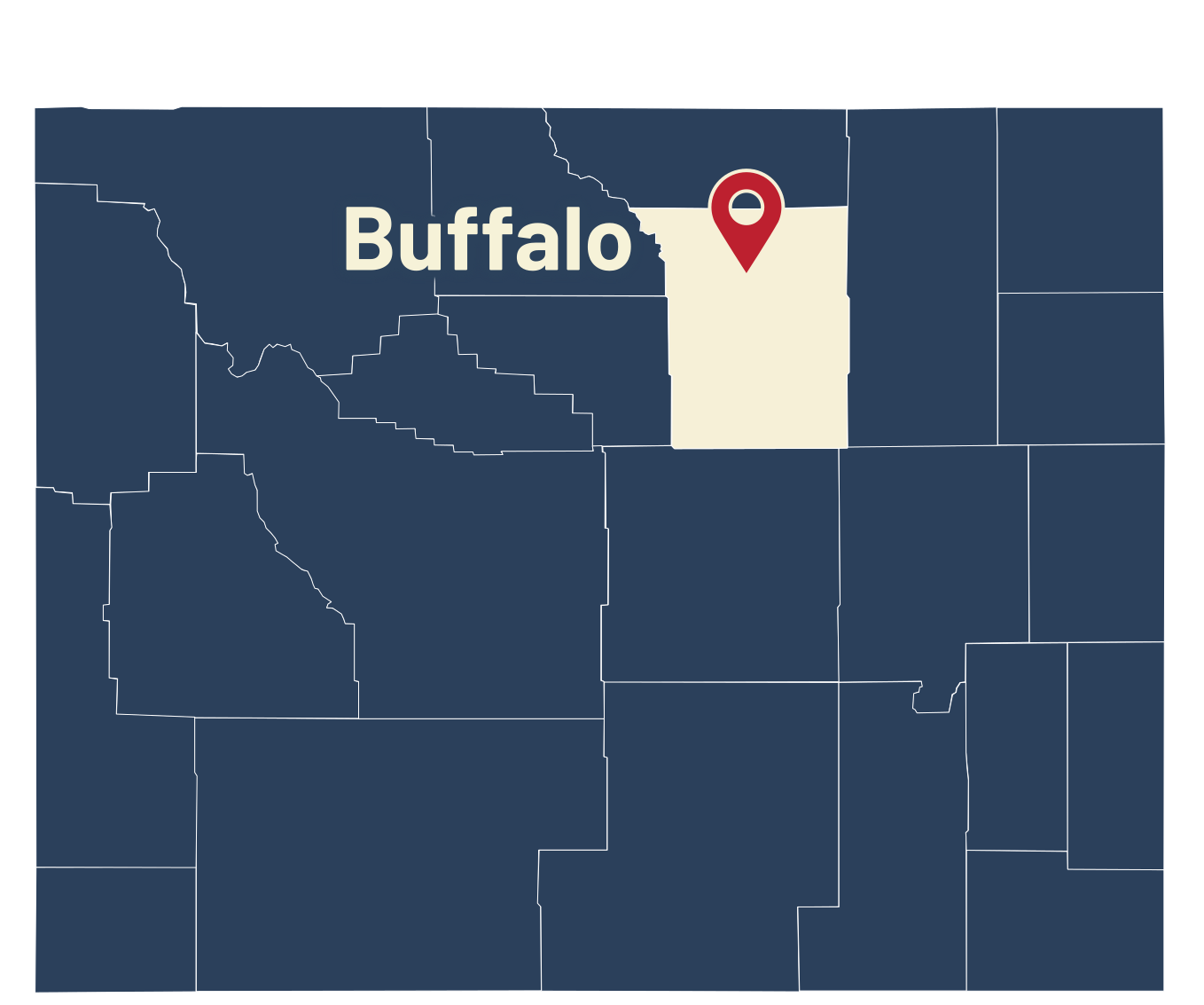
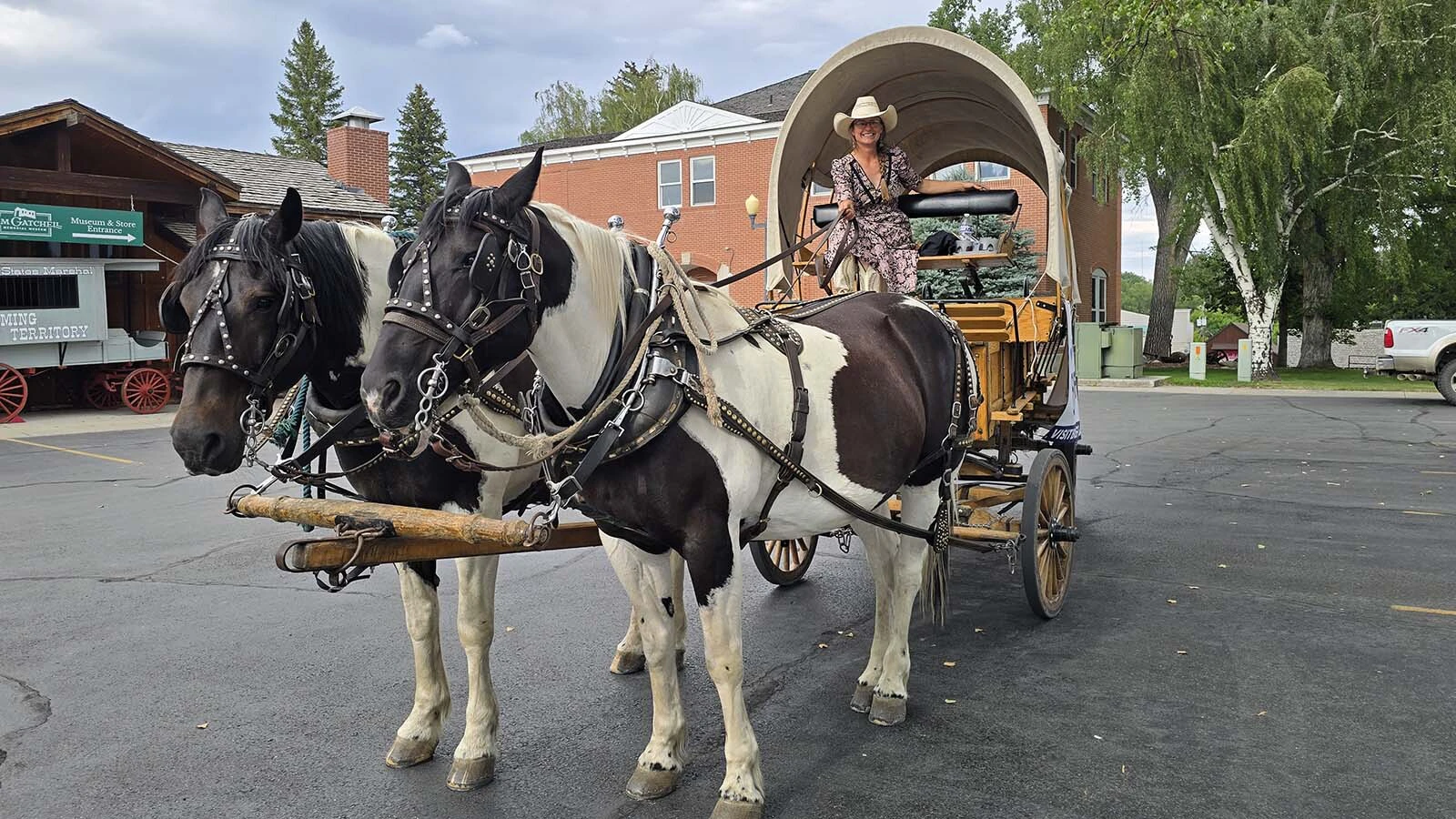
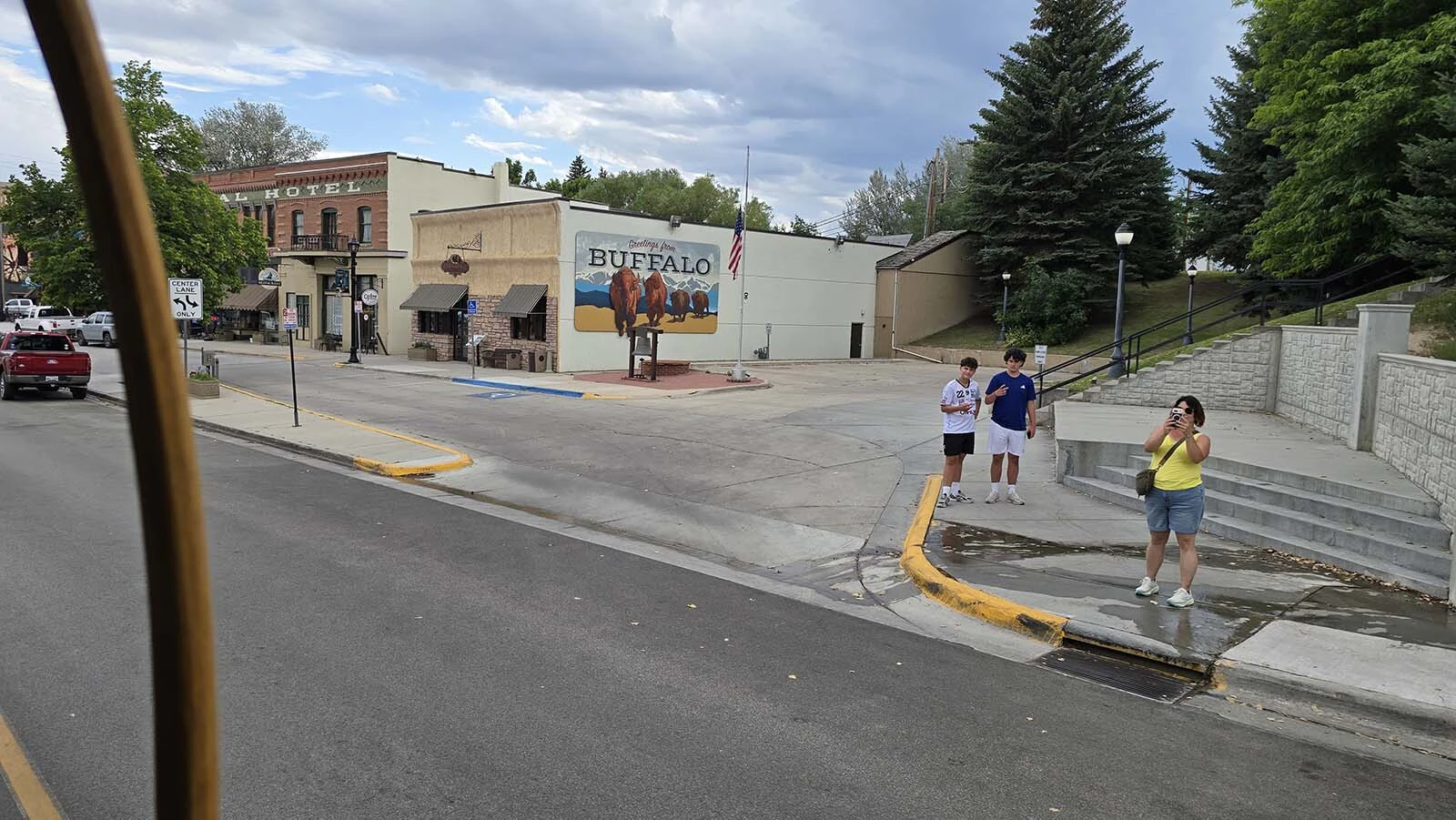
BUFFALO — Tourists enjoying a warm summer evening in Buffalo get to see something uniquely Western that’s not seen much anymore — a covered wagon rolling down Main Street at a leisurely pace, a gentle clip-clop of hooves echoing off historic storefronts.
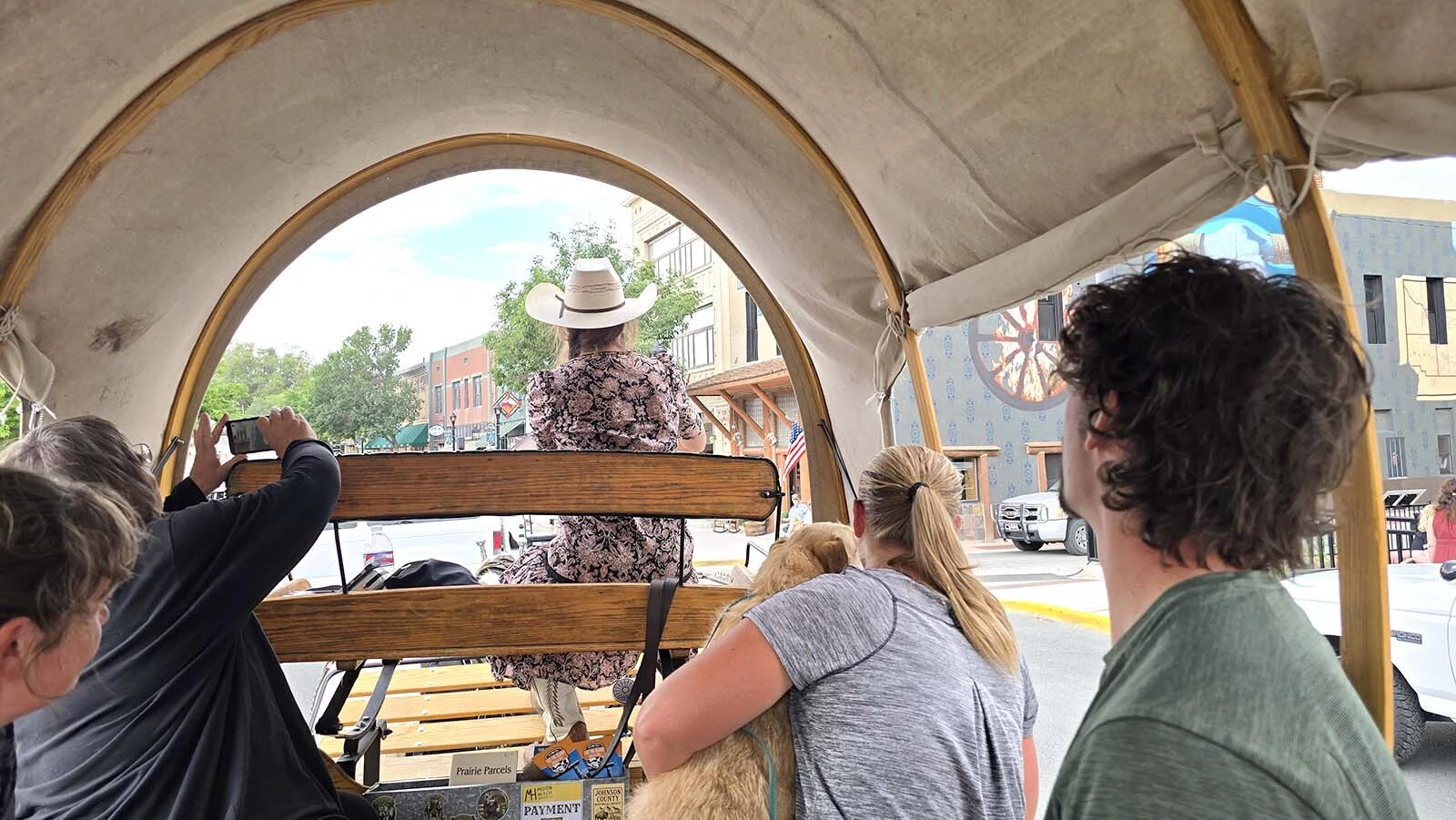
Kids wave and phones inevitably come out — cue the social media selfies — the minute Moonhitch Wagon’s history tour appears.
Owner Ashlee Kintzler doesn’t mind a bit. She’ll stop for a beat if she can, and smile and wave for the photo.
“When you’re on the Moonhitch Wagon, you’re always in your own one-float parade,” she jokes with the guests. “Everybody wants to stop and take photos and videos and they want to come up and ask who you are and what you’re doing and how they can take a ride.”
The one-wagon parade has quickly established itself as a popular way to not only see Buffalo but also to catch other local attractions, such as sunsets over the Bighorn Mountains and history of the Bozeman Trail.
And, soon, scenic and historic guided tours of Fort Phil Kearny.
“It’s so beautiful out there,” Kintzler said. “There’s rolling hills and whitetail deer and you’ve got the mountains as your background. It’s stunning, so we’ll do those in the golden hour at 6 o’clock in the evening and at 7:30 for a sunset view.”
Still Loves Chariot Racing
Although the Moonhitch Wagon takes its time, the idea for the new business was born from a life spent going very fast.
“I grew up in a chariot-racing family,” Kintzler told Cowboy State Daily.
Her dad continued racing chariots into his 40s, and as a kid, Kintzler always knew just what she wanted to do in life — race chariots just like Dad.
“I ran chariots for a few years with my dad until I went off to college,” she said. “Then we both decided to get out of the chariot-racing world and get into more of a leisurely pace with what you’d call a heavy horse, a draft horse.”
It was a decision born from health complications for her dad and lifestyle considerations for Kintzler, who needed to prioritize her time for college classes.
“Chariot racing … we had always teased that it was a dying sport when we got into it,” she added. “There was never any money involved in racing chariots. It was really just for bragging rights and for the glory of hanging out with a great group of people.”
These days, the sport is practically nonexistent, though she still loves the adrenaline of it, Kintzler added.
“You start in a set of starting gates, like you would a flat track horse race, and when those gates pop, it’s a very quick break,” she said. “You’re zero to 45 instantaneously, and you cruise that quarter-mile racetrack as fast as you can.
"Looking back, it kind of makes me laugh that I used to do that, and now we go 3 mph to get anywhere with our wagon and our teams.”
A Western Backdrop Begging For A Wagon
Kintzler moved to Buffalo in 2022, and one of the first things she noticed was the charm of her new home’s many historic buildings downtown.
There was a whole nexus of Wild West history around the Occidental Hotel, she realized, with storefronts that have changed little since the 1800s lining the main drag. It was all, in her opinion, just begging for a wagon to appear.
“This town would really benefit from an attraction that is true to its heritage,” she thought.
And it would also give her the chance to put all those skills she’d learned while chariot racing to good use.
Moonhitch was thus “born out of family legacy and Wyoming heritage” to feed both her love for horses and chariot racing and to celebrate her new home’s history.
Moonhitch supplies the horses and wagons, but it all works out so well because of Buffalo itself.
It provides the perfect backdrop to bring historical tales to life. It’s also a community that is proud to say it’s the real-life template for just about any Wild West movie or novel. In fact, it was one of the settings for Owen Wister’s famous novel, “The Virginian.”
The idea that anything that’s ever happened in a Western happened in Buffalo first was actually the theme of a BBC documentary, local historian Richard Kendall tells his wagon tour riders.
“We have the wagon trains surrounded by Indians,” he said. “We’ve got Butch Cassidy and the Sundance Kid and the Hole-in-the-Wall Gang.
"We have the Johnson County Cattle War. We’ve got Fort Phil Kearny up here, where the cavalry was surrounded and wiped out by the Sioux. So it’s all happened here.”
3 Miles From Fort Phil Kearny
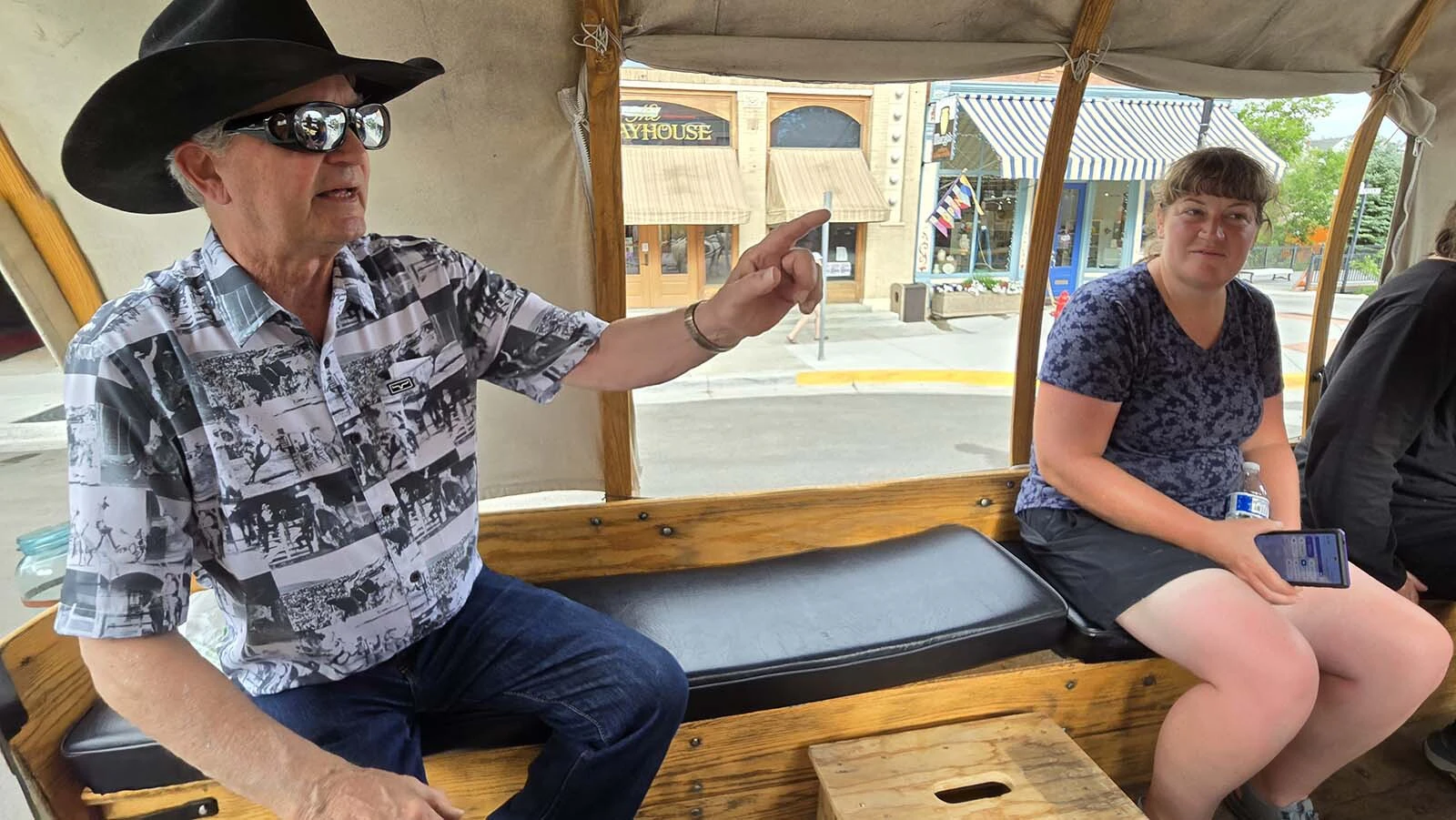
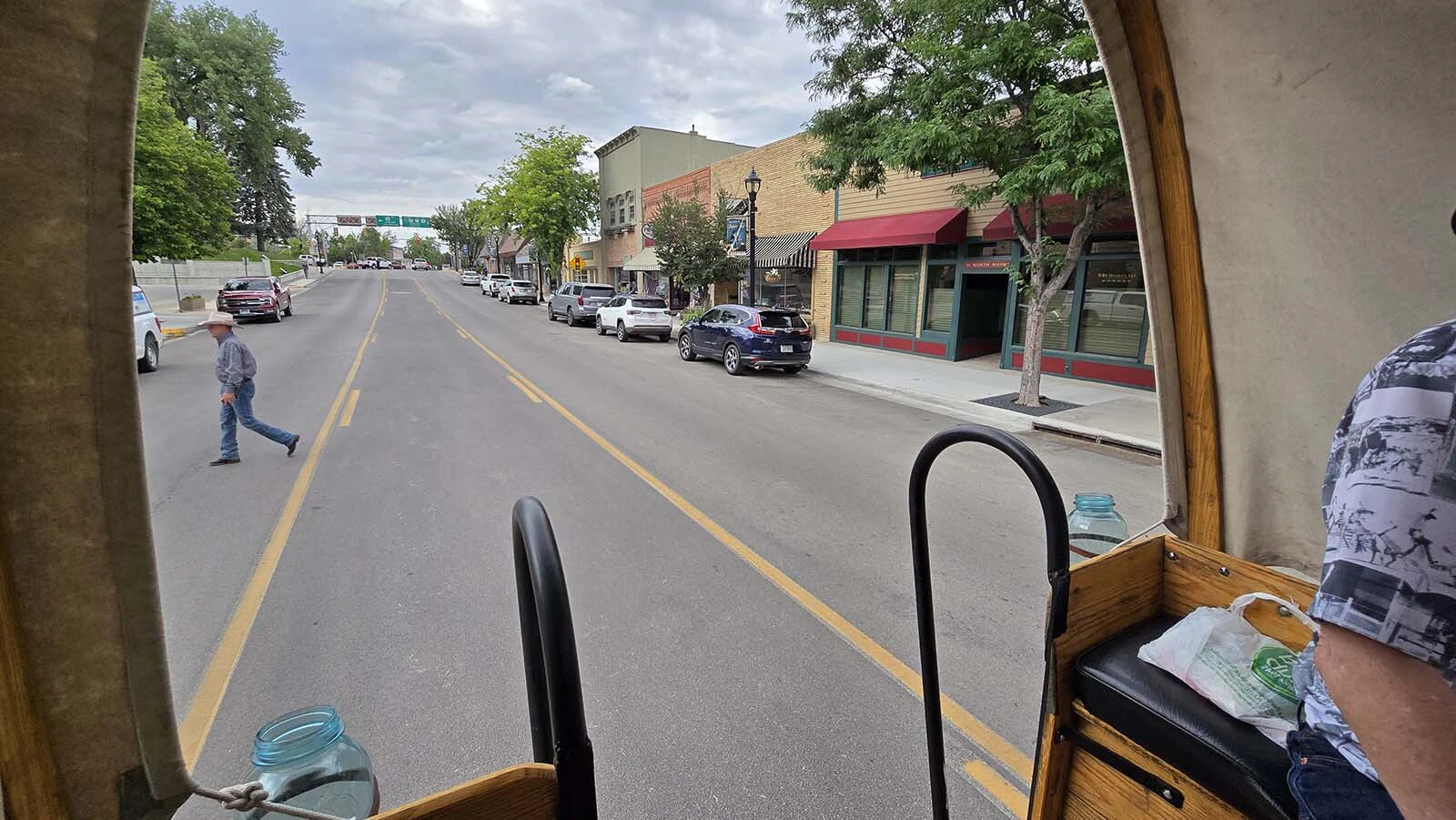
From his wagon seat, Kendall points out the 1884 Johnson County courthouse, built on the old site of the Lone Star Dance Hall, then glances down a Main Street that was once lined with 17 saloons serving a town of just 637 souls.
“I did the math,” he tells his riders with a chuckle. “That’s one saloon for about every 35 men, women and children in town.”
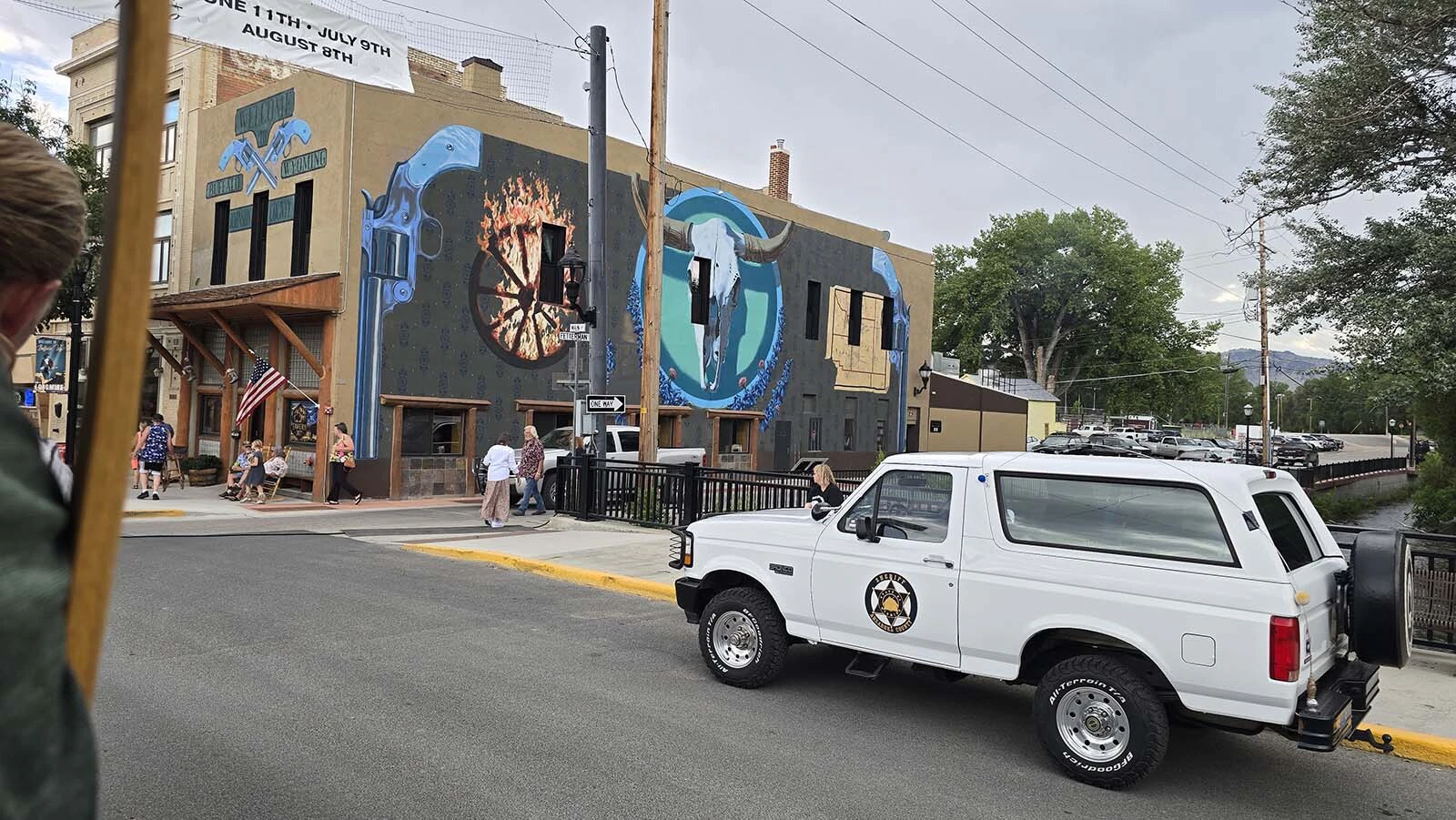
He points next to the Occidental Hotel, which is “the cradle of Buffalo itself.”
“There were three things that worked together to determine that Buffalo was going to be right here,” he said. “The first thing is that Main Street generally follows the Bozeman Trail from down around Douglas up to the gold fields in Montana.”
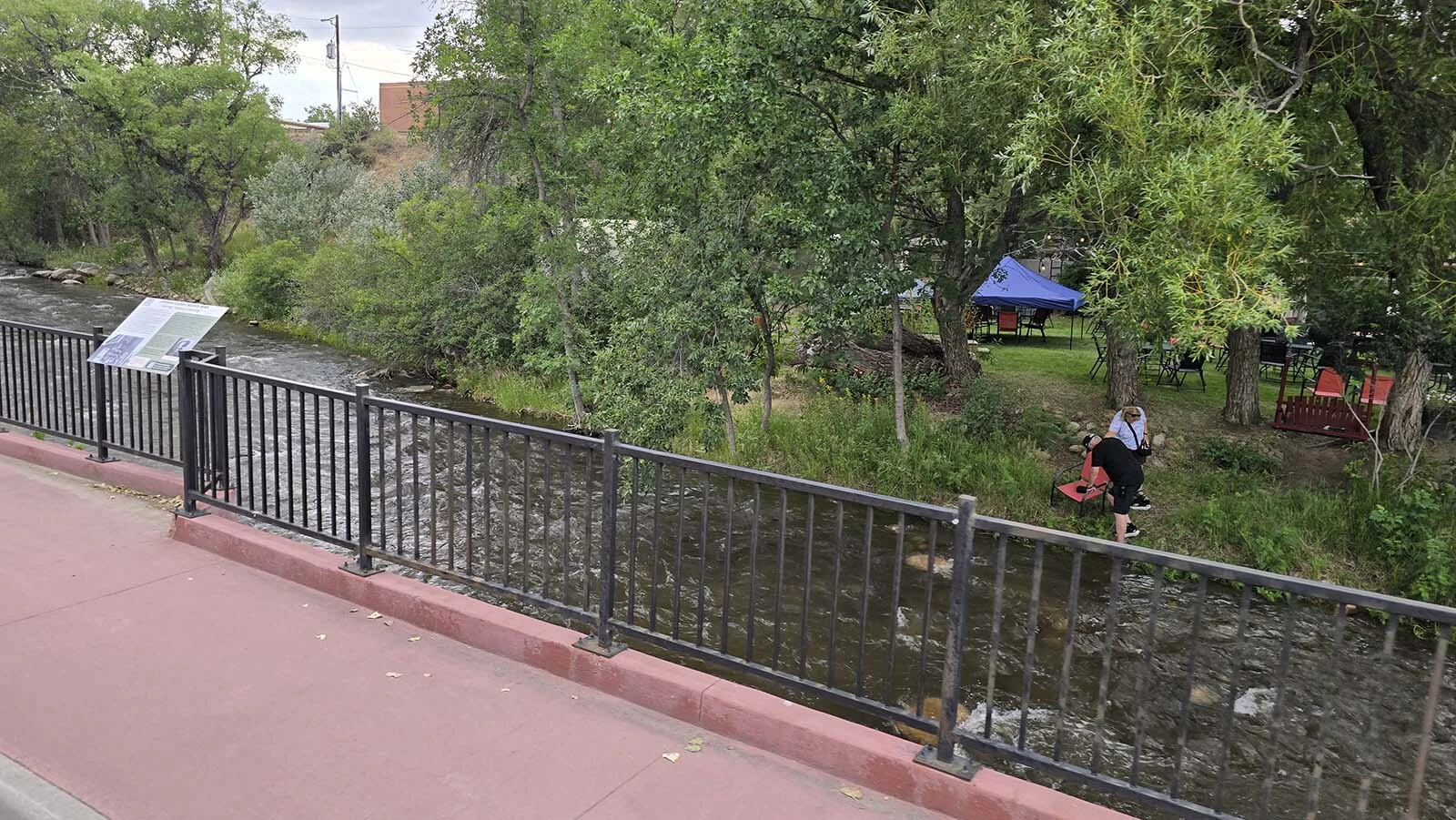
The second factor was the creek flowing right through the town, which meant there was ample water for civilization.
The third and final deciding factor was its distance from Fort Phil Kearny.
“There was a rule that said you couldn’t serve liquor within 3 miles of the fort,” Kendall said. “Guess how far it is from right there to the fort? Exactly 3 miles.”
Hotel Of The Century
The Occidental was begun by a man named Charlie Buell who was taking care of the fort’s sutlers.
“He would give them a place to take care of their horses, give them a meal and a place to sleep,” Kendall said. “He started in a tent right there where the Busy Bee is, and as he got more business, he expanded to a wooden hotel here.”
The Occidental served as the nerve center of the growing community.
“It was the place where business was taken care of,” Kendall said. “If you needed somebody to go to work for you, you came down here. They were in the saloon.”
Business decisions were also often made there, and famous people came to stay there.
“Teddy Roosevelt and Herbert Hoover stayed at the Occidental,” Kendall said. “Their names are in the register.”
Owen Wister, Ernest Hemingway, Buffalo Bill Cody, Johnson County Sheriff William “Red” Angus, frontier sheriff and U.S. Marshal Frank Canton, and renowned Union general, General Philip Sheridan are among other famous people who stayed there.
The infamous also put in an appearance — Butch Cassidy, the Sundance Kid, Calamity Jane, Tom Horn, and various members of the Hole-in-the-Wall Gang.
Marathon high-stakes poker games lasting for days took place at the Occidental, and the original tin ceiling still has the bullet holes to show for it, as does the 25-foot wooden bar, brought to Buffalo via horse-drawn wagons more than 100 years ago.
Flood Of 1912
The brick hotel was built sometime in the 1920s, after a 1912 flood wiped everyone out.
“The two biggest events in Johnson County history is one, the cattle war, and second, the flood of 1912,” he said, pointing at the next block over from the Occidental. “At the corner of that building up there, just above the American flag, you see a line marked about 2 feet above the flag.”
That mark, which is not all that noticeable when one is standing on the street, is where the high-water line for the 1912 flood was. It’s about as high as a man is tall.
“You can extend it back that way and see how far the damage was,” Kendall said. “And it was a big deal. It was on June 11, 1912. It had been raining in the mountains all day. About 6:30 p.m. it started raining here and by 7:30 p.m. people were putting their babies to bed. They’d finished supper, and all heck broke loose.”
One cloudburst later, and it was like some invisible floodgate on high had suddenly opened up, engulfing the young town.
“It just came through these buildings here and just threw everything out in front of them, out into the street, down the creek,” he said. “This side wasn’t damaged quite as badly as the ones on this side, but when the water finally went down, people just got out here and started cleaning up.”
That included a jeweler who found his inventory of diamonds and other jewels scattered in the mud.
“People came out here and picked through there and picked up everything they could find and gave it back to him through his store,” Kendall said. “There was one fatality, a young fellow 29 years old named Rodney Childs. He had been trying to get away, but couldn’t make it. He was swept away and died.”
Four of the town’s 17 saloons were completely destroyed, leaving the town to “make do” with just 13.
Kendall touches on many other lesser-known highlights of Buffalo history during the tour, including its red-light district — condemned but tolerated — complete with monthly “fines” that look suspiciously like license fees and its old Wyoming Railroad.
That became infamous for taking six hours to cover 29 miles because it had to stop and open 21 gates along the way.
Sunset Seekers, And Slower Pace Of Life
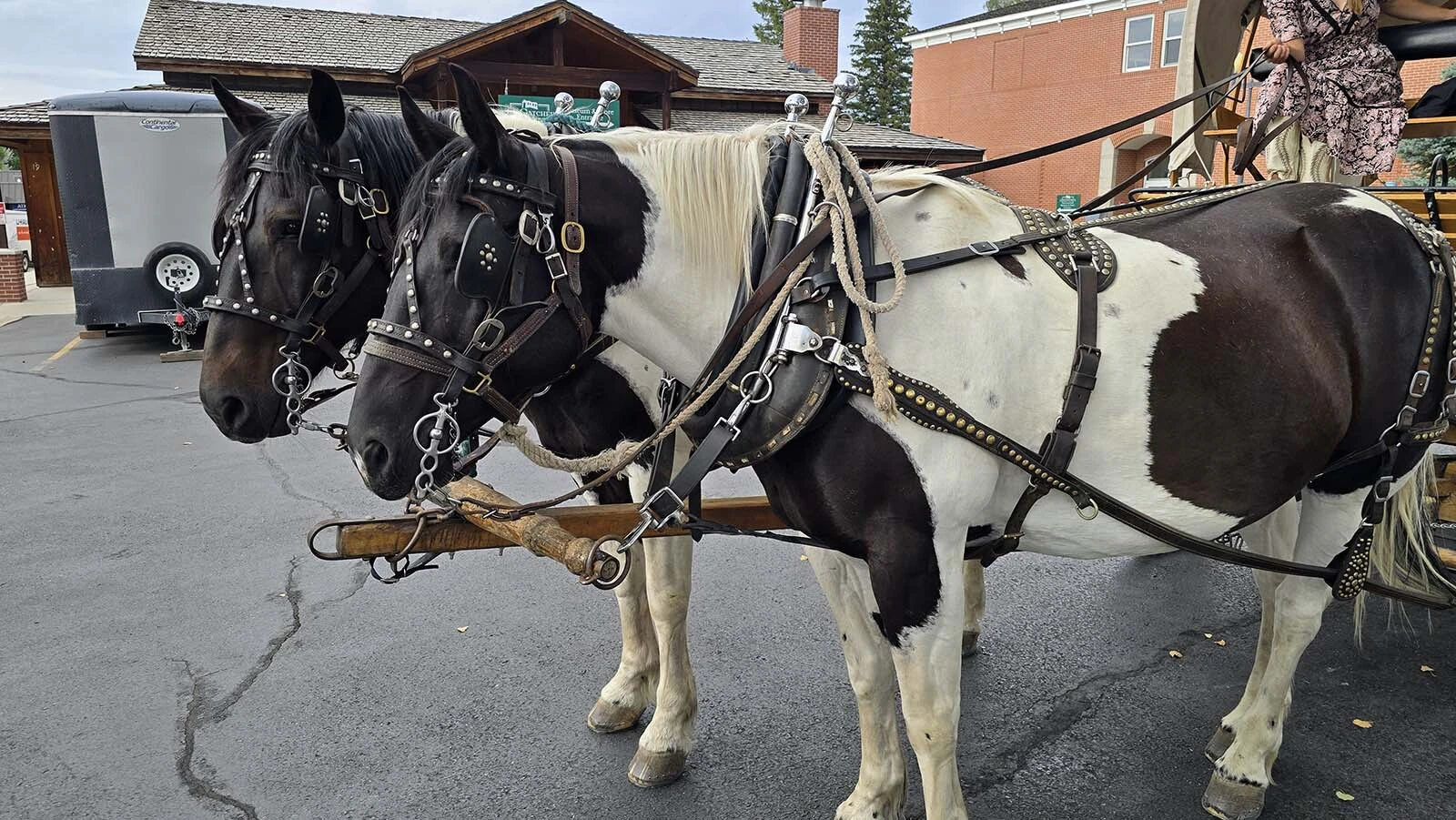
The history tour helps Buffalo history shine for tourists, but it’s the scenic Sunset Seeker tours that have so far drawn the most interest.
“That one really is a crowd pleaser,” Kintzler said. “We go out and watch the sun set over the Bighorns, and I stop for ice cream at Creekside Family Fun Center.”
From there, she takes guests to Mountain Plains Heritage Park, giving the kids a chance to burn off the sugar high from the ice cream, while the adults climb a hill to look out over the surrounding mountains.
Along the way, there are interpretive plaques to spark discussion of the Bozeman Trail, the railroad and Native American history in the area.
“I tell people, put your phones away, kick up your feet and just enjoy the scenery,” Kintzler said. “Enjoy the clip-clop of the horses. Enjoy a slower pace of life and just relax.”
'Molly Mules'
For all its popularity and charm, Moonhitch has required a carefully engineered survival to make it. Buffalo, like many communities in Wyoming, is seeing increased housing expenses that are making it hard for entrepreneurs like Kintzler to thrive.
“It’s very difficult to make a living in Buffalo as a single-income household,” she said. “But I wanted to put together something that I knew was my own, and that I could make as big or small as I’d like.”
She’s kept costs manageable by leasing her teams during the wagon tour season, rather than owning them outright.
Her teams include Percheron-Paint cross horses Sparky and Stanley, as well as Morgan-Percheron pair Mitch and Mike and Percheron-mule team Katie and Maggie, known as “Molly mules.”
Percheron blood runs through all of them for a reason.
“Folks ask me all the time, ‘Why Percherons?’” she said. “They are of the draft horse breed and they’re very strong, very docile. You get a lot of strength from them and size, but they’re calm and quiet and easy to work around. They’re not as high-strung as certain other breeds out there, but they’re strong and very gritty.”
The city also decided, at her and other vendors’ urging, to create a new tier of vendor with a lower seasonal fee, making the business a little less costly to operate.
Kintzler has been told often she could easily raise her tour prices from $30 per adult and $15 per child, but she’s decided to keep the fee modest as long as she can.
“I don’t want somebody to miss out on a tour because it was $10 more than the last one,” she said. “I’d rather keep this affordable than make it an exclusive thing at $50 a tour.”
A Moving Front Porch For A Modern Age
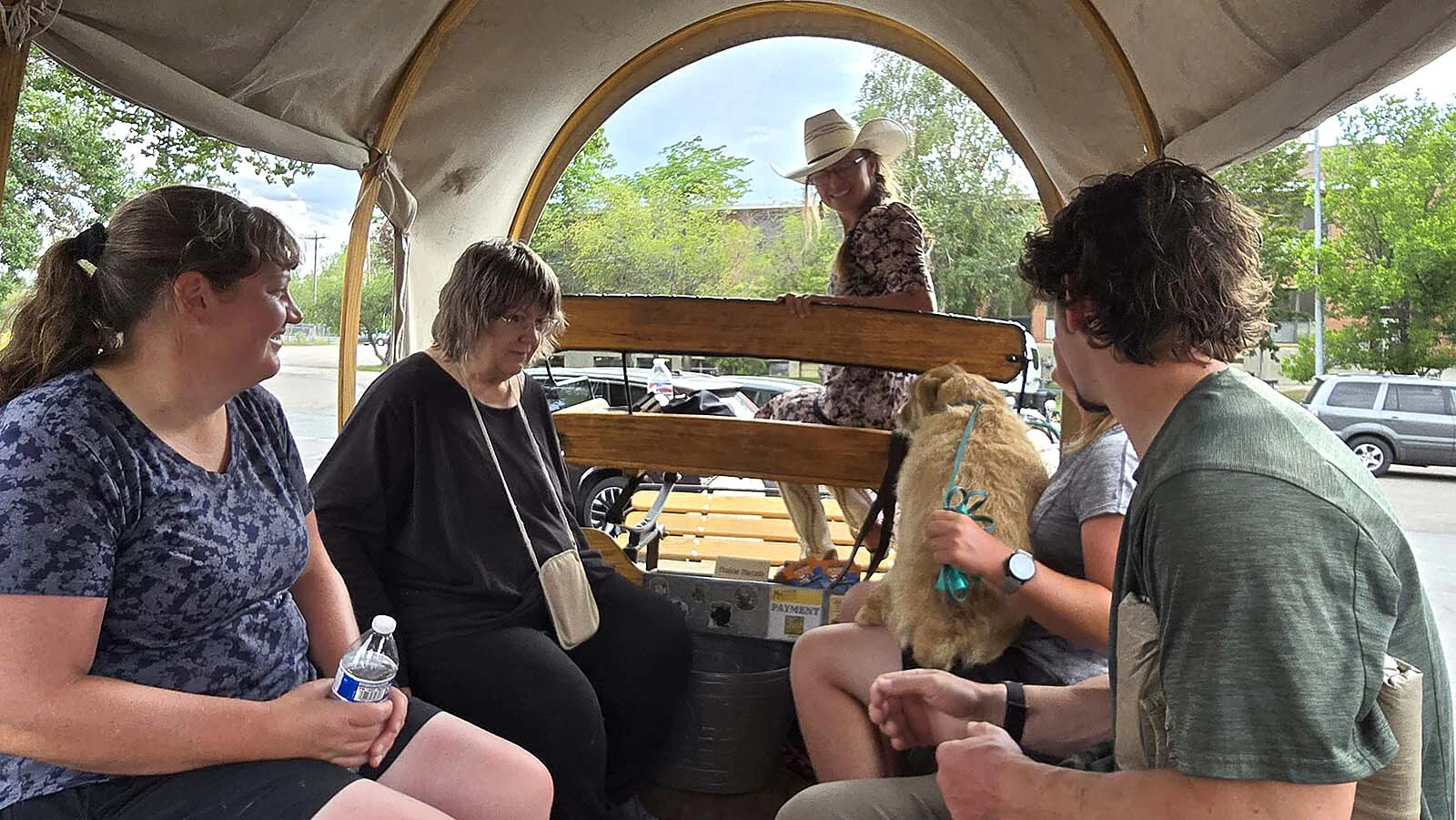
Meeting new people has been her favorite part of the tour, which has included people from all over the world.
“I love bringing people together,” she said. “People are so glued to their phones and screens these days, so it’s nice to see the face-to-face interaction and folks actually talking to each other.”
She also loves how complete strangers entering the wagon leave it as friends, making dinner plans together, and talking about what adventures to have next.
For a woman who once flew down icy chariot-racing tracks with manes and chunks of snow flying, it’s been oddly satisfying to move at a slower pace, knowing she’s created a moving front porch for the community, one where strangers come together over Buffalo’s past and present.
Renée Jean can be reached at renee@cowboystatedaily.com.