

Gov. Gordon recently wrote that Wyoming should “lead, follow, or get out of the way” as artificial intelligence and data centers reshape the nation’s economy.
I agree: Wyoming should lead.
But leadership is not measured by how quickly we say yes.
It is measured by whether we ask the right questions before making decisions our children and grandchildren will live with.
Having data centers in Wyoming and wanting them in the right places are not in conflict.
Wyoming is a great place to do business!
We have abundant energy, available land, a skilled workforce, a favorable tax structure, and a business climate that welcomes investment.
But not every location is the right location.
If we have industrial parks designed for industrial development, why place massive facilities beside existing neighborhoods?
If some areas have fewer conflicts over water, wildlife, agriculture, and residential growth, shouldn’t we start there?
This makes sense.
Unfortunately, asking these questions is sometimes portrayed as opposing progress. I disagree.
Asking questions is what elected officials are supposed to do.
When families ask how a project will affect their neighborhood, water supply, or electric bill, they are not being obstructionists or knuckleheads.
They are asking reasonable questions about decisions that could permanently change the place they call home.
Before approving projects of this size, citizens deserve straight answers.
Can our grid support multiple large data centers without hurting reliability?
Can we guarantee existing ratepayers will not pay for transmission lines, substations, or other improvements?
How much water will these facilities require over the next twenty or thirty years?
Who pays for roads, utilities, emergency services, and other public infrastructure?
How many permanent Wyoming jobs will remain after construction crews leave?
Those are not anti-development questions. They are responsible-government questions, and they point to another reality we should not ignore.
Across America, people have become more skeptical when government asks them to accept major changes with limited information.
The COVID years left many citizens less willing to simply trust official assurances.
They want facts, transparency, and proof that difficult questions are being asked before decisions are made.
That skepticism is growing in Wyoming.
With each new data center announcement, more citizens are asking for time, information, and a meaningful voice in decisions that will affect their communities for decades.
Some question what appears to be instant rezoning for data centers. Others have called for temporary moratoriums so local governments can study cumulative effects and set clear rules before approving more projects.
Citizens tell me they feel something is happening to them rather than with or for them.
They see announcements after plans are already moving. They worry about water, power costs, property values, and industrial-scale development near their homes.
Whether officials agree with every concern or not, those citizens deserve an honest public conversation before decisions are made.
Government should see questions as normal, not inconvenient.
Public confidence is built by showing citizens the information, listening to their concerns, and demonstrating that their voices matter. Transparency will strengthen good projects.
We should also examine what Wyoming receives in return.
Construction jobs are valuable, but construction brings temporary workforces and then ends. How many long-term, high-paying Wyoming jobs will remain after ribbon cuttings and press conferences?
Are we creating lasting opportunities for Wyoming families, or simply providing inexpensive land and energy for companies headquartered elsewhere?
We have long believed government should not pick winners and losers.
We believe in a level playing field, private property rights, and accountability. Those principles should not change simply because a project is measured in billions of dollars instead of millions.
Property rights matter for existing landowners, too.
Families invested in homes or ranches deserve meaningful input before industrial-scale development is placed close by. Listening to citizens is one of the most important parts of public service.
None of this means Wyoming should close the door to new industries.
Let’s welcome data centers, compete with other states, and encourage private investment. But good planning is not anti-growth. It is what makes growth sustainable.
The question is not whether Wyoming should have data centers.
The real questions are where they belong, how many our infrastructure can responsibly support, and whether Wyoming citizens, not just corporations and government budgets, benefit.
Citizens deserve to know if insiders are benefiting from sweetheart land deals while homeowners lose.
Once transmission corridors are built, industrial facilities are operating, and communities are transformed, there is no easy way to go back. We already have operational data centers.
Why the rush to approve so many more? How many can we sustain? What is our goal?
Taking time to ask hard questions is doing our job.
Gov. Gordon challenged Wyoming to lead.
I agree.
Let’s lead by welcoming new industry while placing projects where they have the least impact on families, ranches, wildlife, and existing communities.
Let’s protect ratepayers from subsidizing private infrastructure.
Let’s replace “trust us” with transparency. And before we leap, let’s learn.
That's what leadership looks like.
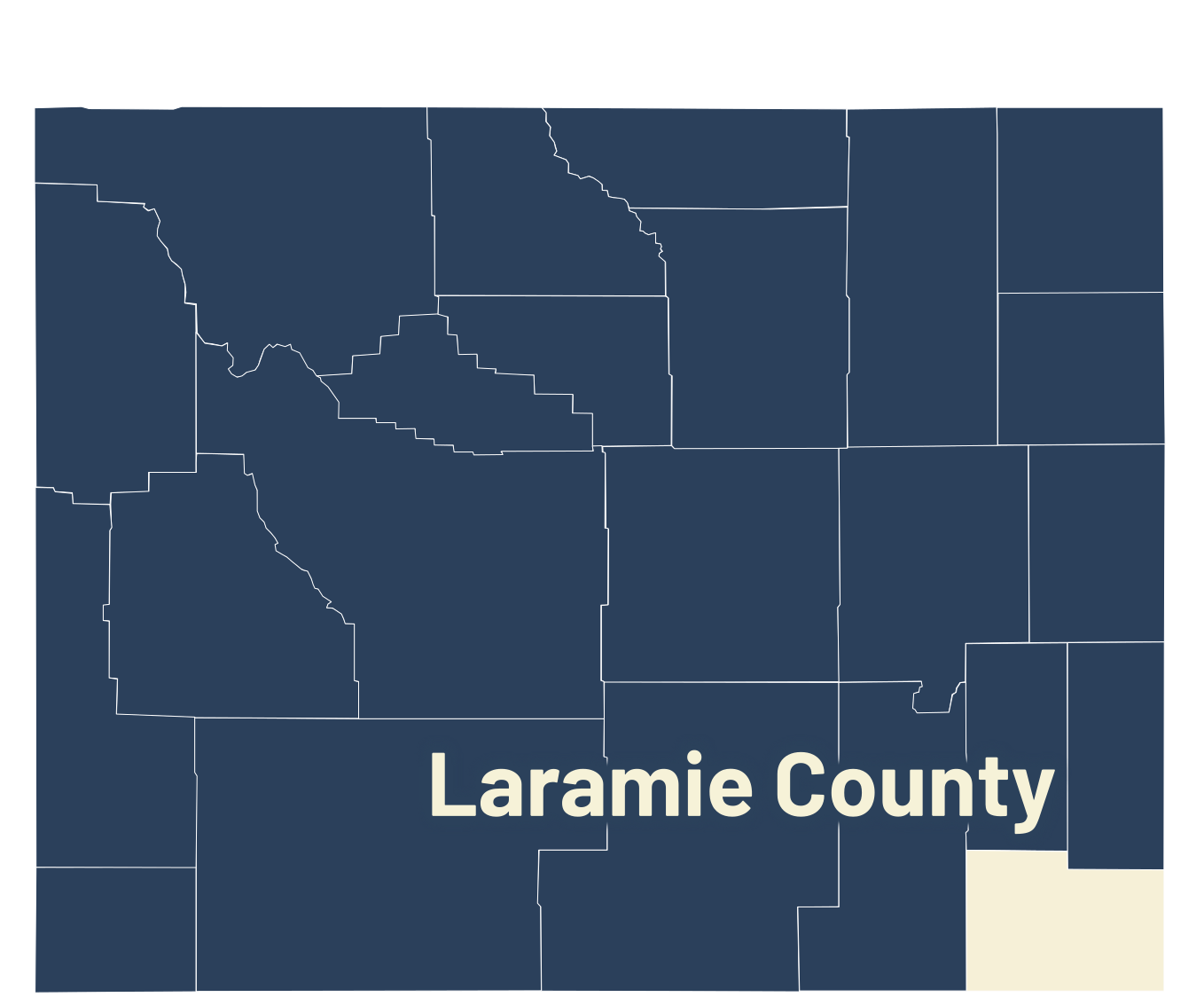
Rep. Ann Lucas, House District 43, lives in Laramie County.


