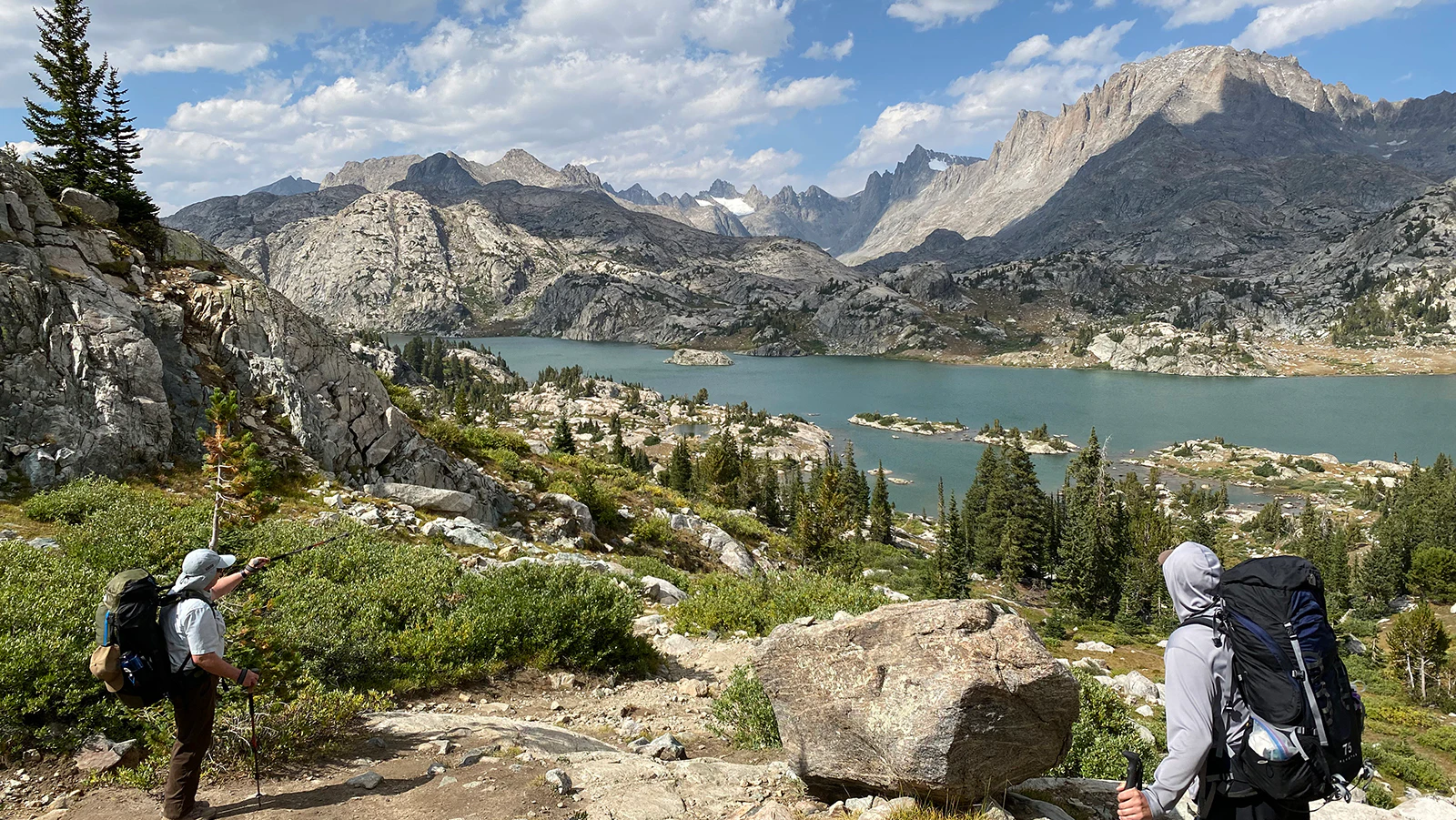
The moment a hiker or biker walks into the Atlantic City Mercantile on a hot July summer day, Carl Freeman can instantly tell which ones are coming in from Wyoming’s Red Desert on the Continental Divide Trail.
“They are so happy to be here,” Freeman told Cowboy State Daily. “There’s no water out there. No trees for a hundred miles.”
Ice cream is a popular choice for the hikers and mountainbikers coming in from the Red Desert. But they’re also buying lots of high-protein, high-calorie foodlike burgers and fries to fuel up for the next leg of the trail. And copious amounts of their favorite fluids.
“It’s put Atlantic City on the map in that community,” Freeman said of those who travel the trail. “We’ve become known. They’ve told us that it’s within their community.
“Apparently, they have some type of apps that they all communicate with.”
On that app, he’s been told there are dozens of reviews advising fellow hikers and bikers, “You’ve got to stop for a burger at the Merc.”
The traffic from that rave review is hit and miss, Freeman said.
But every bit helps a small restaurant located in a community that has roughly 60 people in it.
“We’re also in a book of 1,000 places to see before you die,” Freeman added with a chuckle. “It’s a good customer base. They come through and they’re looking for a lot of fish, a lot of chicken, a lot of liquid. They tank up and then they’re gone.”
Trail Towns Are Lifelines For Hikers, Bikers
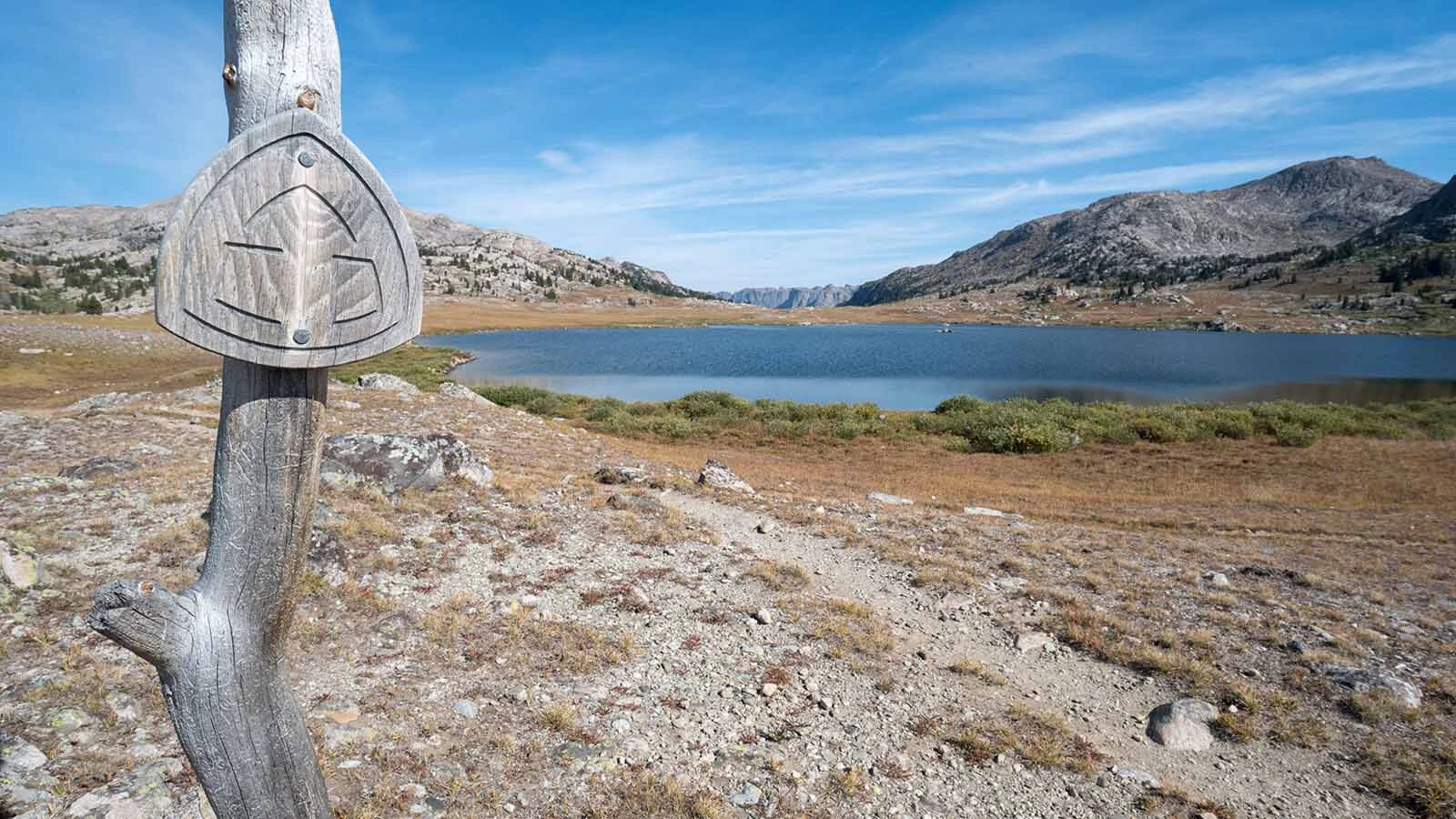
Atlantic City isn’t the only community along the trail’s 510 miles through Wyoming that’s getting a big boost from Continental Divide hikers and bikers.
Farther south, trail towns like Encampment, Riverside, and Rawlins have quietly become lifelines for hikers and mountain bike riders — aka bikepackers — moving along the Continental Divide Trail and the parallel Great Divide bike route.
Long distance hikers will typically spend $8,000 to $9,000 over the course of a through-hike, Wyoming Pathways Executive Director Mike Kusiek told Cowboy State Daily.
A big chunk of that change lands in smaller Wyoming towns, where it’s spent on food, gear, lodging, and the occasional celebratory splurge.
A recent CDT Trail Coalition Survey that included 200 business owners along the entire 3,028-mile trail from the U.S.-Mexico border in New Mexico to the border with Canada in Montana found that 88% of communities along the trail report significant business growth the last five years thanks to the Continental Divide Trail.
And 58% also said the trail had directly grown their businesses.
Kusiek said he's not surprised Atlantic City is seeing the benefits.
“Atlantic City was one of the early adopters for both the cyclists and the hikers,” he said. “They are aggressively marketing for those folks to stop, and they’re accommodating them with lodging, mail delivery, showers, and meals.
"And they really try to go out of their way, too, because some of (the hikers and bikers) are heading into the Red Desert.”
Pinedale and Lander, too, have embraced the Continental Divide trekkers, whether on foot or bicycle.
That welcoming attitude is something Kusiek believes can make a difference for towns along the way.
“When you’re known as a community that endorses the trip, you’re telling the hikers we look forward to you coming to town,” he said. “We’re going to make it easy for you. We’re going to accommodate you.”
Kusiek knows of people who have hitchhiked into town specifically to go to the Wild Iris to buy new shoes and other gear that’s worn out on the trail.
“There’s some pretty neat statistics on how many pairs of shoes the CDT hikers go through,” he said. “They’re going through roughly five to seven pairs of shoes per hiker, and those shoes they’re buying are typically $140 to $180 a pair. So that’s $700 to $1,000 in footwear per hiker.”
The Laundromat That’s Like A Living Room
In Lander, one of the most beloved trail stops isn’t a bar or a gear shop, but a laundromat.
Sophel Thompson’s On Site Laundry has become an unofficial living room for Continental Divide hikers and Great Divide bikepackers rolling through town.
Inside, weary travelers can wash away a week’s worth of trail dust from their clothes, grab a hot shower while they wait, and access WiFi to message family and friends with a beer or a boba tea, as well as finger foods like gyoza or shrimp tempura.
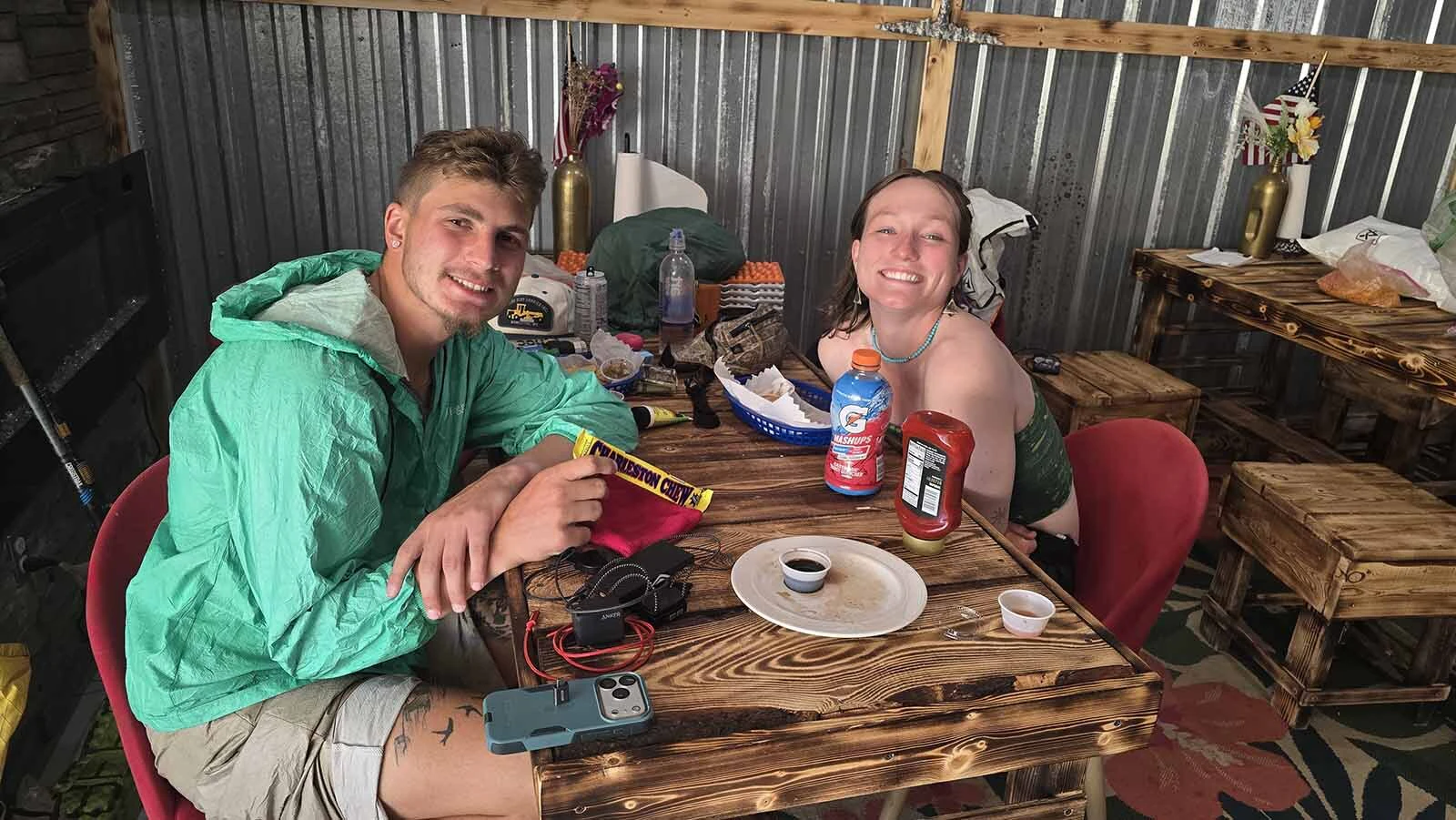
“To have a shower-laundry place is spectacular for us,” Haleigh Swabowicz told Cowboy State Daily as she munched on a plate of chicken fingers and fries.
Swabowicz and her trail friend, Willie Hammond, found the laundromat on an app that lists water sources, good camping sites, and other helpful resources for people doing the Continental Divide Trail.
“I saw quite a few comments about this place,” Swabowicz said. “Because hikers are stinky. We go along time in between laundry and shower. So I was in need of that. And there were a bunch of comments about this place.
"Super convenient. You can get coffee, you can get ice cream, chips and salsa, and also do shower and laundry for a pretty reasonable price, which we love.”
Hammond said it was the first time he’d seen a place like the laundromat, where so many needs are met all in one place.
“Boba, beer, food, sugar — everything,” he said.
“We went to a bunch of laundromats, but it’s just your typical boring laundromat,” Swabowicz added. “This is really cool. We’re having fun hanging out here. The showers were really nice, too.
“Usually, if you’re paying for a shower somewhere it’s kind of gross, but this was clean and there was soap, shampoo and conditioner, and towels. Everything you need.”
Atlantic City didn’t have many resupply options, Hammond added, so that’s one reason the duo decided to skip that town in favor of Lander.
Meet Me Halfway In Rawlins
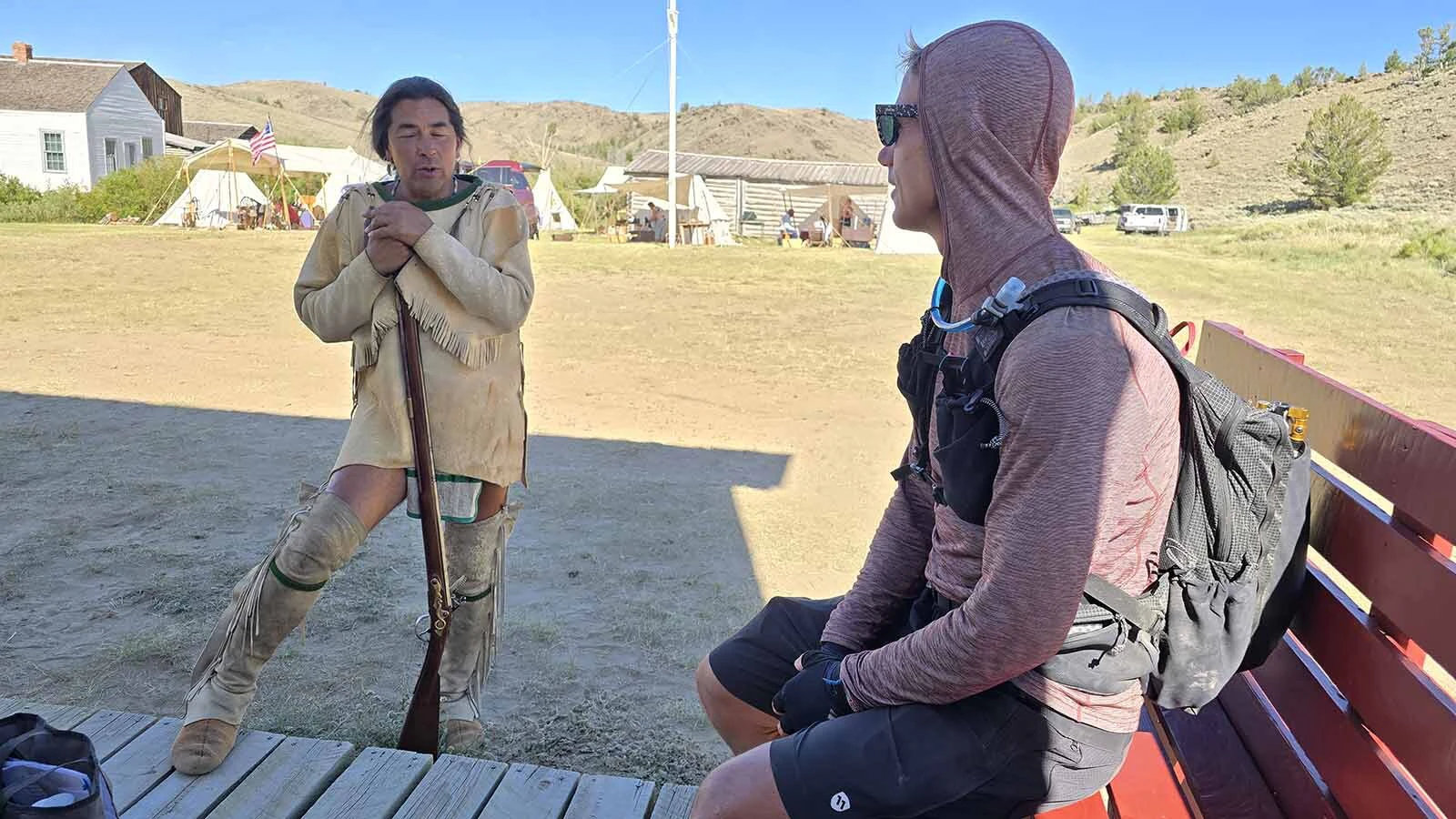
If Atlantic City and Lander show what happens when individual businesses have embraced Divide hikers and bikepackers, Rawlins shows what happens when an entire town does.
Rawlins sits on what local boosters call “the X” — a rare crossroads where the transcontinental rail corridor, the Lincoln Highway, the old transcontinental airmail route, the Continental Divide Trail and the Great Divide Mountain Bike Route all converge in one place.
It’s an incredible intersection of history and recreation, Rawlins tourism officials have previously told Cowboy State Daily. It’s a place where people can follow old rail and highway stories while hikers and cyclists can trace the spine of the continent.
It’s other claim to fame along the trail is that it’s the halfway point, which lends itself to celebration for these adventurers.
“There’s only three towns that the Continental Divide Trail goes through a downtown, and of those three, we are the halfway point,” Rawlins Downtown Development Director Pam Thayer told Cowboy State Daily. “So, it’s a pretty amazing intersection.”
For decades, that fact has been mostly trivia, but Thayer sees a tourism strategy written all over it.
“I remember as a kid going to the Four Corners, which was four states at the same time,” she said. “I had one foot on each, and so this is kind of that same feeling.”
She said she hopes people will be attracted to the quirky nature of standing in a community with so many crossroads and plan to make Rawlins a stop — whether they’re hiking or biking the Continental Divide or passing through on Interstate 80.
A Gift That Keeps on Giving
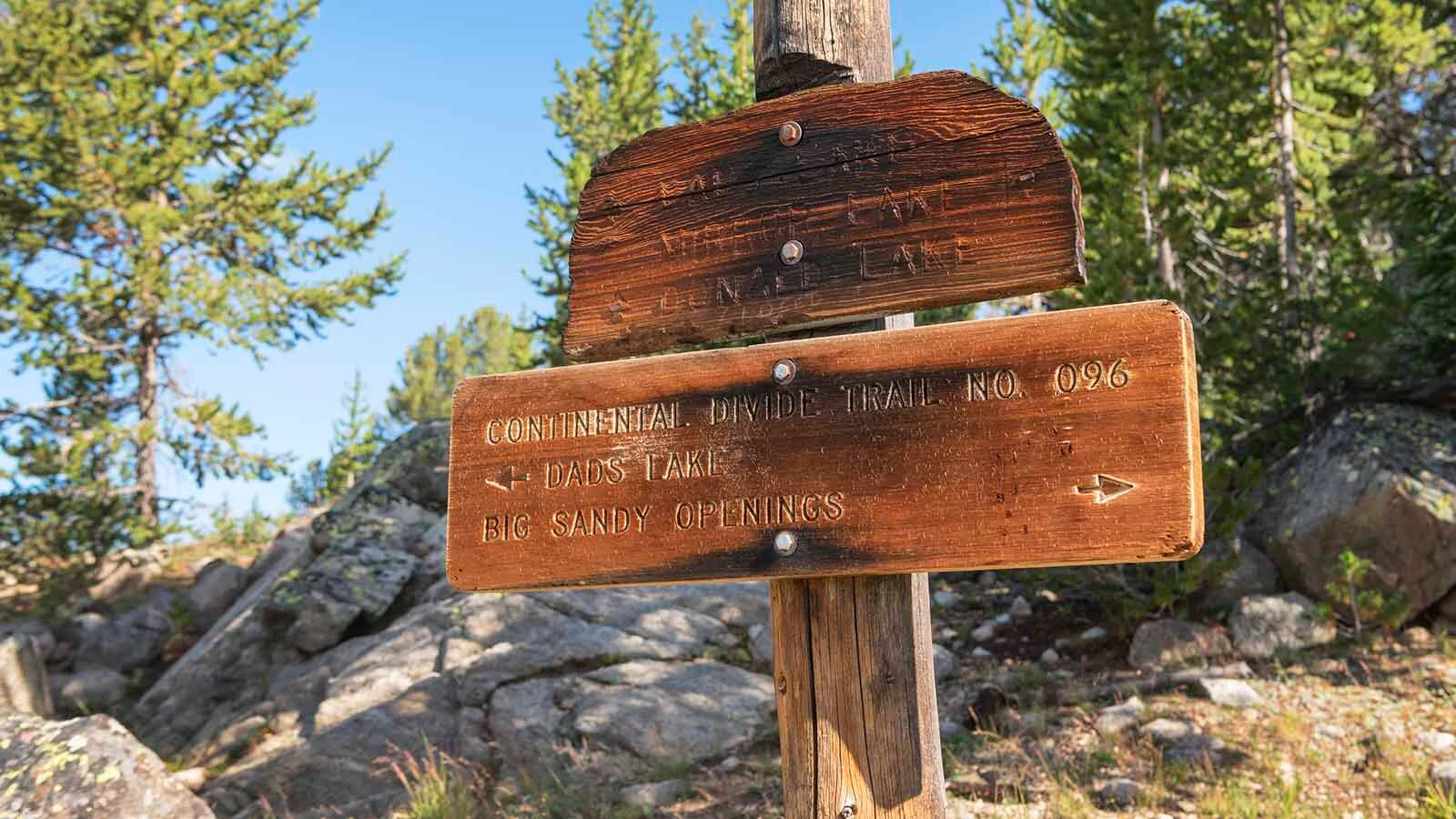
Kusiek sees these kind of efforts, from downtown Rawlins’ planning to Atlatnic City’s burgers and ice cream to Lander’s showers, as pieces of the same larger puzzle.
Gateway communities that have embraced the trail are seeing more benefits than those keeping it at arm’s length. Even relatively modest investments, like Lander allowing free camping in the park, can pay dividends to a community’s businesses.
Trails, Kusiek added, are an investment that gives back for decades without requiring much in the way of expensive maintenance.
“There’s no electricity. There’s no staffing. There’s no infrastructure,” he said. "So, it’s a tremendous investment. The communities that choose to invest in trails build it and pay for it once, and it just keeps bringing people back, year after year, decade after decade.”
Lander’s experience with outdoor recreation, meanwhile, shows how things can snowball.
Over time, climbers drawn to the nearby cliffs in Lander didn’t just visit. They moved there, started restaurants and coffee shops and other small businesses.
Continental Divide hikers and Great Divide bikepackers are a new layer on top of that, and they’re helping to fill tables and barstools.
Some of them might even, at some point, decide Lander’s the place they want to be in the world and build more new businesses.
Slow Travel, Big Spending
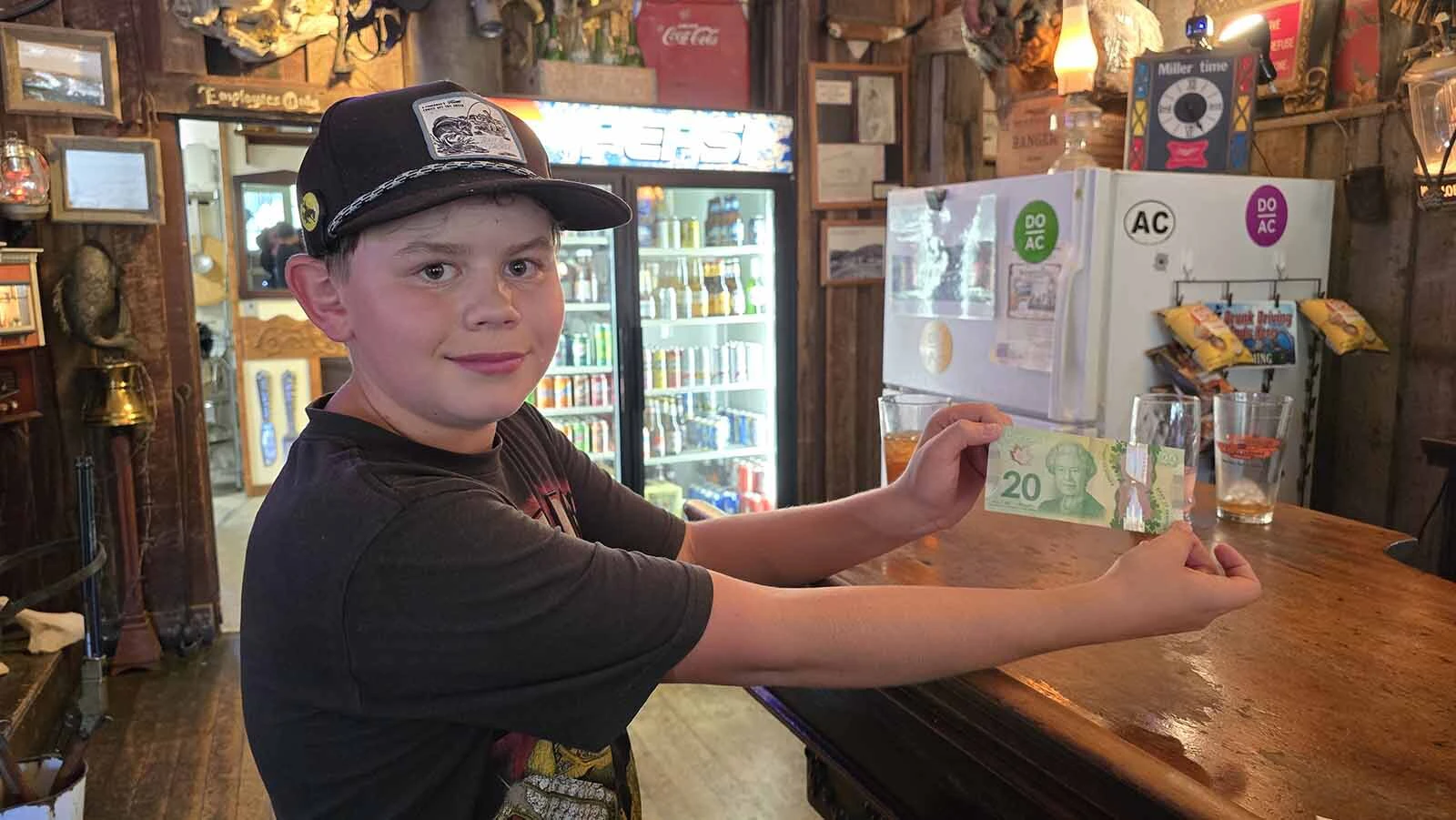
Back in Atlantic City, none of the big-picture economics are on the minds of a hiker or biker whose just left the Red Desert sunburned, dust-caked, and thinking mostly about burgers and ice cream.
“We come hungry,” bikepacker Ryan Van Duzer told Cowboy State Daily. “We burn a lot of calories every day when we’re riding our bikes 75 to 100 miles. And when we get into these towns, we spend a lot of money. We’re buying meals. We’re staying at hotels or campsites.”
Duzer hit the trail on his mountain bike because he loves slow travel.
“You get to see the world in a different way, a slower way,” he said. “You get to interact with the people in a way that’s different when you’re in a car just flying by.
"It’s just a beautiful way to be connected to nature, connected to local communities, and connected to myself.”
Hiker Max Goto stopped for three nights in Lander to spend time with his fiancée, Alexis Gokey. He'son his third long-distance hike after finishing both the Appalachian and Pacific Crest trails.
He told Cowboy State Daily he’ll spend at least $1,000 a month on his trip.
In Encampment, one of his first Wyoming stops, he hit the 307 restaurant for breakfast and lunch, resupplied his food at a local gas station, and camped at a donation-based tent area in town.
In Rawlins, he tried a Thai buffet before pushing on to Atlantic City, South Pass, and Lander.
“I’m already on my fourth pair of shoes,” he said, adding that Lander is where a lot of hikers plan to refresh gear before heading to Pinedale, Dubois, and Yellowstone.
“I went to two outdoor stores here, Wild Iris and then Wind River Range Outdoors,” Goto added. "I was able to get bug protection and I was also able to get bear spray and a food container to bolster my protection against bears.”
He’s got 1,300 miles to go before he reaches the Canada border and the end of the Continental Divide Trail.
“The CDT is rugged and beautiful, but brutal in a lot of ways,” he said. "It’s the least hiked of all three premier national scenic trails, so there’s a lot of isolation and a lot of really rugged wilderness you’re traversing.”
That makes each of the small Wyoming towns along the way huge, both mentally and physically.
“There’s definitely some times you have a conversation with a marmot or a lizard,” he said. “It’s been challenging. I’m not going to sugarcoat that, but it’s been beautiful.”
Contact Renee Jean at renee@cowboystatedaily.com
Renée Jean can be reached at renee@cowboystatedaily.com.