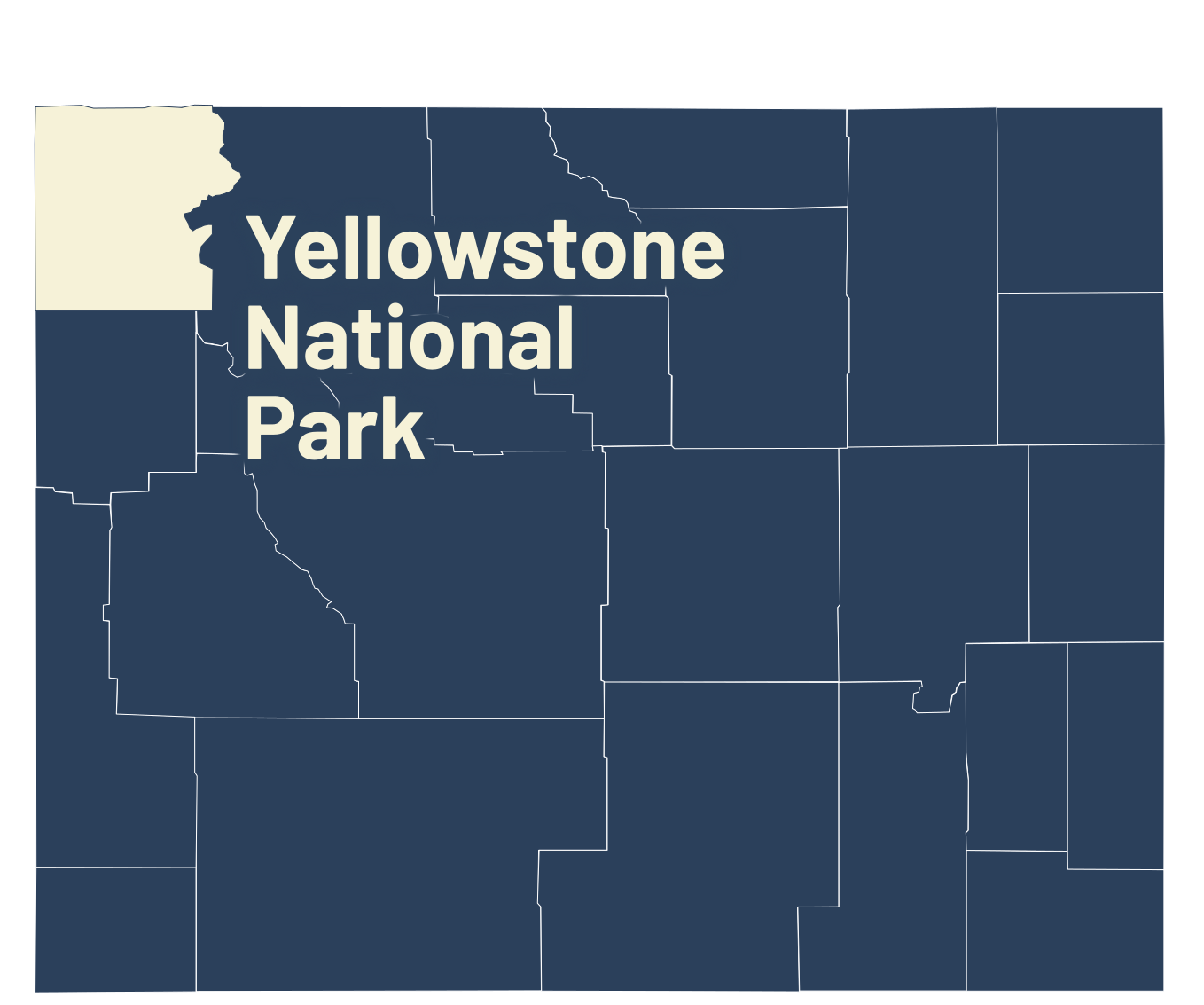
How many wolverines are in Yellowstone National Park?
The National Park Service doesn’t have an easy answer for a census of these super-elusive members of the weasel family.
Neither does biologist Jim Halfpenny, but he does have an estimate based on decades of confirmed evidence — and it’s a lot more than most people think.
The National Park Service reports seven “documented” wolverines in the region from 2006-2009. Halfpenny’s nearly 50 years of research says there are dozens more, at least 31 verified in the last five years and "83 absolute verified wolverines” since 1990.
That was the story Halfpenny shared recently at the historic Range Riders Lodge in Silver Gate, Montana. Dozens of people attended his presentation on what he calls the “elusive, sparse, and downright rare wolverine.”
“Tonight, I’m dealing with verified reports only,” he said. “No matter how much I trust somebody who says they saw a wolverine, that's not counted. This is where I have positive verification.”
Bad PR
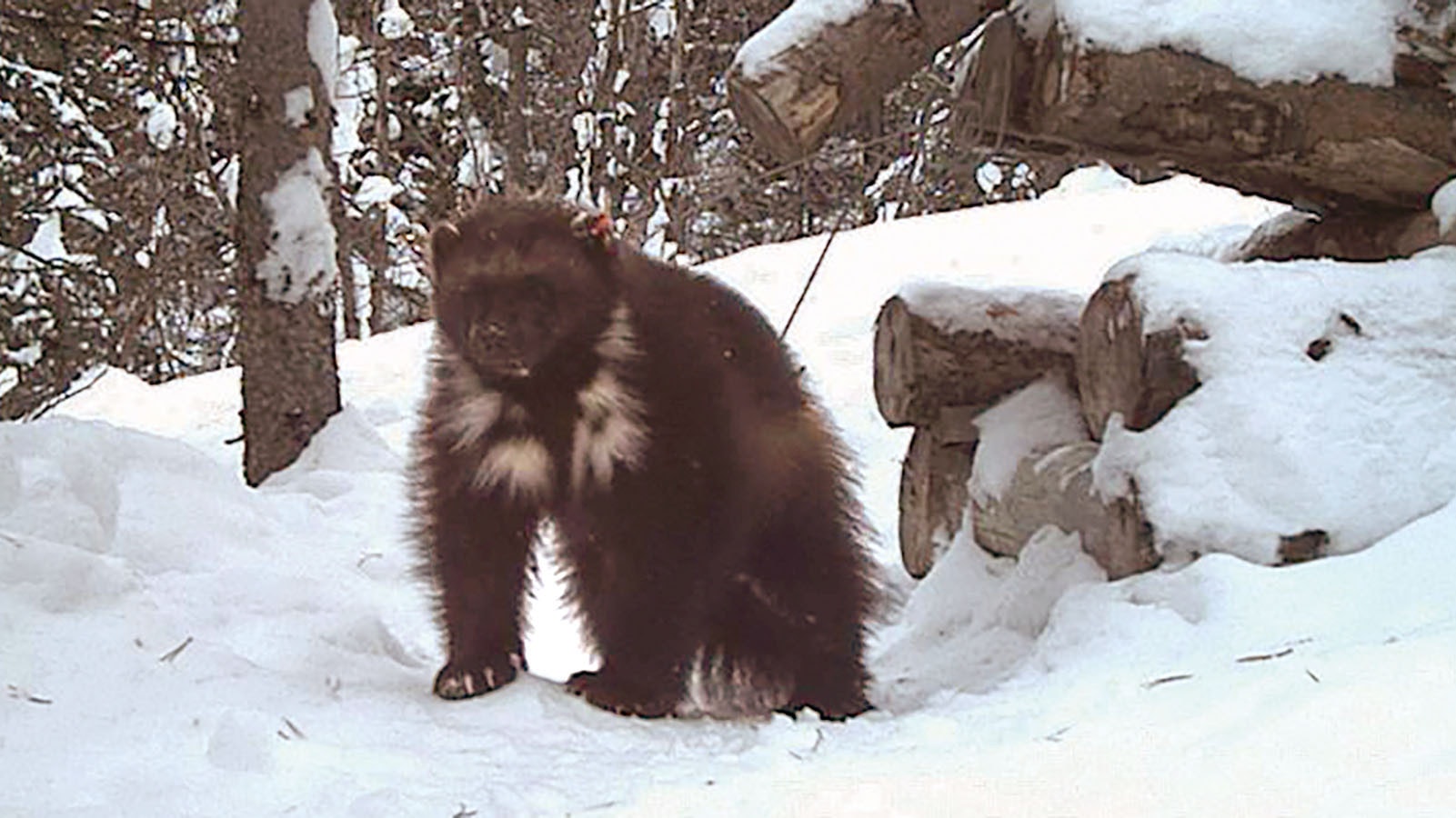
The wolverine, in Halfpenny’s opinion, has a bad reputation through no fault of its own. He’s spent decades reversing their public image by fastidiously learning more about them.
“We're going to talk about the real wolverine,” he said. “The real wolverine is quite a different creature than the stories you probably grew up with.”
The wolverine has been known by many names, among them “the Devil Bear,” “the Glutton,” and “The Evil One.”
Even Peter Krott, a biologist who hand-raised wolverines alongside his own children, titled his 1959 book on wolverines “Demon of the North.”
“I hate to say it, (but) the wolverine is a plain out-and-out victim of bad PR,” Halfpenny said.
Halfpenny has been tracking and studying wolverines in the Greater Yellowstone Ecosystem since 1979. In that time, he said he’s seen the truth about “the curious big weasel.”
“Dave Need and I picked up a grant for $80,000, which was a lot of money then, for three years of chasing lynx and wolverine,” he said. “That was the start of the wolverine hair snagging for the United States.”
Fact And Fiction
Wolverines have long been depicted as almost mythical creatures.
The earliest accounts from North American explorers depict them as fearless, vicious, and ill-tempered animals that battle bears and eviscerate anything in their path.
Halfpenny has always been focused on verification. When it comes to understanding the truth of the wolverine, everything else is pointless.
“There's two basic eras of wolverine knowledge: the natural history books and things that we read there, and the modern science,” he said.
The natural history books say a wolverine could grow up to 80 pounds. Modern science, in the form of over 700 in-the-field weighings of wild wolverines in North America, reached a much more conservative conclusion.
“The largest weight ever is 37 pounds,” Halfpenny said. “A male might hit 35, but the average weight is around 30 pounds.”
Natural history says a fully grown wolverine could be more than 6 feet long. Modern science hasn’t found a wolverine larger than 3 feet long.
Halfpenny has seen wolverines interact with grizzlies but never engage them in combat. If anything, wolverines are extremely deferential to their much larger neighbors.
Wolverines were also nearly hunted to extinction.
In fact, Halfpenny believes they might have been extinct in Montana by 1920, partly due to the National Park Service's early archaic anti-predator policies.
“If you read the Yellowstone superintendent’s report from 1877, which really irritates me, it says, ‘strychnine poisoning for wolves and wolverine habitats will go on in Yellowstone.’ That was the period of massive predator slaughter in the ecosystem,” he said.
Halfpenny asked his audience to make a mental note that a wolverine had been spotted in the southeast corner of Yellowstone in 1871.
“Put that in your memory,” he said. “We’re going to come back to it.”
Rocky Mountain Reunion
Halfpenny’s story of wolverines was simultaneously a story of how technology changed the dynamic of wildlife conservation in the Greater Yellowstone Ecosystem.
When he started studying wolverines, the first method of verification was to physically trap the elusive animals.
“We had a 12-foot-square cage with a noose inside,” he said. “We grabbed the back legs, laid them in the center of a tarp, and rolled them up like a hot dog.”
He had a special guest on his earliest trapping projects: singer, songwriter, and actor John Denver, who chronicled the adventure in the 1978 television movie “John Denver’s Rocky Mountain Reunion.”
“John pitched in just like everybody else and worked his tail end off to do that,” Halfpenny said. “It was great to be working with him.”
In one scene, Denver is carrying one end of a wolverine cage with a wolverine inside through a blizzard in the mountains. Halfpenny noted the peculiar way Denver was walking that had nothing to do with the deep, blowing snow.
“If you look at the end (of the cage), that opening's big enough for a wolverine paw to come through and get a piece of John's ass, to put it one way,” he said.
Science Marches On
As Halfpenny continued trapping, other scientists were undertaking the first modern studies of wolverines in North America.
The next big advancement was radio-collaring, started by Howard Hayes in northwest Montana.
Then in the 1980s, Halfpenny became acquainted with CyberTracker. It was a handheld computer program developed by Louis Liebenberg to track and study wild animals in South Africa.
“He developed a picture-icon system for PDAs,” Halfpenny said. “It was a way to manage wildlife without a budget.”
When the Wildlife Conservation Society started trapping wolverines in the 1990s, they introduced implanted trackers and DNA sampling.
“By grabbing DNA samples, we could start looking at the populations,” Halfpenny said. “With radio collars and CyberTracker, we could create a map and gather years of behavioral studies.
Then in the 2000s, biologists had the money for helicopter surveys.
These individual studies pooled their knowledge and assembled the first comprehensive analysis of wolverine diversity and distribution in the Greater Yellowstone Ecosystem, he said.
Halfpenny had an unlikely ally in his endeavors.
He regularly worked with commercial fur trackers, who diligently informed him when they trapped a wolverine and allowed him to see, study, and measure the specimen for first-hand verification.
“The trappers always provided us with locations and DNA,” he said.
That’s why he categorized the classification and federal protection of the wolverine as a threatened species under the Endangered Species Act in 2023 as “a trade-off.”
“That seems like it might be good for the wolverine, but it's poor for our knowledge,” he said. “It depends on which side of the coin you want to take.”
Family Inheritance
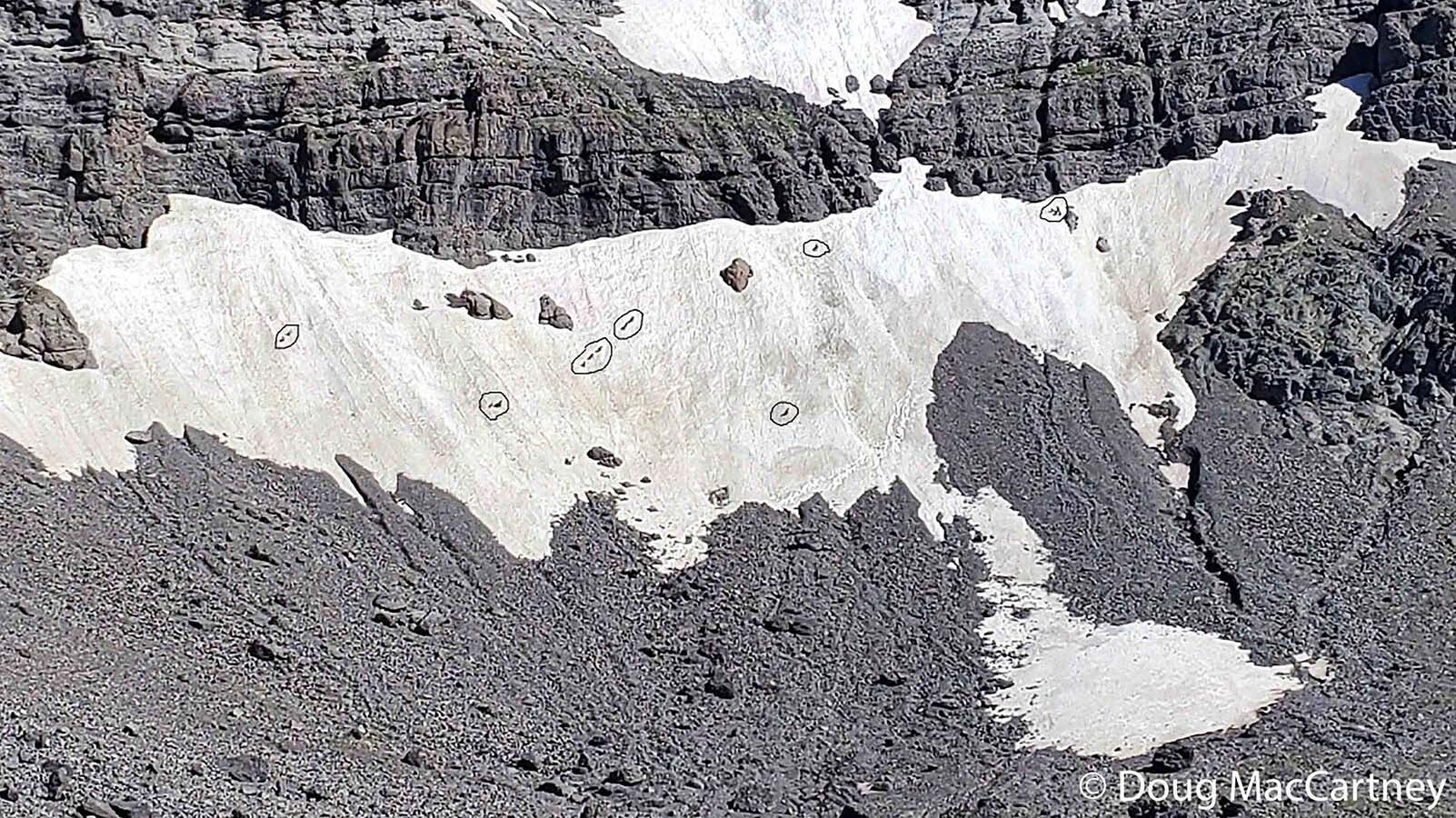
In August 2022, biologists Doug McCartney, Steve Moore, and Bill Turner were hiking in the mountains in the southeast corner of Yellowstone.
That’s when they saw something incredible: 13 wolverines in the same snow-covered bowl.
Halfpenny said this sighting has been “highly disputed.” After extensive forensic analysis of McCartney’s photos, pixel-by-pixel in Gaia GPS and Photoshop, he feels he has verified 12 of the 13 wolverines.
“I can’t find the 13th one,” he said.
He could even verify that the wolverines in the photos were two adult males, three adult females, and two other adults, with the rest being younger individuals.
With no carcass in the area, Halfpenny has an incredible theory: family inheritance.
“I think one of those was an adult female with an adult male,” he said. “The other two females were daughters, each of whom had their two (offspring), and one was mated with the second adult male.”
As evidence, Halfpenny cited the sighting of a wolverine in the same area in 1871.
“This is favorable habitat,” he said. “I can’t prove it, but I'm arguing this is a family unit that's taken over that area.”
So, How Many?
Then there’s the debate over just how many wolverines are in Yellowstone.
The “old park estimate,” according to Halfpenny, was six individuals. After decades of research and verifiable evidence, Halfpenny says the actual number is “much higher.”
However, that doesn’t make it any easier to give a hard number.
“Yellowstone is 3,400 square miles, and the ecosystem is 23,000 square miles,” he said. “You want me to tell you how many secretive, elusive, 3-foot-long creatures there are in that area? Yeah, thanks.”
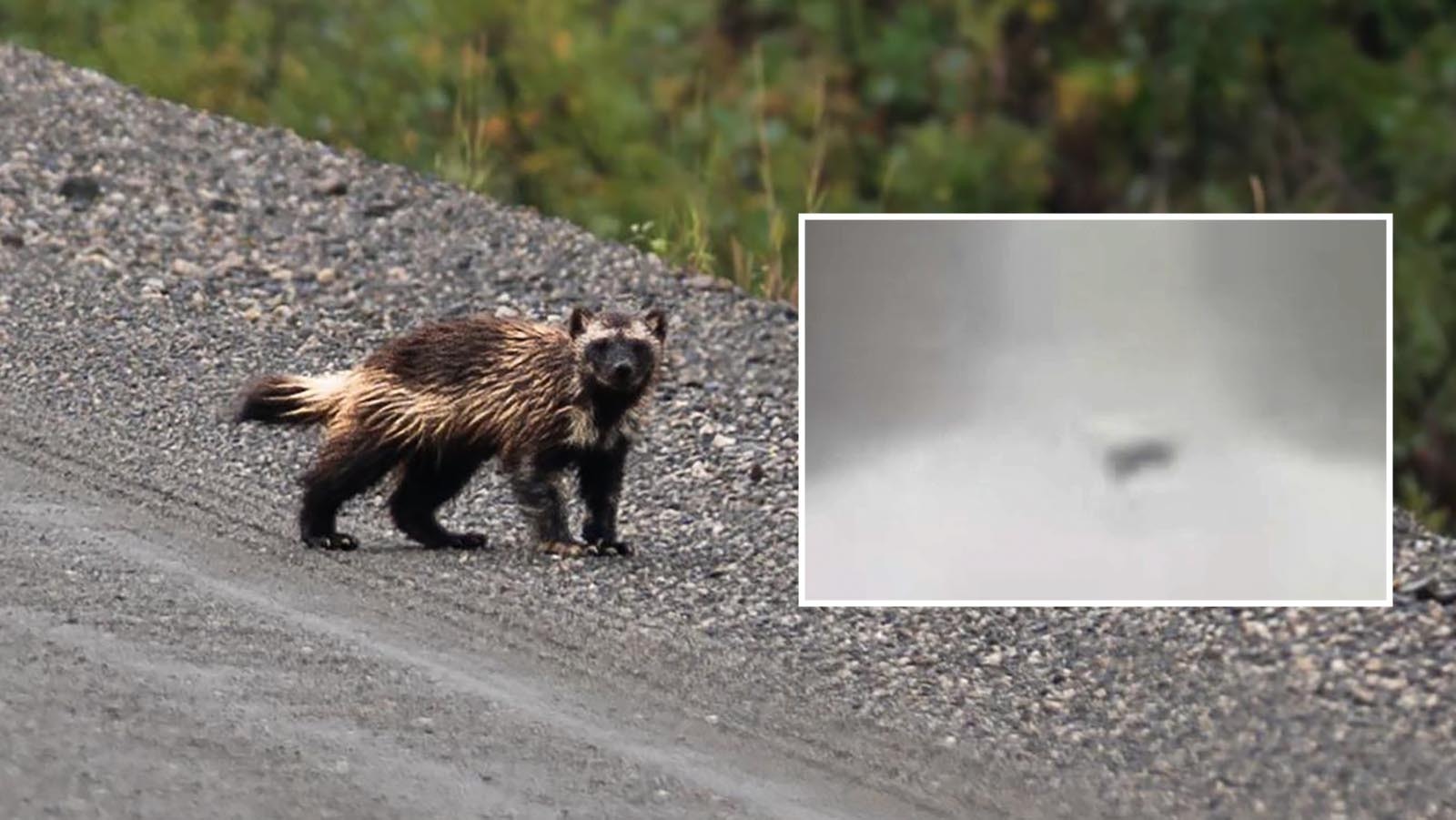
Nonetheless, Halfpenny has a number: 83 verified wolverines between 1990 and 2026, and at least 31 individuals verified in Yellowstone in the last five years.
“No question,” he said. “I have the evidence. I have 83 absolute verified wolverines.”
Halfpenny is so confident in his estimate because he and his colleagues are able to identify wolverines individually based on their appearance.
Everything from a wolverine’s ears, cheeks, and tail to its movement and coloration can be ascribed to an individual known from photos, trail cams, or DNA analysis.
That’s led Halfpenny to believe, with “no question,” that Yellowstone’s wolverine population is increasing, all based on verifiable evidence.
“If we sit down and look over the years at the number of positive verifications, starting back in 2015, what you see is the numbers increasing,” he said. “It’s more than just cellphones. A lot of these we had in hand, either dead, collared, or anesthetized.”
'Shoot, Shoot, Shoot'
Over time, Halfpenny and his colleagues have developed an understanding of the biology, ecology, and geographic range of wolverines, leading to a better assessment of their population health and conservation status.
Nobody’s trapping or radio-collaring wolverines anymore, and CyberTracker has been obsolete for decades, he said.
The key to the scientific verification of wolverine verification in Yellowstone is in the hands of citizen scientists.
As smartphones became more widespread in the late 2000s, the number of wolverine sightings in Yellowstone increased.
Halfpenny has used amateur photographers of wolverines to build his scientific case for the growing population of wolverines.
“These excellent photos and videos have characteristics we can recognize,” he said.
Yellowstone visitors don’t have to venture too long before having a chance sighting of bison, elk, grizzlies, or wolves without leaving their vehicle.
If they want a guaranteed sighting of these animals, there are certain hotspots where they have a higher chance.
“Where can I find a wolverine in Yellowstone? They are where they find you,” Halfpenny said.
On a practical level, wolverines seem to favor the northeast and southeast corners of the park, as it appears to be their ideal habitat.
It’s much easier to find wolverine tracks, especially in the snow. That’s why Halfpenny says every Yellowstone visitor should carry a 6-inch ruler with them.
“(If) you find a track, get a ruler in there,” he said. “Don't put a hand. Don't put a foot. Don't put a $1 bill. We need something solid with exact measurements. Even a comb or a pen is better. Hands don’t count.”
Regardless, Halfpenny wants any and all photos and videos of wolverines in the Greater Yellowstone Ecosystem.
That, he said, is the next chapter of “the wolverine story” and why he encouraged anyone with a smartphone or camera to “shoot, shoot, shoot.”
“We need positive evidence of wolverines, and all the reports I've talked about tonight come from positive, verified evidence,” he said. “Photos are cheap. Electrons are cheap. So, shoot, shoot, shoot and send (your photos) to me.”
Andrew Rossi can be reached at arossi@cowboystatedaily.com.