
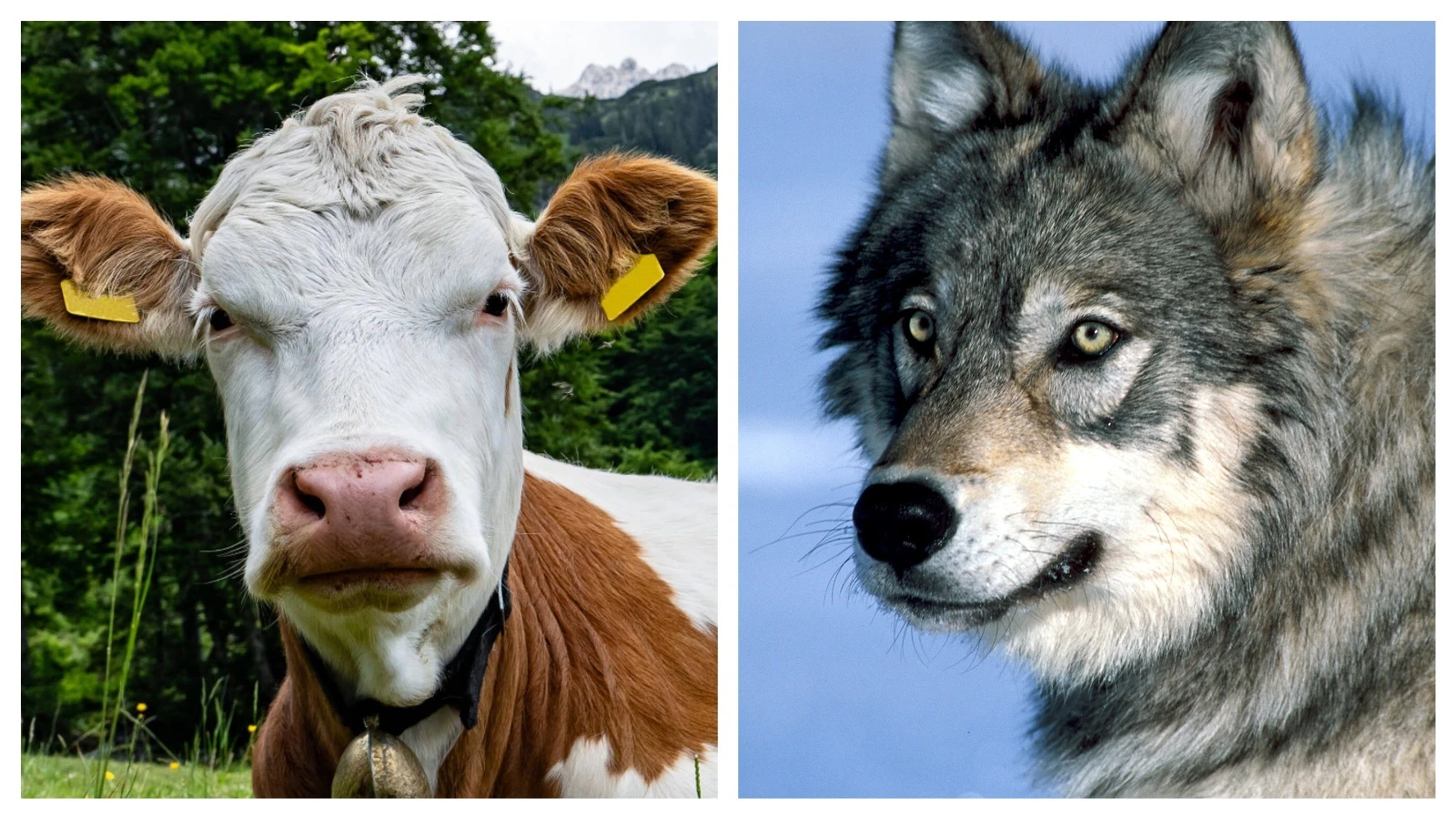
A study of levels of the stress hormone cortisol in cattle exposed to wolves in California suggest that just having wolves around stresses the cows.
Ranchers in Wyoming and California told Cowboy State Daily that the study’s apparent findings don't reveal anything that they didn’t already know.
And, they said, it bolsters ranchers’ longstanding argument that the cost to them of having wolves around goes well beyond just the price of the cows the predators kill.
The study, published in Ecology And Evolution found that cortisol levels in hair samples from cows indicate that cattle exposed to wolves experienced different levels of seasonal cortisol fluctuation, compared to those not exposed to wolves.
“Our study provides the first evidence of disrupted cortisol regulation in beef cattle exposed to gray wolf presence, measured through hair cortisol analysis. Our preliminary findings reveal important research gaps for understanding predator reintroduction ecology,” according to the authors.
“These preliminary results point toward a potential physiological mechanism by which predator reintroduction may indirectly affect prey, with implications for understanding how recovering carnivores could influence prey physiology, animal welfare, and productivity,” the authors stated.
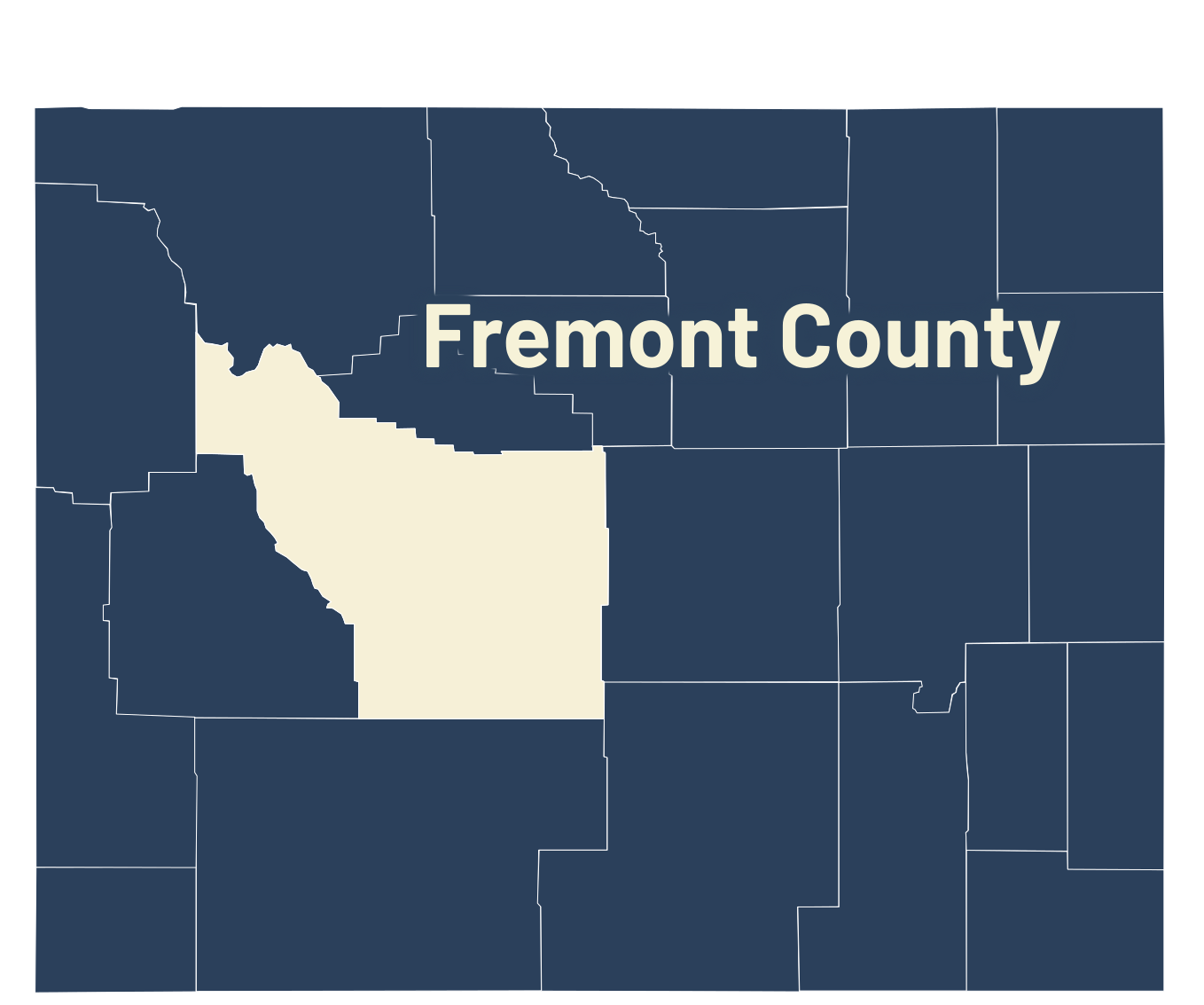
All that is a fancy way of saying that having wolves around can cause fear to ripple through a cattle herd, said Mitch Benson, who ranches near the Wind River Indian Reservation.
“I think it took somebody with credentials to draft a story,” for the matter to gain attention, said Benson, who has seen the study.
“We ranchers have known about this for years. Why do you think our great-great grandfathers eradicated them (wolves)?” he said.
‘In La-La Land’
Ranchers in Sierra County, in northeast California, admonished state wildlife officials last spring that they were “under siege” by a wolf pack that had settled there and started attacking cattle.
Wolves had been gone from California for about a century when they started drifting in from Oregon on their own in 2011.
The state now has several established wolf packs. Another recent study, apart from the one done on cattle cortisol levels, suggests that California wolves have been feeding mostly on cattle.
Paul Roen is a county official and rancher in Sierra County.
During a telephone interview with Cowboy State Daily on Thursday, he said that while the wolf pack was there, ranchers reported 160 attacks on cattle, 94 of which were confirmed to be wolf kills.
Unlike ranchers in Wyoming, California ranchers aren’t allowed to shoot wolves.
State wildlife agents last fall killed four of the eight wolves thought to be there.
“The killing of cattle stopped immediately. That night,” Roen said.
“Anybody who says that lethal removal (of wolves) is not part of the solution is in la-la land,” he said.
The surviving wolves fled when the four were killed. But at least one of them might have returned and started attacking cattle again, Roen added.
California had a fund to compensate ranchers for cattle killed by wolves, but it was drained in “about 45 days,” he said.
And the compensation payments never took into account the full scope of losses to ranchers, Roen said.
That includes such things as cattle losing weight or having gestation and birthing problems with calves, he said.
“The direct losses (to wolf kills) are the most insignificant effects that can be felt by ranchers,” Roen said.
He said that the stress study “is verifying exactly what we’ve been saying” about the wider effects of wolves on cattle.
Roen added that “we are in the midst of another study,” this time in his county, that aims to tally the cumulative effects that the wolf pack had on cattle herds there.
Pinpointing An Explanation
Jim Magagna, a sheep rancher and executive vice president of the Wyoming Stock Growers Association agreed that the California cow stress studies are confirming what ranchers already knew.
“Certainly, there has always been evidence that the presence of wolves affects weight gains and birth rates in livestock,” he said.
“I think the (cortisol) study is helpful, because it helps pinpoint a cause” for the effects that ranchers see, Magagna added.
Benson said that as he sees it, the return of predators is part of larger “rewilding” agenda, that aims to push ranchers off the land.
“You start taking a 35% loss because of stress from predators, and I don’t think there are many guys who can maintain the profitability of the herd,” he said.
And when ranchers fold, “who comes along and buys the land?” he added.
Mark Heinz can be reached at mark@cowboystatedaily.com.


