
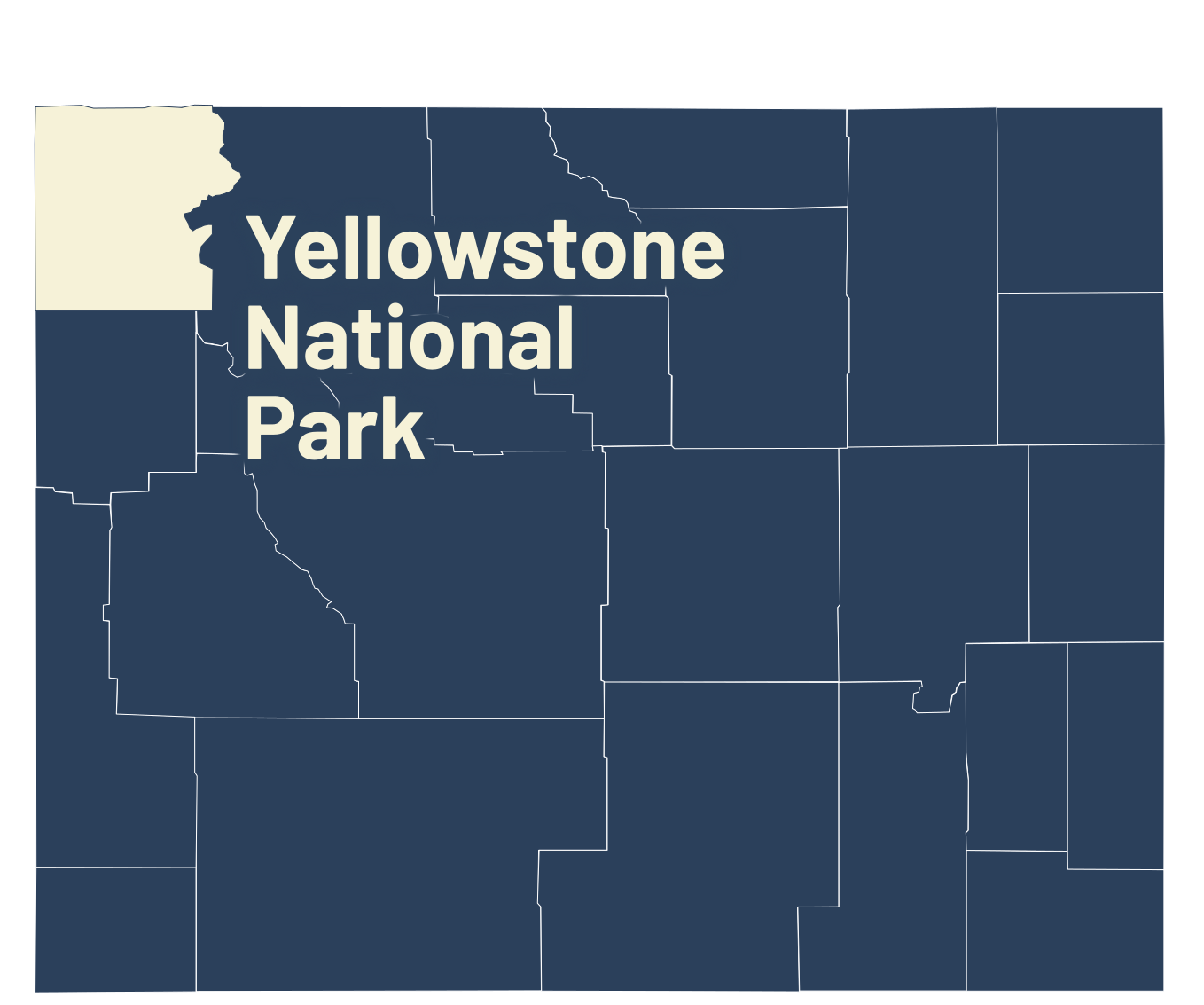
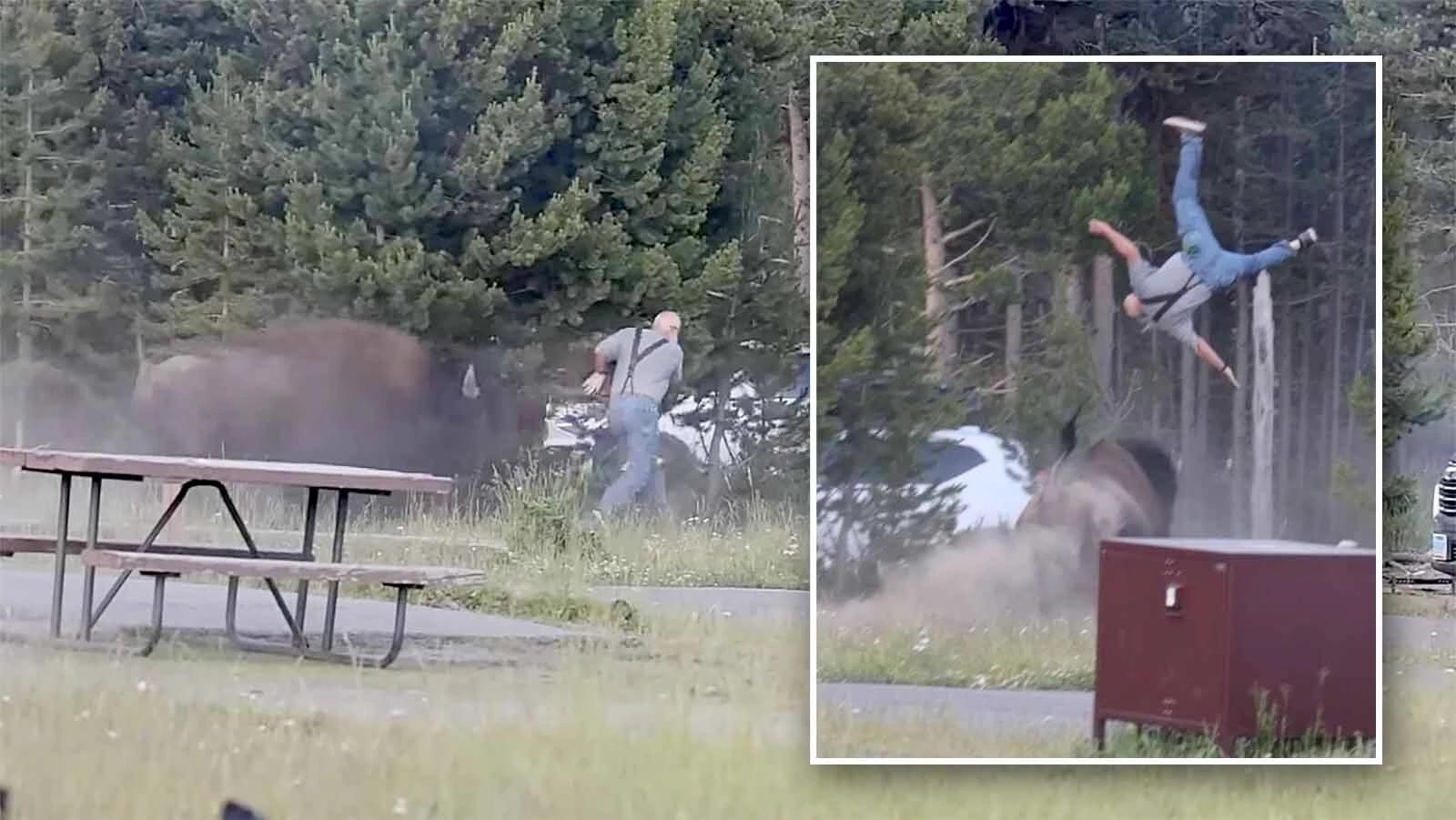
Yellowstone National Park will spare the life of the bison that tossed and seriously hurt Washington state resident Carl Isom-McDaniel, 65, at the Bridge Bay Campground on Friday.
Park officials said in a statement to TMZ that “no management action” will be taken against the bull bison that tossed McDaniel 8 feet into the air during an aggressive rampage through the campground.
That means the bison won’t be relocated or euthanized. It will live the rest of its natural life safely inside Yellowstone.
Yellowstone officials didn’t respond to multiple Cowboy State Daily requests to confirm TMZ’s report.
As a practice, Yellowstone officials rarely take management action against wildlife that injures visitors unless the offending animal shows signs of habituated behavior. The actions of wildlife are often seen as natural responses rather than deliberate acts of aggression.
Even grizzlies that attack and seriously injure park guests usually get off the hook, so long as the attack was determined to be a natural behavior, like defending cubs or a food source.
Identifying just which bison tossed the Washington man also could be extremely difficult after the fact.
Both McDaniel and the bison have been under scrutiny for their actions during the encounter. While Yellowstone is giving the bison a pass, many people are acknowledging that McDaniel wasn’t at fault, either.
McDaniel supports the decision to not euthanize the bison, expressing his desire that the bison not be penalized or euthanized for injuring him.
“(The bison) was right on top of me,” he told CNN. “He could have stomped on me. He could have gored me. He could have done almost anything to take my life, but he did not do so.”
Reading The Bison Book
Ecologist and bison expert George Wuerthner reviewed the video of McDaniel’s encounter with the bison. Based on the bison’s behavior during and leading up to the toss, he commended McDaniel for how he handled the encounter.
“He couldn’t have done much to prevent that charge,” he told Cowboy State Daily. “I don’t know if I would have done any better.”
Bison, like many animals, have recognizable behavioral patterns that indicate their moods. Experienced biologists and photographers can, essentially, read a bison’s mind by analyzing its body language and movements.
In this instance, the bull bison’s behavior was easy to read.
It was highly agitated and looking for a fight before McDaniel and his 13-year-old grandson were even in its line of sight.
“If you notice, the bull had its tail up in the air,” Wuerthner said. “That indicates that it was very agitated. It’s a behavior that bison do with other bison, and the other bison know what it means.”
What agitated the bison? People have speculated about everything from the movements of a white pickup driving by to being teased by other tourists before charging and tossing McDaniel.
Wuerthner has a simpler, more natural explanation. Heat, environmentally and biologically.
“The rut is on,” he said. “When bull bison are going through the rut, their hormones are going, and they’re much more agitated in general.”
According to the National Park Service, Yellowstone’s bison reach the peak of the rut in July and August. During that time, males display their dominance by bellowing, wallowing, and picking fights with other bulls that occasionally turn lethal.
This aggression is driven by hormones and instinct. The dominant males get to mate with the most females.
Mike MacLeod, the photographer who filmed McDaniel’s encounter with the bison, also understands bison behavior. He said the incident he observed was “weird.”
“If you've been around bison for a while, you know what to expect from these guys at this time of year,” he said. “This changed my idea of what to expect, because I would not have predicted that happening.”
In this heightened state, it doesn’t take much to provoke the wrath of a bull bison. Sometimes, it takes nothing at all.
However, MacLeod knew McDaniel wouldn't want the bison to suffer for its actions.
"He didn’t want the bison killed,” he said. “Sometimes, they put animals down for these things, for animals being themselves, and Carl didn’t want that.”
What To Do Differently?
After viewing the video captured by MacLeod, Wuerthner doesn’t fault McDaniel for anything he did to avoid serious injury, even if it ended with him being seriously injured.
“He was right trying to get into that little grove of trees,” he said. “He probably wasn't thinking this way at the time, but I would have tried to climb one of those trees to prevent the bison from getting to him.”
A possible alternative might have been getting into one of the nearby vehicles in the Bridge Bay Campground. However, people don’t instinctively jump into a stranger’s vehicle, even when making life-or-death, on-the-spot decisions.
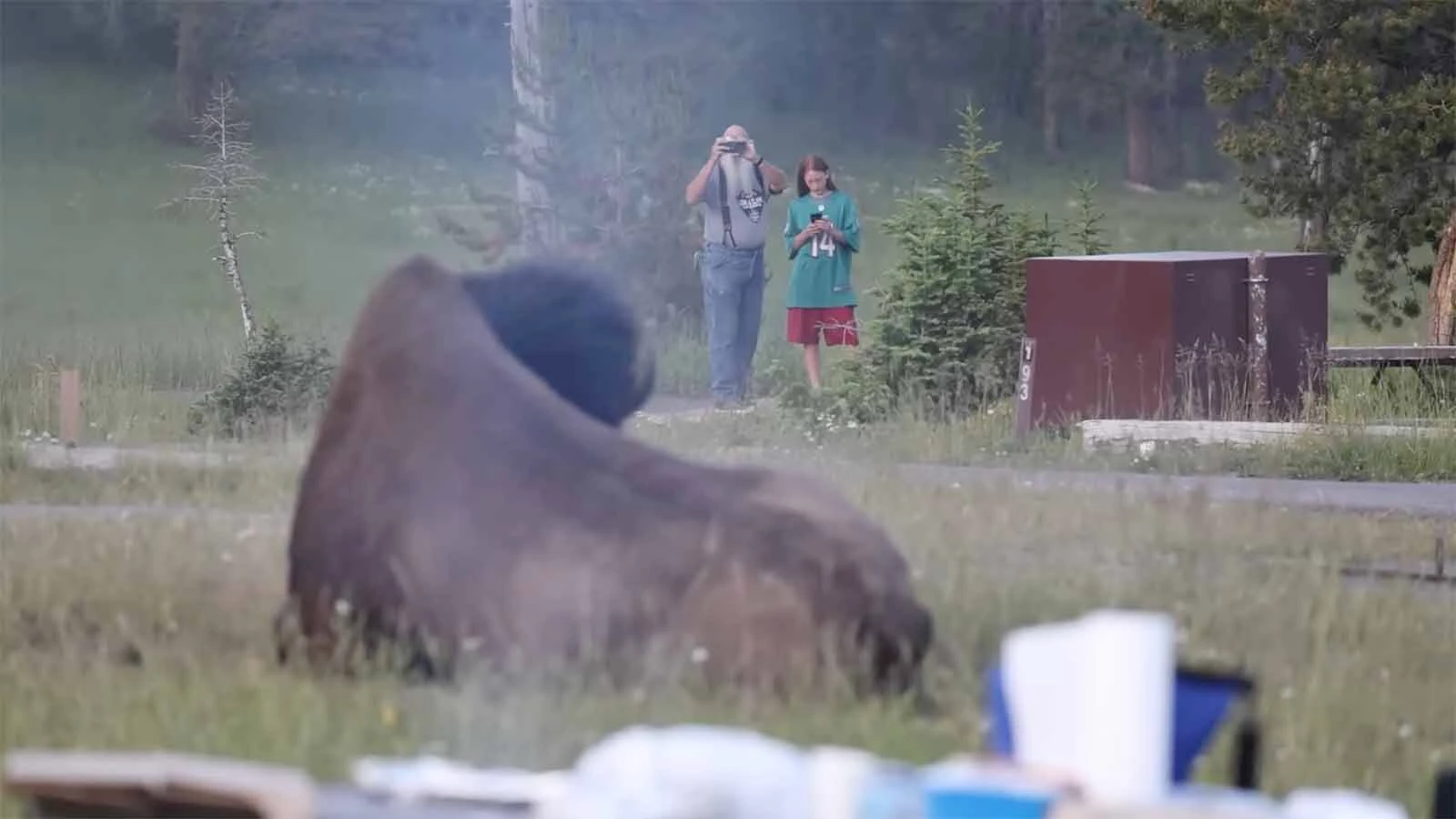
Many people have said that McDaniel was too close to the bison, and that prompted the attack.
MacLeod has repeatedly denied this, saying McDaniel and his grandson were far beyond the 25-yard minimum Yellowstone asks people to keep between themselves and bison, elk, and other large herbivores.
Wuerthner agreed, while adding that the distance wouldn’t have made much difference.
“Bison are incredibly fast,” he said, adding that, “25 yards is a safe distance, but that doesn’t mean it’s completely safe. Even bears are happy to come up to people and quickly cross 100 yards if there’s some reason they might want to.”
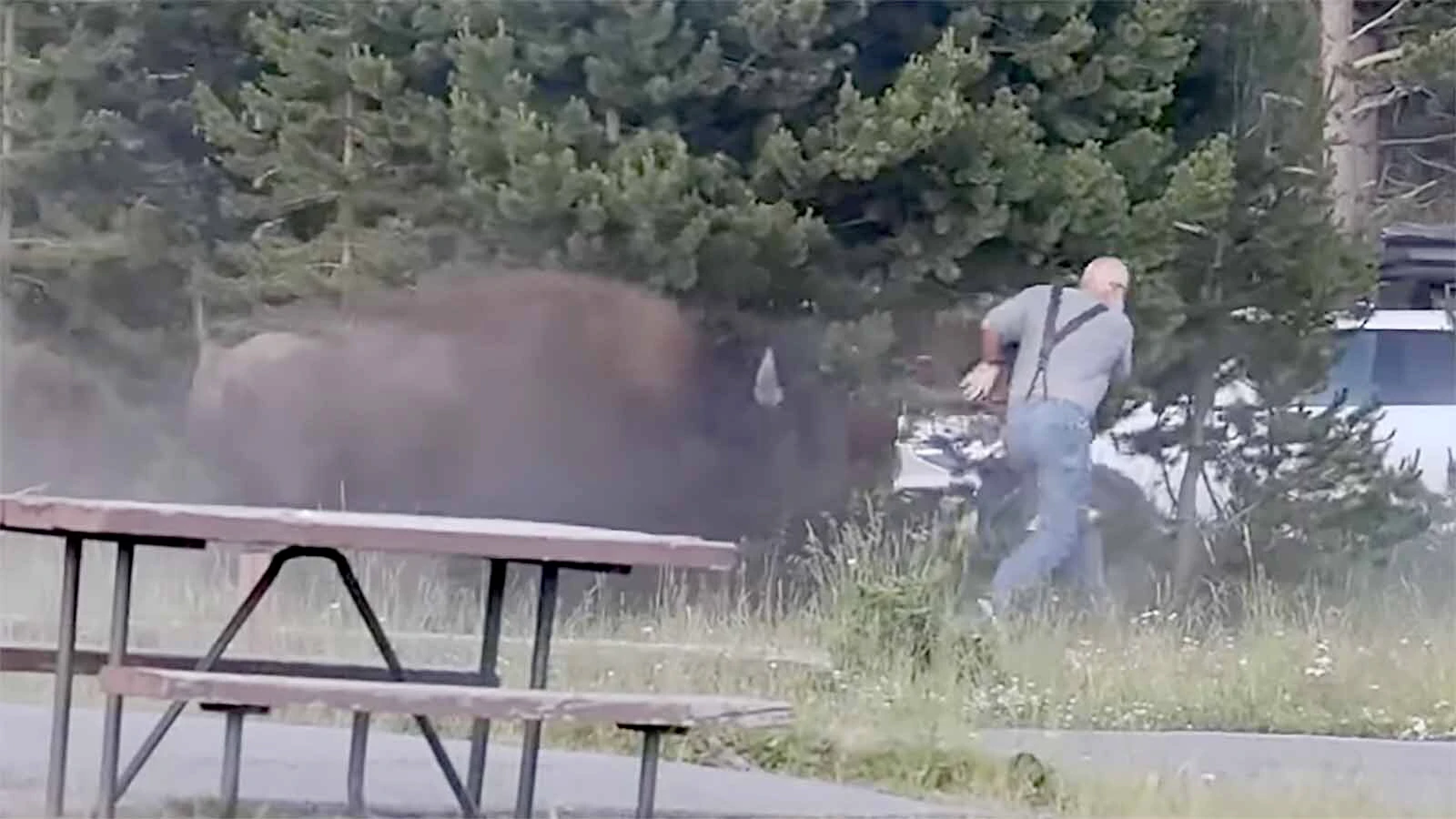
However, there’s another factor to consider. McDaniel was simultaneously trying to avoid the bison while deliberately keeping its attention.
According to MacLeod, McDaniel’s priority was protecting his grandson.
To do this, he told his grandson to run while he kept the bison’s attention by running into and around the trees.
“He led the bison on that wild goose chase to keep him away from his grandson,” he said.
To that end, he was successful. McDaniel’s grandson was unharmed.
Given these circumstances, it’s hard to fault McDaniel for anything he did or didn’t do, Wuerthner said. He made several split-second decisions that were the best decisions given the circumstances.
“I don't know how much people will do and are willing to do, especially if they’re unaware of how dangerous the bison can be under certain circumstances,” he said. “There isn’t much more he could have done.”
Safety Never Guaranteed
After the incident, McDaniel was hospitalized in critical condition with his right femur broken in four places. He’s undergone surgery and is expected to make a full recovery.
Wuerthner knows how bison can break their own patterns of behavior and do unpredictable things, especially during the rut. He speaks from experience.
“One summer, I hiked up a small ridge in the open grasslands of Lamar Valley,” he said. “Suddenly, this bison herd started coming right towards me and split up. I literally could have reached out on either side and touched bison. They were less than 4 feet away, on their side.”
Wuerthner wasn’t hurt, but admittedly was “scared of an attack” as the bison passed by. Even so, he had been more than 25 yards away from the nearest bison when the whole herd decided to move in his direction.
Most human-bison incidents happen when someone gets too close to a bison, deliberately or accidentally.
In this instance, Wuerthner has joined many others in exonerating McDaniel. Still, he feels there’s a valuable lesson to be learned from the experience.
“People tend to look at the wildlife in Yellowstone like they would if they were at a zoo,” he said. “Those animals are accustomed to people, but that doesn't negate their natural, wild tendencies. And, in their wild conditions, Yellowstone’s wildlife will react differently than an animal in the zoo.”
He also had a tidbit of wisdom based on the human behavior he’s observed in Yellowstone: there’s no protection across the road.
“People think it’s safe on the side of the road because the wildlife knows they’re not supposed to be there,” he said. “I see it all the time. Roads are for human occupation, and off-road is for wildlife.”
Twenty-five yards is the “safe” distance Yellowstone tourists are asked to keep between themselves and bison. Most of the time, it’s a completely safe distance, but McDaniel’s bison encounter shows that safety should never be taken for granted.
“More people get hurt by bison than by any other animal in Yellowstone,” Wuerthner said. “That’s partly because people underestimate how bison will react when they approach and how quickly they can respond. People need to know that they’re dangerous.”
Andrew Rossi can be reached at arossi@cowboystatedaily.com.


