
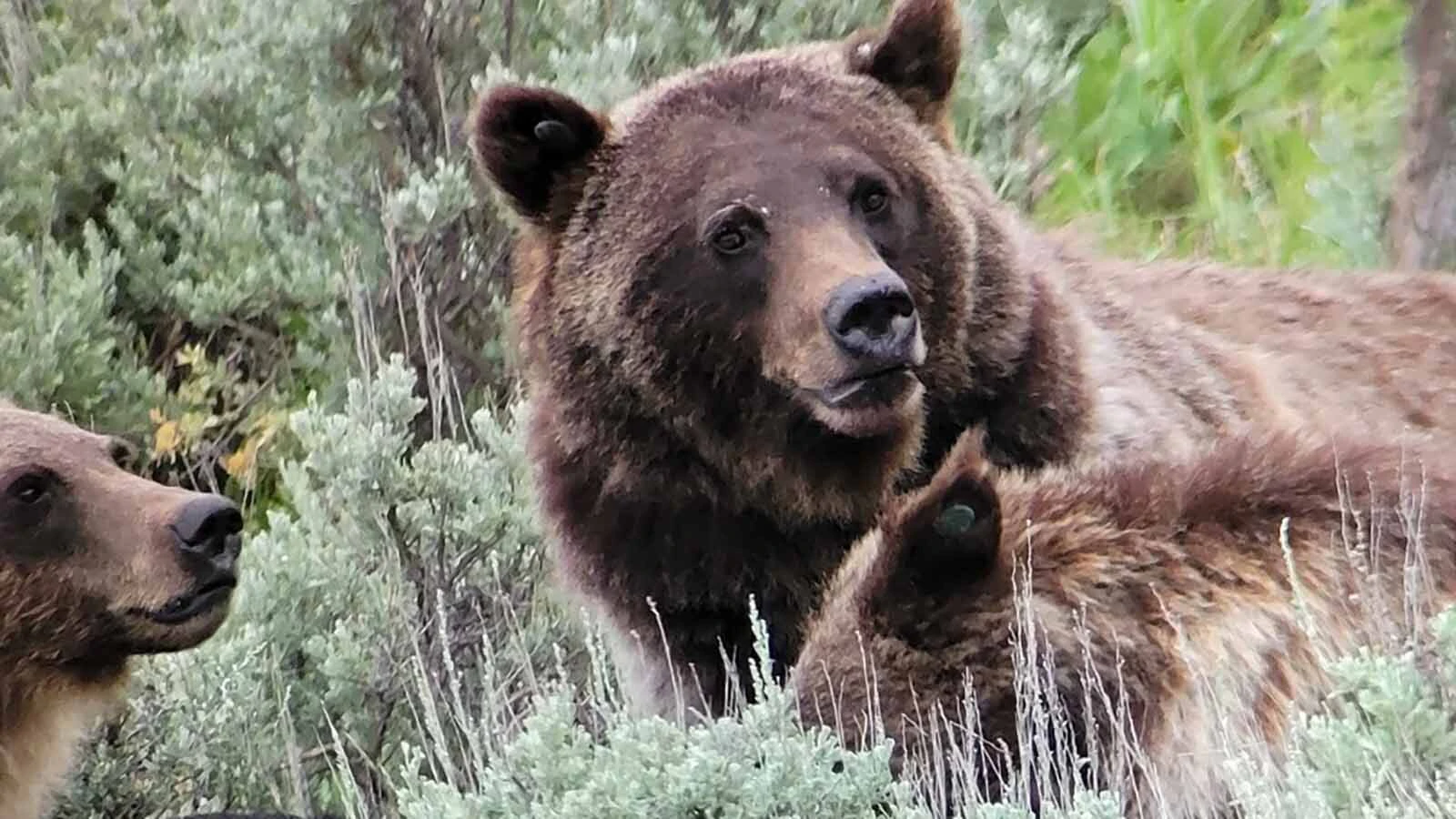
Some Wyomingites are saying Tuesday's move by federal officials to hand management of grizzly bears over to states is long overdue, although it falls short of delisting them from Endangered Species Act protection. Others worry it will get bears killed needlessly.
Cody outdoorsman Dalton Epperson told Cowboy State Daily on Wednesday that he thinks state management of grizzlies “is the way it should be.”
Wyoming’s congressional delegates also praised the move, which doesn’t officially delist grizzlies from Endangered Species Act (ESA) protection.
Republican Rep. Harriet Hageman indicated that efforts will continue to get grizzlies delisted through legislation.
U.S. Secretary of the Interior Doug Burgum and the Department of the Interior (DOI) on Tuesday proposed revising section 4 (d) of the Endangered Species Act, effectively ceding direct control of grizzly bears to the states.
It remained unclear Wednesday whether that sets the stage for a full delisting of grizzlies in the Lower 48, and the rule change likely won't lead to hunting seasons for grizzlies.
A full delisting of grizzlies was attempted in 2007, and again in 2017. The latter led to the Wyoming Game and Fish Department issuing hunting tags for a grizzly season. However, both the 2017 and 2007 delisting efforts were overturned in court.
States later petitioned to have the bears removed from federal protection.
The Biden administration in its final hours denied the petitions and released a rule affirming grizzlies’ protected status.
The Trump administration's DOI proposal calls for revising the Biden-era rule by allowing state management of the species.
DOI opened a 30-day public comment period on the matter, pending a final decision.
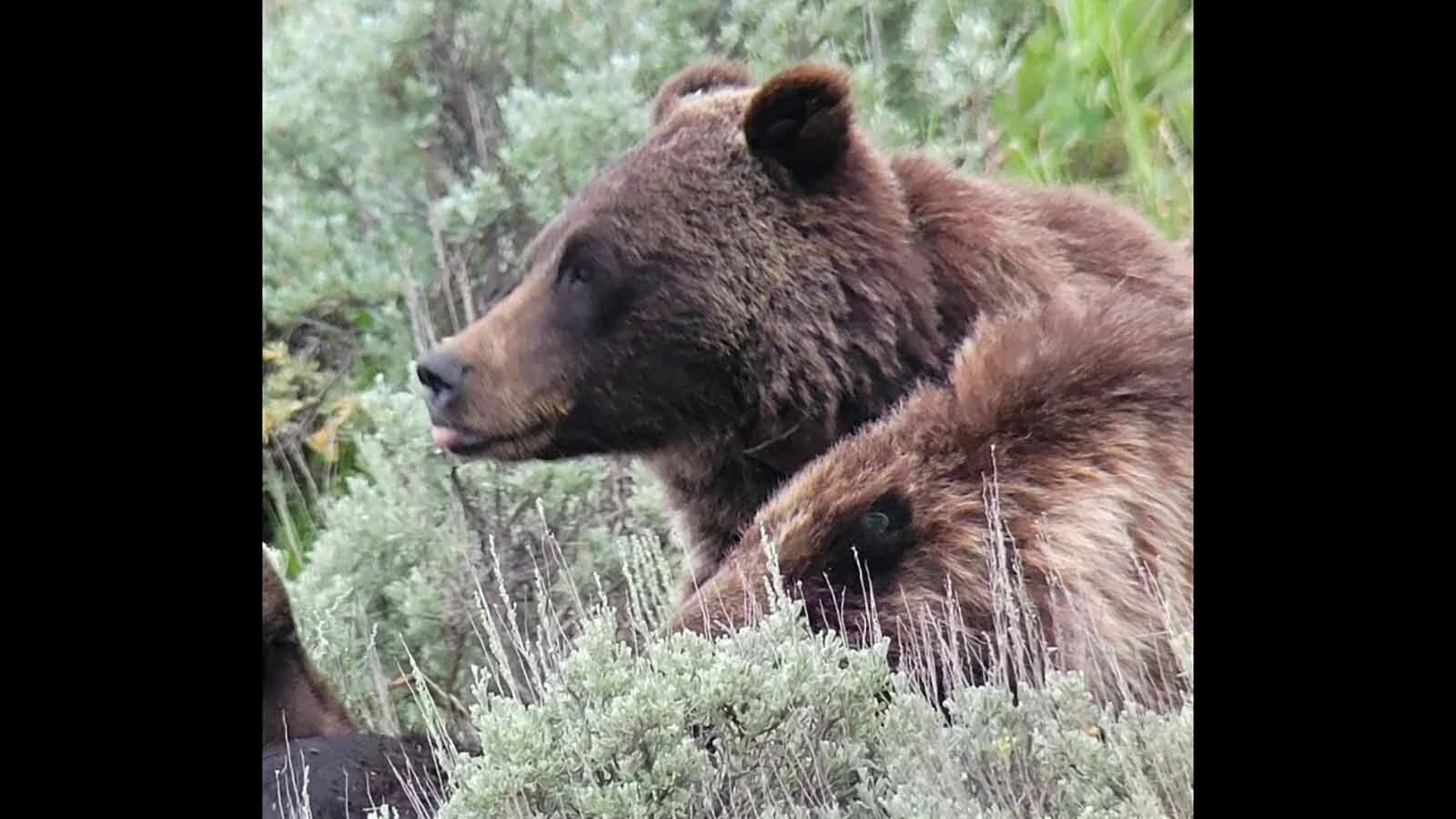
Gobs Of Grizzlies
Epperson said that as he sees it, grizzly bears are abundant and have little to no fear of people.
He recalled a recent encounter with a female grizzly bear and her cubs near Cody, during which the female grizzly charged his pickup.
“They (the female and cubs) knew I was no threat,” he said. "She knew I was in my pickup. That’s the second time that particular bear has done that to me.”
Others have told of similar encounters with that bear, he added.
That grizzly’s behavior is a “product” of decades of endangered species protection for the bears, Epperson said.
Epperson has been hunting black bears in northwest Wyoming for a decade. He said that he and other black bear hunters have noticed an ever-increasing number of grizzlies.
“We call it a ’10-to-1’ ratio. Even though now, it’s more like a 15-to-1 ratio,” he said. "Meaning for every black bear you see, you’re going to see 15 grizzlies."
During a hunt a couple of years ago, he said that he kept a hand-written tally of bear sightings, and ended up with 27 black bears and 147 grizzly sightings.
“After the hunt, I showed that written tally to some Game and Fish personnel, and they said, ‘That seems pretty accurate,’” Epperson said.
Although the current DOI proposal apparently doesn’t include grizzly hunting seasons, Epperson said he’d like to see grizzly hunts in Wyoming someday.
That doesn’t mean that he wants to see an overabundance of tags issued and “grizzlies getting wiped out,” Epperson said.
“Personally, I don’t hate grizzly bears. I hate what’s happening to them” as their numbers and conflicts with humans increase, he said.
“I thoroughly enjoy being in grizzly country. I spend 95% of my free time in grizzly country,” he said.
Will Get More Grizzlies Killed
Kristin Combs, executive director of Wyoming Wildlife Advocates, told Cowboy State Daily that she thinks the proposed rule change will just get more grizzlies needlessly killed.
As she understands the proposal, it would remove stringent oversight over such things as grizzlies being killed on suspicion of attacking livestock or frightening people.
“There will be less motive to deter bears, and it will much easier for somebody to just kill a bear if they perceive it as threatening their livestock or threatening their house,” Combs said.
The change could undermine years of efforts to mitigate conflicts and live alongside bears, she added.
Instead of making it easier to kill bears, time and money could be better spent working to mitigate conflicts with livestock, and providing money for ranchers to implement non-lethal bear deterrents, Combs said.
Public education and conflict deterrence could be long-term solutions, whereas killing bears is often just a quick fix, she said.
“If we just kill a bear because we think it’s causing an issue, then another bear will just take its place,” she said.
Combs said she’s skeptical that lethal control of bears, and hunting them, would make them more wary of people.
“One dead bear is just a dead bear,” Combs said. "That bear is not telling other bears to stay away from humans."
Gordon, Delegates Speak Out
Gov. Mark Gordon on Tuesday attended an official announcement of the proposal in Big Sky, Montana, joined by Montana Gov. Greg Gianforte, Idaho Gov. Brad Little, Burgum and U.S. Fish and Wildlife Director Brian Nesvik.
“The endangered species list is not a dean’s list. It’s time that this bear graduates,” Gordon said.
Wyoming’s Republican U.S. Sens. John Barrasso and Cynthia Lummis released statements supporting the move.
“It’s time for Wyoming — not Washington — to be in charge of managing grizzly bears,” Barrasso said. "Today’s action by the Trump administration puts power back into the hands of states and local communities who understand the situation and the science the best."
"For decades, Wyoming and other western states have proven that we know how to conserve and manage grizzly bear populations," Lummis stated. "Western grizzly bear populations have been recovered for years, yet previous Democrat administrations chose to play politics with delisting instead of following the science."
In email to Cowboy State Daily, Hageman stated that she also supports the DOI’s proposal, and wants to keep pushing for a full delisting of grizzlies.
“Wyoming's Greater Yellowstone Ecosystem Grizzly bear population has exceeded recovery goals for almost three decades,” she said. "Delisting is warranted, but activist judges and a broken Endangered Species Act have made it almost impossible to do.
“The ESA has largely become a zoning law to control land and water use, rather than a mechanism to recover and protect at-risk species. The Wyoming Game and Fish Department’s success on grizzly bear management should be celebrated and rewarded.”
Organizations React
Hunting and environmental groups also issued statements for and against the proposal.
“The rule advances grizzly conservation from the now-resolved problem of too few bears to the now-emerging realities of abundant bears,” stated Simon Roosevelt, the Boone and Crockett Club’s executive vice president of conservation, research, and policy.
"The predictable and misleading criticism of this will be that bears are losing protection,” he added. "The accurate view is that bears and people are gaining the benefits of sustainable management."
“I’m deeply disappointed that the Trump administration is trying to make it easier to kill imperiled grizzly bears,” stated Andrea Zaccardi, carnivore conservation program legal director at the Center for Biological Diversity.
“Grizzlies shouldn’t be killed at the whim of the livestock industry while it exploits our public lands for its own personal profit,” she added.
Mark Heinz can be reached at mark@cowboystatedaily.com.


