
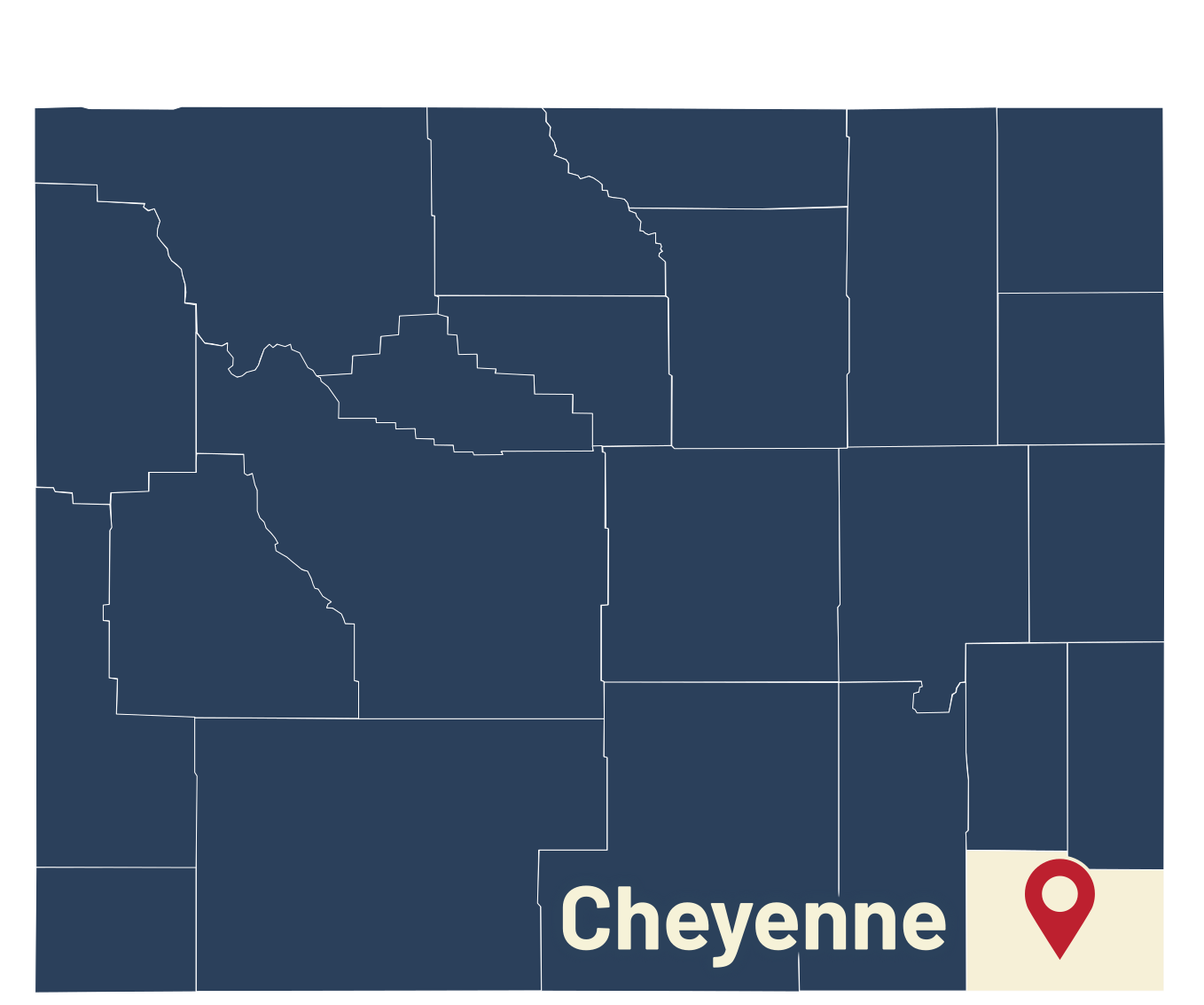
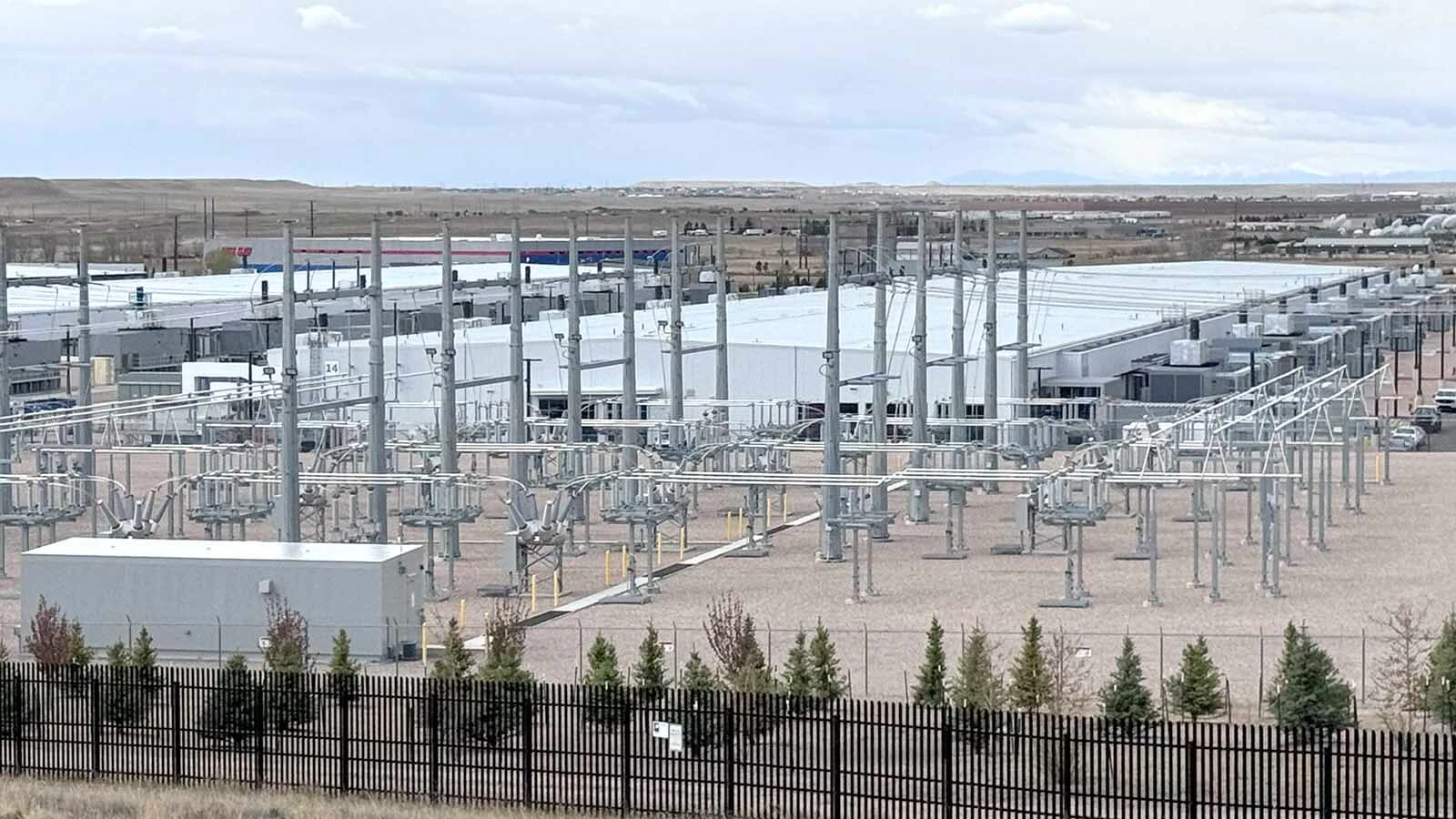
CHEYENNE — Why can a project as massive as Microsoft’s planned 3,500-acre expansion avoid Wyoming’s Industrial Siting Council while wind farms and other major industrial facilities usually cannot?
The short answer is that Wyoming law exempts certain non-mineral processing facilities built in existing industrial or business parks designated by local governments from the state’s full siting review.
That question, in one form or another, hung over more than five hours of testimony Monday night as the Cheyenne City Council considered a package of annexation and zoning ordinances tied to Microsoft’s next wave of data center growth on the city’s south side.
The biggest piece in the package was a 3,500-acre annexation called the Highlands, the largest annexation in Cheyenne history.
Before Monday's vote, the property represented roughly 20% of the city’s existing footprint. The council approved the annexation on a 6-3 vote, with Councilmen Larry Wolfe, Mark Moody, and Pete Laybourn all opposed.
The approval hands control to Cheyenne over land-use, water, and sewer decisions for thousands of acres tied to Microsoft’s future plans.
Opponents argued the city was moving too quickly and surrendering leverage before the public had a fuller accounting of long-term impacts, while supporters said the annexation was necessary to secure investment and shape the city’s future.
Regulatory Workaround Or Just Business As Usual?
At the center of the dispute is a legal distinction that’s become increasingly important as Wyoming recruits hyperscale data centers.
Under Wyoming statues, non-mineral processing facilities built in existing industrial parks designated by local governments are exempt from the Industrial Siting Act’s fee and certification procedures, though they must still furnish certain information to the state.
That means data centers in qualifying business park or industrial park settings can avoid the lengthy Industrial Siting Council Process that applies to many other large industrial developments.
For critics of data centers, that’s a regulatory blind spot, while supporters see it as a system working as designed to avoid duplicative efforts when there’s already planned land for industrial use.
The distinction matters because it’s not a newly invented loophole or a data-center-specific workaround.
It’s a standing feature of state law — even if that state law was crafted long before the huge data centers now being built.
Siting Council Wouldn’t Block Data Centers
Skipping the Industrial Siting Council review shaves as much as a year off construction timelines, as well as hundreds of thousands of dollars in additional regulatory costs.
If critics of data centers believe pushing those projects to the Industrial Siting Council will stop or block the projects, they’ll be disappointed, Rep. Cale Case, R-Lander, told Cowboy State Daily.
“The Industrial Siting Council doesn’t do what people think it (does),” he said. “You don’t have 10 projects and five get through and five don’t. All 10 are going to get through.”
What it will do is force additional accommodations to ensure they are “better neighbors.”
“Our laws are designed to let things happen, but try and minimize the impacts to other people,” Case said. “But there’s nothing that says you can’t do this if they follow the law and make the accommodations.”
One issue with that is that Wyoming’s Industrial Siting Act was created long before there were such massive data centers and is not really set up to handle data centers.
“Remember, data centers started off small. They were innocuous,” he said. "Now it’s suddenly a different animal. So they would undoubtedly meet the economic threshold, but they’re not considered an industrial facility.”
Another shortcoming, Case added, is that the law also doesn’t really have a mechanism for considering cumulative impacts.
“One area where the Industrial Siting law has clearly failed in my mind is the cumulative impacts problem,” he said. “Because it can do its analysis of each project piecemeal and the marginal impacts … are not deal breakers.
"But yet, in the end, we have things like the wall of wind that people are talking about from Colorado to Converse County.”
Whether there’s any appetite to address such things isn’t yet clear.
Case said he has not heard much talk about it himself, but expects that if such a measure is on the horizon, it will come up first in the Legislature’s Joint Revenue Committee.
That’s also where measures dealing with eliminating the manufacturing sales tax exemption would also come up.
“We should deal with this manufacturing sales tax exemption as it applies to them,” Case said. “Absolutely, we should deal with it. If they can afford to bring in fuel cells to produce electricity they can afford to pay sales tax on the servers.”
Wyoming Should Address 'Blind Spot'
Concerns surfaced repeatedly during Cheyenne’s Monday night session, with opponents arguing the projects should receive broader, statewide scrutiny such as what the Industrial Siting Commission would provide.
Among these voices was Laramie County Democratic Party Chair Ted Hanlon, who is a candidate for state Senate District 5.
He told the council he does not believe the city is staffed, structured, or funded enough to act as an industrial regulatory body, which is how he sees the business park exemption functioning.
“I’m not opposed to data centers,” he added. “I’ve been trying to figure out how to get jobs in Cheyenne all my adult life.”
But allowing the exemption for such massive projects is creating a “regulatory blind spot.”
“Effectively, (it’s) allowing mega corporations to bypass the oversight of the Wyoming Department of Environmental Quality’s Industrial Siting Council,” he said. “Under Wyoming state law, massive industrial projects that exceed specific cost and infrastructure threshold are required to go through the IASC. This is a vital regulatory safeguard that’s been in place since 1975.”
The Siting Council helps ensure the impacts of a project are clear, whether those impacts are socio-economic or environmental, and also ensures there are community benefits agreements in place up front, to protect both local governments and taxpayers.
“By approving this annexation without a fully realized master plan, you’re abdicating your duty to protect the public,” he said. “You’re giving up all of our leverage. Councilman Wolfe was entirely correct. Push for a dramatic reset and demand a formal community benefits agreement.”
Wolfe had earlier in the process proposed a delay to negotiate a $50 million community benefits agreement with Microsoft ahead of the annexation, a measure that was defeated.
“If these corporations want to create a huge footprint in our backyard, they must play by our rules, provide binding transparency, and directly mitigate the strain they place on our town,” Hanlon said. “Voting yes tonight sets a dangerous precedent that Cheyenne will compromise its own regulatory integrity for the promise of unquantified future tax revenues.
"I urge you to vote no or postpone this ordinance until a full joint review can be conducted alongside the DEQ Industrial Siting Council.”
In later questioning, Hanlon said he’d work with lawmakers like Rep. Ann Lucas, R-Cheyenne, to remove data centers from the state’s exemption.
Two More Republicans Urge Caution
Lucas had spoken to the council prior to Hanlon, urging caution in its decision.
“This shouldn’t be instant-coffee decisions,” she said. “The people who choose to build homes there, they chose these homes in the past, deserve confidence that their quality of life has been carefully considered — traffic noise, lighting, future expansion, utility infrastructure, and just overall the cumulative effect of continued industrial growth all deserve thoughtful discussion.”
Rep. Daniel Singh, R-Cheyenne, outright said he opposes the annexation and further questioned the idea that data centers will attract people under the age of 30 to stay in Wyoming.
“When you look at polling of young people under age 30, they’re actually the most vehemently opposed to data centers themselves,” he said. “Over 50% if you look at Gallop polling, over 50% of young people are strongly opposed to data centers.
"So to sit here and say … that we need to build these data centers so we can provide for the next generation and have the next generation stay in Wyoming and thrive — I would actually venture to say that’s the opposite of what would actually happen.”
A data center in the backyard for that age demographic would more likely be seen as a reason not to stay or move to Cheyenne, he added.
“This is campaign season, as you all know, and I’m not here to advocate for anybody in particular,” he added. “But as I’ve been going door to door, one of the consistent themes I’m hearing from my neighbors is that they came to Cheyenne for a particular atmosphere.”
The new developments run counter to that atmosphere, Singh said, and it’s already prompting some of them to move on, younger and older.
“Many of them have said they sold their properties and are leaving town,” Singh said. “So the projected intention of gaining a new population, a new workforce, if that’s really what we intend to do, we need to look at the unintended consequences of building these things.”
Singh also stressed that he’s not necessarily saying large computing centers should be barred. Rather, he wants to see it done more incrementally, with consideration for what the public has to say.
“I just want to preface that with Article 10, Section Two of the Wyoming Constitution, which says that all powers and franchises of corporations are derived from the people and are granted by their agent the government, for the public good and general welfare,” Singh said. “And the right and duty of the state to control and regulate them for these purposes is hereby declared.”
Trust And Recent Water Scare
For many residents who spoke against the Highlands annexation, the fight wasn’t just about processes or zoning categories.
It was about trust after learning that a contractor working for Meta had contaminated the city’s wastewater system. The incident prompted months of cleanup and compromised the city’s reuse water system, which is used for things like irrigating parks and golf courses.
“Two months ago, I stood here to speak about the unknown health impacts of data centers here in Cheyenne,” Ward One resident Stacy Leach told the council. “I talked about the possibility of aerosolized bacteria and harsh chemicals entering our water supply.
"As I shared my concerns, you sat here listening with the knowledge that it had already happened and you said nothing.”
Leach questioned why it took until July 9 to finally disclose that the industrial user had been connected to Meta.
“You protected Meta,” she said. “You knew in February of this year that a Meta data center had compromised a highly used water system serving parks and golf courses where immunocompromised elderly people golf.
"With your authorization, Mr. Mayor, the Board of Public Utilities shut down Cheyenne’s reclaimed water system due to concern that this rare, untreatable, and deadly bacteria could become airborne. And you said nothing. You kept that information from the public.”
Collins told the crowd he had been notified in general terms that an incident had happened earlier in the spring, but that he did not receive full technical details right away and insisted there was no deliberate coverup.
Board of Public Utilities Engineer Bryce Dorr said a detailed timeline is coming, along with answers to some of the public’s information requests.
Long-Term Economic Stakes Important
Supporters of the Highlands project focused on the long-term economic stakes.
While Wyoming’s average wages are fourth in the nation on paper at $82,000 per year, take out Teton County and the average drops significantly below the national average, Councilman Dr. Mark Rinne said.
Councilman Ken Esquibel, meanwhile, talked in terms of watching his two daughters leave the state for better-paying job opportunities.
Stacy Balkin, who lives in Ward 2, said Microsoft data centers gave her a second chance and a new career. She’s watched the company work hard to be a “great neighbor” along the way.
“Since 2019, Microsoft data center investments have generated about $1.6 billion in economic activity, created thousands of local jobs, with more to come," she said. “They are the No. 1 taxpayer in Cheyenne and the No. 2 taxpayer in Laramie County.
“Since 2025 alone, Microsoft data centers have generated approximately $11 million in property tax revenue. That’s $11 million invested in our public services, which includes schools, infrastructure, and public safety.”
Lance Gold, who moved to Cheyenne 13 years ago for a job with Microsoft, said he and his family have grown to love Cheyenne, and said he sees it as a personal responsibility to ensure none of his company’s facilities do anything negative to the community or its environment.
“I have six kids that I brought here, and all six have stayed here,” he added. “My second, she moved away, went to school, and moved back. This has become home for my family of now nine.”
Microsoft, he added, goes above and beyond statutes and EPA requirements.
“I know a lot of you might not agree with that, but that’s one of the things that I love about Microsoft,” he said. “I care deeply about the environment, about the water we have, and as I work with Microsoft as a build manager for these projects, for these data centers, I take it personally responsible to make sure we don’t pollute water, that our air is clean.
"I’ve got skin in the game, and I’ve had skin in the game for over 13 years.”
Renée Jean can be reached at renee@cowboystatedaily.com.


