
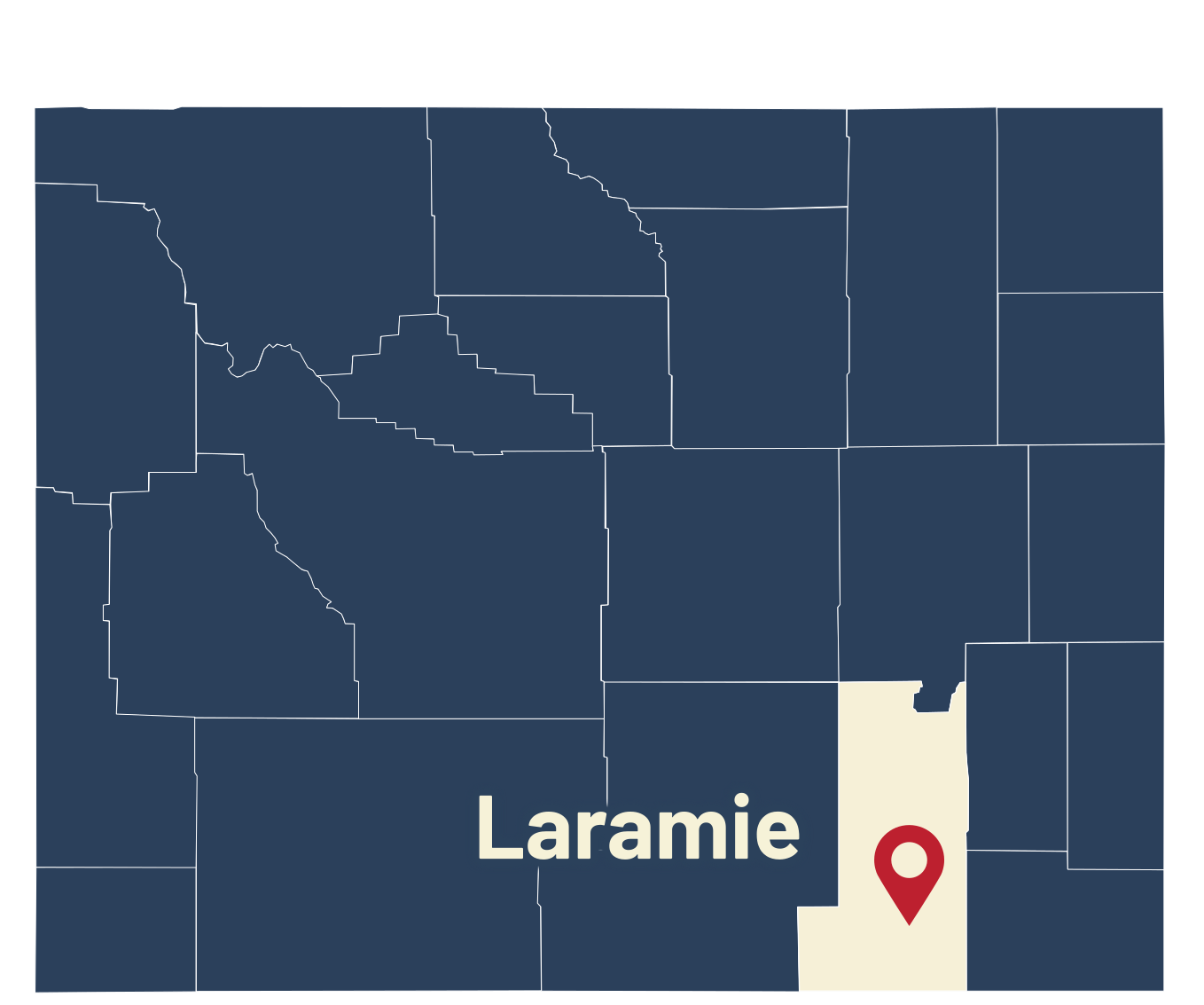
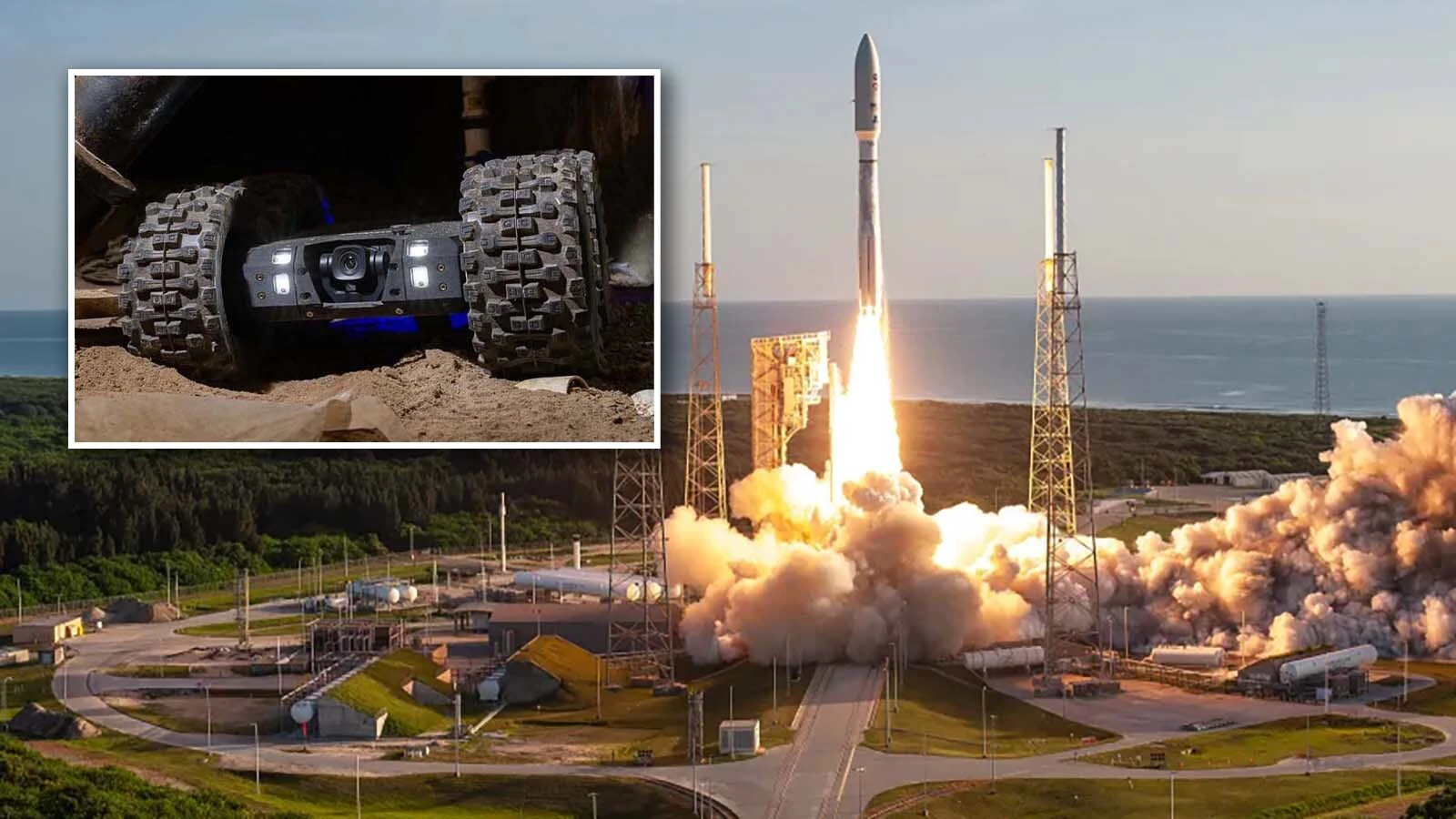
When NASA needed to inspect a tight crawlspace for its Artemis 3 project, they contacted a small tech company in Laramie for help. Uplinkrobotics had designed the Wombat – a big-wheeled drone that can get into places that no man can go.
The small robot features big squishy wheels and a simple body that can flip, turn and get itself out of tight spots.
“Our drone is usually used for home inspections,” co-founder Brady Wagstaff said. “But they are good for any type of inspection. We have had them used by the police to clear a building and exterminators looking for pests.”
NASA asked for help because they needed to inspect their network of pipes that sprays over 450,000 gallons of water during lift off from the rocket launcher at the Kennedy Space Center. Wagstaff described it as NASA’s “ignition over pressure sound suppression” - IOP-SS - system, which is designed to protect Artemis 3 from sound vibrations during launch.
“These pipes were definitely small enough and long enough that a small person could fit,” Wagstaff said. “They were able to send our drone in instead of a person and it’s just a lot safer that way.”
Wagstaff said his only concern was that the Wombat is not yet waterproof, but the pipes were drained and NASA was able to have a successful mission with the drone crawler and its oversized wheels.
“They were able to make some decisions based on the imagery that they collected for the Artemis 3 program,” Wagstaff said. “So that was really cool.”
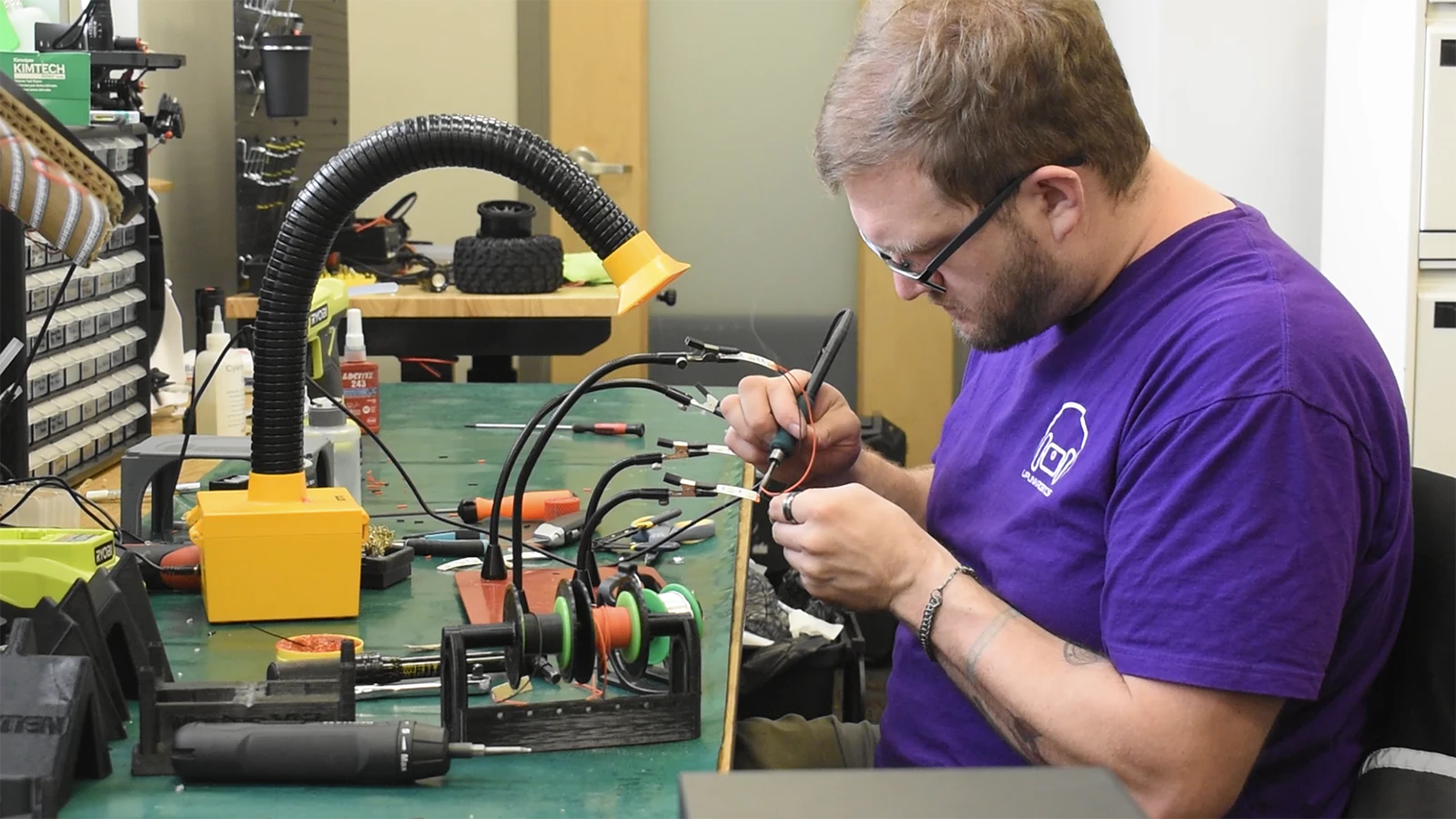
Designing drones start on the computer at the Wyoming-based engineering company, UplinkRobotics. The young engineering team are creating a niche for themselves designing wheeled drones for home inspectors. They have kept their designs simple and are focused on efficiency and ease of use. (UplinkRobotics) 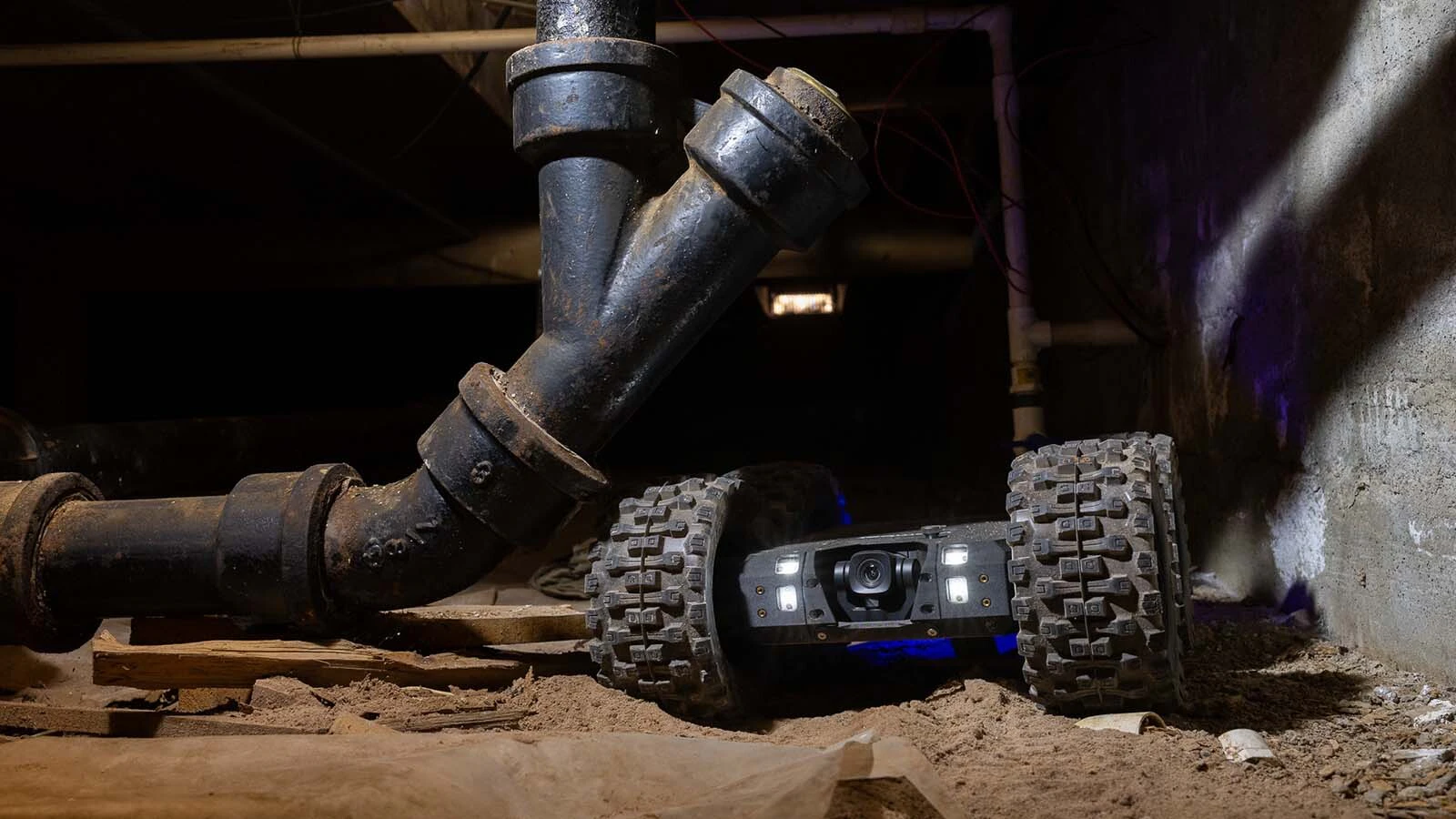
The Wombat drone is designed to go into tight spaces that people would rather avoid. The unique Wyoming-designed drone has big squishy wheels and is a rock crawler that can go over uneven terrain easily. (UplinkRobotics) 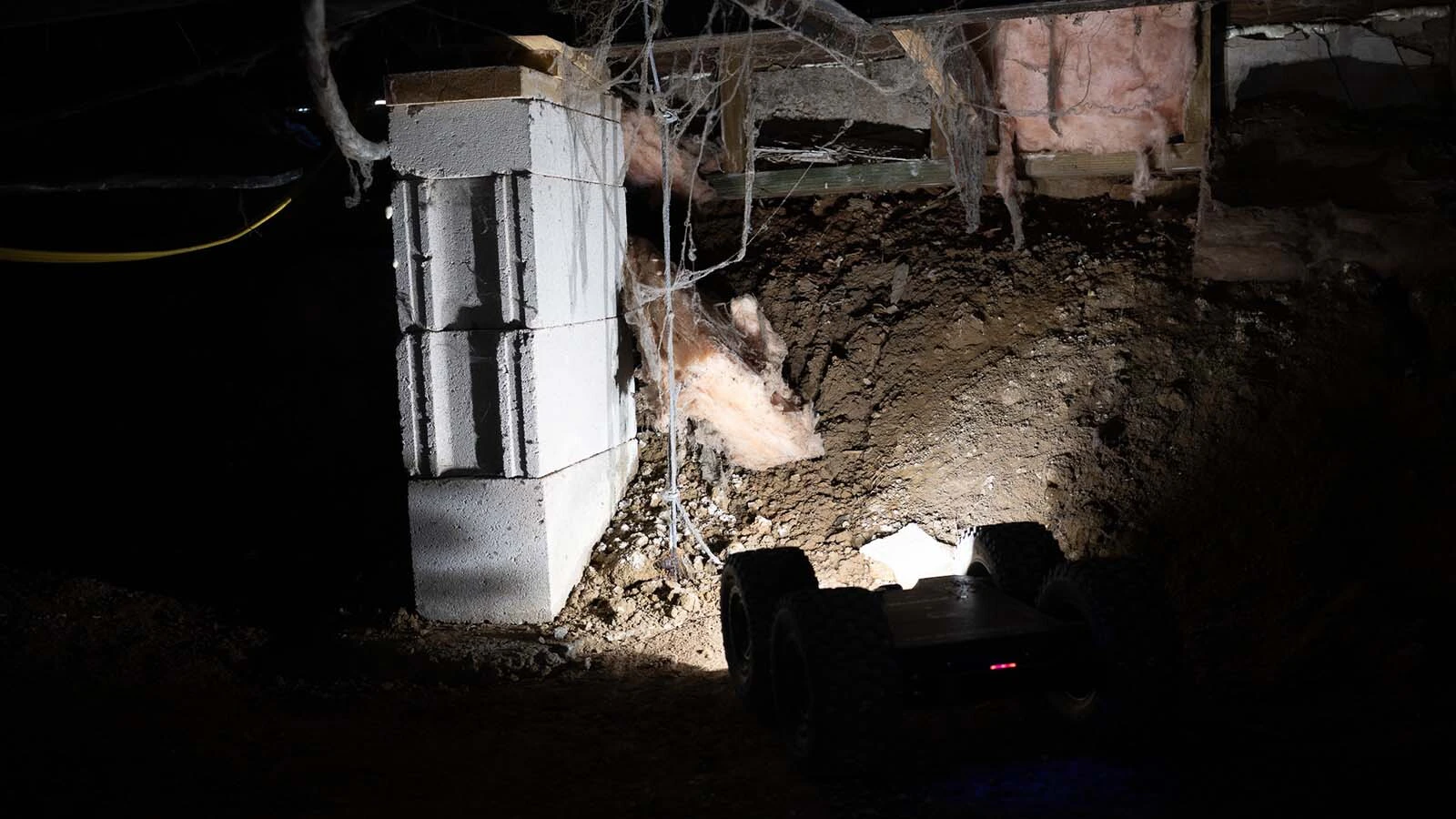
The Wombat drone is designed to go into tight spaces that people would rather avoid. The unique Wyoming-designed drone has big squishy wheels and is a rock crawler that can go over uneven terrain easily. (UplinkRobotics) 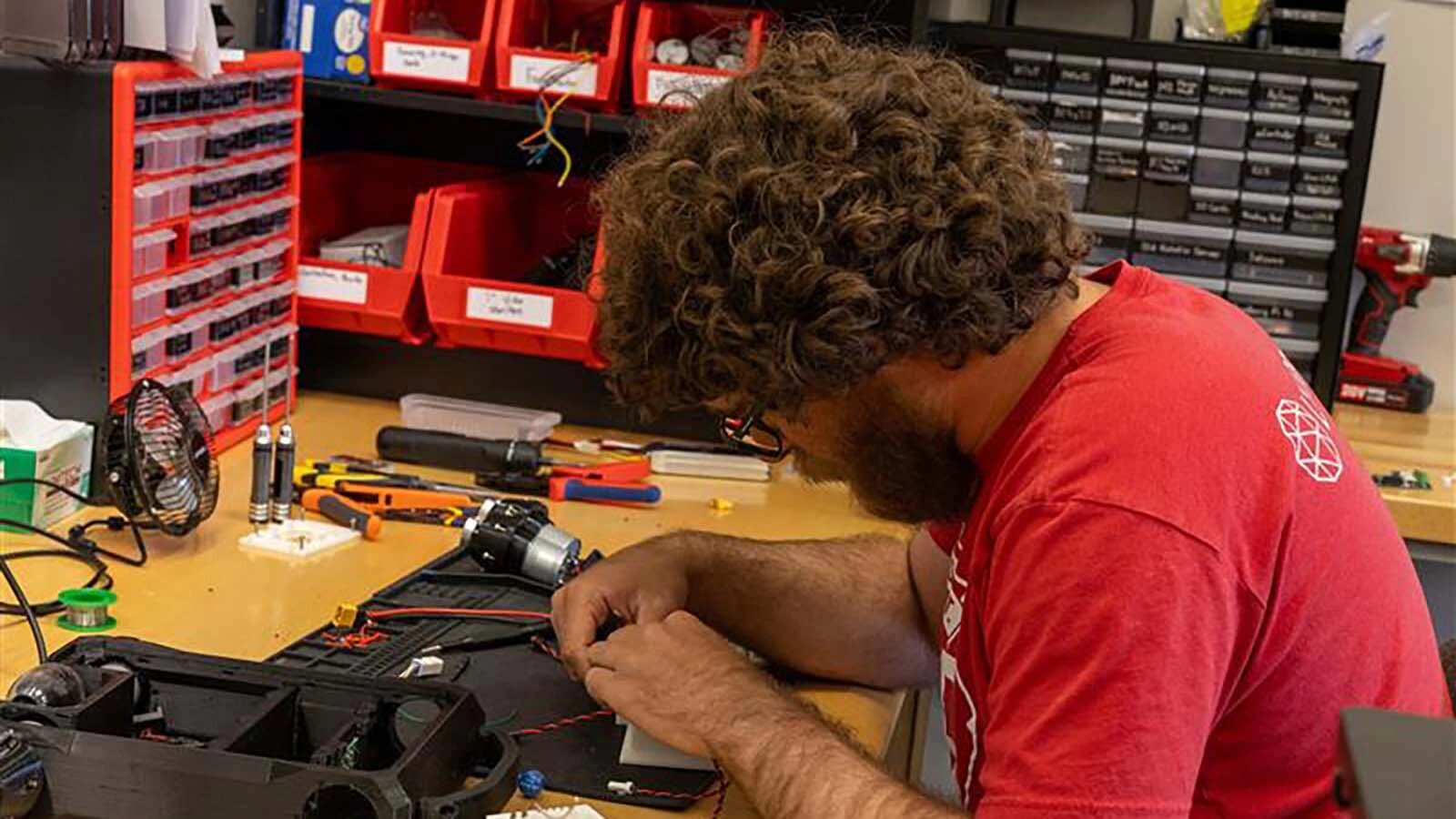
The Wombat is a Wyoming-made drone that relies on big wheels and a simple body to get its job done — inspecting tight crawl spaces. Engineer Brady Wagstaff was one of the inventors of this simple drone and recently sold one to NASA who used it to inspect its water pipes for the Artemis project. (UplinkRobotics) 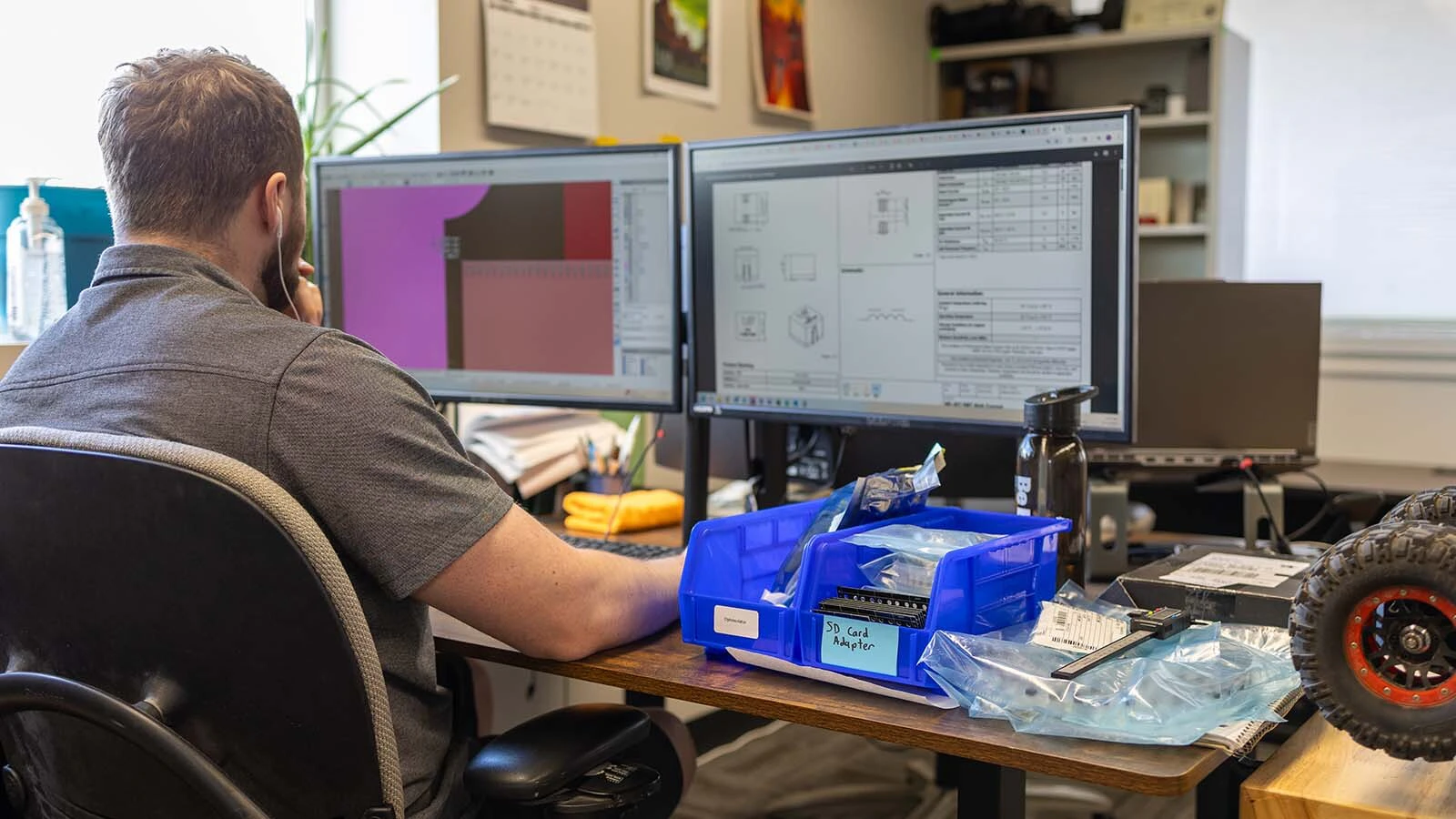
Designing drones start on the computer at the Wyoming-based engineering company, UplinkRobotics. The young engineering team are creating a niche for themselves designing wheeled drones for home inspectors. They have kept their designs simple and are focused on efficiency and ease of use. (UplinkRobotics)
Where No Man Wants To Go
The idea of the Wombat came from a home inspector who asked why there were no drones or robots he could send into crawl spaces instead of himself.
“A group of us were doing computer engineering at the University of Wyoming, and Christian Bitzas’ dad pitched the idea to us,” Wagstaff said. “We were like, 'We probably could build those, and we ended up winning a competition.'”
That was the launch of Uplinkrobotics four years ago. Since then, Wagstaff’s three co-founders have gone on to other projects and jobs. Wagstaff said he stayed on because of the potential he sees in their rock crawler drone that can literally go anywhere.
“You would be surprised but there are not a lot of people making ground-based robots,” Wagstaff said. “There is quite a bit of push to build drones with legs right now that look like dogs or the ones that look like humans – but not for the wheeled versions.”
The Wombat is specifically designed to go down into crawlspaces and take live videos and photographs. Wagastaff said it is common for pictures to be sent back from their wheeled drone of skunks, snakes and leaking sewage.
“There is all kinds of nasty stuff under a house that people have to crawl into,” Wagstaff said. “They have to suit up and wear a mask just to protect themselves from mold and hantavirus. And they'll be doing these inspections four or five times a day.”
Wagstaff said that not only does it save on the house inspectors time, it also saves their knees.
“I've been under homes testing our crawler and it sucks, especially in small spaces where you can barely fit,” Wagstaff said. “It hurts even if you wear knee pads and you will be struggling to walk by the time you are 60 if you do that daily.”
Keeping It Simple
When designing the Wombat, which retails for just over $4,000, Wagstaff said they kept it simple. The four entrepreneurs stuck to a wheeled version that can handle the uneven terrain under most homes much better than even the high-end $70,000 walking robots.
The four large under-deflated wheels are designed to at least have one wheel always touching the ground, so it rarely gets stuck. The camera is mounted in the front rather than the top so the drone can flip over and it won't get damaged.
“Spaces are very nasty environments,” Wagstaff said. “It's very hard on electronics and there’s no flat ground.”
Their buyers, Wagstaff explained, are mostly blue-collar workers from 25 to 60 years old who are inspecting homes. They don’t want a complicated machine that takes 20 minutes to set up and two weeks to learn.
“They want something they can hand to their apprentice that can be figured out in a matter of seconds and takes five seconds to deploy,” Wagstaff said. “So, we concentrate on reliability, durability and simplicity.”
The drone is operated with a simple control by the house inspector and the footage can be saved to an SD card.
“We came up with the motto of “easy to use and hard to lose,” Wagstaff said. “We can hand this to a 5-year-old and they can drive it or hand it to your grandma and she can drive it.”
While Wagstaff and his team continue to build their home inspection niche with a new unit, the Muskrat, designed for inspecting culverts, they are also continuing to get requests from other business sectors.
“We've got some SWAT teams buying the Wombat and are seeing a lot more customers from the industrial sectors,” Wagstaff said. “Like the people inspecting metadata centers and some school district buildings.”
Their rock crawling drone is now in nearly every state. Wagstaff said that people are surprised to learn that only a few have been sold in the Cowboy State and that was to WYDOT.
NASA has just ordered the Muskrat, and Wagstaff said he is excited for the future of his Wyoming-centered company. He said the key is to keep it simple and design their drones for efficiency.
Jackie Dorothy can be reached at jackie@cowboystatedaily.com.


