
CHEYENNE — Every guy, at some point in his life, will say just about anything to get a girl.
Hit by a bolt from the blue, who can blame them? Before they know it, the boldest of promises are tumbling from their lips.
For Cheyenne native George Jay Wienbarg III, that moment of lovestruck convergence hit him one winter day at New York’s Central Park.
“She was a very clever Korean girl who was wearing these really interesting clothes,” Wienbarg told Cowboy State Daily. “She had made the clothes, and I got to talking to her — she was this very cute, little 5-foot-tall Korean girl — and the clothes were so fascinating, so interesting.”
As was the girl.
Wienbarg was so taken by her, the next thing he knew he was telling her that if she could raise $50,000, he knew he could make her and her clothing line Hollywood famous.
“I knew I could do it, because I’d already done it once,” Wienbarg said. “And I had confidence because when I got to New York I had just $35 in my pocket, and in three days I had a job doing the morning show at this country western station in New York City.”
Not Just Whistling Dixie
As bold as his promise seemed, Wienbarg’s confidence wasn’t totally misplaced.
Just before coming to New York to study at the American Academy of Dramatic Arts, he had engineered an international publicity campaign to help his friend Hank Berger sell pieces of the original, world-famous Hollywood sign as souvenirs.
The sign was an icon.
Originally built in 1923 to promote a posh little subdivision, the “Hollywoodland” sign stood five stories tall and stretched over a city block, making it the biggest sign in the world at that time.
The sign was lit up at night with 4,000 20-watt bulbs placed 8 inches apart, and could be seen from at least 50 miles away. It required a full-time maintenance man just to take care of replacing burnt-out bulbs.
In 1949, a new letter “H” was erected for the sign. The last four letters, L-A-N-D, were removed, making the sign just “Hollywood.”
Over the years, pranksters reworked those letters to variations like “Hollyweed" — fun and games.
Not so fun, however, were the depressed starlets, including Peg Entwistle, who jumped from the letter “H” to their deaths.
By 1978, time and the elements had taken a toll. The sign had become a wreck.
“It was starting to fall down and it was just thin, rusty old metal on telephone poles,” Wienbarg said. “So they said, ‘Well it’s so famous, we better build a new one.’”
Berger bought the old sign for $10,000 and then called the best marketing person he knew to help him sell off pieces of the sign.
That was Wienbarg, fresh off a stint as news director in Cleveland, where he’d led his team to the No. 1 station in the market. His success there had led him to consulting work in other locations across America, including New Orleans and Raleigh, North Carolina.
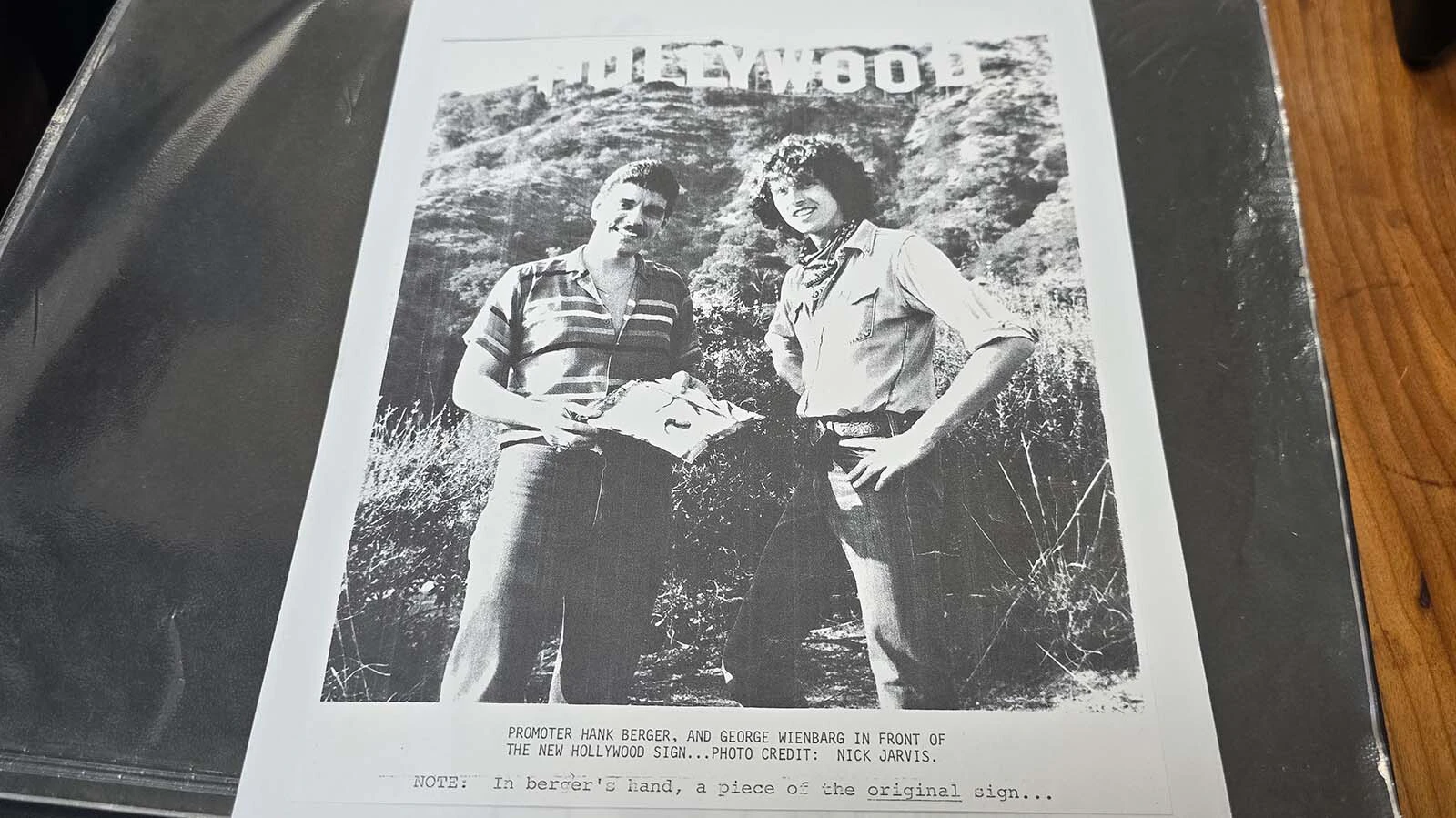
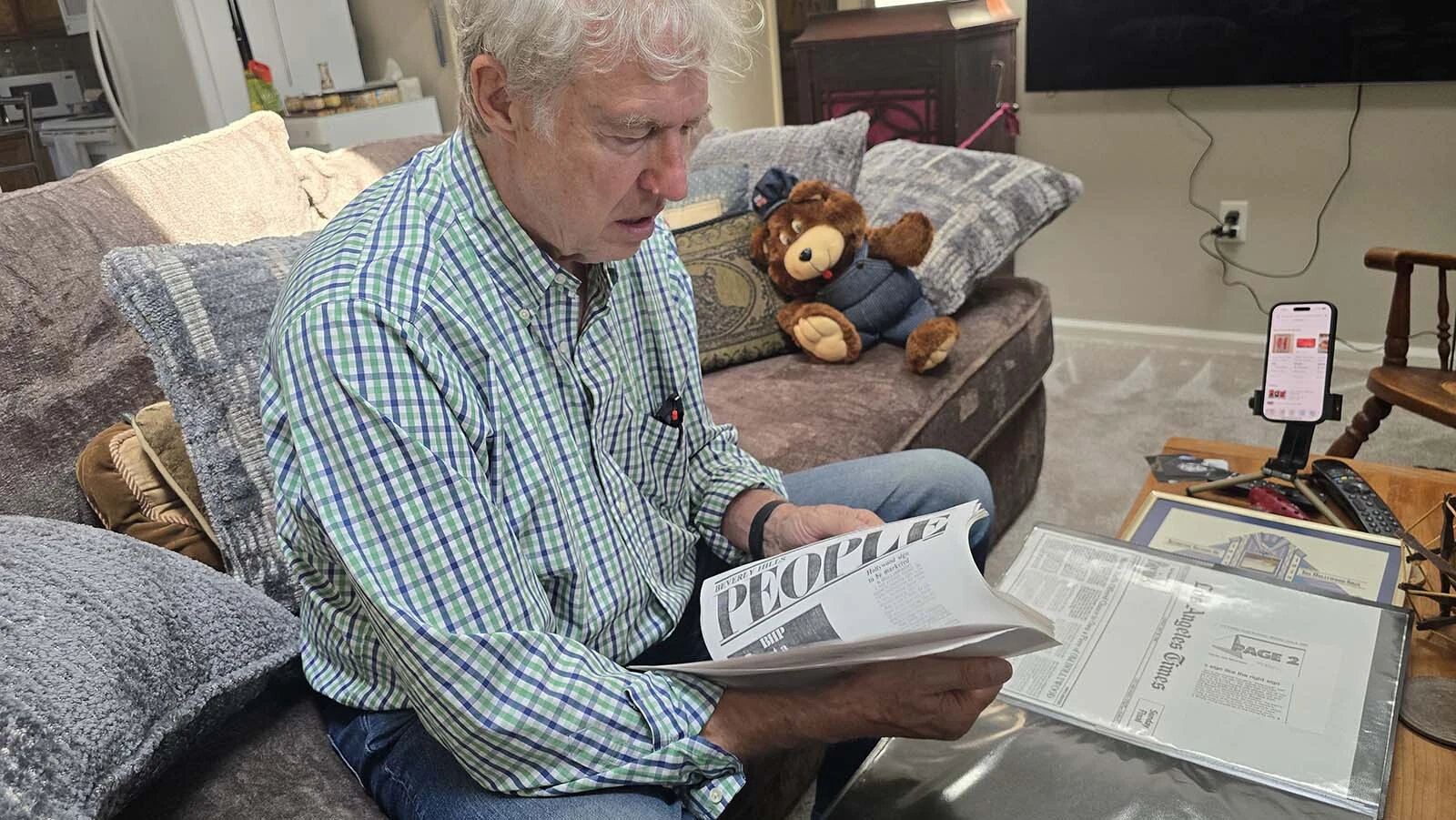
Hank Berger, left, and his friend George Jay Wienbarg III in a newspaper clipping about their efforts to sell pieces of the famous Hollywood sign for souvenirs. (Renee Jean, Cowboy State Daily) 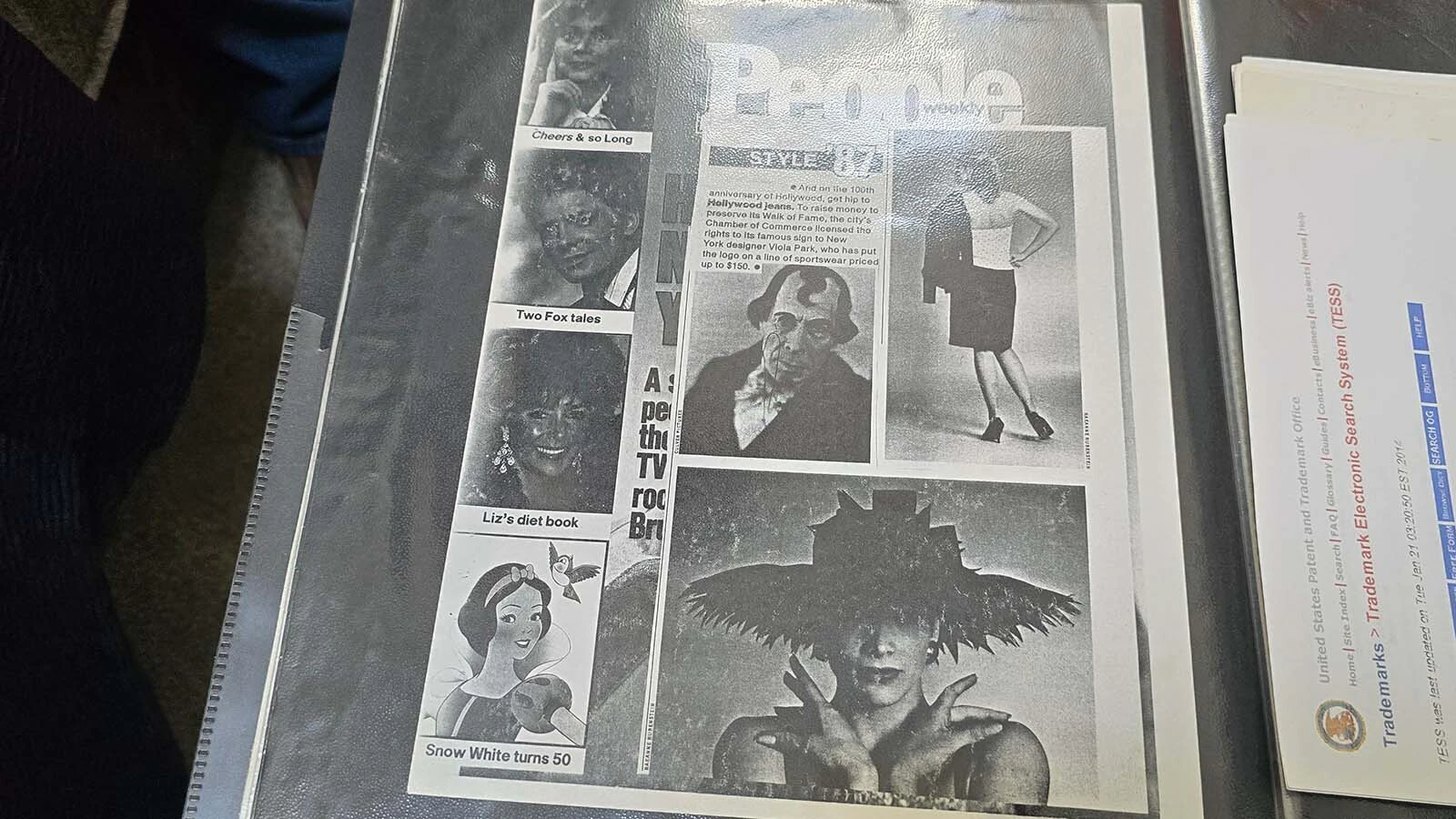
An article in People Magazine about George Jay Wienbarg III's girlfriend, Violla Park and her clothing line. Wienbarg trademarked the Hollywood sign and let his girlfriend use it for her clothing line, after promising he could make his girlfriend“Hollywood” famous. The strategy worked. But love, Wienbarg learned, can be just as fleeing as fame. (Renee Jean, Cowboy State Daily) 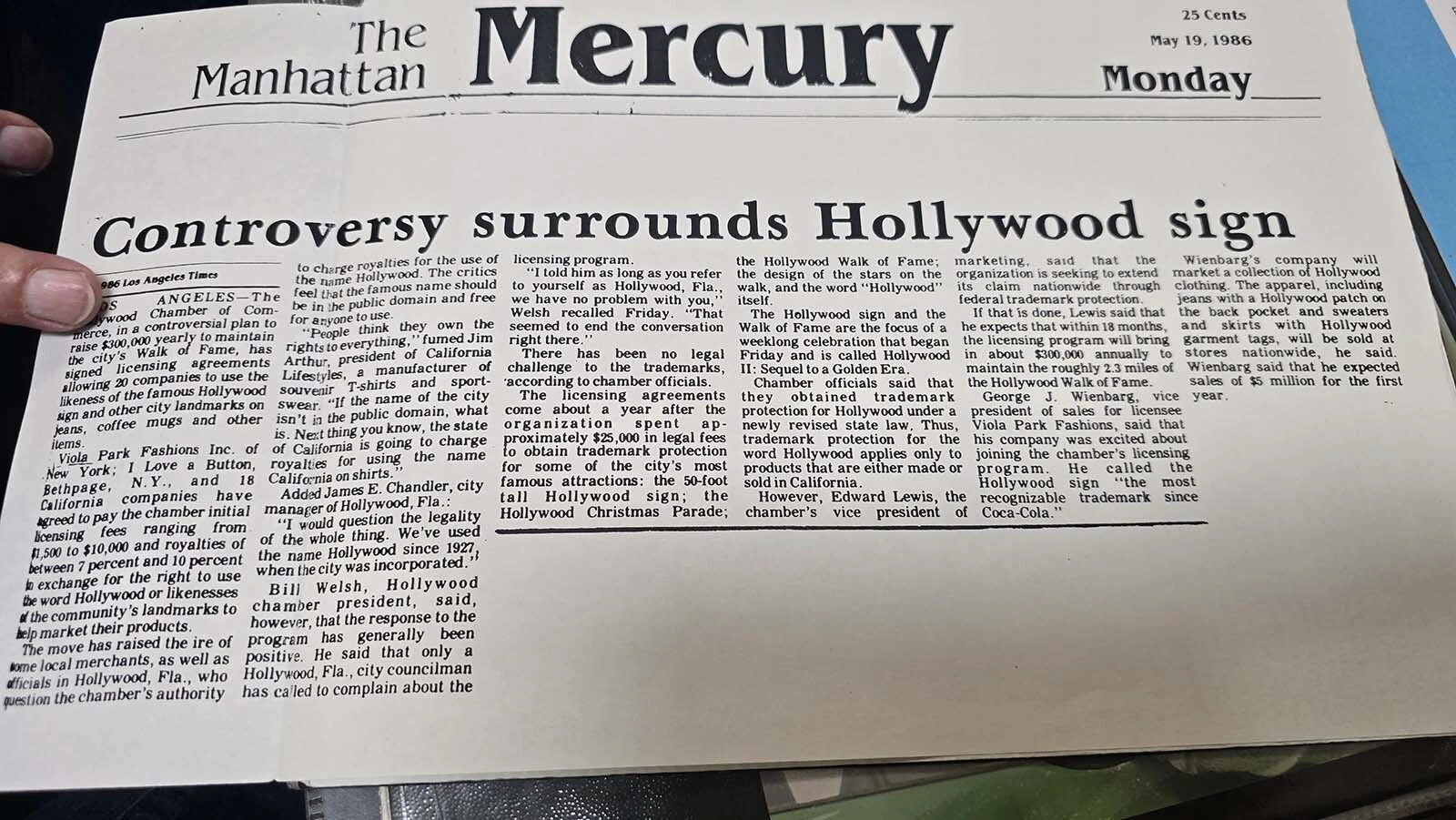
Trademarking the Hollywood sign eventually led to some controversy, and prompted the Chamber of Commerce to protect other famous Hollywood landmark with their own trademarks. (Renee Jean, Cowboy State Daily) 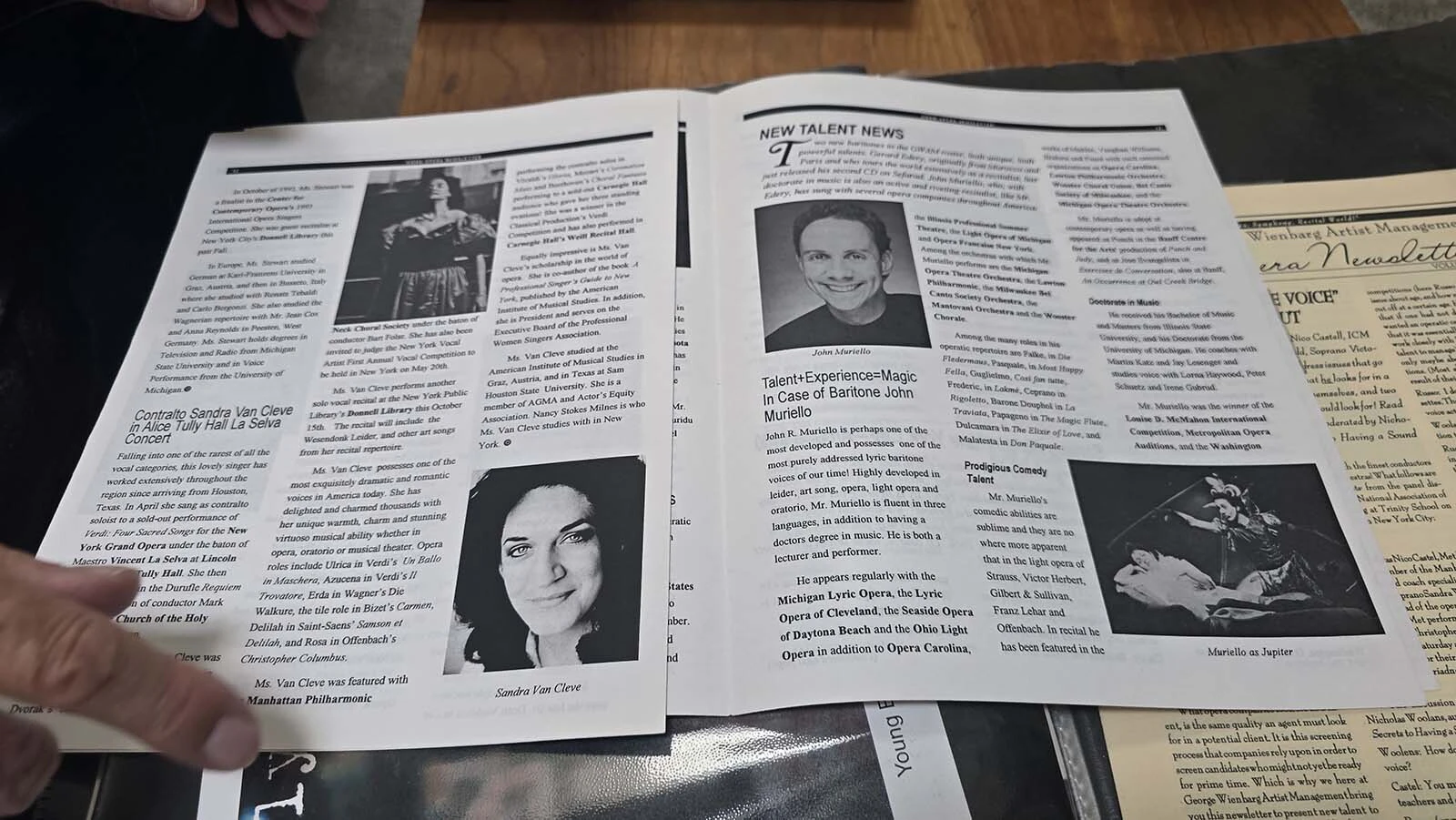
George Jay Wienbarg also managed opera singers during a 45-year career as a radio and film personality in New York. (Renee Jean, Cowboy State Daily) 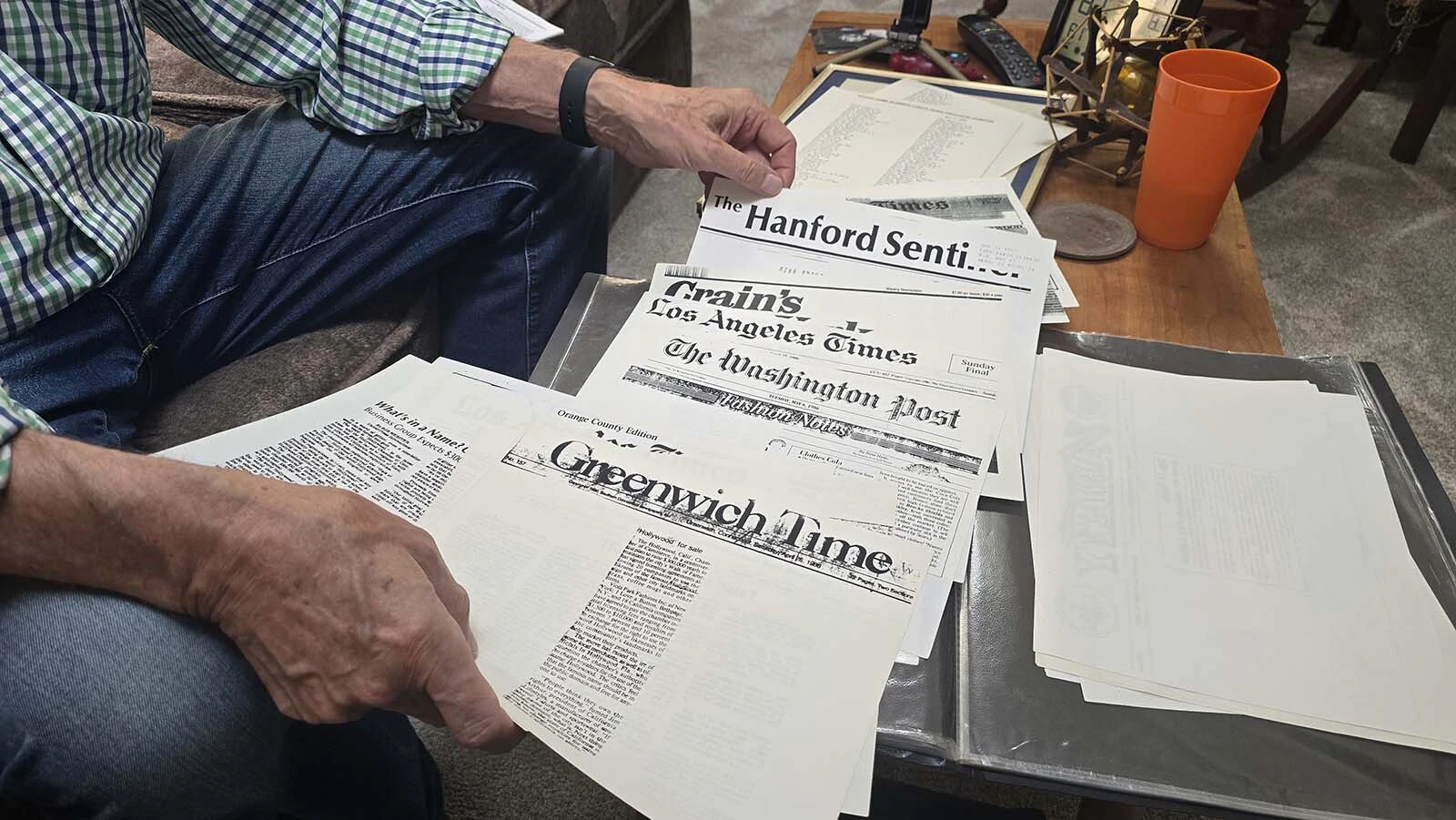
A sheet of newspaper clippings highlighting Wienbarg's efforts to sell pieces of the Hollywood sign as souvenirs. (Renee Jean, Cowboy State Daily) 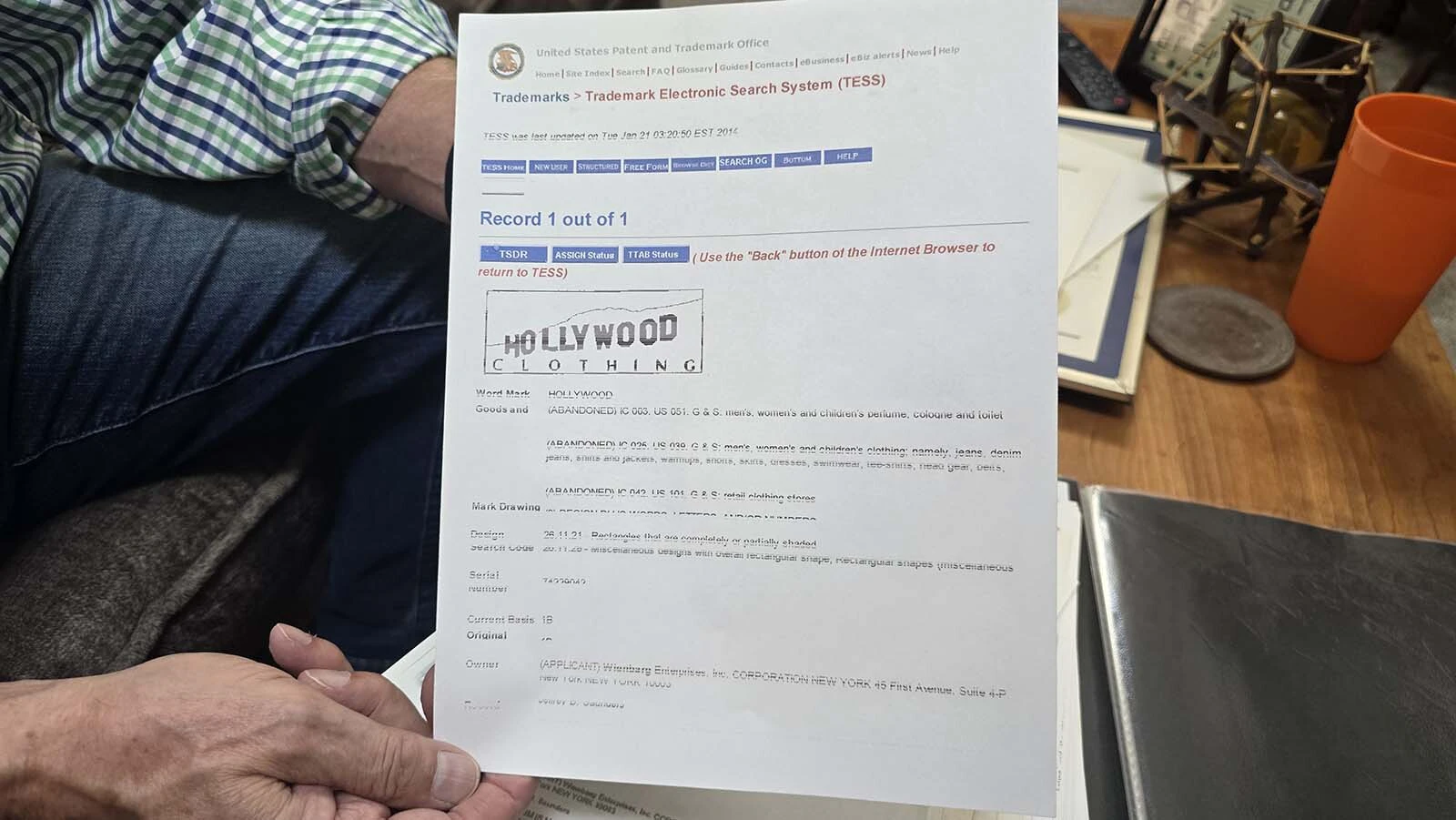
A Hollywood trademark helped A George Jay Wienbarg III keep a promise to his his girlfriend, a Korean fashion student in New York, to make her “Hollywood” famous. The idea worked, but love, Wienbarg learned, can be just as fleeing as fame. (Renee Jean, Cowboy State Daily)
The Dishwashing Segue Way
Wienbarg had grown tired of news media, though, so when Berger called he was working at the Plains Hotel as a dishwasher.
Selling the world-famous Hollywood sign sounded a little more interesting, so Wienbarg was in.
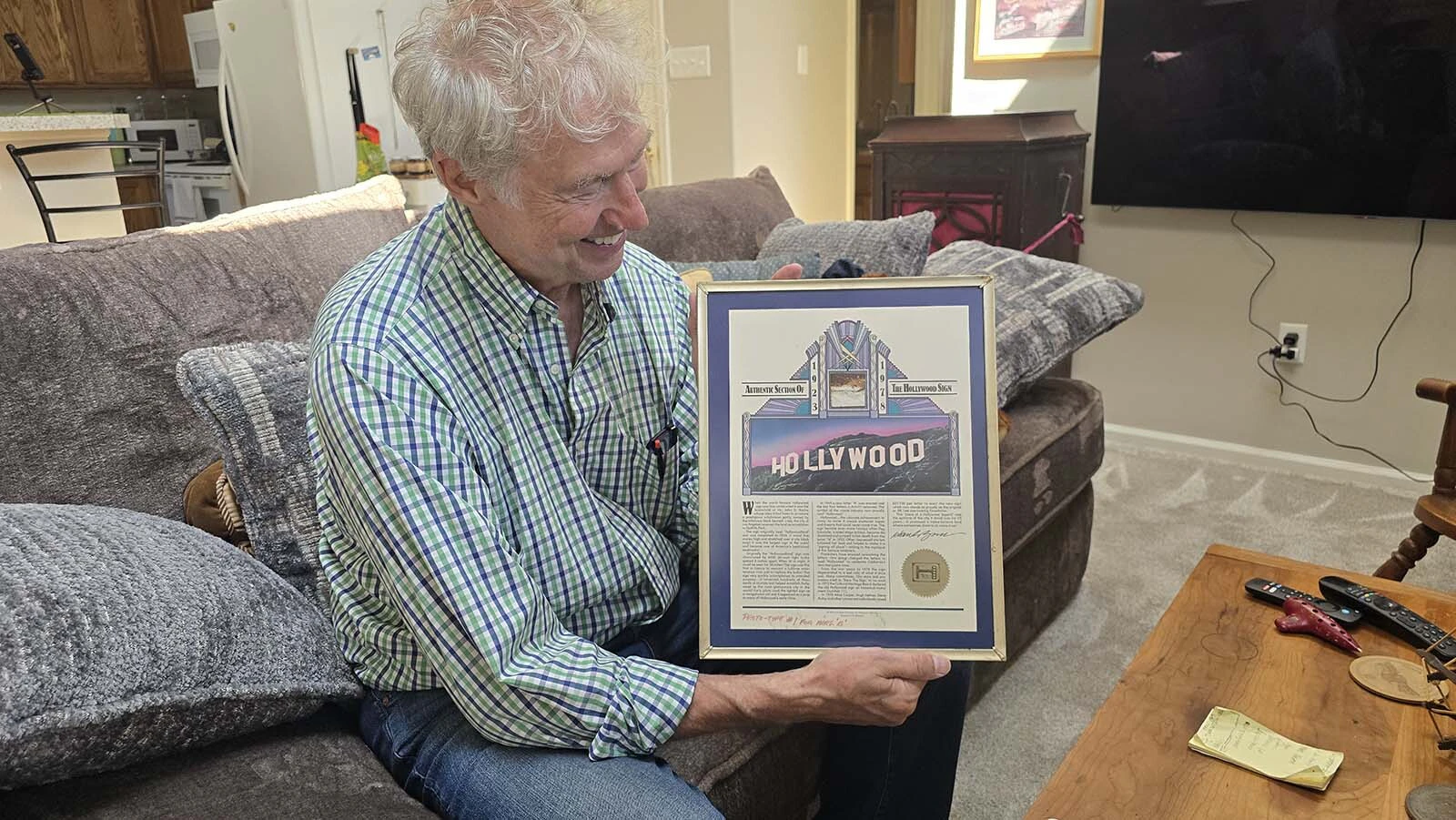
First they cut up squares from the Hollywood sign in Berger’s backyard and then they set each square into a beautiful Art Deco lithograph, with the story of the Hollywood sign underneath.
They took their collectible to a big gift show in New York, to see if it would catch fire as the status gift of 1980. The sales didn’t go well — but not for lack of publicity.
Wienbarg put together a campaign that sent the story around the globe. There were articles in Germany, Spain, and England, as well as in dozens of American newspapers and magazines, from the Los Angeles Times and Cosmopolitan, to People and Time.
Working on the Hollywood sign helped Wienbarg realize that a dish-washing job in Wyoming wasn’t going to cut it. He was bored already.
So he auditioned successfully for a spot with the American Academy of Dramatic Arts in New York. He packed up his life and moved away on July 4, 1981.
Necessity Is The Mother Of Inspiration
Six years later, he met Park on that winter day in New York, and made a promise he knew he had to keep, if he wanted to keep his girlfriend.
“I started selling her clothes,” he said. “I just took her under my wing, and she actually became my girlfriend and her dad came up with the 50,000 bucks so I thought, ‘Well, I better figure out some way to make her famous.’”
Naturally, wrestling with how to do that turned his thoughts to his successful Hollywood sign campaign.
“So it just occurred to me, trademark the Hollywood sign,” Wienbarg said. “I just said, ‘This sign is up there on the hill, it’s in the public domain, nobody’s ever trademarked it.”
Wienbarg found a clever New York attorney to help him trademark the sign for Park’s clothing line, and then they were in business. Wienbarg soon had articles appearing in places such as Variety, the Los Angeles Times, and many others, delivering on his promise in a big way.
“This is the most familiar trademark next to Coca-Cola,” Wienbarg is quoted in one article as vice president of sales and marketing for Viola Park Fashion, with a projection of $5 million in wholesale volume in the first year.
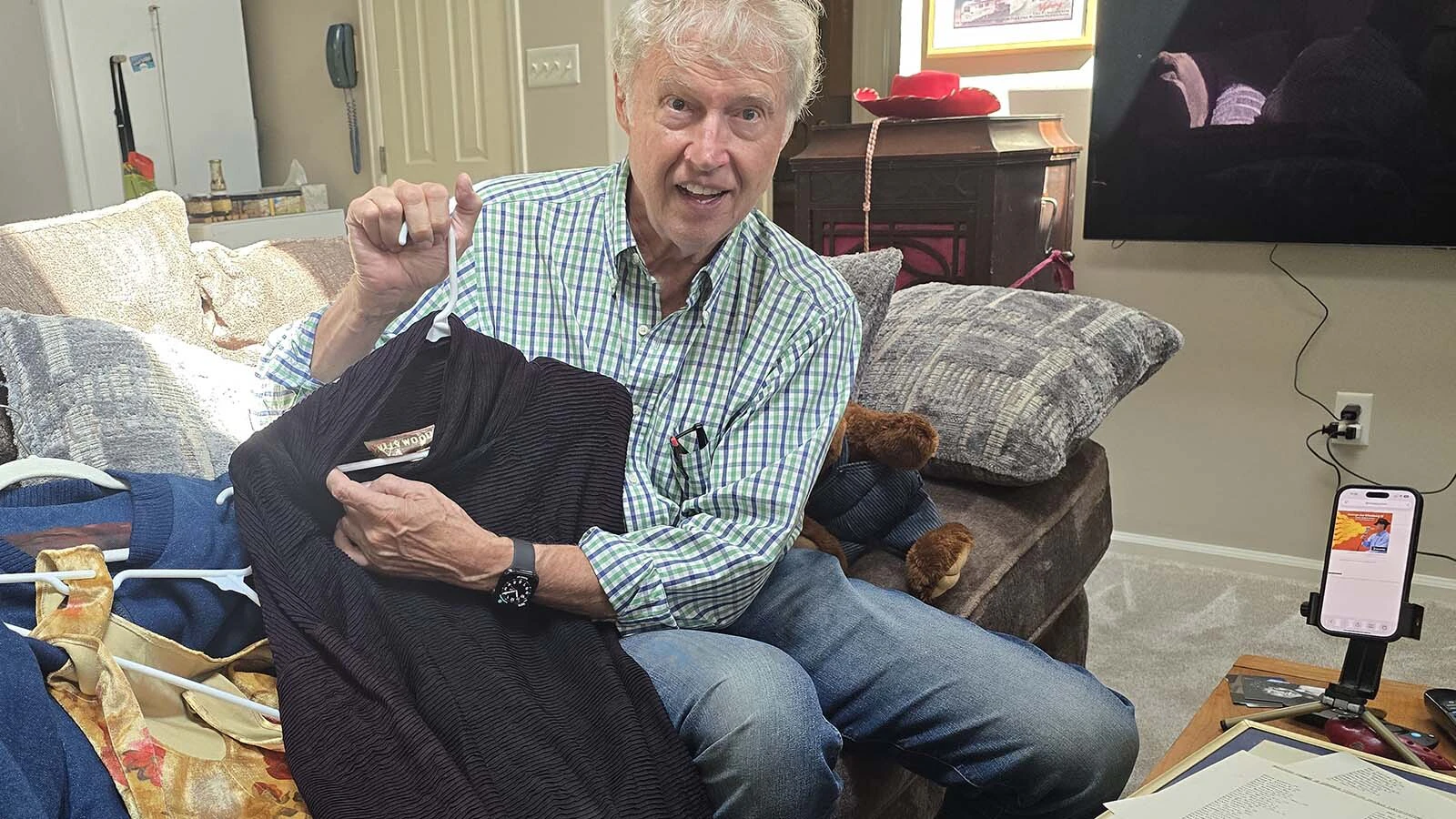
“We started making clothes and we found this really cool fabric,” Wienbarg said, holding up a little black dress that he has kept as a memento from the line. “It was a rayon and nylon on a warp knit.”
The fabric feels silky soft and catches silvery highlights here and there in the right light.
“There were many pieces in this line, and we sold them in Macy’s in every state,” Wienbarg said. “What we would do is go to the boutique show four times a year at the Jacob Javits Convention Center.”
Stores would come from around the world to place orders.
“We cut to order, so we didn’t make them and then try to sell them,” Wienbarg said. “We made them to order.”
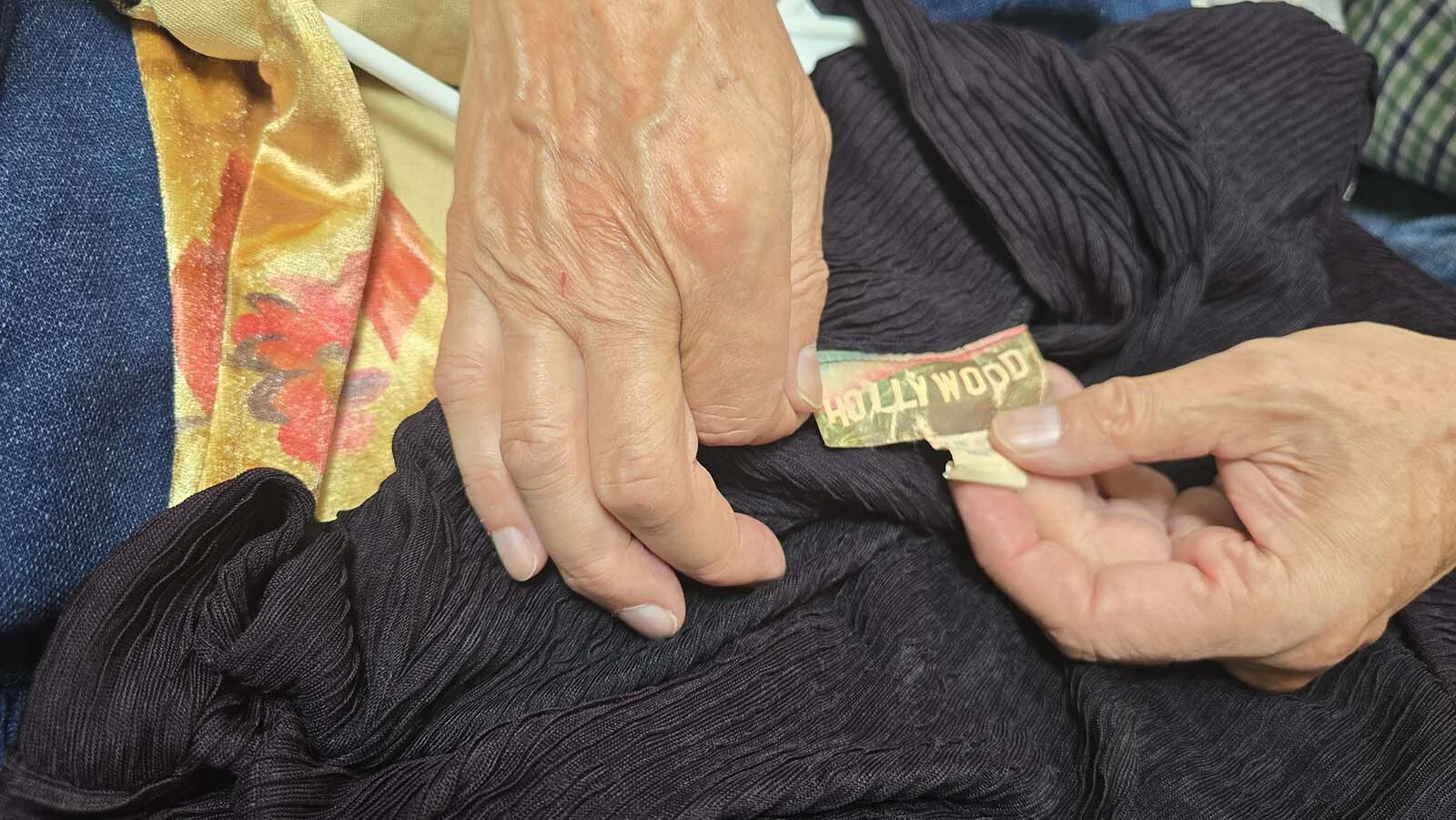
The Hollywood trademark on this clothing line helped launch it in Macy stores across the United States. (Renee Jean, Cowboy State Daily) 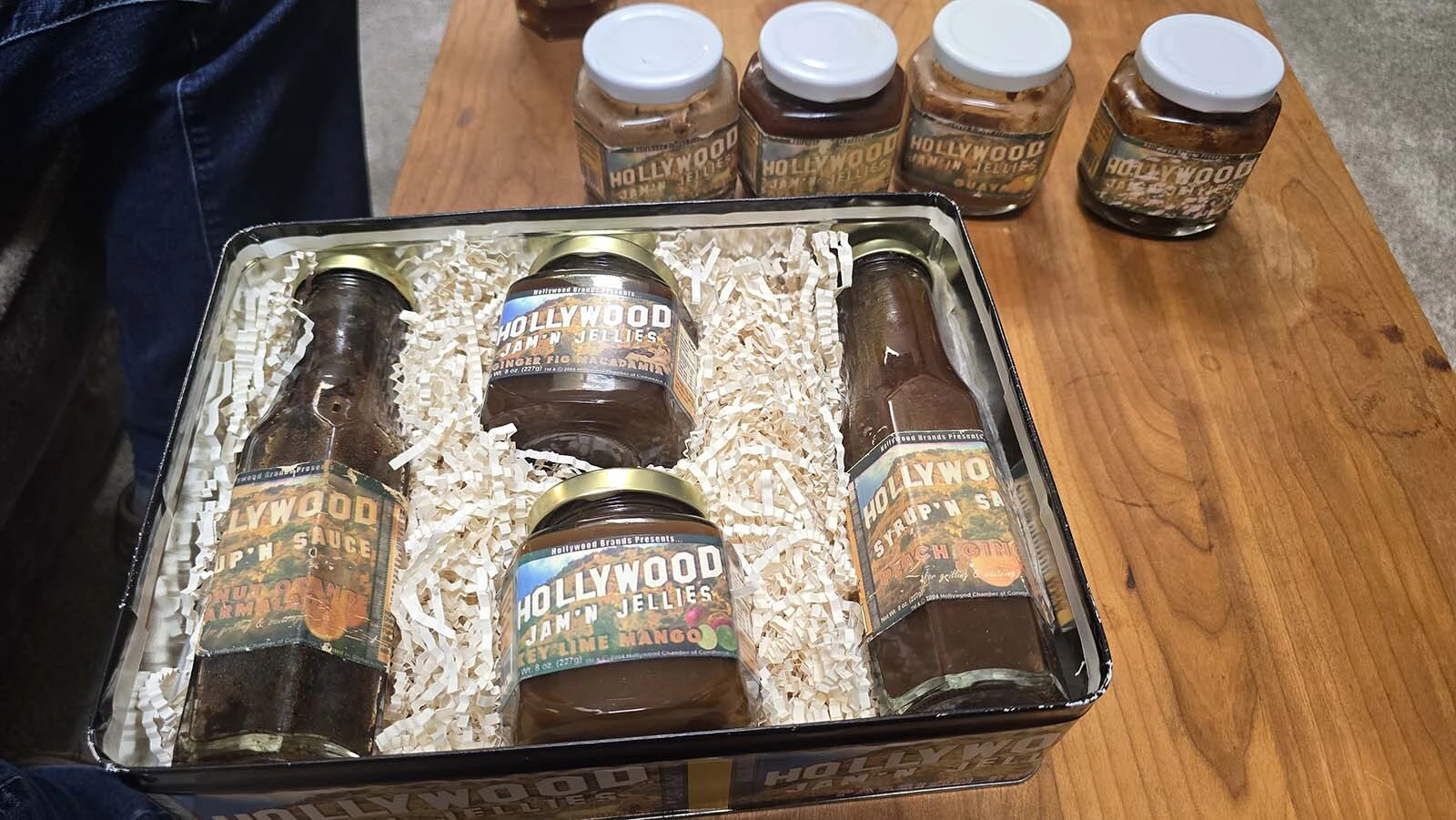
George Jay Wienbarg III developed an idea for a line of jams he encountered during a tropical film set, but never executed the idea. Sometimes he thinks about relicensing the Hollywood trademark to see if his jams would catch on. (Renee Jean, Cowboy State Daily) 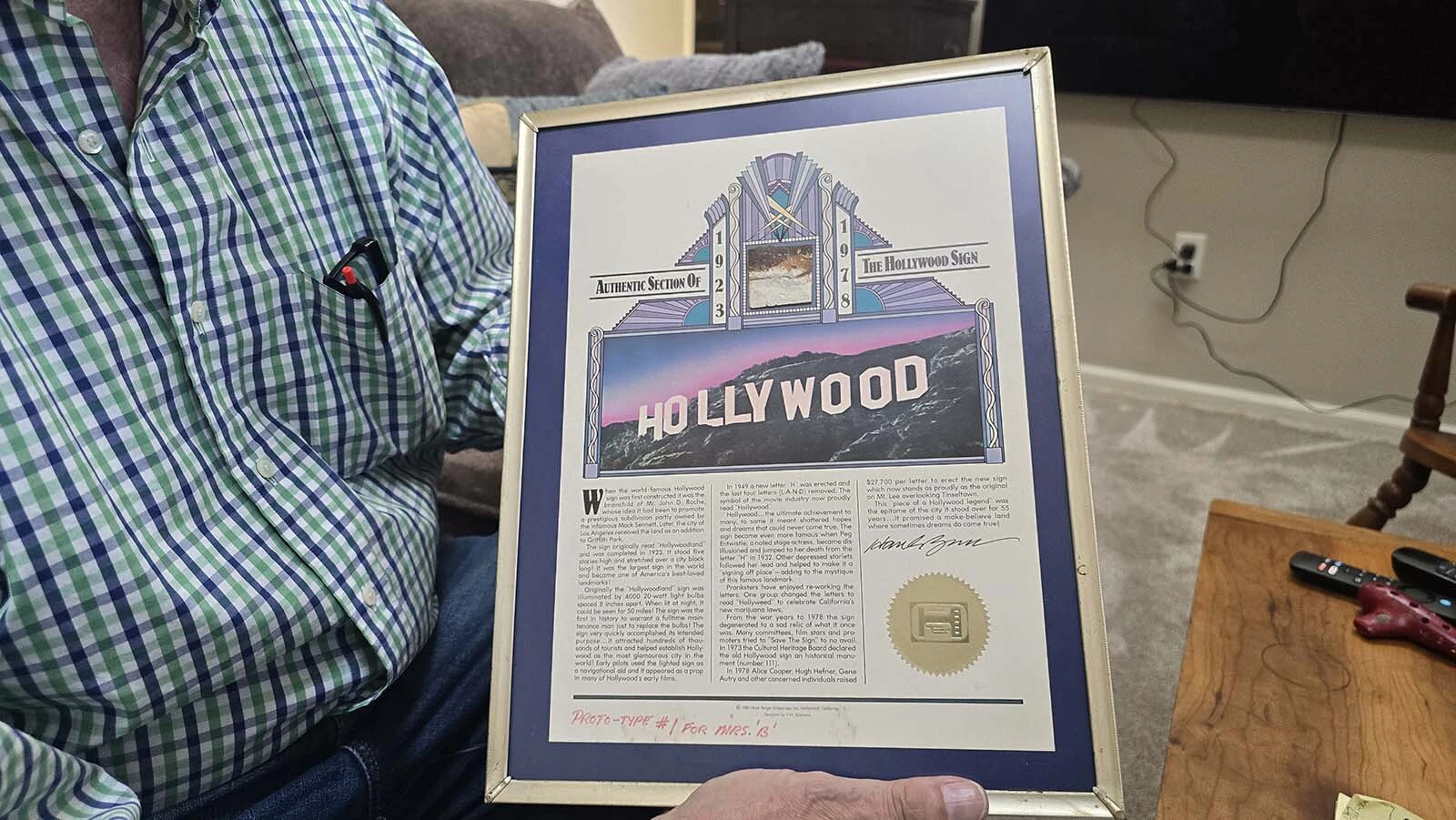
The tiny square of the Hollywood sign retailed for $29.95 back in the 1980s. (Renee Jean, Cowboy State Daily)
Hollywood Pushback
What Wienbarg didn’t realize was that trademarking the Hollywood sign would eventually put him at odds with Hollywood itself.
“Nobody had ever trademarked the Hollywood sign before,” Wienbarg said. “So I thought it was just a brilliant idea.”
But while he and Park were trying to build the Viola Park Fashion line, Hollywood was taking note of the commercial power of its own skyline.
Articles with headlines like “Controversy surrounds Hollywood sign” started showing up in newspapers with a Los Angeles dateline.
“People think they own the rights to everything,” one businessman fumed. “If the name of the city isn’t in the public domain, what is? Next thing you know, the state of California is going to charge royalties for using the name California on shirts.”
In the wake of Wienbarg’s trademark, the Hollywood Chamber of Commerce spent $25,000 in legal fees to obtain trademark protection for some of its most famous attractions, including the Hollywood Christmas Parade and the Hollywood Walk of Fame.
Wienbarg ultimately agreed to let the Chamber have the trademark for the sign and license it back from them. In exchange, Wienbarg received permission to use names of stars from the Hollywood Walk of Fame like Frank Sinatra, Johnny Travolta, and Bette Davis to promote his clothing line.
Fame Is Fleeting — Sometimes, So Is Love
The line seemed to be set for takeoff, but behind the scenes, the dream was fraying. Viola’s brother became involved in the business and things began to change.
“We ended up breaking up,” Wienbarg said. “And then I thought, well, I’ll try to come up with a line myself, and I thought this was pretty ...“
Wienbarg held up a sleeveless, velvet dress with a pastel floral print.
“But I never sold them,” he said, adding, “Fame is fleeting.”
And sometimes love is, too.
Wienbarg would stay in New York for another 45 years after that, with a successful radio career and eventually a new wife, as well as a fun side gig managing opera singers, and then a few movies to boot.
These days, he’s back in Cheyenne working on a true crime thriller, and thinking about whether he should relicense the Hollywood trademark for a line of jams and jellies — a story for another day.
Renée Jean can be reached at renee@cowboystatedaily.com.


