
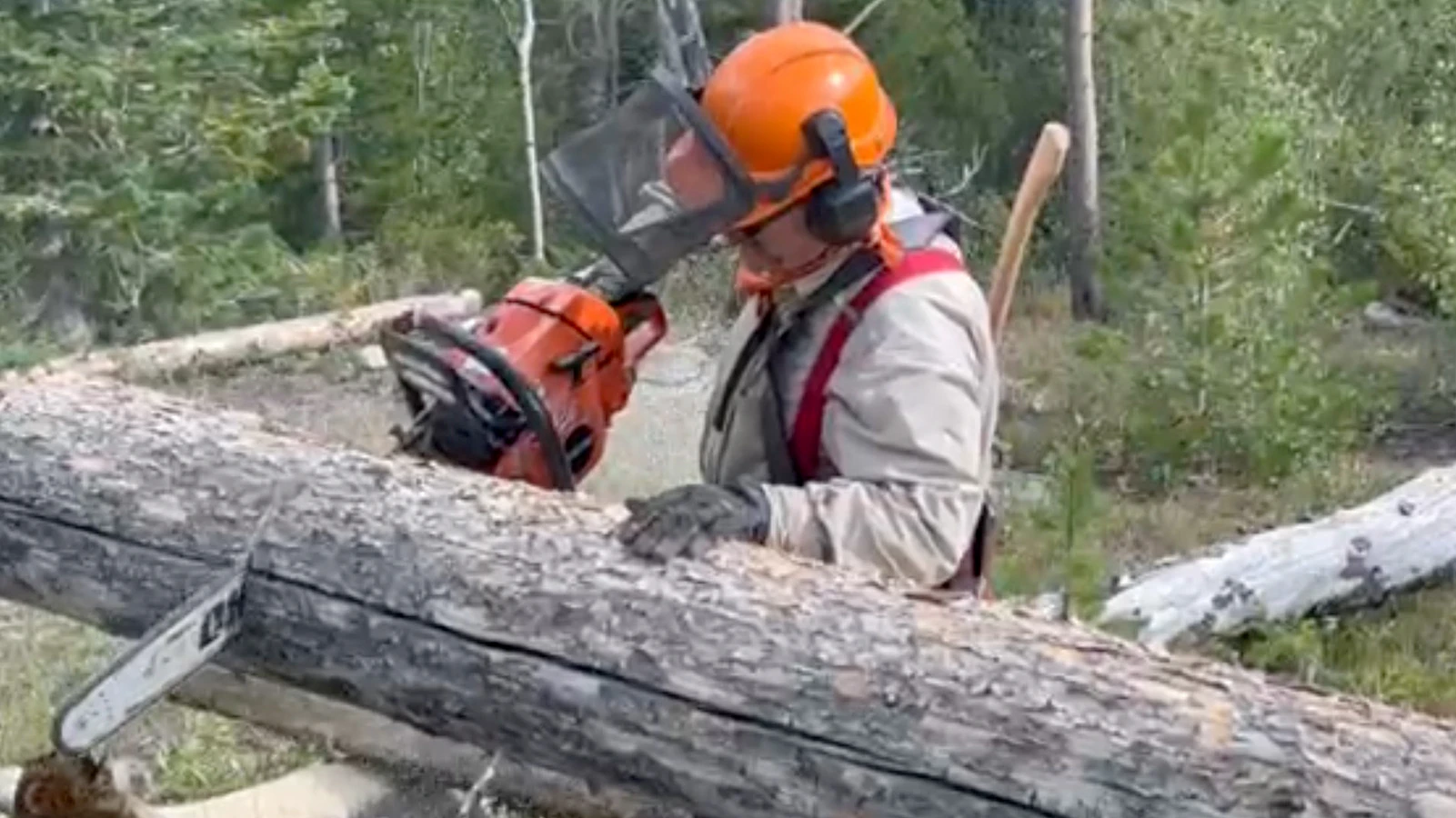
So many dead trees are piling up on Wyoming’s remote wilderness trails, some outfitters are saying they should be allowed to use chainsaws to clear them rather than toiling for days with old-fashioned hand tools.
They argue the buildup of dead timber has exceeded the Forest Service's capacity to remove it in a timely manner, particularly with the agency's recent staff and budget cuts.
Allowing chainsaw use on a limited basis could solve the problem, some say. It’s already been tried – most recently this spring in the 2.3 million-acre Frank Church-River of No Return Wilderness in central Idaho.
However, opponents argue the rules are clear about keeping designated areas strictly primitive under the 1964 Wilderness Act – no machinery of mechanical devices of any kind.
Not even bicycles are allowed in wilderness areas, opponents say, so why should an exception be made for chainsaws?
Dead Trees Everywhere
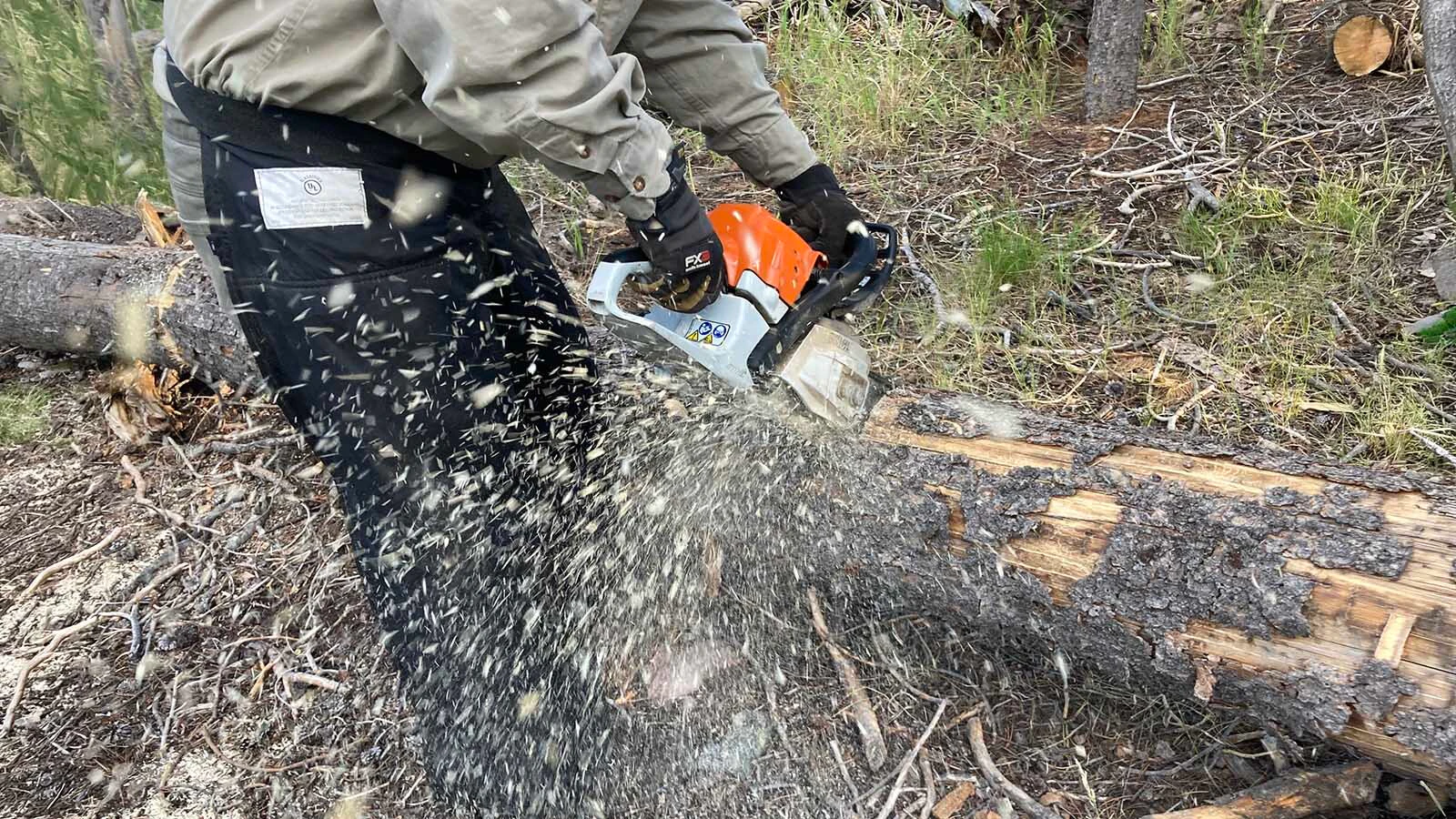
Pine beetle epidemics have torn through forests across the West, leaving dead trees everywhere. Thy frequently fall over on trails, or blow over in huge piles.
The Forest Service and volunteer trail associations across Wyoming can hardly keep up with the work.
That’s especially true during the spring and early summer, as hikers and equestrians head out on trails where trees have been dropping all winter.
The task is made more difficult by orders of magnitude in wilderness areas, where only hand tools are allowed, says Dustin Stetter of Dubois, president of the Wyoming Outfitters and Guides Association.
‘Misery Whips’
The main campsite for his company, Stetter Outfitters, is about 20 miles from the nearest road. It’s for summer camping excursions and a base camp for hunting trips.
Stetter and his crew could typically clear the path for the first camping trip in June. And they could do so using old-fashioned hand saws, axes and two-person crosscut saws.
Crosscuts are huge saws with a handle at each end, which operators can continually by alternately pushing and pulling.
Stetter said he once heard an old-timer outfitter call crosscut saws “misery whips” because running them for hours can be utterly exhausting.
With the amount of dead tress left in the wake of the pine beetle epidemic, the days of clearing trail on the way to camp are over, Stetter said.
“It’s gotten to where we can’t do that anymore. We have to send an advanced team in to clear the trail ahead of time,” he said.
It can take more than a day, and sometimes must be done in the spring and again in the fall before hunting season.
“I think one year we cleared 120 trees just to get to our camp, Stetter said.
“We get along really well with our Forest Service office (in Dubois)," he added. "It’s not a matter that they won’t clear the trail, it’s just that they might not have the time or resources."
Chainsaws In The Frank Church
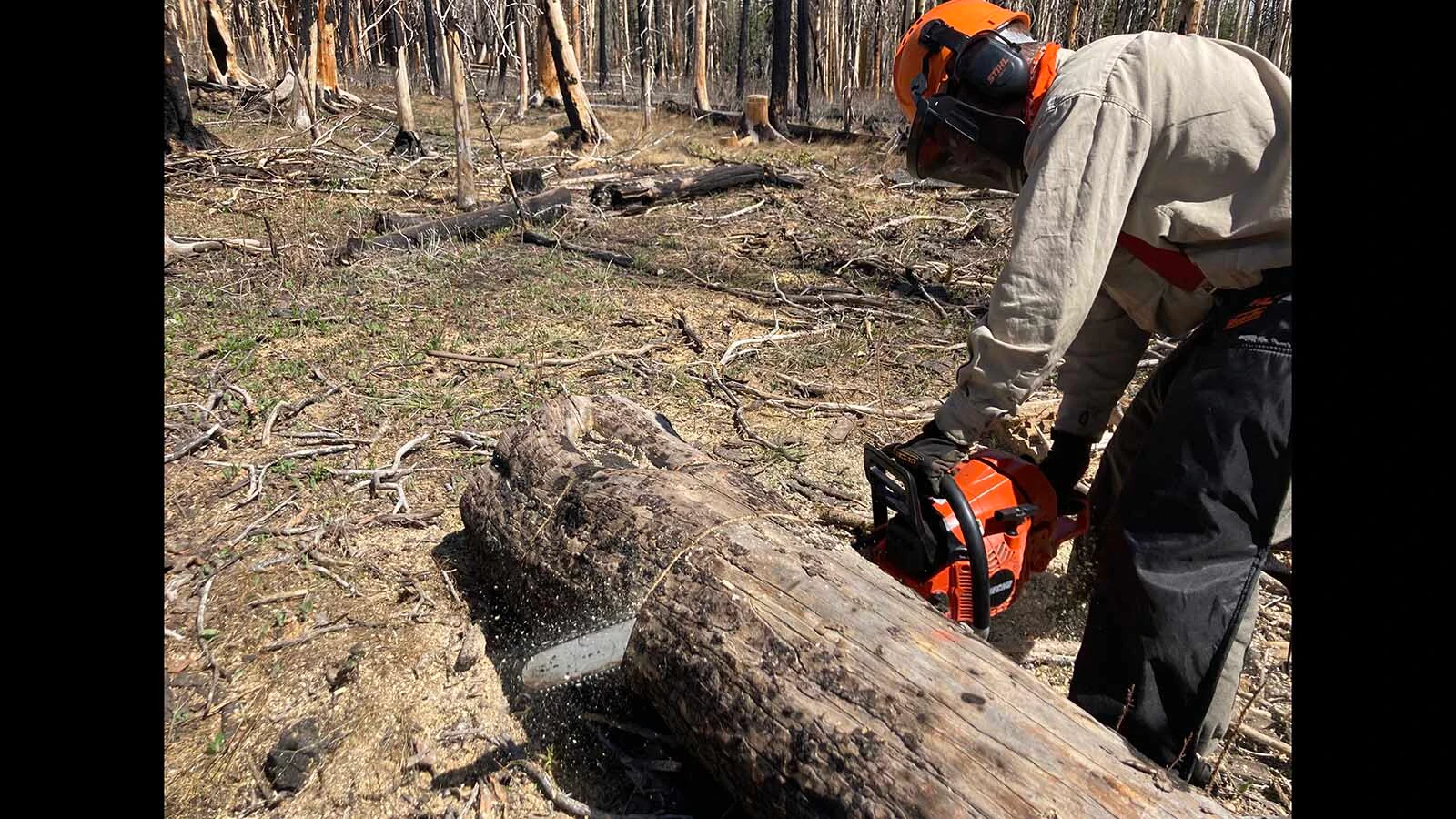
In May, the Forest Service granted a request from the Idaho Outfitters and Guides Association to use gas chainsaws on roughly 542 miles of trails in the Frank Church-River of No Return Wilderness.
The agency cited “extraordinary levels” of downed trees as the reason for a temporary suspension of the ban on mechanical devices, National Public Radio reported.
The Missoula, Montana-based Wilderness Watch organization opposed the move.
“The Forest Service made this decision after a year of secret, behind-closed-door negotiations with the Idaho Outfitter and Guides Association with no public comment or environmental review, and little regard for federal laws, including the Wilderness Act,” Wilderness Watch said in a statement.
Wilderness Watch is circulating a “sign-on” letter opposing chainsaws in wilderness areas, which it stated has been signed by “nearly 100 conservation and trails organizations, as well as dozens of former agency wilderness rangers and specialists.”
Budget-Slashing
The problem is rooted in cuts to the Forest Service, Julia Stuble, Wyoming state director for The Wilderness Society, told Cowboy State Daily in an email.
“People deserve the freedom to get outside and access our shared wilderness areas, and the Wilderness Act already allows for careful, case-by-case consideration of chainsaw use through an agency minimum tool analysis where needed to help maintain that access,” she wrote.
“But while people debate chainsaws in this instance, the administration is taking a chainsaw to the public land workforce itself — slashing staffing levels, starving budgets and closing office doors. That is the bigger threat to public access, and it is exactly why we are focused there,” Stuble added.
Going Electric?
Chainsaws come in three performance grades — in ascending order, homeowner, ranch and professional grade.
Electric chainsaws were once limited to a few smaller models that had to be plugged into an extension cord.
Recently, however, electric chainsaw technology has advanced considerably.
A variety of cordless, battery-powered units can out-pace gas homeowner saws, and compete with ranch-grade gasoline-powered saws.
Stetter said electric chainsaws might be a good option for allowing saws into wilderness areas when needed without disrupting the “primitive atmosphere” of remote areas with screaming gas engines.
It could be done, he said, on a limited-permit, case-by-case basis, strictly for clearing trails at specific times.
Allowing the broad use of chainsaws in wilderness areas would spoil those areas, he said.
Wilderness Watch spokesman Matthew Koehler told Cowboy State Daily that his group opposes allowing even electric chainsaws into wilderness areas.
That’s because they still qualify as mechanical devices and undermine the intent of the Wilderness Act, he said.
Mark Heinz can be reached at mark@cowboystatedaily.com.


