
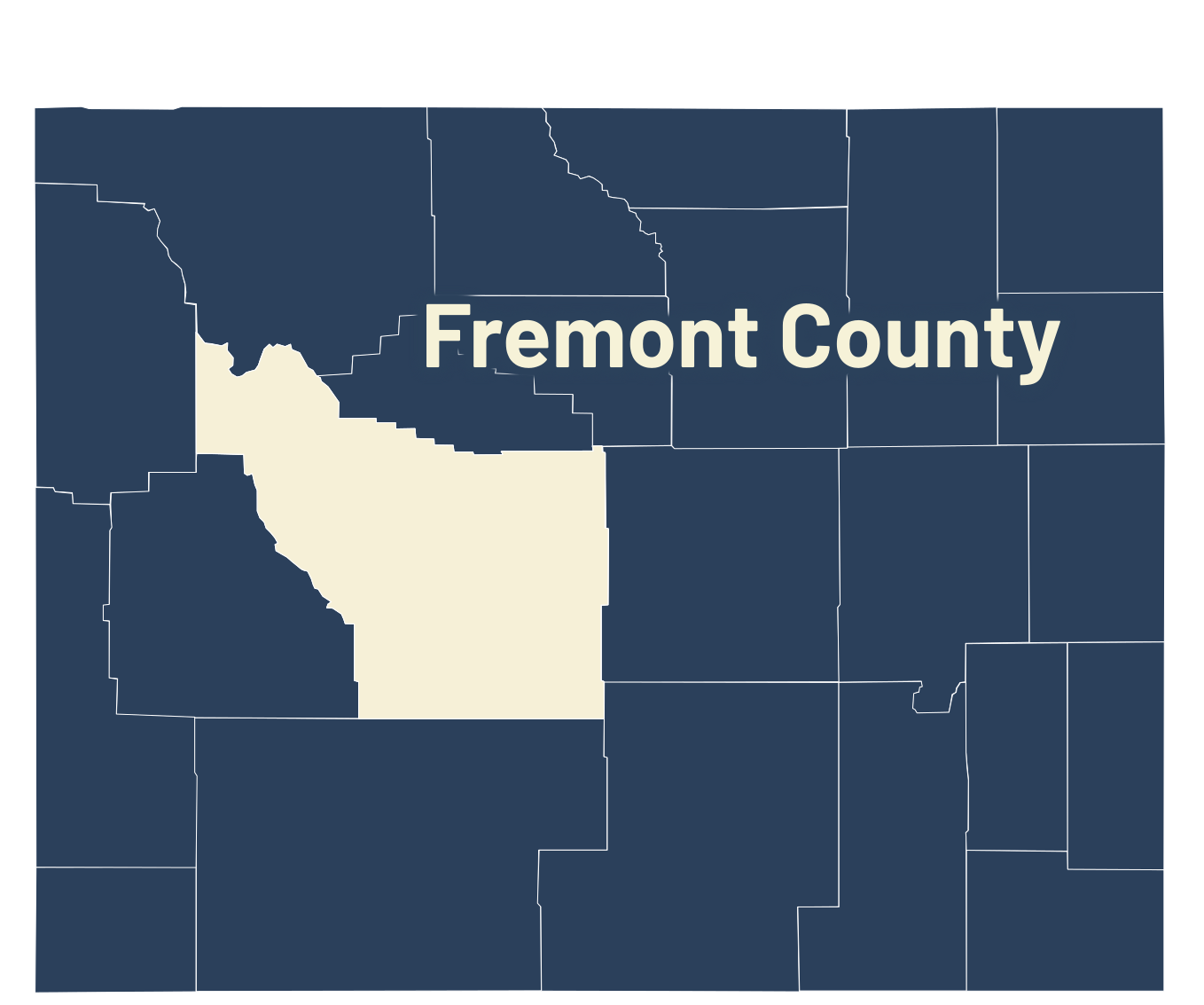
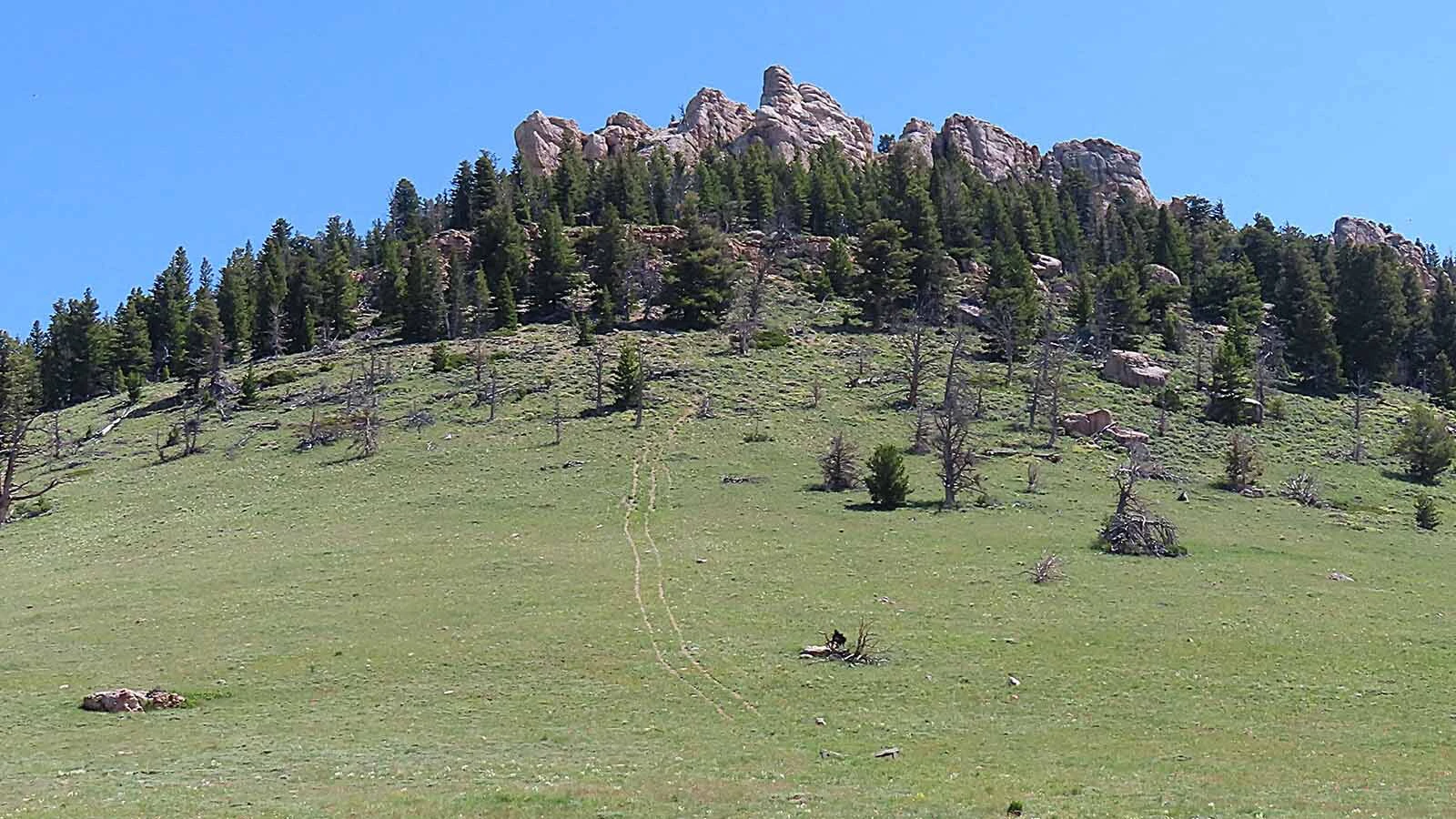
People keep using a steep, scenic hillside above Sinks Cayon near Lander as a climbing challenge for off-road vehicles, leaving tire ruts that have lasted more than two decades, a retired Forest Service ranger says.
Overzealous off-roaders have illegally gone ripping up Fossil Hill so many times, retired forester Karl Brauneis wonders if the marred hillside will ever heal.
“I just don’t think that site is going to recover. And that fact that people keep driving up it means it’s going to remain an eyesore,” Brauneis told Cowboy State Daily.
In 2005, he wrote the last ticket of his career with the Forest Service after watching a young man on a dirt bike illegally buzzing up the hillside.
“I waited until he came back down, and then wrote him a ticket,” Brauneis said. “That kid who went up there, who I ticketed, was not the first one to go up there.”
Nor was he the last, Brauneis said.
He still visits the site frequently, and took a recent photograph of an illegal two-track.
That's despite a barricade at the bottom of the hill and a sign stating the area is closed to motorized travel.
“For some folks the barricade and closure sign simply means, ‘Let’s go around and drive on up. It's so much fun to tear up rehabilitation sites,’" Brauneis said.
He added that the recurring off-road violations on Fossil Hill encapsulate the “chronic problem” of unauthorized off-road vehicle use on public lands.
The 50-40-10 Rule
Brauneis noted that during his career Forest Service rangers and Wyoming Game and Fish wardens would go out together on “red shirt-green shirt patrols,” referencing the red shirts worn by wardens and the rangers’ green.
During one such patrol with a warden, Brauneis said they were discussing how many people are honest citizens compared to those who might try to bend or break the rules.
They came up with what he calls the “50-40-10 rule.”
Meaning, “50% of the people are law-abiding and will faithfully follow laws and regulations even when nobody’s watching," he said.
Then, there are the 40% who are “going to try get away with it, if they think they can get away with it,” he added.
The last 10% “will kill you if they think they can get away with it,” Brauneis said. “Fortunately, most of those are in prison. The bad news is, some of them might be getting out tomorrow.”
To his estimation, the people running vehicles up Fossil Hill probably fall into the “40%” category – and don’t have truly bad intent.
“They are probably younger people who are just after the thrill,” he said.
And in some cases, unauthorized off-roading could result from confusion over the rules on federal land, Brauneis added.
On Bureau of Land Management (BLM) tracts, the regulations for motorized use tend to be more permissive, he said. So, people accustomed to recreating there might not realize rules are stricter on Forest Service land.
‘Outwash From Big Cities’
As to why off-road violations might have gotten more common, Brauneis noted the availability and capability of vehicles has increased.
“I think everything escalates, gets bigger with the increased technology in vehicles,” he said. "But also, there’s the sheer number of people to consider.”
The outdoors has become more crowded, and more people means greater odds of a relative few breaking the rules, he said.
Places that once were sparsely visited, such as the southern end of the Wind River Range, are drawing crowds, Brauneis said.
“It’s outwash from the big cities. It’s their land, and they want to recreate on it. And there’s no problem with that, but there’s just a huge amount of people out there,” he said.
He also noted that the Forest Service tried moving toward educating the public rather than having an immediate presence of rangers with ticketing authority on the ground.
Brauneis said the latter is more effective. The more rangers are on patrol, the better.
“Not in an antagonistic way, in a service way. But with the ability to take care of problems, if the need arises,” he said.
Brauneis said he’s not against roads or motorized use in general. He favors established Forest Service roads because they aid public travel and make fire mitigation and timber harvest more efficient.
And because the national forests are “America’s playground,” there should be areas where motorized users can enjoy themselves, he added.
‘Loss Of Access, And Understanding’
Taylor Jones is a Sweetwater County commissioner and off-road enthusiast who advocates for motorized access.
He said he hates to see people breaking rules and tearing up places where vehicles aren’t supposed to go.
“Every group has that 10% who don’t play by the rules and give everybody else a bad name,” he said.
And those who abuse the land ruin things for all off-roaders, Jones said.
“What it can do – and we have seen it, so we know it’s true – is it can cause the motorized recreation community to lose access to public land. And, in some cases, also private land,” he said. “The motorized community has lost a tremendous amount of access to public land, and loses more on an annual basis.”
Irresponsible people tearing up fragile landscapes are a big driver of that, he said.
However, by Jones’ estimation, there’s been a decline in illegal off-road use because motorized users know what’s at stake if they continue to let rule-breaking go unchecked.
“There’s a big push in the off-road clubs to raise awareness and be better stewards of the land,” he said. "There’s an awareness of the loss of access, and an understanding that breaking the rules causes it.”
Mark Heinz can be reached at mark@cowboystatedaily.com.


