A sweeping class-action lawsuit accusing the nation's four largest meatpackers of conspiring to manipulate cattle and beef prices is moving forward after a federal judge in Minnesota certified several classes of plaintiffs earlier this month.
The lawsuit alleges that JBS, Tyson Foods, Cargill and National Beef coordinated to restrict beef supplies and inflate prices between June 2015 and February 2020, harming ranchers who sold cattle while forcing wholesalers, grocers, consumers, restaurants and caterers to pay more for beef.
Together, the four companies control more than 80% of the U.S-fed cattle processing market, giving them wide influence over cattle prices and the nation's beef supply.
U.S. District Judge John Tunheim issued his ruling July 16.
From The Big 12 To The Big Four
For Wyoming ranchers who have watched consolidation reshape the industry over decades, the lawsuit is about far more than the five-year period covered in the complaint.
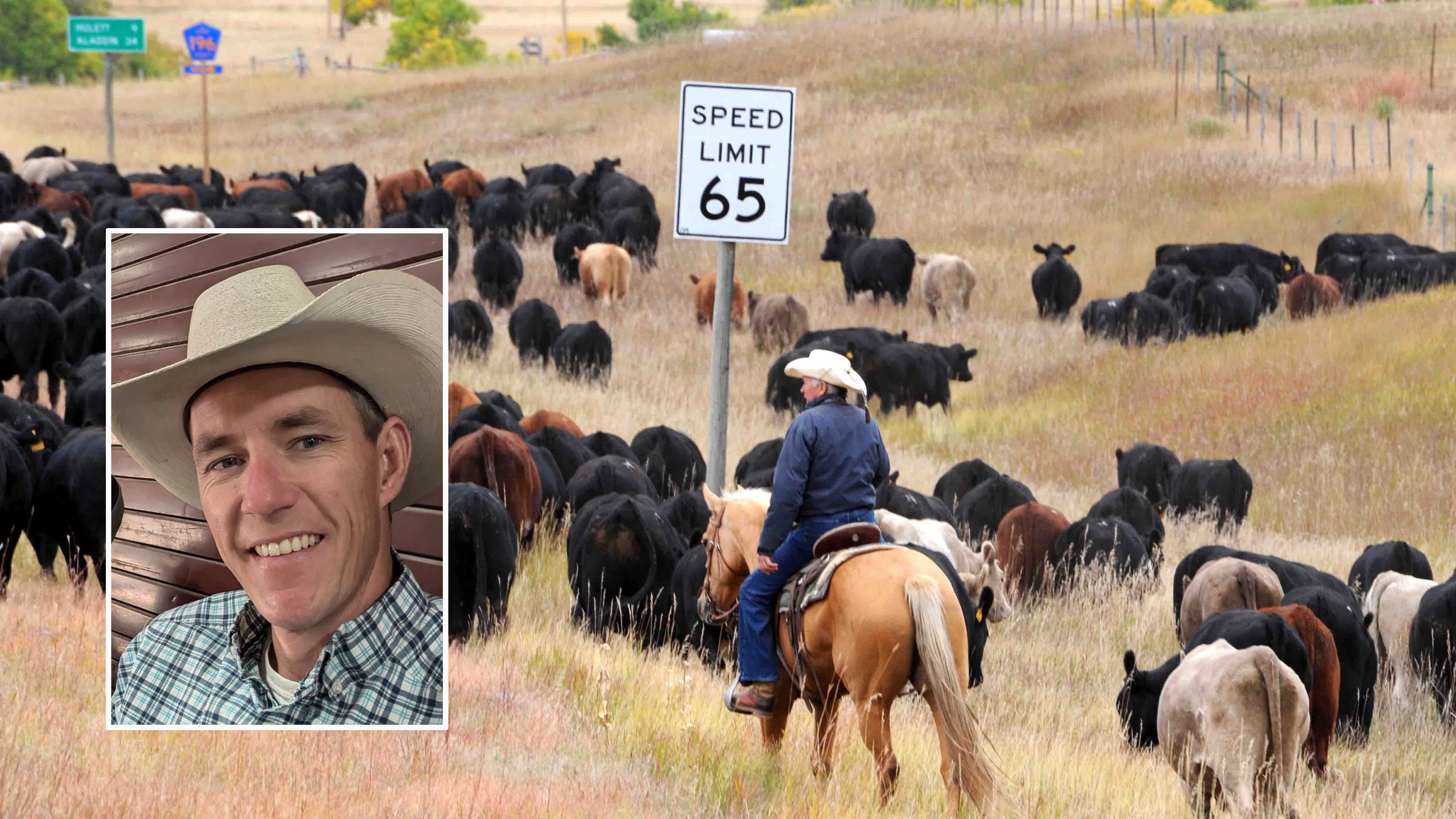
"The packers have controlled the destiny of beef for decades upon decades," Crook County rancher Tyler Lindholm told Cowboy State Daily. "It's getting to the point where people are starting to push back."
State Sen. Ogden Driskill, R-Devils Tower, said the current market is the product of decades of declining competition.
"Our federal government has allowed our federal packing industry to go from the big 12 to the big 10 to now the big four," Driskill said.
With a dozen major packers competing, coordinating prices would have been far more difficult, he said. Today, with only four dominant players, ranchers are left with few options for selling cattle.
"It really is high time for the government to step in and say we have to get a process that treats everybody fairly," Driskill said. "We're not asking for an upper hand. We're looking for everyone to be treated fairly."
Driskill blamed what he called a "very, very failed federal bureaucracy" for allowing market concentration to reach its current level.
Not Every Rancher Is Convinced
Not everyone in Wyoming's cattle industry believes the allegations will hold up.
Laramie County rancher Mark Eisele said he remains skeptical that the major packers have engaged in coordinated misconduct.
"I'm not sure how I feel about this lawsuit," Eisele told Cowboy State Daily. "I would like to see what comes from this."
After decades in the cattle business, Eisele said he has never seen evidence of retaliation or deliberate manipulation by the major packers.
Court filings paint a different picture.
According to the plaintiffs, economic modeling shows ranchers were underpaid by nearly 7% during the period covered by the lawsuit because the packers coordinated slaughter schedules and managed beef inventories to suppress cattle prices while increasing wholesale beef prices.
Lindholm said he believes market behavior itself supports those allegations.
He pointed to the Trump administration's approval of roughly 2 million additional pounds of beef imports from Argentina, saying a significant increase in imported beef should have softened domestic prices if the market were functioning normally.
"By all expectations, having an insane amount of beef imported from a country should have moved the beef prices here. It did not," Lindholm said. "Some might call that a conspiracy. But the proof is there. You can see it in the market."
More Harm Than Good?
Eisele, however, questioned whether repeated class-action lawsuits are driven more by financial incentives than by wrongdoing.
If plaintiffs prevail, attorneys could receive more than one-third of any award, he noted.
Activists often follow the same pattern of suing and settling, he said.
He suggested that previous settlements, including one involving JBS, reflected business decisions rather than admissions of wrongdoing.
"It was a pressure point," he said.
Meanwhile, Eisele worries the industry faces another challenge altogether: shrinking cattle supplies.
Some large packing plants are already slowing production or closing facilities because there simply aren't enough cattle moving through the system, he said.
"Cattle producers need to be real careful of what they wish for," Eisele said.
If additional plants close, ranchers could find themselves with even fewer places to process cattle.
"We're starting to paint ourselves into a dangerous corner on this," he said.
A Difficult Case To Win
Even if the allegations are justified, Driskill said he believes proving them in court will be difficult.
"They have deep pockets," he said of the meatpackers. "They're going to have the better lawyers."
Price-fixing cases are notoriously difficult because plaintiffs must show competitors acted together rather than making similar business decisions independently.
Regardless of the lawsuit's outcome, Driskill said Congress should revisit the Packers and Stockyards Act to strengthen protections for independent producers and smaller regional packing plants.
He would also like to see policymakers encourage enough competition to return the industry to something closer to the days when 10 or 12 significant packers competed for cattle.
"Let's break it up and get rid of these huge multinational conglomerates," he said.
Lindholm said the only way to do that is to look at the existing regulatory structure. The Federal Meat Inspection Act currently blocks states from controlling the meatpacking industry.
“What is allowing these big four to capture so much (business) under one umbrella?” Lindholm said. “That’s the key … Congress needs to go break the back of the packers.”
Driskill added that only a substantial financial penalty would change corporate behavior.
"A $30 million fine on a $10 billion company is like me getting a 10-cent speeding ticket," he said. "I would just pay the ticket and be on my way."
Cowboy State Daily reached out to JBS, Tyson Foods, Cargill and National Beef for comment. None had responded by publication.
Kate Meadows can be reached at kate@cowboystatedaily.com.