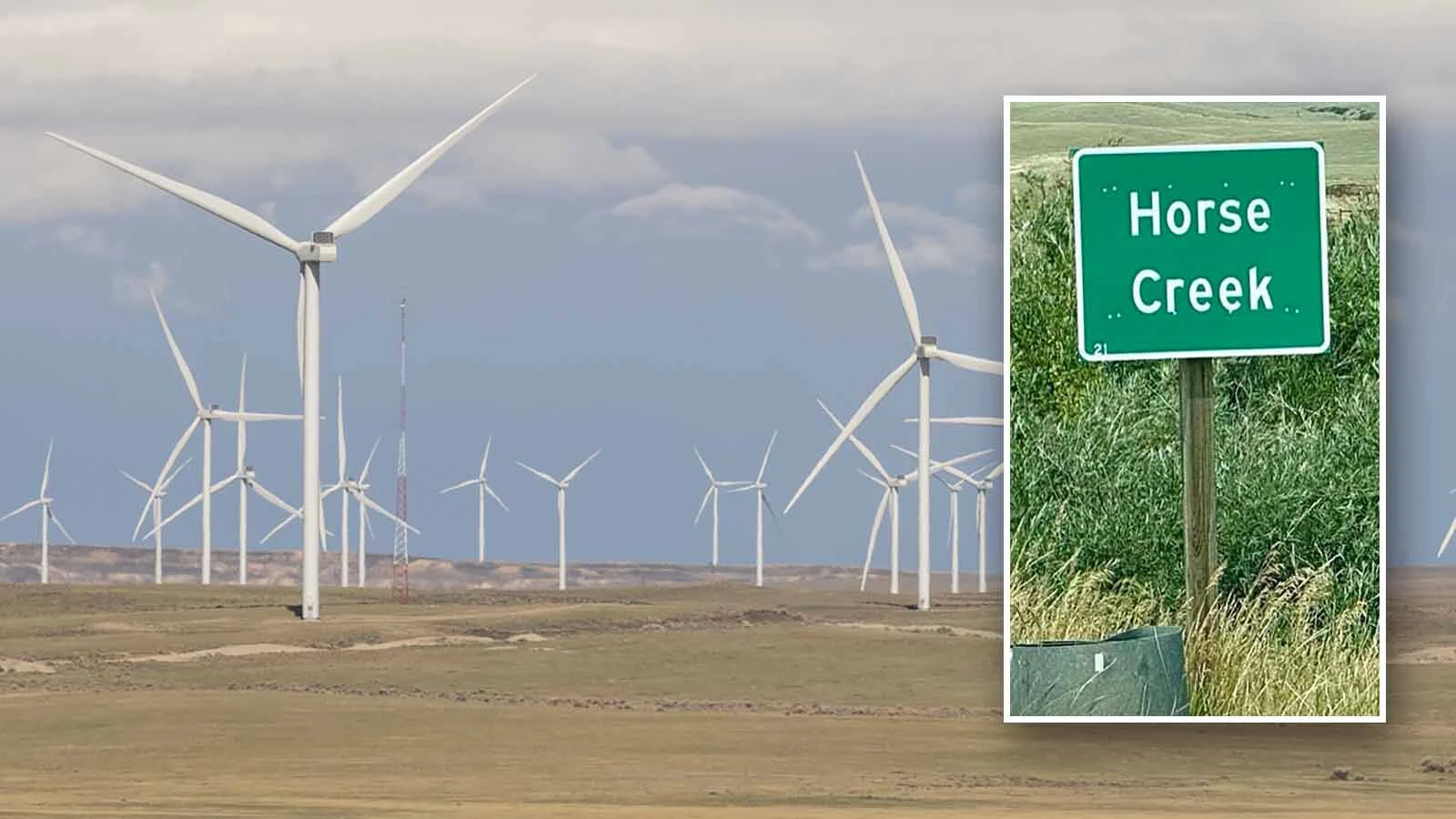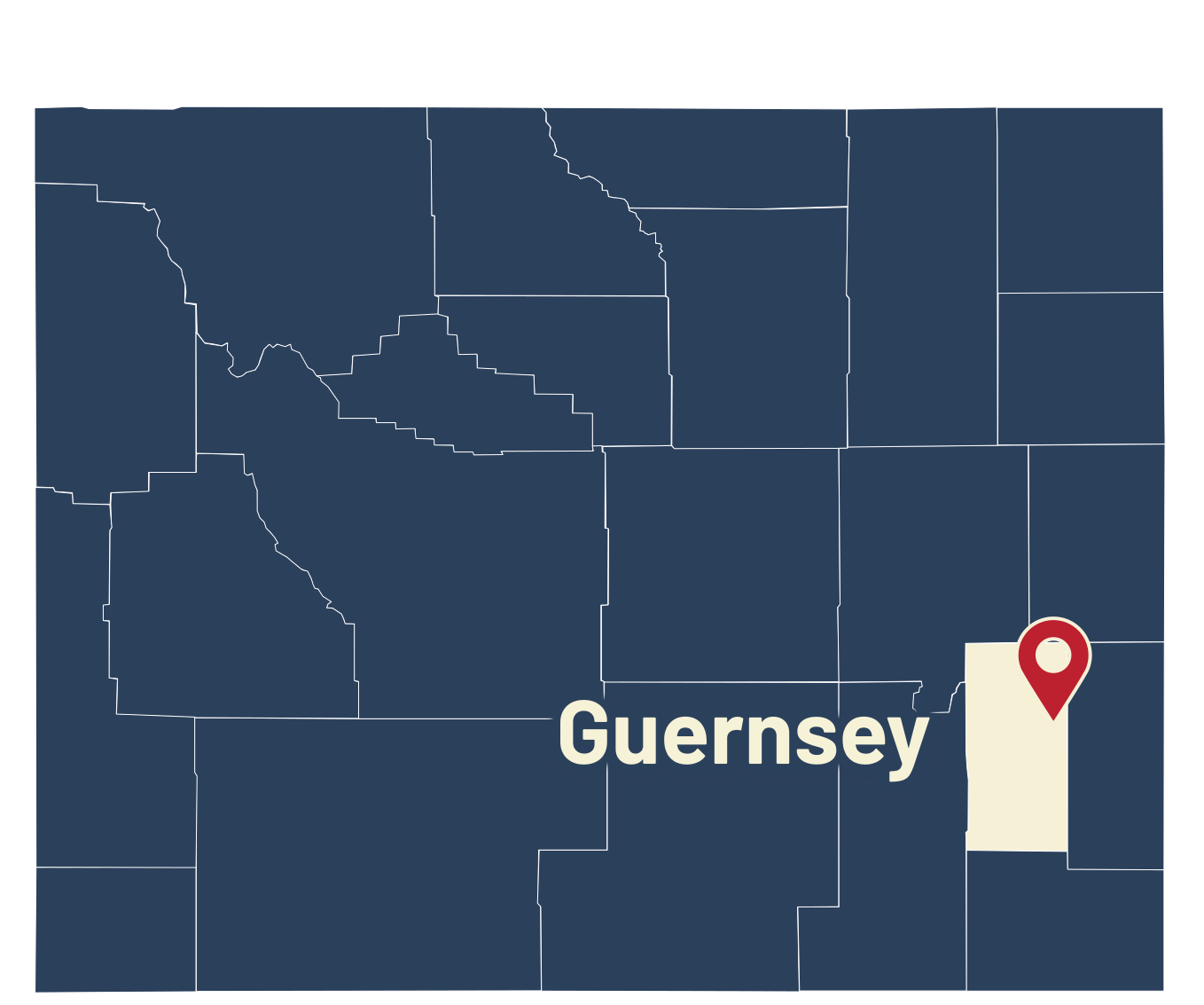
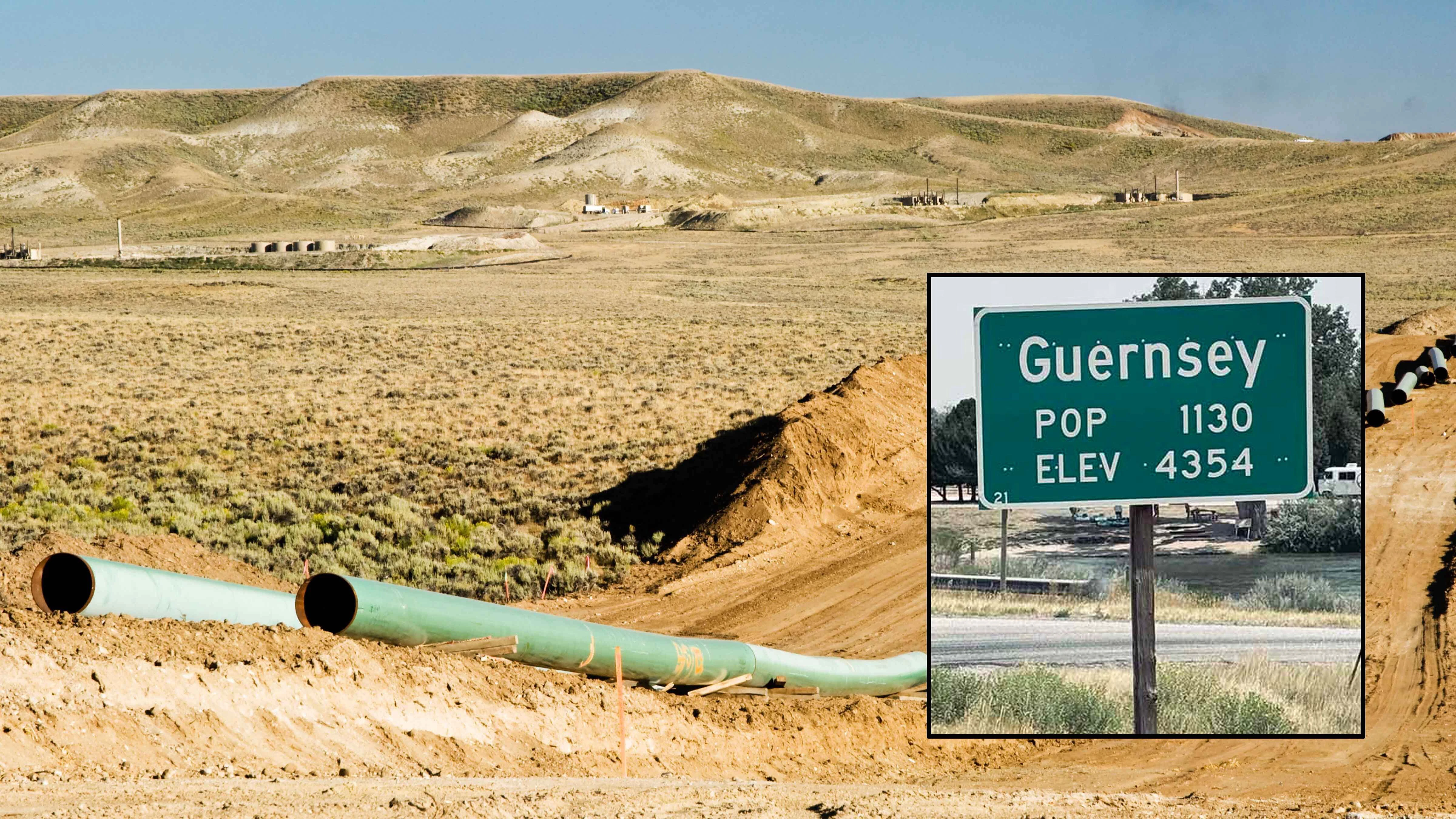
A crude-oil pipeline proposed between Guernsey and Cushing, Oklahoma, is poised to strengthen Wyoming’s role as a key crossroads in North America’s oil network — even though it likely won’t move a single barrel of Wyoming crude.
The project, called the Liberty Bridge Pipeline, will connect at Guernsey with a project previously proposed by Canada’s Southbow and True Companies’ for a 650-mile cross-border pipeline that would carry an initial 550,000 barrels of Canadian crude daily from Hardisty, Alberta, to Guernsey.
The pipeline could eventually scale to 1.3 million barrels of crude per day.
The Guernsey hub is an important oil and gas crossroads in Wyoming, sending oil to the Midwest as well as to Cushing, but much of its capacity for the Gulf Coast was already spoken for. That raised questions as to how half a million or more new barrels of Canadian crude arriving in Wyoming would get to the markets that need it.
With the announcement of the new pipeline, the mystery is solved.
Bridger Pipeline spokesman Bill Salvin confirmed for Cowboy State Daily that Bridger and Southbow are teaming to build the pipeline and that it will connect with the previously proposed pipeline from Alberta.
“Bridger and Southbow are going to jointly develop the Liberty Bridge Pipeline through this joint venture that’s going to be called Liberty Bridge Pipeline LLC,” Salvin said. “And essentially it’s going to be along existing pipeline corridors.”
The joint venture has already begun outreach to landowners and communities along the route, Salvin added.
Big Economic Impacts For Wyoming
The decision to move forward with Liberty Bridge Pipeline follows a successful open season for the previously proposed pipeline segments from Hardisty to Guernsey, which was outlined in May by Southbow in an online media statement.
Even though the proposed pipeline won’t likely carry any Wyoming crude oil, that doesn’t mean it doesn’t have significant economic impacts for Wyoming and its oil and gas industry.
Salvin didn’t have figures yet for how many construction jobs will be involved, but University of Wyoming economist Rob Godby has told Cowboy State Daily in previous interviews that such projects are likely to bring in substantial numbers of high-paying construction work, long-term pipeline jobs, and higher tax revenues for the state from oil and gas revenue.
“Pipelines aren’t minor,” Godby has said. “They affect the local economies for a period of time.”
The Rocky Mountain Express Pipeline, built in the early 2000s, illustrates the dynamic.
“That was a really huge gas pipeline to move Wyoming natural gas to the Chicago hub and beyond,” he said. “It had huge impacts on our construction industry, because you had like, literally, man camps that were moving along the pipeline, and hundreds of welders working on different segments.”
Significant tax revenues are also associated with such projects for the state and counties along the route.
Knock-On Effects For Wyoming Producers
The project also has knock-on effects for the oil and gas industry, Wyoming oilman, Steve Degenfelder, who works as a land manager for Kirkwood Oil and Gas, told Cowboy State Daily.
“Since Wyoming has always had a disadvantage because it is farthest from the main marketplaces, any additional capacity to Cushing, which in turn has access to the Gulf Coast, should help Wyoming oil producers get higher prices, which also translates into higher severance taxes to the state and ad valorem taxes to counties,” he said. “A lot of oil from Utah is even coming to Guernsey these days, because the refineries in Salt Lake City are full.”
The project also bolsters Guernsey as a hub, Denver-based oil and gas analyst Matthew Lewis told Cowboy State Daily. Lewis is founder of Plainview Energy Analytics.
“The Guernsey hub is a major hub,” Lewis told Cowboy State Daily. “It’s an important hub. It’s probably the most important hub in all of the Rocky Mountain area, and this just helps with that. Having all that storage there — it’s important to be able to batch different grades of crude. They’ll have to likely build significantly even more storage at Guernsey because of this project and that will help Guernsey.”
A Smarter Keystone XL
The corridor from Alberta to Guernsey and then from Guernsey to Cushing does use portions of pipe laid for Keystone XL, which has had some describing the new pipeline as a revival of that project.
Energy analyst Kyle Bertamini, with energy research firm Enverus, describes the broader system as a kind of “segmented” Keystone.
“It solves a lot of the same initiatives that Keystone XL was trying to do,” he said. “But it’s doing it in a way that’s maybe less controversial and follows a lot of the rights-of-way of existing pipelines … making it a little bit easier to get some of the regulatory and necessary environmental permits.”
The new route differs from Keystone XL’s in a couple critical ways.
First, it doesn’t go through South Dakota or Nebraska, where there was intense opposition to the pipeline from Indigenous and environmental groups.
It also follows existing pipeline corridors, thus avoiding unfragmented agricultural land, which also became controversial for Keystone XL.
Liberty Bridge Pipeline will cut southeast out of the Guernsey hub, running through Colorado and Kansas to get to Cushing.
With A Three-Part Build
The pipeline is actually three overall segments. There’s the Alberta to Montana border segment, which is being built by Calgary-based Southbow, and there’s the Phillips County, Montana, to Guernsey portion, which Bridger Pipeline will construct. The third leg, Guernsey to Cushing, is the joint venture between Southbow and Bridger.
“That third segment is going to follow the Liberty right-of-way, which was a previously proposed pipeline project that has been canceled,” Bertamini said. “They’ll now build this third and final leg that will take the oil sands barrels down into Cushing.”
Capacity details for the Guernsey-to-Cushing segment haven’t been publicly confirmed, though its obvious purpose is to carry the crude oil from the previously announced segment, which will start with an initial capacity of 550,000 barrels of crude oil per day and can scale to up to 1.3 million.
Challenges Have Surfaced
The project already faces some wrinkles. A coalition of Montana residents and the Montana Environmental Information Center (MEIC), along with Earthjustice, have filed a legal challenge over a waiver issued to a Bridger Pipeline subsidiary that allows the company to skip certain corporate financial disclosures, as well as the state’s exhaustive environmental analysis, which includes calculated estimates of the potential size, frequency and geographic impact of pipeline leaks.
The groups said under law Montana DEQ was strictly required to advance public notice and host a formal public hearing before granting such a waiver.
Politics, rather than environmental protests, are the project’s biggest obstacle, both Bertamini and Lewis said.
“You saw (permit revocation) two times with Obama and Biden,” Lewis said. “They can just revoke or not issue — and then the project’s essentially dead.”
That has Southbow calling for proof that a U.S. presidential permit is “durable” before it proceeds with its partial revival of the Keystone XL pipeline, company executives said during a May energy roundtable in Calgary. The company plans to decide whether to invest by mid-May 2027, but has said it won’t move forward without some assurance that its permit cannot just be revoked by a subsequent administration.
A legislative fix, which strips the executive branch of unilateral permit power, is working its way through Congress.
The Promoting Cross-Border Energy Infrastructure Act has already passed the House but is stalled in the Senate, where it requires 60 votes to overcome filibusters.
Still, despite that, optimism for the project is running high, Bertamini added.
“From our perspective, this has a higher chance of moving forward than Keystone XL did,” he said. “In terms of momentum, the likelihood of the pipeline getting constructed is quite high at this point.”
Renée Jean can be reached at renee@cowboystatedaily.com.