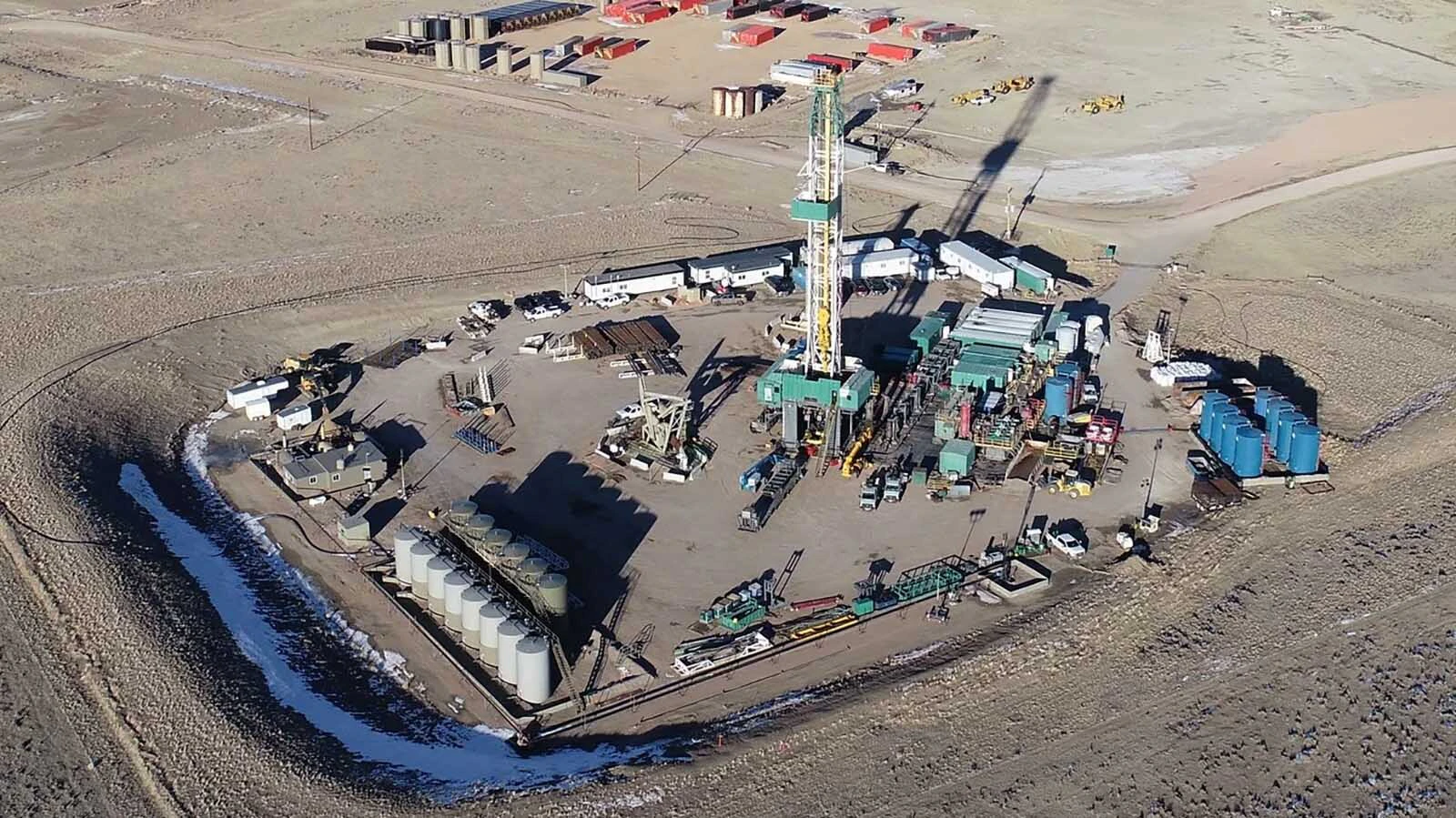
When Wyoming oilman Howard Cooper finally got word he could drill two 2.5-mile-long horizontal wells in the Powder River Basin, it wasn’t just a triumph of geology. It was a marathon for the key federal lease that made his wells economic.
Those two leases were but thin slices of the 2.5-mile-long lateral that made up each horizontal well, cutting across the line, but might as well have been the Great Wall of China as far as Cooper was concerned.
Cooper, who owns Three Crown Petroleum, told Cowboy State Daily he can permit and drill a typical oil well on private minerals in about five weeks in Wyoming, at least on paper. That’s two weeks for state permits, one week to build a pad and move in a drilling rig, and two weeks to drill.
But when federal leases are involved, timelines can stretch dramatically, particularly if litigation and additional environmental reviews are triggered.
That makes any well with a federal lease a gamble with million-dollar stakes.
Cooper’s two-well program is a case study in how even the tiniest sliver of federal land can hang up a drilling project, tying up capital while the operator misses out on economic opportunities vital to keeping smaller companies afloat.
A Lease That Sat For Years
The story starts long before Cooper, with a federal lease that sat in limbo for years.
The lease was originally issued to Anschutz as part of a series of federal sales between 2015 and 2020 across several western states, including Wyoming, which accounted for 1,232 of the 1,323 leases sold during that time.
The leases were challenged by conservationists, who said the environmental analysis of water usage, sage-grouse protections and greenhouse gas emissions were inadequate.
A judge agreed, ordering a 200-page supplemental environmental review to redo aquifer and sage-grouse analysis for the sales, which also included some areas in Nevada, Utah and Montana.
Bureau of Land Management spokesmen said at the time that such reviews have been required under the National Environmental Policy Act in similar cases to ensure impacts are fully considered before development moves forward.
To create a viable oil and gas well, Cooper needed to add Anschutz’s disputed lease to existing leases he already held in the area. He had already put together enough leases for a 1.75-mile and a 1.25-mile well, but for the project to be economic, Cooper said he needed each well to have a lateral of at least 2.5 miles.
“That essentially doubles your reserves,” he said. “But doesn’t add that much more to the cost.”
So Cooper signed an agreement to purchase Anschutz’s lease, despite the ongoing legal and regulatory uncertainty tied to it, on Nov. 4, 2025.
They were the last two puzzle pieces he needed for a viable project.
From then until now, when he’s finally received the go-ahead to drill, it’s been eight months.
Taken together, though, that thin slice of federal minerals — from its original lease sale years ago to final permitting today — carries a timeline of roughly seven years.
That piece was essential, however, to extending Cooper’s wells to 2.5 miles, making the overall project economic.
During that time, Cooper estimates he committed in excess of $1 million across the two Powder River wells — money he had to pay up front — while also keeping his business afloat.
Bundled Wells And Lost Revenue
Putting a well together involves is an exercise in a bit of business gymastics, with a dash of mathematics and puzzle making thrown in.
Cooper sited his well pad just outside of the sage-grouse corridor Wyoming has established, saving him an additional $375,000 per well by not having to purchase sage-grouse credits.
Cooper also bundled two other wells in nearby Johnson County into his Powder River project to further lower the cost of drilling. So, even though the Johnson County wells didn’t have the same federal complications, they couldn’t move forward either until the entire package was ready to go.
“By signing a four-well drilling program, we save a considerable amount of money,” Cooper said. “So we went down this road of one, two, three, four, five, six, seven, eight months of our capital is tied up.
“It’s a lot of capital tied up. We know the oil is there, if they would just let us drill and produce it.”
Meanwhile, the market shifted substantially.
“If we could have drilled these wells three months ago, we would have had three months of oil at $100 a barrel,” he said. “Now we’ve lost 30% of value. It’s gone from $100 a barrel to $70.”
Cooper estimates that, taken together, the four wells would have produced around 300,000 barrels of oil during that three-month period of $100 oil. He bases that figure on production from nearby offset wells, which have already extracted roughly 100,000 barrels each.
“We’re still going to get a return on our investment,” Cooper said. “But we’d have gotten a much better return … if we could have drilled these wells three months ago.”
Reform Push Underway
Getting his permits required more than waiting.
“We worked with Gov. Mark Gordon’s office, Western (Energy) Alliance, both U.S. senators and House representatives,” he said. “We had to work with everybody to get this stuff, which should not be necessary. Why should I spend all that time when, if I drill on private minerals, I don’t have to do any of that. It takes a lot of my time, which I prefer to be focusing on putting together additional drilling deals, as opposed to spending a lot of time with all these different entities to try to get our permits issued.”
Industry leaders say Cooper’s experience is increasingly common. Wyoming Petroleum Association’s Ryan McConnaughey told Cowboy State Daily litigation has become common where federal leasing i involved, often due to the checkerboard nature of mineral leases in most western states.
“I believe under President Biden’s administration was the first time that every lease sale was challenged,” he said.
While conservation groups have argued those challenges are necessary to ensure federal agencies fully comply with environmental law and account for cumulative impacts, McConnaughey said lawsuits are often filed late in the process, at the 11th hour, as a way to increase financial pressure on operators.
“This isn’t really about making sure that the federal government is doing their due diligence,” McConnaughey said. “It’s become a concerted effort to stop oil and gas drilling on federal lands.”
Environmental reviews conducted for permits in many cases are now taking nearly a decade to complete, he said, which makes the flood of 11th-hour lawsuits even more troubling.
“Delays have become a hallmark of drilling on federal land,” he told Cowboy State Daily. “And that’s one of the reasons we have been advocating for reform.”
Building At SPEED
McConnaughey supports legislation from Wyoming’s congressional delegation called the Let America Build Act and the SPEED Act, which sets deadlines for legal challenges and allows states to take larger roles in administering the permitting process.
McConnaughey said the change would improve efficiency without removing federal requirements. Critics, however, have raised concerns that tighter deadlines could limit legal oversight.
“It should be about making sure that the federal government is following the law,” McConnaughey said. “If that’s the case, those challenges need to take place immediately.”
Taking over regulatory oversight doesn’t reduce or eliminate any existing restrictions, he added. It just means state agencies are helping eliminate a bureaucratic chokepoint.
“That way the work is being done by local people who understand the industry, understand what is required, and could really speed up the process,” McConnaughey said. “I think that would be a game-changer for the industry here in Wyoming.”
Cooper: Federal Process Insane
Looking over the history of the new wells he’s about to drill, Cooper sees a sharp contrast between federal and state processes.
“It’s absolutely insane,” he said. “We are moving pretty fast now, but this is one of those things where … it would be really helpful going forward if the Secretary of the Interior and the Secretary of Energy are focusing on streamlining the permitting process with the federal government. I would like to see it more in line with the way the state of Wyoming moves forward. fter you acquire the lease, then you approach the state of Wyoming and file for your permits. If you own the lease 100%, then it takes basically a two-week period from the time you apply for your permits to when they’re issued.
"After that, a rig moves onto the location, a well pad is built, and you’re “good to go.
“Then you just drill the well and tie your well to an existing oil line and an existing gas line, and you sell your product into the existing oil and gas lines and that’s how it works. It’s very efficient, and that’s what the federal government should strive for, because then it would generate a lot more revenue for the federal government.”
Renée Jean can be reached at renee@cowboystatedaily.com.