
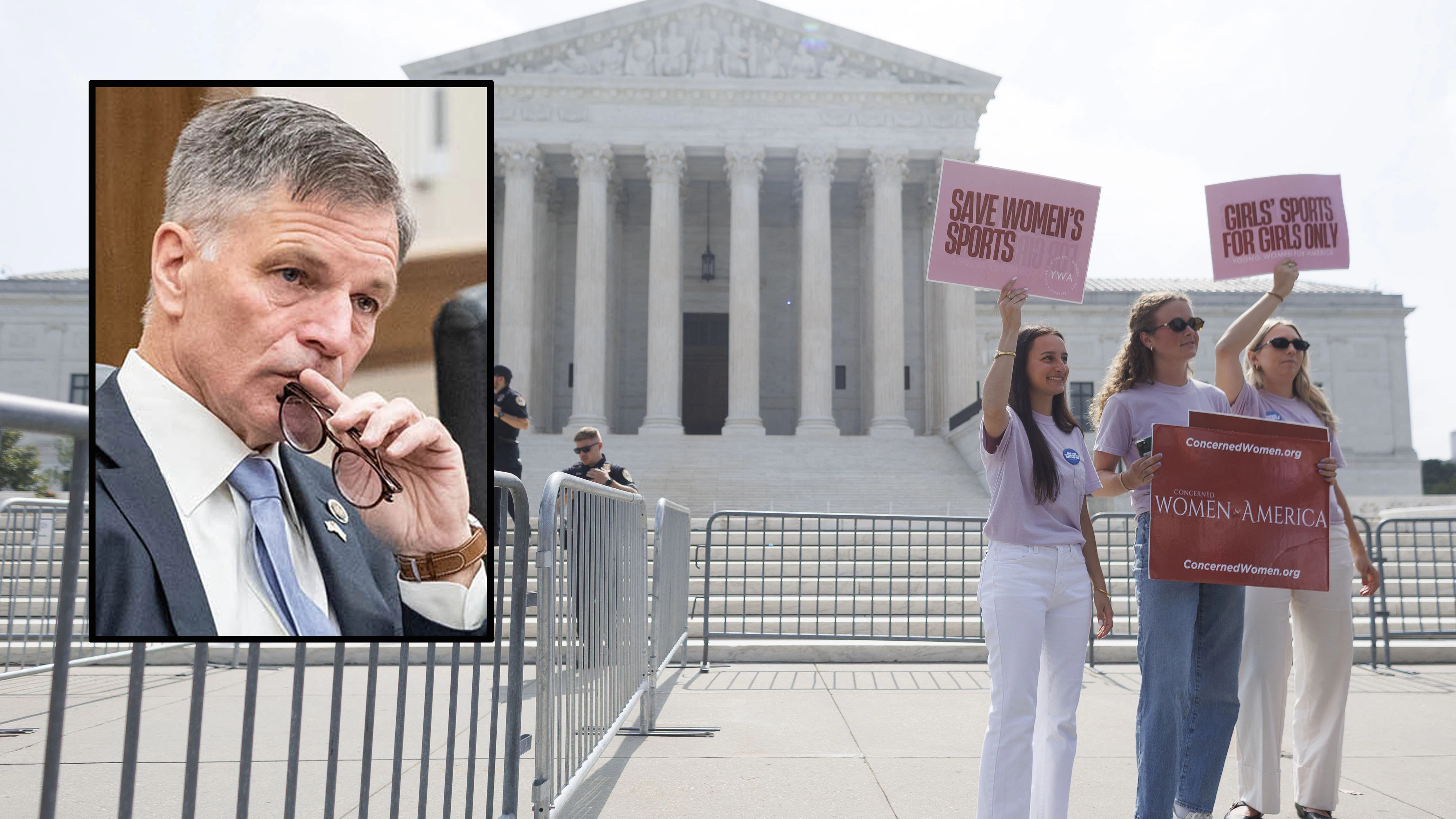
The U.S. Supreme Court on Tuesday upheld Idaho and West Virginia’s bans on male participation in girls’ school sports.
Many Wyoming Republicans applauded the decision, including Gov. Mark Gordon, who had derided the state’s own cross-sex sports ban while allowing it to become law in 2023.
Idaho passed its Fairness in Women’s Sports Act in 2020. It was the nation’s first law preventing biological male students from competing on public school and club female sports teams.
One year later, West Virginia passed its Save Women’s Sports Act, barring male participation in secondary school and collegiate-level female sports.
Transgender students challenged each ban in litigation that culminated in the Supreme Court’s Tuesday decision to uphold them.
In the meantime, the Wyoming Legislature in 2023 passed a ban on male competition in public, interscholastic female sports from grades 7-12.
It replaced Wyoming’s prior, case-by-case administrative evaluation system for individual students. Idaho and West Virginia had similar, case-by-case systems in place before they passed their respective bans in 2020 and 2021.
Gordon let the Wyoming bill pass into law without his signature — and at the time derided it as “draconian” and “discriminatory.”
“While he supports and agrees with the overall goal of fairness in competitive female sports,” said a March 17, 2023, statement from Gordon’s office, the governor believed the ban to be “overly draconian, is discriminatory without attention to individual circumstances or mitigating factors and pays little attention to the fundamental principles of equality.”
The statement said Gordon believed the bill’s intent is “well-meaning as a way to protect the integrity and fairness of women’s sports in our state,” but that an outright ban “sends a harmful message that these individuals and their families do not deserve the same opportunities as others.”
The governor’s tone has changed since then.
On Jan. 13 of this year, Gordon’s office announced he’d signed onto a Republican Governors Association statement urging the U.S. Supreme Court to “protect women’s sports.”
That coincided with the oral argument in the West Virginia and Idaho cases then still pending before the high court.
Gordon applauded the court’s decision Tuesday.
“I welcome today’s United States Supreme Court ruling which upholds state legislation mandating that student-athletes participate on sports teams aligned with their biological sex at birth, as opposed to their gender identity,” says the Tuesday statement from the governor’s office. “(I) believe as a father of girls who competed in high school sports, that sports brings real value to young women’s lives and they deserve to be protected in that space.
"This decision does just that.”
Gordon’s spokeswoman did not respond by publication to a specific inquiry about the governor’s changed stance on this issue.
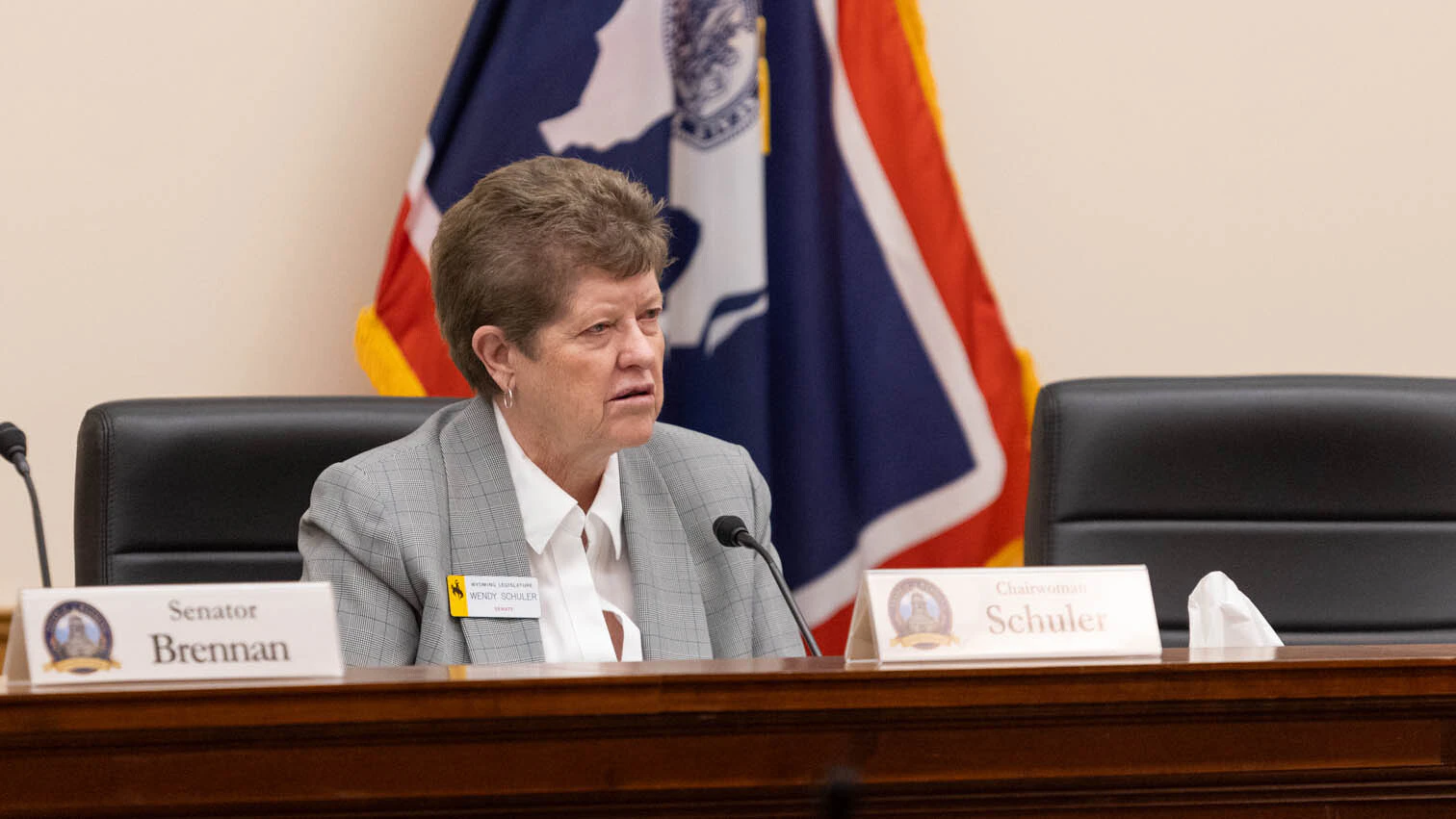
What Senator Wendy Schuler Did
Wyoming state Sen. Wendy Schuler, R-Evanston, spearheaded the Fairness in Women’s Sports Act starting in 2022. That died in the state House of Representatives, so Schuler tried again in 2023 with Senate File 133, which became law.
In late 2024, University of Wyoming women’s volleyball team athletes became embroiled in a national controversy over a transgender competitor at San Jose State University.
UW joined a multi-school boycott of SJSU games. Three UW athletes sued SJSU and its umbrella school that November.
The case is ongoing.
Schuler turned to the green books again in early 2025 and championed into law a bill expanding her sports protection legislation to the collegiate level of interscholastic sports.
“As a former multisport UW athlete, it was important for me to see that these rights for our females will be enshrined in law,” said Schuler in a Tuesday statement, reacting to the court ruling.
Superintendent of Public Instruction Megan Degenfelder also lauded the ruling, saying in a statement that she’s fought to protect girls’ sports and that she appreciates their value.
“Today's Supreme Court decision is an important victory for female athletes across the nation and a reaffirmation that women and girls deserve a level playing field,” said Degenfelder.
Degenfelder also coaches the women's rugby team at UW.
The Wyoming Freedom Caucus — which is a coalition of populist-leaning Republicans in the State House — issued its own Tuesday statement both lauding the ruling and deriding the lawmakers of the past who resisted Schuler’s bills.
Schuler is not a Freedom Caucus member. But her bill became law with the help of the Freedom Caucus’ support and after the caucus’ presence increased in the House in 2023.
“The Wyoming Freedom Caucus is proud to have stood up for biological reality even in the face of defeat,” says the caucus’ statement.
The Six-Justice Majority Wrote …
Both bans satisfy the U.S. Constitution’s call for equal protection, says a Tuesday 6-3 majority opinion by U.S. Supreme Court Justice Brett Kavanaugh, which Chief Justice John Roberts and Justices Clarence Thomas, Samuel Alito, Neil Gorsuch and Amy Coney Barrett joined.
Justices Sonia Sotomayor, Elena Kagan and Ketanji Brown-Jackson dissented in part.
The transgender middle schooler, now high schooler, who had challenged West Virginia’s ban also invoked Title IX to federal education law and a 1974 amendment to it calling for reasonable enforcement.
Those laws don’t disallow West Virginia’s ban, the Kavanaugh majority ruled.
Kavanaugh waxed eloquent about the opportunities Title IX extended to girls and women by offering equal opportunities for sports participation.
“Participation in sports has enabled countless American women and girls to be on a team, to take part in the human drama of athletic competition, to overcome the agony of defeat and know the thrill of victory,” says the majority opinion. “And those lessons and experiences in sports have empowered millions of American women who have gone on to thrive in all aspects of American life.”
‘Unencumbered By Fact Or Law’
Sotomayor’s partial dissent calls the majority’s ruling “an opinion unencumbered by fact or law” that “cuts off (the legal) process prematurely, deciding instead that BPJ’s case must end now.”
The dissent said it would have been better to send West Virginia’s claims that its ban was permissible back down to the trial-level court for further evaluation. Instead, the majority ruled that federal law and the Constitution allow the ban — and the people can decide transgender sports rules democratically within their own states.
“The majority extends great sympathy to those it favors: the young cisgender girls and women who play sports,” wrote Sotomayor. “I share that sympathy.”
Sotomayor touted the benefits of athletics, and said the majority “inflicts a hardship on those it disfavors without giving them the fair and full opportunity the Constitution requires to litigate their contentions.”
Clair McFarland can be reached at clair@cowboystatedaily.com.


