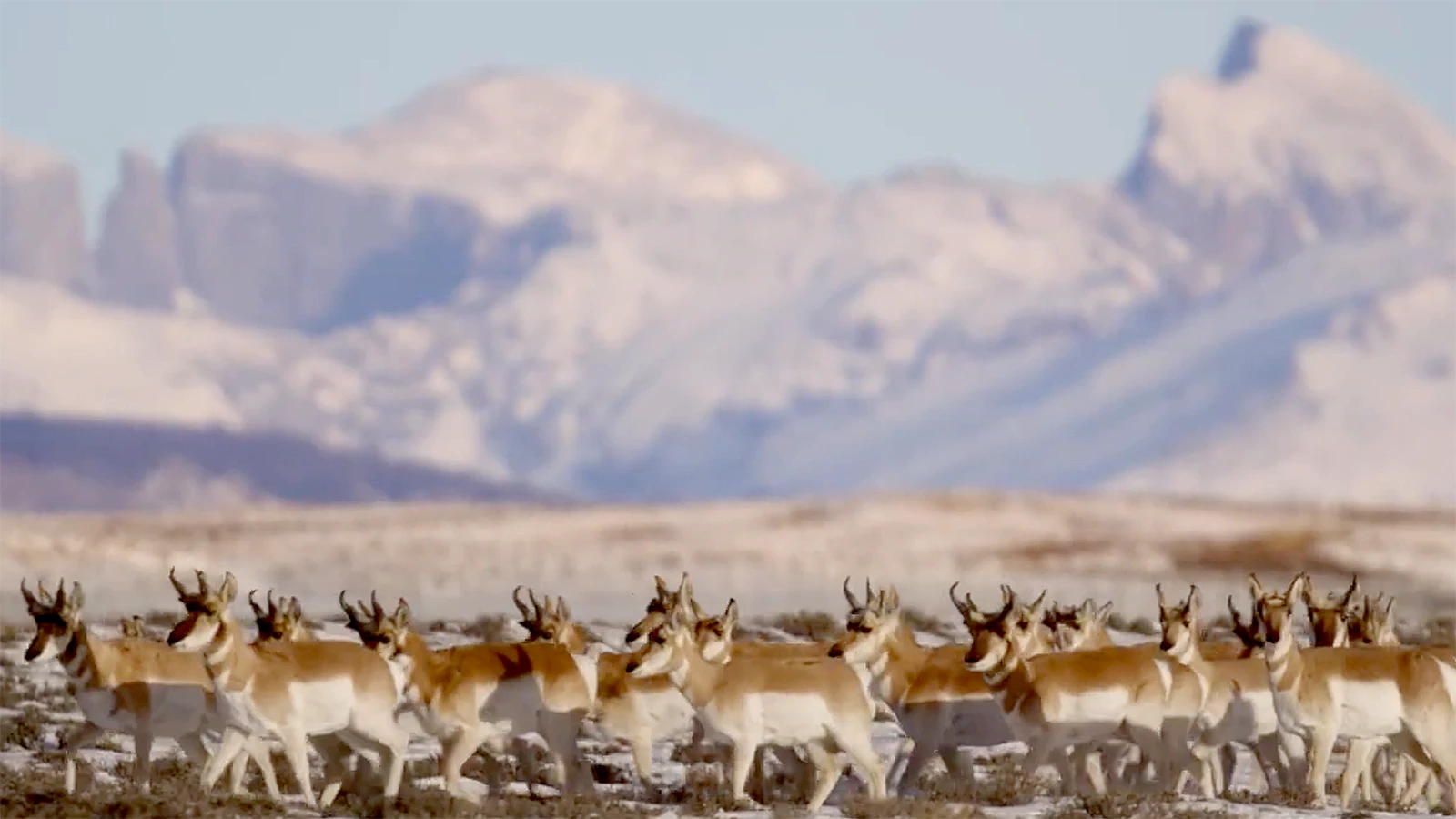
Hopes are high for the continued recovery of a treasured Wyoming pronghorn herd after Gov. Mark Gordon declared the “Path of the Pronghorn” a protected migratory route.
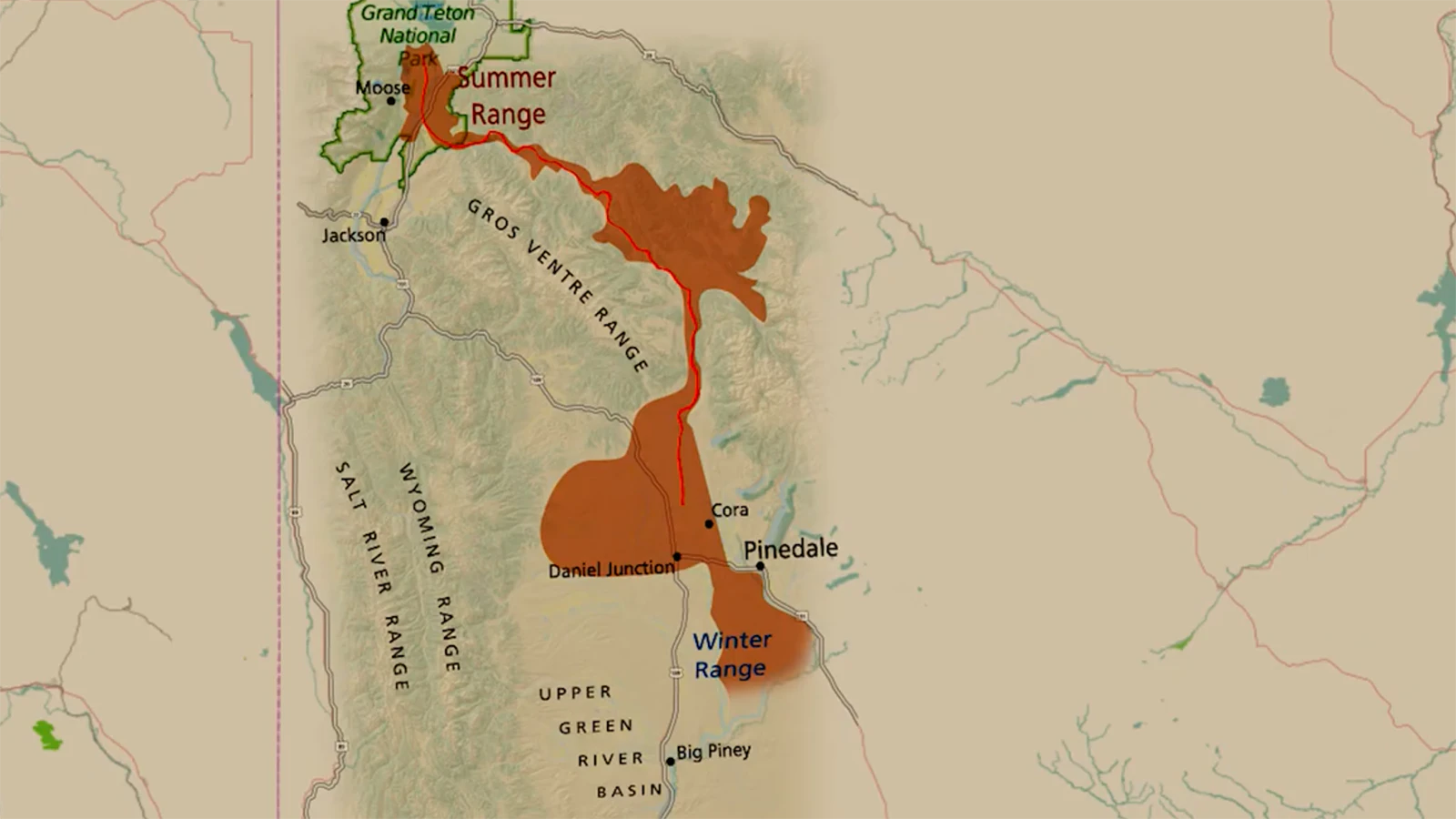
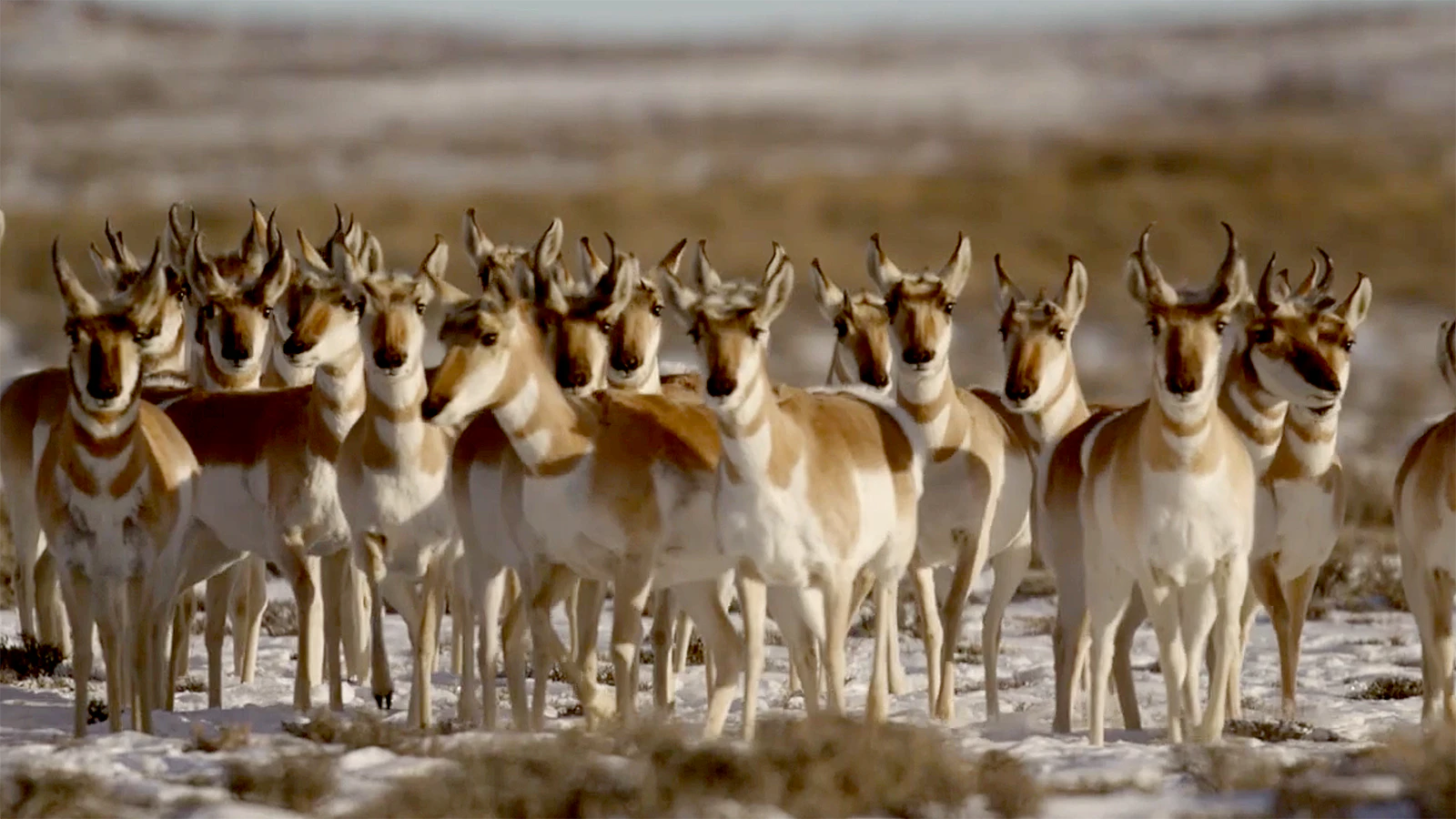
The 200-mile Path of the Pronghorn is the common name for the Sublette Antelope Migration Corridor, and it's one of the longest land migratons in the Lower 48 states. It’s used by an estimated 20,000 pronghorn to migrate between summer range near Grand Teton National Park and winter range near Rock Springs.
The Sublette pronghorn herd is about half its peak size. Thousands of pronghorn died during the brutal 2022-2023 winter, and this year the herd is struggling against drought.
The Wyoming Game and Fish Commission last year recommended protecting nearly the entire network.
Various Interests
Conservationists argue that the herd’s long-term vitality hinges upon protecting the Path of the Pronghorn from man-made barriers, such as fences, that impede the herd’s movements. They’ve been lobbying for years to have the migration route protected.
Ranchers and energy developers have expressed misgivings about the designation bringing needless regulations in Wyoming counties that depend heavily on agriculture and energy revenue.
Wyoming Game and Fish's recommendation included sections east of Farson, to which some ranchers and others objected.
Gordon’s declaration included eight sections of the Path of the Pronghorn, but not those near Farson.
His decision was guided by a local working group, with representatives for various interests.
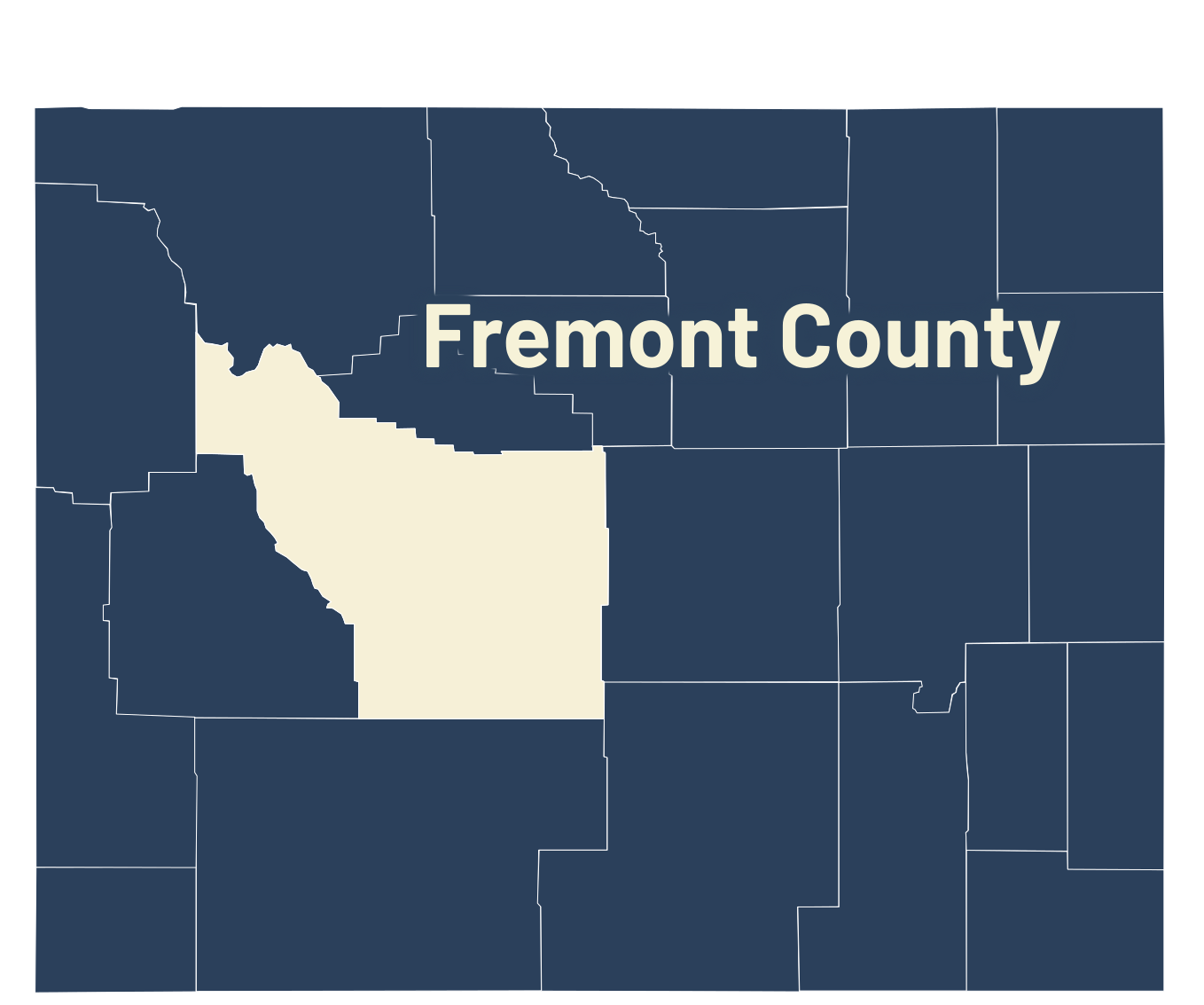
Gordon’s executive order applies only on public lands.
Wyoming Wildlife Federation executive director Craig Benjamin told Cowboy State Daily that the designation essentially creates a “road map” for future management on the public lands, and not a host of new regulations.
Steven Degenfelder, the land manager for Kirkwood Oil and Gas, told Cowboy State Daily that he hopes for a balance between wildlife conservation and energy exploration.
“Southwest Wyoming has a lot of natural gas, and liquids, that we feel are yet to be developed. And we would like a chance to develop them,” he said.
A First For Pronghorn
Retired biologist and pronghorn advocate Rich Guenzel told Cowboy State Daily that while nobody got everything they wanted from Gordon’s declaration, it represents a great step forward in conservation.
“It’s the first pronghorn herd to come up for his sort of designation anywhere,” said Guenzel, who worked for Wyoming Game and Fish from 1986-2011 and retired as the agency’s Laramie District wildlife biologist.
“We should be grateful for what we got,” he said. “I would have like to have seen those eastern segments added in and, down the road, who knows what might happen?” he said.
He added that the process leading to Gordon’s decision was thorough.
“They used science to identify at least those eight segments and designate them,” Guenzel said
The importance of clear migration routes for pronghorn can’t be overstated, he said.
Many pronghorn are “nomadic” and their migration routes are determined by snowdrift patterns and other factors, he said.
Pronghorn are vulnerable to deep snow buildup, particularly if it develops a frozen crust, he said.
“The sooner they can get to where they need to go, the better off they’re going to be,” he said.
Wyoming has more pronghorn than any other state because it’s maintained open spaces and good habitat for them, he added.
And they shouldn’t be underappreciated, he said.
“They’re not ‘antelope.’ They never were and we need to celebrate these animals for their uniqueness,” Guenzel said.
Other Concerns
Although Gordon’s executive order doesn’t apply to private property, it helps clear the way for conservationists to work with landowners, Benjamin said.
Ranchers and wildlife advocates can work together on such projects as establishing wildlife-friendly fencing, allowing pronghorn safe passage, he said.
On public lands along the migration route, “it helps guide decision in stopover areas and at bottlenecks,” Benjamin said.
Degenfelder said he hadn’t yet read the report on Gordon’s decision in detail, but he’s hopeful that it will leave room for oil and gas leasing on Bureau of Land Management parcels.
“Oil and gas is where it’s found, and we don’t get a choice of locating it where it’s least impactful,” he said.
Degenfelder is an advocate for horizontal drilling. He said that allows drillers to set up infrastructure far away from wells in sensitive areas, and drill horizontally toward them.
"A lot can be accomplished with horizonal drilling. They can use two- and three-mile laterals. They’re even trying to get to four miles laterally, if they can,” he said.
‘Lots Of Babies’
Pinedale-area resident Jay Norman told Cowboy State Daily he enjoys watching and photographing pronghorn, so he’s glad to hear that they’ll be getting more protection.
He watched the herd nosedive during the 2022-2023 winter, but said the pronghorn appear to be doing well this spring and summer.
They’ve been reproducing prolifically, Norman said, noting that he’s seen many sets of twin fawns.
“There are lots of babies this year. They’ve been running around and playing,” he said.
Mark Heinz can be reached at mark@cowboystatedaily.com.