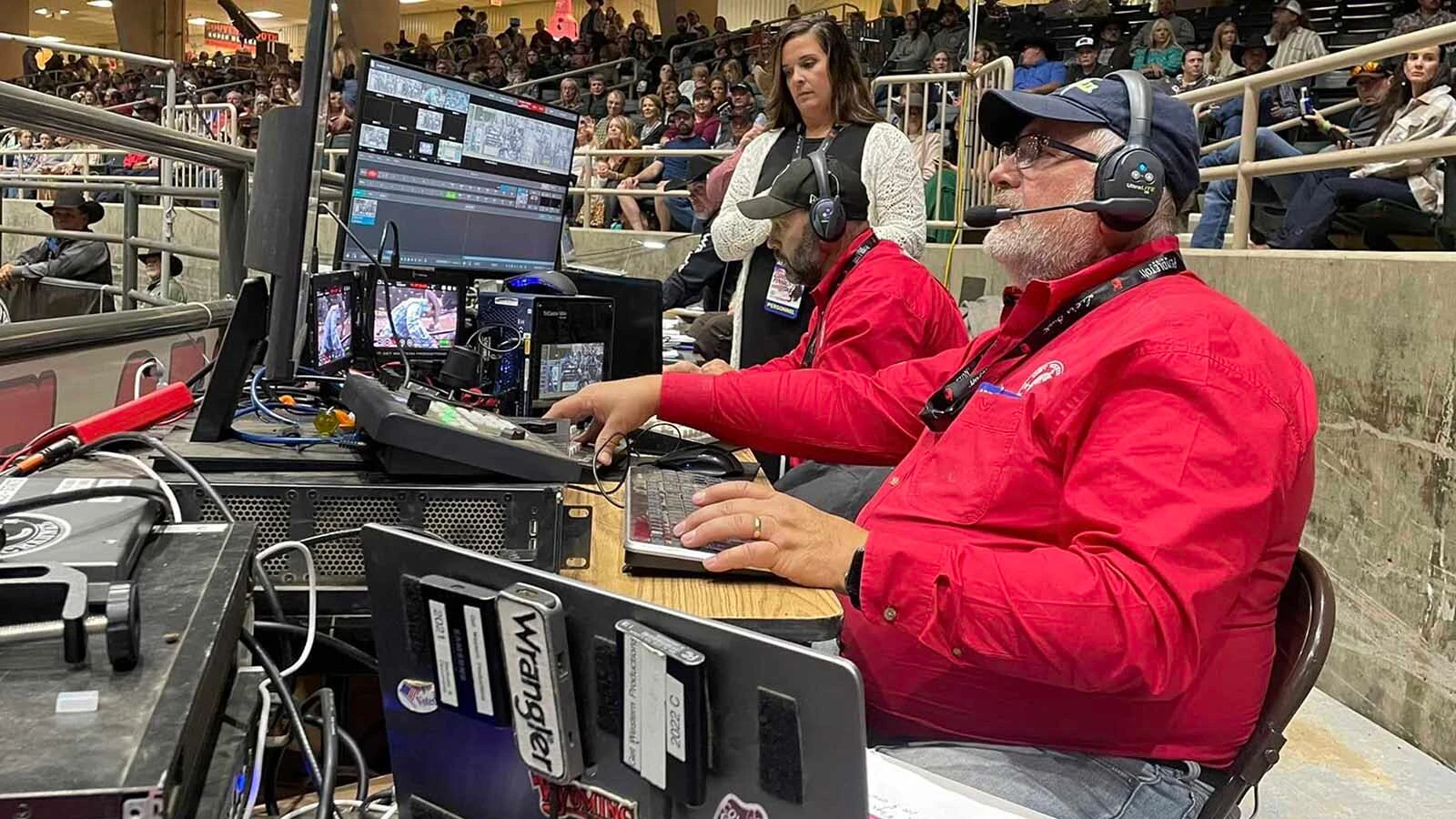
If rodeo were an orchestra, Stuart Pierson would be the conductor, setting the pace and tone for the overall performance. The Centennial, Wyoming, man travels the west — from Alaska to Las Vegas to Cheyenne Frontier Days for more than four decades — producing the West’s top rodeos.
The videographer and producer has a vast collection of rodeo memories, including coming just inches away from being gored by a bull at Cheyenne Frontier Days.
Pierson, who lives in Centennial, travels the Western rodeo circuit at a grueling pace nearly all year, from the San Antonio Stock Show and Rodeo in February to the National Finals Rodeo in Las Vegas in December.
But his favorite rodeo is still “The Daddy of ‘Em All” at Cheyenne Frontier Days, where he will be working for the 43rd year at the end of July.
Pierson works behind the scenes at Cheyenne Frontier Days, so he doesn’t step into the spotlight. But he plans every minute of every show, making sure it’s a smooth production from when the cannon goes off until the end of each day’s wild horse race.
Pierson calls rodeo “America’s sport.”
“It’s unique to us, and I love it,” he told Cowboy State Daily. “I have so much fun at rodeos. I don’t need a hobby. This is my hobby.”
Pierson said the rodeo community is like a family, from contestants and bullfighters to rodeo clowns, announcers and the production crews.
“Everyone looks after each other,” he said.
In his television days at Cheyenne’s Channel 5, Pierson purposely did some of the toughest video jobs at Frontier Days, including shooting from “The Pit,” the hole in the arena. Pierson says it’s worth being drenched by sweat and covered in dust because it’s the perfect place to film steer wrestling.
“The angle there is just right," he said. "You get a shot there that’s hard to match in all of rodeo."
He wanted to do such a demanding gig because it helped train him as a director.
If he was going to be in a control room telling a crew that was holding heavy hand-held cameras what to do, he needed to know everything about that job.
‘Air Traffic Controller’
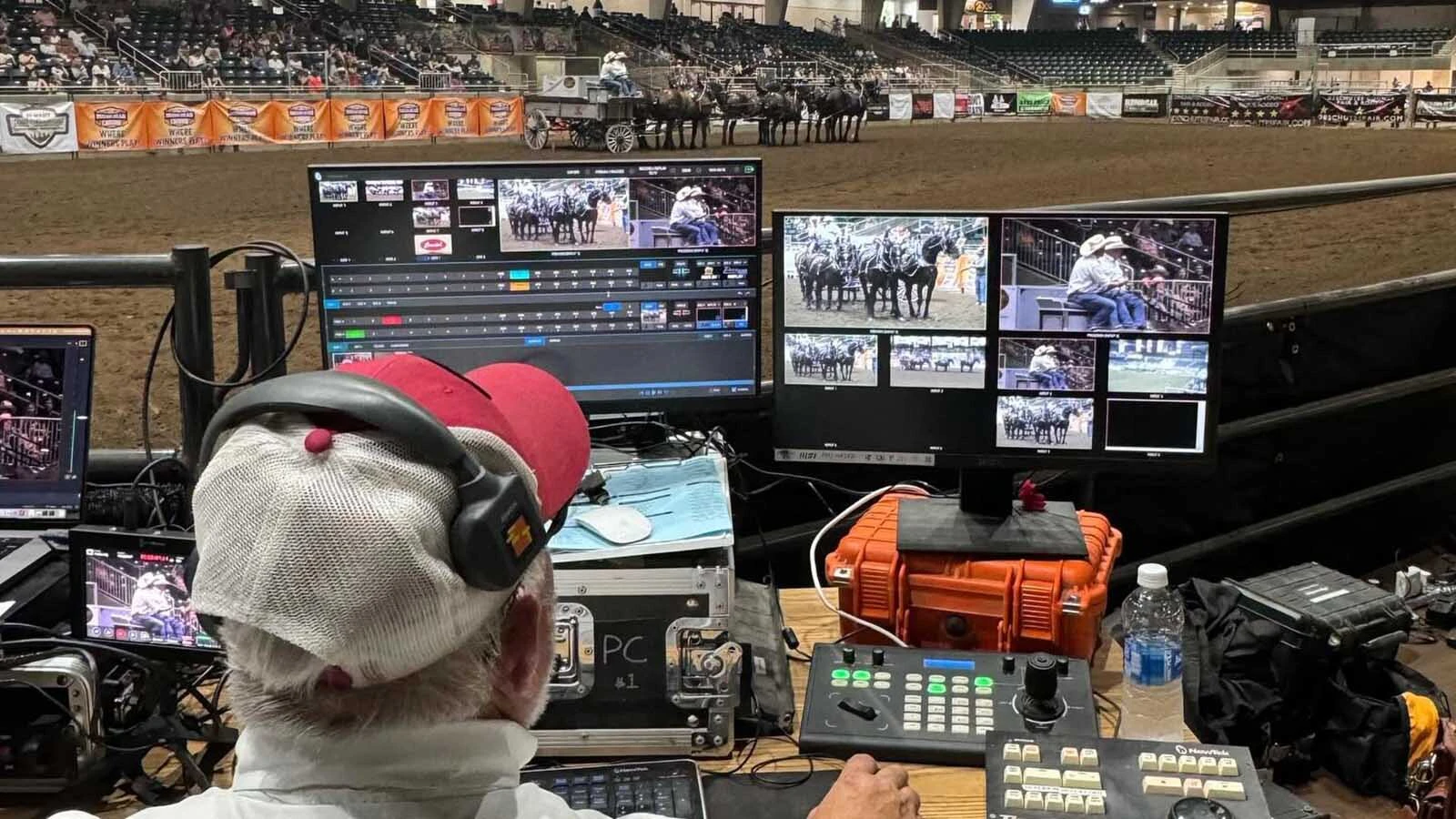
He describes his job now as the director of rodeo entertainment at Frontier Days — and at dozens of events across the U.S. — as “kind of like being an air traffic controller.”
CFD is the only job during the year that Pierson isn’t directing traffic for his videographers during the rodeo, then editing highlight reels for the next day.
He begins each day at the Cheyenne event by making out the afternoon rodeo’s timeline.
“There’s a time and a spot for everything, when and where those things are supposed to happen, and I activate that,” Pierson explained.
That includes everyone hitting their marks and playing commercials at the right time.
“It’s kind of an interconnect between the production, the rodeo teams, and the announcers,” Pierson explained.
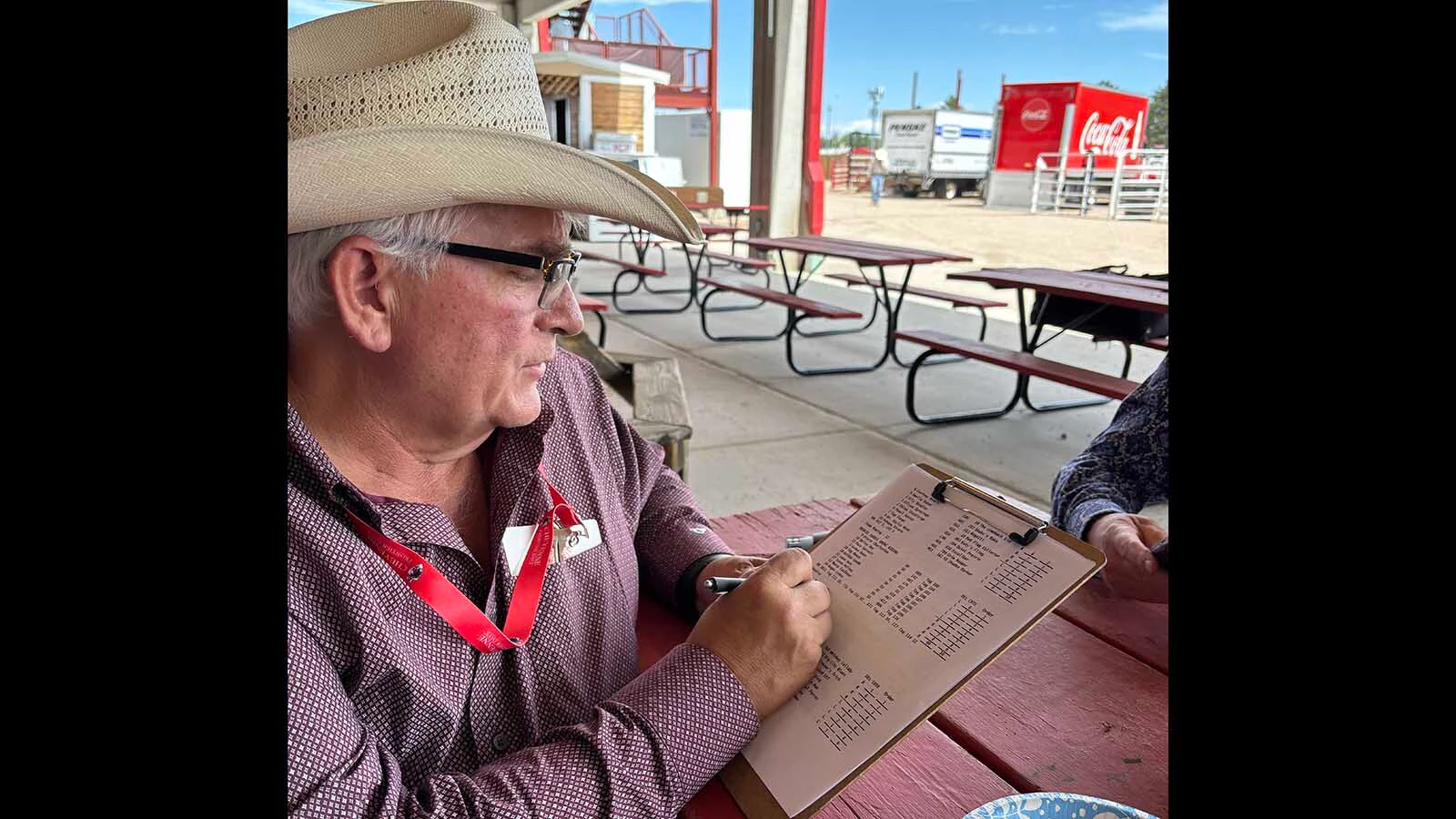
Jim Wilkinson, who retired as the CFD’s corporate relations manager at the end of last year, said Pierson is “pretty picky” about the rodeos he produces, and is attentive to every single minute.
“He’s very astute about how he wants the rodeo to flow, and what I love about him is he never stops wanting each performance to get better,” he said. “He wants the audience to see a seamless Frontier Days rodeo, and that’s what people have come to expect.”
Some of the major events for his company, Go Western, such as the San Antonio rodeo, require 15 cameras.
“We’ll have six manned cameras, three pan-tilt robotic cameras that I run, and there’s a Go-Pro mounted inside every bucking chute that feeds live video back on the (arena) screen,” Pierson explained. “It’s a lot but it's an exciting show.”
On Friday, Pierson had two days left at a 10-day rodeo in Reno when he was interviewed by Cowboy State Daily. He said he would home to Centennial, his “little slice of paradise,” see his wife for the first time in a month, and head to Cody for an Xtreme Bulls competition.
He'll be in Wyoming for all of July.
“I’ll take my camper up to Cody on Monday and live on the rodeo grounds,” Pierson said. “On Tuesday morning, we’ll set up a control room at the Cody Cowboy Church, which has a little portable building behind the bucking chutes.
“It’s a five-camera show,” he added. “I’ll make sure all the wires work, set up cables for the cameras, and about 4 o’clock we’ll have a production meeting. During the day when I’m setting up, I’ll add all of the graphics into my system.”
Then he goes over the show with the camera operators so they know what’s coming.
“I’ll sit down with a headset and talk with the announcers," he said. "When the show starts I’ll tell my guys, ‘Stand by camera one'.”
Two of the cameras in Cody are above the bucking chutes, and he said he uses them for crowd shots and dramatic video shooting straight down into the chutes.
Pierson jokes that he grew up “in the suburbs of Buford,” about five miles from the almost resident-free town between Cheyenne and Laramie. After college he started working in the sports department of Cheyenne’s TV station, where he’d cover the Denver Broncos and Denver Nuggets, and then the Colorado Rockies when the baseball team hit the Mile High City.
But his first love was always rodeo. Pierson spent weekends and vacation traveling, filming and editing rodeo highlights, and dreamed that one day he’d be able to do the work full-time.
No More Arena Shoots
When Pierson started filming Cheyenne Frontier Day’s rodeos while at Channel 5, he shot a lot in the arena with a $25,000 hand-held camera. It had an umbilical cord to a recording deck that had to be handled by another member of his team, Pat Lewis, following behind.
It was a particularly perilous assignment for the cameraman, who could only see to his left when holding the equipment. To protect Pierson, Lewis had a rope that was connected to Pierson’s belt.
One afternoon Bobby Romer, one of rodeo’s best bullfighters, came over. He was known for protecting cowboys, but he also looked out for the people photographing the event.
“He said, ‘Stu, this next bull is going to come out and spin twice. He’s going to plant his legs, and if he throws his rider he’s going to charge right down this fence where you’re standing,'" Pierson said.
“I said, ‘Bob, should I get out of the arena right now?’ And he said, ‘No, just keep an eye on it,'” Pierson recalled. “So, I’m nervous and shooting this bull, and he comes out, spins twice and plants his feet and looks at me. And I see the rider fly off and I thought, ‘Oh, shit.'”
Pierson and Lewis turned and ran to the fence.
“I’m scrambling to get up the fence and Pat reaches down and grabs my belt and lifts me out of the arena, kind of flops my belly on top of the fence,” Pierson recalled.
He remembered being “kind of shaken.”
Later, when Pierson watched the video shot from The Pit, he was shaking even more.
“The video of me climbing the fence shows my boots go out, inches in front of this bull’s nose,” he said.
A still photographer, Randy Wagner of the Wyoming Travel Commission, was on the fence until the bull went by, and he jumped back to the ground.
“The bull spun around on a dime and threw Randy into the arena, just kind of plowed him into the dirt and pushed him,” Pierson said. “They carried Randy past us.”
Wagner, after he finally recovered from being gored by the animal’s horns, eventually went back to the arena to work. Pierson, however, did not.
“That was the last time I ever shot in the arena,” he said. “My wife had just had a baby, and I decided the arena is not where I needed to be.”
Pierson went back to shooting behind the bucking chutes, which he said is a great angle — and much safer.
After leaving Wyoming for Los Angeles, he and his wife decided the big city wasn’t where they wanted to start a family. He went back to Channel 5 for a while, then did a variety of work, including as marketing director of Corral West ranchwear.
“We sponsored about 150 rodeos, and all those sponsorships came across my desk,” Pierson said.
After the ranchwear company went out of business, Pierson became the field marketing manager for Cheyenne-based Taco Johns. When Taco Johns underwent a management change and he was once again out of work, Pierson said he was finally ready to go full-time in rodeo video production.
Pierson said he thinks rodeo is seeing an uptick in popularity, likely due to the influence of the TV show “Yellowstone.”
“When I was at Corral West we were praying for another ‘Urban Cowboy,’ and I think ‘Yellowstone’ has had a lot to do with it,” he said.
He said people who have nothing to do with rodeo are wearing cowboy hats and cowboy boots, and supporting rodeo and its athletes.
From Centennial to Vietnam
In 2024, Pierson said he added up the days he spent with his wife, and it totaled 100. Deciding that was not enough, he carved out another 25 days last year.
Most of that extra time was spent in Vietnam, where the Piersons’ son and two daughters teach English. Their son, Trey, is married to a Vietnamese woman, and during their vacation in September, Stuart and Jan finally met their granddaughter.
“My daughter-in-law said, ‘You have to come back and be Santa Claus,’” Pierson said. “So I stopped shaving and went back and played Santa at my son’s school, which has 140 kids, and my daughter-in-law took pictures of me with every one of their students.
“It’s where we’ll be spending all of our vacations,” he added. “It’s a beautiful place and the people are wonderful.”
When his son Trey was in grade school, Pierson talked him into accompanying him to the Greeley, Colorado, rodeo that Corral West was sponsoring by telling him he’d buy him a hot dog. “We’ll have a good time,” his dad promised.
At the rodeo Pierson took a ride around the arena in a wagon as part of his official duties, then went to find Trey in the stands.
The boy was excited about a contest he’d heard the announcer talk about: by correctly answering a trivia question about Whiplash, the famous monkey rodeo cowboy, you could win an autographed photo of the amazing 2-foot-tall, white-faced Capuchin monkey who wears a cowboy hat and rides a border collie to herd wild Barbados sheep.
Trey wanted a photo for his baby sister, Mae, so the father-and-son team went to the contest booth. Because Pierson had worked a few rodeos with Whiplash and was friends with his owner, he knew the answer and collected the prize for Trey.
“This guy from Canada standing next to me said he’d never seen anything like Whiplash and he wanted a photo, so I handed it to him,” Pierson recalled. “Trey looked like he was going to kill me. He said, ‘Dad, that was for Mae!’”
As any good father would do to make things right, Pierson raced to Whiplash’s trailer, and on the way he spotted Anthony, the son of the monkey’s owner. He explained what happened and asked if Trey could get an autographed picture.
Anthony said the star performer had just finished a show and needed to rest, but said he would take care of the request. Trey asked if the autograph could be made out to his “sister Mae, M-A-E.”
Anthony went behind a door, talked for a while and came out and handed the junior Pierson a portrait inscribed, “Cowgirl up, Mae. Love, Whip.”
Trey's eyes lit up. “Dad, the monkey spelled her name right!” he said.
On the way home, Pierson said Trey told him, “Dad, I think I know why you like rodeo so much. They treat you like family. Actually, they treat you better than family'.”
Kerry Drake can be reached at: Kerry@CowboyStateDaily.com