
In a modern West where history is increasingly paved over or fenced in, Wyoming’s notorious Hole in the Wall outlaw hideout stands out as one of few places that remains just as wild as it was more than a century ago.
Here, a towering red rock wall rises 400 feet and stretches, seemingly unbroken, for 35 miles.
There’s an ocean of blue sky above and a sea of green prairiegrass below without another human soul for endless miles. This cliff appears both seamless and impassible — a beautiful, if formidable, sight.
Hidden within that long wall, however, is a single passage where a man can slip past the rock and simply vanish.
And that is what gave this place its name, the Hole in the Wall.
It’s not really a hole in the wall, cowboy historian Clay Gibbons tells visitors on his tours of the remote hideout. It’s more like a notch, just wide enough for a single man on horseback to squeeze through.
Beyond that notch lies a secluded and lush valley just right for grazing stolen cattle and horses, and impossible to see from the outside.
The narrowness of this nearly invisible notch also makes it easy to defend. A lone gunman with plenty of ammunition can hold off a much larger force.
That helped keep lawmen at bay for decades, creating a haven for outlaws ranging from Harvey Logan — better known as Kid Curry — to Butch Cassidy.
Though Cassidy didn’t spend as much time here as he did a place further west called Brown’s Hole where three states meet, giving him three directions to escape the law.
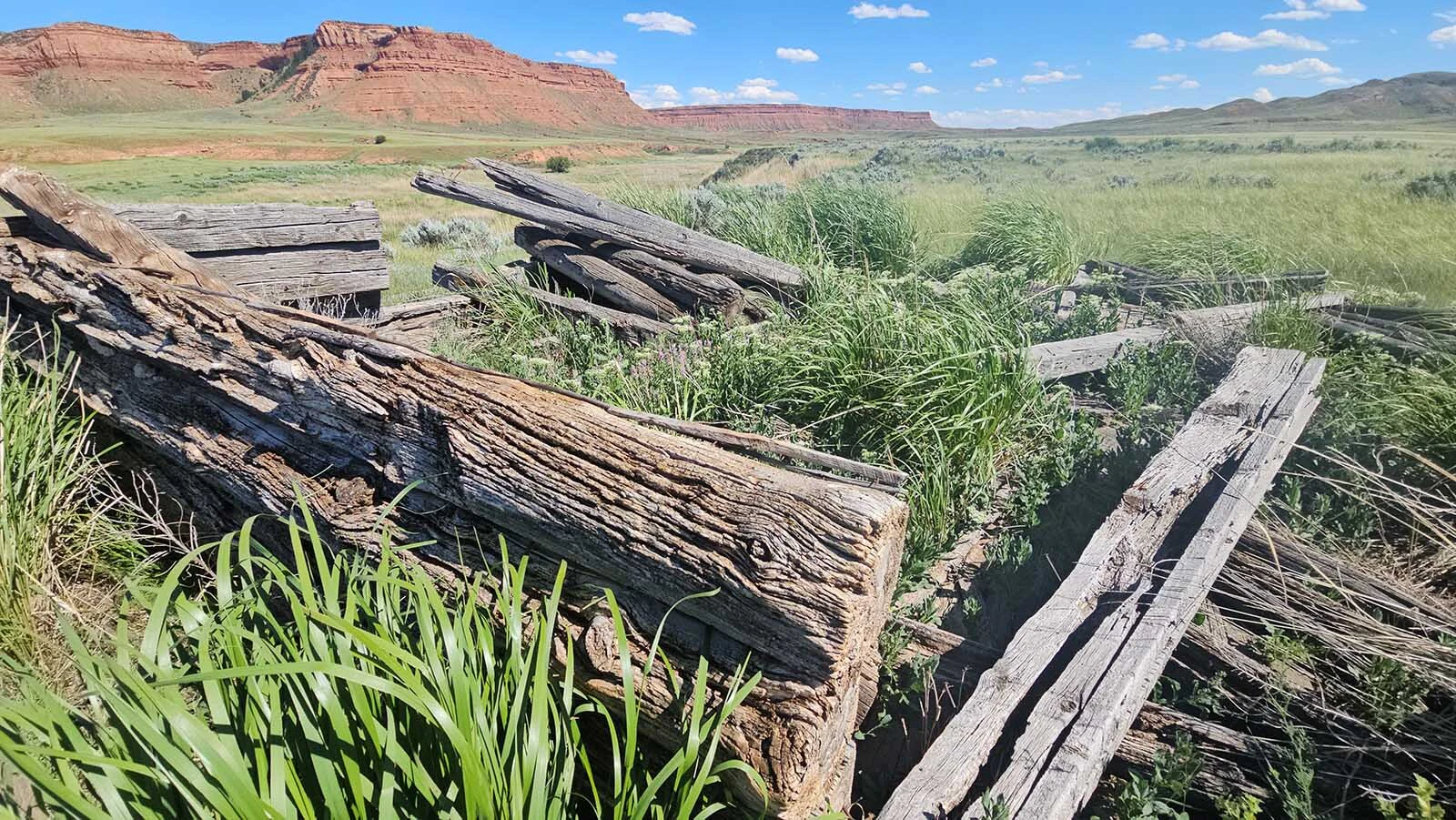
It was a cabin of dreams in the Hole in the Wall country, but is now giving way to time and the elements. The building was part of the ranch that belonged to Alex Ghent. (Renee Jean, Cowboy State Daily) 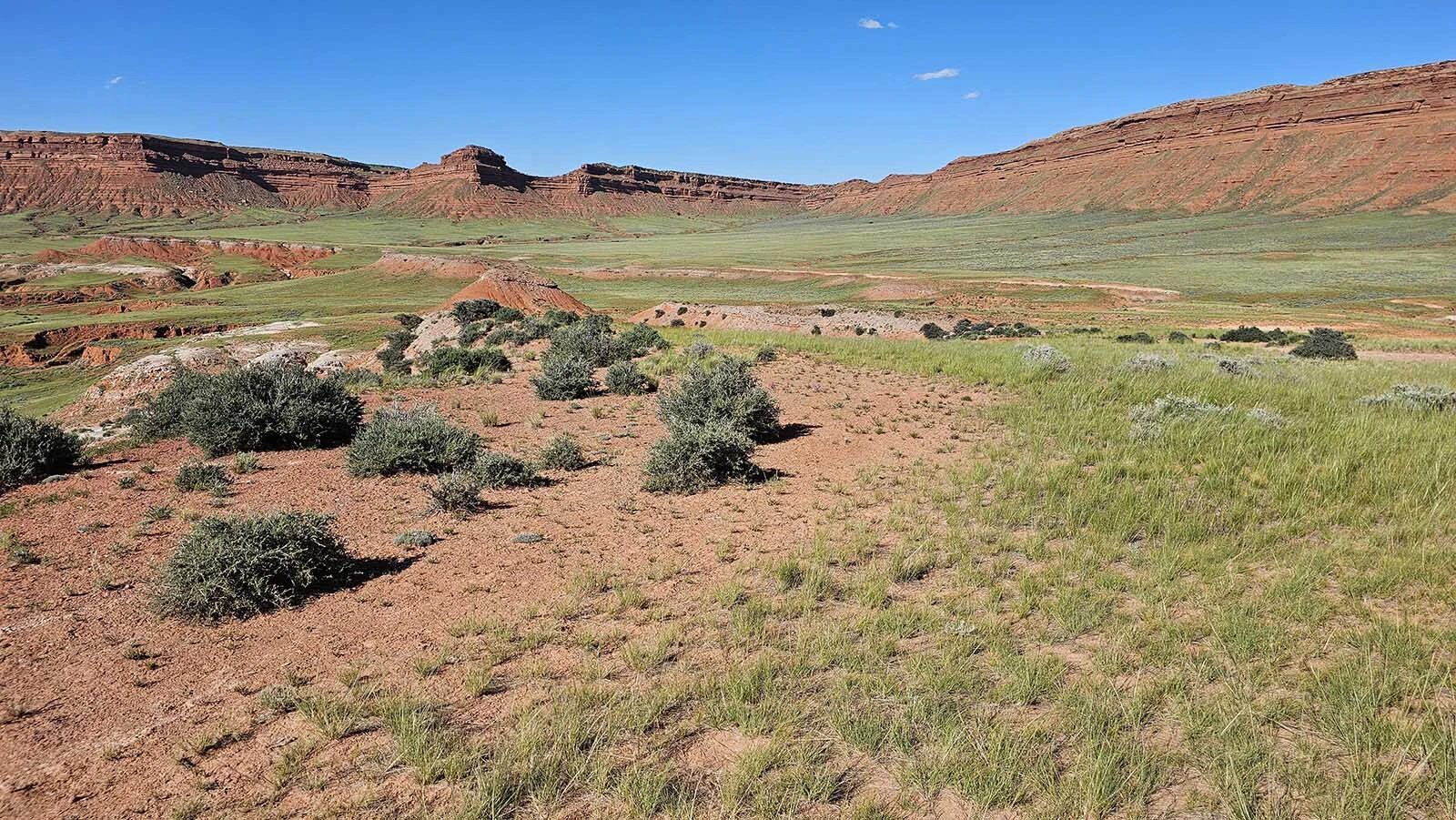
This red cliff wall runs for 35 miles straight, seemingly without a break. There is one notch, however, where a man can slip past and seemingly vanish. (Renee Jean, Cowboy State Daily) 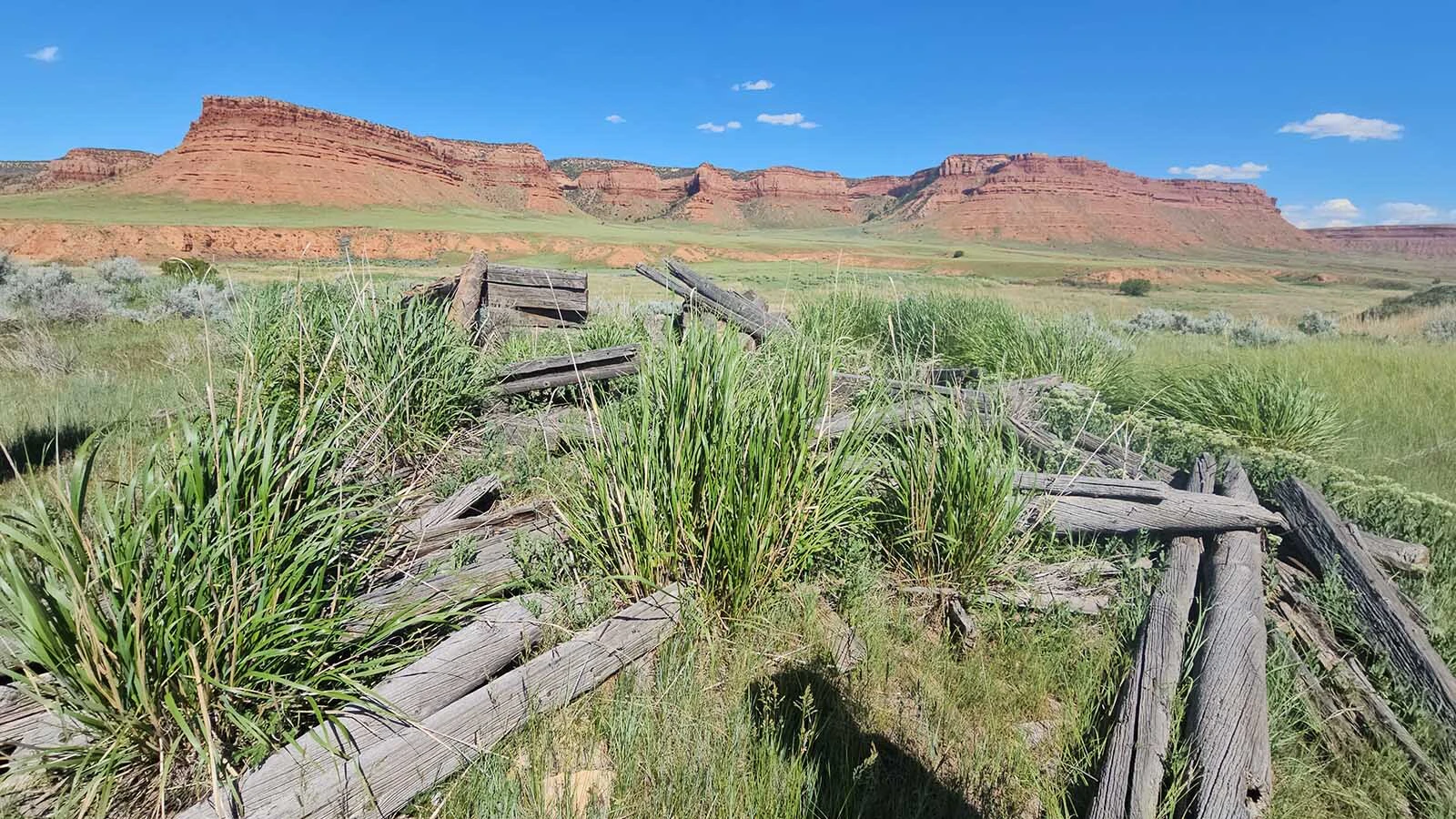
It was a cabin of dreams in the Hole in the Wall country, but giving way now to time and the elements. The building was part of the ranch that belonged to Alex Ghent. (Renee Jean, Cowboy State Daily) 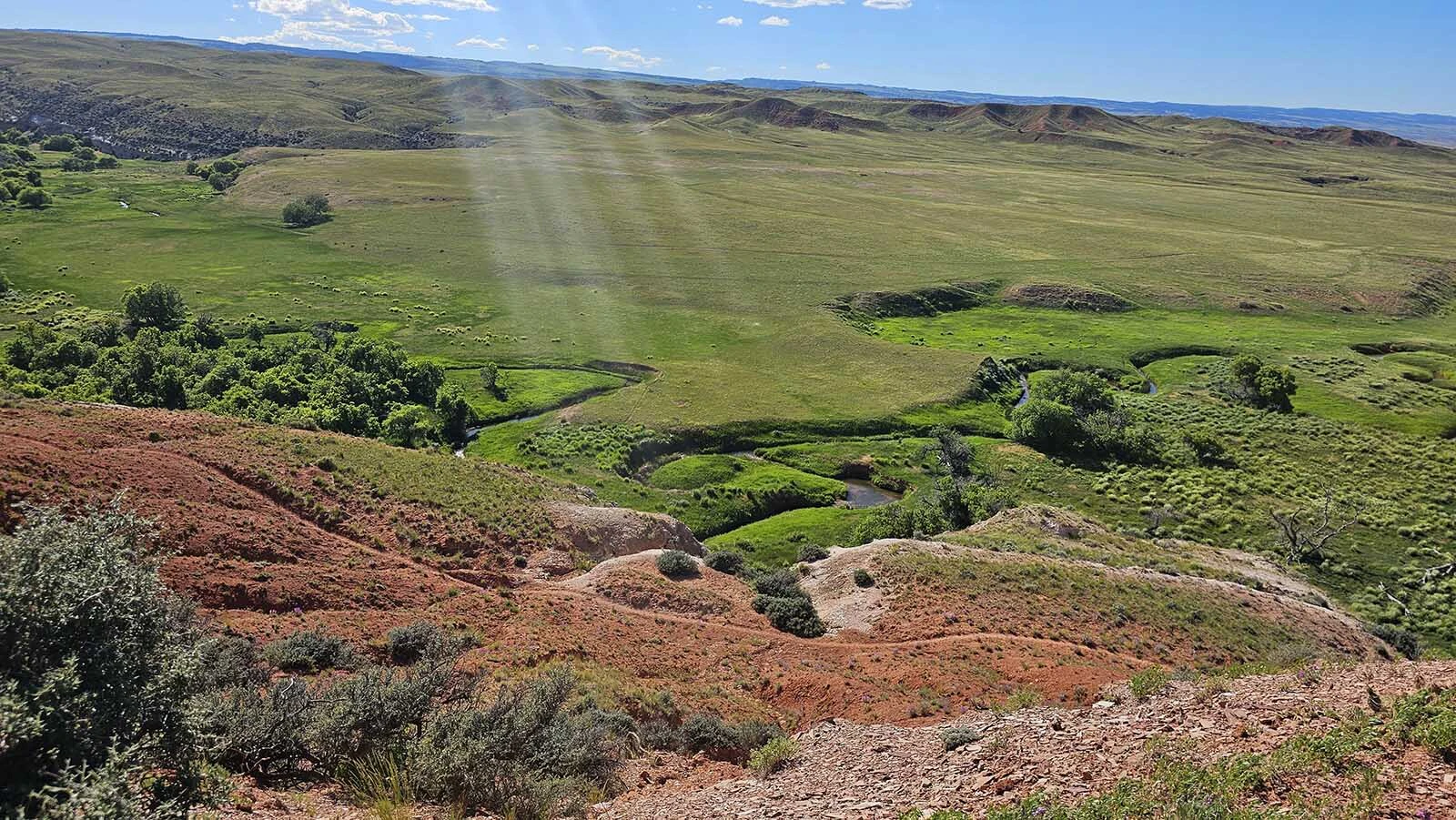
A lush valley of green awaited those who made it past the Hole in the Wall. (Renee Jean, Cowboy State Daily) 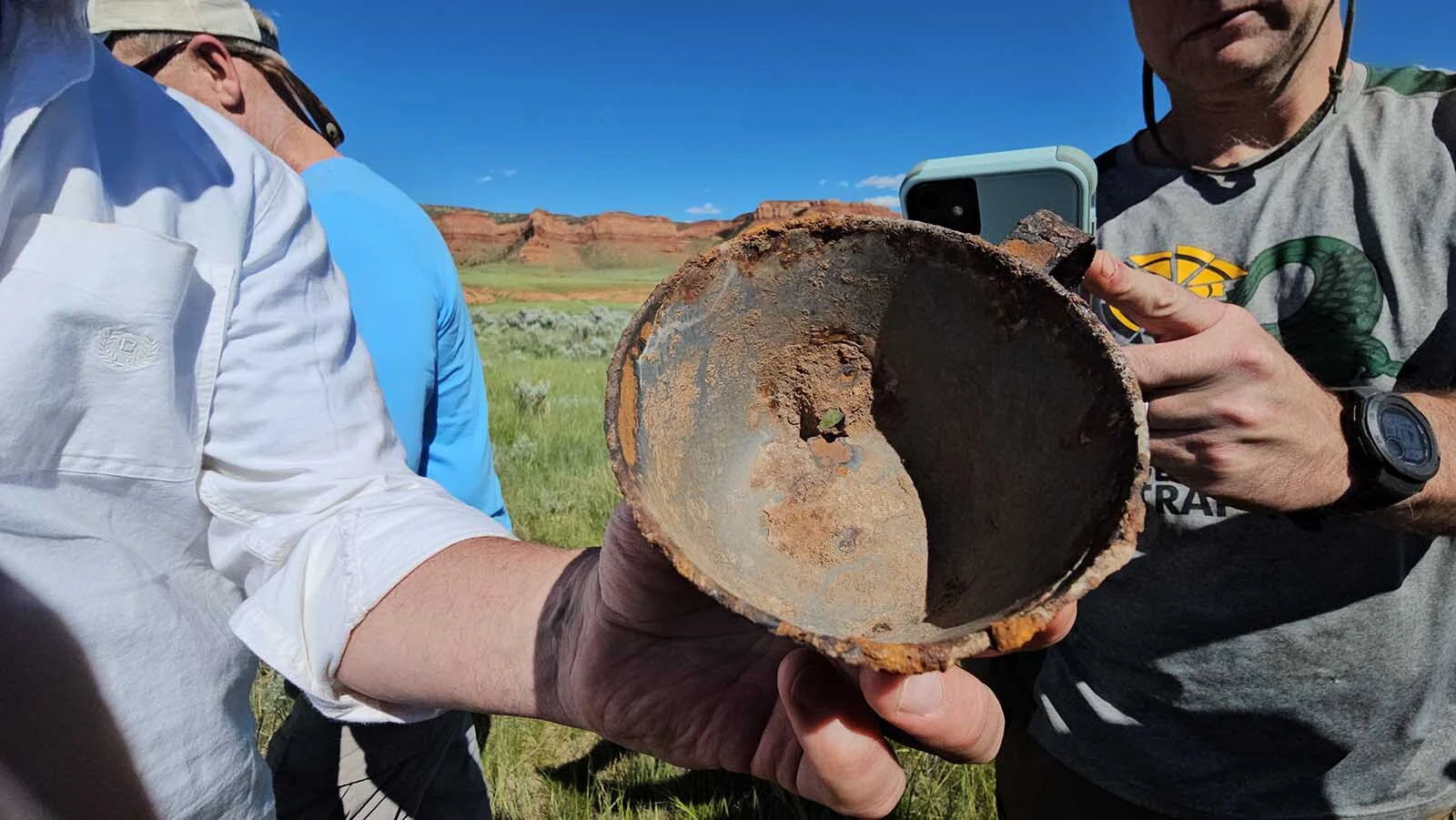
Closeup of a tin cup with a single bullet hole shot through it. Clay Gibbons believes it might be evidence of a historical crime in the Hole in the Wall country. (Renee Jean, Cowboy State Daily) 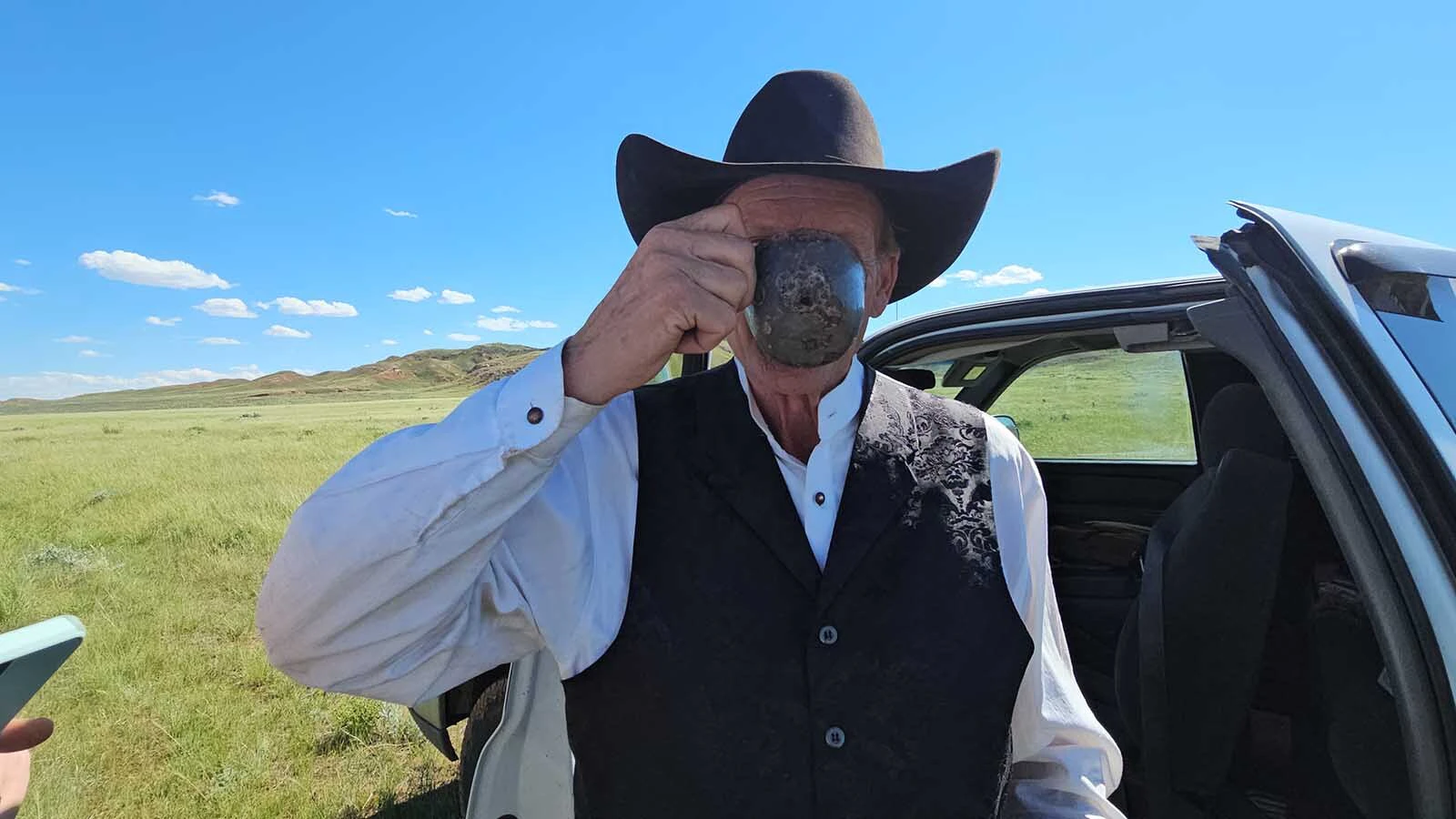
Clay Gibbons shows the tin cup he found in the Hole in the Wall Country with a single bullet-hole shot through it. Gibbons suspects that it points to an unsolved murder. (Renee Jean, Cowboy State Daily)
Finding The 'Hole'
One of the first things Gibbons does on his tours is teach visitors how to find the nearly invisible passage.
“So there’s that red wall that has no shadows on it,” Gibbons said, pointing toward the red cliffs. “And then there’s this one that has shadows. You see where it comes together? There’s a triangular shadow.
"And at the top left of that triangle there’s a little white dot.”
It looks insignificant. In reality, it’s a flat, white rock measuring 12 feet by 15 feet.
“We’re about 3 miles away from the hole right now, so as we get closer, that will get bigger,” Gibbons said. “But first, we’re going to stop at the Hole in the Wall Fight site, where I put up a state historical marker, and I’ll tell you how I found that location. That’s going to be some story.”
Stories are actually what Gibbons’ Hole in the Wall tours are all about.
They begin the moment his vehicle lurches onto a rugged two-track — less road and more dry riverbed. It’s a ride that jostles the insides in more than one direction at once, even as an untamed and beautiful landscape unfolds.
Gibbons laughs about the roughness of the ride and admits some would question his speed, given the bumpy terrain. But, he adds with a grin, the pace is absolutely necessary.
Even by vehicle, this trip to the Hole in the Wall will take every bit of an entire day, from sunup to sundown. There’s a lot to see and a lot of history to tell, so the truck careens onward without slowing down.
Growing Up With History
Gibbons comes by his love of history naturally. His dad loved it, too.
Growing up, the third-generation Worland native went everywhere with his dad, who owned an implement dealership. To help pass the time, Gibbons’ dad would tell him all kinds of interesting historical tales.
By the time he was 16, Gibbons had heard so much about the Fetterman massacre, for example, he was timing his entire school day by it on its 100th anniversary.
“I didn’t get anything done in school that day,” Gibbons said with a chuckle. “I stared at the clock and I was thinking, ‘OK, right now Fetterman is doing this. Right now Crazy Horse is doing this.’ I mean, I was just mesmerized.”
For Gibbons, though, it’s never been enough to know what happened when. He also wants to know where it happened. Exactly where.
One day as he and his dad were driving south of Ten Sleep over Spring Creek, a 9-year-old Gibbons asked his father where the Spring Creek Raid had happened.
“He kind of waved out to the side,” Gibbons recalled. “Somewhere over there.”
That answer didn’t satisfy Gibbons, and sent him on a lifetime historical search that would eventually uncover lost details of that raid and allow him to pinpoint exactly where it happened.
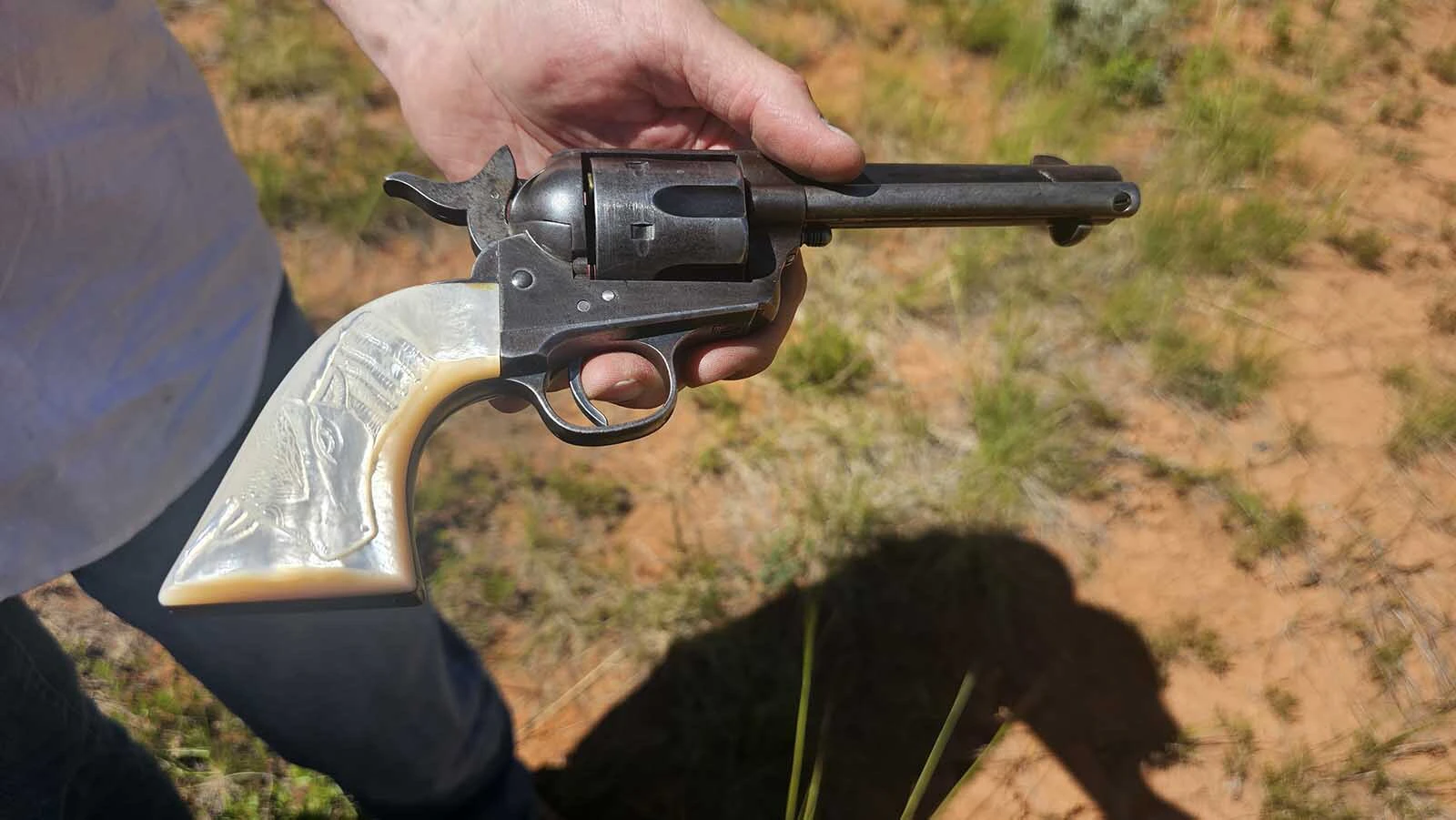
This pearl-handled revolver is from the same era as Butch Cassidy. (Renee Jean, Cowboy State Daily) 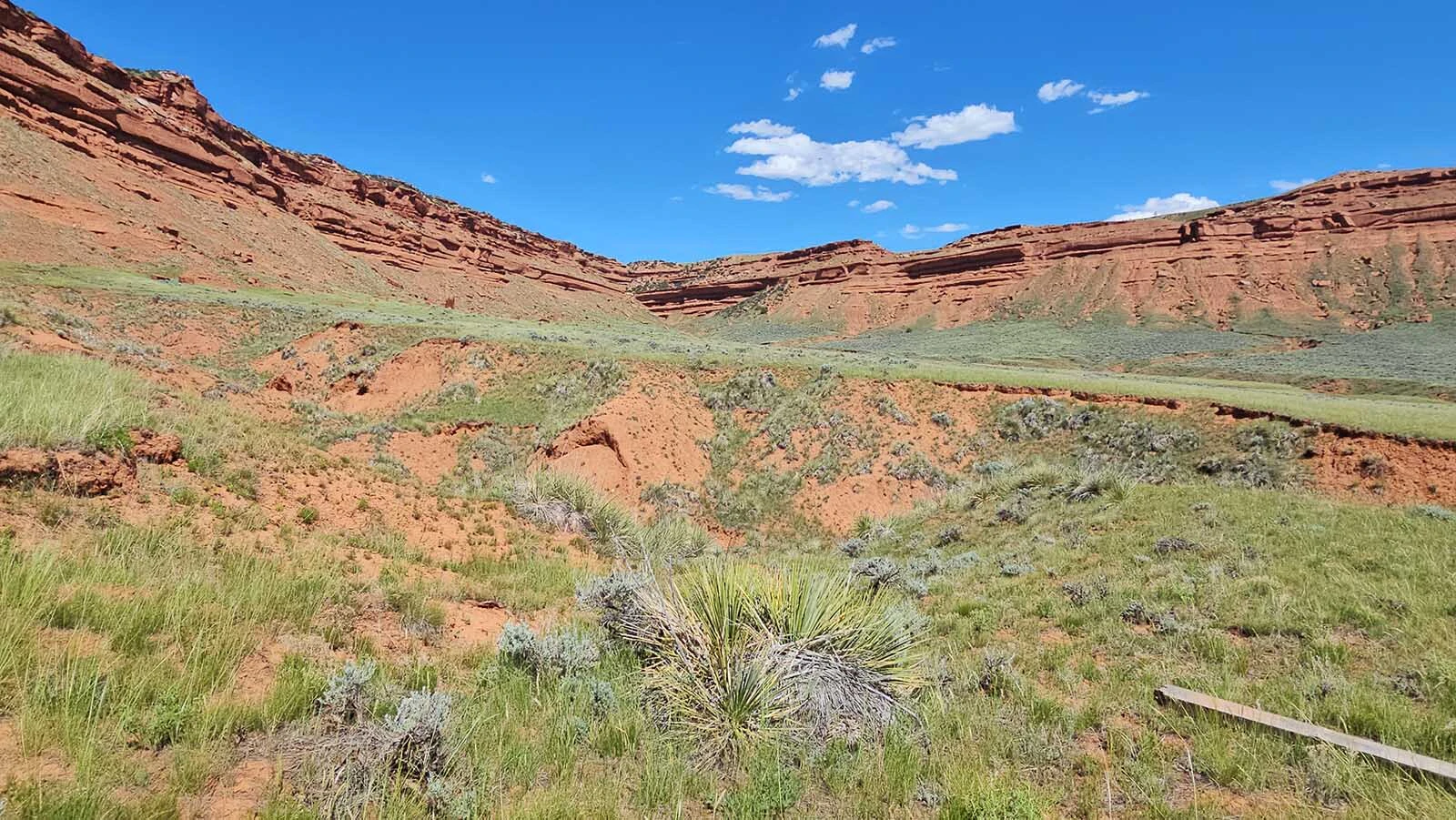
A tiny insignificant white speck in this photo is actually a 12-foot by 15-foot flat, white rock, and marks the location of the Hole in the Wall. (Renee Jean, Cowboy State Daily) 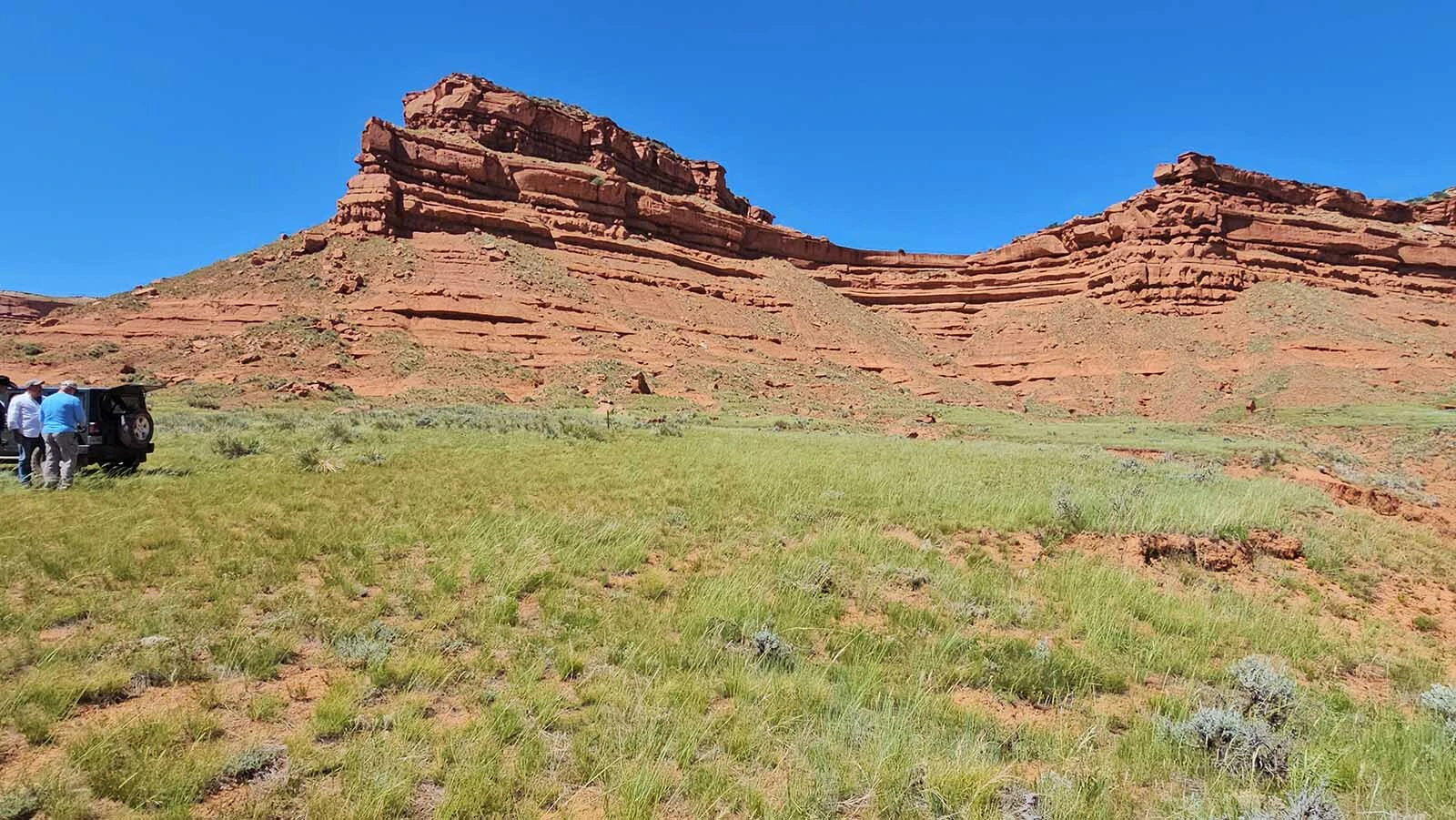
Tour participants took turns shooing a colt 45 from the same era as Butch Cassidy. (Renee Jean, Cowboy State Daily) 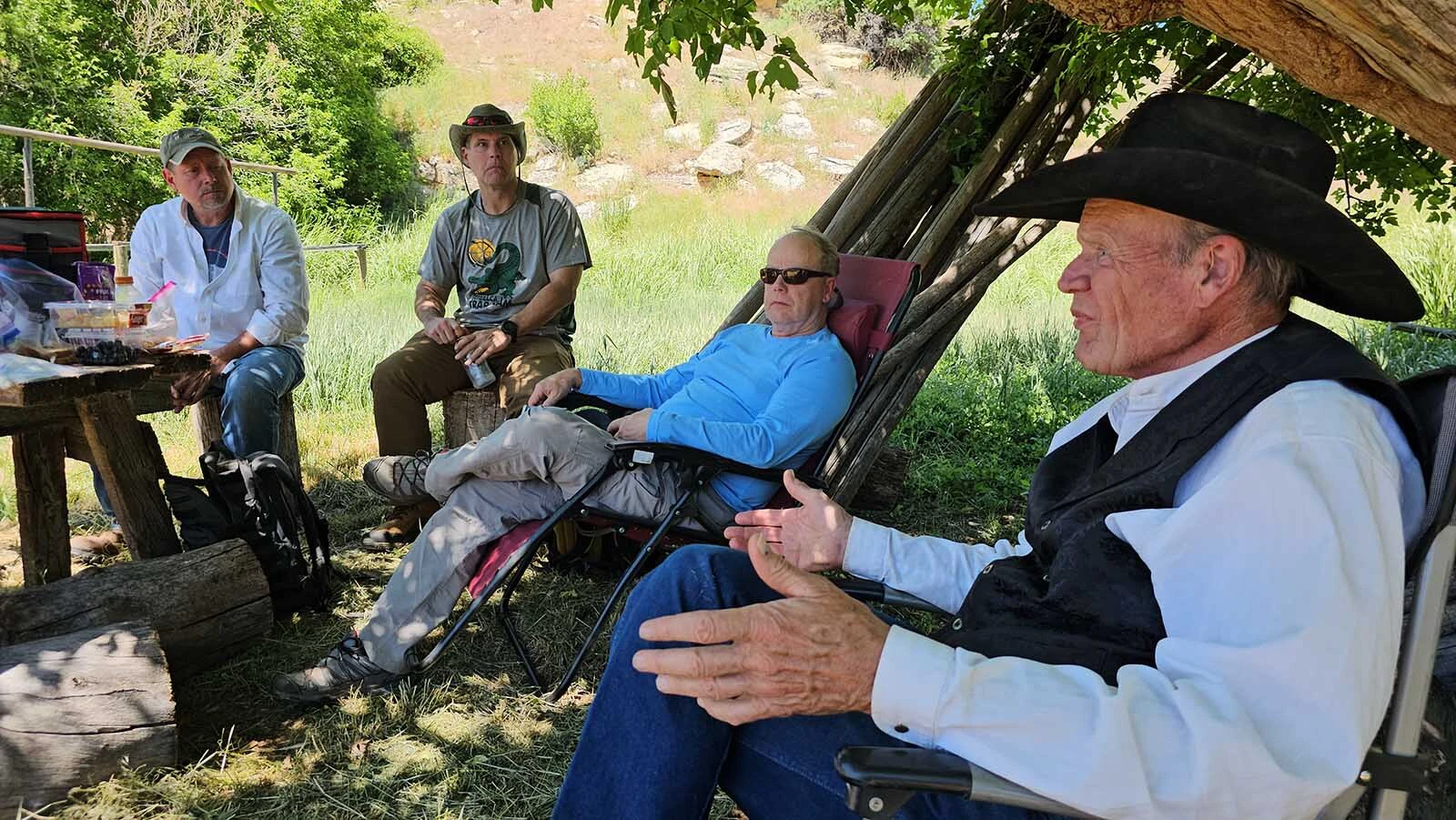
Clay Gibbons tells more Western historical tales during lunch on one of his private, Hole in the Wall tours. (Renee Jean, Cowboy State Daily) 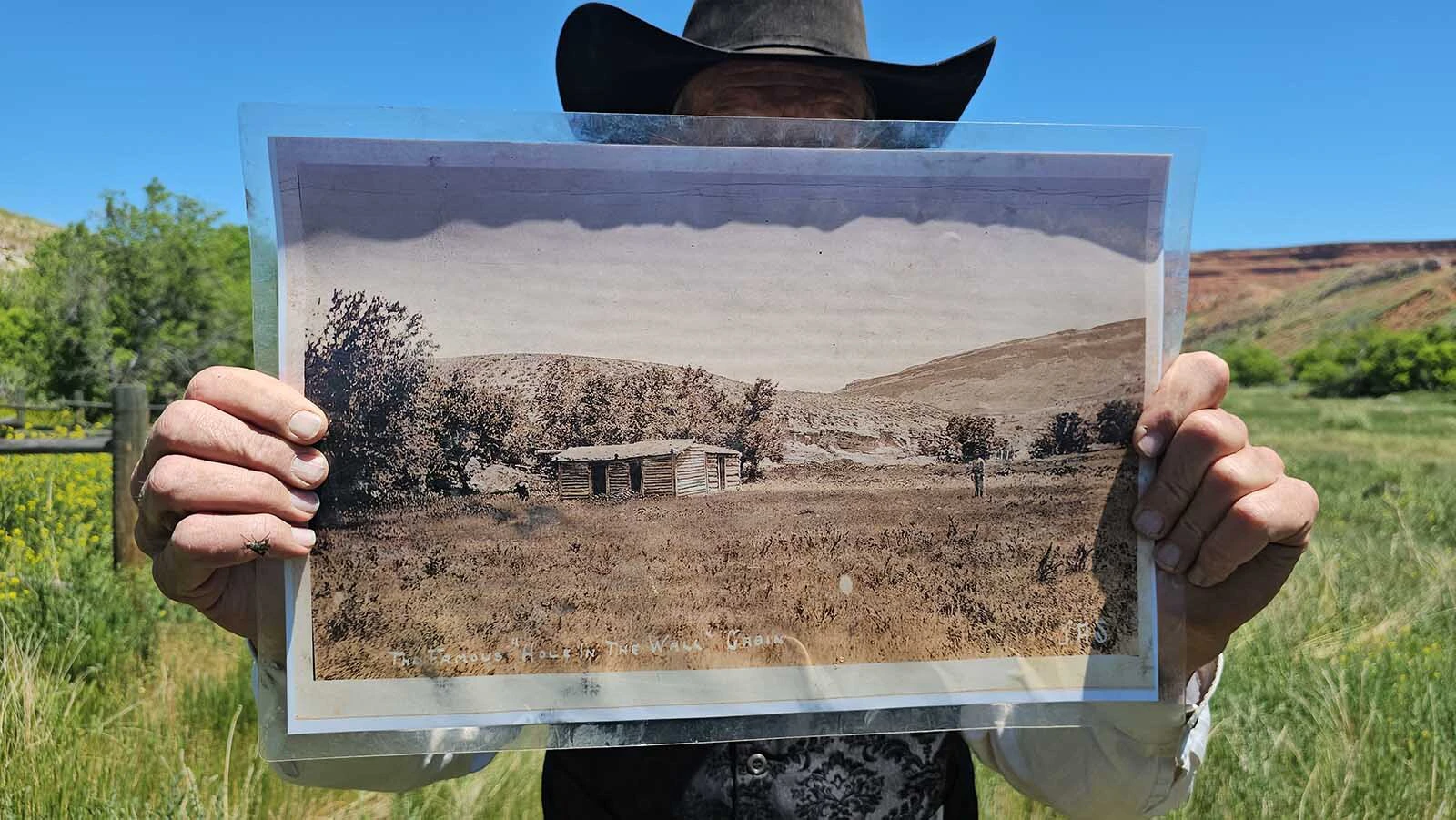
A then and now view. Clay Gibbons holds up a photo, then invites participants of his 2024 tour to take a look at the photo and then at the scenery, and see if they aren't standing right where the photographer who took that photo stood. (Renee Jean, Cowboy State Daily) 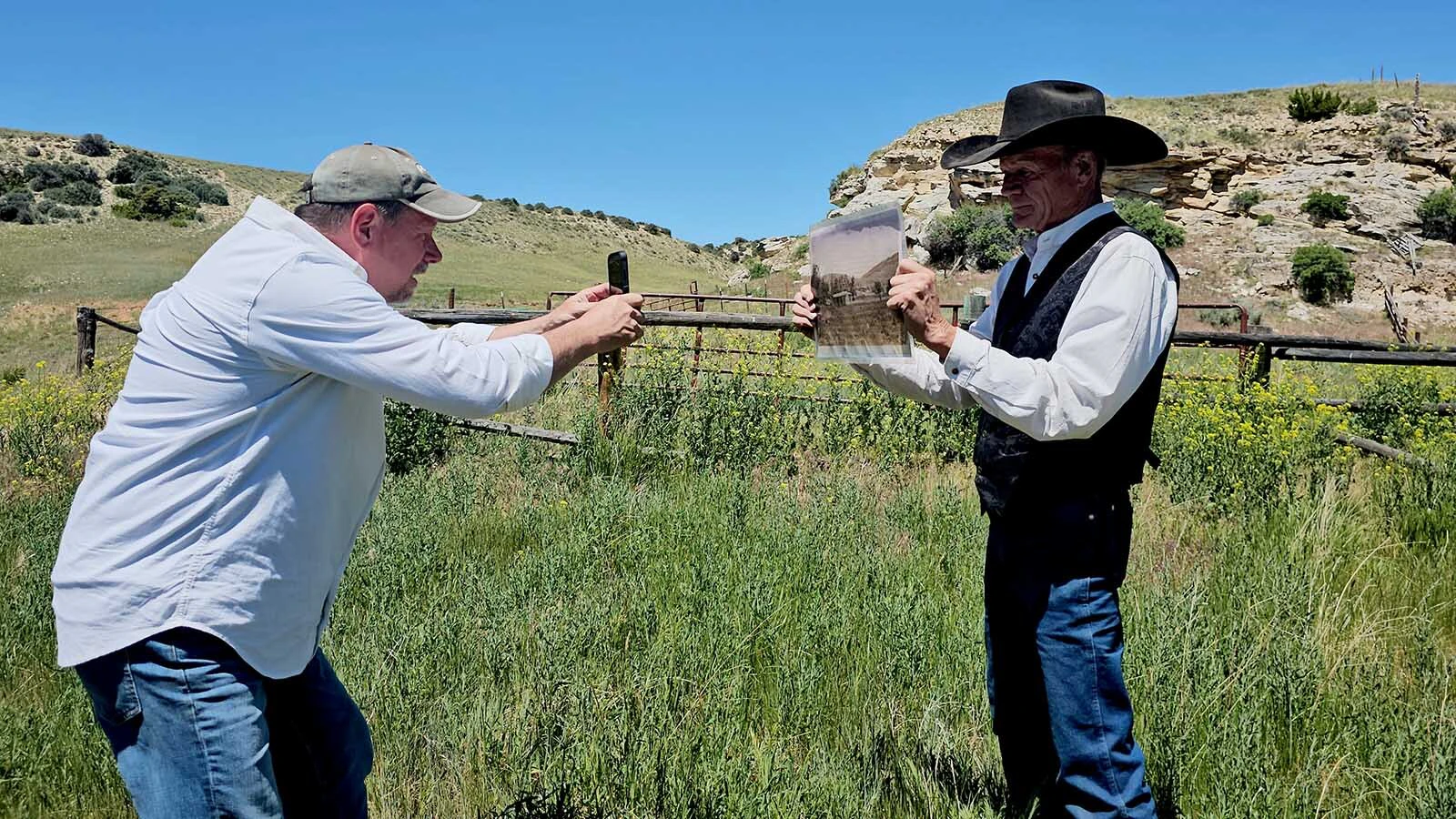
Clay Gibbons holds up a historical photo at the spot where that photo was taken. A tour participant takes his own photo, first of the historical photo and then of the location and what is there now. (Renee Jean, Cowboy State Daily) 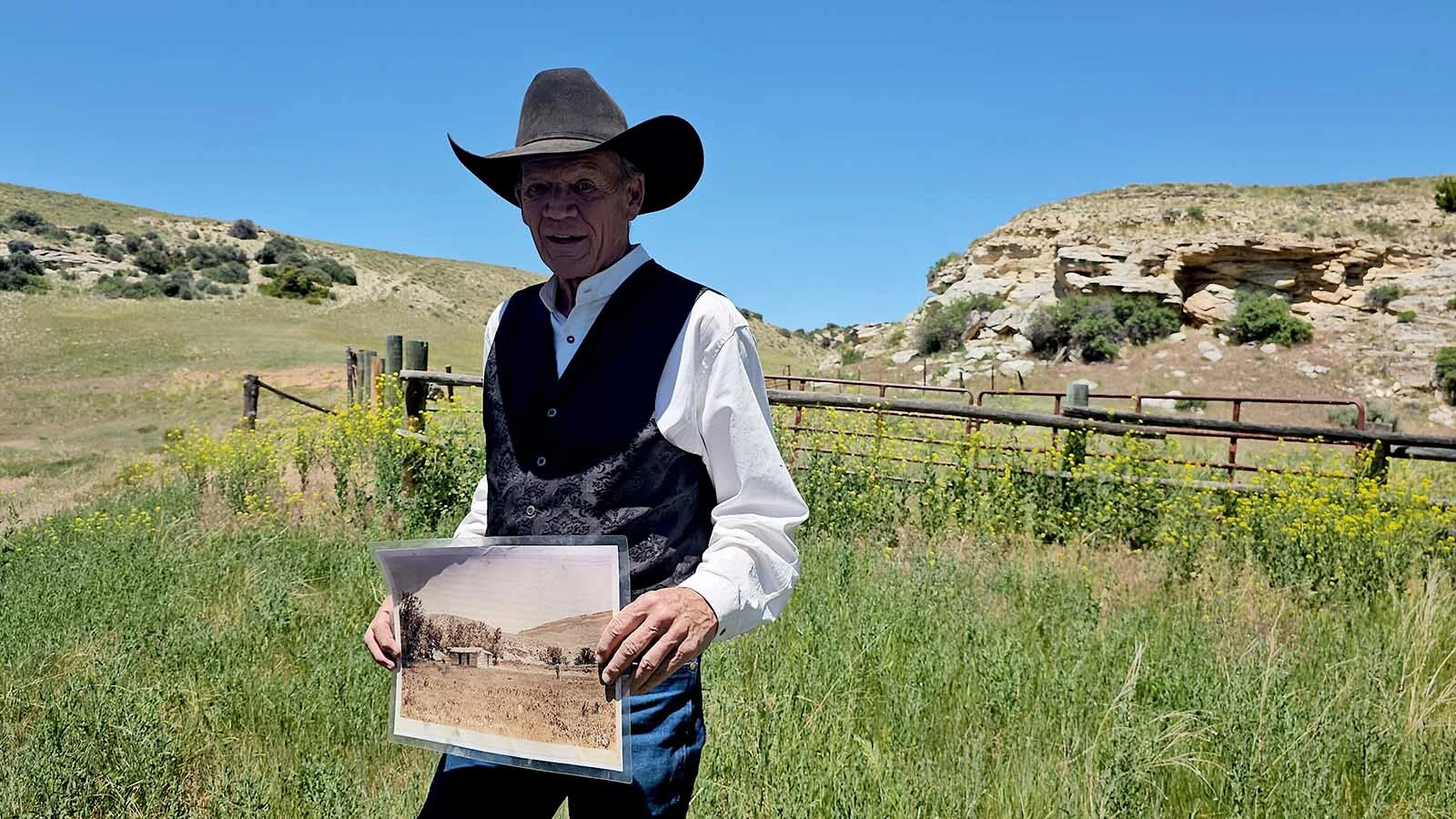
Clay Gibbons has found the exact spot where this historical photo was taken. One of the things he has tour participants do is stand in that spot and take their own photo of what is there now. (Renee Jean, Cowboy State Daily)
Finding The Hole In The Wall Fight
Gibbons applied that same mentality to the 1897 Hole in the Wall Fight.
At first, the location of the gun battle was a mystery.
Newspapers only mentioned the battle’s location vaguely. Locals, meanwhile, would say it was by the Bob Smith Hill, “somewhere over there.”
Those were fighting words to Gibbons.
He started digging into old court papers and documents, trying to find something that could help him pin down an exact location.
From that effort, he learned that county officials at the time weren’t sure whether the shooting was a Natrona County or a Johnson County crime. They sent a surveyor to the scene to find the county line and determine which county had jurisdiction.
Clay was eventually able to track down the surveyor’s century-old field notes, which mentioned a large pile of rocks marking the site of the shooting.
Gibbons had noticed an unusual pile of rocks when he had visited before. They weren’t like the rock Indian cairns that mark the 1,500-year-old Sioux War Trail that winds through the Hole in the Wall country. And they weren’t like a grave marker either.
Using Bureau of Land Management maps and the surveyor’s legal descriptions, Gibbons was eventually able to verify that the pile of rocks he’d seen was in the same spot indicated by the surveyor’s notes.
Shots Fired, Horses And Dust Flew
A stone monument now stands at the site of the battle on a windswept knob just above Buffalo Creek.
The marker retells the story of the battle.
Stock detective Bob Divine of the CY Cattle Co. had ridden up to the Hole in the Wall with 10 cowboys to look for rustled cattle. They met three members of the local outlaw crowd, brothers-in-law Bob and Al Smith and their partner Bob Taylor.
“There was animosity between Bob Divine and Bob Smith,” Gibbons said. “Divine asked if they’d seen any CY cattle and Smith replied, ‘Not a damn one.’”
Smith, believing that Divine was about to pull his weapon, pulled his own gun first.
“Shots were fired,” Gibbons said. “Horses were pitching and the dust flew. When the smoke cleared, Bob Smith lay on the ground with a bullet through his back and Divine’s horse had been killed, and he and his son Lee had been wounded.”
Al Smith escaped after his gun was shot from his hand, and Bob Smith was taken to the Hole in the Wall Cabin where he died the next day with his young wife at his side.
“Bob Taylor was captured and taken to the Natrona County jail and later released shortly after that,” Gibbons said. “Divine led a contingent with heavily armed men and two deputies through the Hole and drive several hundred cattle out.
"They were watched closely by a number of armed men, but were not bothered.”
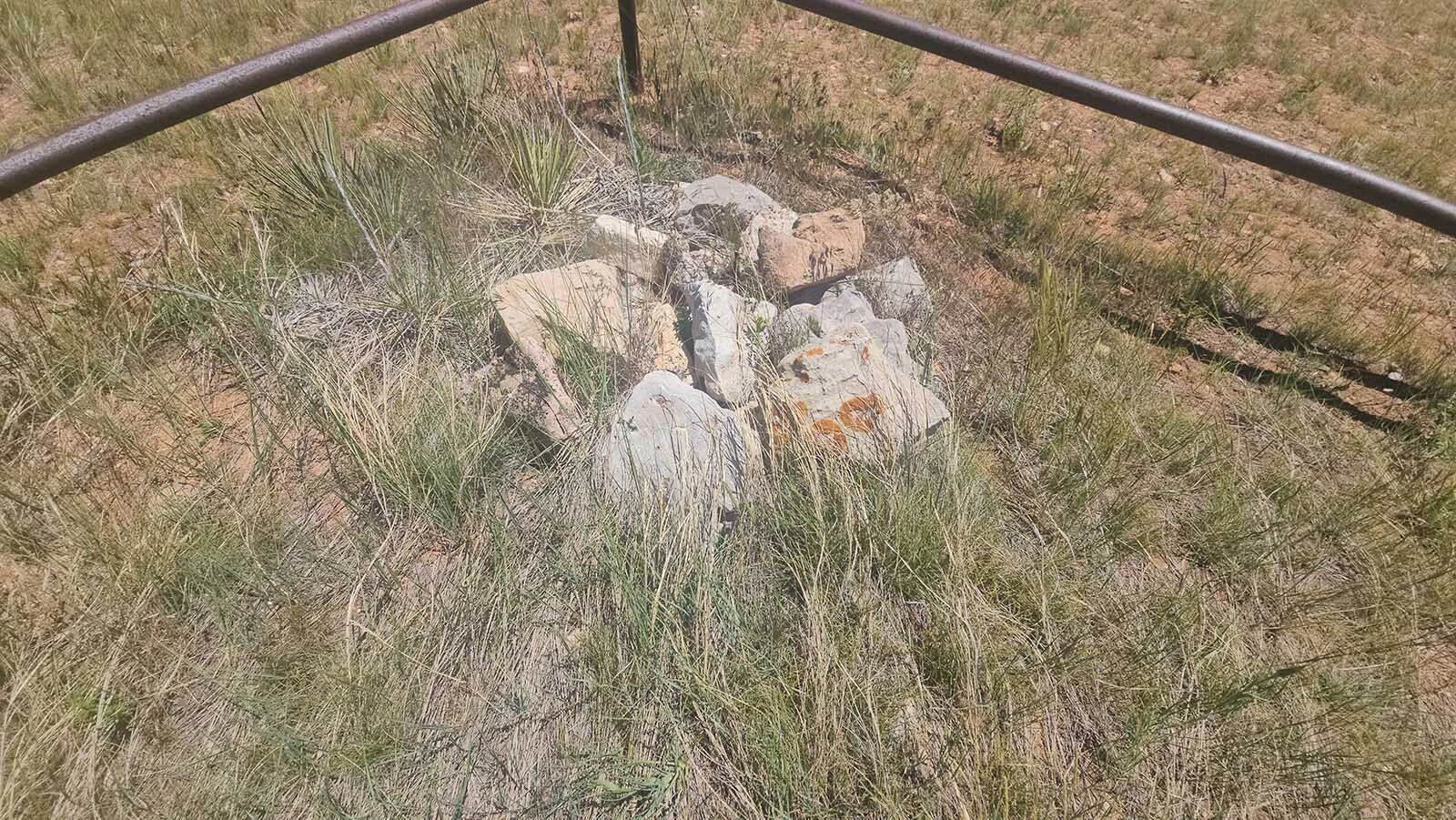
This surveyor's pile of rocks found by Clay Gibbons marks the site where the Hole in the Wall fight occurred. (Renee Jean, Cowboy State Daily) 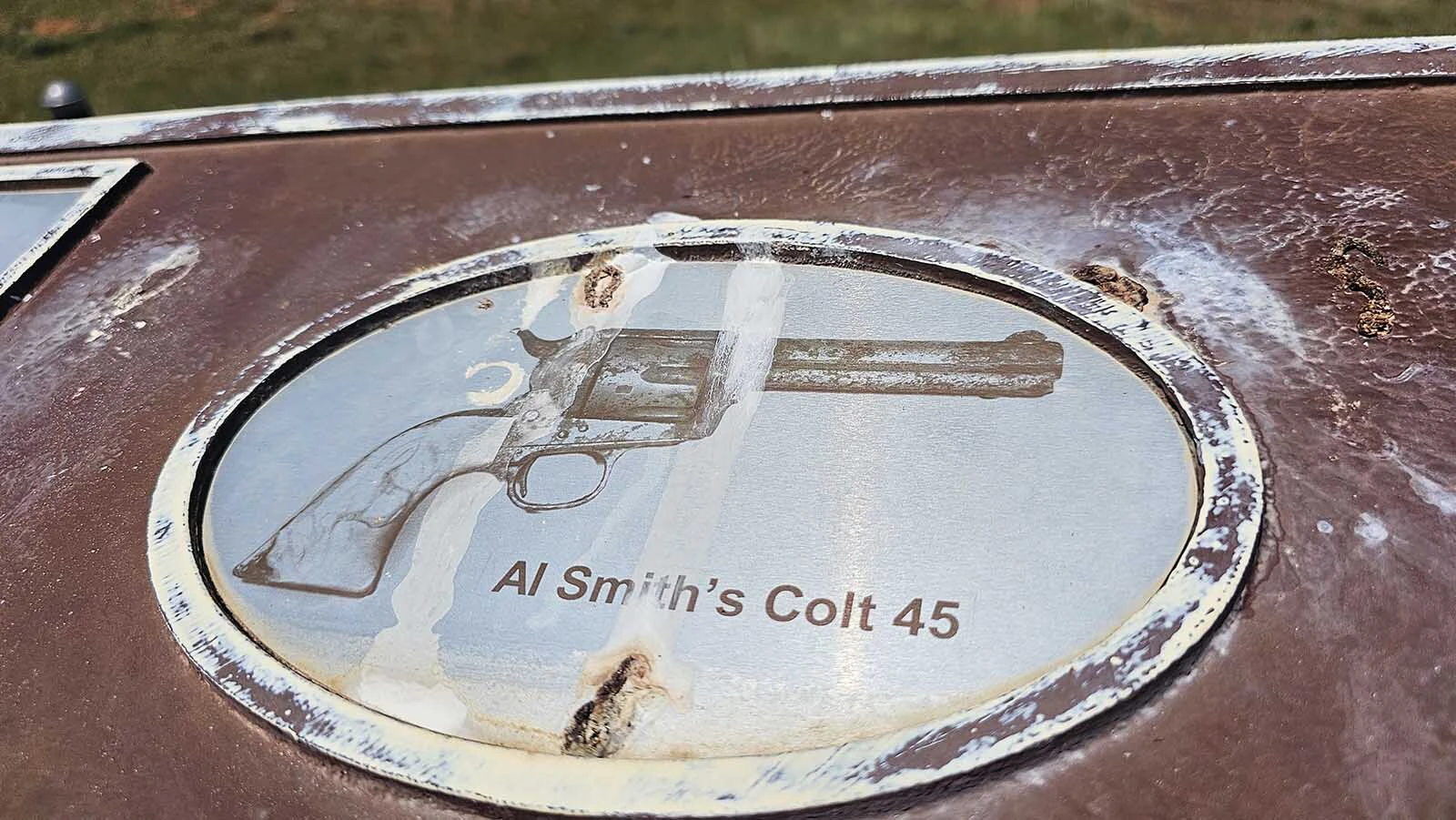
Clay Gibbons took a photo of Al Smith's Colt 45 for the Hole in the Wall Fight monument near Bob Smith's Hill in the Hole in the Wall country. (Renee Jean, Cowboy State Daily) 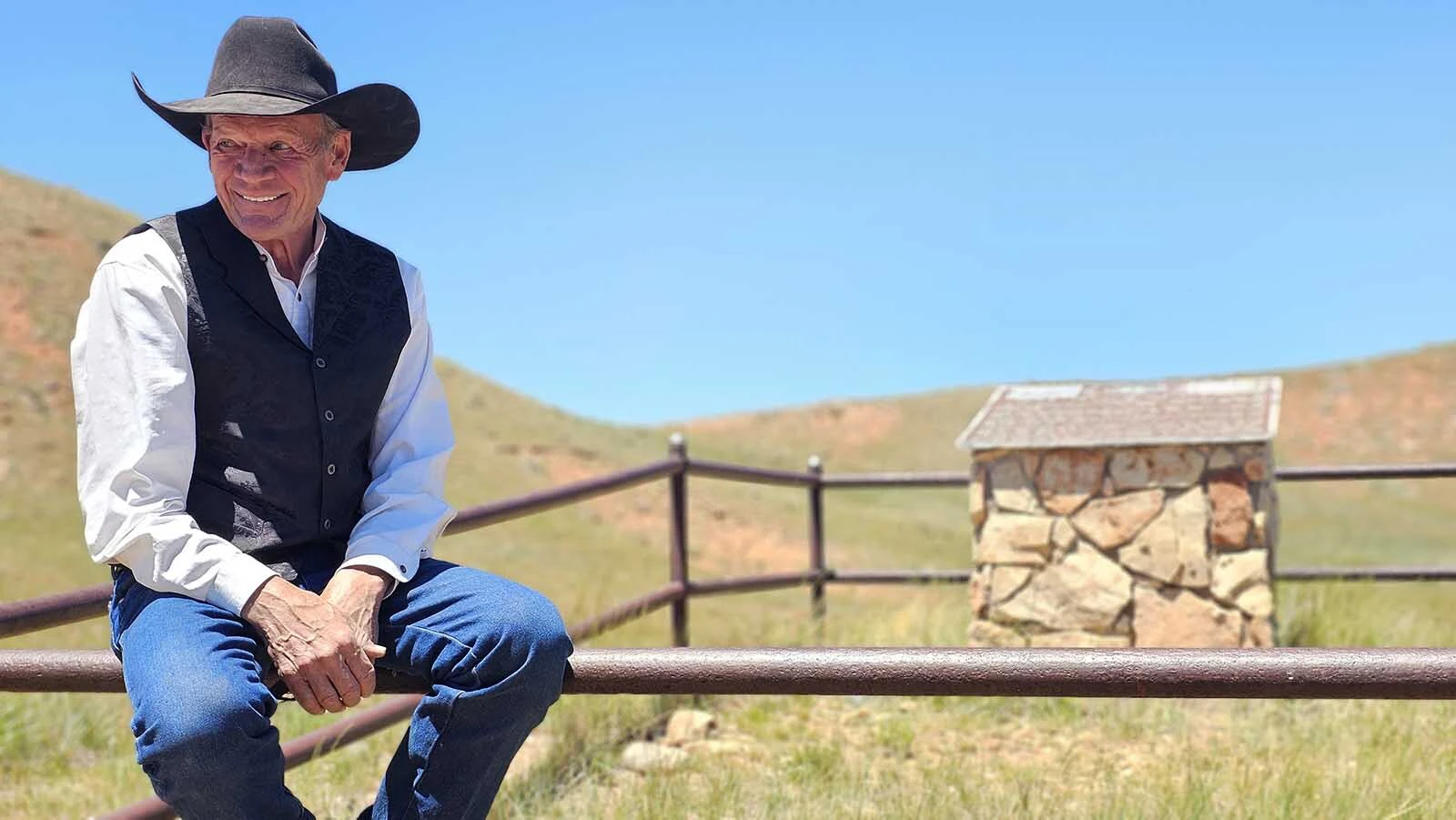
Clay Gibbons put this monument at the location of the Hole in the Wall fight. (Renee Jean, Cowboy State Daily) 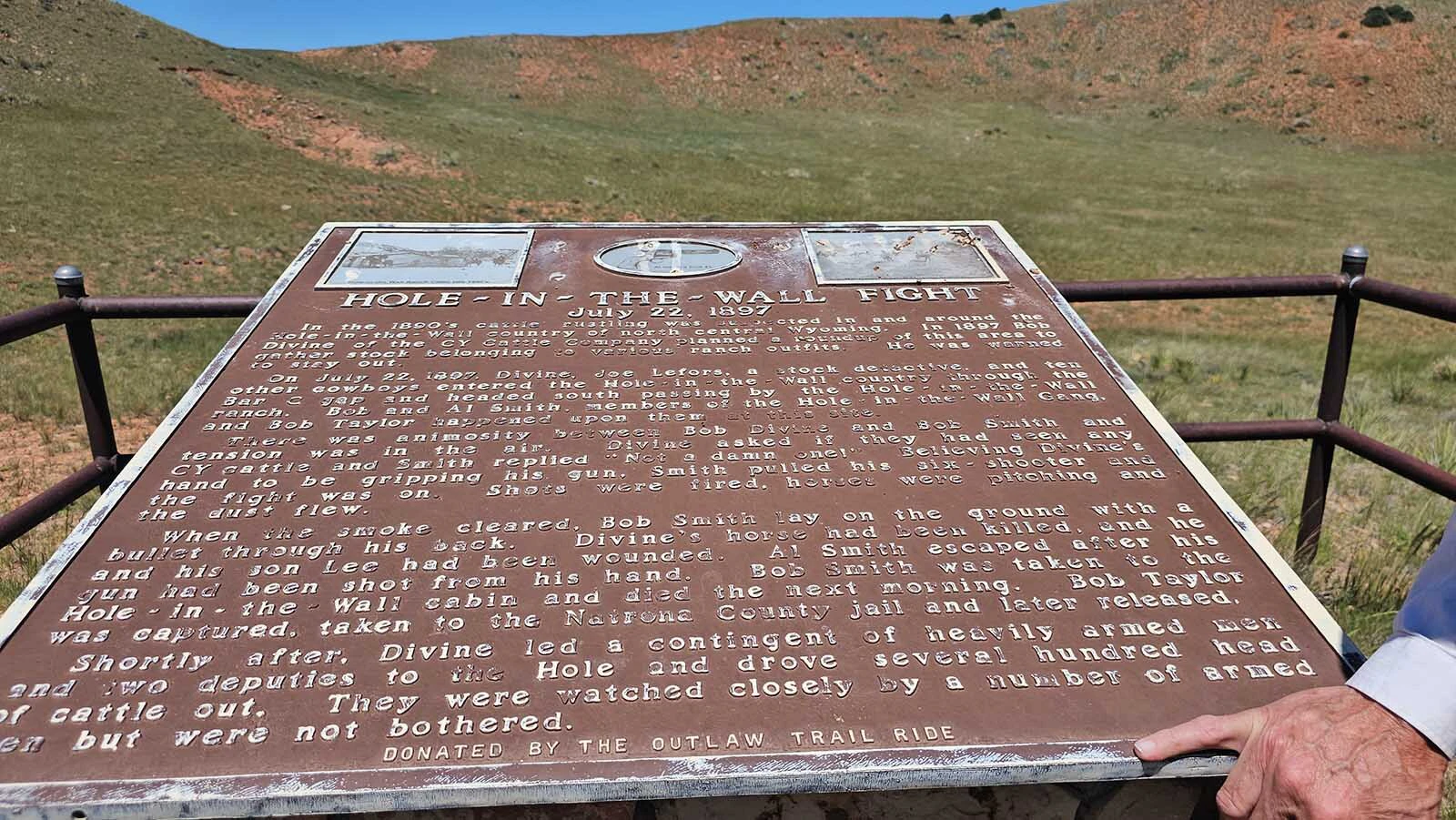
The story of the Hole in the Wall Fight is part of the darker that Clay Gibbons was instrumental in placing near Bob Smith Hill. (Renee Jean, Cowboy State Daily) 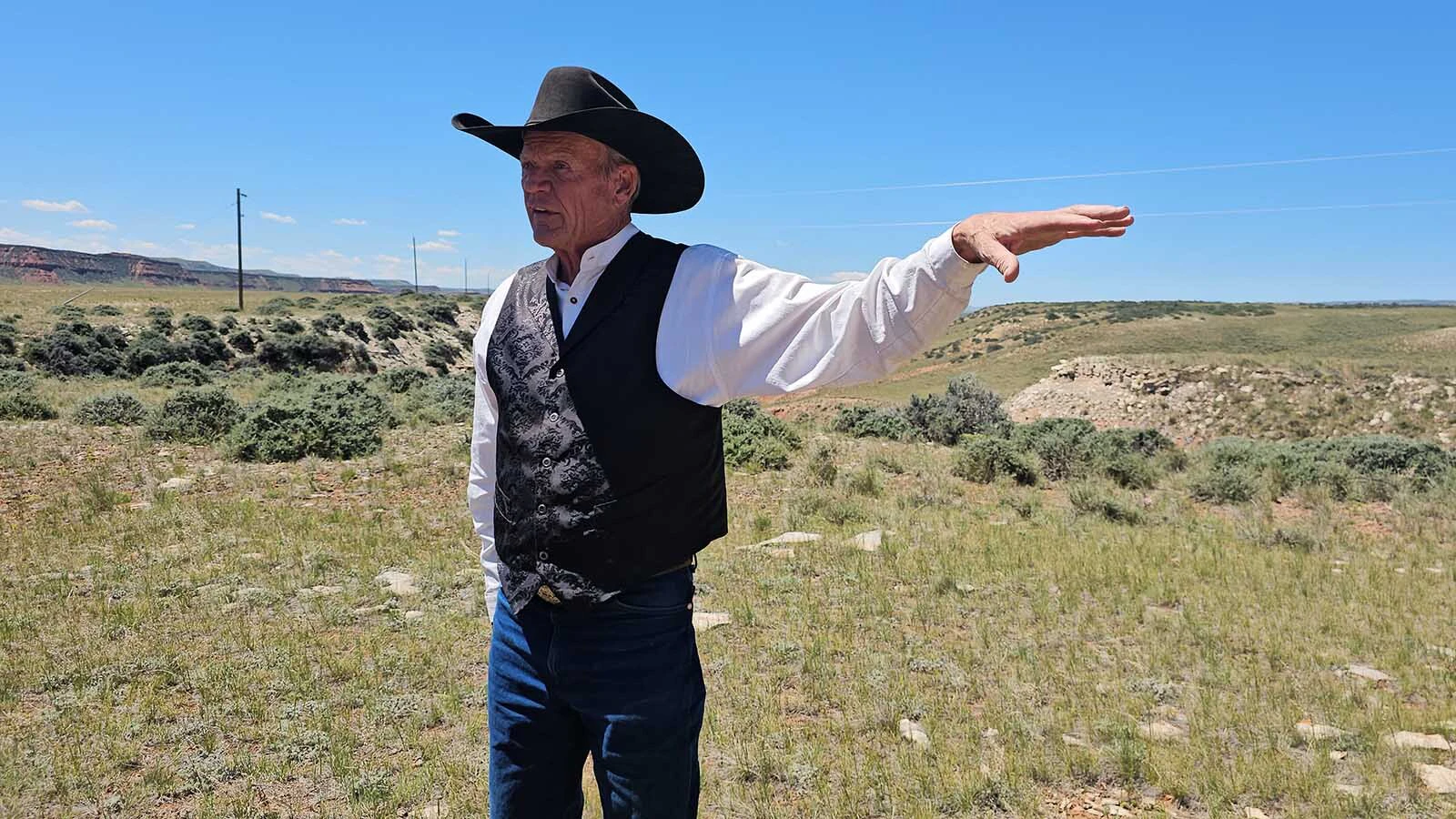
Clay Gibbons tells tales of the Hole in the Wall country during one of his private tours. (Renee Jean, Cowboy State Daily) 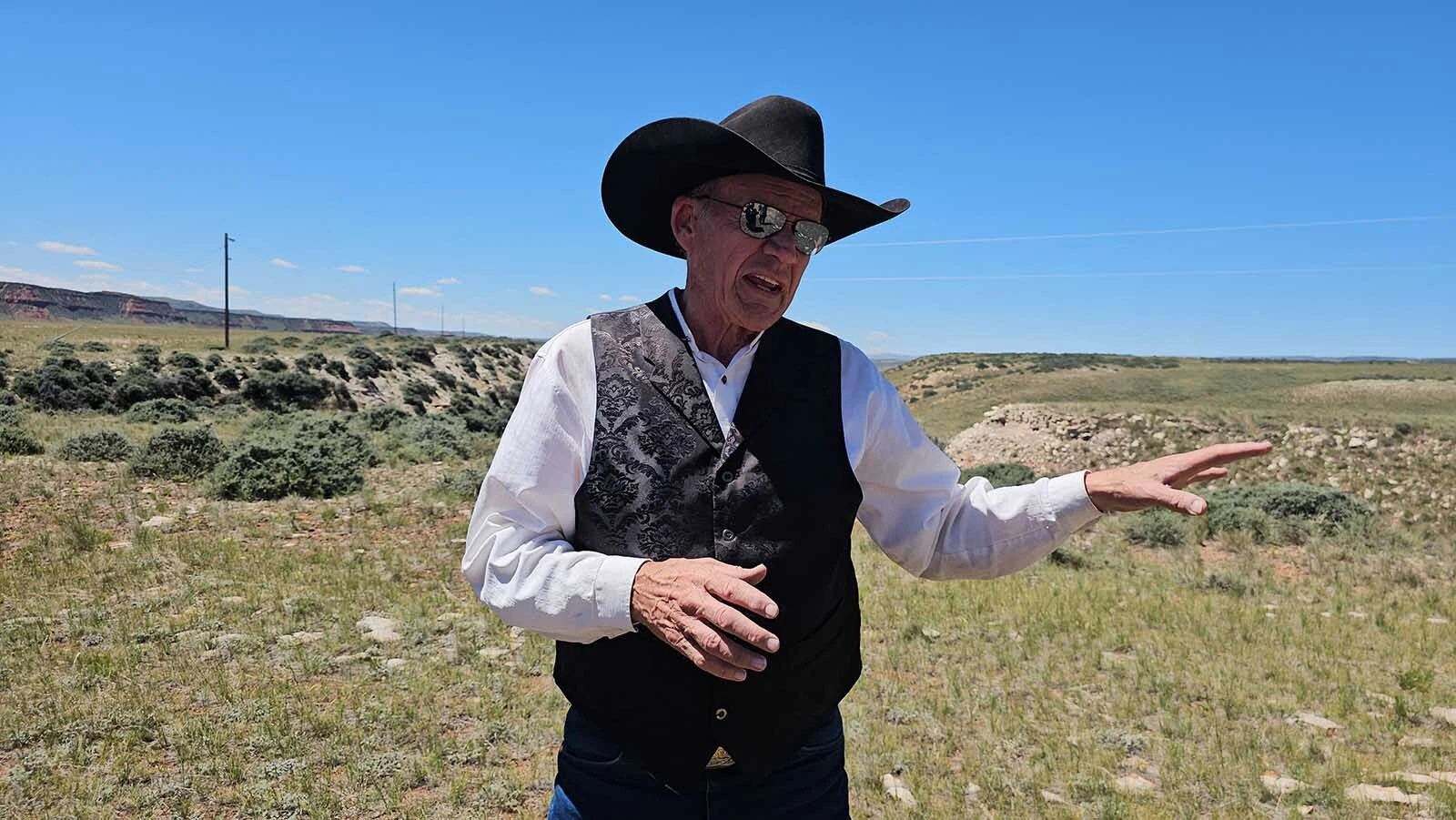
Clay Gibbons tells tales of the Hole in the Wall country during one of his private tours. (Renee Jean, Cowboy State Daily)
Why Nate Champion Took Off His Boots
After the sad tale, Gibbons offers a spread of sandwiches and drinks for lunch, and then there are more stories.
Clay shifts seamlessly from outlaw history to the wider, grittier politics of the West at the time and the Johnson County War, when powerful cattle barons brought 32 hired guns up from Texas at $5 a day plus $50 per scalp.
The siege of the TA Ranch comes alive as he is talking, as does the doomed defense of small ranchers like Nate Champion, who wrote his last words in his diary as gunmen ringed his cabin and finally set it ablaze.
“The cabin's on fire,” Gibbons quotes Champion. “I’m going to have to make a run for it. Goodbye, boys, if I never see you again.”
Champion, Gibbons said, took his boots off before charging out into the gunfire. It’s an odd piece of historical detail that has nagged at Gibbons for years.
“I always wondered why the hell he took his boots off,” Gibbons said. “Because the people who were there, the invaders, had mentioned that he had his boots off, had a rifle in one hand and a revolver in another, and he goes out the back door shouting.”
Champion was met with a barrage of 28 bullets, Gibbons said.
“They went up to him and they tied a little note to his vest, ‘Cattle thieves beware,’” Gibbons said. “And so that’s where Nate met his end.”
Gibbons spotted an old frontier saying he believes explains Champion’s bootless feet.
“If you died with your boots on it meant you were an outlaw,” Gibbons said. “A good guy dies in bed, right? You don’t wear your boots to bed. So it finally clicked. Nate stripped those boots off as his final statement.
"He wanted the world to know he wasn’t an outlaw.”
Cassidy’s Escape Plan
No Hole in the Wall story can be complete without a Butch Cassidy mention or two. But Clay doesn’t treat Cassidy like a Hollywood myth. Cassidy was a smart, calculating professional.
“He understood one thing, and that’s a fresh horse will outrun a tired horse every day of the week,” Gibbons said. “So when he would pull his jobs, whether it’s a bank job or a train job or whatever, he always knew where he was going after he got the cash.
"He knew where they were headed, and so what he’d do is take a horse and ride the hell out of him and about 15 miles away … to a fresh horse.”
By planting fresh horses every 15 miles or so along his escape route, Cassidy guaranteed he would stay ahead of law enforcement and ultimately get away.
The law didn’t know where he was going and had no fresh horses to keep up.
Fast horses could take Cassidy to a hideout like Hole in the Wall where sheriff’s deputies feared to travel.
“For hell’s sake, how do they expect us to ever catch these outlaws once they get into the Hole in the Wall?” an exasperated sheriff wrote in a bitter letter to the Pinkertons and the Wyoming governor after the Wilcox Train Robbery. “There’s nobody will talk. Everybody protects them. It’s a den of thieves.”
Locals had their reasons for protecting the outlaws who used the Hole in the Wall.
For one, they paid well for fresh horses.
In an anecdote Gibbons found, one ranch wife told a visiting writer she could leave a coffee can of coins on her mantle, and if outlaws passed through while the family was away, they’d cook themselves a meal, leave the house tidy and sometimes even add to the can of coins.
“Who is going to turn in the men who treat you better than some of the big outfits do?” Gibbons asked.
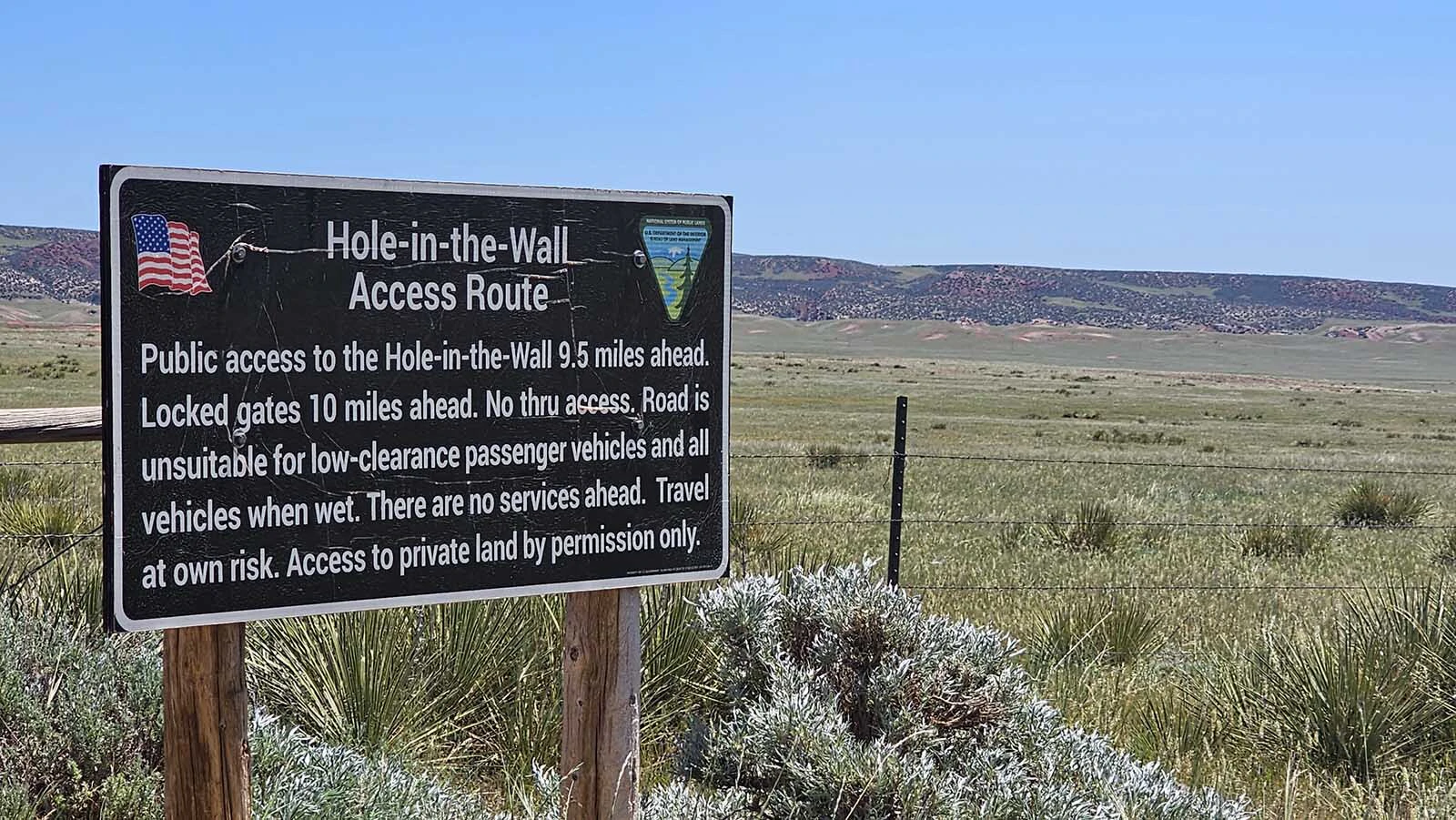
The Hole in the Wall access route is remote and difficult to find without a private guide like Clay Gibbons, but there is a public foot trail to it. (Renee Jean, Cowboy State Daily) 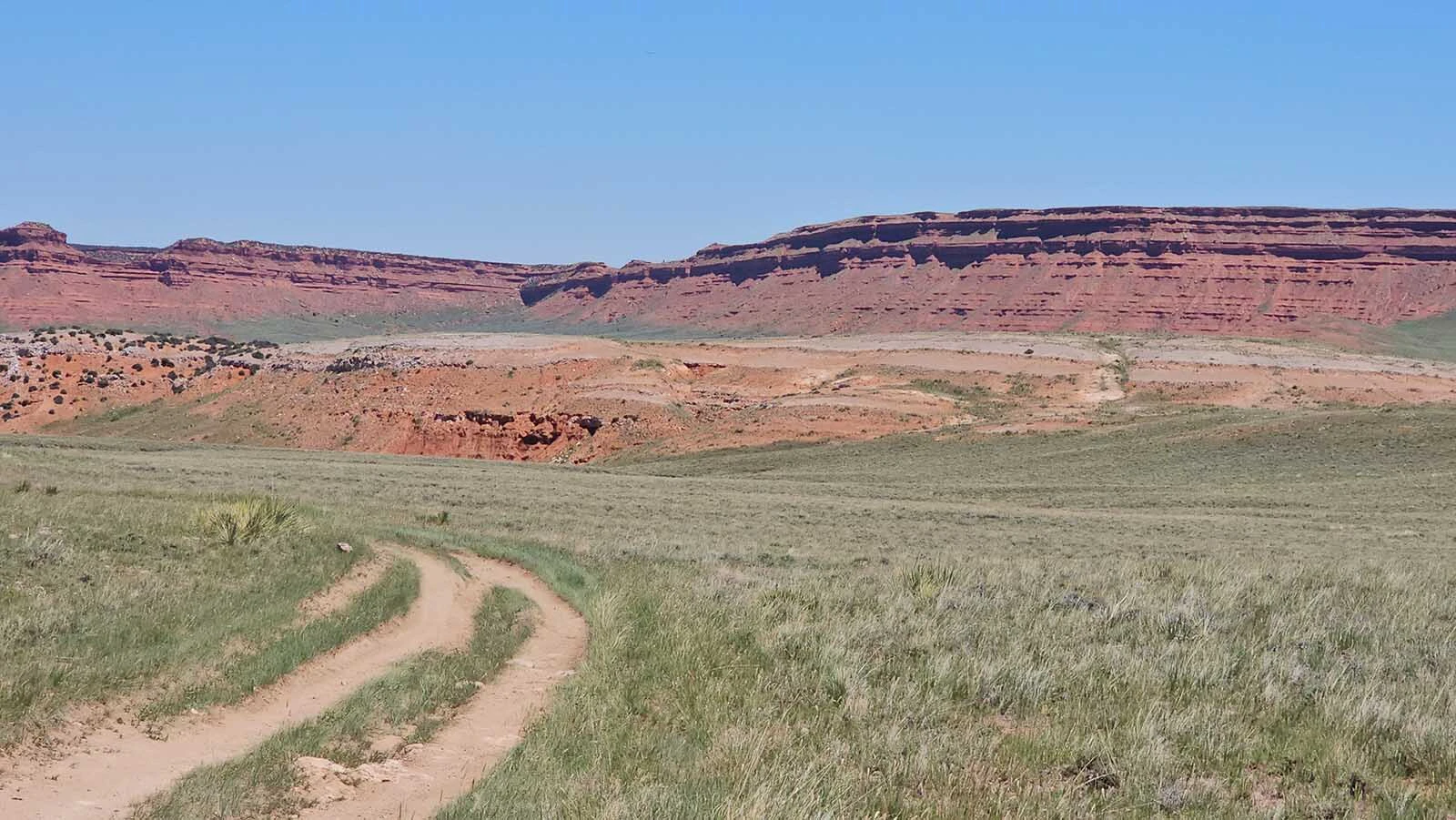
The Hole in the Wall is actually a notch in a towering red cliff that rises 400 feet above the grassland that is just big enough for one person to squeeze through. (Renee Jean, Cowboy State Daily) 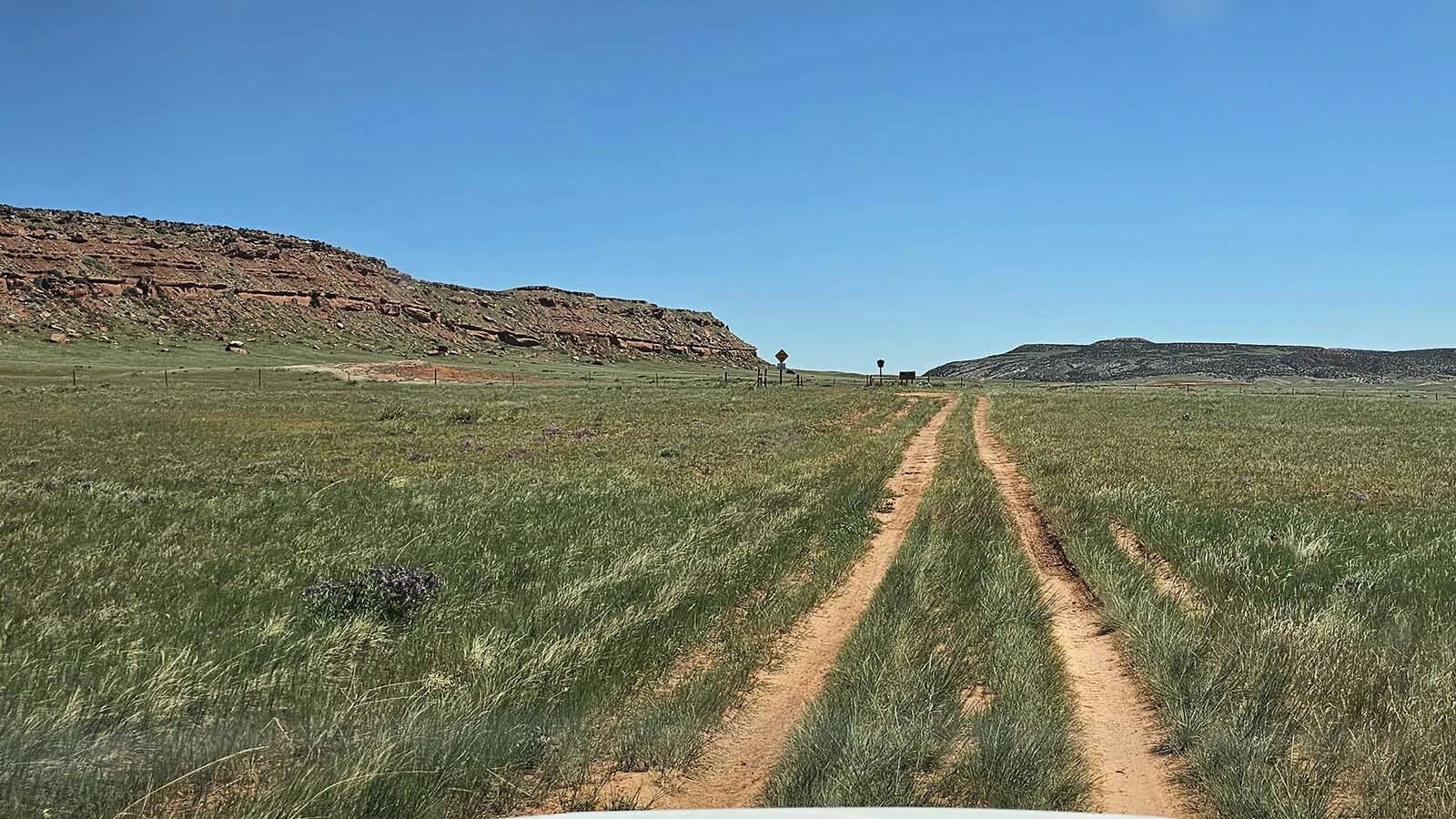
The beauty of the Hole in the Wall country. (Renee Jean, Cowboy State Daily) 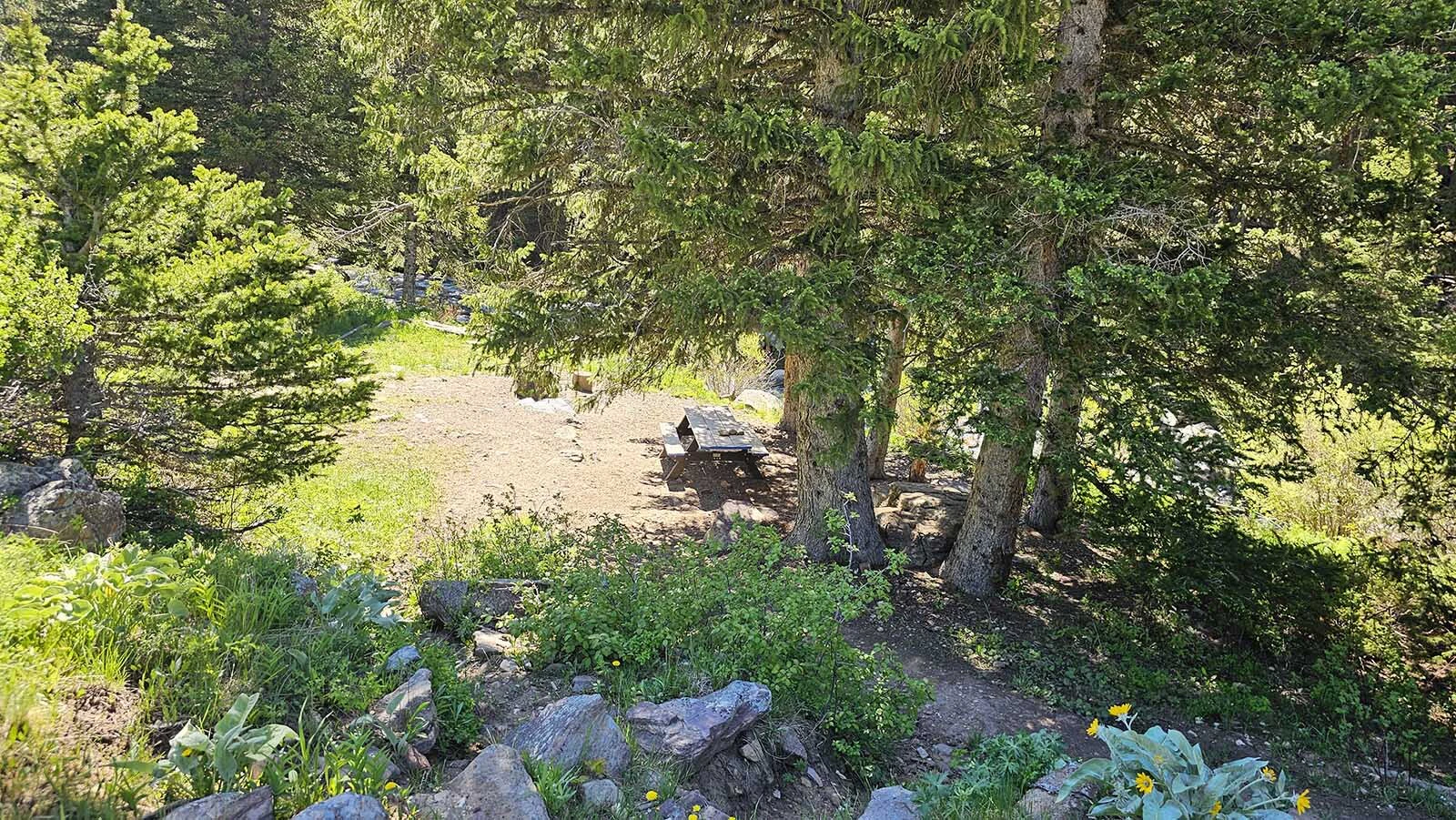
The Middle Fork Campground offers rustic campground sites on the way to the Hole in the Wall. (Renee Jean, Cowboy State Daily) 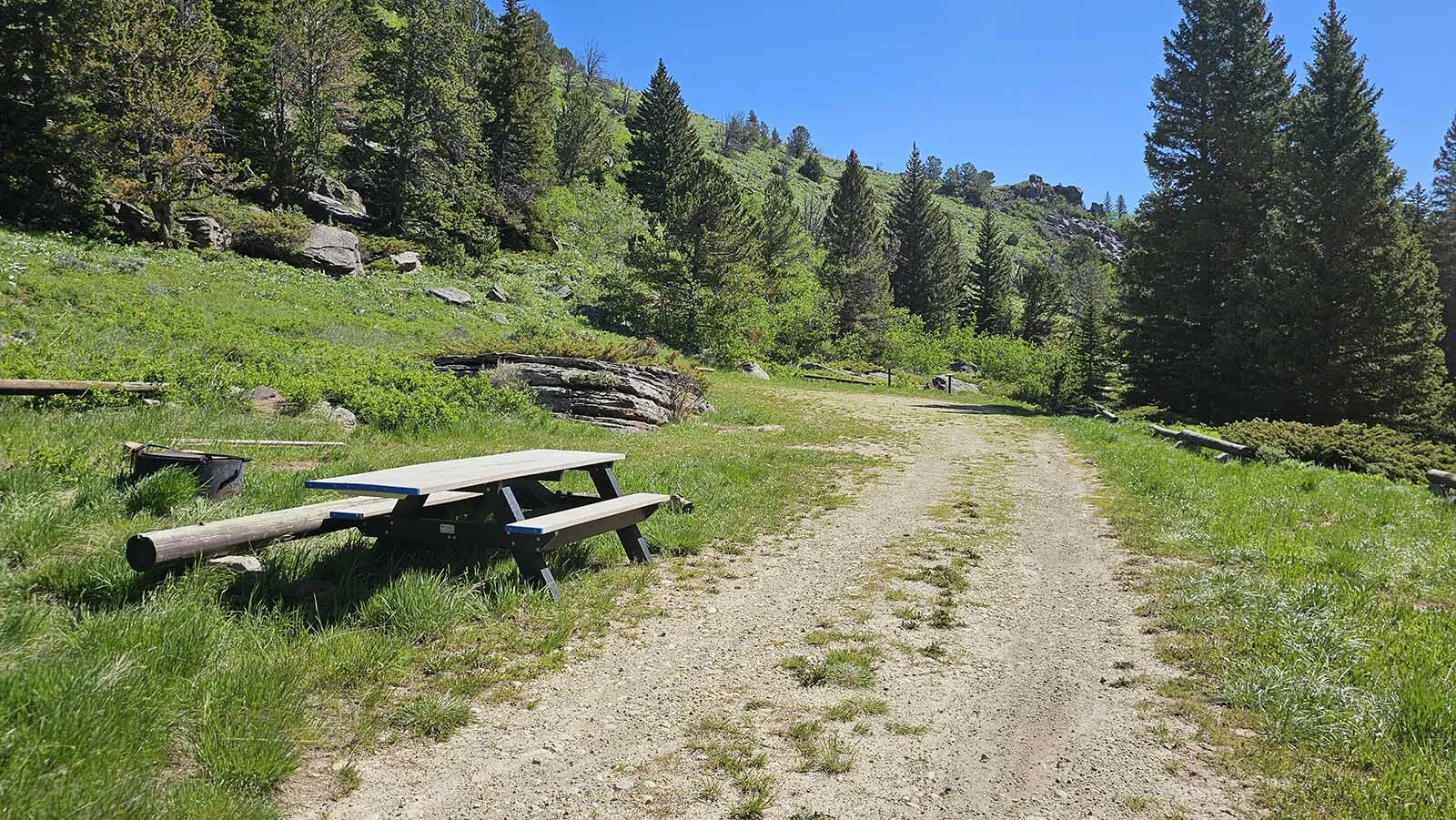
There is a public campground on the way to the Hole in the Wall. It's a very rustic affair. (Renee Jean, Cowboy State Daily) 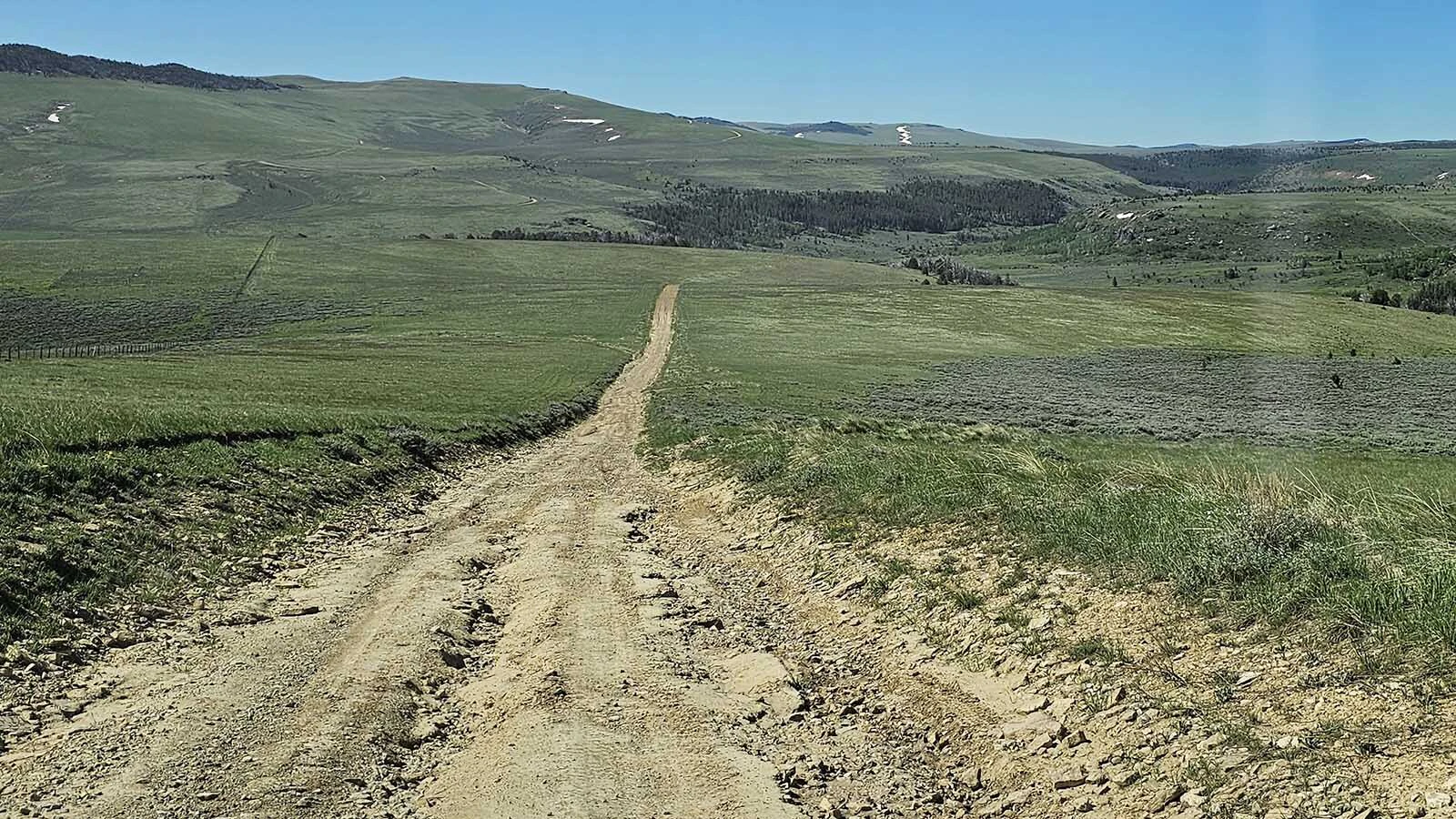
The "road" that takes people to the Hole in the Wall is at times little more than a dry creek bed, eventually dwindling down to a two track that has tufts of grass standing nearly as tall as the truck's hood. (Renee Jean, Cowboy State Daily) 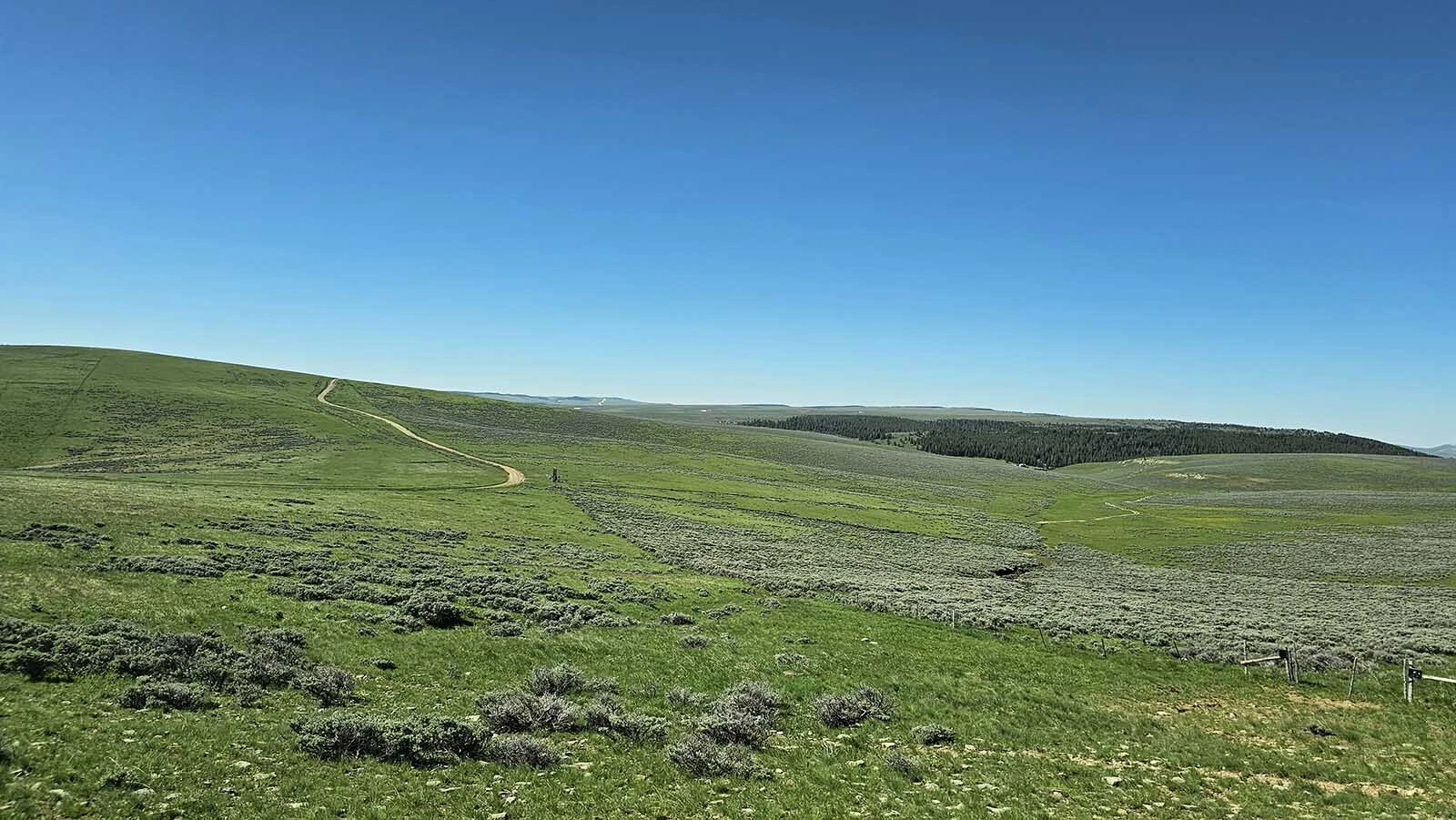
The way into the Hole in the Wall is beautiful, but long and lonely. Not another human soul for miles and miles. (Renee Jean, Cowboy State Daily)
An Unfolding Mystery
Not all of Gibbons’ stories are settled history. Some are still unfolding.
Like the one he tells at the remnants of Alex Ghent’s ranch.
The cabin and barn look like a heap of breaking grey bones, bowing to the inexorable years and slowly sinking into the earth.
In this place, Ghent once raised fast horses for the Hole in the Wall crowd, including the mounts that helped the Wilcox train robbers disappear into this country.
At some point, a second man named Joseph “Joe” Bowie bought into the ranch. The two bachelors ran cattle together until Bowie went back East, married a schoolteacher and brought her home to this lonely, but spectacular, place.
Cheyenne newspapers of the time gushed over the new Mrs. Bowie. She was so vibrant, charming and beloved by everyone she met, and they wished the couple “the best of luck in their new home in the Hole in the Wall.”
Not long after that, however, there’s a legal notice in the same paper. Mrs. Joseph Bowie is filing for divorce due to abandonment. She hasn’t seen her husband in over a year.
The notice had to run three times in the newspaper before a judge granted the divorce. The very next day after that, Mrs. Bowie became Mrs. Alex Ghent.
Gibbons has always wondered about that. Did Bowie really walk away from his equity in the ranch he’d worked so hard for and the wife he’d married from back East?
Or had something else happened …
A Tin Cup Clue
One weekend while Gibbons was camping over the Fourth of July, he decided to do a little poking around with a metal detector. He found a dump near an outhouse with shards of pottery, old medicine bottles, and old tools.
He also found a tin cup in that trench.
It was nearly intact, save for one single neat bullet hole punched through the bottom and existing just above the rim.
It was exactly the trajectory one might expect if someone were holding that cup to his lips and taking a drink.
“If you’re this far from town, you don’t use a perfectly good cup for target practice,” Gibbons said. “If you’re going to use it for target practice, you’re gonna shoot the living hell out of it right? Not just one hole and throw it away.”
Gibbons realizes he can’t prove anything based on that. But he’s learned of suggestive anecdotes that make him believe Bowie didn’t abandon his wife at all.
“There was word that Ghent left the ranch one day and he came back and threw his gun on the bed and said, ‘I never want to see that gun again,’” Gibbons said. “And then one of the hired men caught him down at the crick crying.”
What Gibbons wants to do next is a little more digging in the privy area to see if he can find a revolver that matches the bullet in that tin cup.
“If we do, then I think we’ve solved a murder mystery,” Gibbons said.
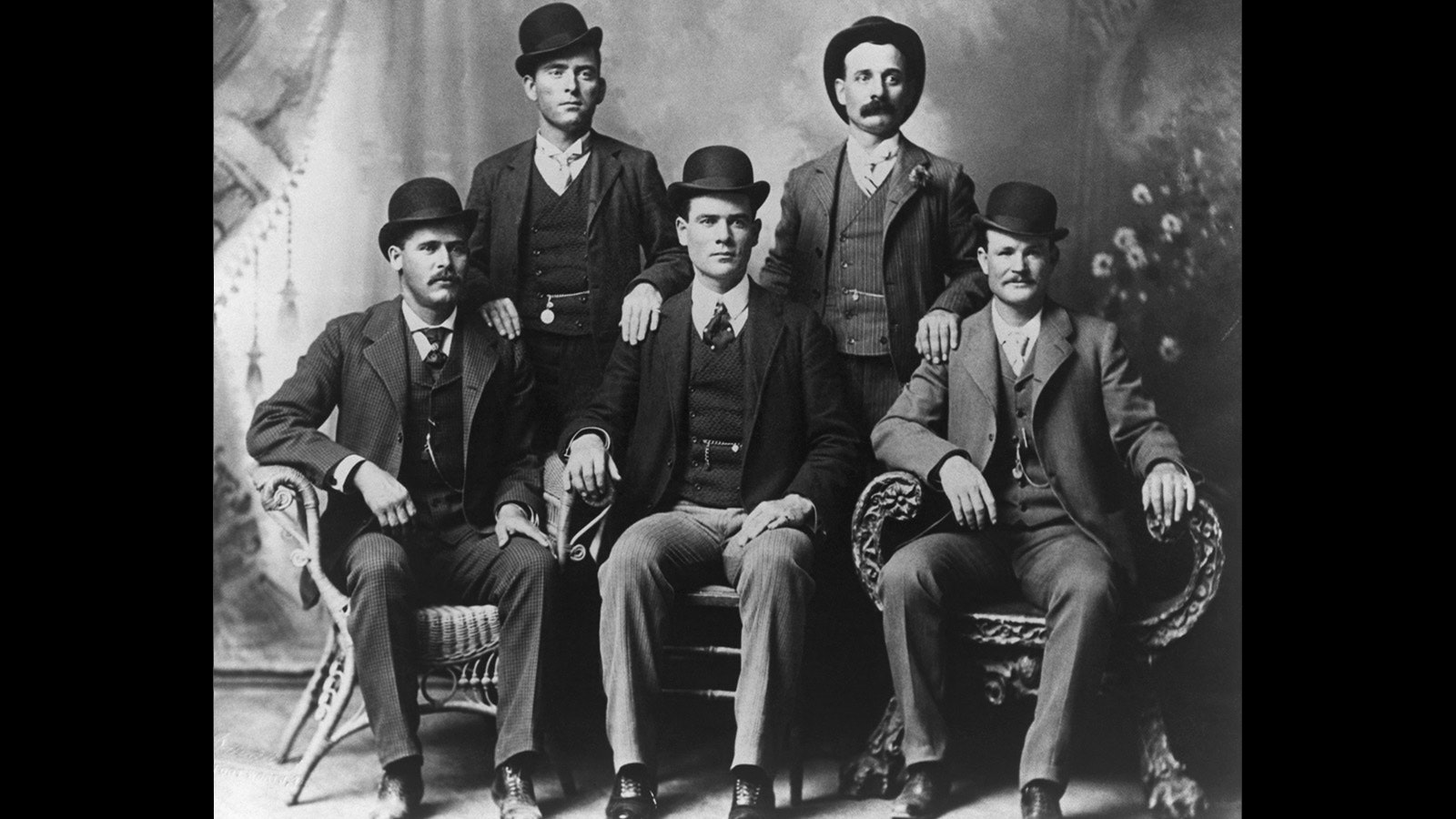
The famous "Fort Worth Five" photo of the Wild Bunch in 1901. They are, from left, William Carver (News Carver), Harvey Logan (Kid Curry); sitting, Harry Longabaugh (Sundance Kid), Ben Kilpatrick (The Tall Texan) and Robert LeRoy Parker (Butch Cassidy). 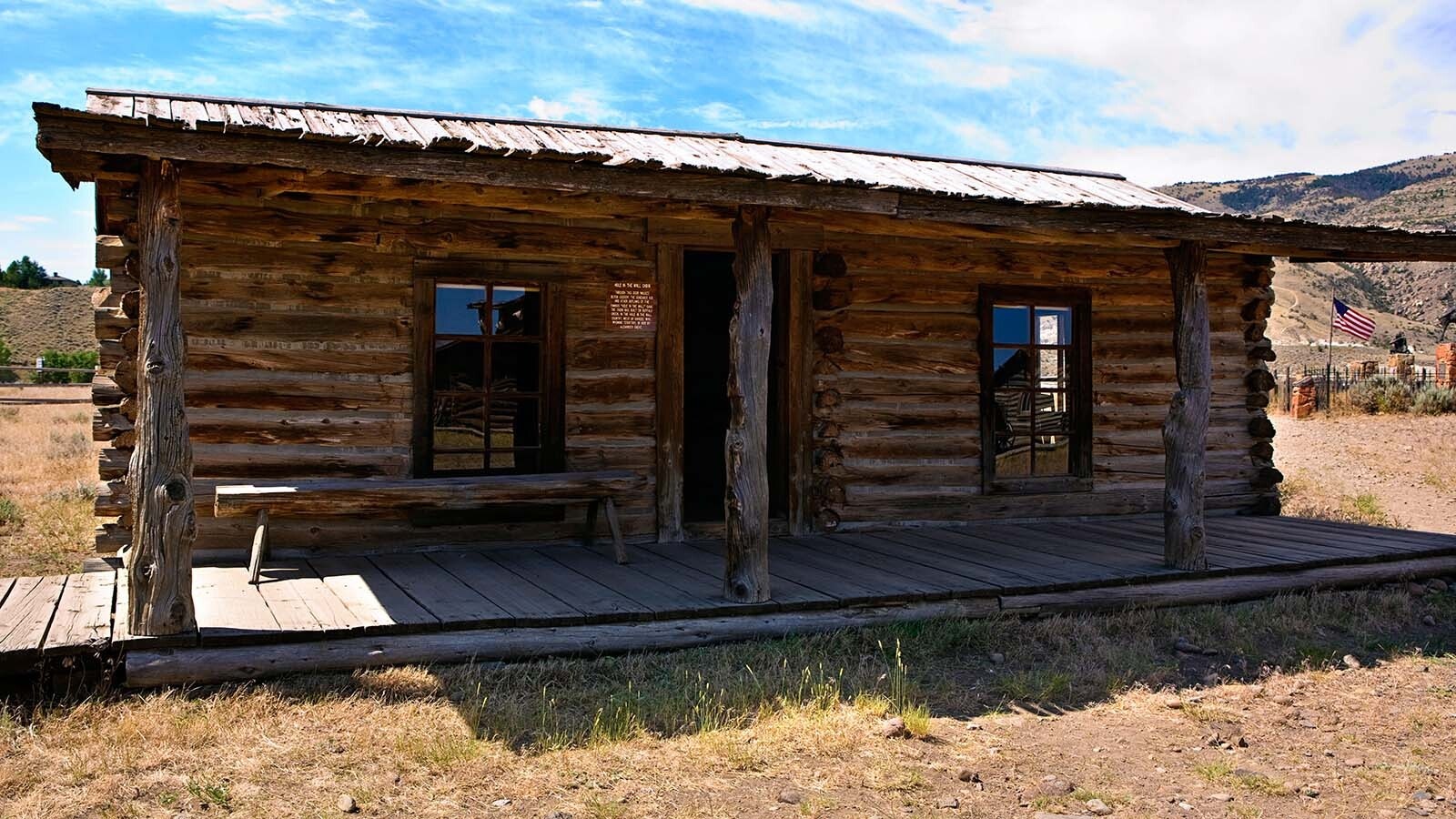
Hole in the Wall Gang cabin, which is now preserved in Cody, Wyoming, at Old Trail Town. (Wendy White via Alamy)
Letting The Past Live
By late afternoon, Gibbons has his truck about as close as possible to the base of the red wall.
Those who want to climb it have just enough time to scramble up and touch the skyline if they wish, looking down the west side at a sight that hasn’t changed much in over a century.
One member of the party, meanwhile, has brought a revolver that he believes rolled off the factory line the same day as the revolver Cassidy used.
Everyone in the party takes turns firing the weapon at a distant rock, listening to the sound of gunfire echoing against the cliff wall.
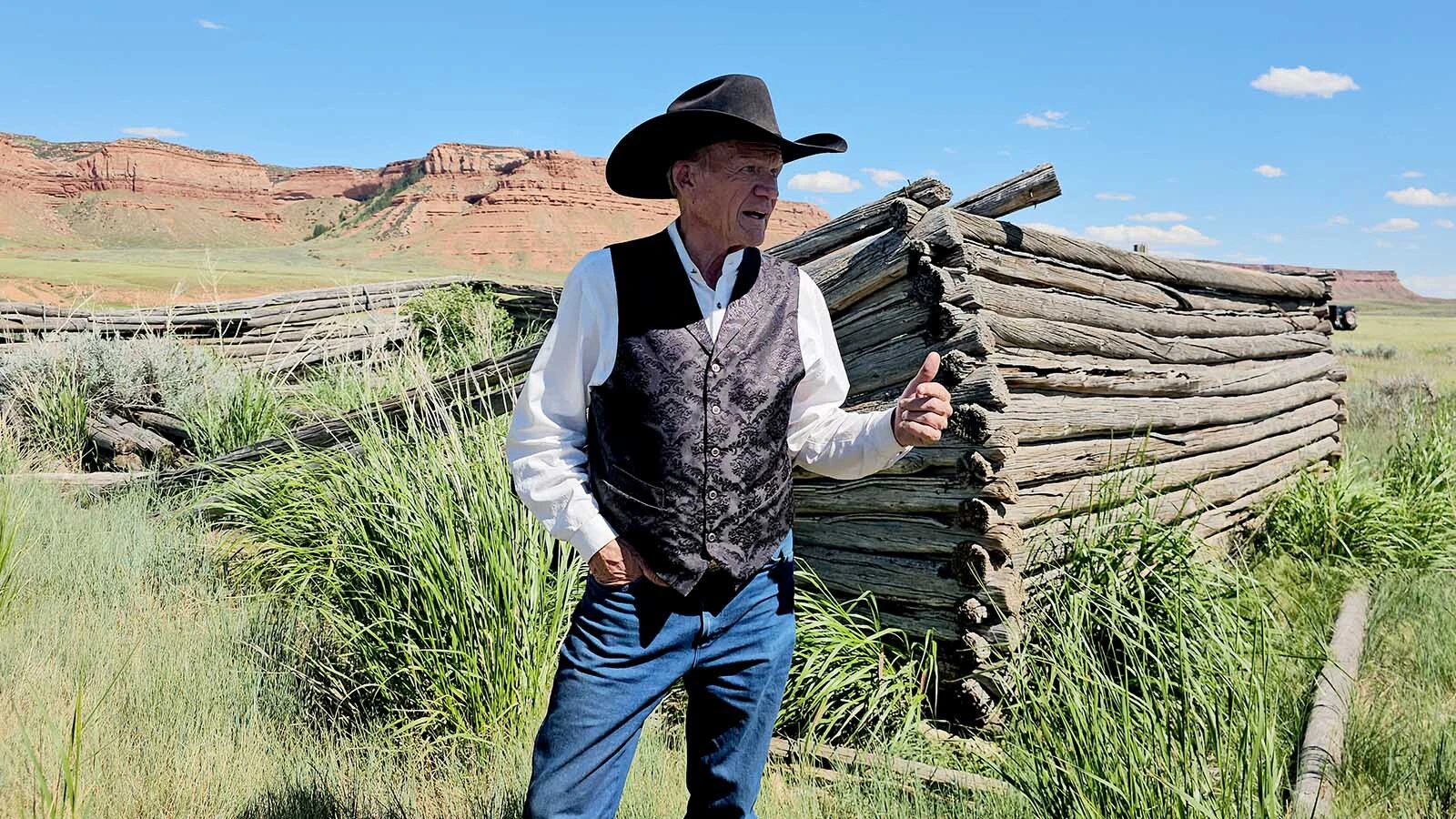
Gibbons waits patiently, his cowboy hat tilted to one side and a crooked but happy smile on his face.
There’s a long drive back to civilization, but he’s not in any hurry. There will be plenty of time to return to the 21st century later.
For now, he listens to the wind move through the sagebrush and lets time stand still. This is the moment when the past lives for him.
That’s what always brings him back to the Hole in the Wall, time and again.
Renée Jean can be reached at renee@cowboystatedaily.com.


