A wildlife rescue hospital on the fringe of the Denver metro area’s urban sprawl is accustomed to taking on tough cases. A young red fox with a severely broken leg is among the latest.
Rocky Mountain Wildlife Alliance’s critter hospital in Sedalia, Colorado, has taken in 627 patients so far this year, founder and executive director Emily Davenport told Cowboy State Daily.
This spring, the center treated a bald eagle suffering from lead poisoning, after eating a carcass with bullet fragments in it.
June and July are typically the busiest time of year, with roughly 200 animals per month arriving. Roughly one-third have suffered injuries from vehicle collisions or some other sort of physical trauma, she said.
The young fox (or kit) was likely born in April and was brought in June 6, Davenport said. The kit is believed to have been struck by a vehicle at a remote county road intersection near the small prairie town of Elbert, Colorado.
At the hospital, he joined a coyote pup recovering from head trauma after being hit by a vehicle, a red-tailed hawk that suffered bone fractures in a vehicle strike, and many others.
“We’ve had 110 different species in this year. That’s a 26% increase in the number of species over last year,” Davenport said.
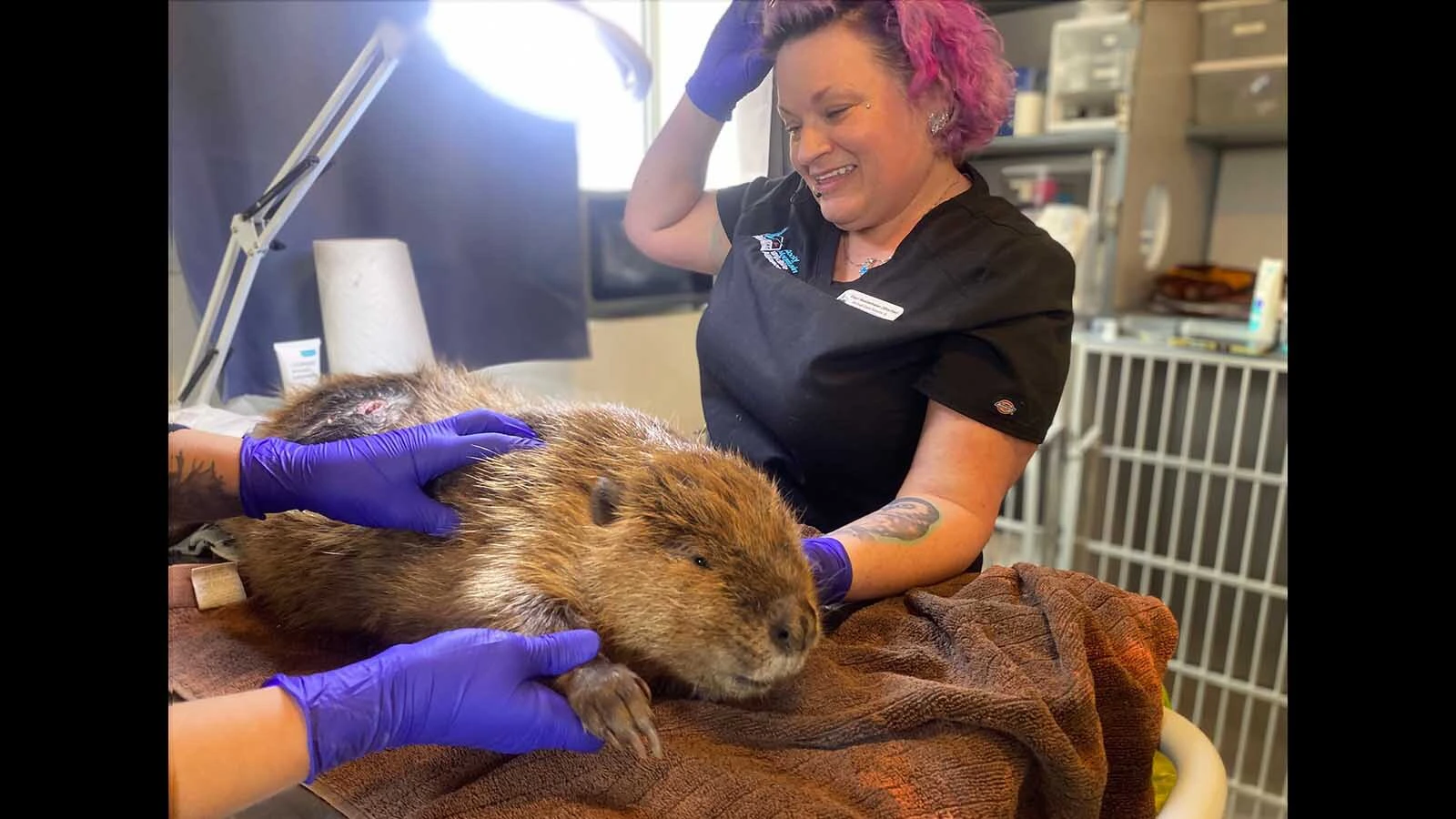
Amid Denver's urban sprawl, Rocky Mountain Wildlife Alliance is rescuing a fast-growing number of injured animals, like this beaver with an open wound. (Rocky Mountain Wildlife Alliance) 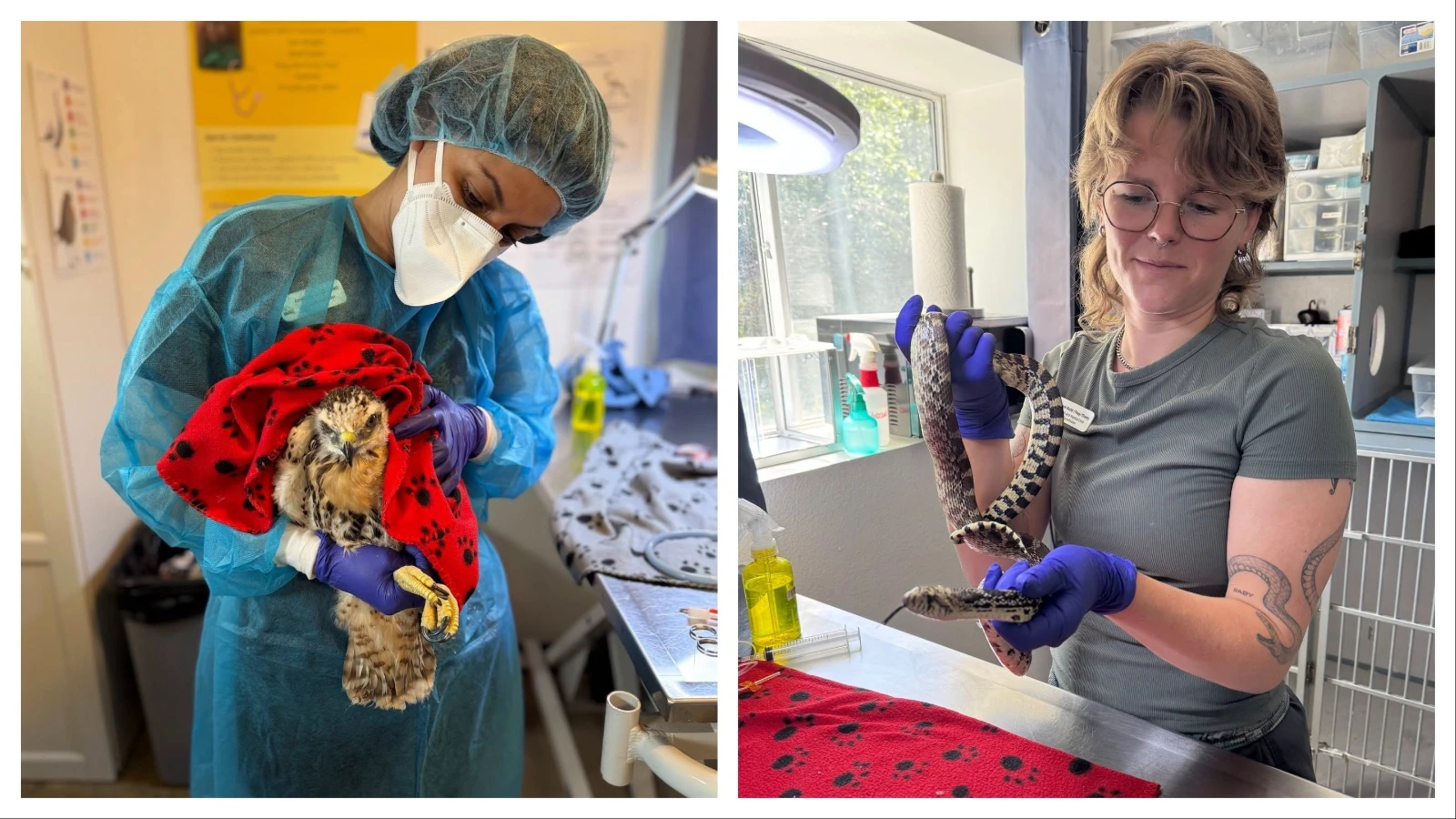
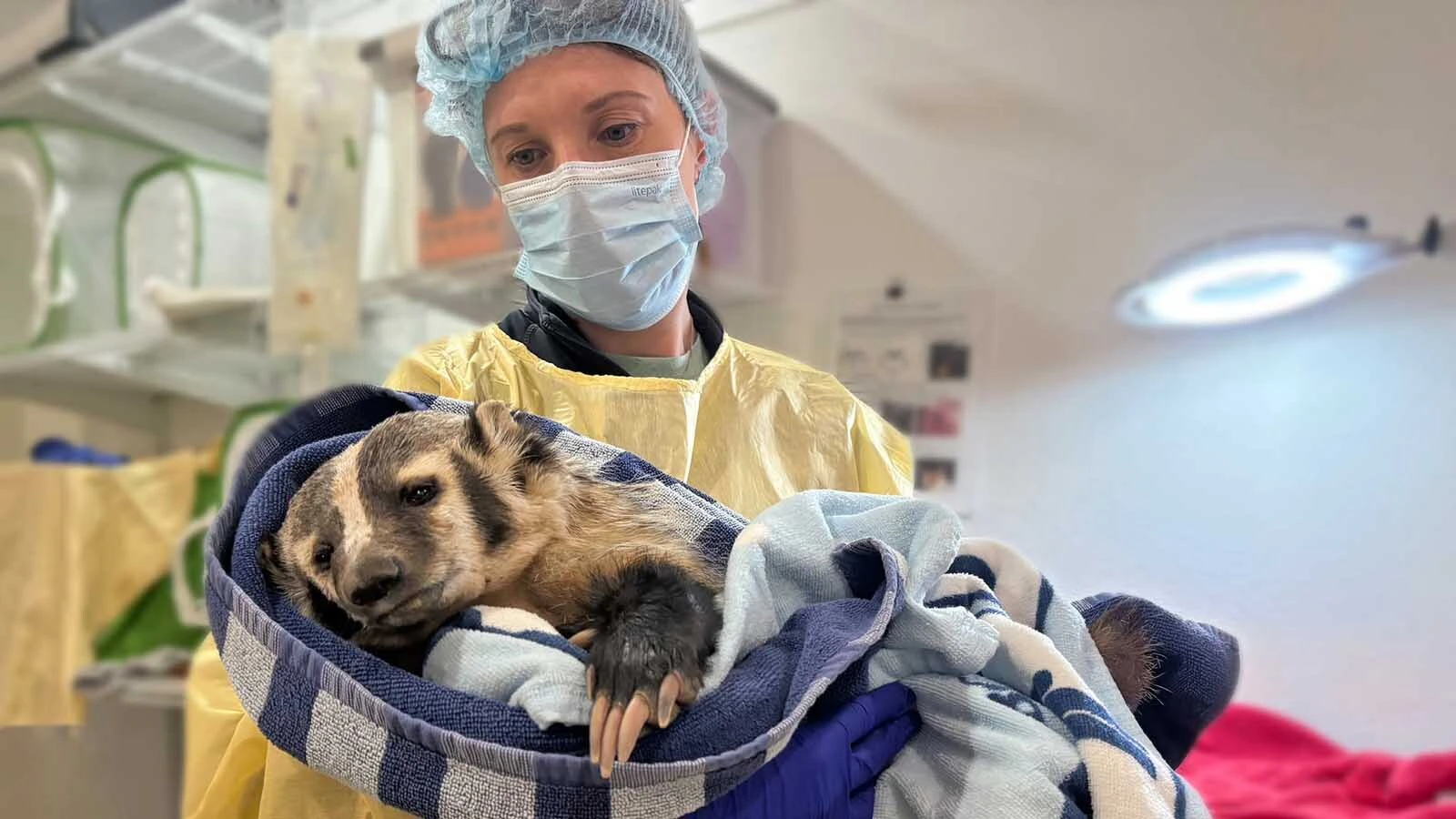
Amid Denver's urban sprawl, Rocky Mountain Wildlife Alliance is rescuing a fast-growing number of injured animals. (Rocky Mountain Wildlife Alliance)
Little Fella, Big Surgery
Davenport runs the center with the philosophy of returning wildlife to the wild whenever possible. She likes to give every animal a chance, even against long odds.
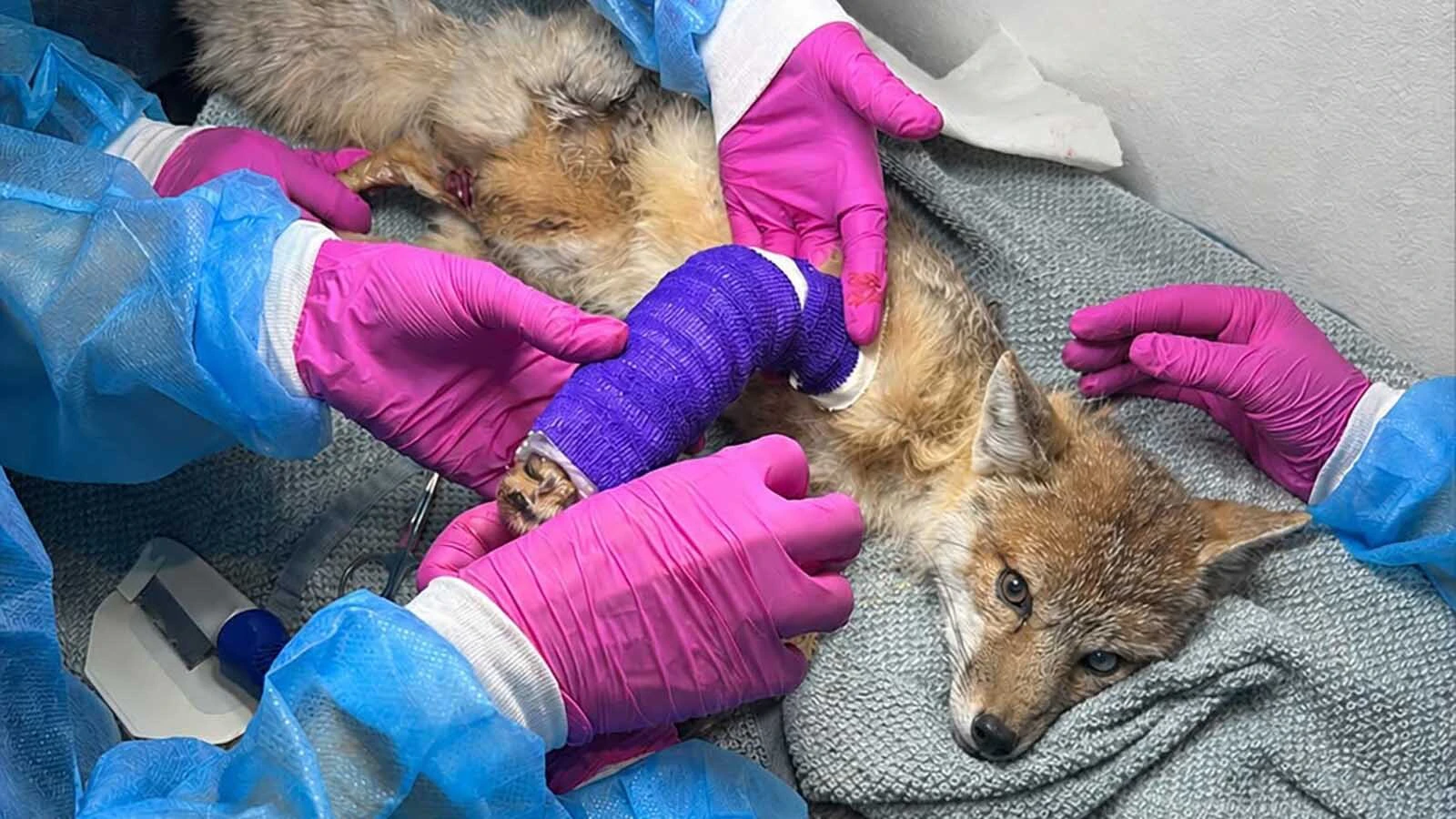
The fox kit was such a case. He had severe bone fractures in his right front leg.
An orthopedic surgeon was brought in to realign the bones and install a metal plate to keep them in place. The center raided enough money through donations to pay for the surgery.
“The surgery went well and there were no issues. He was standing on the leg the day after the surgery,” Davenport said.
“We take on some of the more difficult cases, where other shelters might euthanize (the injured animals,” she added.
But she sees it as a matter of doing right by wildlife.
Some might argue for “nature taking its course” with injured animals, and Davenport understands that, when the circumstances are natural.
“I’m a big believer that it’s not nature taking its course if an animal is hit by a car or bird flies into a window. That’s human-caused,” she said.
Amid Denver's urban sprawl, Rocky Mountain Wildlife Alliance is rescuing a fast-growing number of injured animals. “As the human environment expands, we’re seeing more and more conflict with wildlife,” founder Emily Davenport says. (Rocky Mountain Wildlife Alliance) 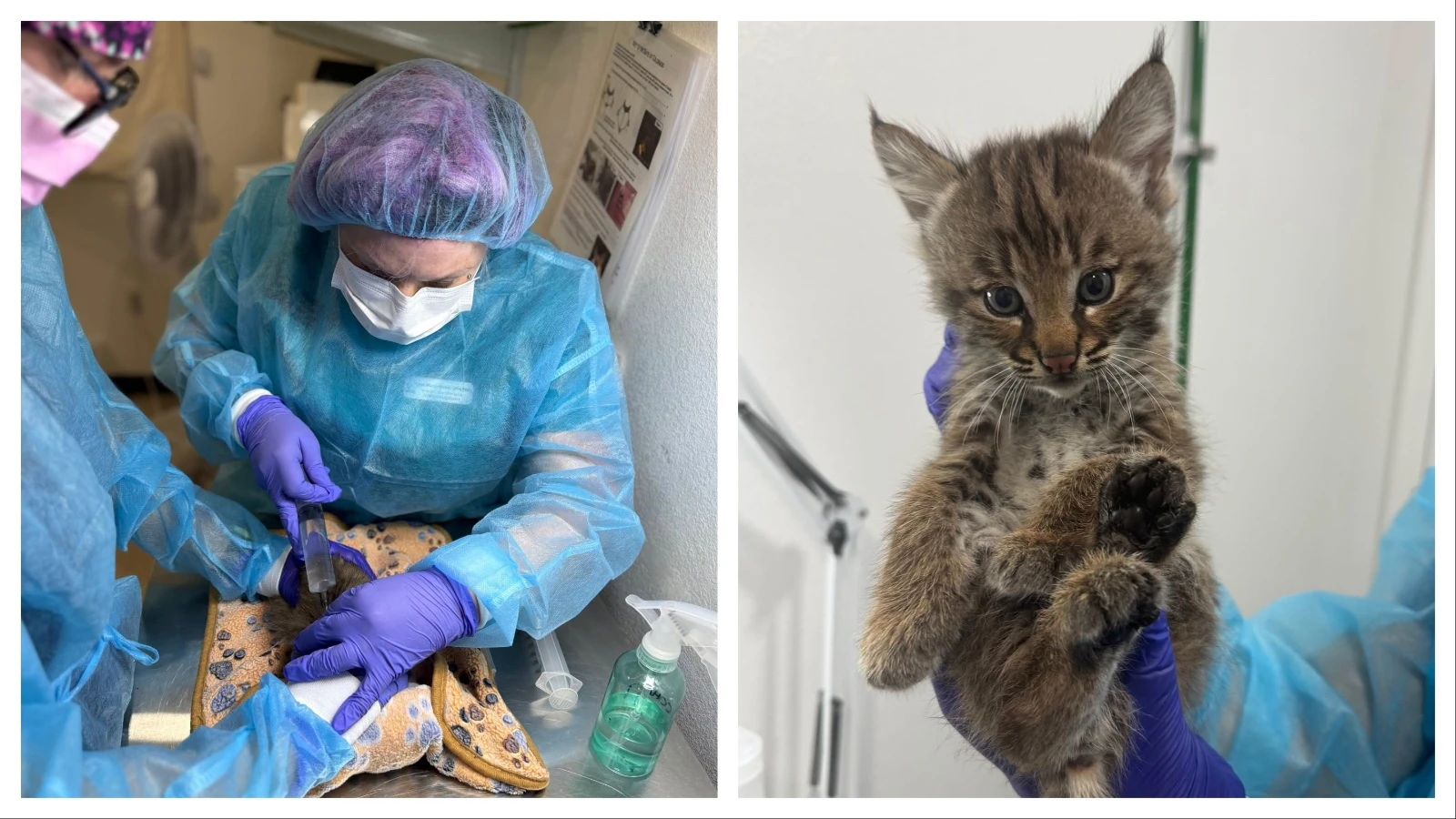
Amid Denver's urban sprawl, Rocky Mountain Wildlife Alliance is rescuing a fast-growing number of injured animals. (Rocky Mountain Wildlife Alliance)
‘A Pretty Good Plan’
The plan is to keep the little fox at the center until late August or early September, helping it to learn how to hunt and then turn it back loose in the wild, Davenport said.
Biologist Robert Crabtree told Cowboy State Daily he thinks the fox has good chances of survival.
“It it’s a pretty good plan. The fox should be fine, as long as it’s learned to hunt on its own,” said Crabtree, the founder, chief scientist and president of the Yellowstone Ecological Research Center in Bozeman, Montana.
Canines such as wolves are on the “social end of the spectrum” and are raised into supportive packs, he said.
Foxes are on the “more solitary end of the canine spectrum, he said.
However, they typically mate for life and “dad is involved” in helping to raise the kits, he said.
Kits typically disperse on their own in September, Crabtree said.
There might be one, usually a female, that still hangs around with the parents.
“There is often a helper, that helps mom at the fox den,” he said.
Retired biologist Franz Camenzind of Jackson also gave the fox kit good chances of returning to the wild on his own.
“If it’s physically all good, it should have a good chance, said Camenzind, who studied coyote behavior in and around the National Elk Refuge near Jackson.
Foxes also adapt fairly well to human development, so long as they can find natural food sources, such as mice, and stay out of trouble, he said.
“If there is a group that’s trying to heal an animal like a fox and put it back into the wild, I would certainly encourage it,” he said.
Davenport said foxes play a vital role in the ecosystem and can be beneficial to humans.
“Not only are they cute to boot, they serve a really important ecosystem function with pest control,” by devouring mice and voles, she said.
Amid Denver's urban sprawl, Rocky Mountain Wildlife Alliance is rescuing a fast-growing number of injured animals. “As the human environment expands, we’re seeing more and more conflict with wildlife,” founder Emily Davenport says. (Rocky Mountain Wildlife Alliance) 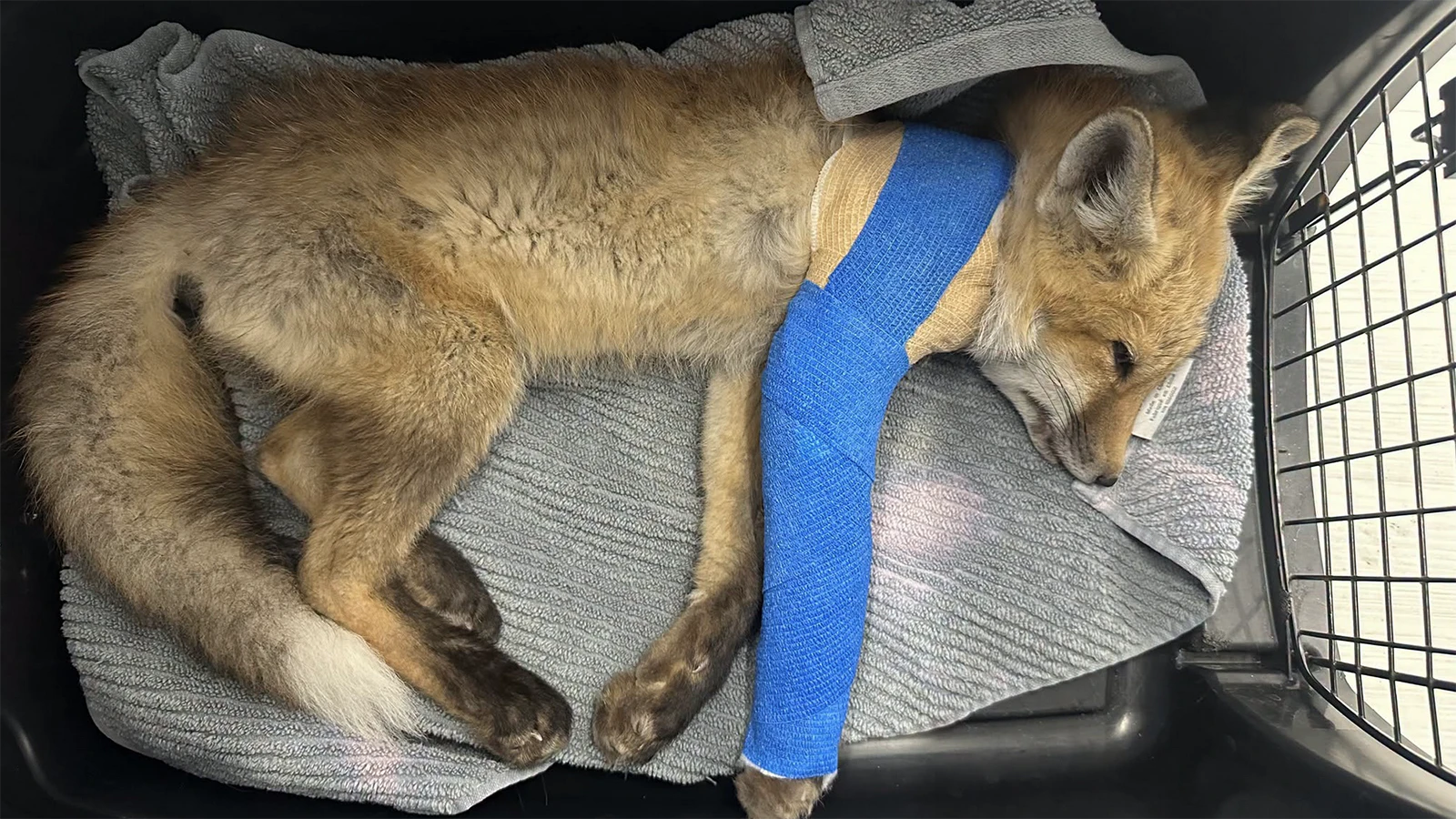
A kit, or young red fox, recovers after surgery for a broken leg at the Rocky Mountain Wildlife Alliance’s wildlife hospital in Sedalia, Colorado. (Emily Davenport) 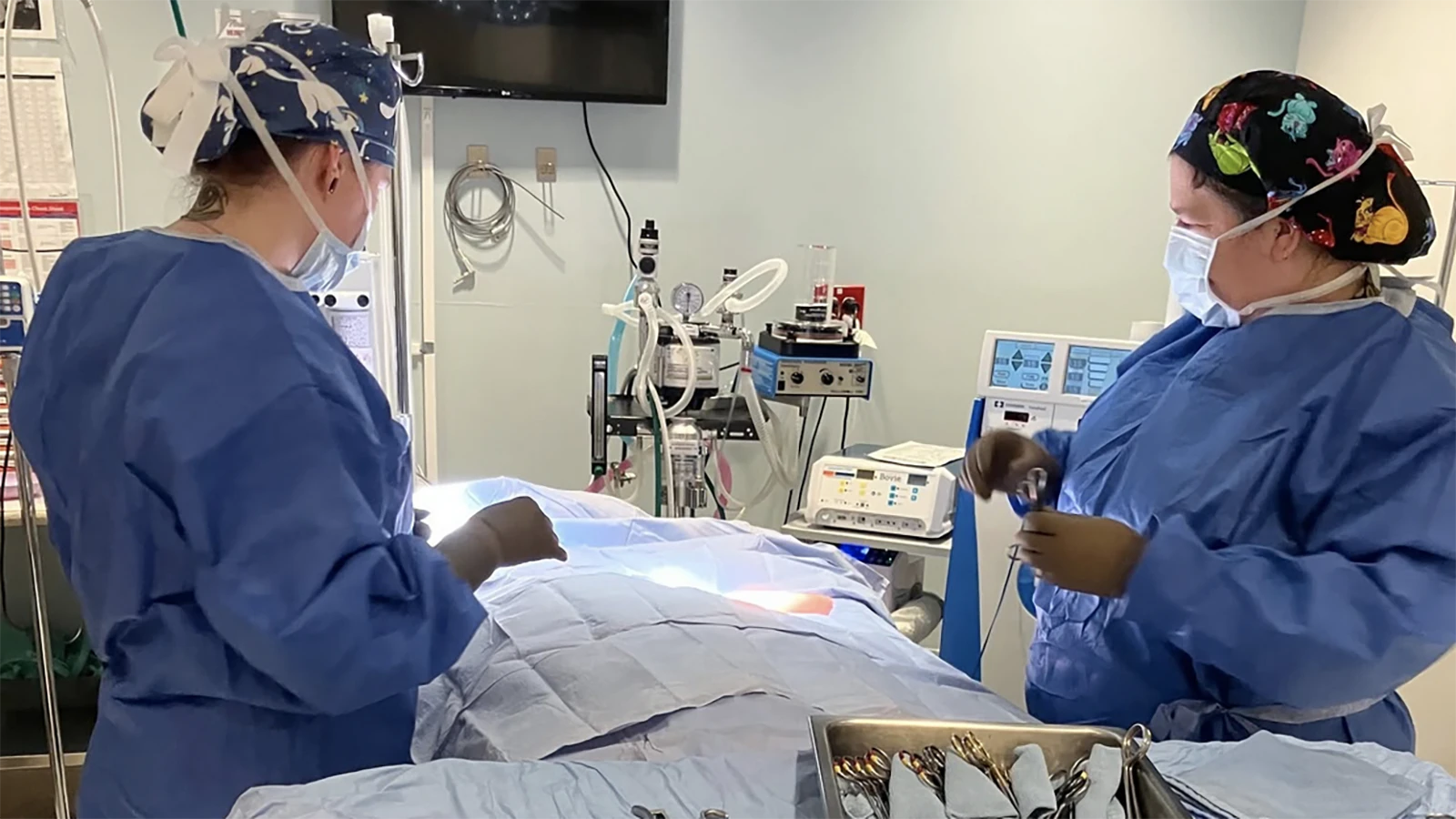
An orthopedic surgeon prepares to operate on a red fox kit at the Rocky Mountain Wildlife Alliance’s wildlife hospital in Sedalia, Colorado. (Emily Davenport) 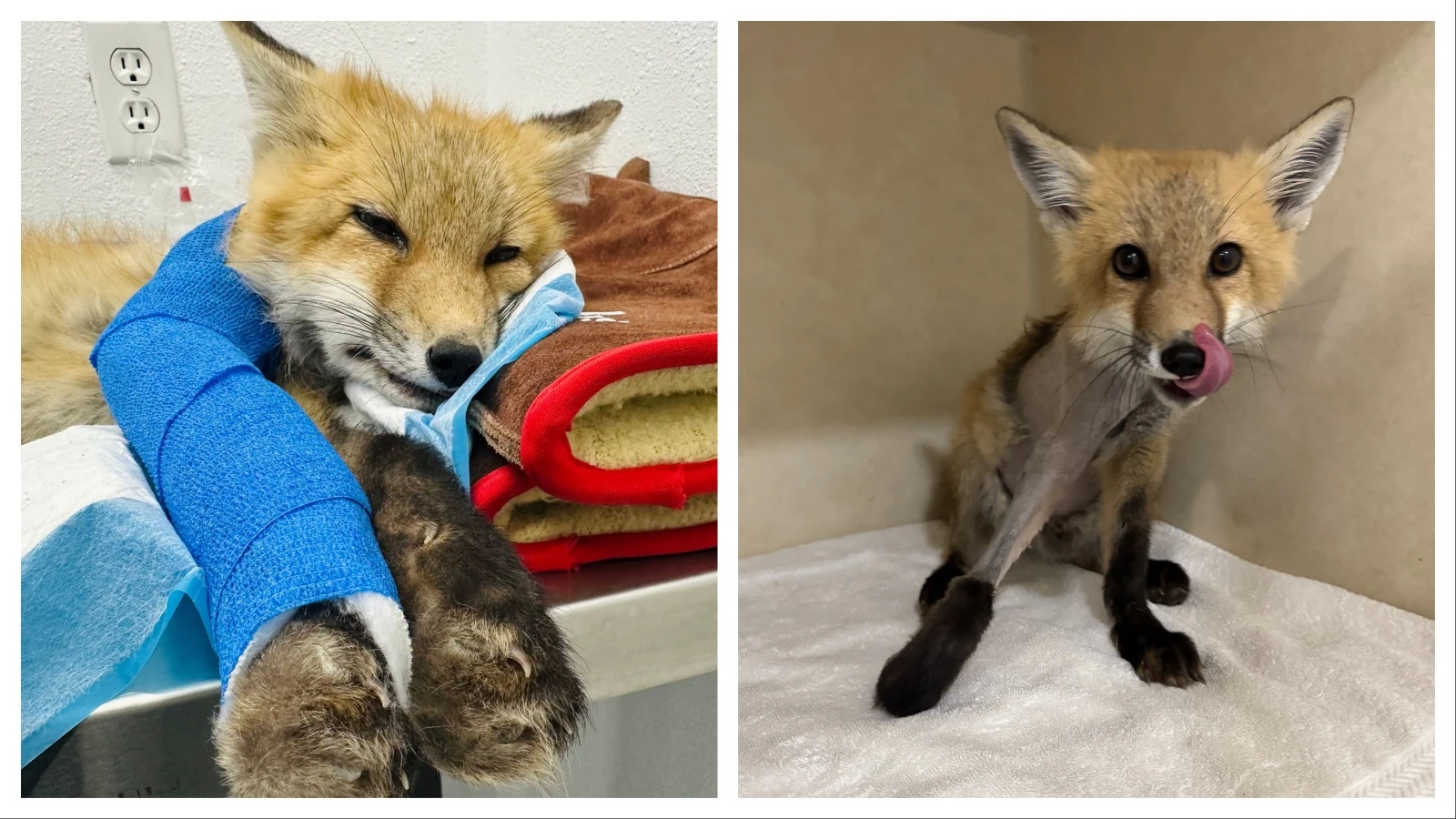
A kit, or young red fox, recovers after surgery for a broken leg at the Rocky Mountain Wildlife Alliance’s wildlife hospital in Sedalia, Colorado. (Emily Davenport) 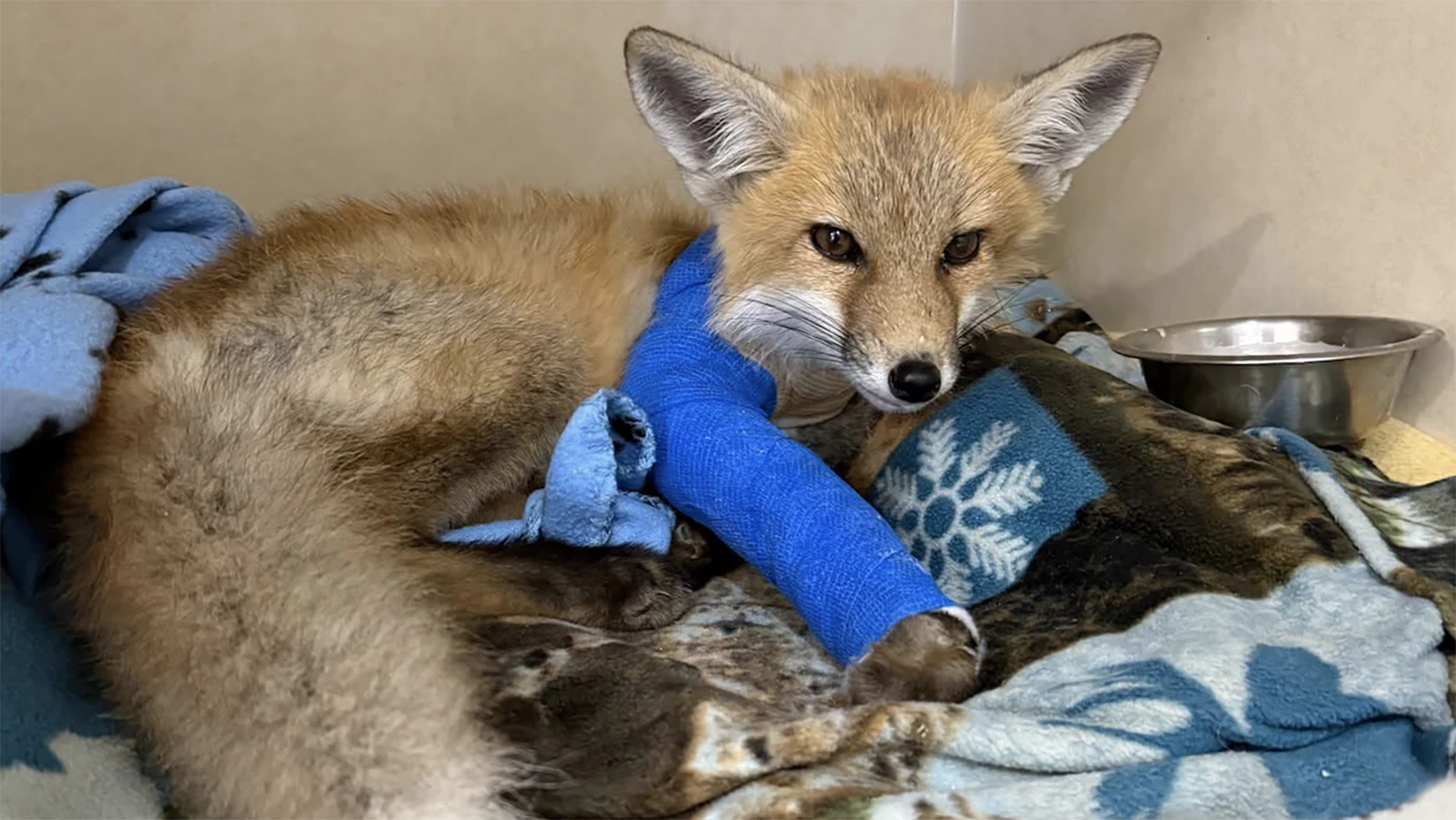
A kit, or young red fox, recovers after surgery for a broken leg at the Rocky Mountain Wildlife Alliance’s wildlife hospital in Sedalia, Colorado. (Emily Davenport)
Urban Sprawl
Davenport doesn’t expect business at the wildlife hospital to slow down anytime soon.
The Denver Metro area is growing, with no end in sight.
“As the human environment expands, we’re seeing more and more conflict with wildlife,” she said.
There are “lots of massive housing developments bringing changes that animals can’t adapt to quickly," she said.
Sedalia is nestled in the foothills of the Rocky Mountain front and has so far escaped the worst of it, and Davenport hopes it stays that way.
"We’re in this amazing little rural pocket surrounded by the Denver metro area,” she said.
Mark Heinz can be reached at mark@cowboystatedaily.com.