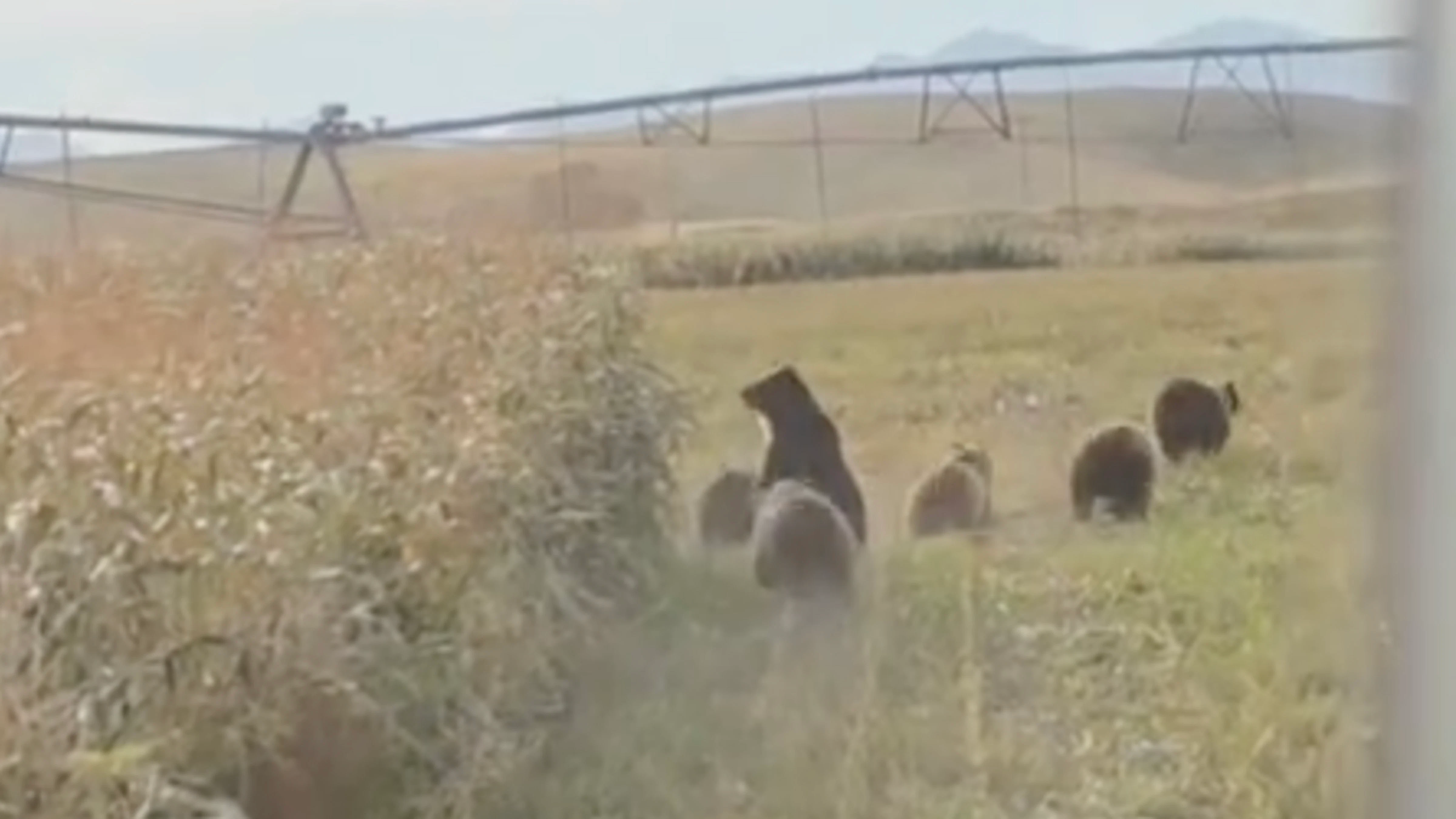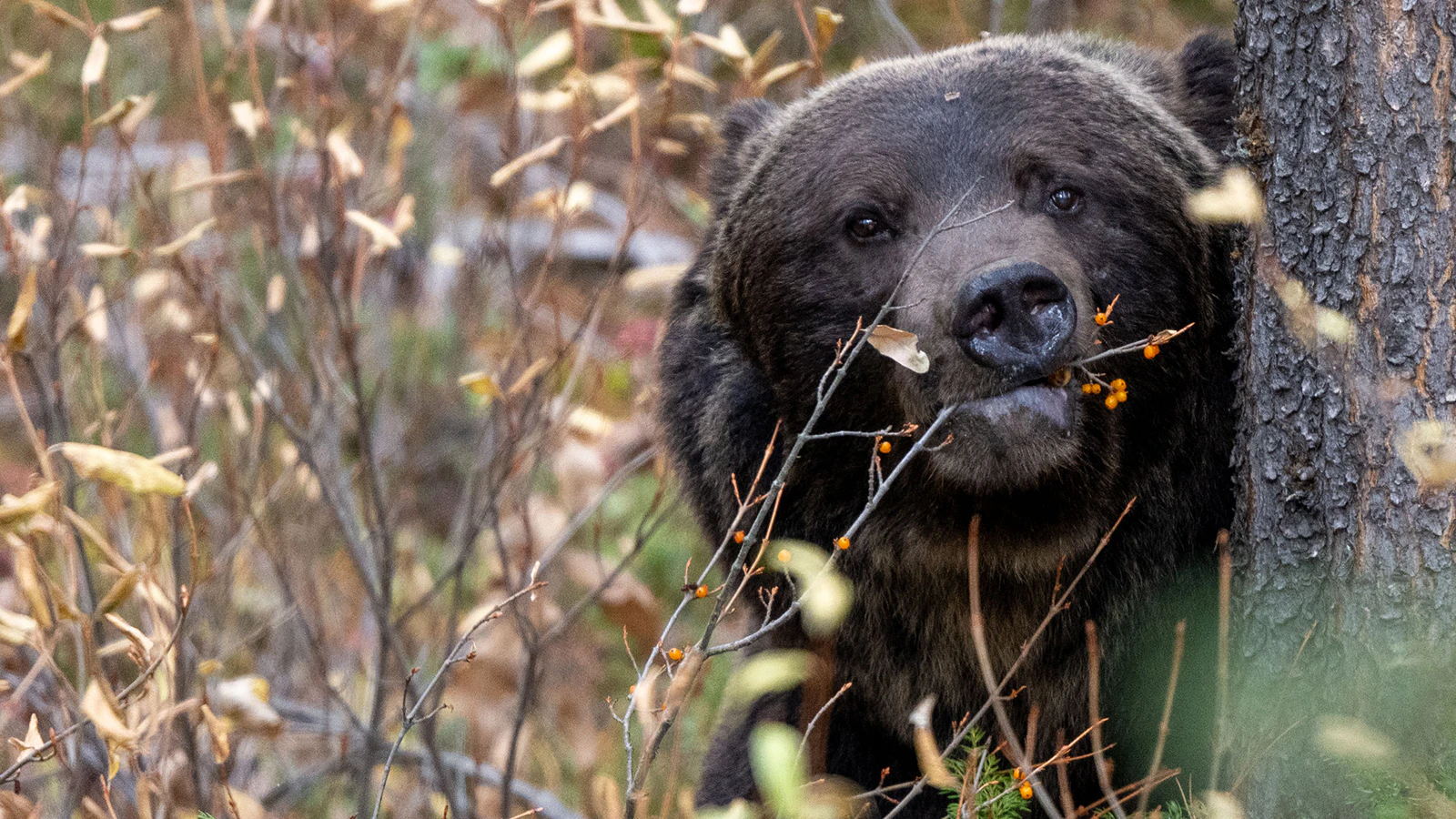
Arguments over grizzlies north of the border in Alberta, Canada, are remarkably similar to those in Wyoming and Montana, with some calling for the bears to be hunted again and others saying that would be a horrible idea.
The Rural Municipalities of Alberta is lobbying the provincial government to reinstate grizzly hunts, which were banned there in 2006.
Hunt advocates cite increasing conflicts with humans, as bears push farther into foothill and plains habitat — much like Montana’s expanding population of prairie grizzlies.
However, provincial authorities have stated not to expect grizzly hunts anytime soon, the Canadian Broadcasting Corp. (CBC) reported.
Grizzlies have been designated a threatened species in Alberta since 2010. At the time, it was thought there were fewer than 1,000 adults in the province.
The latest population study of Alberta’s grizzlies from 2018 suggested there could be more than 1,000 adult bears in the province, according to CBC.
Grizzlies in the Lower 48 have been under federal Endangered Species Act protections since 1975.
There is a renewed push to get grizzlies in Wyoming, Montana and Idaho delisted and possibly hunted. Wyoming Game and Fish Director Angi Bruce recently stated that her agency probably kills more grizzlies over conflict management than hunters would if there was a grizzly season.
First Grizzlies In 100 Years
The debate over whether to hunt grizzlies has been going on for a while, says human-bear conflict expert Kim Titchener, who lives in Alberta, in an interview with Cowboy State Daily.
“It keeps coming up. More so in areas that are the outskirts of grizzly bear habitat, where there’s a lot of livestock and agriculture,” said Titchener, the president of Bear Safety and More.
There have also been incidents of grizzlies and hunters running into each other and hunters getting mauled, she added.
There’s no evidence grizzly populations are “massively regrowing,” but bears have been showing up in new areas, Titchener said.
“These people haven’t seen a grizzly bear on their landscapes for 50 to 100 years,” she said.
That’s also what’s happening in Wyoming and Montana. Grizzlies have shown up in farmland near Powell and spotted as far south as the Kemmerer area.
In Montana, bears have wandered as far east as the Missouri Breaks.
‘Not Really Solving The Problem’
Alberta allows hunters to apply for special tags for “problem bears,” such as those that have chronically raided chicken coops, Titchener said.
“There’s only been a few cases where we’ve allowed a hunter to do that,” she said.
And Titchener questions the effectiveness of that approach, versus having wildlife agents remove problem bears.
“It seems like the government pandering to the hunting community, and not really solving the problem,” she said.
Protecting livestock and poultry with electric fencing and livestock guardian dogs would probably be more effective, Titchener said.
She also questions the argument that allowing widespread hunting would make grizzlies more fearful of humans.
“If you kill a bear, you don’t really teach other bears. Dead bears don’t pass that information on,” Titchener said.
How much territory grizzlies reclaim could hinge upon human tolerance, she added.
“Do you want to have bears in only a very select area? Or are we going to accept that they are going to go out into lands where they once lived? That’s a choice that the public needs to make. And we can’t just hunt them back into oblivion,” Titchener said.
‘They Just Know’
Guy Eastman of Cody participated in one of the last grizzly hunts along the British Columbia/Alberta provincial line. He killed a grizzly bear on the B.C. side in about 2007, right before B.C. followed Alberta’s lead and banned grizzly hunting.
As he sees it, Canadians had far fewer problems with grizzlies when they were hunted, said Eastman, who represents the third generation of the famous outdoor multimedia family that launched Eastman's Hunting Journal and a popular outdoors television show.
“It’s the same old story. They (Canadians) quit hunting grizzlies and now they’re having the same old problems,” he told Cowboy State Daily.
“I killed a bear on the backside of one of British Columbia’s ski areas,” he said.
And even though that was in June, there were plenty of people in the area enjoying hiking and other outdoor activities, with no bear trouble, Eastman said.
And he credits legal bear hunts at the time for that.
Eastman argues that grizzlies seem to have a different attitude when they’re hunted.
He recalled grizzlies being skittish during numerous black bear hunts in Canada, when people he was hunting with also had grizzly tags.
“Those grizzlies, because they were hunted, were super, super shy,” he said.
“They just know (they’re being hunted),” Eastman added. “They’re incredibly intelligent. They have about twice the IQ of a black bear. They just know.”
Fall Is The Worst Time
Allowing grizzlies to be hunted might mitigate human-bear conflicts during the fall, which seems to be the worst time for bear attacks, Eastman said.
During the spring and early summer, bears can feed on elk calves, he said. And at the height of summer, grizzlies are feeding on moths far above timberline, where not many people go.
“By August, the calves are too big for them to catch and the moths are gone,” he said, so that’s when the trouble really starts.
“If we started hunting them, the number of bear incidents would go down,” Eastman said.
But that would raise the question of how bear viewing would be affected, he added.
“The problem is, human nature. People want to see bears, If you want to see bears, you can’t hunt bears, because they get scared of you,” he said.
‘Grizzlies Are Reintroducing Themselves’
Grizzlies are naturally a plains species; they’ve been contained mostly to the mountains because of human settlement, Danny Kinka, senior wildlife restoration manager for the American Prairie conservation group in Montana, told Cowboy State Daily.
American Prairie has property at the south end of the Missouri Breaks, near the confluence of Judith Creek and the Missouri River.
Grizzlies have occasionally shown up there. And American Prairie likes the idea of an established subpopulation there someday, even though it’s outside of Montana’s officially designated grizzly recovery zone.
Kinka doesn’t see grizzly hunting in prairie habitat being a possibility anytime soon.
“With hunting, the goal is essentially to remove animals that might have died anyway,” he said.
Grizzlies reproduce slowly, and it would be long time, if ever, for enough of them to be established in the Missouri Breaks region for a huntable surplus population, he said.
The main debate over whether grizzlies should be hunted in Montana will probably involve the more abundant bear populations in western Montana, he said.
American Prairie remains optimistic that people will remain reasonably tolerant of grizzlies in the area, Kinka said.
“They’re coming back on their own. It’s not being imposed on anybody through government reintroduction. Grizzly bears are essentially reintroducing themselves,” he said.
Mark Heinz can be reached at mark@cowboystatedaily.com.