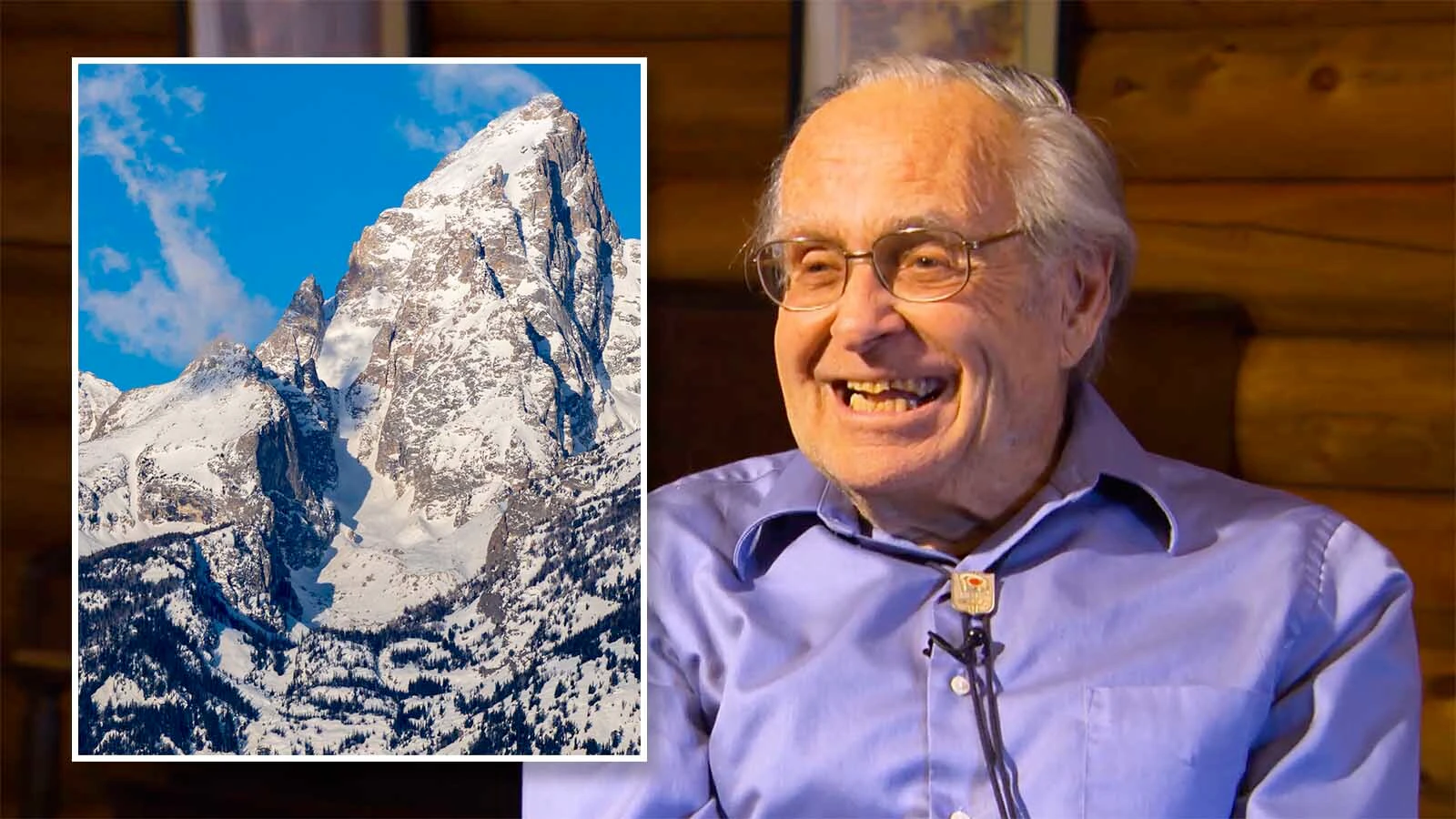
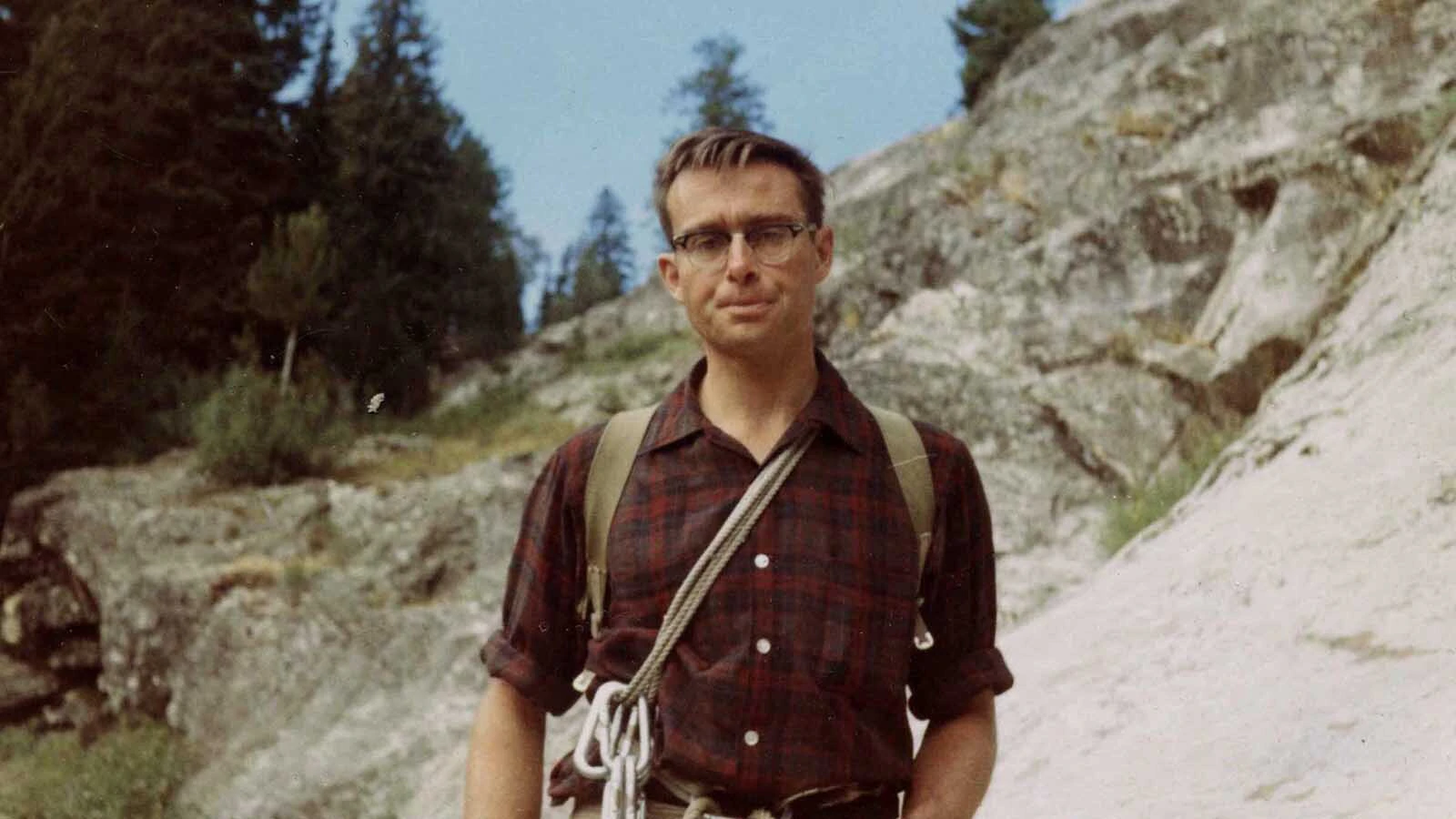
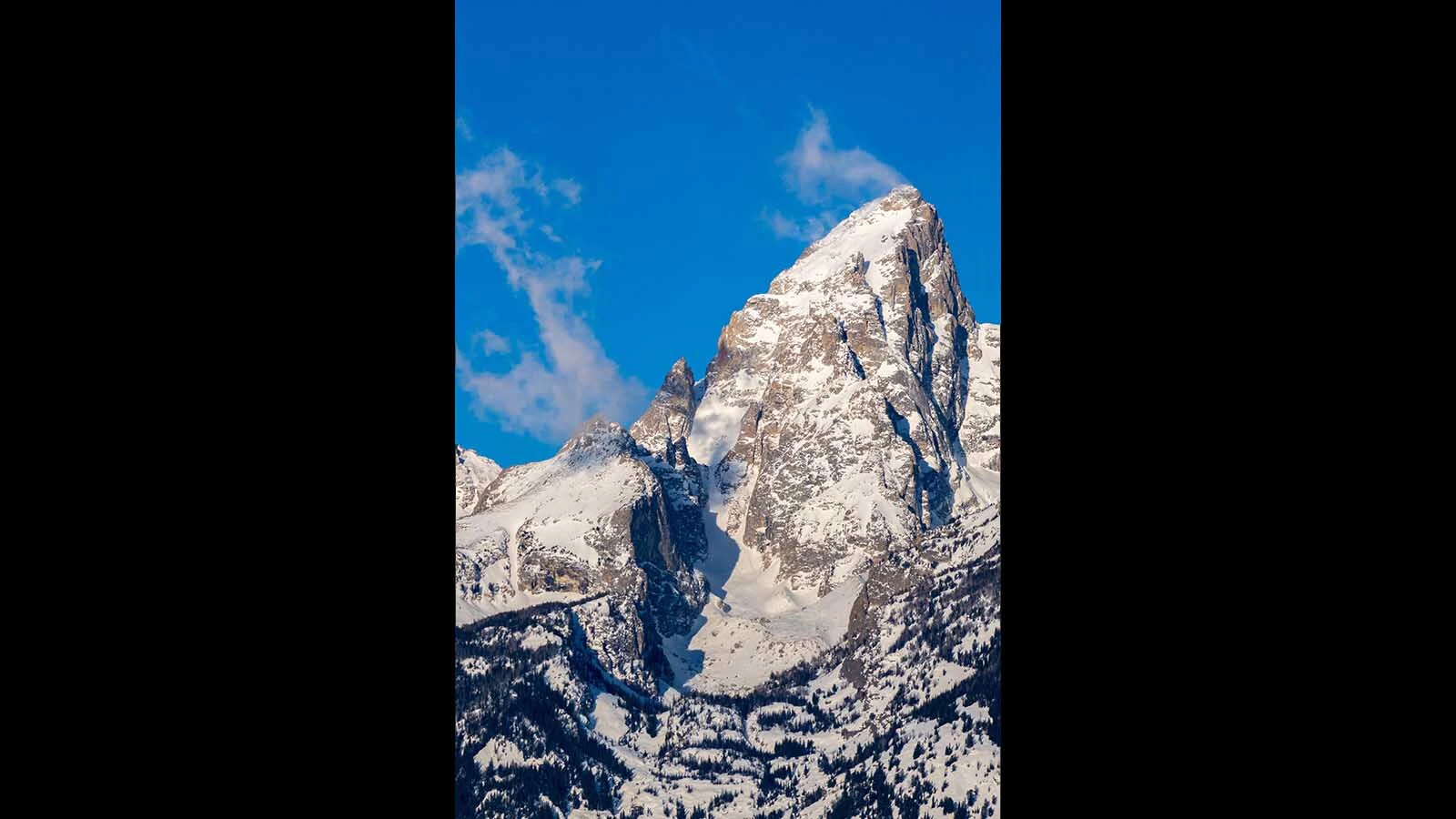
On the 55th anniversary of Bill Briggs’ legendary, incredibly dangerous, and totally outrageous first ski down the face of Grand Teton this past Monday, the now-94-year-old mountaineer and musician said it was just something he had to do.
“There was a lot of uncertainty, but I felt it’s probably now or never,” Briggs said in an email to Cowboy State Daily.
Now hard of hearing, email is the way he communicates now — except when he’s at his haunts in Jackson and Wilson every weekend where he sings and yodels.
“I thought (skiing the Grand) was sort of a last chance, and I was running a little late already,” Briggs recalled. “I thought, ‘Just do the best you can, one thing at a time. It’s all doable snow all the way, and I’m as fit as I will ever be for this lifetime.'”
Without A Hip Joint
Skiing down the sheer face of a rocky and intimidating Grand Teton would have been impressive enough, but it’s even more so considering that Briggs was born without a hip joint.
He underwent surgery at age 2 to carve out a socket, and ultimately had it fused in 1961. Ten years later on June 15, 1971, he would make his historic descent down Grand Teton.
A profile of Briggs’ career by Kimberly Geil said his hip was frozen in place and never quite worked properly after the fusion, but Briggs didn’t allow it to keep him from doing what he wanted.
“He has achieved athletic feats that most people with all joints functioning at 100% could never have accomplished,” she wrote.
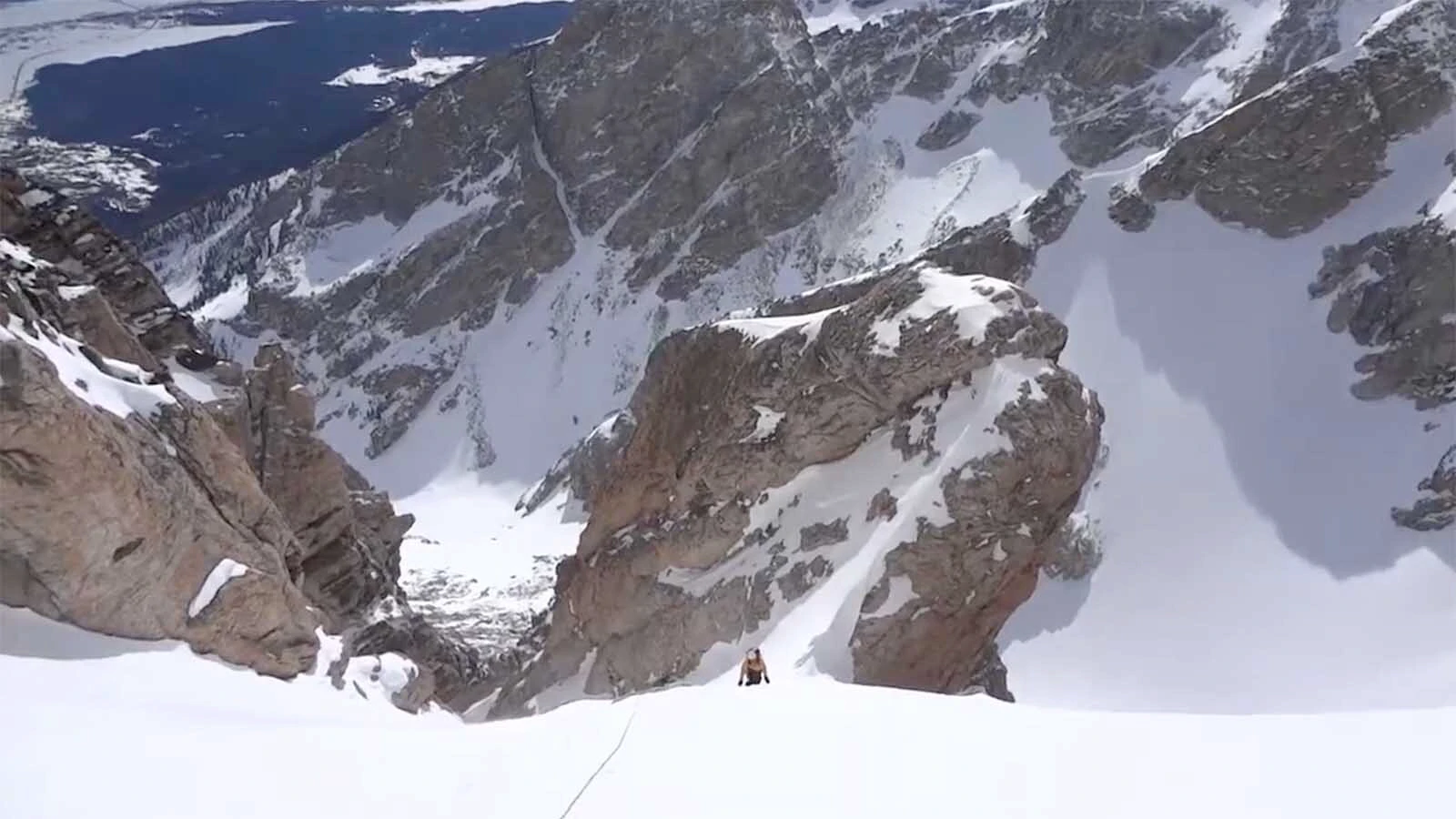
Briggs’ route required a free-hanging rappel down a 165-foot cliff face, which he completed with his skis on.
Despite all the preparation and planning, he said there was plenty of unexpected twists and turns.
“Ice ripples at the bottom of the Stettner Couloir. Not enough snow for the traverse over to the Ford Couloir,” Briggs said. “Huge chockstone clear across the Stettner. Steep slot to climb out of the Stettner onto the East Face.”
Then there were frozen crampon straps.
“No flat place to put skis on and can’t dent the hard crust on the snow,” he explained. “Many rocky outcrops to ski around. Breaking through the hard crust and falling downhill. Big slough of snow down the East Face. Ski tails hit rock when skiing the slot. Rappelling the chockstone.”
Briggs recalled periodic bunches of snow spiriting into the Ford-Stettner route on the peak from the right, to then flow down the runnel in the middle of the couloir.
“Cornice to ski off onto slope over to Teepee’s Pillar,” he wrote. “Entire slope sloughs as I ski across to Teepee’s. Huge frost feathers 3 feet deep to ski through down Teepee’s glacier.”
His assessment 55 years later?
“Harder than I thought,” Briggs said. "Only the less than 10-foot wide, steep 60-degree slot. That’s the absolute limit of what I can ski.”
Father Of Extreme Skiing
What does Briggs — known as the father of extreme skiing (he prefers the term ski mountaineering) — think about the body challenges he faced with his hip disability?
“What’s possible? What’s the limit?” he replied. “The great fun of making the margin of safety more narrow.”
After completing the feat and returning to town, Briggs quickly realized that he had a problem: many people didn’t believe he did it. Where was the proof?
But when Briggs drove to the Jackson airport and saw that the tracks his skis made on the mountain were still visible, he called Jackson Hole News co-owner Virginia Huidekoper, who immediately recognized the news value and how important it was to document what her friend did.
“She knew the greatness of the achievement and told me to stay right there so we can fly up and photograph the tracks,” Briggs said.
Huidekoper flew her Cessna 182, but Briggs said she suddenly surprised him by turning control of the craft over to him, even though he had absolutely no experience as a pilot.
“She told me to put my feet on the pedals and hands on the steering wheel and don’t do anything while she took four photos of the tracks as viewed from the south,” Briggs wrote. “She dropped me off at the airport and probably picked up her paper’s chief photographer, Roger LaVake, so he could get several shots of the tracks.”
‘So Many! But None As Great’
Briggs told Cowboy State Daily that he had many other wonderful experiences as a ski mountaineer, including his time as an Exum guide.
He also made first descents of other mountains in the Teton Range, including Middle Teton, South Teton, Mount Moran and Mount Owen.
“So many!” he exclaimed in his email. “But none as great.”
Sometimes, when the pain of mountaineering became so great, Briggs had to stop and find other work. In 1961, before his hip fusion, he tried playing folk music in New York City, where the genre was all the rage.
Briggs played once in a small, almost empty Greenwich Village coffee shop. The lack of an audience was due to the fact there was another folk singer performing at a nearby club, a fellow named Bob Dylan.
“I didn’t fit in very well at all in Greenwich Village,” Briggs said. “I was just coming out of the lowest point of this life. Bob Dylan was a great talent, but there were so many others.
"I had musically met with Pete and Penny Seeger, Joan Baez and Judy Collins. I was very impressed with them all.”
Later, Briggs would get a chance to play with Dylan — or maybe it was Dylan who had the good fortune to play with the famed mountaineer.
It was at a wedding reception at the small Turpin Meadow Ranch 50 miles north of Jackson. Briggs recalled a few inches of snow on the ground.
Dylan came as the guest of music producer David Geffen.
“Our bass player/photographer said Dylan might show up,” Briggs said. “He did and didn’t seem very happy to be there. Our front man, John Cooke, invited him to play with us, which cheered him up.”
Briggs said the only extra instrument his band had was a mandolin, “which Bob played very well for our three remaining sets.”
“At the end, one of the ranch hands introduced Bob to me as if I was sort of equal,” Briggs said. “Bob would have none of it.”
Still Playing Music
Briggs is still playing music for the summer and winter seasons each Sunday at the Stagecoach Bar in Wilson, and Monday at the Hoot.
“Skiing the Grand was by far the best [experience] of my life,” Briggs said. “But what I enjoyed most about it all was doing each piece and having completed each one. Planning is fun, but deep enjoyment comes only with the doing.
“Often the enjoyment is unexpected and that makes it even better,” he added. “There’s a growth element wherein it’s being or been done better than ever. It doesn’t matter whether it’s music making or athletic endeavor as long as it’s better in some way.”
Briggs has long been a proponent of Scientology, and said it’s helped shape his life in many ways.
He confided that he’s become a student of religious philosophy and “resolved to my own satisfaction practically all of the mysteries of life. One has to come by this on his own. I don’t know who else may have, or what to do with it all.”
How would Briggs like to be remembered?
“I’ve been in the pursuit of happiness, and through the study and practice of religious philosophy, got there to my satisfaction,” he said. “And I’m the one responsible for that.”
Kerry Drake can be reached at: Kerry@CowboyStateDaily.com